RussiaUkraine

US, Russian officials meet in Miami for talks on Ukraine war | Russia-Ukraine war News

Negotiators from Russia and the United States have met in the US city of Miami as Ukrainian President Volodymyr Zelenskyy urged Washington to ramp up the pressure on Moscow to end its war on Ukraine.

The meeting on Saturday took place between Russian President Vladimir Putin’s special envoy, Kirill Dmitriev, and US President Donald Trump’s special envoy, Steve Witkoff, and his son-in-law, Jared Kushner.

Recommended Stories

list of 3 itemsend of list

Dmitriev told the reporters the talks were positive and would continue on Sunday.

“The discussions are proceeding constructively,” said Dmitriev. “They began earlier and will continue today, and will also continue tomorrow.”

Earlier, US Secretary of State Marco Rubio had said that he may also join the talks in Miami. He said that progress has been made in discussions to end the war, but there is still a way to go.

“The role we’re trying to play is a role of figuring out whether there’s any overlap here that they can agree to, and that’s what we’ve invested a lot of time and energy [on], and continue to do so,” Rubio said. “That may not be possible. I hope it is. I hope it can get done this month, before the end of the year.”

Trump’s envoys have for weeks been negotiating a 20-point peace plan with Ukrainian, Russian and European officials.

While US ​officials say they have made progress, major differences remain on the issues of territory and possible security guarantees that Kyiv says are essential for any agreement.

Russia has shown few signs that it is willing to give up its expansive territorial demands in Ukraine, which it believes it is well-positioned to secure as the war grinds on and political fractures emerge among Ukraine’s European allies.

In Kyiv, Zelenskyy said he remains supportive of a US-led negotiations process, but that diplomacy needs to be accompanied by greater pressure on Russia.

“America must clearly say, if not diplomacy, then there will be full pressure… Putin does not yet feel the kind of pressure that should exist,” he said.

The Ukrainian leader said Washington has also proposed a new format for talks with Russia, comprised of three-way talks at the level of national security advisers from Ukraine, Russia, and the US.

Zelenskyy expressed scepticism that the talks would result in “anything new”, but said he would support trilateral discussions if they led to progress in areas such as prisoner swaps or a meeting of national leaders.

“If such a ‍meeting could be ⁠held now to allow for swaps of prisoners of war, or if a meeting of national security advisers achieves agreement on a leaders’ meeting… I cannot be opposed. We would support such a US proposal. Let’s see how things go,” he said.

The last time Ukrainian and Russian envoys held official direct talks was in July in Istanbul, which led to prisoner swaps but little else.

The talks in Miami come after Putin promised to press ahead with his military offensive in Ukraine, hailing Moscow’s battlefield gains in an annual news conference on Friday.

Putin, however, suggested that Russia could pause its devastating strikes on the country to allow Ukraine to hold a presidential ballot, a prospect that Zelenskyy rejected.

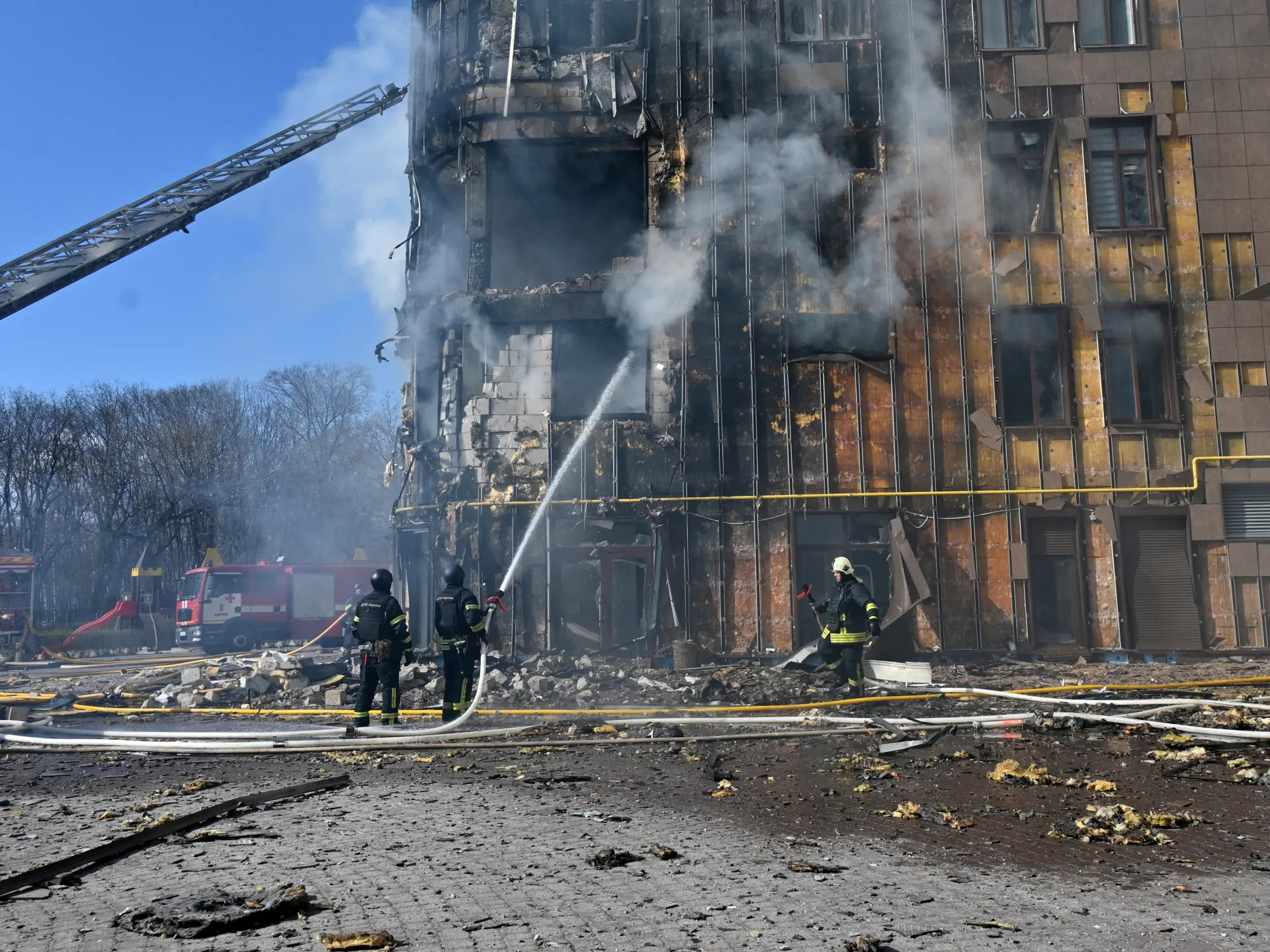
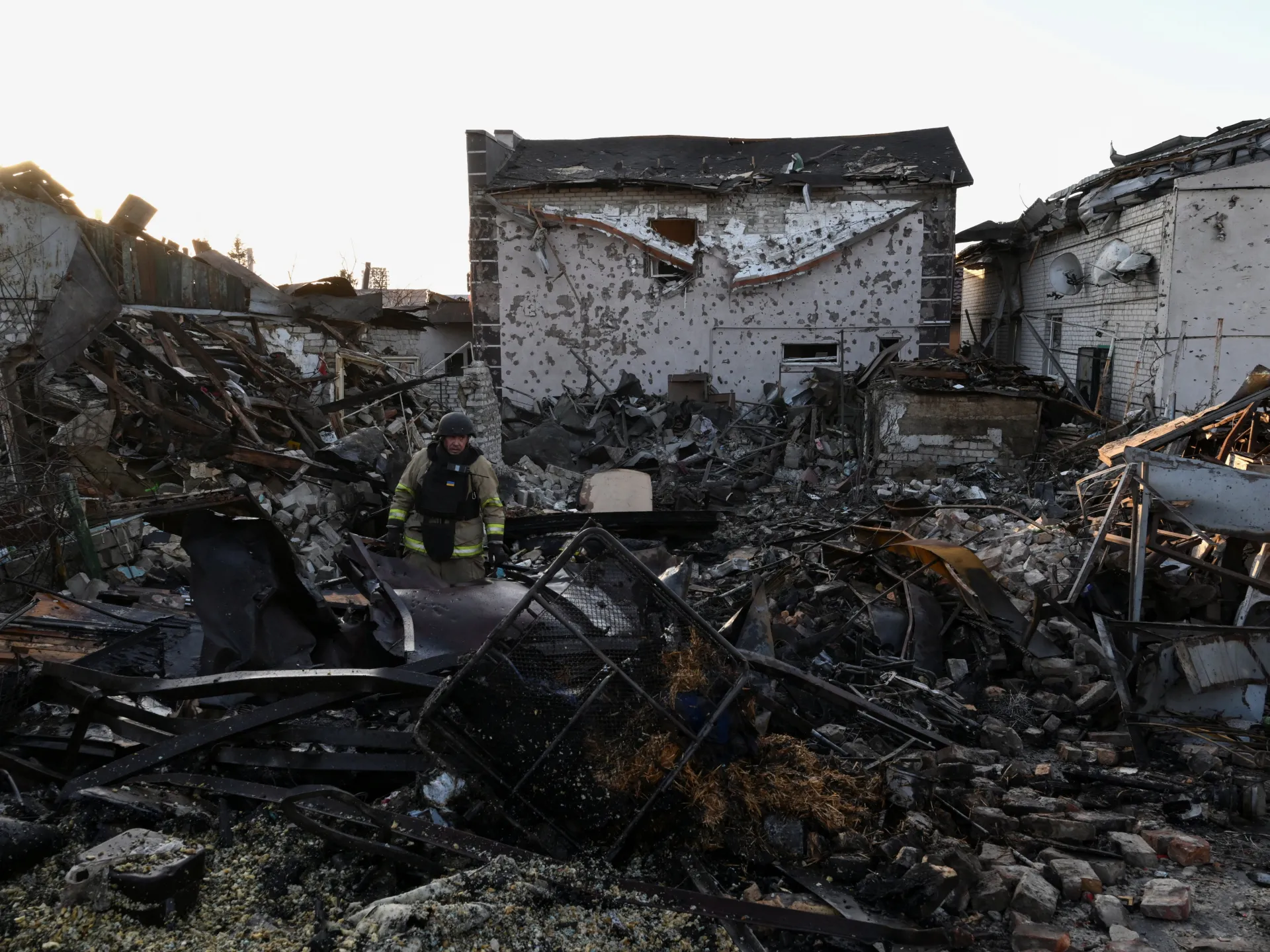
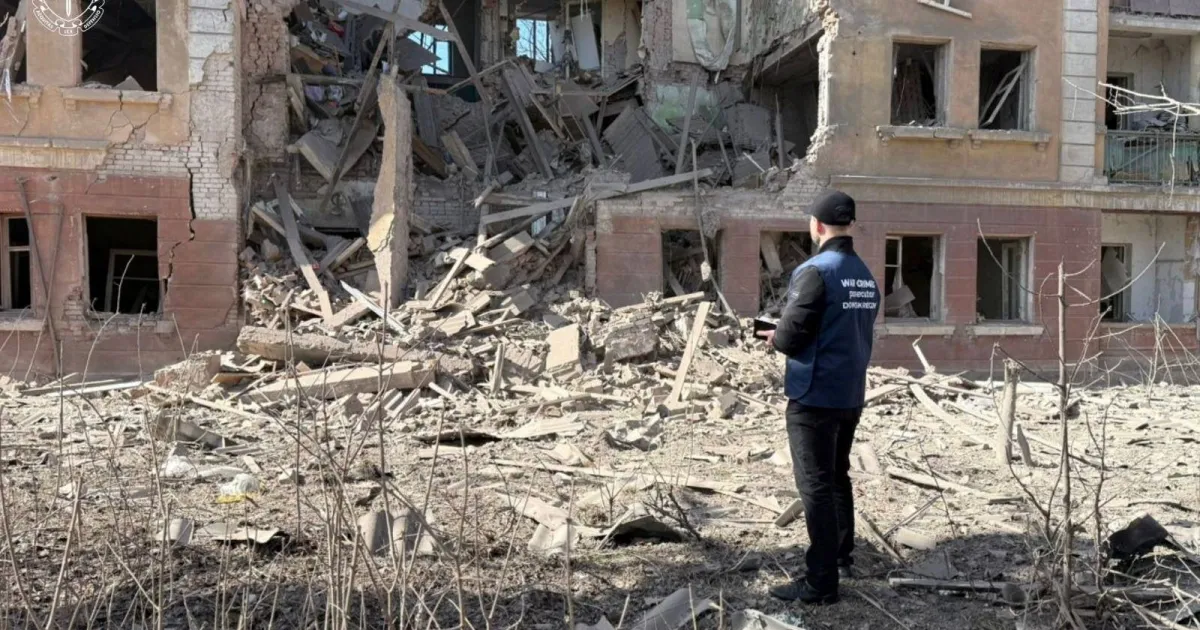
Meanwhile, the death toll in Ukraine’s Black Sea Odesa region from an overnight Russian ballistic missile strike on port infrastructure rose to eight, with 30 people wounded.

A civilian bus was struck in the attack, Ukrainian Prime Minister Yulia Svyrydenko said.

The Russian attacks on the coastline region have wrought havoc in recent weeks, hitting bridges and cutting electricity and heating for hundreds of thousands in freezing temperatures.

Moscow earlier said it would expand strikes on Ukrainian ports as retaliation for targeting its sanctions-busting oil tankers.

On Saturday, Ukraine claimed to have destroyed two Russian fighter jets at an airfield in Moscow-occupied Crimea, according to the security service SBU. Kyiv’s army said it struck a Russian oil rig in the Caspian Sea as well as a patrol ship nearby.

Putin described Russia’s initial full-scale invasion of Ukraine as a “special military operation” to “demilitarise” the country and prevent the expansion of NATO.

Kyiv and its European allies say the war, the largest and deadliest on European soil since World War II, is an unprovoked and illegal land grab that has resulted in a tidal wave of violence and destruction.

Source link

Russia-Ukraine war: List of key events, day 1,396 | Russia-Ukraine war News

Here is where things stand on Sunday, December 21:

Fighting

  • The death toll from a Russian missile attack on Ukraine’s port city of Odesa rose from seven to eight, with at least 30 others wounded, according to Ukrainian authorities.
  • Ukrainian President Volodymyr Zelenskyy described the situation in Odesa as “harsh” and accused Russia of trying to block Kyiv’s access to the Black Sea.
  • The Ukrainian leader also said that he is looking to replace the head of the Southern Air Command, Dmytro Karpenko, over the Russian strikes on Odesa.
  • Ukrainian Deputy Prime Minister Oleksii Kuleba said Russian forces also attacked the nearby port of Pivdennyi on Saturday, hitting several reservoirs.
  • Ukraine’s military said its special forces carried out a drone attack on a Lukoil oil rig in the Caspian Sea on Friday, along with the Russian military patrol ship Okhotnik. The military also said that the Filanovsky oil rig, which had been targeted twice this month, was damaged in the strike.
  • The Ukrainian military also said it destroyed two Russian fighter jets at an airfield in the occupied Crimean peninsula.
  • Russia’s Ministry of Defence said its forces took control of the villages of Svitle and Vysoke, located in Ukraine’s eastern Donetsk region and the northeastern Luhansk region, respectively.

Diplomacy and ceasefire talks

  • Zelenskyy said the United States proposed a new format for talks with Russia, comprised of three-way talks at the level of national security advisers from Ukraine, Russia, and the US.
  • The Ukrainian leader expressed scepticism that the talks would result in “anything new”, but added that he believes that US-led talks have the best chance of success.
  • He added that he would support trilateral discussions if they led to progress in areas such as prisoner swaps or a meeting of national leaders. “If such a ‍meeting could be ⁠held now to allow for swaps of prisoners of war, or if a meeting of national security advisers achieves agreement on a leaders’ meeting… I cannot be opposed. We would support such a US proposal. Let’s see how things go,” he said.
  • Zelenskyy also pushed back against calls for Ukraine to hold elections as the war drags on, stating that voting cannot take place in Russian-occupied areas and that security conditions must first improve. “It is not [Russian President Vladimir] Putin who decides when and in what format the elections in Ukraine will take place,” Zelenskyy said.
  • Zelenskyy urged European leaders to approve a measure to seize frozen Russian assets and use them to fund Ukraine’s war effort, saying that doing so will strengthen Ukraine’s leverage at the negotiating table. The International Monetary Fund has estimated that Ukraine will need about 137 billion euros ($161bn) in 2026 and 2027, as the demands of the war continue to strain the country’s economy.
  • Russian special envoy Kirill Dmitriev held talks with his US counterpart, Steve Witkoff, and US President Donald Trump’s son-in-law, Jared Kushner, in the city of Miami.
  • “The ‌discussions are proceeding constructively. They began earlier and ‌will continue ⁠today, and will also continue tomorrow,” ‌Dmitriev said
  • Russian Minister of Foreign Affairs Sergey Lavrov attended a summit in Cairo, held to advance closer cooperation between Russia and African nations, and attended by more than 50 countries. Lavrov pitched Russia as a “reliable partner” to African countries in areas such as security and national sovereignty.

Weapons

  • Ukrainian presidential aide Oleksandr Kamyshin announced a deal with Portugal on the joint production of maritime drones, saying it would help “defend Europe from the sea”.

Source link

Russian attack on Ukraine’s Odesa kills at least 8 as peace talks lumber on | Russia-Ukraine war News

A Russian ballistic missile strike on port infrastructure in Ukraine’s Odesa port in the south has killed at least eight people and wounded 27, as Moscow intensifies attacks on the strategic Black Sea region and talks to end the war remain in a critical stage.

The attack late on Friday hit critical logistics infrastructure, with some of the wounded trapped on a bus at the strike’s epicentre as trucks caught fire in a car park.

Recommended Stories

list of 2 itemsend of list

Ukrainian officials say the bombardment is part of a sustained Russian campaign against Odesa’s civilian infrastructure that has left more than two million people without electricity, water and heating for days amid freezing temperatures in the war’s fourth punishing winter.

Moscow struck the same port again on Saturday, hitting reservoirs in what Ukrainian Deputy Prime Minister Oleksii Kuleba described as deliberately targeting civilian logistics routes.

The escalation comes as both sides trade blows across multiple fronts, while United States-led negotiations and numerous high-level meetings in Europe to end the war lumber on without a breakthrough.

Russia claimed on Saturday to have seized the villages of Svitle in the eastern Donetsk region and Vysoke in the northeastern Sumy region, though the reports could not be independently verified.

Ukraine has responded with a widening campaign against Russian military and energy assets.

On Friday night, Ukrainian drones struck the Filanovsky oil rig belonging to Russian energy giant Lukoil in the Caspian Sea, along with a military patrol ship patrolling near the platform.

The attack marked the first officially acknowledged Ukrainian strike on Caspian drilling infrastructure, though the rig had been hit at least twice before in December.

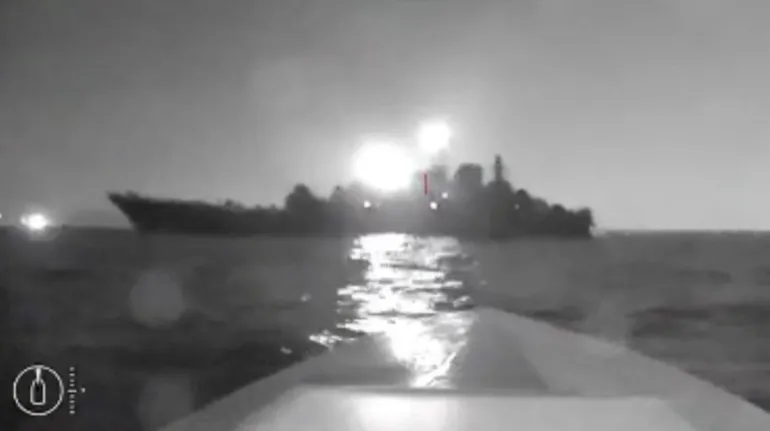
Between December 14 and 15, Ukrainian forces used sea drones to strike a Russian Kilo-class submarine at the Novorossiysk Naval Base in the Black Sea, according to a United Kingdom Defence Intelligence assessment.

Miami talks

The attacks unfold as American and European officials gather in Miami for weekend talks aimed at ending the nearly four-year war, with Russian and Ukrainian teams also in attendance.

Russian envoy Kirill Dmitriev said on Saturday he was heading to Miami.

US Secretary of State Marco Rubio said Washington would not force Ukraine into any agreement, though he described the conflict as “not our war”.

Trump envoys Steve Witkoff and Jared Kushner are leading discussions with Ukrainian negotiator Rustem Umerov and officials from the UK, France and Germany. Russian representatives, including Kremlin key negotiator Dmitriev, are meeting separately with American officials.

The key obstacle remains territorial concessions, with reports suggesting Washington is pushing Kyiv to cede parts of the eastern Donetsk region.

Russian President Vladimir Putin showed no signs of compromise at his annual choreographed news conference on Friday, pledging to press ahead with military operations and predicting new successes before the year’s end.

Putin’s remarks were the latest in a drumbeat of often-repeated maximalist Russian positions nearly four years after he ordered troops into the neighbouring country.

The issue of territory gained, lost, to be ceded or not, delves into the heart of the matter on one of the most contentious issues in the talks to end the war so far.

Putin has demanded Ukraine cede all territory in four key regions his forces have captured and occupied, along with Crimea, which Moscow seized and annexed in 2014.

He also wants Ukrainian troops to withdraw from parts of eastern Ukraine that Russian forces have not yet taken in the eastern Donetsk region, where fighting remains attritional – conditions Kyiv has rejected outright.

As talks continue, so does the fighting, with Russia controlling large parts of Ukraine’s eastern and Black Sea coastal regions.

Putin projected confidence on Friday about battlefield progress, saying Russian forces had “fully seized strategic initiative” and would make further gains before the year ends.

However, that narrative is on shaky ground this week, as Moscow’s assertion of inevitable victory flew in the face of facts on the ground.

Ukraine steadily took back control of almost all of its northern city of Kupiansk after isolating Russian forces within it, belying Russian claims to have seized it.

Russian forces were also unable to dislodge Ukrainian defenders from the eastern city of Pokrovsk in the eastern area of Donetsk to back up Moscow’s claims of total control.

Ukraine received a boost on Friday when European leaders agreed to provide a 90 billion euros ($105bn) loan to cover military and economic needs for the next two years.

President Volodymyr Zelenskyy, who met Polish President Karol Nawrocki in Warsaw the same day to reinforce regional unity against Russia, said the funds would go towards defence if the war continues or reconstruction if peace is achieved.

Source link

Russia-Ukraine war: List of key events, day 1,395 | Russia-Ukraine war News

These are the key developments from day 1,395 of Russia’s war on Ukraine.

Here is where things stand on Saturday, 20 December :

Fighting

  • Russian attacks targeting ports in Ukraine’s Odesa killed seven people and wounded 15, Governor Oleh Kiper said in a post on Telegram.
  • Kiper described the attack as “massive” and said it involved Russian ballistic missiles, which targeted trucks that caught fire.
  • The Kyiv Independent news outlet reported that Odesa city has been suffering from chronic power outages since December 13, due to earlier Russian attacks.
  • Russian forces attacked Ukraine’s Dnipro region with artillery shelling and drones, damaging homes, power lines and a gas pipeline, Vladyslav Hayvanenko, acting head of the Dnipropetrovsk Regional State Administration, wrote on Facebook.
  • Ukraine has taken back control of almost all of its northern city of Kupiansk after isolating Russian forces and unending Russian claims to have seized the key urban centre.

Aid

  • European Union leaders agreed to provide a $105.5bn interest-free loan to Ukraine to meet the country’s military and economic needs for the next two years.
  • EU leaders decided ‍to borrow cash on capital markets to fund Ukraine’s defence against Russia, rather than use frozen Russian assets, diplomats said.

Diplomacy

  • In his annual “results of the year” speech in Moscow on Friday, Russian President Vladimir Putin blamed Ukrainian President Volodymyr Zelenskyy for refusing to discuss giving up the Ukrainian Russia has seized, as part of truce negotiations.
  • “We know from statements from Zelenskyy that he’s not prepared to discuss territory issues,” Putin said.
  • The Russian president also attacked Europe’s handling of frozen Russian assets, labelling plans to use them to fund Ukraine as “robbery”, rather than theft, because it was being done openly.
  • “Whatever they stole, they’ll have to give it back someday,” Putin said, pledging to pursue legal action in courts that he described as “independent of political decisions”.

Ceasefire talks

  • US Secretary of State Marco Rubio said that progress has been made to end Russia’s war on Ukraine in a year-end address in Washington, DC.
  • “I think we’ve made progress, but we have a ways to go, and obviously, the hardest issues are always the last issues,” Rubio told reporters.
  • “We don’t see surrender any time in the near future, and only a negotiated settlement can end this war,” Rubio said, adding that any decision about ending the war will be up to Ukraine and Russia, and not the US.
  • Top Ukrainian negotiator Rustem Umerov, who is in the US for ceasefire discussions, said the US and Kyiv had agreed to continue their joint efforts to reach a ceasefire.
  • “We agreed with our American partners on further steps and on continuing our joint work in the near future,” Umerov wrote on Telegram, without providing further details. He added that he had informed Zelenskyy of the outcome of the talks.
  • Putin’s special envoy, Kirill ‍ Dmitriev, is heading ‍to Miami for a meeting with Trump’s envoy, Steve Witkoff, and the US president’s son-in-law, Jared Kushner, a Russian source told Reuters.
  • The meeting in Miami this weekend comes after Witkoff and Kushner held talks in Berlin with Ukrainian and European officials earlier this week to try to reach a deal to ​end the war.
  • The Russian source said that any meeting between Dmitriev and Ukrainian negotiators currently in the US had been ruled out.

Regional Security

  • Turkiye’s Ministry of the Interior said that it found a Russian-made reconnaissance drone in the İzmit district of Kocaeli, in northwestern Turkiye, based on “initial findings” from an ongoing investigation.
  • An “unmanned aerial vehicle (UAV) believed to be of the Russian-made Orlan-10 type, used for reconnaissance and surveillance, was found,” the ministry said in a post on X.
  • Turkiye’s Ministry of National Defence said on Monday that it had shot down a drone over the Black Sea as it approached Turkish airspace, according to local reports, without providing further details.
  • Ukraine’s Ukrinform news site reported on Friday that after the drone was shot down, Turkiye had informed both Kyiv and Moscow “of the need to act cautiously” so as not to “negatively affect security in the Black Sea”.

Source link

Secretary of State Marco Rubio: Russia-Ukraine conflict is ‘not our war’

Dec. 19 (UPI) — U.S. Secretary of State Marco Rubio said Friday that U.S. negotiators have made “progress” attempting to end the war between Russia and Ukraine, but ultimately “it’s not our war.”

The Russian invasion of Ukraine was one of several global issues Rubio addressed during his 2-hour year-end news conference with reporters. He said despite the progress in negotiations, “we have a ways to go” to end the nearly four-year war in eastern Europe.

“And obviously, the hardest issues are always the last issues,” he said during the briefing.

“Maybe that happens this week, maybe that happens next month, maybe that’s not ready for a few months,” Rubio said of a deal.

His comments came ahead of a weekend meeting in Miami between U.S. and Russian negotiators. He said that while the United States is trying to work on a deal that would make both parties happy, he’s not willing to force a plan.

“It’s not our war. It’s a war on another continent.

“We can’t force Ukraine to make a deal. We can’t force Russia to make a deal. They have to want to make a deal.”

White House officials said they were optimistic this weekend’s meeting would result in an agreement. Previous talks resulted in about “90%” consensus on terms, the officials told The Hill.

Those terms included a multi-national force deployed to Ukraine to respond to acts of aggression against the country in the future. Earlier this week, European leaders pledged to provide military support to Ukraine in protection against Russia, however Ukrainian President Volodymyr Zelensky conceded over the weekend his country may have to give up its dream of joining NATO to end the war.

As peace talks have gone on, U.S. negotiators have put pressure on Ukraine to make more concessions to Russia, which has remained staunch in its demands, which including giving up land. Politico reported that the Trump administration believes Russia will accept EU membership for Ukraine as well as offers of mutual defense from the United States and European countries.

President Donald Trump holds a signed executive order reclassifying marijuana from a schedule I to a schedule III controlled substance in the Oval Office of the White House on Thursday. Photo by Aaron Schwartz/UPI | License Photo

Source link

Rubio fields questions on Russia-Ukraine, Gaza and Venezuela

Secretary of State Marco Rubio weighed in on Russia-Ukraine and Israel-Hamas peace efforts and defended the Trump administration’s increasing military pressure on Venezuela during a rare, end-of-year news conference Friday.

In a freewheeling meeting with reporters running more than two hours, Rubio also defended President Trump’s radical overhaul in foreign assistance and detailed the administration’s work to reach a humanitarian ceasefire in Sudan in time for the new year.

Rubio’s appearance in the State Department briefing room comes as key meetings on Gaza and Russia-Ukraine are set to be held in Miami on Friday and Saturday after a tumultuous year in U.S. foreign policy. Rubio has assumed the additional role of national security advisor and emerged as a staunch defender of Trump’s “America First” priorities on issues ranging from visa restrictions to a shakeup of the State Department bureaucracy.

The news conference is taking place just hours before Trump’s special envoy Steve Witkoff meets with senior officials from Egypt, Turkey and Qatar to discuss the next phase of the Republican president’s Gaza ceasefire plan, progress on which has moved slowly since it was announced in October.

Witkoff and other U.S. officials, including Trump son-in-law and informal advisor Jared Kushner, have been pushing to get the Gaza plan implemented by setting up a “Board of Peace” that will oversee the territory after two years of war and create an international stabilization force that would police the area.

On Saturday, Witkoff, Kushner and Rubio, who will be at his home in Florida for the holidays, are to meet with Russian President Vladimir Putin’s adviser Kirill Dmitriev in Miami to go over the latest iteration of a U.S.-proposed plan to end the Russia-Ukraine war.

Rubio said there would be no peace deal unless both Ukraine and Russia can agree to the terms, making it impossible for the U.S. to force a deal on anyone. Instead, the U.S. is trying to “figure out if we can nudge both sides to a common place.”

“We understand that you’re not going to have a deal unless both sides have to give, and both sides have to get,” Rubio said. “Both sides will have to make concessions if you’re going to have a deal. You may not have a deal. We may not have a deal. It’s unfortunate.”

The U.S. proposal has been through numerous versions with Trump seesawing back and forth between offering support and encouragement for Ukraine and then seemingly sympathizing with Putin’s hard-line stances by pushing Ukrainian President Volodymyr Zelensky to agree to territorial concessions. Kyiv has rejected that concession in return for security guarantees intended to protect Ukraine from future Russian incursions.

On Venezuela, Rubio has been a leading proponent of military operations against suspected drug-running vessels that have been targeted by the Pentagon in the Caribbean Sea and the eastern Pacific Ocean since early September. The Trump administration’s actions have ramped up pressure on leftist Venezuelan President Nicolás Maduro, who has been charged with narco-terrorism in the U.S.

In an interview with NBC News on Friday, Trump would not rule out a war with Venezuela. But Rubio and Defense Secretary Pete Hegseth have publicly maintained that the current operations are directed at “narco-terrorists” trying to smuggle deadly drugs into the United States. Maduro has insisted the real purpose of the U.S. military operations is to force him from office.

Rubio sidestepped a direct question about whether the U.S. wants “regime change in 2026” in the South American country.

“We have a regime that’s illegitimate, that cooperates with Iran, that cooperates with Hezbollah, that cooperates with narco-trafficking and narco-terrorist organizations,” Rubio said, “including not just protecting their shipments and allowing them to operate with impunity, but also allows some of them to control territory.”

Rubio defended Trump’s prerogatives on Venezuela and said the administration believes “nothing has happened that requires us to notify Congress or get congressional approval or cross the threshold into war.” He added, “We have very strong legal opinions.”

Trump has spoken of wanting to be remembered as a “peacemaker,” but ceasefires his administration helped craft are already in trouble due to renewed military action between Cambodia and Thailand in Asia and Rwanda and the Democratic Republic of the Congo in Africa. Rubio, however, said those deals helped create a list of commitments that can now be used to bring both sides back to peace.

“Those commitments today are not being kept,” Rubio said of the Thailand-Cambodia conflict, which now threatens to reignite following Thai airstrikes. ”The work now is to bring them back to the table.”

Rubio’s news conference comes just two days after the Trump administration announced a massive $11-billion package of arms sales to Taiwan, a move that infuriated Beijing, which has vowed to retake the island by force if necessary.

Trump has veered between conciliatory and aggressive messages to China since returning to the Oval Office in January, hitting Chinese imports with major tariffs but at the same time offering to ease commercial pressure on Beijing in conversations with China’s President Xi Jinping. The Trump administration, though, has consistently decried China’s increasingly aggressive posture toward Taiwan and its smaller neighbors in disputes over the South China Sea.

Since taking over the State Department, Rubio has moved swiftly to implement Trump’s “America First” agenda, helping dismantle the U.S. Agency for International Development and reducing the size of the diplomatic corps through a significant reorganization. Previous administrations have distributed billions of dollars in foreign assistance over the last five decades through USAID.

Critics have said the decision to eliminate USAID and slash foreign aid spending has cost lives overseas, although Rubio and others have denied this, pointing to ongoing disaster relief operations in the Philippines, the Caribbean and elsewhere, along with new global health compacts being signed with countries that previously had programs run by USAID.

“We have a limited amount of money that can be dedicated to foreign aid and humanitarian assistance,” Rubio said. “And that has to be applied in a way that furthers our national interest.”

Lee and Klepper write for the Associated Press. AP writer Bill Barrow contributed to this report.

Source link

Moscow’s narrative wobbles as Ukraine takes back Kupiansk | Russia-Ukraine war News

Ukrainian military successes and Russian narratives clashed this week, as Moscow’s assertion of inevitable victory flew in the face of facts on the ground.

Ukraine steadily took back control of almost all of its northern city of Kupiansk after isolating Russian forces within it, belying Russian claims to have seized it.

Russian forces were also unable to dislodge Ukrainian defenders from the eastern city of Pokrovsk to back up Moscow’s claims of total control.

And Moscow attempted to deny Ukraine’s successful use of an underwater unmanned vehicle to severely damage a Kilo-class submarine, despite visual evidence.

Ukrainian forces operating in the northern Kharkiv region said they had cut Russian logistics to Kupiansk, surrounded a vanguard of 200 Russians inside it, and cleared Russian forces out of forests north of the city on December 12.

Geolocated footage showed Ukrainian forces advancing in the city the following day and taking back the southern suburb of Yuvileynyi, pushing Russian troops to the northern and western suburbs.

The Russian position had become more precarious by Monday. Ukrainian forces said they prevented reinforcements from entering the city through a gas pipeline, a tactic Russia had used in the siege of Chasiv Yar, and the isolated Russian troops were being supplied solely by drone. Ukraine’s General Staff said its forces were still repelling Russian attacks on Friday.

Russia’s Ministry of Defence insisted it had control of the situation. “Units of the Zapad Group of Forces exercise reliable control over all districts of liberated Kupiansk,” it said on Monday, claiming that Ukraine’s efforts to enter the city from the south were being suppressed.

“The only thing that can be said for sure is that the Russian Armed Forces are still holding part of the centre and north of Kupiansk, but most of it is already either in the grey zone or under the control of the Armed Forces of Ukraine,” wrote a Russian military reporter on the Telegram messaging app.

On Wednesday this week, Colonel General Oleksandr Syrskii, Ukraine’s Army commander-in-chief, told a Ramstein-format of Ukraine’s allies that his forces had taken back 90 percent of Kupiansk. At the same time in Moscow, Russian Defence Minister Andrei Belousov was telling Russian President Vladimir Putin that “the enemy is unsuccessfully trying to regain” the city.

“The Russian Defense Minister, Belousov, continues to lie that Russia controls Kupiansk,” wrote Andrii Kovalenko, head of Ukraine’s Center for Countering Disinformation, on Telegram. “In reality, most of the city is controlled by the Ukrainian Defense Forces, which are continuing to clear it of Russians. However, all of Putin’s officials, from [commander-in-chief Valery] Gerasimov, who was the first to lie about controlling the city, to Belousov, continue to lie in the presence of Putin himself.”

Contrary to the available evidence, Belousov also insisted that Russia had seized Pokrovsk, which Russia calls Krasnoarmeysk, and was on the cusp of vanquishing neighbouring Myrnohrad, which Russia calls Dimitrov. Both towns are in the eastern Donetsk region, and are almost surrounded by Russian forces to the north, south and east.

“Russian soldiers continue to inflict fire damage on Ukrainian troops in Dimitrov, the last stronghold of the Armed Forces of Ukraine in Krasnoarmeysk agglomeration,” Belousov told Putin.

But Syrskii told allies that Ukrainian forces had regained about 16 square kilometres (6 square miles) in the northern part of Pokrovsk and 56sq km (22sq miles) west of the city. “Logistics in Myrnograd are complex, but the operations continue,” he wrote.

Russia had claimed complete control over Pokrovsk on December 2 and was sticking to its story.

INTERACTIVE-WHO CONTROLS WHAT IN UKRAINE-1765877913
(Al Jazeera)

Submarine and oil refinery explosions

A third point of contention was Ukraine’s successful use of an underwater unmanned vehicle (UUV) to strike a Russian Kilo-class submarine on Monday (December 15), in what is considered the first such attack in military history.

Video of the Russian fleet at anchor in the port of Novorossiysk on the Black Sea shows a huge explosion in the stern section of the submarine.

Ukraine’s State Security Service later claimed credit for the attack.

However, Russia’s Defence Ministry said: “Not a single ship or submarine as well as the crews of the Black Sea Fleet stationed in the bay of the Novorossiysk naval base were damaged as a result of the sabotage.”

The ministry published footage of what it said was the attacked submarine, in which it appeared undamaged above the surface, but the video did not show the stern section.

Ukraine’s long-range strikes against Russia scored other successes, on which Russia did not comment.

Ukraine struck the oil refinery in Yaroslavl, northeast of Moscow, on December 12. On Sunday, Ukrainian drones struck the Afipsky refinery in Krasnodar Krai and the Uryupinsk oil depot in Volgograd, causing explosions in both locations. They also struck the Dorogobuzhskaya power plant in Smolensk.

Kupiansk
A Ukrainian Presidential Press Service photo shows President Volodymyr Zelenskyy as he awards a serviceman of the 14th Separate Mechanized Brigade of the Armed Forces of Ukraine during his visit to the front-line town of Kupiansk on December 12, 2025 [Ukrainian Presidential Press Service/Handout via Reuters]

United States and Ukrainian negotiating teams met for two days in Berlin on Sunday and Monday. Russian officials said they would be briefed next week on the results of those talks.

But even as it claimed to be interested in ongoing peace negotiations, Russia clearly signalled that it plans to continue aggressive operations next year.

“The key task for the next year is to maintain and increase the pace of the offensive,” said Belousov in Putin’s presence on Wednesday, at an expanded meeting of the Defence Ministry Board.

“It wasn’t us who started the war in 2022; it was the destructive forces in Ukraine, with the support of the West – essentially, the West itself that unleashed this war,” Putin said. “We are only trying to finish it, to put an end to it.”

Putin said “the goals of the special military operation will certainly be achieved,” and “Russia will achieve the liberation of its historical lands by military means,” suggesting there was little room for compromise on Moscow’s side.

Putin’s Deputy Foreign Minister Sergey Ryabkov signalled the same thing in an interview with ABC on Tuesday. He said Europe and Ukraine expected a “deep and very wrong” revision of Russian peace proposals, and ruled out conceding seized Ukrainian land.

“We are not able in any form to compromise on this, because it would be, in our view, a revision of a very fundamental element of our statehood, set forth through our constitution,” Naryshkin said.

INTERACTIVE-WHO CONTROLS WHAT IN EASTERN UKRAINE copy-1765877906
(Al Jazeera)

Russian losses outpace recruitments

Russia has attempted to give the impression that it has inexhaustible manpower with which to prosecute the war it started in Ukraine.

Belousov said almost 410,000 Russians volunteered for military service, exceeding expectations for 2025.

That translates to 32,800 per month. “Data from the Ukrainian General Staff on Russian losses indicate that Russian forces suffered an average of 34,600 casualties per month between January and November 2025 – suggesting that Belousov’s recruitment numbers are not quite replacing Russian losses,” wrote the Institute for the Study of War, a Washington-based think tank.

Ukrainian President Volodymyr Zelenskyy suggested most of these casualties were deaths. “[Putin] spends around 30,000 soldiers’ lives on the front every month. Not wounded – 30,000 killed each month… We have drone footage confirming these deaths,” he told Dutch parliamentarians.

Syrski also doubted Russian recruitment quotas were sufficient.

“The number of Russian troops has long been around 710,000,” he wrote on Telegram. “However, the enemy has not been able to increase this figure, despite active recruitment in Russia, because our soldiers are ‘reducing’ the number of occupiers by a thousand every day through deaths and injuries.”

INTERACTIVE-WHO CONTROLS WHAT IN SOUTHERN UKRAINE-1765877909
(Al Jazeera)

Source link

Putin takes aim at Zelenskyy in annual Q&A, says he won’t negotiate on land | Russia-Ukraine war News

Russian leader underscores Kremlin’s hardline stance on peace talks as Trump pushes for deal to end war.

Russian President Vladimir Putin, speaking at his highly choreographed annual question-and-answer session in Moscow, has said his Ukrainian counterpart Volodymyr Zelenskyy refuses to discuss territorial concessions.

The comments were made on Friday during the “Results of the Year” event, where Putin fielded questions from millions of Russians on topics ranging from domestic policy to the war.

Recommended Stories

list of 3 itemsend of list

Putin’s remarks are the latest in a drumbeat of often-repeated maximalist Russian positions nearly four years after he ordered troops into the neighbouring country, as United States President Donald Trump intensifies diplomatic efforts to broker a peace deal between Moscow and Kyiv.

The issue of territory gained, lost, to be ceded or not, delves into the heart of the matter on one of the most contentious issues in the talks to end the war so far.

“We know from statements from Zelenskyy that he’s not prepared to discuss territory issues,” Putin told attendees at the event in the capital’s Gostiny Dvor exhibition hall. Zelenskyy has indeed stated that clearly, but Ukraine’s constitution also forbids the ceding of land.

Putin has demanded Ukraine cede all territory in four key regions his forces have captured and occupied, along with Crimea, which Moscow seized and annexed in 2014.

He also wants Ukrainian troops to withdraw from parts of eastern Ukraine that Russian forces have not yet taken in the eastern Donetsk region, where fighting remains attritional – conditions Kyiv has rejected outright.

Putin projected confidence about battlefield progress, saying Russian forces had “fully seized strategic initiative” and would make further gains before the year ends.

Moscow’s larger army has made steady advances in recent months, seizing between 12 and 17 square kilometres (4.5 and 6.6 square miles) daily in 2025, according to Western assessments.

The Russian president also attacked Western handling of frozen Russian assets, labelling plans to use them for Ukraine as “robbery” rather than theft because it was being done openly.

“Whatever they stole, they’ll have to give it back someday,” he said, pledging to pursue legal action in courts he described as “independent of political decisions”.

European Union leaders agreed to provide a hefty $105bn interest-free loan to Ukraine to meet its military and economic needs in its war with Russia for the next two years, EU Council President Antonio Costa said.

The leaders decided early on Friday ‍to borrow cash on capital markets to fund Ukraine’s defence against Russia rather than use frozen Russian assets, diplomats said.

The annual event, which Putin has held in different formats since 2001, drew about three million questions from Russians via phone, text and online platforms. An artificial intelligence system processed the queries to identify common themes.

Putin’s comments come at a pivotal moment, and are watched closely by Western officials who will want to get a read on how he intends to present the situation on the ground to the Russian public.

Trump has launched a major diplomatic push to end nearly four years of fighting, but negotiations have stalled over sharply conflicting demands from Moscow and Kyiv.

US officials estimate that Russia and Ukraine have suffered more than two million casualties since Moscow launched its invasion in February 2022. Neither side discloses reliable loss figures.

Source link

Russia-Ukraine war: List of key events, day 1,394 | Russia-Ukraine war News

These are the key developments from day 1,394 of Russia’s war on Ukraine.

Here is where things stand on Friday, December 19:

Fighting

  • Three people, including two crew members of a cargo vessel, were killed in overnight Ukrainian drone attacks on the Russian port of Rostov-on-Don and the town of Bataysk in the country’s southern Rostov region, local governor Yury Slyusar said.
  • Russian strikes near Ukraine’s Black Sea port of Odesa killed a woman in her car and hit infrastructure. Odesa’s Governor Oleh Kiper said a Russian drone killed a woman crossing a bridge in her car, and three children were injured in the incident.
  • Kiper also asked residents whose homes have been affected by extended power outages to be patient and to end blocking roads in protest against the blackouts.
  • “As a result of enemy attacks, the energy infrastructure in Odesa region has suffered extensive damage,” Kiper said.
  • About 180,000 consumers have been left without electricity across five Ukrainian regions after Russian attacks, Ukraine’s acting energy minister, Artem Nekrasov, said.
  • Nekrasov said the southern regions of Mykolaiv and Zaporizhia, the central regions of Cherkasy and Dnipropetrovsk, and the northeastern region of Sumy have been impacted.
  • Russia has formed a military brigade equipped with Moscow’s new hypersonic intermediate-range ballistic missile, Russian chief of the general staff, Valery Gerasimov, said.
  • Russia fired the Oreshnik at Ukraine for the first time in November 2024, and Russian President Vladimir Putin has boasted that the missile is impossible to intercept and has destructive power comparable to that of a nuclear weapon.

Sanctions

  • European Union leaders have agreed in principle at a summit in Brussels to work on financing Ukraine in 2026 and 2027 through the use of frozen Russian assets rather than EU borrowing, Poland’s Prime Minister Donald Tusk said.
  • EU leaders were still trying to overcome differences over the plan, with talks in Brussels focused on seeking to reassure Belgium, which holds most of the frozen assets, and other concerned countries, that Europe would share the legal and financial risks resulting from the initiative.
  • A new draft of the deal offered Belgium and other countries unlimited guarantees for damages should Moscow successfully sue them for using Russian assets to finance Ukraine.
  • Diplomats said the deal could be a problem for some governments, who would need parliamentary approval. The new draft also offered EU countries and institutions, whose assets may be seized by Russia in retaliation, the possibility to offset such damages against Russian assets held by the EU.
  • The text of the draft deal also offered a mechanism of unconditional, irrevocable, on-demand guarantees that the EU would swiftly repay the Russian central bank assets in all circumstances should the need arise.
  • Russia’s central bank has said it will extend legal action beyond its lawsuit against Belgium-based depository Euroclear and sue European banks in a Russian court over attempts the EU’s plans to use frozen Russian assets as loans for Kyiv.
  • Britain has imposed more sanctions targeting Russian oil companies, including 24 individuals and entities, in what it described as a move against Russia’s largest remaining unsanctioned oil companies: Tatneft, Russneft, NNK-Oil and Rusneftegaz.

Peace talks

  • Ukrainian peace negotiators are en route to the United States and plan to meet Washington’s negotiating team on Friday and Saturday, Ukrainian President Volodymyr Zelenskyy has said.
  • US President Donald Trump said he believes talks to end the war in Ukraine are “getting close to something” as Trump envoys Steve Witkoff and Jared Kushner plan to meet a Russian delegation in Miami this weekend.

Aid

  • The Ukraine-US reconstruction fund, established as part of a Trump-pushed minerals deal the two countries signed in April, has approved its asset policies and is poised to begin reviewing its first investment opportunities in 2026, the US body overseeing the fund said.
  • The Development Finance Corporation (DFC) said the fund’s second meeting “reached final consensus necessary to bring the fund to full operational status”. Potential deals could focus on critical minerals extraction and energy development as well as on maritime infrastructure, the DFC said.
  • Ukraine is facing a foreign aid shortfall of 45-50 billion euros ($53-$59bn) in 2026, President Zelenskyy said, adding that if Kyiv did not receive a first tranche of a loan secured by Russian assets by next spring, it would have to cut drone production.
  • Ukraine has clinched a long-awaited deal to restructure $2.6bn of growth-linked debt, with creditors overwhelmingly accepting a bonds-and-cash swap offer – a key step for the country to emerge from the sovereign default it suffered in the wake of Russia’s full-scale invasion in 2022.

Politics and diplomacy

  • President Zelenskyy said he saw no need to change Ukraine’s constitution enshrining its aim to become a NATO member state. A block on Ukraine joining the military alliance has been a core Russian demand to end its war.
  • “To be honest, I don’t think we need to change our country’s constitution,” Zelenskyy said. “Certainly not because of calls from the Russian Federation or anyone else,” he said.
  • Earlier this week, Zelenskyy said Ukraine could compromise on NATO membership if given bilateral security guarantees with protections similar to NATO’s Article 5, which considers an attack on one member as an attack against all.
  • Ukraine’s Deputy Foreign Minister Sergiy Kyslytsya met Chinese foreign ministerial aide Liu Bin in Beijing, where the pair “discussed ways to strengthen trade and economic cooperation, and issues of co-operation within international organisations”, the Foreign Ministry said.

Russian affairs

  • Sergei Yeremeyev, a Belarusian man accused by Russia of blowing up two trains in Siberia for Ukraine, has been jailed for 22 years. Yeremeyev was found guilty of carrying out an act of terrorism and of planting explosives on two freight trains in 2023.
  • British man Hayden Davies, who fought for Ukraine against Russia, has been sentenced to 13 years in a maximum security prison camp after being convicted of being a paid mercenary, Russian prosecutors said. The 30-year-old was tried by a court in a part of Russian-controlled Donetsk.

Source link

Guests from Kharkiv City: Rebuilding Life in Rural Ukraine | Russia-Ukraine war

In the quiet village of Kozubivka in Ukraine’s Poltava region, Nelia and her husband Oleksandr open their home to people displaced from Kharkiv, where bombing and shelling have forced thousands to flee.

But rebuilding a life in rural Ukraine is not easy. City people must learn to navigate unfamiliar routines on the farm, endure physical labour and bear the emotional weight of displacement. In the process tempers flare despite moments of tenderness.

Through these intimate encounters, Guests from Kharkiv reveals what it means to create community in the middle of a war and the courage it takes to adapt to a new way of life.

A documentary short by Halyna Lavrinets, produced by Eleron Pictures.

Source link

Russia-Ukraine war: List of key events, day 1,392 | Russia-Ukraine war News

These are the key developments from day 1,392 of Russia’s war on Ukraine.

Here is where things stand on Wednesday, December 17:

Fighting

  • Kyiv Mayor Vitalii Klitschko said explosions were heard in the Ukrainian capital and warned people to stay in shelters late on Tuesday night as air defences worked to repel a Russian attack.
  • Russian forces launched a “massive” drone attack on Ukraine’s Sumy region, targeting energy infrastructure and causing electricity blackouts, Governor Oleh Hryhorov said on Telegram late on Tuesday night.
  • Power outages were also reported in the Donetsk region, Ukrainian Deputy Minister of Energy Mykola Kolisnyk said.
  • A Russian attack on electrical substations and other energy infrastructure left 280,000 households in Ukraine’s Odesa region without power, Governor Oleh Kiper wrote on Telegram.
  • Electricity was later restored to 220,000 homes, Kiper said, but extensive work was still needed to repair damaged networks.
  • The Russian-occupied Zaporizhzhia nuclear power plant in Ukraine is currently receiving electricity through only one of two external power lines, the facility’s Russian management said, after the other line was disconnected due to military activity.

  • Russian forces shot down 180 Ukrainian drones in one day, Russia’s Ministry of Defence said, according to the state-run TASS news agency.
  • The ambassador-at-large of the Russian Ministry of Foreign Affairs, Rodion Miroshnik, told TASS that Ukrainian attacks had killed 14 Russian civilians and injured nearly 70, including in the Russian-occupied Kherson and Zaporizhia regions of Ukraine, over the past week.

Ceasefire talks

  • German Chancellor Friedrich Merz shared details about a potential European-led multinational force being considered as part of discussions on security guarantees for Ukraine.
  • “We would secure a demilitarised zone between the warring parties and, to be very specific, we would also act against corresponding Russian incursions and attacks,” Merz told ZDF public television, adding that the talks “we’re not there yet”.

Regional security

  • Bulgaria, Estonia, Finland, Latvia, Lithuania, Poland, Romania and Sweden said in a joint statement on Tuesday that “Russia is the most significant, direct and long-term threat to our security and to peace and stability in the Euro-Atlantic area”.
  • After the Eastern Flank Summit in Helsinki, Finland, Polish Prime Minister Donald Tusk said that the grouping of European countries discussed an “anti-drone wall” that would require “billions in expenditure here”.
  • Germany’s Federal Ministry of Defence said that it ended the deployment to Poland of its Patriot systems and soldiers from its Air and Missile Defence Task Force, after the mission concluded as planned.
  • UK Secretary of State for Defence John Healey said the United Kingdom is spending 600 million pounds (more than $800 million) to buy “thousands of air defence systems, missiles, and automated turrets to shoot down drones” for Ukraine, during a virtual meeting of the Ukraine Defence Contact Group, according to the Kyiv Independent news outlet.
  • German Defence Minister Boris Pistorius told the same meeting that Germany would “transfer a significant number of AIM-9 Sidewinder missiles” to Ukraine next year.

Reparations

  • The leaders of 34 European countries signed an agreement in The Hague to create an International Claims Commission for Ukraine to seek compensation for hundreds of billions of dollars in damage from Russian attacks.
  • “Every Russian war crime must have consequences for those who committed them,” Ukrainian President Volodymyr Zelenskyy said before signing the agreement.
  • “The goal is to have validated claims that will ultimately be paid by Russia. It will really have to be paid by Russia,” Dutch Minister of Foreign Affairs  David van Weel said.

Source link

Russia-Ukraine war: List of key events, day 1,391 | Russia-Ukraine war News

These are the key developments from day 1,391 of Russia’s war on Ukraine.

Here is where things stand on Tuesday, December 16:

Fighting

  • A Russian drone attack killed a 62-year-old Ukrainian man as he was riding a bicycle in the Velyka Pysarivka community of Ukraine’s Sumy region, Governor Oleh Hryhorov said in a post on the Telegram messaging app.
  • Russian forces launched 850 attacks on Ukraine’s Zaporizhia region in a single day, injuring 14 people and damaging houses, cars and infrastructure, Governor Ivan Fedorov said on Telegram.
  • Russian forces injured five people in attacks on Ukraine’s Dnipropetrovsk region, and six people in the Kherson region in the past day, local officials said, according to the Ukrainian news agency Ukrinform.
  • In Dnipropetrovsk, those injured included a firefighter and factory worker, hurt after Russian forces launched a second attack on a factory in the Synelnykivskyi district, as rescuers tried to respond to a fire caused by an earlier Russian attack, the State Emergency Service of Ukraine reported on its website.
  • Russian attacks caused power outages in Ukraine’s capital, Kyiv, as well as the Donetsk and Dnipropetrovsk regions, the Ukrainian energy company NPC Ukrenergo said on Facebook.
  • Ukraine claimed that underwater drones had, for the first time in the war, struck a Russian submarine docked in the Black Sea port of Novorossiysk.
  • The head of Russia’s Black Sea Fleet press service, Aleksei Rulyov, denied that the underwater drone attack was successful. “Not a single ship or submarine of the Black Sea Fleet located at the base in Novorossiysk Bay was damaged,” he said. “The enemy’s attempt at sabotage through underwater drones failed to achieve its aims.”

Ceasefire talks

  • US President Donald Trump said a deal to end Russia’s war in Ukraine was “closer than ever” after American, Ukrainian, European and NATO leaders met in Berlin for hours of talks on a potential settlement, hosted by German Chancellor Friedrich Merz.
  • European leaders issued a joint statement after the talks, saying that any decisions on potential Ukrainian territorial concessions to Russia can only be made by the people of Ukraine, and once robust security guarantees are in place for Kyiv.
  • They also said that US and European leaders had agreed to “work together to provide robust security guarantees”, including a European-led “multinational force” made up of nations willing to assist “in securing Ukraine’s skies, and in supporting safer seas, including through operating inside Ukraine”.
  • Speaking at a news conference after the talks, Merz said that the US had offered “considerable” security guarantees, and that although there is now a “chance for a real peace process”, “territorial settlement remains a key question”.

Regional security

  • Russian Minister of Foreign Affairs Sergey Lavrov called “the EU’s aggressive actions the main threat in the world at the moment”, and claimed that the US is trying to put Europe “in its place”, in an interview with Iranian state television.
  • Germany’s lower house of parliament, the Bundestag, suffered a major email outage. Officials told UK newspaper The Financial Times that they suspect it was a cyberattack, while the Ukraine ceasefire talks were taking place in Berlin.
  • Air Chief Marshal Sir Richard Knighton, the new head of the UK’s armed forces, has called for “national resilience” in the face of a “growing” risk from Russia. “It means more people being ready to fight for their country,” Knighton said of the threat from Moscow, while also referring to recent comments from his French counterpart, Fabien Mandon, who said France must be ready to “lose its children”.

Source link

Trump says deal to end Ukraine war ‘closer than ever’ after Berlin talks | Russia-Ukraine war News

US President Donald Trump has said that an agreement to end Russia’s war on Ukraine is “closer than ever” after key leaders held talks in Berlin, but several officials said that significant differences remain over territorial issues.

Trump told reporters in the Oval Office on Monday that he had “very long and very good talks” with Ukrainian President Volodymyr Zelenskyy and the leaders of France, Germany, the United Kingdom and NATO.

Recommended Stories

list of 4 itemsend of list

“We’re having tremendous support from European leaders. They want to get it [the war] ended also,” he said.

“We had numerous conversations with President [Vladimir] Putin of Russia, and I think we’re closer now than we have been, ever, and we’ll see what we can do.”

Zelenskyy had earlier said that negotiations with US and European leaders were difficult but productive.

The high-level discussions, involving Zelenskyy, a US delegation led by envoy Steve Witkoff, Trump’s son-in-law, Jared Kushner, and European leaders, took place in Berlin over two days amid mounting pressure from Washington for Kyiv to make concessions to Moscow to end one of Europe’s deadliest conflicts since World War II.

In a statement following the talks, European leaders said they and the US were committed to working together to provide “robust security guarantees” to Ukraine, including a European-led “multinational force Ukraine” supported by the US.

They said the force’s work would include “operating inside Ukraine” as well as assisting in rebuilding Ukraine’s forces, securing its skies and supporting safer seas. They said that Ukrainian forces should remain at a peacetime level of 800,000.

Two US officials, speaking to the Reuters news agency, described the proposed protections as “Article 5-like”, a reference to NATO’s Article 5 mutual defence pledge.

Ukraine had earlier signalled it may be willing to abandon its ambition to join the NATO military alliance in exchange for firm Western security guarantees.

Speaking to reporters in Berlin, Zelenskyy said that Kyiv needed a clear understanding of the security guarantees on offer before making any decisions on territorial control under a potential peace settlement. He added that any guarantees must include effective ceasefire monitoring.

Ukrainian officials have been cautious about what form such guarantees could take. Ukraine received security assurances backed by the US and Europe after gaining independence in 1991, but those did not prevent Russia’s invasions in 2014 and 2022.

German Chancellor Friedrich Merz said Washington had offered “considerable” security guarantees during the Berlin talks.

“What the US has placed on the table here in Berlin, in terms of legal and material guarantees, is really considerable,” Merz said at a joint news conference with Zelenskyy.

“We now have the chance for a real peace process,” he said, adding that territorial arrangements remain a central issue. “Only Ukraine can decide about territorial concessions. No ifs or buts.”

Merz also said it was essential for the European Union to reach an agreement on using frozen Russian assets to support Ukraine to demonstrate to Moscow that continuing the war is futile. He warned that EU members must share the risks involved in appropriating those assets, or risk damaging the bloc’s reputation.

Meanwhile, the EU has adopted new sanctions targeting companies and individuals accused of helping Russia circumvent Western restrictions on oil exports that help finance the war.

In Moscow, Kremlin spokesperson Dmitry Peskov said that Putin was “open to peace and serious decisions” but opposed to what he described as “temporary respites and subterfuges”.

Reporting from Berlin, Al Jazeera’s Dominic Kane said the outcome of the talks remains unclear.

“We know American emissaries were speaking to Ukrainians here in Berlin yesterday and today. Talks between those two groups have finished, according to a statement by Zelenskyy’s office,” Kane said.

“What we don’t yet know is how much of the US-led 28-point plan – parts of which were acceptable to Moscow but strongly opposed by Kyiv and EU officials – remains intact.”

Kane added that the German government has presented a separate 10-point proposal focused on military and intelligence cooperation rather than a peace settlement. European leaders are expected to continue discussions on the remaining areas of disagreement.

Fighting continues

Meanwhile, Ukraine said on Monday that Russia launched 153 drones overnight, with 17 striking their targets.

Russia’s Ministry of Defence said its forces destroyed 130 Ukrainian drones over Russian territory.

Kyiv said its underwater drones struck a Russian submarine docked at the Black Sea port of Novorossiysk. Ukraine has stepped up naval attacks in recent weeks on what it has described as Russia-linked vessels in the Black Sea.

Russian forces have continued to target the Ukrainian port city of Odesa, with two Turkish cargo ships hit in recent days. Kyiv said the strikes were aimed at Russian targets.

Zelenskyy also accused Moscow of using its attacks as leverage in peace negotiations.

He said Russia has struck every power station in Ukraine as part of its campaign against the country’s energy infrastructure.

Source link

Europe’s efforts to undermine Trump’s plan on Ukraine may backfire | Russia-Ukraine war

This week is shaping up to be crucial for the European Union’s policy on Ukraine. EU foreign ministers met in Brussels on Monday; EU heads of state will gather on Thursday. Ukrainian President Volodymyr Zelenskyy is meeting United States envoy Steve Witkoff. At the top of the agenda is the peace plan put forward by US President Donald Trump and continuing funding for Ukraine’s war effort.

The European strategy so far has been to alter the US-proposed peace plan in such a way that it becomes completely unacceptable to Russia. This, as European leaders hope, will reinforce the core narrative emanating from their capitals over the past two months – that Russian President Vladimir Putin is just playing games and doesn’t really want peace.

The idea behind it is to try to sway Trump to their side and have him apply additional military and economic pressure on the Kremlin rather than pressing Ukraine into signing an unsavoury peace deal right away. But this effort could easily backfire.

The main practical issue with regards to Ukraine’s capacity to withstand Russian aggression during 2026 is who is going to fund its army as well as its state and social welfare system. Trump proudly states that the US is no longer financing Ukraine’s war effort because, in his parlance, it is “Biden’s war” – ie, his predecessor Joe Biden is to blame.

The burden of funding is now squarely on Europe – the EU and rich non-EU countries, such as the United Kingdom and Norway. The US keeps providing weapons to Ukraine, but these are being paid for with money from European coffers. US intelligence support, crucial in Ukraine’s war planning, is currently available to Kyiv for free.

European leaders have been vocal and aggressive throughout the year in rejecting any realistic compromise that could end the war. But even as 2025 is ending, there is no clarity as to how they are going to back up their jingoistic rhetoric with sufficient funding that would allow Ukraine not just to stay afloat but tip the balance in the conflict in its favour.

Their plan A is what they call the reparations loan. It envisages using the assets of the Russian Central Bank frozen by European banks to fund the Ukrainian defence. This means that rather than spending the money on actual reparations – as in Ukraine’s post-war restoration – it would be spent on the war itself.

The thinking behind this plan is that once Russia suffers a strategic defeat, it would retroactively agree to the confiscation rather than demand its money back, so European governments would not have to reach into their coffers to return the money to the Russians.

The obvious problem here is that exactly nobody – except war cheerleaders who have been promising Russia’s defeat for the past four years – believes this outcome is even remotely realistic. Belgium, which holds the bulk of these assets, is equally sceptical, which is why it opposes this plan. It has been joined by a growing number of EU states, including the Czech Republic and Italy.

The other big problem is that Trump’s peace plan has radically different designs for the assets in question. It envisages using them as actual reparations, as in spending them on restoring Ukraine’s economy. Most crucially, Moscow has on numerous occasions signalled that it agrees with this part of the plan. It considers the money lost and wants to make sure neighbouring Ukraine does not turn into a failed state.

This means that if the reparations loan plan goes ahead, it would undermine the most attractive provision of Trump’s plan. If this happens, the US and the EU may find themselves more at odds with each other than they already are, and that would hardly sway Trump.

His administration has indicated on a number of occasions that it could walk out of the peace process if it is derailed, which means ending any help to Ukraine, be it with weapons or intelligence.

The reparations loan plan also comes with an enormous risk for the European economy. The confiscation of Russian assets would discourage any central bank in the world from keeping its money in Europe, meaning the European banking system stands to lose.

More importantly, this move cannot guarantee that Ukraine would be able to stop Russia’s slow but steady advancement. Securing funding for another year under the current circumstances basically means that more Ukrainian lives and territory will be lost in 2026.

This money cannot in effect counter the biggest threat to Ukraine and its neighbours right now: that of Russia precipitating a humanitarian catastrophe that could spill over into the region by devastating Ukraine’s energy infrastructure this winter. The latest blackout in Odesa when the whole city was left without water and heating in the middle of winter is a dark prelude of things to come.

All this warrants the question of why European leaders are acting the way they are now. Could their irrational radicalism be explained by their extensive political investment in delusional outcomes of this war that they have been selling to voters for the past four years? Or are they engaging in incessant moral posturing so as to avoid being scapegoated for the real outcome of the war?

There is probably a bit of both. But there is perhaps also an even more sinister motive, recently expressed by Wolfgang Ischinger, chairman of the Munich Security Conference: the idea that “as long as this war is being fought, … Europe is safe because the Ukrainians have successfully tied down this mighty Russian army.” In other words, there are some within the European political elite who perceive ending the war as being against European interests.

But regardless of what those on top think or are motivated by, the war fatigue in Europe is real. The rise of pro-Russia far-right groups in Germany and elsewhere, capitalising on the ruling elites’ shining ineptitude in handling the conflict with Russia, is a clear sign of that.

If the reparations loan scheme does not pass this week, the EU would have to go to plan B, which envisages loaning money from the EU budget. That, of course, would be met with fierce opposition from the European public.

The failure to secure funding for Ukraine may be seen as an embarrassing failure in Europe, but it would make things easier for Zelenskyy. With his administration losing popularity amid continuing military upsets and a major corruption scandal, Ukraine’s president is well on his way to becoming the chief scapegoat in this debacle.

But no more funding from Europe would allow him to declare that the West has betrayed Ukraine and proceed with the inevitable: accepting an unsavoury peace largely on Russia’s terms.

The views expressed in this article are the author’s own and do not necessarily reflect Al Jazeera’s editorial stance.

Source link

Zelenskyy says willing to drop NATO membership bid ahead of peace talks | Russia-Ukraine war News

The Ukrainian president says Kyiv could drop its long-held ambition of joining NATO in exchange for Western security guarantees.

Ukraine has indicated it is prepared to drop its long-held ambition of joining NATO in exchange for Western security guarantees, President Volodymyr Zelenskyy has said ahead of meetings with US envoys and European allies in Berlin.

Zelenskyy described the proposal on Sunday as a concession by Kyiv, after years of pressing for NATO membership as the strongest deterrent against future Russian attacks. He said the United States, European partners and other allies could instead provide legally binding security guarantees.

Recommended Stories

list of 3 itemsend of list

“From the very beginning, Ukraine’s desire was to join NATO; these are real security guarantees. Some partners from the US and Europe did not support this direction,” Zelenskyy said in response to questions from reporters in a WhatsApp chat.

“Thus, today, bilateral security guarantees between Ukraine and the US, Article 5-like guarantees for us from the US, and security guarantees from European colleagues, as well as other countries – Canada, Japan – are an opportunity to prevent another Russian invasion,” he said.

“And it is already a compromise from our part,” Zelenskyy added, stressing that such guarantees must be legally binding.

The shift would mark a significant change for Ukraine, which has long sought NATO membership despite Moscow viewing the alliance’s expansion as a threat.

While the move aligns with one of Russia’s stated war objectives, Kyiv has continued to reject demands to cede territory.

Zelenskyy said he was seeking a “dignified” peace and firm assurances that Russia would not launch another attack, as diplomats gathered to discuss what could become Europe’s deadliest conflict since World War II. He also accused Moscow of prolonging the war through sustained attacks on Ukrainian cities and critical infrastructure.

Pressure to reach a settlement

The talks come amid pressure from US President Donald Trump to reach a settlement. Trump’s envoy Steve Witkoff and his son-in-law Jared Kushner on Sunday arrived in the German capital city of Berlin for discussions involving Ukrainian and European representatives.

The decision to send Witkoff, who has previously led negotiations with both Kyiv and Moscow, suggested Washington saw scope for progress.

Zelenskyy said Ukraine, Europe and the US were reviewing a 20-point plan that could culminate in a ceasefire, though he reiterated that Kyiv was not holding direct talks with Russia. He said a truce along current front lines could be considered fair, while noting that Russia continues to demand a Ukrainian withdrawal from parts of Donetsk and Luhansk still under Kyiv’s control.

Despite diplomatic efforts, Russian attacks have continued, leaving thousands without electricity in recent strikes. Ukrainian officials say Moscow is deliberately targeting the power grid to deprive civilians of heat and water during winter.

Fighting has also intensified in the Black Sea. Russian forces recently struck Ukrainian ports, damaging Turkish-owned vessels, including a ship carrying food supplies. An attack on Odesa set grain silos ablaze, according to Deputy Prime Minister Oleksii Kuleba. Zelenskyy said the strikes “had no … military purpose whatsoever”.

Turkish President Recep Tayyip Erdogan warned against further escalation, saying the Black Sea should not become an “area of confrontation”.

“Everyone needs safe navigation in the Black Sea,” Erdogan said, calling for a “limited ceasefire” covering ports and energy facilities. Turkiye controls the Bosphorus Strait, a vital route for Ukrainian grain and Russian oil exports.

Source link

Russia-Ukraine war: List of key events, day 1,389 | Russia-Ukraine war News

Here is where things stand on Sunday, December 14:

Fighting

  • Two people were killed in a Ukrainian drone strike on the Russian city of Saratov, regional Governor Roman Busargin said in a statement on Telegram. An unspecified number of people were also injured in the attack.
  • Russia’s Ministry of Defence said it hit Ukrainian industrial and energy facilities with hypersonic Kinzhal missiles, in what it called a retaliatory attack for Ukrainian strikes on “civilian targets” in Russia.
  • Ukraine’s southern port city of Odesa and the surrounding region have suffered major blackouts after a large overnight Russian attack on the power grid left more than a million households without power.
  • Ukrainian President Volodymyr Zelenskyy said Russia’s overnight attack on Ukraine included more than 450 drones and 30 missiles.
  • Prime Minister Yulia Svyrydenko described the attack as one of the war’s largest assaults on Odesa, where supplies of electricity and water had been knocked out. She said supplies of non-drinking water were being brought to areas of the city.
  • Ukraine’s power grid operator said a “significant number” of households were without power in the southern regions of Odesa and Mykolaiv, and that the Ukrainian-controlled part of the front-line Kherson region was totally without power.
  • Ukraine’s navy has accused Russia of using a drone to deliberately attack the civilian Turkish vessel Viva, which was carrying sunflower oil to Egypt, a day after Moscow hit two Ukrainian ports. None of the 11 Turkish nationals onboard the ship was hurt, and the vessel continued its journey to Egypt.
  • Earlier, it was also reported that three Turkish vessels were damaged in a separate attack.
  • Ukraine’s Zaporizhzhia nuclear power plant temporarily lost all offsite power overnight for the 12th time during the conflict, due to military activity affecting the electrical grid, according to Rafael Mariano Grossi, the director general of the International Atomic Energy Agency (IAEA). Both power lines are now reconnected, the IAEA said.
This photograph shows a general view of the southern city of Odesa, where some neighborhoods are without power on December 13, 2025, following missile and drone attacks on Ukrainian energy infrastructure, amid Russia’s invasion of Ukraine. (Photo by Oleksandr GIMANOV / AFP)
Neighbourhoods in the city of Odesa experienced power outages on Saturday night, following Russian missile and drone attacks on Ukrainian energy infrastructure [Oleksandr Gimanov/AFP]

US-led negotiations

  • Zelenskyy said he would meet US and European representatives in Berlin to discuss the “fundamentals of peace”. He added that Ukraine needed a “dignified” peace and a guarantee that Russia, which launched a full-scale invasion of his country in 2022, would not attack again.
  • US envoy Steve Witkoff and President Donald Trump’s son-in-law Jared Kushner will meet Zelenskyy and European leaders in Berlin on Sunday and Monday, a US official briefed on the matter said.
  • French President Emmanuel Macron, UK Prime Minister Starmer and German Chancellor Friedrich Merz were also expected to attend the Berlin meeting, The Wall Street Journal reported.
  • Europeans and Ukrainians are asking the US to provide them with “security guarantees” before any territorial negotiations in Russian-occupied eastern Ukraine, the French presidency said.
  • British Prime Minister Keir Starmer and European Commission President Ursula von der Leyen have discussed work on US-led peace proposals for Ukraine and efforts to use frozen Russian sovereign assets to provide funds for Kyiv, a Downing Street spokesperson said in a statement.
  • Turkish President Tayyip Erdogan, fresh from a meeting with his Russian counterpart Vladimir Putin in Turkmenistan, said he hopes to discuss a Ukraine-Russia peace plan with Trump, adding that “peace is not far away”.

Politics and diplomacy

  • Ukraine received 114 prisoners released by Belarus, including citizens accused of working for Ukrainian intelligence and Belarusian political prisoners, according to Kyiv’s POW coordination centre. The centre posted photos appearing to show the released captives boarding a bus, with some of them smiling and embracing.
  • Zelenskyy spoke to Belarusian prisoner Maria Kalesnikava after her release, presidential aide Dmytro Lytvyn told reporters. Lytvyn told reporters that military intelligence chief Kyrylo Budanov was present when the prisoners released by Belarus were received.
  • North Korean leader Kim Jong Un attended a welcoming ceremony for an army engineering unit that returned home after carrying out duties in Russia, North Korea’s KCNA news agency reported. At the event, Kim praised officers and soldiers for their “heroic” conduct during their 120-day overseas deployment.
  • Russia has sentenced top International Criminal Court (ICC) judges and its chief prosecutor Karim Khan to jail, in retaliation for the court’s 2023 decision to issue an arrest warrant for Putin over alleged war crimes during the Ukraine war.

Source link

Russia damages Turkish-owned vessels in attack on Ukrainian ports | Russia-Ukraine war News

Ukrainian President Volodymyr Zelenskyy said the Russian attacks ‘had no … military purpose whatsoever’.

Russian forces have attacked two Ukrainian ports, damaging three Turkish-owned vessels, including a ship carrying food supplies, according to Ukrainian officials and a shipowner.

Friday’s attacks by Russian forces targeted Chornomorsk and Odesa ports in Ukraine’s southwestern Odesa region on the Black Sea. A Ukrainian navy spokesperson told the Reuters news agency that three Turkish-owned vessels were damaged in total, but did not provide additional details.

Recommended Stories

list of 3 itemsend of list

Posting video footage on social media of firefighters tackling a blaze on board what he described as a “civilian vessel” in Chornomorsk, Ukrainian President Volodymyr Zelenskyy said the Russian attacks “had no … military purpose whatsoever”.

“This proves once again that Russians not only fail to take the current opportunity for diplomacy seriously enough, but also continue the war precisely to destroy normal life in Ukraine,” Zelenskyy said.

“It is crucial that … the world maintains the proper moral compass: who is dragging out this war and who is working to end it with peace, who is using ballistic missiles against civilian life, and who is striking the targets that influence the functioning of Russia’s war machine,” he said.

Zelenskyy did not name the vessel, but it was identified as the Panama-flagged and Turkish-owned Cenk T by Reuters, which matched cranes and buildings to satellite imagery of Chornomorsk port.

The ship’s owners, Cenk Shipping, confirmed it was attacked at about 4pm local time (14:00 GMT). There were no casualties among the crew, and damage to the ship was limited, it added.

An employee of a private company was also injured in a separate attack on Odesa port, where a cargo loader was also damaged, Ukraine’s Deputy Prime Minister Oleksii Kuleba confirmed.

He added that Russia had used drones and ballistic missiles in the port strikes, which were “aimed at civilian logistics and commercial shipping”.

Ukraine’s three large Black Sea ports in the Odesa region are a key economic artery for Kyiv.

Late on Friday, Turkiye’s Ministry of Foreign Affairs confirmed the vessel had been attacked in Chornomorsk port. It added that there were no reports of injured Turkish citizens.

The ministry said in a statement that the attack “validates our previously stated concerns regarding the spread of the ongoing war in the region to the Black Sea, and its impact on maritime security and freedom of navigation”.

“We reiterate the need for an arrangement whereby, in order to prevent escalation in the Black Sea, attacks targeting navigational safety as well as the parties’ energy and port infrastructure are suspended,” it added.

Hours earlier, in talks with Russian President Vladimir Putin in Turkmenistan’s capital of Ashgabat, Turkish President Recep Tayyip Erdogan called for calm in the Black Sea and suggested that a limited ceasefire for energy facilities and ports could be beneficial for regional security.

Turkiye, which has the longest Black Sea coastline at approximately 1,329km (826 miles), has grown increasingly alarmed at the escalating attacks in its back yard and has offered to mediate between Kyiv and Moscow.

The attacks come just days after Putin promised retaliation and threatened to cut “Ukraine off from the sea” for Kyiv’s maritime drone attacks on Moscow’s “shadow fleet” – unmarked tankers thought to be used to circumvent oil sanctions – in the Black Sea.

Kyiv says the tankers are Moscow’s main source of funding for its almost four-year-old war. It has also tried to squeeze Russian revenues by expanding attacks to the Caspian Sea, where it struck a major oil rig this week.


Source link

Russia-Ukraine war: List of key events, day 1,388 | Russia-Ukraine war News

These are the key developments from day 1,388 of Russia’s war on Ukraine.

Here’s where things stand on Saturday, December 13:

Fighting

  • Ukrainian forces said they had retaken parts of the northeastern town of Kupiansk and encircled Russian troops there, as President Volodymyr Zelenskyy visited the area and praised the operation, saying it strengthened Ukraine diplomatically.
  • In a video clip, President Zelenskyy, wearing a bulletproof vest, is seen standing in front of a sign bearing the town’s name at the entrance to Kupiansk. “Today it is extremely important to achieve results on the front lines so that Ukraine can achieve results in diplomacy,” he said.
  • Ukrainian drones struck two Russian oil rigs in the Caspian Sea, an official in the Security Service of Ukraine (SBU) said. The SBU drones hit the Filanovsky and Korchagin oil rigs, which both belong to Russia’s Lukoil. The Filanovsky rig – part of Russia’s largest Caspian oilfield – came under attack earlier this week as Ukraine steps up its campaign to disrupt Russian oil and gas output.
  • Ukraine said it conducted an operation alongside a local resistance movement to hit two Russian ships transporting weapons and military equipment in the Caspian Sea. They did not specify when the strike took place.
  • Ukraine’s military also said it attacked a major Russian oil refinery in Yaroslavl, northeast of Moscow, and industry sources said the facility had suspended output.
  • Russia attacked Ukraine’s Chornomorsk and Odesa ports, damaging three Turkish-owned vessels, including a civilian ship carrying food supplies, Ukrainian officials said.
  • Moscow previously threatened to cut “Ukraine off from the sea” in retaliation for Kyiv’s maritime drone attacks on its “shadow fleet” tankers thought to be used to export oil.
  • Russia also attacked energy facilities in the southern Ukrainian Odesa region overnight, causing fires and leaving several settlements in the region without electricity, the local governor and emergency service said.
  • Russia’s Ministry of Defence said it had destroyed 90 Ukrainian drones over the country and the Black Sea overnight.
  • Moscow’s Sheremetyevo airport said it suspended departures amid the overnight drone attacks, while in the city of Tver, 181km (112 miles) northwest of Moscow, authorities said seven people were injured.

Peace deal

  • Turkiye has called for an urgent end to the war in Ukraine after Turkish-owned vessels were damaged in an attack on Ukraine’s Chornomorsk port by Russia, saying the incident underscored risks to Black Sea maritime security.
  • Ankara called for an arrangement to suspend attacks targeting navigation safety, energy and port infrastructure “to prevent escalation”.
  • Turkish President Recep Tayyip Erdogan also met with Russian President Vladimir Putin, telling him that a limited ceasefire around energy facilities and ports in particular could be beneficial.
  • Ukrainian, European and United States national security advisers met and discussed coordination of their positions on proposals for a settlement to the conflict in Ukraine, the head of the Ukrainian negotiating team, Rustem Umerov, said.
  • Ukraine’s Prime Minister Yulia Svyrydenko said the meeting was attended from the US side by Jared Kushner and Steve Witkoff, as well as World Bank chief Ajay Banga and BlackRock CEO Larry Fink.
  • President Donald Trump said a US-proposed free economic zone in the Ukraine-controlled parts of the eastern Donbas would work after Washington suggested creating such an economic zone as a compromise between Ukraine and Russia.
  • Ukraine, the US and European powers are still working to find a joint position that would outline the contours of a peace deal, including security guarantees for Kyiv, in a ceasefire deal that “American negotiators are willing to bring to the Russians”, a French presidency official said.
  • Kremlin foreign policy aide Yury Ushakov said a ceasefire is only possible after Ukrainian forces withdraw from the entire Donbas region, and the area Kyiv currently controls is taken over by the Russian National Guard.
  • “If not by negotiation, then by military means, this territory will come under the full control of the Russian Federation. Everything else will depend entirely on that,” Ushakov said.

Sanctions

  • The European Union agreed to indefinitely freeze 210 billion euros ($246bn) worth of Russian sovereign assets held in Europe, removing a big obstacle to using the cash to help Ukraine defend itself against Russia. The agreement removes the risk that Hungary and Slovakia, which have better relations with Moscow than other EU states, could refuse to roll over the freeze at some point and force the EU to return the money to Russia.
  • Russia’s central bank said the EU plans to use its assets to support Ukraine were illegal and it reserved the right to employ all available means to protect its interests.
  • The bank said separately it was suing Brussels-based financial institution Euroclear – which holds many of the assets – in a Moscow court over what it said were damaging and “illegal” actions.
  • In advance of the vote to freeze the funds, Hungary lodged a protest against what it called an “unlawful” step by the EU to hold Russian assets indefinitely. Prime Minister Viktor Orban said the decision would “cause irreparable damage to the Union”.
  • “Hungary protests the decision and will do its best to restore a lawful situation,” Orban said.

International affairs

  • North Korean leader Kim Jong Un attended a welcoming ceremony for the 528th Regiment of Engineers of the Korean People’s Army that returned home after carrying out duties in Russia, praising the officers and soldiers for their “heroic” conduct and “mass heroism” during a 120-day overseas deployment.
  • Berlin has summoned Russia’s ambassador over what it said was a huge increase in threatening hybrid activities, including disinformation campaigns, espionage, cyberattacks and attempted sabotage. “[We] made it clear that we are monitoring Russia’s actions very closely and will take action against them,” Germany’s Federal Foreign Office spokesperson Martin Giese said.


Source link

Russia-Ukraine war: List of key events, day 1,387 | Russia-Ukraine war News

These are the key developments from day 1,387 of Russia’s war on Ukraine.

Here’s where things stand on Friday, December 12:

Fighting

  • Russian President Vladimir Putin thanked the Russian army after its forces reportedly took control of the town of Siversk in eastern Ukraine. Ukraine’s military responded, saying it remained in control of the town.
  • News agencies were unable to verify the battlefield claims around Siversk, a longstanding target in Russia’s drive to capture all of Ukraine’s Donetsk region.
  • Moscow’s forces have also taken control of the village of Lyman in Ukraine’s eastern Kharkiv region, Russian state news agencies reported, citing the Ministry of Defence.
  • Russia said Ukraine launched a major aerial attack with at least 287 drones downed over a number of regions inside the country, including Moscow. Russia’s Defence Ministry said at least 40 drones were shot down over the Moscow region, home to more than 22 million people.
  • Ukrainian drones hit two chemical plants in Russia’s Novgorod and Smolensk regions, the commander of Kyiv’s drone forces said. Ukrainian drones also struck Russia’s Filanovsky oil platform in the Caspian Sea for the first time, halting production at the facility owned by Lukoil, according to a Ukraine Security Service official.
  • Russia’s Ministry of Foreign Affairs has called on Britain to disclose what British soldier George Hooley, who was recently killed in Ukraine, was doing in the country.
  • Russia’s Foreign Ministry spokeswoman Maria Zakharova accused London of helping Kyiv carry out “acts of terrorism” on Russia, but provided no evidence for her assertion. Britain’s Ministry of Defence said Hooley died while observing Ukrainian forces test a new defensive capability away from the front line with Russian forces.

Peace deal

  • Ukraine has presented the United States with a revised 20-point framework to end its war with Russia, Ukrainian President Volodymyr Zelenskyy said, adding that the issue of ceding territory to Russia remains a major sticking point in negotiations.
  • Zelenskyy said, as a compromise, the US is offering to create a “free economic zone” in Ukraine-controlled parts of the eastern Donbas, which Russia has demanded Ukraine cede.
  • “They see it as Ukrainian troops withdrawing from the Donetsk region, and the compromise is supposedly that Russian troops will not enter this part of Donetsk region. They do not know who will govern this territory,” Zelenskyy said, adding that Russia is referring to it as a “demilitarised zone”.
  • Zelenskyy also said that Ukrainians should vote on any territorial concessions in a referendum and that he had discussed security guarantees for Ukraine in a video call with top US officials, including Secretary of State Marco Rubio, Secretary of Defense Pete Hegseth and White House special envoy Steve Witkoff.
  • Speaking at a meeting of the “coalition of the willing” – a group of 34 nations led by Britain and France that have pledged support for Ukraine against Russian aggression – Zelenskyy said that holding elections in Ukraine during wartime would require a ceasefire.
  • US President Donald Trump said the US will send a representative to participate in talks in Europe on Ukraine this weekend if there is a good chance of making progress on a ceasefire deal.
  • “We’ll be attending the meeting on Saturday in Europe if we think there’s a good chance. And we don’t want to waste a lot of time if we think it’s negative,” Trump said.
  • Earlier, White House Press Secretary Karoline Leavitt told reporters that Trump had grown weary of multiple meetings that never reached an agreement on ending the war in Ukraine.

Regional security

  • NATO chief Mark Rutte urged allies to step up defence efforts to prevent a war waged in Europe by Russia, which could be “on the scale of war our grandparents and great-grandparents endured”.
  • In a speech in Berlin, Rutte said too many allies of the military alliance did not feel the urgency of Russia’s threat in Europe and that they must rapidly increase defence spending and production to prevent war.

Sanctions

  • Russian and Belarusian youth athletes should compete in international events without access restrictions, the International Olympic Committee said, marking a first step in easing sanctions imposed following Russia’s 2022 invasion of Ukraine.
  • European Union governments have started a process to freeze Russian central bank assets immobilised in Europe for the long term to avoid votes every six months on rolling over the freeze, a move that would pave the way to use the money to provide a loan to Ukraine.
  • Belgium’s Deputy Prime Minister Vincent Van Peteghem said Russian frozen assets will have to be used for Ukraine at some point, adding that Brussels “would not take any reckless compromises” before it agreed to any deal on the issue.
  • Brussels has opposed an unprecedented plan to use Russian funds frozen in the EU – primarily in Belgian banking institutions – to fund a loan to Ukraine, saying it places the country at outsized risk of future legal action from Moscow.
  • Russia’s Foreign Ministry reiterated that the EU’s “manipulations” with Moscow’s frozen assets would not go unanswered.
  • Germany’s top fiscal court has ruled that authorities cannot, for now, sell or use an oil tanker and its cargo seized off the Baltic Sea coast, siding with the vessel’s owners in two separate cases.
  • The Panama-flagged Eventin was found drifting off Germany’s coast in January after departing Russia with about 100,000 metric tonnes of oil worth about 40 million euros ($47m). German authorities suspect the vessel is part of a “shadow fleet” used by Russia to skirt EU sanctions

Economy

  • Russia’s revenues from exports of crude oil and refined products fell again in November, the International Energy Agency said, touching their lowest level since its 2022 invasion of Ukraine.

Source link

Could an end to the Ukraine war be near? | Russia-Ukraine war

Diplomatic efforts intensify with Trump impatient for a deal.

European leaders have sent new peace proposals for the war in Ukraine to US President Donald Trump.

Loss of territory to Russia and use of frozen Russian assets in Ukraine remain areas of disagreement.

But could the war be nearing an end?

Presenter: Folly Bah Thibault

Guests:

Peter Zalmayev – Director of Eurasia Democracy Initiative

Chris Weafer – CEO of Macro-Advisory, a strategic consultancy focused on Russia and Eurasia

Steven Erlanger – Chief diplomatic correspondent for Europe at The New York Times

Source link

Ukraine reports large Russian mechanised assault in battle for Pokrovsk | Russia-Ukraine war News

Russia has claimed to be in full control of Pokrovsk, but Ukrainian forces say they still control the northern part of the strategic city in eastern Ukraine.

Ukrainian forces have reported an unusually large Russian mechanised attack inside the strategic eastern city of Pokrovsk, where Russia has reportedly massed a force of some 156,000 troops to take the beleaguered and now destroyed former logistics hub.

“The Russians used armoured vehicles, cars, and motorcycles. The convoys attempted to break through from the south to the northern part of the city,” Ukraine’s 7th Rapid Response Corps said in a statement on Wednesday regarding an assault earlier in the day.

Recommended Stories

list of 4 itemsend of list

A source in the 7th Rapid Response Corps told the Reuters news agency that Russia had deployed about 30 vehicles in convoy, making it the largest such attack yet inside the city. The source added that previously, Russia had deployed just one or two vehicles to aid troop advances.

While Russia has claimed full control of Pokrovsk, Kyiv maintains that its troops still hold the northern part of the city, where fierce urban battles continue to rage.

Russian troops have pushed into the city for months in small infantry groups, looking to capture the former logistics hub as a critical part of Moscow’s campaign to seize the entire industrial Donbas region of eastern Ukraine.

Video clips shared by the 7th Rapid Response Corps showed heavy vehicles in snow and mud, as well as drone attacks on Russian troops and explosions and burning wreckage.

Russian forces were attempting to exploit poor weather conditions but had been pushed back, the unit said on Facebook.

Capturing Pokrovsk would be Russia’s biggest prize in Ukraine in nearly two years, and the city’s weakening defence amid Moscow’s onslaught has added to pressure on Kyiv, which is attempting to improve terms in a United States-backed proposal for a peace deal that is widely seen as favourable to Moscow.

Ukraine’s top military commander, Oleksandr Syrskii, told journalists earlier this week that the situation around Pokrovsk remained difficult as Russia massed a force of some 156,000 around the beleaguered city.

Syrskii said Russian troops were staging the military buildup in the area under the cover of rain and fog.

George Barros, Russia team lead at the Institute for the Study of War – a US-based think tank – said Moscow is “hyping” the importance of the fall of Pokrovsk “in order to portray Russia’s battlefield advances as inevitable”.

“That sense of inevitability is being echoed by some members of President Donald Trump’s negotiating team trying to pull together a peace proposal for the Ukraine war,” Barros wrote in an opinion piece shared online.

But Russia has paid a huge price in its push to take the city with “more than 1,000 armoured vehicles and over 500 tanks” lost in the Pokrovsk area alone since the beginning of Russia’s offensive operations in October 2023 to seize nearby Avdiivka, which fell to Russian forces in early 2024 in one of the bloodiest battles of the war so far.

On Wednesday, President Trump said he had exchanged “pretty strong words” with the leaders of France, Britain and Germany on Ukraine, telling them their plan to hold new talks on a proposed US peace plan this weekend risked “wasting time”.

“We discussed Ukraine in pretty strong words,” Trump told reporters when asked about the phone call with British Prime Minister Keir Starmer, French President Emmanuel Macron and German Chancellor Friedrich Merz.

“They would like us to go to a meeting over the weekend in Europe, and we’ll make a determination depending on what they come back with. We don’t want to be wasting time,” Trump said.

The initial US peace plan that involved Ukraine surrendering land that Russia has not captured was seen by Kyiv and its European allies as aligning too closely with many of Russia’s demands to end the war, and has since been revised.

Trump has been pushing Ukrainian President Volodymyr Zelenskyy to agree to the US plan while Ukrainian officials told the AFP news agency on Wednesday that Kyiv had sent an updated draft of the plan back to Washington.


Source link