Trent Rockets overcome a woeful start to their innings, losing three wickets with only 10 runs, to defeat Southern Brave at Trent Bridge, confirming their place in the final of The Hundred while their opponents enter the eliminator.
Trent Rockets’ continued their excellent form as they comfortably beat Birmingham Phoenix by seven wickets to move four points clear at the top of the men’s Hundred table, with two matches to go in the league phase.
Shares of China’s leading memory chipmaker, CXMT, formerly ChangXin Memory Technologies, surged more than 500% in their Shanghai market debut on Monday, highlighting strong investor demand for China’s semiconductor sector.
CXMT raised 57.92B yuan ($8.6B) by selling shares at 8.66 yuan apiece
Nadine de Klerk hits an unbeaten 41 to guide London Spirit to a thrilling five-wicket victory over Trent Rockets with three balls to spare. The win at Trent Bridge secures Spirit’s first win of their 2026 women’s Hundred campaign and marks the highest successful run chase in the team’s history.
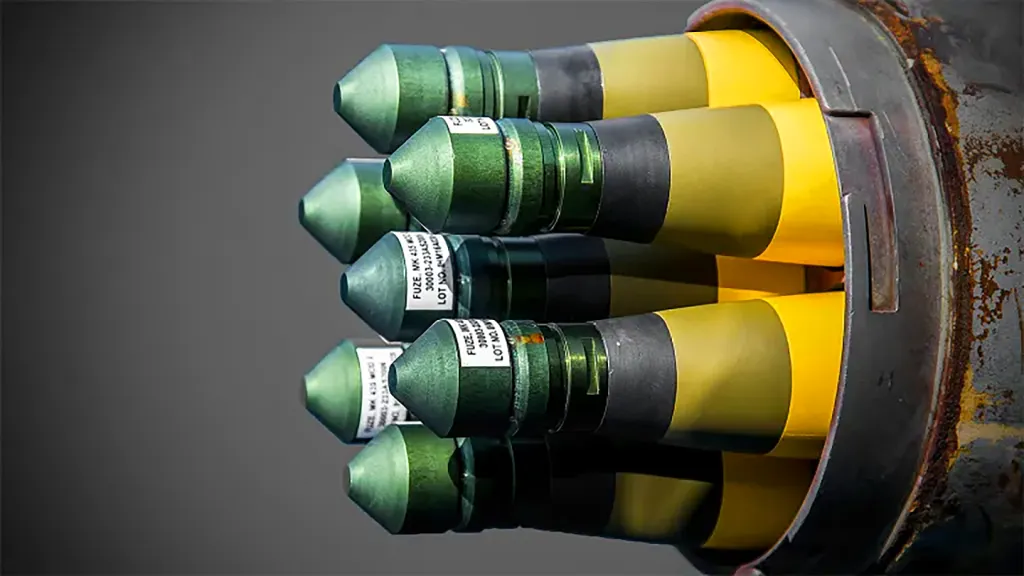
Saudi Arabia wants to buy 10,000 APKWS II air-to-air guidance sections and up to 10,000 air-to-ground guidance sections. The package includes an undisclosed number of LAU-131/A seven-shot 70mm rocket pods, Mk66 rocket motors, Mk-152 high explosive warheads and proximity fuzes.
APKWS rockets. (USMC photo) USMC
All versions of the APKWS rocket are made up of three basic components: a laser guidance section inserted between one of a variety of warhead options and a standard 70mm rocket motor.
An air-to-air optimized variant, designated the AGR-20F and also referred to as the Fixed Wing, Air Launched, Counter-Unmanned Aircraft Systems Ordnance (FALCO), was subsequently developed. The FALCO configuration includes a proximity fuze and changes to the munition’s guidance and sensing algorithms.
An infographic showing the current warheads and motors that are compatible with the APKWS due to its modular design. The GD OTS HEAT/APAM warheads have yet to be added to the list. (BAE Systems) An infographic showing the current warheads and motors that are compatible with the APKWS due to its modular design. The GD OTS HEAT/APAM warheads have yet to be added to the list. Credit: BAE Systems
The deal does not include the rockets themselves, and the State Department notice does not say on which aircraft the Royal Saudi Air Force will carry these munitions. However, they will most likely be loaded onto the RSAF’s Eurofighter Typhoon and F-15SA fighter jets.
A pair of RSAF F-15SA jets, each armed with two AGM-84L Harpoon missiles. @MbKS15/via Twitter
As we noted earlier in this story, this all comes as Iran has been lobbing missiles and drones across the region in response to U.S. attacks. In addition, Saudi Arabia and the Houthis recently traded strikes on airports.
“This proposed sale will support the foreign policy and national security objectives of the United States by improving the security of a Major non-NATO Ally that is a force for political stability and economic progress in the Gulf Region,” the State Department said in a release. “The proposed sale will improve Saudi Arabia’s capability to deter current and future threats by strengthening its homeland defense, and improving interoperability with U.S. forces, and other regional and NATO forces. The proposed sale will also augment Saudi Arabia’s operational aircraft and enhance its air-to-air, and air-to-ground self-defense capability. The Kingdom of Saudi Arabia will have no difficulty absorbing this equipment and services into its armed forces.”
Saudi Air Force Eurofighter Typhoon fighter jets perform during a ceremony marking the 50th anniversary of the creation of the King Faisal Air Academy at King Salman airbase in Riyadh on January 25, 2017. (FAYEZ NURELDINE/AFP via Getty Images) FAYEZ NURELDINE
U.S. Air Force leaders have lauded the APKWS II system.
“It’s our primary weapon against a drone,” Air Force Lt. Gen. Derek France, head of Air Forces Central (AFCENT), the service’s top command in the Middle East, told us last year on the sidelines of the Air & Space Forces Association’s 2025 Air, Space, and Cyber Conference. “We’ve had multiple shoot-downs with it.”
Since then, APKWS has become the primary weapon system used by American fighters to shoot down Iran’s long-range one-way attack munitions, doing so for just a tiny fraction of the cost of the cheapest available air-to-air missile. The Saudis have the same use case and are keenly aware of just how expensive downing drones can be via a fighter platform after years of fighting the Houthis in Yemen. You can read all about this here. The APKWS II guidance section has a unit cost between $15,000 and $20,000, with the rocket motor and warhead adding a few thousand dollars more to the full price tag. Current generation AIM-120 air-to-air missiles cost around $1 million apiece, while the AIM-9X has a price point around $450,000.
With the APKWS being nearly plug-and-play on both the F-15SA and the Typhoon, the Saudis are clearly preparing to shoot down a lot of drones far more cheaply than in the past with their current fighter force.