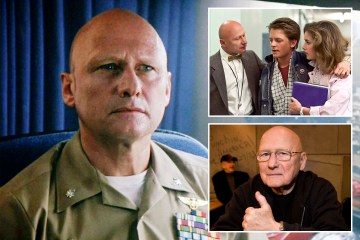
A FOUNDING member of Seventies glam rock band Showaddywaddy, guitarist Trevor Oakes, has died the group announced today.
Former lead singer Dave Bartram who is now manager, said the 79-year-old musician passed away peacefully on February 18 after “a long illness”.
Sign up for the Showbiz newsletter
Thank you!
The musician was a founding member of Seventies glam rock band ShowaddywaddyCredit: GettyGuitarist Trevor Oakes died aged 79Credit: GettyNo further details have been released about Oakes’ illness or cause of deathCredit: Instagram
The band specialised in Fifties and Sixties classics including their only UK No1 single Under the Moon of Love in 1976 and still tours but with only drummer Romeo Challenger from the original line-up.
It enjoyed 15 Top Twenty hits during their peak from 1974 to 1979.
Bartram, also the group’s manager, said: “Trevor was a unique character and a dedicated professional, without whom the band would never have quite scaled the dizzy heights we seemed destined to achieve.
“He was also a caring and affectionate family man, with a mischievous sense of humour, which will be sadly missed by all those dear to him.
“ I could write a book about the incredible memories we’ve shared over the past fifty-seven years, but most of all I thank him from the bottom of my heart for his unwavering friendship. Your true friend Dave.”
A source claimed to The Sun that Bartram died in a Leicester care home and that his funeral has already taken place.
No further details have been released about Oakes’ illness or cause of death.
The musician was born in Leicester and worked as press knife maker before becoming a professional musician.
Oakes quit the band when he was aged 62 in May 2009 after suffering ill health, according to his biography on its website.
He has two ex-footballer sons, Stefan Oakes who played for Leicester City in the Premier League, and Scott Oakes, whoi had a spell at Luton Town.
The band specialised in Fifties and Sixties classicsCredit: InstagramThe band enjoyed 15 Top Twenty hits during their peak from 1974 to 1979Credit: GettyOakes quit the band when he was aged 62 in May 2009 after suffering ill health, according to his biography on its websiteCredit: Instagram
NEW Found Glory guitarist Chad Gilbert has had surgery to remove three tumours in his brain after a tough battle with rare adrenal cancer.
The 45-year-old rocker went to A&E on February 20 after experiencing weakness in his leg that caused him to fall.
Sign up for the Showbiz newsletter
Thank you!
New Found Glory’s Chad Gilbert has had surgery to remove three brain tumoursCredit: Instagram / xchadballxThe guitarist was diagnosed with a rare adrenal cancer in 2021Credit: Instagram / xchadballx
It came three days after he struggled to control his left hand during a show in Nashville.
Taking to Instagram, Chad revealed how a CT scan showed three tumours in his brain, leading to emergency surgery to remove them.
The operation was a success and he felt improvements straight away.
He wrote on Instagram: “I regained function of my left hand immediately. My radiation oncologist described it like this: ‘this is not a fatal blow and not the end of your story, just the beginning of a new chapter.’
“My recovery has been bumpy at times but I’m feeling much better now and getting stronger by the day.”
Chad thanked those who had checked in on his wife Lisa Cimorelli and their daughter, four, over the past month.
He continued: “More stories to come when my brain is working well again. Love you all and am looking forward to sharing more music and fun with you as we come out of this.”
Pictures accompanying the post showed him in a hospital bed at various stages in his recovery and ended with a smiling picture of him doing an activity with shapes to help his cognitive function.
Emo veterans Hawthorne Heights wrote: “We love you Chad! Keep fighting. The world is a brighter place with your riffs and positivity.”
Dashboard Confessional commented: “I love you bud.”
Another post branded Chad the “strongest man on the planet!”
Musician Chad, who was previously had a short marriage to Paramore’s Hayley Williams, was first diagnosed with cancer in December 2021 after wife Lisa found him unconscious in bed.
He was rushed to hospital and doctors found a large adrenal gland tumor that had spread to his liver. The tumour was surgically removed along with half of his liver and gallbladder.
Though he was declared cancer-free the following month, it returned in his spine in August, leading him to have a six-hour surgery to remove the affected vertebrate and replace it with an artificial disc.
There was more disheartening news the following year after nodules were discovered in his lungs.
He went through intense rounds of chemotherapy while continuing to perform and release music with New Found Glory.
The band’s latest album, Listen Up!, was released the same day Chad experienced issues with his hand on stage.
Florida rockers New Found Glory released their debut album in 1999, but it was with their third record, Sticks and Stones, that they achieved stardom.
My Friends Over You became a huge hit and the band’s lyrics inspired the names of more recent groups like All Time Low and The Story So Far.
Their success continued into the early noughties with the album Catalyst, which peaked at number three in the US, and the single All Downhill from Here.
He is recovering well following his latest opCredit: Instagram / xchadballxChad is the main songwriter for the punk veteransCredit: GettyHe was previously married to Paramore’s Hayley WilliamsCredit: Alamy
ALFIE Boe – one of the nation’s favourite tenors – will be unleashing his inner rock god on new album Face Myself.
The record, out on April 10, is inspired by his love of the Madchester era and was produced by Myriot, who previously worked with Primal Scream.
Sign up for the Showbiz newsletter
Thank you!
Alfie Boe is about to unleash his inner rock god on new album Face MyselfCredit: GettyAlfie Boe revealed his new album’s title track pays tribute to late Stone Roses bassist Gary ‘Mani’ MounfieldCredit: Getty
The classical singer said he spent his weekends travelling up to Manchester as a teenager to immerse himself in the music scene, where the Stone Roses launched hits such as I Wanna Be Adored. Alfie said: “At the time I was writing that song, Mani passed away.
“So I had to put a tribute in the song. I changed the lyrics to say, ‘For good old Mani, he played it right’.”
The high-energy track, which is released today, also name checks Liam and Noel Gallagher’s childhood home on Cranwell Drive and celebrates the Madchester spirit.
On the track he sings: “Dreams are grown in Burnage sky, a golden past that made us cry.
“The prom is glorified with lights, for good old Mani, he played it right. Those Cranwell boys, they sang along.”
As a teen, Alfie, who has clocked up 12 Top Ten albums including four No1s, joined an indie band and later found himself exploring classical music.
“I was in an indie band called The English Roses,” Alfie said with a laugh. We were going to go on tour and I was going to be the drummer. But there was school to attend, which was fine, but then I joined lots of other little bands.”
Alfie’s new album is made up of mostly original material and he was inspired to start writing by his pal, The Who’s Pete Townshend.
And the Les Miserables stage fave says the record is all about facing his past, adding: “I thought, what is it about me I have to face?
“It was my childhood, my teenage years, and what got me to where I am today. It’s been a wonderful journey.”
Dua’s full of beans
Dua Lipa has landed a Nespresso ambassador dealDua also had a snap with George Clooney, long-time face of the brand
Dua Lipa has a hefty cheque coming her way, plus a lifetime’s supply of coffee I imagine.
She’s signed up to be global ambassador for Nespresso and posed in blue co-ords to promote the new tie-in. Dua also had a snap with George Clooney, long-time face of the brand.
Greg heading to £2m…but pleads for Wills’ help again
Greg James got a royal boost on his 1,000km Comic Relief ride after Prince William hopped on his tandemCredit: Getty Images
As I caught up with Greg yesterday from the Yorkshire Moors, he said he wished William had stuck around.
Greg, resting up on a wall, below, said with a laugh: “I could’ve done with his legs today. Wills, if you’re reading this, help.”
He has remained incredibly upbeat despite the physical and mental toll the challenge is taking.
And he has been buoyed by the incredible donations from the public, which last night was creeping towards the £2million mark. Greg, who set off from Dorset last Friday and is pedalling all the way to Edinburgh, said: “The hills are very, very difficult today.
“But there was a really nice crowd of people shouting at me at the top.
“The good news is we’ve raised over £1.5million, which is an absurd amount. I’d be happy with that if it was the final total but we’ve got three days left.”
He starts his ride from Sunderlandthis morning with two full days to go.
Tomorrow he will begin his final push, cycling from Galashiels in the Borders to Edinburgh, where he is set to arrive in time for Comic Relief to start on BBC One at 7pm. You can do this, Greg!
Placebo are making a comeback for the 30th anniversary of their debut album, which they have reworked into a new version.
Placebo re:created will be out on June 19.
They will then kick off a European tour this September playing songs from their first two albums, with dates in Nottingham, Glasgow, Dublin, Manchester, London and Cardiff in November and December.
Big cat in Africa
Doja Cat shows her wild side in clashing animal prints during her Move Afrika performance in RwandaCredit: Getty
Doja Cat showed her wild side in clashing animal prints while on stage in Rwanda.
The Say So rapper, who wore a blue wig with a tiger-striped bodysuit, was performing at Global Citizen’s Move Afrika concert.
She sounded great, despite her carefree lifestyle.
In a new interview with Vogue yesterday, Doja admitted she’s had to curb bad habits for the sake of her live shows.
She said: “I love trash – I’m Oscar the Grouch. I love to eat garbage, and I love to drink, and I love to party.
Doja, who had a romance with actor Joseph Quinn in 2024, went on to reveal she is a serial dater, adding: “I’m 30, so I’m ovulating and horny.”
At least she tells it how it is.
Mosh-pit memories with trust
Yungblud is among the stars featured in Teenage Cancer Trust’s Good Energy mosh pit exhibition at the Royal Albert HallCredit: Getty
The Teenage Cancer Trust is staging a photo exhibition at the Royal Albert Hall to mark the joys of mosh pits.
Musicians including Yungblud, Wolf Alice, Fontaines DC and The Sex Pistols ft Frank Carter are featured in the show, called Good Energy.
It highlights “good energy”, which is the code used by fans to look after each other in the crowd. Frank said of his pic: “It was taken in the Royal Albert Hall.
“To play there with the Sex Pistols was a dream come true. Seeing a mosh pit inside such a venue felt like the definition of Good Punk Energy.
The exhibition runs until April 9. Buy signed copies of the prints at teenagecancer trust.org/good.
One direction’s Louis Tomlinson confessed the band’s debut No1 single, What Makes You Beautiful, was his least favourite track. He told Scott Mills’s Radio 2 show: “Performing it was always really eggy.”
Louis also took aim at the handling of 1D’s split, adding: “Hiatus, what a horrible word. It’s cringey, screams management.”
The Sun told last week that Harper had taken part in a photoshoot for beauty brand Hiku by Harper, which is expected to launch in the coming months. Now Princess is following suit.
She said on the Not My Bagg podcast: “I’ve been working on it for ages. I was in Liverpool three days ago.
“I went up for a photoshoot for my beauty brand, which is so good. It’s being released this year.
I’m so excited. I’ve always wanted to be involved in some sort of business. Make-up, I love, so it had to be that.”
The Black Crowes singer Chris Robinson is reflecting on his rollercoaster relationship with his younger sibling, guitarist Rich.
Sign up for the Showbiz newsletter
Thank you!
The Black Crowes lead singer Chris Robinson, left, and his guitarist sibling RichCredit: ROSS HALFINThe pair had no set ideas for the record, as they got creative in the studioCredit: ROSS HALFIN
Their explosive chemistry once earned the outfit a fitting accolade — “The Most Rock ’n’ Roll Rock ’n’ Roll Band in the World”.
Chris is first to admit they’ve had their ups and downs since forming in 1984 under their original name, Mr Crowe’s Garden, as schoolkids in Atlanta, Georgia.
“Rich and I, for better or worse, were stubborn and arrogant but always strong believers in the art,” he admits.
“This has always been our path and, no matter what, we have to do it like this.
“Sometimes, you have to take your lumps,” continues Chris, employing that very American phrase for suffering setbacks. “But, right now, we’re in the zone. The chemistry is 100 per cent there.
“The way we feel goes right back to when we started — it’s f*** it, just play it — even if we are more well-mannered.”
But the pandemic slammed on the brakes before the dates finally happened across the US in 2021, uncorking the band’s celebrated freewheeling energy.
Back to the live arena came Jealous Again, Hard To Handle, She Talks To Angels and Twice As Hard, songs that somehow bottled up the band’s influences — Led Zeppelin, the Rolling Stones and Little Feat among them — but still refreshingly their own.
The follow-up, A Pound Of Feathers, comes tearing out of the blocks with the rocket-fuelled, riff-driven Profane Prophecy, setting the tone for another of The Black Crowes’ “love letters to rock and roll”.
The album arrives with some sound advice — “This isn’t a record you play on Sunday morning, this is a f***ing Saturday night burner!”
In a world where smoothly produced pop dominates the airwaves, The Black Crowes are unashamedly sticking two fingers up at it.
“None of what’s going on in that world is relevant to me,” decides Chris, “and rock ’n’ roll is still huge for millions and millions of people.”
He is talking to me via video call from Aspen, Colorado, the premier ski resort in the States, playground of the rich and famous.
“My wife is an avid skier. She’s the Franz Klammer of the family,” he reports with a reference to the Austrian downhill legend.
“I get to do the cooking, the reading and the hanging out.” (And talking to people like me about The Black Crowes). Brother Rich is at home in Nashville and begins his call by apologising for being under the weather.
“I’m going to be coughing randomly,” he says. “I’m in the middle of flu that’s going around.”
After clearing his throat, Rich, the less flamboyant one who lets his guitar wizardry do most of his talking, gamely picks up on Chris’s theme.
“When we got back together, we both agreed we needed to do it properly,” he affirms.
“We knew that bringing back a toxic dynamic wouldn’t be healthy for anyone.
“We couldn’t have the overarching idea that when Chris and Rich get together, it’s a bad thing.
“We’ve always written all the songs, we own the name so coming back with a more mature approach has been very helpful.”
Rich acknowledges that the music landscape for the older, wiser Black Crowes is vastly different from when they started out. “There’s a bunch of people in the industry who like to think rock ’n’ roll is dead,” he says.
“But then there’s a bunch of people trying to keep it alive. Guns N’ Roses, the Rolling Stones, Metallica and Def Leppard are still selling out stadiums.
“Tens of millions of people still want to see bands like them. Rock ’n’ roll is one thing that no one could tame.
“And it’s still like that for us. We can go into a studio with almost nothing and, in a week, make a record.
“There’s a human, organic quality to rock ’n’ roll. We don’t have auto-tune and we don’t have to set our s**t to a grid.”
Looking back at their unfettered past, Chris exclaims: “I have to say I’m so f***ing proud of The Black Crowes, man!
“Rich and I started this band when we were teenagers in Mom and Dad’s house, as a vehicle to write songs.
The Robinson brothers weren’t on speaking terms for five years after their so-called ‘contractual obligations’ tour ended in 2014Credit: GettyThe Black Crowes in 1998Credit: Getty
“And we found our way to being musicians and performers.”
Yet the creation of A Pound Of Feathers has still blown Chris away, most notably because of the stellar contributions from Rich.
The album was made in double-quick time, carried along by the brothers’ spontaneous fusion of riffs and lyrics.
Chris says: “I’ve been on stage and sat in studios my whole life with my brother playing amazing guitar.
“But, with this album, I sat there with my mouth hanging open.
“Granted I’m very close to the flame but everything he did, I was like, ‘Wow, this guy’s taking it to a new place.’”
During the sessions, The Black Crowes were visited by Chris’s friend, Todd Snider, the singer/songwriter who died last November from pneumonia aged just 59.
Chris cherished the chance to hang out with Todd — and to get some memorable feedback from him.
“He was a storyteller, a real poet, and he and I had a great friendship. He also really liked The Black Crowes.
“He asked if he could come and check out the recording. I went, ‘Dude, yeah fine, but you’re going to be the only one here’. So he sat there taking in me and Rich putting music together.
“At the end of the day, he said, ‘Are you f***ing warlocks? Is this some kind of ESP or is it a parlour trick? You don’t say anything yet, 30 minutes later, there’s this massive song blasting out of the speakers’.”
For Rich, the studio is his happy place. “I’ve always loved being in a studio,” he says.
“It’s where you bring to fruition all the things you have in your head.
“With this record, we came in without any concrete ideas. By allowing ourselves just to play in the sandbox, it became fun and exciting.”
Rich gives a shoutout to producer Jay Joyce, who also helmed Happiness Bastards.
He says: “Nine and a half times out of ten, he agrees with us when we’re excited about something.
“He’s there with us, not bogging us down by trying to insert himself when its unnecessary.”
So what of the songs? There’s the aforementioned opener Profane Prophecy which captures the unvarnished sound of The Black Crowes’ live mayhem, yet recorded in the calmer confines of a studio.
You hear Chris nodding to past rock ’n’ roll excesses by hollering, tongue firmly in cheek, “My pedigree in debauchery is my claim to fame.”
He smiles, “Of course I have to embrace that life. That’s why I sing, ‘I eat casino breakfast off the kitchen floor’.”
But he maintains that while giving “a vision of a debauched rock ’n’ roller”, he’s also “confusing fact with fiction”.
The four-minute shindig concludes with the ensemble chant of the phrase that yielded the album title, “a pound of feathers or a pound of lead”.
Chris got the line from In Here The World Begins, a song by long-defunct British electro-pop band Broadcast.
“I loved the phrase and what it could mean because a pound is a pound,” he says. “It doesn’t matter whether it’s lead or feathers. There’s some weird wisdom to it.”
We turn our attention to Cruel Streak, pounding rock underpinned by funky rhythm.
“I’m adjacent to funk at all times,” says Chris. “Growing up in Atlanta, there was this multiracial band called Mother’s Finest who played heavy funk with ‘Baby Jean’ Kennedy as lead singer.
“There’s a lot of Mother’s Finest in The Black Crowes.”
On the R&B-flavoured It’s Like That, which comes with heavy basslines and a hint of reggae, the brothers employed an amphibian guest, which, as Chris explains, fits with their anything goes attitude.
“I was staying in Nashville, and the doors were open. I heard this frog, so I recorded him. That’s my Nashville rasta frog on the solo.”
Rich says: “There are tree frogs all over the South. They were blaring one night and Chris said, ‘Man, I want to use that sound’.
Chris and Rich Robinson reflect on decades of chaos and creativity in the Black CrowesCredit: EL3
“So he took his phone and pressed record. We found the right space for it on the song.” On the loose, laidback country-tinged Pharmacy Chronicles, recalling the vibe of the Rolling Stones’ Exile On Main St., Chris sings “let the demons find you” because, he insists, we mustn’t think everything is “sugar-coated, glossy and gorgeous”.
“Especially something as messy as a 40-year career in rock ’n’ roll,” he adds. “I can’t believe some of the s**t I was doing. Get some surgical gloves and get to it!”
But Chris is not one to dwell on the past, with all its euphoric highs and crashing lows. “I am devoid of nostalgia,” he says.
“I like to think I interact with the world as a poet. I’m always writing — it could be because I overheard a conversation at an airport check-in.
“I’m no Bruce Springsteen,” he confesses. “But I connect with the world through whatever inspires me.”
And, as he puts it, “a lot of the darkness that is the United States right now” informs A Pound Of Feathers.
It explains why final track Doomsday Doggerel with its line “a front row seat to the end of times” is in stark contrast to the closing song on Happiness Bastards.
“On that last record, Kindred Friend was a beautiful pastoral thing with harmonica, about me and Rich, the band and our audience,” says Chris.
“Doomsday Doggerel is much darker. We haven’t remembered lessons from our past and the f***ing racism means we’re operating at a very low frequency.
“I just hope that someone can play this record on a Saturday night, keep out the low frequency and get a better hum going.”
Chris and Rich reunited after having gone their separate ways for years
As Pharmacy Chronicles ebbs to a close, you hear a defiant chorus of “the good times never end”.
As far as Chris and Rich and the rest of The Black Crowes family are concerned, rock ’n’ roll is the perfect antidote to personal and universal turmoil.
“We’re loud, we can be sloppy but we are like an old cartoon of two people fighting on a train,” says Chris.
“The train goes round a bend, leaning all the way over a cliff, but then it comes back up. That’s us.”
THE BLACK CROWES
A Pound Of Feathers
★★★★☆
The Black Crowes’ new album A Pound of Feathers is out in the UK on 13 March 2026
SHARON Osbourne has revealed that Ozzy’s iconic Ozzfest gigs will continue following his tragic passing.
The festival featured an array of artists and was created by Ozzy and Sharon as a music festival tour specialising in rock and metal music.
Sign up for the Showbiz newsletter
Thank you!
Ozzy Osbourne’s iconic Ozzfest gigs will be revived next yearCredit: GettySharon confirmed she will be bringing the concerts back following his passingCredit: Getty
It was an annual event which ran between 1996 and 2018 and was well known for featuring performances from Ozzy and his band, Black Sabbath.
Now, less than a year on from his sad passing, Sharon has revealed there are plans to revive the music festival tour in his legacy – beginning with a new run of shows in 2027.
Having held discussions with entertainment giant and touring company Live Nation, Sharon confirmed on her son Jack Osbourne‘s podcast that deals had been struck for brand new shows.
CORTINA D’AMPEZZO, Italy — Patrick Halgren, the self-proclaimed “rock star” of the Milan Cortina Paralympics, said he could feel the presence of his late twin brother in his silver medal-winning Para alpine ski run on Monday.
“He made this happen for real. He is the ski god and he has blessed me with speed today,” Halgren said of his brother Lucas Sven Halgren.
Lucas Sven died in a motorcycle accident in New Zealand in 2016, three years after Patrick nearly died and lost most of his left leg in another motorcycle accident.
Patrick has been plastering blue-and-yellow stickers that read “ SvendIt ” around Cortina d’Ampezzo, a play on “send-it,” which is Patrick’s mantra on life and a reference to his brother who went by Sven.
“He’s the reason I’m here. I’m just a vessel to cram love and combat hate down your throats. He inspired me to live life, but life is fragile. You can die,” Patrick said. “It’s all for him. It’s for my family. It’s for the people that have struggled. He’s dead. I’m here living, talking to you guys. I’m going to have who knows how many women and champagne after this. He liked that, too, but he doesn’t get that, and I do. I recognize that.”
Halgren celebrated in front of his parents, Peter and Kathy, which he said was “pretty cool.”
“But also, it sucks not having Sven here, so ups and downs,” the 33-year-old Halgren said after winning his first medal in his second Paralympics appearance.
“They went to Tijuana, Mexico, for their honeymoon 50 years ago. They picked up their dead kid in New Zealand, and they’ve watched me win the Paralympics at the most beautiful ski valley in the world,” Halgren told the Olympics website. “This is a surreal moment for them. This is an experience that will create a memory lasting a lifetime and such a good moment.”
Halgren said it was Sven who steered him to Para alpine skiing after the 2013 crash that nearly killed him and resulted in the above-the-knee amputation of his left leg.
“I died myself. I was in a coma for a month. I died four times,” he said. “They used a defibrillator to start my heart. Blood transfusion. I get it, and I’m lucky that I have that because I know what it’s like. Not many people do.”
Now it’s hard not to miss Halgren, and not only because of his long braids that are dyed red, white and blue. Always entertaining and joking with those around him, the outspoken American has taken on a showman personality at the Games.
At the podium ceremony, he performed an air guitar solo using his crutch. He said it was just “another Monday” for him.
“I am a rock star,” he added. “I always wanted to be this guy, Jim Brown, he was my idol. He was a professional football player, played lacrosse at Syracuse. I did both those sports, and he retired at the peak of his career and became basically the first Black action movie star. I always wanted to be him, and now I am him.”
Halgren said he “learned to be un-irritable, un-embarrassable.”
“It’s about being vulnerable in this life. It’s about trying things and failing. It’s OK to be embarrassed. It’s OK to look weird.”
As he talked to the media, Halgren was congratulated by nearly every rival that passed by. He was second to Switzerland’s Robin Cuche in the men’s super-G standing.
“Medals don’t mean anything to me. The love from all the people supporting me is what means anything to me,” he said. “I can feel, I can literally feel all the people who have ever given me well wishes and ‘Thanks’ and ‘Good lucks.’ I can feel them loving me and they’re the reason I won.
“You celebrate the victories the same as the defeats. I’ve been blessed to have to develop my character over the last 11 years, losing my leg and could either roll over and die, or I could become the greatest Patrick Halgren on Earth, and that’s what you’re seeing.”
His future plans?
“I would like to dominate the Earth in every category with one leg.”