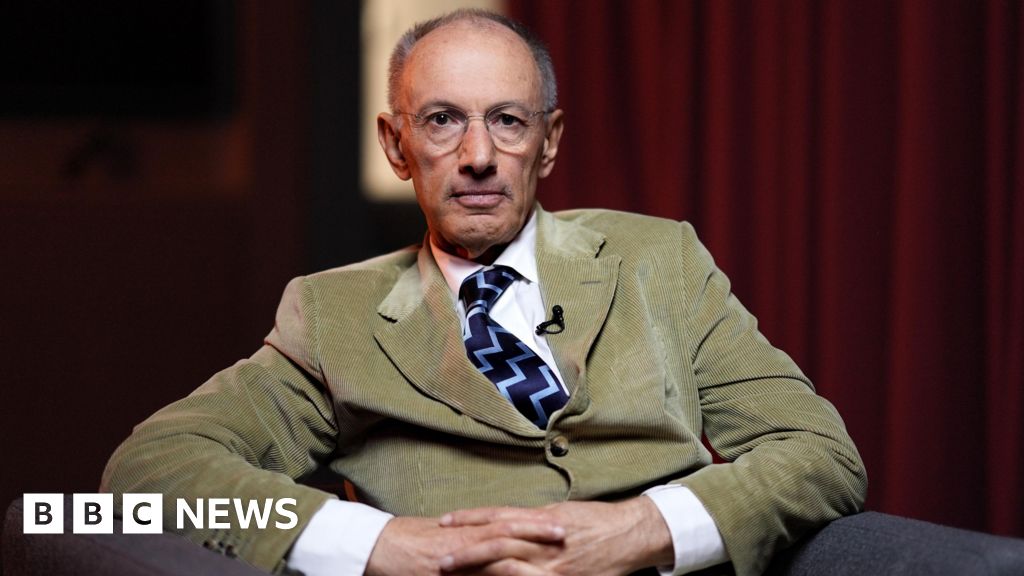
Issa made most of his fortune in the 1990s while leading Directed Electronics Inc., a Vista-based manufacturer of vehicle antitheft devices that he created. His is the voice of the Viper car alarm system, which warns, “Please step away from the car.”
He’s perhaps best known to Californians for bankrolling the recall of Democratic Gov. Gray Davis in 2003, and also emerged on the national stage as he challenged the Obama administration from his role as chairman of the House Oversight and Government Reform Committee.
This is the third straight year Issa earned the top position on the annual Roll Call ranking of lawmakers by minimum net worth. The Los Angeles Times is using the data and for the first time has published a deep dive listing every asset and liability disclosed by the 55 members of the state’s congressional delegation.
As much as 95% of Issa’s wealth is in investments, including several high-yield bond accounts potentially worth more than $50 million each and seven high-yield bond funds worth between $25 million and $50 million.
Lawmakers are allowed to use broad ranges to classify assets and liabilities on the annual personal financial disclosure reports. The ranges start at between $1 and $1,000 and top out at $50 million or more, giving an imprecise figure.
That means Issa’s net worth could be much larger than estimated. The $254.7-million figure, calculated by subtracting the minimum value of liabilities from the minimum value of assets disclosed for calendar year 2014, is down from last year’s $357 million. That could be attributed more to how data is reported on the forms than to any actual financial loss.
The form appears to double count his biggest liability, a potentially more than $50-million personal loan. Issa appears to have paid off what he owed Merrill Lynch in September 2014, the same day he borrowed the same amount from UBS.
Issa’s office did not respond to an interview request.
Lawmakers are not required to disclose property owned unless it is earning income, and they also do not need to list their $174,000 annual salaries, putting each and every one of them above the average Californian.
Madrid, Spain – Real Madrid fans were divided over plans announced this week by club President Florentino Perez to allow private equity investors to buy up to a 10% stake in the club.
Some fans of “los merengues” said it would mean selling off part of the club, even though Real Madrid remains the wealthiest football club in the world.
Recommended Stories
list of 4 itemsend of list
They also noted that in recent years, Real Madrid had already changed membership rules, contravening promises to keep memberships within families and diluting its character.
Others supported the investor plan, saying it made good business sense and would not alter the trajectory of a hugely successful club that has won the Spanish domestic title 36 times and collected a record 15 UEFA Champions League trophies.
Perez insisted that allowing private equity investors – who often deploy large amounts of capital into companies not listed on public stock exchanges – to take a stake in the club was an “indispensable project” for the future of football.
Speaking to club members on Sunday, Perez said he will propose a statutory reform during an extraordinary assembly to allow for the possibility of outside investors to take a minority stake in the club, according to reporting by The Associated Press news agency.
“We will continue to be a members’ club, but we must create a subsidiary in which the 100,000 members of Real Madrid will always retain absolute control,” he said.
“On that basis, this subsidiary could simply incorporate a minority stake, for example, 5% – never more than 10% – from one or more investors committed to the very long term and willing to contribute their own resources.”
Perez said that would be “the clearest and most compelling way to value our club”.
The 78-year-old added that it would allow the club to pay dividends to club members, which it is presently forbidden from doing.
Perez insisted investors would be obliged to “respect our values”, contribute to the growth of the club and “help us protect our assets from external attacks”.
He said Real Madrid could have the right to buy its assets back from investors.
Perez reiterated several times that members would never lose control of the club.
He said his proposal would make sure that the current 98,272 members are recognised as the real owners of the club, with the number of members fixed for the future.
“With this protection in place, no one will be able to diminish our status as owners or alter the balance that guarantees the independence and stability of Real Madrid,” Perez said. “It will be us, the members of today, who will have the responsibility of safeguarding our culture of values and ensuring that our club continues to lead world football for many generations to come.”
The Real Madrid president further explained the reform would “shield the club from external and internal attacks on our assets, and to highlight their value so that we are all aware of the treasure that we, as members, have in our hands”.
Perez, right, looks on in the stands before a Real Madrid match [File: Michael Regan/Getty Images]
Spanish club ownership versus English
Real Madrid, like Barcelona and a small number of other Spanish football clubs, is classed as a nonprofit organisation as it is owned by its club members, or socios. Real Madrid, founded in 1902, has only ever had this ownership model.
This ownership structure prevents large private investors from forging a majority controlling stake in the clubs; it also means they can claim tax concessions.
This is despite the fact that Real Madrid was named the world’s wealthiest football club for the fourth straight year in 2025, with an estimated market valuation of $6.75bn, according to the Forbes List. It was also the first club to earn $1bn in revenue.
The nonprofit status allows Spanish clubs to preserve some traditions of their clubs and for members to take an active role in the organisations.
Graham Hunter, a British football journalist who specialises in Spanish football, pointed to the example of Joan Laporta, the current president of the other Spanish mega club, Barcelona.
“Laporta went from being a member and a lawyer to being [club] president in seven years,” he said.
In stark contrast, football clubs in England or the United States – Manchester United or Inter Miami being just two examples – can be owned by individuals, corporations and in some instances, acquired on public stock exchanges, resulting in more commercialised ownership structures.
It means their club’s performances are often centred on more short-run processes like profit maximisation, whereas in Spain, the club is in the hands of fans – not large private investors – allowing scope for longer-term business strategies to be enacted.
If Perez’s plan goes ahead, this could open the door for this famous Spanish club to become more like its foreign rivals.
The high-profile, multi-billionaire boss of Louis Vuitton, Bernard Arnault, was named in Spanish media on Monday as a potential investor in the club, should the new minority ownership rules be adopted.
Real Madrid’s star-studded on-field lineup, led by key forwards Kylian Mbappe, left, and Vinicius Jr, are pivotal to maintaining the organisation’s status as the world’s wealthiest football club [File: Mahmud Hams/AFP]
Fans reaction
Some Real Madrid fans did not share Perez’s enthusiasm to open up the club to large private investors.
David Garcia, a former season ticket holder at the Santiago Bernabeu stadium, said Perez had previously told fans he would preserve the club for members.
“On Sunday, Florentino [Perez] misled the members again. He had told us that access to the club was restricted to the children or grandchildren of members to prevent a Russian or Chinese person from joining,” he told Al Jazeera.
Garcia added that in recent years, the rules of admission to membership had been changed several times, and Chinese and other foreigners had appeared on membership lists.
Alejandro Dominguez, a former vice president of the Real Madrid Veterans Pena, questioned why outside investors were needed to boost the coffers of such a profitable club.
“I don’t understand why we need more money when we are already the richest club in the world?” he told Al Jazeera.
However, Fernando Valdez, a lifelong Real Madrid fan who is part of La Gran Familia supporters club, said he believed the reform would not harm the character of the club.
“If we were selling off huge chunks of the club to raise money to compete with Paris Saint-Germain, then that would be worrying, as it would change the club forever. But it is not like that,” he said.
“We need to know more details about this, but on the face of it, it does not seem like anything to worry about. Five percent or 10% is nothing.”
David Alvarez, who writes about Real Madrid for El Pais newspaper, said Perez’s ownership plan was not designed to compete with other high-spending clubs like Manchester City.
“This will allow the club to pay dividends to socios (club members). At present, the law stops them from doing that. They would have to sell a much bigger stake to be able to compete with the other big clubs in Europe, so they are not trying to do that.”
Unlike football fans in other countries, Real Madrid spectators often own a small part of their club under the ‘socios’ model, which has existed since 1902 [File: Juan Barbosa/Reuters]
Mark Zuckerberg, Lauren Sanchez, Jeff Bezos, Sundar Pichai and Elon Musk, attend the presidential inauguration of President Donald Trump on Monday, January 20, 2025. File Pool Photo by Julia Demaree Nikhinson/UPI | License Photo
Nov. 3 (UPI) — The United States’ 10 richest billionaires saw their wealth grow last year by nearly $700 billion, according to a new report published Monday by Oxfam, which warns the Trump administration is worsening U.S. inequality.
The report states that in the past year, the wealth of U.S. billionaires grew by $698 billion.
Oxfam, the British-founded confederation of nearly two dozen non-governmental organizations, citing Federal Reserve data, found that between 1989 and 2022, a household in the top 0.1% gained $39.5 million, while a household in the top 1% gained about $8.3 million. Meanwhile, a bottom 20% household saw its wealth only grow by $8,465.
This equals to the poorest household in the top 1% having gained 987 times more wealth than the richest household in the bottom 20%, according to the report.
It continues by stating that while the wealth of working- and middle-class families have barely grown in more than three decades, America’s richest have seen their purses overflow.
As evidence, Oxfam said the share of national income going to the top 1% doubled from 1980 to 2022, while the share going to the bottom 50% decreased by one-third.
It also pointed to the top 1% owning half of the entire stock market, while the bottom half of Americans only hold 1.1%.
“The data confirms what people across our nation already know instinctively: the new American oligarchy is here,” Abby Maxman, Oxfam America’s president and CEO, said in a statement accompanying the publication of the report.
“Billionaires and mega-corporations are booming while working families struggle to afford housing, healthcare and groceries.”
The report warns that the Trump administration is taking actions that threaten to worsen inequality in the United States.
According to Oxfam, the Trump administration, backed by a Republican-controlled Congress, “has moved with staggering speed and scale to carry out a relentless attack on working class families, and use the power of the office to enrich the wealthy and well-connected.”
Maxman said the Trump administration and congressional Republicans “risk turbocharging” this inequality, while adding that what they are doing isn’t new, but what is different “is how much undemocratic power they’ve now amassed.”