Rhode Island

20 states sue HUD over changes to homeless program funding

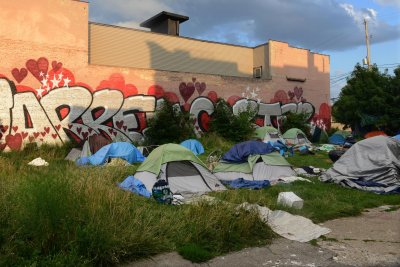
Nov. 25 (UPI) — A coalition of 19 attorneys general and two state governors sued the Trump administration on Tuesday over changes to funding allocations and conditions at the Department of Housing and Urban Development that they say threaten thousands of formerly homeless people and families with eviction.

The lawsuit, filed in the U.S. District Court for Rhode Island, alleges new restrictions and funding cuts announced by HUD earlier this month to its Continuum of Care program threaten housing stability and disadvantage services for people experiencing homelessness, including those with mental disabilities and substance use disorders.

The Democratic-led states allege that the changes have thrown CoC into “chaos” and that HUD was holding congressionally approved funds and vulnerable people hostage.

“Communities across the country depend on Continuum of Care funds to provide housing and other resources to our most vulnerable neighbors,” New York Attorney General Letitia James said in a statement.

“These funds help keep tens of thousands of people from sleeping on the streets every night. I will not allow this administration to cut off these funds and put vital housing and support services at risk.”

Founded by Congress in 1987, the CoC program provides states, local governments and nonprofits with funds to provide housing and support services to those experiencing homelessness.

Earlier this month, HUD Secretary Scott Turner criticized the CoC for prioritizing funds for organizations with Housing First policies, which provide housing to individuals without preconditions, such as sobriety or minimum income.

Turner said the policy ran counter to the department’s objective of selecting the most effective and innovative programs, and it would be instituting changes, including requiring that 70% of projects to be selected through competition.

In a statement, HUD said 90% of CoC awards went to support projects with “failed” Housing First ideologies, which the department said “encourages dependence on endless government handouts while neglecting to address the root causes of homelessness, including illicit drugs and mental health.”

Changes to be implemented are to increase competition for grants, advance public safety, focus on self-sufficiency, encourage personal accountability and crack down on gender ideology, use of taxpayer dollars on undocumented migrants and diversity, equity and inclusion policies.

“Our philosophy for addressing the homelessness crisis will now define success not by dollars spent or housing units filled, but by how many people achieve long-term self-sufficiency and recovery,” Turner said.

In their lawsuit, the states allege that the changes mean only 30% of CoC funds may be used for permanent housing, a drop from roughly 90%.

HUD has also revised the scoring system used to grant awards. According to the lawsuit, the previous system encouraged CoCs to address needs of minority groups, such as the LGBTQ+ community, and the new changes arbitrarily disadvantage programs that provide supportive services for mental disabilities and substance use disorder

The policies also bar funding for applicants that acknowledge the existence of transgender and gender-diverse people and penalize homeless-service providers that pursue approaches to homelessness that do not align with the Trump administration.

In total, the changes will threaten housing stability and disadvantage services for people with mental disabilities and substance use disorder, the lawsuit states.

“This program has proven to be effective at getting Americans off the streets, yet the Trump administration is now attempting to illegally slash its funding,” California Attorney General Rob Bonta said in a statement. “Those caring for our unhoused neighbors need the federal government’s continued support. Absent judicial intervention, the Trump administration’s actions would only worsen the homelessness crisis.”

Source link

Trump administration loses appeal on full SNAP payments

Rep. Nikema Williams, D-Ga., helps distribute food aid bags during a free food distribution at the Young Family YMCA in Atlanta on Thursday. The YMCA’s weekly neighborhood food distribution gave out nearly 10,000 pounds of food to about 400 families. Photo by Erik S. Lesser/EPA

Nov. 7 (UPI) — The Trump administration on Friday night appealed to the U.S. Supreme Court after a federal appeals court upheld a district judge’s order to pay full benefits in November to 42 million in the Supplemental Nutrition Assistance Program.

A short time earlier, the 1st District Circuit left in place a decision on Thursday by Rhode Island federal Judge Jack McConnell, who ordered the administration to pay out the full benefits within one day, saying, “People have gone without for too long.”

The three-member appeals court’s decision means the U.S. Department of Agriculture must take steps to disperse the electronic payments, which are staggered each month. Earlier Friday, the agency said it notified states that it is working to process the payments.

The panel was Chief Appellate Judge David Barron, appointed by President Barack Obama, and Gustavo Atavo Gelpi Jr. and Julie Rikelman, both picked by President Joe Biden.

The judges said that they are still considering a bid for longer relief while assessing the appeal.

Attorney General Pam Bondi posted on X the Trump administration will ask the Supreme Court to stay the Rhode Island-based lower court judge’s ruling, which she called “judicial activism at its worst.”

“A single district court in Rhode Island should not be able to seize center stage in the shutdown, seek to upend political negotiations that could produce swift political solutions for SNAP and other programs, and dictate its own preferences for how scarce federal funds should be spent,” Bondi said.

Seven days ago, McDonnell and U.S. District Court of Massachusetts Judge Indira Talwani told the Trump administration to access available funds to continue. They were both nominated by Obama.

On Monday, the administration told the judge it only had reserved money to pay out 50% of the total $9 billion cost. Then, it was raised to 65%.

The judge directed USDA to find $4 billion “in the metaphorical couch cushions.”

McConnell said the administration could use Section 32 funds, which the USDA uses to help with child nutrition programs. But the administration rejected that plan.

In the appeal, DOJ claimed that the judge’s order “makes a mockery of the separation of powers.” Lawyers said transferring funds would mean diverting money from Child Nutrition Programs.

“Unfortunately, by injecting itself with its erroneous short-term solution, the district court has scrambled ongoing political negotiations, extending the shutdown and thus undercutting its own objective of ensuring adequate funding for SNAP and all other crucial safety-net programs,” they said.

Plaintiffs in the case, which are nonprofit organizations, asked for the full payment, and McConnell agreed.

“The evidence shows that people will go hungry, food pantries will be overburdened, and needless suffering will occur” if SNAP is not fully funded, he said.

“While the president of the United States professes a commitment to helping those it serves, the government’s actions tell a different story,” McConnell wrote in a written order.

The federal government has been shut down since Oct. 1, and the shutdown is now the longest in history.

In every past shutdown, emergency funds have been used to fund the program.

McConnell also mentioned a social media post that Trump made, saying he refused to release any more funds until “the radical-left Democrats open up government, which they can easily do, and not before.”

The post was used as evidence that the administration would ignore McConnell’s order.

Source link

Federal judge orders U.S. government to distribute full SNAP benefits

Volunteers stack donated food for the North Hollywood Interfaith Food Pantry in Los Angeles on October 24, ahead of the suspension of Supplemental Nutrition Assistance Program benefits for 42 million recipients across the country. Photo by Allison Dinner/EPA

Nov. 6 (UPI) — The Trump administration has one day to fully distribute Supplemental Nutrition Assistance Program benefits for November, a federal judge ruled on Thursday.

U.S. District Court of Rhode Island Judge Jack McConnell ordered the program funding after earlier requiring the Trump administration to access available money to at least partially fund SNAP benefits amid the federal government shutdown.

McConnell required the Trump administration to apprise the court on Wednesday of efforts to fund the program formerly known as “food stamps.”

“People have gone without for too long,” McConnell said during an emergency hearing on Thursday, as reported by CNN.

“Not making payments to them for even another day is simply unacceptable,” he added.

He said the Trump administration has not done enough to access an estimated $4.65 billion in contingency funds to partially fund the SNAP benefits that cost about $9 billion per month to help 42 million recipients put food on their tables.

If SNAP is not funded fully, “people will go hungry, food pantries will be overburdened, and needless suffering will occur,” McConnell said on Thursday, according to CNBC.

“That’s what irreparable harm here means,” he continued. “Last weekend, SNAP benefits lapsed for the first time in our nation’s history.”

He called it a “problem that could have and should have been avoided.”

McConnell ordered the Trump administration to provide the full amount of November SNAP benefits to respective states by Friday, which would enable them to distribute benefits to their residents within a few days.

The federal judge also referenced a Truth Social post made by President Donald Trump on Tuesday.

In that post, the president said SNAP benefits only would be funded “when the radical-left Democrats open up government, which they can easily do, and not before.”

The social media post served as evidence that the Trump administration would ignore McConnell’s prior order requiring it to access as much funding as possible to distribute SNAP benefits.

He criticized the U.S. Department of Agriculture’s decision not to access contingency funds to continue SNAP benefits instead of allowing them to be suspended as of Saturday.

“Even when Nov. 1 came, [the] USDA refused to use the congressionally mandated contingency funds,” McConnell said.

“USDA cannot now cry that it cannot get timely payments to the beneficiary for weeks or months because states are not prepared to make partial payments.”

McConnell is presiding over one of two federal cases filed by up to 25 states seeking to continue federal funding of SNAP benefits despite the record 37-day federal government shutdown that started on Oct. 1.

New York is party to both suits, and state Attorney General Letitia James welcomed McConnell’s ruling on Thursday.

“A judge in Rhode Island just stopped the federal government from starving millions of Americans,” James said in a prepared statement.

“I am relieved that people will get the food they need,” she added, “but it is outrageous that it took a lawsuit to make the federal government feed its own people.”

Source link

Trump administration says SNAP will be partially funded after judges’ rulings

President Trump’s administration said Monday that it will partially fund SNAP after a pair of judges’ rulings required it to keep the food aid program running.

The U.S. Department of Agriculture had planned to freeze payments to the Supplemental Nutrition Assistance Program starting Nov. 1 because it said it could no longer keep funding it due to the shutdown. The program serves about 1 in 8 Americans and is a major piece of the nation’s social safety net. It costs about $8 billion per month nationally.

It’s not clear how much beneficiaries will receive, nor how quickly beneficiaries will see value show up on the debit cards they use to buy groceries. The process of loading the SNAP cards, which involves steps by state and federal government agencies and vendors, can take up to two weeks in some states. The average monthly benefit is usually about $190 per person.

The U.S. Department of Agriculture, which oversees the nation’s largest food program, said last month that benefits for November wouldn’t be paid out due to the federal government shutdown. That set off a scramble by food banks, state governments and the nearly 42 million Americans who receive the aid to find ways to ensure access to groceries.

Most states have boosted aid to food banks, and some are setting up systems to reload benefit cards with state taxpayer dollars.

It also spurred lawsuits.

Federal judges in Massachusetts and Rhode Island ruled separately but similarly Friday, telling the government that it was required to use one fund with about $5 billion to pay for the program, at least in part. The benefits and administration cost over $8 billion per month.

The judges gave the government the option to use additional money to fully fund the program and a deadline of Monday to decide.

Judge John J. McConnell Jr., in Providence, Rhode Island, said if the government chose full funding, it would need to make payments Monday. With a partial version, which would require recalculating benefits, the payment deadline is Wednesday.

Trump said on social media Friday that he does “NOT want Americans to go hungry just because the Radical Democrats refuse to do the right thing and REOPEN THE GOVERNMENT.” He said he was telling government lawyers to prepare SNAP payments as soon as possible.

Benefits will be delayed in November because many beneficiaries have their cards recharged early in the month and the process of loading cards can take weeks in many states.

Democratic state attorneys general or governors from 25 states, as well as the District of Columbia, challenged the plan to pause the program, contending that the administration has a legal obligation to keep it running in their jurisdictions. Cities and nonprofits also filed a lawsuit.

The USDA has a $5 billion contingency fund for the program, but the Trump administration reversed an earlier plan to use that money to keep SNAP running. Democratic officials argue that the administration could also use a separate fund of about $23 billion.

U.S. District Judge John J. McConnell in Providence, Rhode Island, said SNAP must be funded using at least contingency funds, and he asked for an update on progress by Monday.

In an additional order Saturday, McConnell said if the government makes full payments, it must do so by the end of the day Monday. If it chooses partial ones — which involve recalculating how much recipients get — those would need to be issued by Wednesday.

That does not mean people would necessarily see the payments that quickly, because the process of loading cards can take up to two weeks in some circumstances.

McConnell also ruled that all previous work requirement waivers must continue to be honored. During the shutdown, the USDA has terminated existing waivers that exempted work requirements for older adults, veterans and others.

In Boston, U.S. District Judge Indira Talwani ruled the suspension was unlawful and said USDA has to pay for SNAP. Talwani ordered the federal government to advise by Monday whether they will use emergency reserve funds to provide reduced SNAP benefits for November or fully fund the program using both contingency funds and additional available funds.

Advocates and beneficiaries say halting the food aid would force people to choose between buying groceries and paying other bills. The majority of states have announced more or expedited funding for food banks or novel ways to load at least some benefits onto the SNAP debit cards.

Rhode Island officials said Monday that under their program, SNAP beneficiaries who also receive benefits from another federal program, Temporary Assistance for Needy Families, received payments Saturday equal to one-fourth of what they typically get from SNAP. Officials in Delaware are telling recipients that benefits there won’t be available until at least Nov. 7.

To qualify for SNAP in 2025, a household’s net income after certain expenses can’t exceed the federal poverty line. For a family of four, that’s about $32,000 per year. Last year, SNAP assisted nearly 42 million people, about two-thirds of whom were families with children.

Mulvihill writes for the Associated Press. AP reporter Kimberlee Kruesi in Providence, R.I., contributed to this report.

Source link

42M lose SNAP benefits despite efforts to fund the food program

Nov. 1 (UPI) — The nation’s 42 million recipients of Supplemental Nutrition Assistance Program benefits will have to wait for them to be restored after losing them on Saturday, which might take weeks.

The ongoing federal government shutdown has shut off funding for the SNAP program that enables recipients to buy food, but two federal judges on Friday ordered the Trump administration to continue it.

President Donald Trump on Friday night announced he is seeking ways to access funds to keep the program going as the federal government shutdown continues at least through Monday.

“I do not want Americans to go hungry just because the radical Democrats refuse to do the right thing and reopen the government,” Trump said Friday in a Truth Social post.

Trump said the two federal judges issued conflicting rulingsand he does not think the federal government legally can access available funds to cover SNAP costs.

“I have instructed our lawyers to ask the court to clarify how we can legally fund SNAP as soon as possible,” he said.

“Even if we get immediate guidance, it will unfortunately be delayed while states get the money out.”

U.S. District Court of Rhode Island Judge John McConnell Jr.was one of the two judges who ordered the SNAP benefits to continue despite the shutdown.

On Saturday, he responded to the president’s post by ordering the Trump administration to access $6 billion in contingency funds for SNAP benefits.

“There is no question that the congressionally approved contingency funds must be used now because of the shutdown,” McConnell wrote Saturday in a seven-page order.

The contingency fund is too little to cover the full $9 billion monthly cost of providing SNAP benefits, but SNAP is an entitlement that the federal government must provide to all eligible households, he said.

“To ensure the quick, orderly and efficient implementation of the court’s order … and to alleviate the irreparable harm that the court found exists without timely payment of SNAP benefits, the government should … find the additional funds necessary to fully fund the November SNAP payments,” McConnell ruled.

He ordered the Trump administration to make at least a partial payment of SNAP benefits by Wednesday and to report how it intends to do so by noon EST on Monday.

The Trump administration said it will take several days and possibly longer to get funds to the respective states and cover the benefits for those who don’t receive them this month.

If the government shutdown continues into December, the problem starts over again with no contingency funds available.

Source link