reunification

China’s Xi says ‘reunification’ with Taiwan ‘unstoppable’ | Xi Jinping News

Taiwan’s Lai pledges to defend national sovereignty after Beijing holds live-fire drills around island.

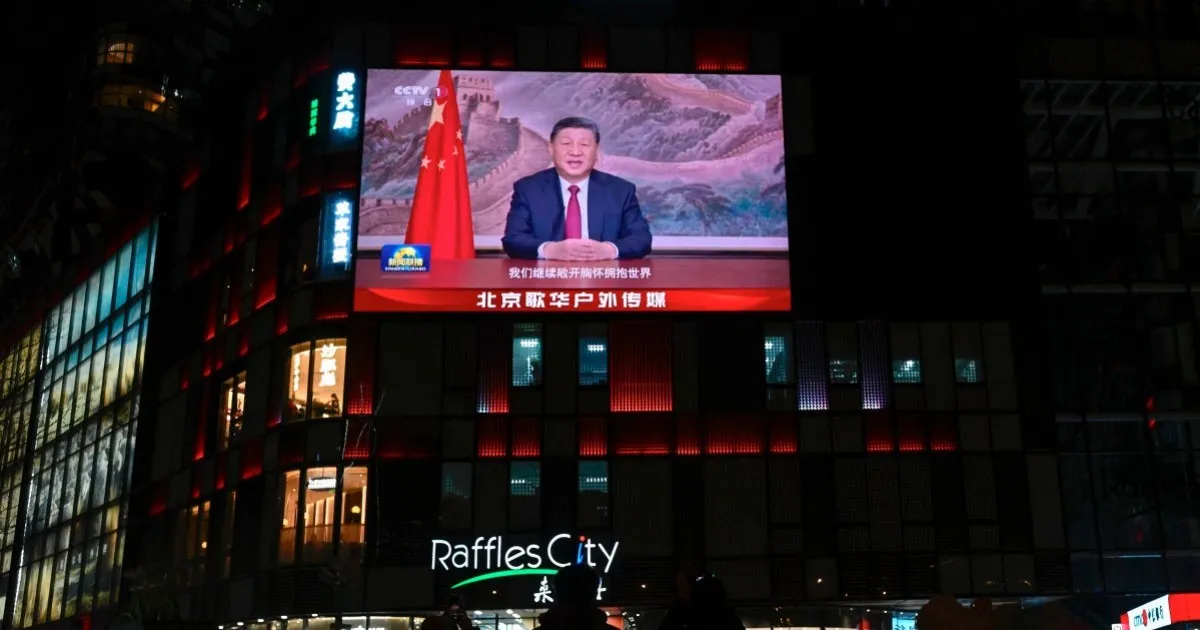
Chinese President Xi Jinping has pledged to achieve the “reunification” of China and Taiwan, calling Beijing’s long-held goal “unstoppable.”

In a New Year’s address delivered a day after China’s military wrapped up war games around Taiwan, Xi on Wednesday invoked the “bond of blood and kinship” between Chinese people on each side of the Taiwan Strait.

Recommended Stories

list of 4 itemsend of list

“The reunification of our motherland, a trend of the times, is unstoppable,” Xi said.

Xi also hailed the institution in 2025 of an annual “Taiwan Recovery Day”, marking the end of imperial Japan’s rule of the island at the end of World War II.

Xi’s speech came on the heels of two days of live-fire drills simulating a blockade of the island, in what officials called a “stern warning” against “separatist” and “external interference” forces.

The drills were the largest ever held around Taiwan in terms of geographical area.

The war games, codenamed “Justice Mission 2025”, came just days after the United States approved its largest-ever arms package to Taiwan, valued at $11.1bn.

China views self-governing Taiwan as part of its territory and has long pledged to bring the island under its control, using force if necessary.

Taiwan’s ruling Democratic Progressive Party maintains that the island is a de facto independent country, though it has not formally declared independence.

In his New Year’s Day address on Thursday, Taiwanese President William Lai Ching-te pledged to “firmly” uphold national sovereignty and boost the island’s defences.

“In the face of China’s escalating expansionist ambitions, the international community is closely watching whether the people of Taiwan have the determination to defend themselves,” Lai said.

While Taiwan elects its leaders and has its own military, passport and currency, the island is officially recognised by just 11 countries and Vatican City.

China insists that countries do not officially recognise Taipei in order to maintain diplomatic ties with Beijing.

Although the US does not officially recognise Taiwan, Washington is committed to helping the island to defend itself under the Taiwan Relations Act of 1979.

While Washington is Taipei’s principal supplier of arms, the law does not stipulate any obligation to directly intervene militarily in the event of a Chinese blockade or invasion.

Opinion polls suggest a large majority of Taiwanese favour the status quo, with much smaller proportions supporting imminent moves towards formal independence or unification.

In his speech on Wednesday, Xi also hailed China’s innovation in industries including artificial intelligence and space.

“We sought to energise high-quality development through innovation. We integrated science and technology deeply with industries, and made a stream of new innovations,” he said.

“Many large AI models have been competing in a race to the top, and breakthroughs have been achieved in the research and development of our own chips. All this has turned China into one of the economies with the fastest-growing innovation capabilities.”
Source link

Survey: Germans with reunification experience back Korean unification

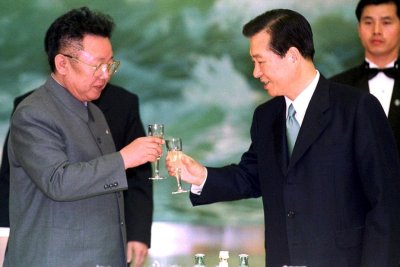
North Korean leader Kim Jong Il and his South Korean counterpart Kim Dae-jung give peace a chance in 2000. File Photo by EPA

Dec. 30 (Asia Today) — More than half of German respondents said they would recommend unification of the Korean Peninsula, drawing on their own country’s experience with reunification, according to a new international survey released Tuesday.

The findings came from the 2025 Global Unification Awareness Survey conducted by the Institute for Unification Studies, which polled 1,000 respondents in each of eight countries.

Among German respondents, 62.2% answered positively when asked whether they would recommend Korean unification based on Germany’s reunification experience. Of those, 17.9% said they “strongly agree,” while 44.3% said they “somewhat agree.”

When asked about the necessity of Korean unification, 55.4% of Germans responded positively. However, only 29.9% said they believe inter-Korean unification is realistically possible, highlighting a significant gap between perceived necessity and feasibility.

A similar pattern appeared in the United States, where 55.6% viewed unification as necessary but only 27.2% believed it was achievable. In Japan, just 29.3% said unification was necessary, and only 13.4% viewed it as possible.

The institute said the results show a consistent divide between recognition of unification’s importance and skepticism about its prospects. It noted that Germany, as a country that has already experienced national reunification, showed a higher perception of necessity than other surveyed nations.

Regarding Japan’s particularly low assessment of the need for Korean unification, the institute said the view appears to stem from a belief that unification would not benefit Japan. It added that, because support from neighboring countries is essential, Seoul should strengthen public diplomacy efforts aimed at improving Japanese perceptions.

On perceptions of North Korea’s nuclear program, Japanese respondents expressed the highest level of concern. A total of 81.5% of Japanese respondents said North Korea’s nuclear weapons pose a serious threat to peace, followed by Americans at 72.9% and Mongolians at 66.5%.

The institute said countries directly affected by North Korea’s nuclear issue – including Japan, the United States and Mongolia – tend to show heightened threat awareness.

Asked about Pyongyang’s motives for developing nuclear weapons, respondents most commonly viewed them as intended for offensive purposes. That perception was strongest in Japan at 71.8%, followed by the United States at 70.9% and Sweden at 70.2%. Excluding Mongolia, only about 20% to 30% of respondents in most countries viewed North Korea’s nuclear program as primarily defensive.

On preferred approaches to denuclearization, 74.6% across all eight countries favored diplomatic negotiations. Support for economic measures such as sanctions stood at 67.7%, while 48.2% supported military options.

The survey also examined national images of the two Koreas. South Korea was generally viewed as a country associated with trust and cooperation, while North Korea was widely perceived as a source of threat and distrust. Japan, however, showed low levels of trust toward both Koreas.

The annual survey was conducted online from Aug. 11 to 18 in Germany, Mongolia, the United States, Sweden, Italy, Japan, Canada and Poland.

— Reported by Asia Today; translated by UPI

© Asia Today. Unauthorized reproduction or redistribution prohibited.

Source link

China warns U.S. it cannot stop Taiwan reunification

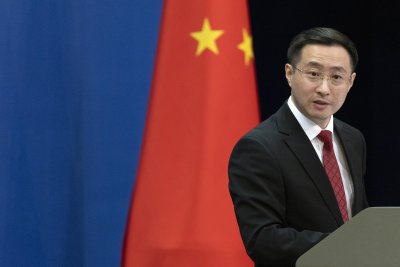
Ministry of Foreign Affairs’ spokesperson Lin Jian speaks during a press conference in Beijing, China, 05 February 2025. File ANDRES MARTINEZ CASARES/EPA

Dec. 29 (Asia Today) — China’s foreign ministry on Monday demanded the United States halt arms sales to Taiwan and warned that U.S. involvement in the Taiwan Strait cannot prevent what Beijing calls “complete reunification,” issuing the statement as the Chinese military launched large-scale drills encircling the island.

In a statement posted on social media, the ministry’s North American and Oceania affairs department criticized Washington’s approval of an $11.1 billion arms package for Taiwan, describing the move as a breach of U.S. commitments and warning it would “harm others” and ultimately “harm itself,” according to Chinese and state-linked media accounts.

The statement urged the United States to recognize what it called the “serious consequences” of arming Taiwan and argued that attempts to support “Taiwan independence” would increase the risk of conflict and confrontation between China and the United States.

It also invoked history, saying the United States sent warships to the Taiwan Strait more than 70 years ago to block reunification by force, adding that “China is no longer the China of over 70 years ago” and claiming a “fundamental shift” in the cross-strait balance of power.

“No matter how much the U.S. tries to turn Taiwan into a ‘porcupine,’ it cannot stop the historical trend of China’s complete reunification,” the statement said, warning that Washington would “reap what it sows” by encouraging pro-independence forces.

The foreign ministry’s comments followed an announcement earlier Monday by the People’s Liberation Army’s Eastern Theater Command that it would conduct joint drills involving land, sea, air and rocket forces around Taiwan, its first major “encirclement” exercise in months, according to multiple reports.

Taiwan placed its forces on heightened alert and condemned the drills, which came after Washington moved forward with the largest U.S. arms package for Taiwan to date, Reuters reported.

— Reported by Asia Today; translated by UPI

© Asia Today. Unauthorized reproduction or redistribution prohibited.

Source link