retiring

Judge Judy retiring from TV, passing gavel to son Adam Levy

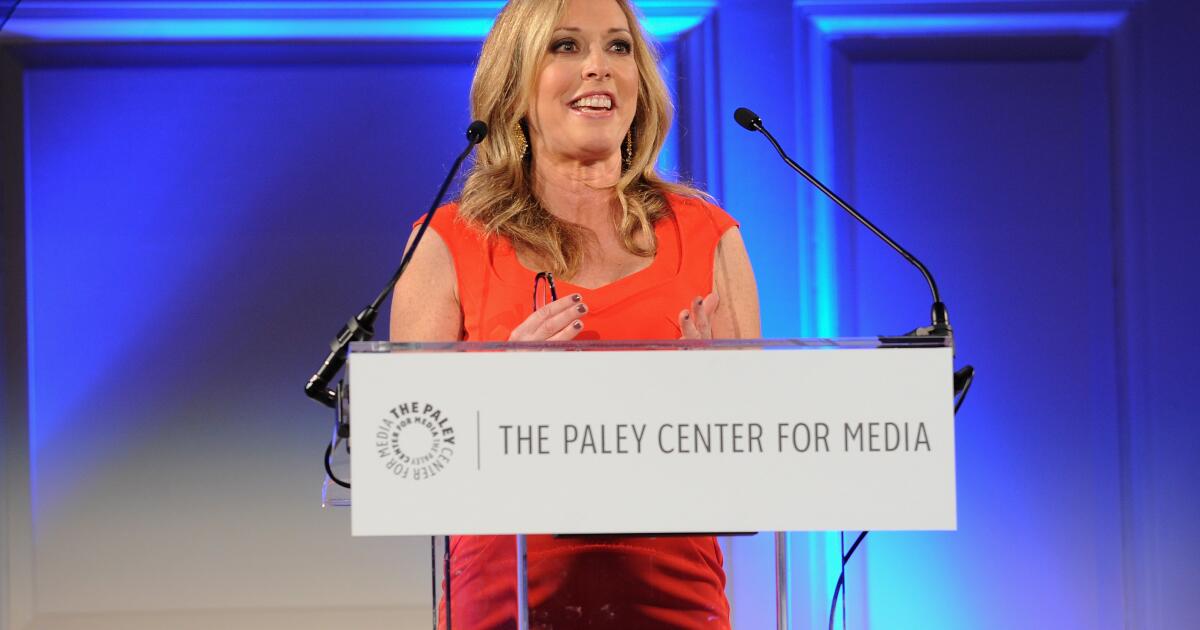
Judy Judge is hanging up her robe.

Nearly 30 years after Judy Sheindlin launched a career that made her TV’s most widely recognized judge — first on the syndicated small claims series “Judge Judy,” which premiered in 1996 and ran for 25 seasons; then on Amazon Prime’s streaming show “Judy Justice” starting in 2021 — she’s passing her gavel to a fitting successor: her son, Judge Adam Levy.

The 83-year-old Sheindlin told People magazine that when “Judy Justice” wraps in October, she’s moving away from on-camera work to focus on other endeavors, including afternoon naps and developing the animated series “Judyverse” based on the “Baby Judge Judy” videos circulating social media.

Created with AI, the videos feature a toddler version of Judge Judy overseeing cases with her signature New York accent and no-nonsense barbs.

“I don’t want to do hair and makeup anymore, but I still want my message to get out there,” she told the outlet.

Sheindlin will also produce her son’s syndicated court TV show, “Adam’s Law,” which debuts Monday.

“There aren’t a lot of people who can carry a half-hour on their own, unscripted,” Sheindlin continued, adding that Levy has what it takes.

The 58-year-old earned his law degree from Hofstra Law School in 1992. This isn’t his first foray into TV, as he joined a panel of judges on Prime’s “Tribunal Justice” in 2023. After three seasons, Sheindlin said he’s ready for his close-up.

On Sept. 22, CBS will air a 30th anniversary special looking back on Sheindlin’s career, “Judge Judy: Unfiltered, Unforgettable.”

“I don’t think that I’ve ever been this content before,” she told People of entering the next era of her life. “I don’t have to prove anything else. I did it.”

Source link

Alysa Liu steps away from skating, but this time she’s not retiring

Alysa Liu is stepping away from skating again.

The first time, following her bronze medal at the 2022 world championships, Liu considered herself retired at age 16.

This time, six months after becoming the first American woman to win Olympic gold in skating since 2002, the 21-year-old athlete says she’s simply taking a year off from the sport and is already planning her return.

“I will not be competing this season,” Liu wrote Monday on Instagram. “I always want to challenge myself in new ways, so my artistry & skating can evolve. It’s important to me that my sport reflects my personal growth. I’m gonna take the time to recalibrate, fine-tune things & whatnot.

“So fear not, I’ll be back, & in the meantime I’ll be rooting for my teammates near & far. See yall soon!!”

Born in Clovis and raised primarily in Oakland, Liu won back-to-back U.S. championships in 2019 and 2020 at ages 13 and 14. In February 2022, she finished seventh at the 2022 Beijing Olympics.

Less than two months later, Liu announced on Instagram that she was “done with my goals in skating [and] i’m going to be moving on with my life.”

During her two years off, Liu hiked to Mount Everest base camp with friends, enrolled at UCLA and focused on herself.

“I found what I like and what I didn’t like,” Liu said earlier this year. “Really got to know myself, because [when] I had skating, I didn’t really know myself. I couldn’t know myself. I only ever did one thing.”

She returned to skating in 2024 on her own terms, with a new look that included a halo hairstyle and a “smiley” piercing in the tissue connecting her upper lip to her gums. A gold medal at the 2025 world championships set the stage for her triumph at the Milano-Cortina Games.

While her last break was an effort to get away from skating, Liu told NBC Sports that this time she will continue training to improve her “overall artistry, spins, jumps, everything.”

“I really want to improve my skating, and I wanted to take the time to do that for myself and just to evolve, and then I’ll be back after that is done,” Liu said. “But I’ll still be cheering on all my competitors and my teammates, and I’m really excited.”

She added that “logically and emotionally and physically, this just makes the most sense” and “I just felt this was right. So I’m trusting my instincts.”


Source link

Retiring Allen Robinson ‘learned a lot about myself’ with Rams

Receiver Allen Robinson II spent one season with the Rams. It didn’t go the way L.A. fans had hoped when the former Pro Bowl receiver signed a three-year, $46.5 million deal with the then-reigning Super Bowl champions.

Still, Robinson had some positive takeaways from that portion of his career to share during a video he posted to Instagram on Monday announcing his retirement from the NFL after 11 seasons.

“I learned a lot about football from Coach [Sean] McVay and Cooper Kupp and the guys I was around to be able to then use for the rest of my career,” Robinson said.

The video, titled “No More Sundays,” was posted on Robinson’s 33rd birthday. It shows Robinson watching film from every stop during his football career — from his days as “a kid in Detroit trying to be like Randy Moss” to his final NFL season with his hometown Lions in 2024. It and ends with him turning off the projector and literally hanging up his cleats.

Robinson played three seasons at Penn State and led the Big Ten Conference in receptions and receiving yards in 2012 and 2013 and receiving touchdowns in 2012. The 6-foot-3 player was selected by the Jacksonville Jaguars in the second round of the 2014 draft and made the Pro Bowl in his second season.

During the first game of his fourth year with Jacksonville, Robinson tore the anterior cruciate ligament in his left knee and missed the rest of the season. He signed with the Chicago Bears before the 2018 season and had four productive years there, which led to his contract with the Rams.

Robinson was expected to be an upgrade over veteran receiver Robert Woods, who was subsequently traded to the Tennessee Titans soon after the Robinson deal, but wasn’t able to achieve his previous levels of success. He wasn’t able to establish a rapport with veteran quarterback Matthew Stafford, who did not throw passes during offseason workouts or part of training camp because of a right elbow condition.

A foot injury caused Robinson to miss the final seven games of the season. He finished the year with 33 catches for 339 yards and three touchdowns. During the offseason, the Rams traded Robinson and a seventh-round draft pick (No. 251 overall) to the Pittsburgh Steelers for that team’s seventh-round pick (No. 234 overall). The Rams were on the hook for about $10 million of Robinson’s salary.

“I did get injured, so I didn’t have a full season in L.A.,” Robinson said. “But I think I learned a lot about myself, being able to just kind of persevere, go through adversity and being able to mentally grow up. I can say that my career wouldn’t be what it was if I didn’t have a lot of those learning moments.”

Robinson finishes his career with 565 receptions for 7,058 yards and 43 touchdowns. He and former NFL cornerback Prince Amukamara started the “Press Release” football podcast last year. In addition, Robinson has hosted several youth football programs over the years.

“Football gave me more than I ever could’ve imagined,” Robinson wrote on Instagram. “It challenged me, shaped me, humbled me, and rewarded me in ways I’ll carry for the rest of my life. I came, I saw, I conquered and I leave with nothing but gratitude.

“The memories, the relationships, the victories, the lessons, they’ll stay with me forever! Thank you for every moment, every cheer, every lesson, and every opportunity.”


Source link

Closer to retiring than changing teams – why Max Verstappen stayed at Red Bull

Three races into this season, after the Japanese Grand Prix, the frustrations of driving the new hybrid engines of this year boiled over in Verstappen.

The need to constantly recover energy to power the batteries, the impossibility of doing so to the extent that they are fully charged at all times, and the artificiality that had been introduced into the racing as a consequence, were too much for the Dutchman after a race at Suzuka, arguably the greatest circuit on the calendar.

“Is it worth it?” Verstappen pondered out loud. “Or do I enjoy being more at home with my family? Seeing my friends more when you’re not enjoying your sport?”

By 2028, the split between internal combustion and electrical power will be 60:40 in favour of the internal combustion engine, when it is more like 53:47 now.

That will reduce – but not eliminate – the energy starvation suffered by the engines, and as a consequence make driving the cars feel more enjoyable.

Verstappen is the purist’s purist. He wants to drive on the limit all the time.

So it was total anathema to him having the engines run out of battery power, robbing them of 470bhp, before the end of long straights, needing to recover energy through the fastest corners, and having power off-sets between one car and another decide overtakes.

In May, he had an experience that underlined to him what F1 had lost, to his mind.

He raced a Red Bull-branded Mercedes AMG GT at the Nurburgring 24 Hours, and he was nothing less than sensational, particularly in a first stint that took the car he shared with two other drivers from 10th to first. Only a late driveshaft failure robbed him of victory.

This, to him, was what racing was all about.

Since Japan, the complaints of the drivers – Verstappen was far from the only driver to express his discontent – have been heard by the sport’s bosses.

Tweaks to the rules are being introduced over the next two years, to increase the proportion of the total power output of the engine coming from the internal combustion side.

At the last couple of races before the summer break, which is brought to an end by this weekend’s Dutch Grand Prix, a softening of Verstappen’s tone in F1 was discernible. And on Thursday he confirmed it.

“After the first few races, I said to Laurent [Mekies, the Red Bull team principal], ‘Don’t come to me with any kind of questions about the future’. Because I didn’t even know if I wanted to stay,” Verstappen said.

“I love racing. I had a lot of very good discussions with F1, but also with the FIA. And I think we are slowly working towards something that becomes better and better.

“Also from my side, of course, I adapted. I accept the situation that we’re all in and just trying to make the best of that.

“Also with the year that I signed to, it again opens up the door maybe, you know, when potentially the V8s come in to look at that again as well.”

That is a reference to ongoing discussions about the next engine regulations, due to come in by 2031 at the latest.

It says something about the mess the sport has got itself into with the latest engine rules that discussions about the next ones, due in five years’ time, started even before the first race of the new power-units.

The FIA, the sport’s governing body, was primarily responsible for the issues with energy starvation that have caused so much angst this season.

They were warned by teams and drivers for the last two years or more that this energy starvation situation would become an issue. But they did not listen, instead focusing on adding ever-more complexities to the rules to try to address some of the consequences of it.

Source link