resumes

U.S. resumes embassy operations in Venezuela after 7 years

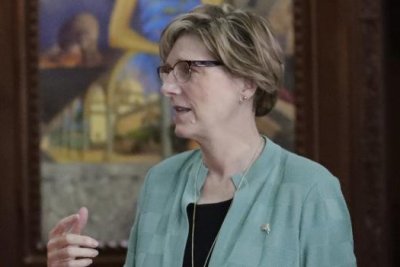
In a statement released Monday, the U.S. representative in Venezuela, Laura Dogu, confirmed that Washington “formally resumed operations” in Caracas, File Photo by Gustavo Amador/EPA

March 30 (UPI) — The United States has reopened its embassy in Caracas, Venezuela, after seven years, marking a concrete step toward restoring diplomatic relations between the two countries, according to an official statement released by the U.S. mission.

In that statement released Monday, the U.S. representative in Venezuela, Laura Dogu, confirmed that Washington “formally resumed operations” in Caracas, signaling the return of permanent diplomatic staff and the beginning of a new phase in bilateral relations.

The announcement comes weeks after a key symbolic gesture: the raising of the U.S. flag at the diplomatic compound on March 14, exactly seven years after it was lowered in 2019, when both countries broke relations.

Venezuelan media reported that the ceremony was led by Dogu, who said the act marked “a new era” in bilateral ties.

According to members of the diplomatic mission, the reactivation will allow resumption of key functions, such as engagement with political actors and civil society, outreach to the business sector and rebuilding facilities, with the aim of restoring consular services in the future.

The United States closed its embassy in Caracas in March 2019 amid Venezuela’s political crisis. Since then, diplomatic management had been handled through the United States External Office for Venezuela based in Bogotá.

Although the embassy has resumed operations, the full restoration of consular services and the appointment of an ambassador have not yet been announced, indicating the process remains in an initial phase.

The resumption of operations takes place in a context of gradual rapprochement between both governments after recent political changes in Venezuela and could have implications in areas such as energy, migration and trade relations.
Source link

Live Nation trial resumes, as 32 states proceed with trial

Live Nation, the ticketing giant that reached a tentative settlement with the Department of Justice last week, remains under fire.

A coalition of more than 30 states that had joined the original lawsuit filed in 2024 is refusing to accept the $200-million settlement, causing the trial to resume this week in Manhattan’s Federal Court.

The settlement with the Justice Department requires Beverly Hills-based Live Nation to open Ticketmaster to rival ticket sellers, force the company to open select venues to competing promoters and cap service fees at 15%. California is one of the key states still involved in the trial.

But those steps fall short, critics say.

“It’s clear that Live Nation has manipulated the market and made itself untouchable by competitors, hurting artists, hurting fans, hurting venues, all the while, raking in the cash,” said California Atty. Gen. Rob Bonta at the Capitol Forum conference last week. “Not because it’s a better service or product, because it acted illegally and created a monopoly.”

U.S. senators have also chimed in. Minnesota’s Amy Klobuchar recently introduced the Antitrust Accountability and Transparency Act to strengthen the review of antitrust settlements. Klobuchar said in a release that it’s “clear the American people got the raw end of the deal.”

And Connecticut’s Richard Blumenthal released a report that provides new details into the inner workings of Ticketmaster and urges attorneys general across the nation to reject the settlement.

Blumenthal said that the Trump administration’s settlement with Live Nation will keep consumers vulnerable to Ticketmaster’s “anticompetitive practices” and ultimately push “concert tickets farther out of reach for fans.”

The senator’s report, entitled “So Casually Cruel: How Ticketmaster’s Monopoly Supercharges Prices and Fees,” examined over 100,000 documents and Ticketmaster’s revenue data. The report argues that the company leveraged its market control to make tickets available on the resale market before they were available to the general public in an effort to hike prices and boost profits.

“The ticketing market is broken,” Blumenthal said in a statement.

In its own statement, Ticketmaster said Blumenthal’s report “misrepresents how the live events industry works” and that the problem lies in the secondary ticketing industry.

“This is why we’ve long called for industry resale reform, including price caps, while also developing tools to empower artists and protect fans,” Ticketmaster said in a statement.

Recently, Ticketmaster has backed ticketing bills like AB-1349 and advocated to Congress for an industry-wide resale cap.

Sens. Blumenthal and Klobuchar are among many industry experts who say the settlement doesn’t adequately address anticompetitive practices and falls short of protecting consumers from high ticket prices.

Under Klobuchar’s new bill, courts could have 90 days to review public comments and government responses.

“When the government prosecutes antitrust violations, the goal should be to uphold the law, lower prices, and protect consumers and small businesses,” Klobuchar said in the statement.

Lindsay Owens, the executive director of the economic policy nonprofit Groundwork Collaborative, said the settlement will end up being “incredibly costly for concertgoers, performers, and independent venues.”

“California and 35 other states are standing up for Americans who are sick and tired of being ripped off and having to scrimp and save to enjoy a night out,” Owens said in a statement.

This ongoing trial is one of several major legal battles the ticketing giant is facing. The company is also being sued by the Federal Trade Commission and is dealing with a handful of class-action lawsuits from groups of concertgoers.

Times staff writer Meg James contributed to this report.

Source link

Homeland Security resumes Global Entry during partial government shutdown

March 11 (UPI) — The United States resumed Global Entry, a program that allows trusted travelers to quickly get through U.S. customs, on Wednesday after a short break.

The service began again at 5 a.m. EDT Wednesday, the Department of Homeland Security said.

“We are working hard to alleviate the disruptions to travelers caused by the Democrats’ shutdown,” a DHS spokesperson said in a statement.

The program was suspended to preserve staff and resources during the partial government shutdown that began Jan. 31. When it was announced, the department said it would also suspend TSA PreCheck, which allows low-risk travelers to speed through Transportation Security Administration checkpoints, but quickly reversed course on that decision.

Geoff Freeman, president and CEO of the U.S. Travel Association, said the organization was pleased with the decision.

“Over the last two weeks, the travel industry has been clear about the role programs like Global Entry and TSA PreCheck play in both security and efficiency,” Freeman said in a statement. “Through outreach to members of Congress and administration officials, collaboration across the travel sector and strong public engagement, we highlighted a simple reality: Trusted Traveler Programs enhance security while keeping travel moving.”

Travelers at airports have seen long lines for TSA checkpoints, some lasting several hours with lines stretching out onto sidewalks.

The DHS, which includes TSA, is shut down because Congress couldn’t agree on a funding bill for the department. Democrats don’t want to fund it until guardrails are put on the agency, and Republicans haven’t agreed to Democrats’ demands.

Because of this, TSA workers got a partial paycheck on Feb. 28 and will miss their first full check Saturday. There have been more work absences while staff are not getting paid, which slows the TSA lines at major airports.

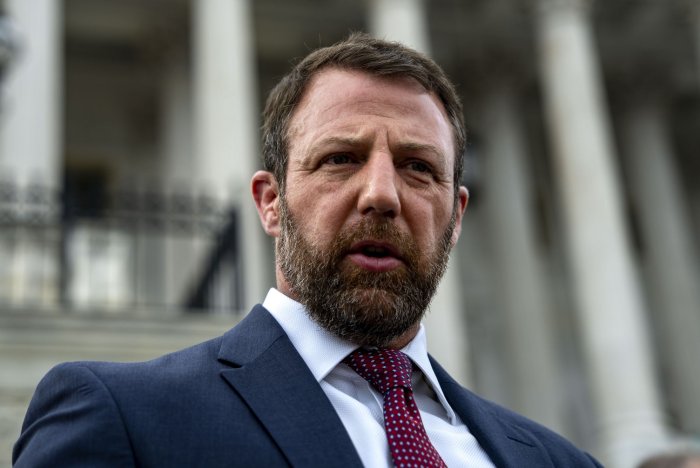
Sen. Markwayne Mullin, R-Okla., speaks to the press outside the U.S. Capitol on Thursday. Earlier today, President Donald Trump announced Mullin would replace Kristi Noem as Secretary of the Department of Homeland Security. Photo by Bonnie Cash/UPI | License Photo

Source link