Republicans

Ad blitz in California brings tax plan fight home

With a vote expected Thursday on the proposed GOP tax overhaul, California’s House Republicans are being targeted with a blitz of ads highlighting changes that would hurt many California taxpayers.

In turn, Republican-connected groups have launched ads encouraging the lawmakers to back the plan.

Five of the state’s GOP members are being targeted in television ads that began airing over the weekend about the tax reform plan that would disproportionately impact residents of high-tax states such as California.

“The Republican tax plan will raise taxes on California families by eliminating middle-class tax deductions to pay for a massive tax break for the super wealthy and big corporations,” a narrator says during the 30-second ad, which the “Not One Penny” coalition of liberal and labor groups funded. “Tell your member of Congress to vote ‘no’ on the Republican tax plan. California families can’t afford it.”

The ads are airing on cable and network stations in districts represented by Darrell Issa of Vista, Steve Knight of Palmdale, Dana Rohrabacher of Costa Mesa, Ed Royce of Fullerton and Mimi Walters of Irvine. Flipping at least some of those districts, which Hillary Clinton won over Donald Trump last year, is critical to Democrats’ efforts to retake the House.

Republican House members from California are facing competing pressures — a desire to accomplish a major legislative achievement before the midterm elections, and a reluctance to support a bill that would eliminate and restrict tax breaks used heavily by their constituents.

The House version of the tax proposal would eliminate the deduction for state and local income and sales taxes, limit the property tax deduction to $10,000 and cap the mortgage interest deduction on loans up to $500,000, rather than the current $1 million. The Senate version preserves the current mortgage deduction but eliminates the property tax deduction.

Red to Blue California, a political action committee seeking to unseat vulnerable California GOP lawmakers, began running digital ads Monday casting the tax plan as “billionaire tax cuts” and urging voters to call their members of Congress to oppose the plan. The group said the ads will reach about 250,000 people in each of the seven GOP-held districts where Clinton won last year.

Another PAC, Fight Back California, has been running digital ads over the last week, targeting about 30,000 voters in each of the districts and focusing primarily on homeowners who would be affected by the changes to mortgage interest deduction.

With pressure building through ads opposed to the plan, a super PAC connected with House Speaker Paul D. Ryan launched ads Monday encouraging the lawmakers to back the tax bill.

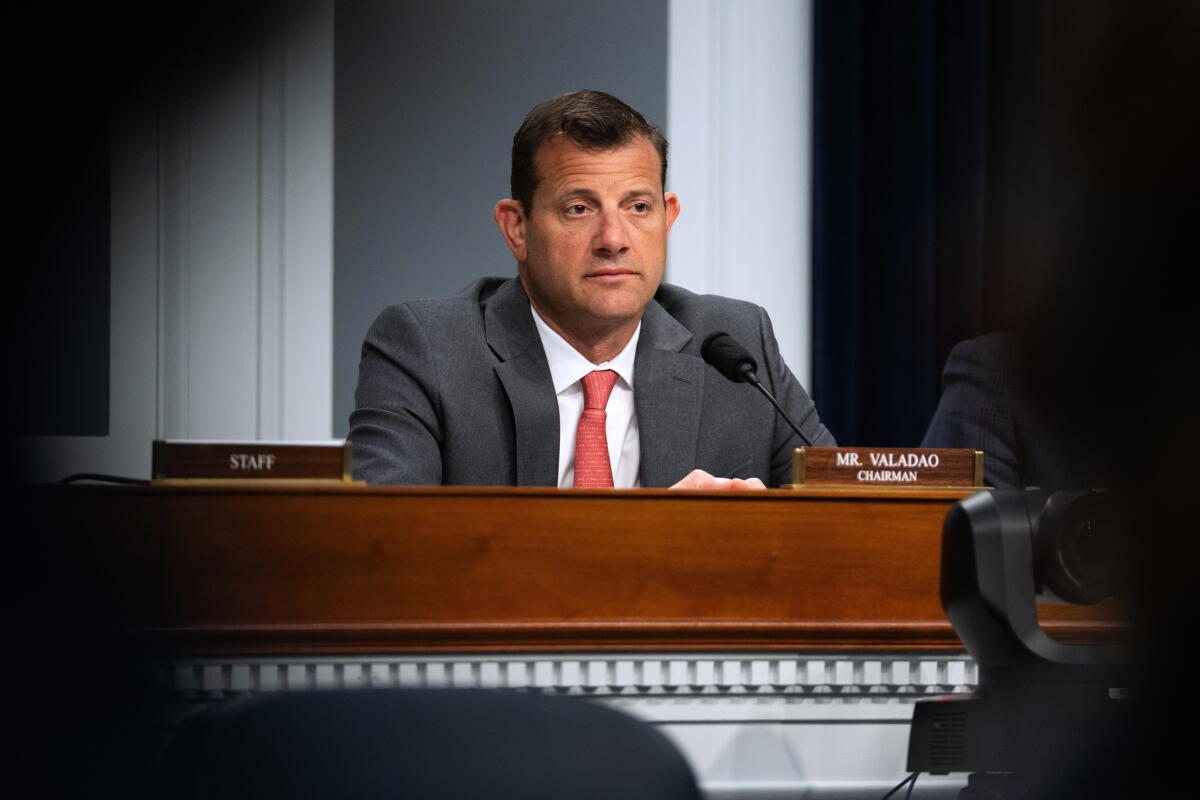
The $1.5 million in television and online ads from American Action Network targets 23 Republicans in multiple high tax states, including five in California — Denham, Valadao, Knight, Walters and Issa. A similar ad by the pro-Trump PAC 45Committee urging four House Republicans to “keep your promise and vote yes on tax reform” will air on cable and radio. These are among the first efforts by Republicans to shore up tax plan support through ads in California.

FOR THE RECORD, Nov. 16, 2017: The group connected to Speaker Paul D. Ryan that is running ads is a politically active nonprofit, not a super PAC.

christine.maiduc@latimes.com

For more on California politics, follow @cmaiduc.

ALSO

Updates on California politics


UPDATES:

2 p.m.: This article was updated to clarify that Fight Back California is targeting 30,000 voters in each of the seven districts.

This article was originally published at 3 a.m.


Source link

Trump’s economic claims collide with reality in a Pennsylvania city critical to the midterms

When Idalia Bisbal moved to this Pennsylvania city synonymous with America’s working class, she hoped for a cheaper, easier life than the one she was leaving behind in her hometown of New York City.

About three years later, she is deeply disappointed.

“It’s worse than ever,” said the 67-year-old retiree, who relies on Social Security, when asked about the economy. “The prices are high. Everything is going up. You can’t afford food because you can’t afford rent. Utilities are too high. Gas is too expensive. Everything is too expensive.”

Bisbal was sipping an afternoon coffee at the Hamilton Family Restaurant not long after Vice President JD Vance rallied Republicans in a nearby suburb. In the Trump administration’s second high-profile trip to Pennsylvania in a week, Vance acknowledged the affordability crisis, blamed it on the Biden administration and insisted better times were ahead. He later served food to men experiencing homelessness in Allentown.

The visit, on top of several recent speeches from President Trump, reflects an increasingly urgent White House effort to respond to the economic anxiety voiced by people across the country. Those worries are a vulnerability for Republicans in competitive congressional districts like the one that includes Allentown, which could decide control of the U.S. House in next year’s midterms.

But in confronting the challenge, there are risks of appearing out of touch.

Only 31% of U.S. adults now approve of how Trump is handling the economy, down from 40% in March, according to a poll from the Associated Press-NORC Center for Public Affairs Research. Yet Trump has called affordability concerns a “hoax” and gave the economy under his administration a grade of “A+++++.” Vance reiterated that assessment during his rally, prompting Bisbal to scoff.

“In his world,” Bisbal, a self-described “straight-up Democrat,” responded. “In the rich man’s world. In our world, trust me, it’s not an ‘A.’ To me, it’s an ‘F,’ ‘F,’ ‘F,’ ‘F,’ ‘F,’ ‘F.’”

Agreement that prices are too high

With a population of roughly 125,000 people, Allentown anchors the Lehigh Valley, which is Pennsylvania’s third-largest metro area. In a dozen interviews last week with local officials, business leaders and residents of both parties, there was agreement on one thing: Prices are too high. Some pointed to gas prices while others said they felt the shock more at the grocery store or in their cost of healthcare or housing.

Few shared Trump’s unbridled boosterism about the economy.

Tony Iannelli, the president and CEO of the Greater Lehigh Valley Chamber of Commerce, called Trump’s grade a “stretch,” saying that “we have a strong economy but I think it’s not yet gone to the next stage of what I would call robust.”

Tom Groves, who started a health and benefits consulting firm more than two decades ago, said the economy was at a “B+,” as he blamed the Affordable Care Act, widely known as Obamacare, for contributing to higher health costs, and he noted stock and labor market volatility.

Joe Vichot, the chairman of the Lehigh County Republican Committee, referred to Trump’s grade as a “colloquialism.”

Far removed from Washington’s political theater, there was little consensus on who was responsible for the high prices or what should be done about it. There was, however, an acute sense of exhaustion at the seemingly endless political combat.

Pat Gallagher was finishing lunch a few booths down from Bisbal as she recalled meeting her late husband when they both worked at Bethlehem Steel, the manufacturing giant that closed in 2003.

Now retired, Gallagher too relies on Social Security benefits, and she lives with her daughter, which helps keep costs down. She said she noticed the rising price of groceries and was becoming exasperated with the political climate.

“I get so frustrated with hearing about the politics,” she said.

A front-row seat to politics

That feeling is understandable in a place that often gets a front-row seat to the national debate, whether it wants the view or not. Singer Billy Joel’s 1982 song “Allentown” helped elevate the city into the national consciousness, articulating simultaneous feelings of disillusionment and hope as factories closed.

In the decades since, Pennsylvania has become a must-win state in presidential politics and the backdrop for innumerable visits from candidates and the media. Trump and his Democratic rival in 2024, Kamala Harris, made several campaign swings through Allentown, with the then-vice president visiting the city on the eve of the election.

“Every race here, all the time,” Allentown’s mayor, Democrat Matt Tuerk, recalled of the frenzied race last year.

The pace of those visits — and the attention they garnered — has not faded from many minds. Some businesses and residents declined to talk last week when approached with questions about the economy or politics, recalling blowback from speaking in the past.

But as attention shifts to next year’s midterms, Allentown cannot escape its place as a political battleground.

Trump’s win last year helped lift other Republicans, such U.S. Rep. Ryan Mackenzie, to victory. Mackenzie, who unseated a three-term Democrat, is now one of the most vulnerable Republicans in Congress. To win again, he must turn out the Republicans who voted in 2024 — many of whom were likely more energized by Trump’s candidacy — while appealing to independents.

Mackenzie’s balancing act was on display when he spoke to the party faithful Tuesday, bemoaning the “failures of Bidenomics” before Vance took the stage at the rally. A day later, the congressman was back in Washington, where he joined three other House Republicans to rebel against the party’s leadership and force a vote on extending Obamacare subsidies that expire at the end of the year.

Vichot, the local GOP chairman, called Mackenzie an “underdog” in his reelection bid and said the healthcare move was a signal to voters that he is “compassionate for the people who need those services.”

A swing to Trump in 2024

Lehigh County, home to Allentown and the most populous county in the congressional district, swung toward Trump last year. Harris’ nearly 2.7-percentage-point win in the county was the tightest margin for a Democratic presidential candidate since 2004. But Democrats are feeling confident after a strong performance in this fall’s elections, when they handily won a race for county executive.

Retaking the congressional seat is now a top priority for Democrats. Gov. Josh Shapiro, a Democrat who faces reelection next year and is a potential presidential contender in 2028, endorsed firefighter union head Bob Brooks last week in the May primary.

Democrats are just a few seats shy of regaining the House majority, and the first midterm after a presidential election historically favors the party that’s out of power. If the focus remains on the economy, Democrats are happy.

The Uline supplies distribution factory where Vance spoke, owned by a family that has made large donations to GOP causes, is a few miles from the Mack Trucks facility where staff was cut by about 200 employees this year. The company said that decision was driven in part by tariffs imposed by Trump. Shapiro eagerly pointed that out in responding to Vance’s visit.

But the image of Allentown as a purely manufacturing town is outdated. The downtown core is dotted by row homes, trendy hotels and a modern arena that is home to the Lehigh Valley Phantoms hockey team and hosts concerts by major artists. In recent years, Latinos have become a majority of the city’s population, driven by gains in the Puerto Rican, Mexican and Dominican communities.

“This is a place of rapid change,” said Tuerk, the city’s first Latino mayor. “It’s constantly changing ,and I think over the next three years until that next presidential election, we’re going to see a lot more change. It’s going to be an interesting ride.”

Sloan writes for the Associated Press.

Source link

Republicans defy House leadership to force vote on healthcare subsidies | Politics News

An expanded federal healthcare subsidy that grew out of the pandemic looks all but certain to expire on December 31, as Republican leaders in the United States faced a rebellion from within their own ranks.

On Wednesday, four centrist Republicans in the House of Representatives broke with their party’s leadership to support a Democratic-backed extension for the healthcare subsidies under the Affordable Care Act (ACA), sometimes called “Obamacare”.

Recommended Stories

list of 3 itemsend of list

By a vote of 204 to 203, the House voted to stop the last-minute move by Democrats, aided by four Republicans, to force quick votes on a three-year extension of the Affordable Care Act subsidy.

Democrats loudly protested, accusing Republican leadership of gavelling an end to the vote prematurely while some members were still trying to vote.

“That’s outrageous,” Democratic Representative Jim McGovern of Massachusetts yelled at Republican leadership.

Some of the 24 million Americans who buy their health insurance through the ACA programme could face sharply higher costs beginning on January 1 without action by Congress.

Twenty-six House members had not yet voted – and some were actively trying to do so – when the House Republican leadership gavelled the vote closed on Wednesday. It is rare but not unprecedented for House leadership to cut a contested vote short.

Democratic Representative Rosa DeLauro of Connecticut said the decision prevented some Democrats from voting.

“Listen, it’s playing games when people’s lives are at stake,” DeLauro said. “They jettisoned it.”

It was the latest episode of congressional discord over the subsidies, which are slated to expire at the end of the year.

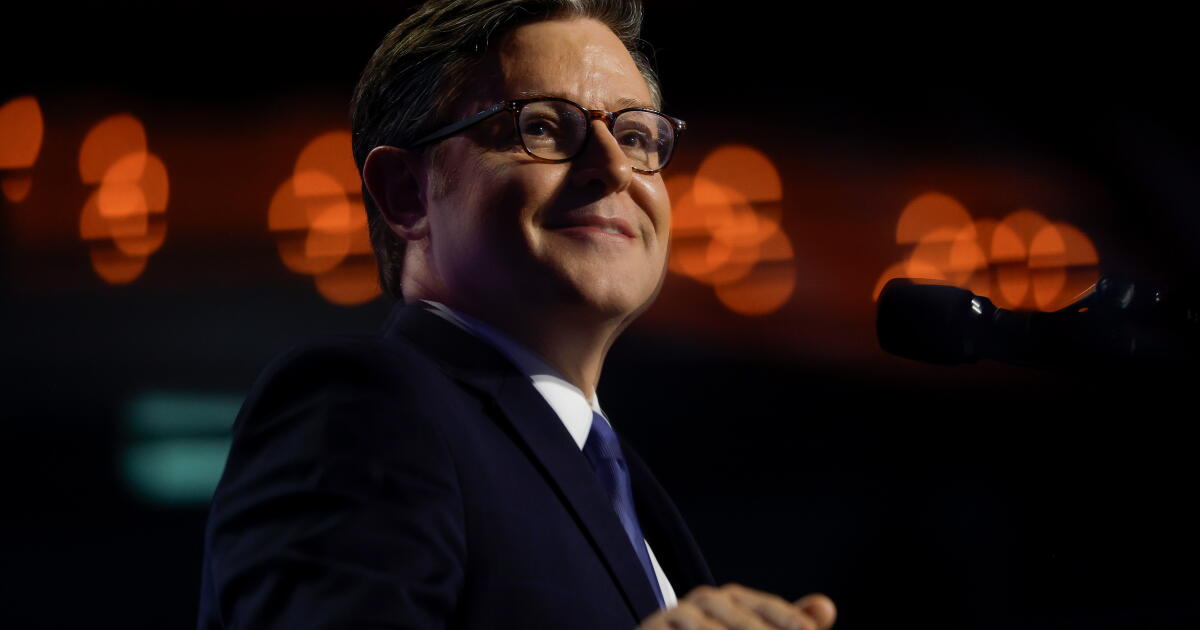
The vote also offered another key test to the Republican leadership of House Speaker Mike Johnson. Normally, Johnson determines which bills to bring to a House vote, but recently, his power has been circumvented by a series of “discharge petitions”, wherein a majority of representatives sign a petition to force a vote.

In a series of quickfire manoeuvres on Wednesday, Democrats resorted to one such discharge petition to force a vote on the healthcare subsidies in the new year.

They were joined by the four centrist Republicans: Mike Lawler of New York and Brian Fitzpatrick, Robert Bresnahan and Ryan MacKenzie of Pennsylvania.

The Democratic proposal would see the subsidies extended for three years.

But Republicans have largely rallied around their own proposal, a bill called the Lower Health Care Premiums for All Americans Act. It would reduce some insurance premiums, though critics argue it would raise others, and it would also reduce healthcare subsidies overall.

The nonpartisan Congressional Budget Office (CBO) on Tuesday said the legislation would decrease the number of people with health insurance by an average of 100,000 per year through 2035.

Its money-saving provisions would reduce federal deficits by $35.6bn, the CBO said.

Republicans have a narrow 220-seat majority in the 435-seat House of Representatives, and Democrats are hoping to flip the chamber to their control in the 2026 midterm elections.

Three of the four Republicans who sided with the Democrats over the discharge petition are from the swing state of Pennsylvania, where voters could lean right or left.

Affordability has emerged as a central question ahead of the 2026 midterms.

Even if the Republican-controlled House manages to pass a healthcare bill this week, it is unlikely to be taken up by the Senate before Congress begins a looming end-of-year recess that would stop legislative action until January 5.

By then, millions of Americans will be looking at significantly more expensive health insurance premiums that could prompt some to go without coverage.

Wednesday’s House floor battle could embolden Democrats and some Republicans to revisit the issue in January, even though higher premiums will already be in the pipeline.

Referring to the House debate, moderate Republican Senator Lisa Murkowski told reporters: “I think that that will help prompt a response here in the Senate after the first of the new year, and I’m looking forward to that.”

The ACA subsidies were a major point of friction earlier this year as well, during the historic 43-day government shutdown.

Democrats had hoped to extend the subsidies during the debate over government spending, but Republican leaders refused to take up the issue until a continuing budget resolution was passed first.

Source link

Republicans defy Speaker Johnson to force House vote on extending health insurance subsidies

Four centrist Republicans broke with Speaker Mike Johnson on Wednesday and signed onto a Democratic-led petition that will force a House vote on extending for three years an enhanced pandemic-era subsidy that lowers health insurance costs for millions of Americans.

The stunning move comes after House Republican leaders pushed ahead with a health care bill that does not address the soaring monthly premiums that millions of people will soon endure when the tax credits for those who buy insurance through the Affordable Care Act expire at year’s end.

Democrats led by Minority Leader Hakeem Jeffries of New York needed 218 signatures to force a floor vote on their bill, which would extend the subsides for three years.

Republican Reps. Brian Fitzpatrick, Robert Bresnahan and Ryan Mackenzie, all from Pennsylvania, and Mike Lawler of New York signed on Wednesday morning, pushing it to the magic number of 218. A vote on the subsidy bill could come as soon as January under House rules.

“Unfortunately, it is House leadership themselves that have forced this outcome.” Fitzpatrick said in a statement.

Origins of a Republican revolt

The revolt against GOP leadership came after days of talks centered on the health care subsidies.

Johnson, R-La., had discussed allowing more politically vulnerable GOP lawmakers a chance to vote on bills that would temporarily extend the subsidies while also adding changes such as income caps for beneficiaries. But after days of discussions, the leadership sided with the more conservative wing of the party’s conference, which has assailed the subsidies as propping up a failed marketplace through the ACA, which is widely known as “Obamacare.”

House Republicans pushed ahead Wednesday a 100-plus-page health care package without the subsidies, instead focusing on long-sought GOP proposals designed to expand insurance coverage options for small businesses and the self-employed.

Fitzpatrick and Lawler tried to add a temporary extension of the subsidies to the bill, but were denied.

“Our only request was a floor vote on this compromise, so that the American People’s voice could be heard on this issue. That request was rejected. Then, at the request of House leadership I, along with my colleagues, filed multiple amendments, and testified at length to those amendments,” Fitzpatrick said. “House leadership then decided to reject every single one of these amendments.

“As I’ve stated many times before, the only policy that is worse than a clean three-year extension without any reforms, is a policy of complete expiration without any bridge,” Fitzpatrick said.

Lawler, in a social media post, similarly said that “the failure of leadership” to permit a vote had left him with “no choice” but to sign the petition. He urged Johnson to bring the plan up for an immediate floor vote.

Path ahead is uncertain

Even if the subsidy bill were to pass the House, which is far from assured, it would face an arduous climb in the Republican-led Senate.

Republicans last week voted down a three-year extension of the subsidies and proposed an alternative that also failed. But in an encouraging sign for Democrats, four Republican senators crossed party lines to support their proposal.

Senate Majority Leader John Thune, R-S.D., argued against the Democratic extension as “an attempt to disguise the real impact of Obamacare’s spiraling health care costs.”

Freking writes for the Associated Press.

Source link

Court battle begins over Republican challenge to California’s Prop. 50

Republicans and Democrats squared off in court Monday in a high-stakes battle over the fate of California’s Proposition 50, which reconfigures the state’s congressional districts and could ultimately help determine which party controls the U.S. House in the 2026 midterms.

Dozens of California politicians and Sacramento insiders — from GOP Assembly members to Democratic redistricting expert Paul Mitchell — have been called to testify in a Los Angeles federal courtroom over the next few days.

The GOP wants the three-judge panel to temporarily block California’s new district map, claiming it is unconstitutional and illegally favors Latino voters.

An overwhelming majority of California voters approved Prop. 50 on Nov. 4 after Gov. Gavin Newsom pitched the redistricting plan as a way to counter partisan gerrymandering in Texas and other GOP-led states. Democrats admitted the new map would weaken Republicans’ voting power in California, but argued it would just be a temporary measure to try to restore national political balance.

Attorneys for the GOP cannot challenge the new redistricting map on the grounds that it disenfranchises swaths of California Republicans. In 2019, the U.S. Supreme Court decided that complaints of partisan gerrymandering have no path in federal court.

But the GOP can bring claims of racial discrimination. They argue California legislators drew the new congressional maps based on race, in violation of the Equal Protection Clause of the 14th Amendment and the 15th Amendment, which prohibits governments from denying citizens the right to vote based on race or color.

On Monday, attorneys for the GOP began by homing in on the new map’s Congressional District 13, which currently encompasses Merced, Stanislaus, and parts of San Joaquin and Fresno counties, along with parts of Stockton.

When Mitchell drew up the map, they argued, he over-represented Latino voters as a “predominant consideration” over political leanings.

They called to the stand RealClearPolitics elections analyst Sean Trende, who said he observed an “appendage” in the new District 13, which extended partially into the San Joaquin Valley and put a crack in the new rendition of District 9.

“From my experience [appendages] are usually indicative of racial gerrymandering,” Trende said. “When the choice came between politics and race, it was race that won out.”

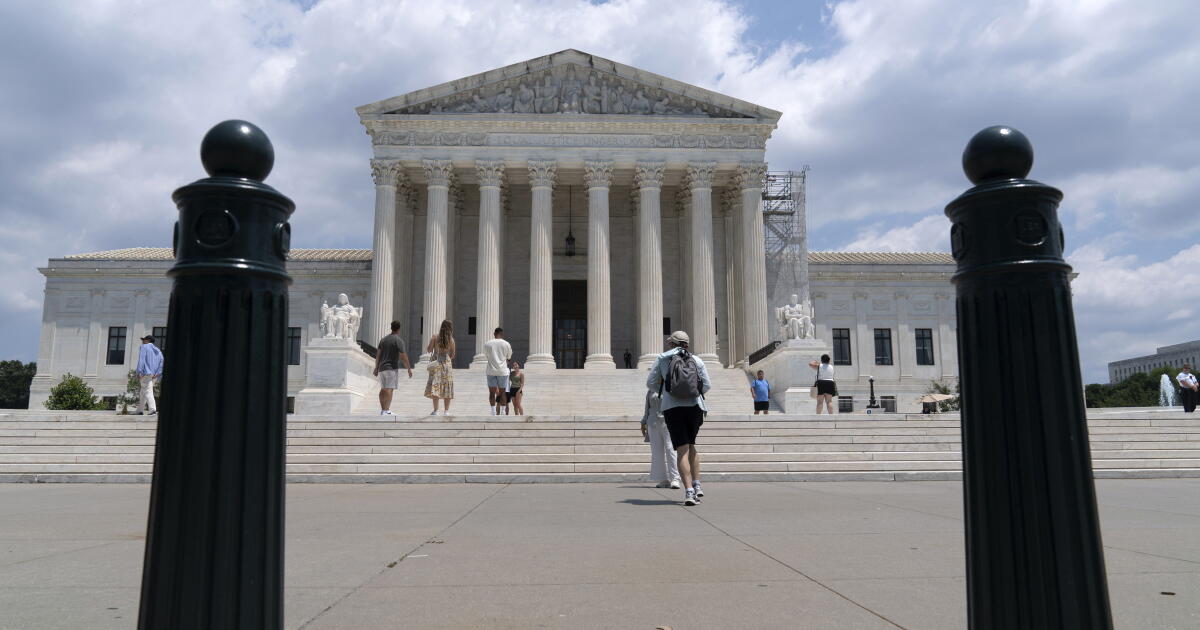
Republicans face an uphill struggle in blocking the new map before the 2026 midterms. The hearing comes just a few weeks after the U.S. Supreme Court allowed Texas to temporarily keep its new congressional map — a move that Newsom’s office says bodes poorly for Republicans trying to block California’s map.

“In letting Texas use its gerrymandered maps, the Supreme Court noted that California’s maps, like Texas’s, were drawn for lawful reasons,” Brandon Richards, a spokesperson for Newsom, said in a statement. “That should be the beginning and the end of this Republican effort to silence the voters of California.”

In Texas, GOP leaders drew up new congressional district lines after President Trump openly pressed them to give Republicans five more seats in the U.S. House of Representatives. A federal court blocked the map, finding racial considerations likely made the Texas map unconstitutional. But a few days later the Supreme Court granted Texas’ request to pause that ruling, signaling they view the Texas case, and this one in California, as part of a national politically-motivated redistricting battle.

“The impetus for the adoption of the Texas map (like the map subsequently adopted in California),” Justice Samuel A. Alito Jr. argued, “was partisan advantage pure and simple.”

The fact that the Supreme Court order and Alito’s concurrence in the Texas case went out of their way to mention California is not a good sign for California Republicans, said Richard L. Hasen, professor of law and director of the Safeguarding Democracy Project at UCLA School of Law.

“It’s hard to prove racial predominance in drawing a map — that race predominated over partisanship or other traditional districting principles,” Hasen said. “Trying to get a preliminary injunction, there’s a higher burden now, because it would be changing things closer to the election, and the Supreme Court signaled in that Texas ruling that courts should be wary of making changes.”

Many legal scholars argue that the Supreme Court’s ruling on the Texas case means California will likely keep its new map.

“It was really hard before the Texas case to make a racial gerrymandering claim like the plaintiffs were stating, and it’s only gotten harder in the last two weeks,” said Justin Levitt, a professor of law at Loyola Marymount University.

Hours after Californians voted in favor of Prop. 50 on Nov. 4, Assemblymember David J. Tangipa (R-Fresno) and the California Republican Party filed a lawsuit alleging that the map enacted in Prop. 50 for California’s congressional districts is designed to favor Latino voters over others.

The Department of Justice also filed a complaint in the case, arguing the new congressional map uses race as a proxy for politics and manipulated district lines “in the name of bolstering the voting power of Hispanic Californians because of their race.”

Mitchell, the redistricting expert who drew up the maps, is likely to be a key figure in this week’s battle. In the days leading up to the hearing, attorneys sparred over whether Mitchell would testify and whether he should turn over his email correspondence with legislators. Mitchell’s attorneys argued he had legislative privilege.

Attorneys for the GOP have seized on public comments made by Mitchell that the “number one thing” he started thinking about” was “drawing a replacement Latino majority/minority district in the middle of Los Angeles” and the “first thing” he and his team did was “reverse” the California Citizens Redistricting Commission’s earlier decision to eliminate a Latino district from L.A.

Some legal experts, however, say that is not, in itself, a problem.

“What [Mitchell] said was, essentially, ‘I paid attention to race,’” Levitt said. “But there’s nothing under existing law that’s wrong with that. The problem comes when you pay too much attention to race at the exclusion of all of the other redistricting factors.”

Other legal experts argue that what matters is not the intent of Mitchell or California legislators, but the California voters who passed Prop. 50.

“Regardless of what Paul Mitchell or legislative leaders thought, they were just making a proposal to the voters,” said Hasen, who filed an amicus brief in support of the state. “So it’s really the voters’ intent that matters. And if you look at what was actually presented to the voters in the ballot pamphlet, there was virtually nothing about race there.”

Source link

Column: California Democrats have momentum, Republicans have problems

You’re reading the L.A. Times Politics newsletter

Anita Chabria and David Lauter bring insights into legislation, politics and policy from California and beyond. In your inbox three times per week.

By continuing, you agree to our Terms of Service and our Privacy Policy.

It turns out Proposition 50 smacked California Republicans with a double blow heading into the 2026 congressional elections.

First, there was the reshaping of House districts aimed at flipping five Republican-held seats to Democrats.

Now, we learn that the proposition itself juiced up Democratic voter enthusiasm for the elections.

Voter enthusiasm normally results in a higher casting of ballots.

It’s all about the national battle for control of the U.S. House of Representatives — and Congress potentially exercising its constitutional duty to provide some checks and balance against the president. Democrats need a net pickup of only three seats in November’s elections to dethrone Republicans.

President Trump is desperate to keep his GOP toadies in power. So, he has coerced — bullied and threatened — some red-state governors and legislatures into rejiggering Democratic-held House seats to make them more Republican-friendly.

When Texas quickly obliged, Gov. Gavin Newsom retaliated with a California Democratic gerrymander aimed at neutralizing the Lone Star State’s partisan mid-decade redistricting.

California’s counterpunch became Proposition 50, which was approved by a whopping 64.4% of the state’s voters.

Not only did Proposition 50 redraw some GOP-held House seats to tinge them blue, it stirred up excitement about the 2026 elections among Democratic voters.

That’s the view of Mark Baldassare, polling director for the nonpartisan Public Policy Institute of California. And it makes sense. Umpteen millions of dollars were spent by Newsom and Proposition 50 backers advertising the evils of Trump and the need for Democrats to take over the House.

A PPIC poll released last week showed a significant “enthusiasm gap” between Democratic and Republican voters regarding the House contests.

“One of the outcomes of Proposition 50 is that it focused voters on the midterm elections and made them really excited about voting next year,” Baldassare says.

At least, Democrats are showing excitement. Republicans, not so much.

In the poll, likely voters were asked whether they were more enthusiastic than usual about voting in the congressional elections or less enthusiastic.

Overall, 56% were more enthusiastic and 41% less enthusiastic. But that’s not the real story.

The eye-opener is that among Democrats, an overwhelming 72% were more enthusiastic. And 60% of Republicans were less enthusiastic.

“For Democrats, that’s unusually high,” Baldassare says.

To put this in perspective, I looked back at responses to the same question asked in a PPIC poll exactly two years ago before the 2024 elections. At that time, Democrats were virtually evenly split over their enthusiasm or lack of it concerning the congressional races. In fact, Republicans expressed more enthusiasm.

Still, Democrats gained three congressional seats in California in 2024. So currently they outnumber Republicans in the state’s House delegation by a lopsided 43 to 9.

If Democrats could pick up three seats when their voters weren’t even lukewarm about the election, huge party gains seem likely in California next year. Democratic voters presumably will be buoyed by enthusiasm and the party’s candidates will be boosted by gerrymandering.

“Enthusiasm is contagious,” says Dan Schnur, a former Republican operative who teaches political communication at USC and UC Berkeley. “If the party’s concentric circle of committed activists is enthusiastic, that excitement tends to spread outward to other voters.”

Schnur adds: “Two years ago, Democrats were not motivated about Joe Biden or Kamala Harris. Now they’re definitely motivated about Donald Trump. And in order to win midterm elections, you need to have a motivated base.”

Democratic strategist David Townsend says that “enthusiasm is the whole ballgame. It’s the ultimate barometer of whether my message is working and the other side’s is not working.”

The veteran consultant recalls that Democrats “used to go door to door handing out potholders, potted plants, refrigerator magnets and doughnuts trying to motivate voters.

“But the best turnout motivator Democrats have ever had in California is Donald J. Trump.”

In the poll, 71% of voters disapproved of the way Trump is handling his job; just 29% approved. It was even worse for Congress, with 80% disapproving.

Among Democratic voters alone, disapproval of Trump was practically off the chart at 97%.

But 81% of Republicans approved of the president.

Among voters of all political persuasions who expressed higher than usual enthusiasm about the House elections, 77% said they‘d support the Democratic candidate. Also: 79% said Congress should be controlled by Democrats, 84% disapproved of how Congress is handling its job and 79% disapproved of Trump.

And those enthused about the congressional elections believe that, by far, the most important problem facing the nation is “political extremism [and] threats to democracy.” A Democratic shorthand for Trump.

The unseemly nationwide redistricting battle started by Trump is likely to continue well into the election year as some states wrestle with whether to oblige the power-hungry president and others debate retaliating against him.

Sane politicians on both sides should have negotiated a ceasefire immediately after combat erupted. But there wasn’t enough sanity to even begin talks.

Newsom was wise politically to wade into the brawl — wise for California Democrats and also for himself as a presidential hopeful trying to become a national hero to party activists.

“Eleven months before an election, nothing is guaranteed,” Schnur says. “But these poll numbers suggest that Democrats are going to start the year with a big motivational advantage.”

Trump is the Democrats’ proverbial Santa who keeps on giving.

What else you should be reading

The must-read: Kristi Noem grilled over L.A. Purple Heart Army vet who self-deported
The TK: Newsom expresses unease about his new, candid autobiography: ‘It’s all out there’
The L.A. Times Special: A Times investigation finds fraud and theft are rife at California’s county fairs

Until next week,
George Skelton


Was this newsletter forwarded to you? Sign up here to get it in your inbox.

Source link