
received

Dodgers received 2025 World Series rings. What do they look like?

Clayton Kershaw’s 2025 teammates had already received their World Series rings in a pregame ceremony Friday at Dodger Stadium when the future Hall of Famer jogged out of the dugout wearing his No. 22 Dodgers jersey.

He took the ball from manager Dave Roberts on the mound and delivered the ceremonial first pitch. Then the team re-emerged to present Kershaw with his ring.

“For me it’s just a great ending to my career,” Kershaw said when asked what the new ring meant to him. “I couldn’t have scripted it any better.”

A detailed look at the inside of the Dodgers' 2025 World Series championship ring.

A detailed look at the inside of the Dodgers’ 2025 World Series championship ring.

(The Champions Collective)

Though his playing days are over, Kershaw’s time with the Dodgers will continue. He’s joining the front office as a special assistant, according to a person with knowledge of the situation not authorized to speak publicly.

The Dodgers’ ring ceremony was the second part of a two-day celebration of the team’s 2025 World Series title. On opening day, the Dodgers brought out their trophies from back-to-back World Series titles and raised their new championship banner.

“I’m excited,” Kershaw said a couple hours earlier, after watching the Dodgers take batting practice before facing the Arizona Diamondbacks. “It’s why we play, is to win some of these rings. I heard the ring is pretty over the top; I haven’t seen it yet.”

Over the top, indeed.

A detailed look at the inside of the Dodgers' 2025 World Series championship ring.

A detailed look at the inside of the Dodgers’ 2025 World Series championship ring.

(The Champions Collective)

The diamond- and sapphire-encrusted rings highlight the back-to-back nature of last year’s World Series victory. They include engravings of the 2024 and 2025 trophies on both the outside and inside of the ring.

The L.A. logo is made up of 17 custom-cut blue sapphires, one for every postseason game the Dodgers played last year.

On the underside side of the ring, the four playoff series are listed, along with “11.01.25,” the date of Game 7 of the World Series.

The ring top holds dirt collected from home plate during Game 7, visible through a glass window when the ring is opened. Inside the ring sits a bespoke band that’s also set with sapphires and a diamond.

Dodgers players (from left) Shohei Ohtani, Freddie Freeman, Mookie Betts and Max Muncy show off their World Series rings.

Dodgers players (from left) Shohei Ohtani, Freddie Freeman, Mookie Betts and Max Muncy show off their World Series rings before beating the Arizona Diamondbacks at Dodger Stadium on Friday.

(Gina Ferazzi / Los Angeles Times)

In a nod to the fan base, the total attendance figure for the 2025 season (4,012,470) gleams in blue on the bottom of the ring. Each players’ ring is also personalized with his signature, last name and number.

“Anytime you get to celebrate one more time with your teammates, it’s pretty special,” Kershaw said. “I know they’ve got to move on to this season, but I don’t have to. So I’m just going to keep relishing it. It’ll be great.”

Kershaw was already in town for work. He appeared on NBC’s broadcast of the Dodgers’ 8-2 win Thursday against the Diamondbacks.

A detailed look at the side of the Dodgers' 2025 World Series championship ring.

A detailed look at the side of the Dodgers’ 2025 World Series championship ring.

(The Champions Collective)

“It’s just talking baseball,” Kershaw said. “So if people want to hear me talk about baseball, I can do that all day. I love baseball.”

His new role with the Dodgers, first reported by the Athletic, is another form of talking baseball.

“Probably not physically here in L.A.,” Kershaw said. “But definitely, I’m sure I’ll watch games. I still want to be a part of the Dodgers, so if I can help in some small piece, I will.”

A detailed look at the side of the Dodgers' 2025 World Series championship ring.

A detailed look at the side of the Dodgers’ 2025 World Series championship ring.

(The Champions Collective)

Because Kershaw joined Team USA for the World Baseball Classic and then jumped into part-time broadcasting, he hasn’t fully experienced retirement yet. He said he doesn’t miss playing, but he misses the people.

“There’s a freedom with retirement,” Kershaw said. “If you don’t want to work out, you don’t have to. If your back hurts, it doesn’t matter. If your arm hurts, it doesn’t matter. You get to see a lot more stuff, be around for everything. So there’s a lot of great parts. It doesn’t take away from how special playing this game is, but there’s a lot of really awesome parts about being home.”
Source link

Former Newsom advisor received $50,000 payout after leaving state job amid federal probe

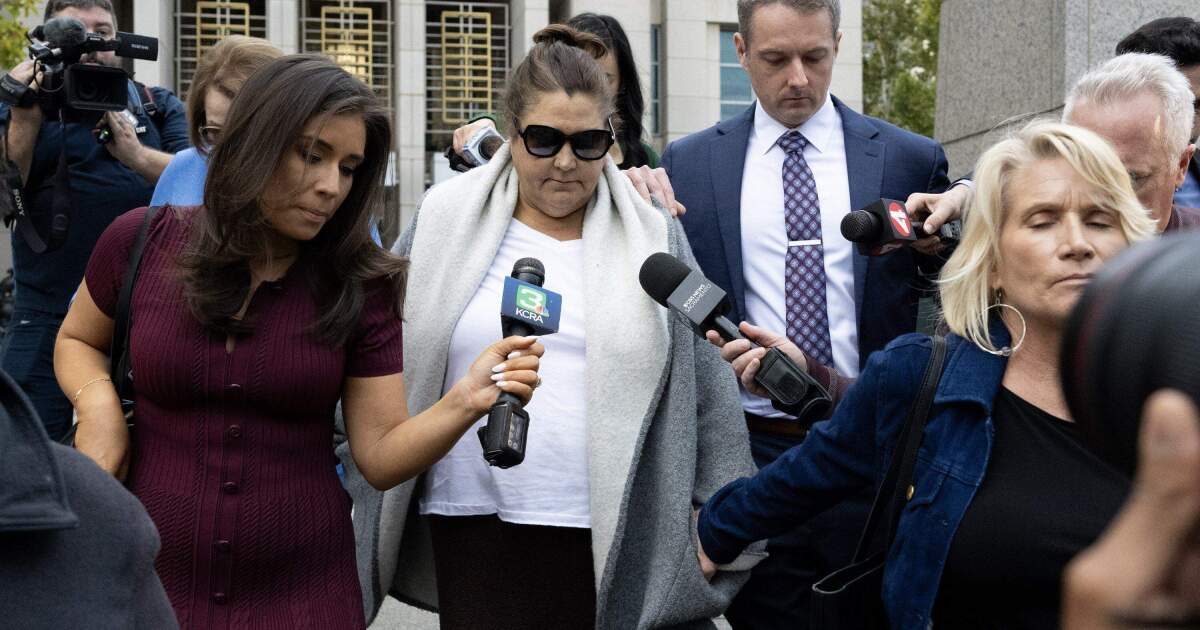
Gov. Gavin Newsom’s former chief of staff, Dana Williamson, left state service with two things: a federal corruption investigation and more than $50,000 in pay for vacation time she accrued but never took.

State payroll records reviewed by The Times show Williamson used approximately $30,000 in unused vacation time to remain on California’s payroll through Jan. 31 — seven weeks after Newsom’s office indicated she had departed — before collecting an additional $22,000 lump-sum payout for the hours she had left.

Large cash-outs for departing state workers with hundreds of hours of time off on the books have been a recurring issue in California. The state’s unfunded liability for vacation and other leave owed to employees has ballooned in recent years to $5.6 billion, fueled by generous time-off provisions and a long-standing failure to enforce policies that cap most employees’ vacation balances at 640 hours.

Many state workers accumulate large balances of unused vacation after decades of being on the government payroll. The typical public employee retires with more than two decades in public service, according the California Public Employees’ Retirement System. Their unused time off is paid when they leave state employment at their final rate of pay.

Williamson, however, amassed 462 hours of unused leave in less than two years on the job. She earned $19,612 a month as the governor’s chief of staff.

John Moorlach, director at the conservative think tank the Center for Public Accountability at the California Policy Center, said that a job like Williamson had probably involved incredibly long workdays but that the pace in which employees accumulate days off is a major financial burden.

“A normal blue-collar worker would say, ‘Really? Really?“” said Moorlach, a former Republican state senator from Orange County. “You don’t find this perk in the private sector.”

Williamson notified Newsom in November 2024 that she was under federal investigation and was put on paid administrative leave through Dec. 16, the governor’s office said.

Federal charges against Williamson, which were filed in November 2025, allege she siphoned $225,000 out of a dormant state campaign account belonging to gubernatorial hopeful Xavier Becerra and illegally claimed $1 million in luxury handbags and travel as business expenses on her tax returns. She pleaded not guilty to the charges.

A status conference in Williamson’s case was moved to April 16 after she recently underwent a successful liver transplant and due to the large volume of discovery — more than 280,000 pages so far — according to court records filed last month.

Williamson’s attorney, McGregor Scott, did not respond to a request for comment.

State payroll records show Williamson earned $40,000 in regular pay in 2025, which the state controller’s office said included her December 2024 and January 2025 paychecks. The governor’s office said Williamson’s December 2024 paycheck included 11 days of paid administrative leave, and the remainder of both paychecks was covered by her unused leave.

With her final cash-out of $22,000 in remaining time off, she made a total of $62,000 last year — all tied to administrative leave and unused vacation time rather than time worked.

“That’s shocking, honestly,” said Assemblyman Josh Hoover (R-Folsom), adding that stockpiled vacation time overall is something the state Legislature should look into.

The state paid $453 million in unused leave benefits to state workers in 2025. That was an average of more than $20,000 to the 21,000 employees who received a lump-sum check. The amount paid to departing or retiring state workers has steadily increased each year. In 2024, the state paid $413 million for unused time off.

“Obviously, employees are an important part of our state and they accrue vacation time,” Hoover said. “But, if this is something being used to pad people’s salaries … we need to look into that and possibly reform that.”

Last year, 80 state employees took home at least $250,000 in unused time off, and 1,081 employees were paid more than $100,000. Those numbers have been increasing each year. For example, the state paid 16 state workers more than $250,000 for unused time off in 2010, and 309 employees were paid more than $100,000.

In 2024, the state paid out a record $1.2 million to a prison supervising dentist for unused time off. Last year, the top amount paid for unused leave was about $650,000 to an assistant fire chief with the California Department of Forestry and Fire Protection.

The state owed nearly $5.6 billion to state workers for unused vacation and other leave benefits in 2024, according to the most recent financial accounting report issued by the state controller’s office. Although that unfunded liability held steady when compared with 2023, it has risen sharply from pre-pandemic amounts.

In 2019, the state owed $3.9 billion for employees’ unused time off before COVID-19 curtailed travel and work-from-home policies resulted in fewer workers taking time off. State employees have argued that under-staffing at state agencies can make it difficult to take vacations.

Nick Schroeder, a policy analyst at the nonpartisan California Legislative Analyst’s Office, said the state has plans to reduce unfunded liabilities for pensions and retiree healthcare, but that isn’t the case with unused time off.

“There isn’t a plan to address it,” Schroeder said.

When an employee retires with a large leave balance, the department where that person worked last is on the hook for the amount.

“It can be a big effect on that individual department’s budget,” Schroeder said.

During budget deficits — including in the current fiscal year — the state has cut employee pay or deferred annual raises in exchange for additional days off, a strategy that helps balance budgets but also adds to workers’ growing vacation balances.

In Newsom’s January budget proposal, which estimated a $3-billion deficit, the governor recommended providing $91 million in ongoing funding to the California Department of Corrections and Rehabilitation to help the prison system pay departing employees for their unused time off. The department said that from 2020 to 2025, it paid about $130 million annually on average to employees leaving state service, according to a Legislative Analyst’s Office report.

When employees cash out banked leave, the state pays them not only for the hours they have accumulated, but also for the additional vacation and holidays they would have earned had they taken that time off.

That means a person with 640 hours of vacation would also be paid for all of the vacation and holidays they would have earned had they taken those 80 days off. Each hour of leave is paid based on an employee’s final salary — not what they were earning when the time was accrued.

Most private-sector employers cap vacation accrual between 40 and 400 hours and stop employees from earning additional time once they reach those limits. Some companies have moved in the opposite direction, adopting “unlimited paid time off” policies. Under those systems, employees do not accumulate vacation days that can be banked or cashed out, but critics say the policies can lead to workers taking less time off because there is no guaranteed number of days and employees may feel pressure not to appear absent.

Jon Coupal, president of the Howard Jarvis Taxpayers Assn., said there appears to be little appetite in the state Capitol to address California’s burgeoning vacation liability.

“This problem is systemic within California government and no one seems willing to take it on,” Coupal said. “At the same time, they are clamoring that there is a budget crisis. I suspect they will continue to kick the can down the road.”

Source link