rare-earth

G7 Launches Critical Minerals Alliance to Reduce Dependence on China

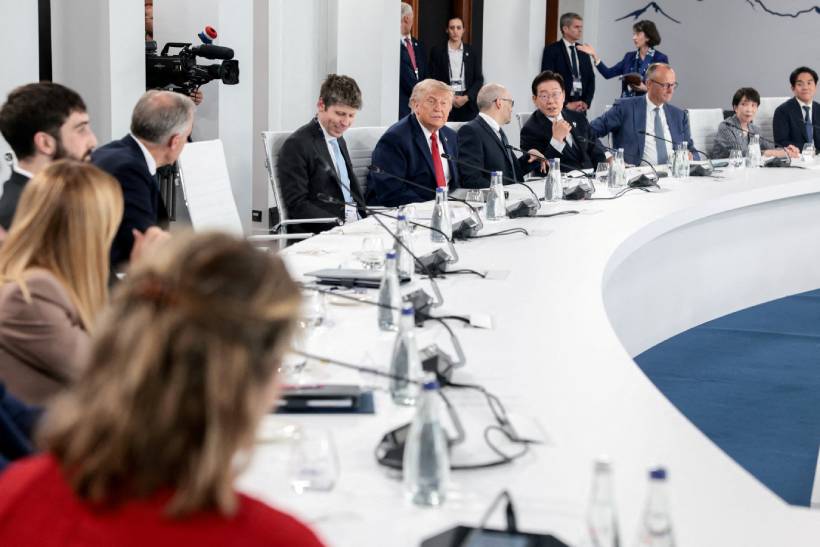
Leaders of the Group of Seven agreed to deepen cooperation on critical minerals and establish a new coordination platform aimed at reducing reliance on China for materials essential to defense, technology, electric vehicles, and renewable energy industries.

The move comes as Western economies seek to strengthen supply chain security following disruptions caused by Chinese export restrictions on rare earth related products and permanent magnets, which exposed the vulnerability of global industries dependent on a single dominant supplier.

New Targets for Supply Chain Diversification

The G7 outlined ambitious goals to reduce dependence on any single supplier outside the group and its partners. Leaders said they aim to lower reliance on one source for rare earths and permanent magnets to below 60 percent by 2030, with a longer term objective of reducing that figure to 50 percent as soon as possible.

Initial cooperation will focus on lithium and nickel, two minerals that play a crucial role in battery manufacturing and clean energy technologies. The framework is expected to expand gradually, adding several new minerals each year with particular attention on rare earth elements.

New Monitoring Platform and Investment Push

A central part of the initiative is the creation of a new platform that will coordinate policy responses, improve information sharing, and monitor potential supply disruptions.

The platform will work closely with the International Energy Agency, which will provide market analysis and early warnings about supply risks, shortages, and distortions.

G7 leaders also stressed the need for greater investment across the entire supply chain, from mining and processing to manufacturing and recycling. Development finance institutions, export credit agencies, and private investors are expected to play a larger role in funding strategic projects.

According to the summit statement, nearly 200 critical mineral projects have already been announced since the start of 2026, representing tens of billions of dollars in planned investment.

Economic Security Becomes a Strategic Priority

The initiative reflects a broader shift in Western economic policy, where critical minerals are increasingly viewed as a national security issue rather than simply a trade matter.

Rare earths, lithium, nickel, cobalt, and other strategic minerals are essential for advanced military systems, semiconductors, electric vehicles, batteries, renewable energy infrastructure, and artificial intelligence technologies.

Spend

Western governments have become increasingly concerned that geopolitical tensions could disrupt access to these resources, creating economic and security vulnerabilities.

Analysis

The G7 initiative represents one of the most coordinated attempts yet by advanced economies to reduce strategic dependence on China. While the statement avoids directly confronting Beijing, the objectives clearly target vulnerabilities that became apparent after China’s export restrictions disrupted global industries.

The challenge, however, extends beyond mining. China has spent decades building dominance across processing, refining, manufacturing, and logistics networks. Replicating those capabilities will require sustained investment, government support, and international coordination over many years.

The inclusion of measures such as joint procurement, subsidies, quotas, and price support mechanisms suggests governments are increasingly willing to intervene in markets to secure strategic resources. This marks a significant departure from the free market approach that previously dominated global trade policy.

Success will depend on whether G7 members can maintain political unity and attract sufficient private investment. If implemented effectively, the alliance could gradually reshape global critical mineral supply chains and reduce China’s leverage over key industries. If not, Western economies may continue to face supply risks despite ambitious targets and large investment commitments.

What Comes Next

The G7 is expected to begin implementing pilot programs focused on lithium and nickel while expanding cooperation with allies such as Japan and the European Union. The United States is also expected to pursue new trade and supply agreements related to critical minerals in the coming months.

Attention will now shift to whether governments can translate commitments into operational projects, increase domestic processing capacity, and build alternative supply chains quickly enough to reduce dependence on China before future disruptions occur.

With information from Reuters.
Source link

The Weaponisation of Supply Chains: Chips, Rare Earths, and Economic Warfare

The rise of artificial intelligence (AI) and the move toward a green transition built on renewable energy are fundamentally restructuring the global economy. While unleashing unprecedented opportunities, these developments also provide new geopolitical weapons due to the unequal distribution of critical minerals, in particular rare earths, the advanced technology and expertise involved in manufacturing, and the omniscient and inexorable role of the resulting products like semiconductors and batteries for the operation of today’s technologised societies. Thus, countries like China and the United States (US) increasingly seek to safeguard national access to these crucial components and products. This weaponization has implications for global business interests, supply chains, technological development and existing geopolitical tensions in the Middle East and between the US and China.

Semiconductors—the new oil?

Semiconductors, or advanced chips, have been likened to the oil of the 21st century. Just as in the 20th century, oil formed the basis for global economic activity, semiconductors form crucial parts of everything from critical infrastructure like 5G data networks, military technology like missiles and AI data centers, to smartphones, fridges and electric vehicles. Indeed, the semiconductor market, growing rapidly since the launch of large language AI models in 2022, is projected to hold a value of $1 trillion by 2030. Hence, whoever controls the supply of semiconductors holds the power to bring rivaling economies to a standstill. This capability is reinforced by the fact that advanced microchips, and the rare earths contained in them, lack ready substitutes.

Assuredly, oil still offers geopolitical leverage—brought to the fore by the current energy crisis resulting from the closure of the Strait of Hormuz. Yet, semiconductors offer a more potent geopolitical weapon. For example, European sanctions on Russian oil and natural gas following the invasion of Ukraine in 2022 has been largely ineffective in crippling the oil-reliant Russian economy, as Russia has been able to find alternative supply routes like the Caspian Sea and alternative buyers such as India, Türkiye and China. By contrast, semiconductor supply chains are more concentrated due to differential geography, and economic, technological and intellectual capital. For example, Taiwan produces over 90% of the world’s advanced chips, while China controls 60% of global rare-earth production, and 90% of mineral refinement. Similarly, the US enjoys supremacy in semiconductor manufacturing equipment (SME) and expertise, while the Netherlands is the world’s sole producer of extreme ultraviolet lithography required to imprint circuits on semiconductors. Hence, the highly concentrated supply chains of semiconductors gives a handful of countries significant strategic leverage as countries are willing to go far to secure access to these crucial components.

Capitalising on critical mineral supply

This power is reinforced by the fact that the majority of the planet’s critical minerals—such as copper, cobalt and lithium—used in semiconductors and batteries are concentrated in developing countries in Africa and Latin America like Brazil, Chile and the Democratic Republic of Congo (DRC). Thus, the capital-intensity of mineral extraction has allowed major powers like the US and China to expand their influence over supply chains through massive investment in the mining industries of these regions. Hence, supply chains are further concentrated in the hands of a few states, enhancing the weaponisability of these resources. This is bolstered by the rarity and geographic disparity of these elements, meaning that countries cannot easily find substitutes or alternative suppliers for these critical resources, should the aforementioned mineral ‘gatekeepers’ choose to wield their strategic leverage and restrict supply.

Global business caught in the crossfire

This development subjects international business activity, especially within emerging technologies like AI, to geopolitical tensions. For example, the US introduced export controls in 2022, banning US semiconductor company Nvidia from exporting its advanced H2000 chips to China to protect US technological dominance. And Nvidia is not an isolated case—in the last few years, the amount of US companies on the Commerce Department’s Entity List restricting exports has quadrupled. In effect, US companies are losing global competitiveness and access to China—one of the biggest markets in the world. This effect might be hard to reverse. Although the Trump administration relaxed export restrictions in early 2026, no Nvidia chips had arrived in China by mid-May. Part of the reason is that China in response to US restrictions has built up its domestic production, and legally favored domestic chips producers like Huawei to reduce its strategic vulnerability to foreign powers. For similar reasons, China prevented US-based Meta in 2025 from buying up Manus, a Chinese-founded AI company. Thus, business interests are highly susceptible to the weaponisation of concentrated critical supply chains in the geopolitical rivalry between US and China.

Semiconductors—beyond oil

Hence, semiconductors and related products may not simply be the economic and strategic, 21st-century equivalent of 20th-century oil, but may indeed hold greater geopolitical leverage than oil ever did. While the US dominates global oil production, China does not have to import oil from its geopolitical rival at the expense of Chinese strategic power—despite China relying on imports for over 70% of its oil—as diversified global energy markets allow for alternative energy sources like coal and natural gas, and alternative suppliers like the UAE, Iran and Qatar. By contrast, China’s ability to manufacture the most advanced semiconductors without the currently unique US SME is highly limited, with Chinese semiconductor development 3 years behind the US. Consequently, China accounts for over half of the semiconductor exports of US-allied Taiwan.

Taiwan in the crossfire

This in turn increases the strategic importance of the Taiwan dispute. While China has long claimed Taiwan to be part of China, the US endorses Taiwanese independence. The importance of semiconductors has cemented this conflict, with China desiring reunification to gain control over global semiconductor manufacturing, while the US for the same reason favors Taiwanese independence from China to maintain US access to its semiconductor supply, in extension of current efforts to induce TSCM to offshore its production to the US, and reduce semiconductor exports to China. Similarly, China has leveraged its global dominance of refined rare earths and battery production by introducing export restrictions on batteries, refined critical minerals, and rare earths in response to US SME restrictions, exploiting the fact that the US has limited ability to employ its SME to manufacture semiconductors without these Chinese inputs. In response, the US and its allies are scrambling for alternative access to critical minerals by expanding trade partnerships with mining countries like the DRC, investment in battery-production, and by launching Project Vault, a $12-billion investment to create a national critical minerals reserve.

The weaponisation capacity of semiconductors has only begun. As countries are approaching the deadlines of net-zero emissions goals outlined in the Paris Agreement, increased dependency on renewable energy will increase susceptibility to global supply chains for batteries, rare earths and semiconductors for products like EVs, solar panels and energy storage.

Source link