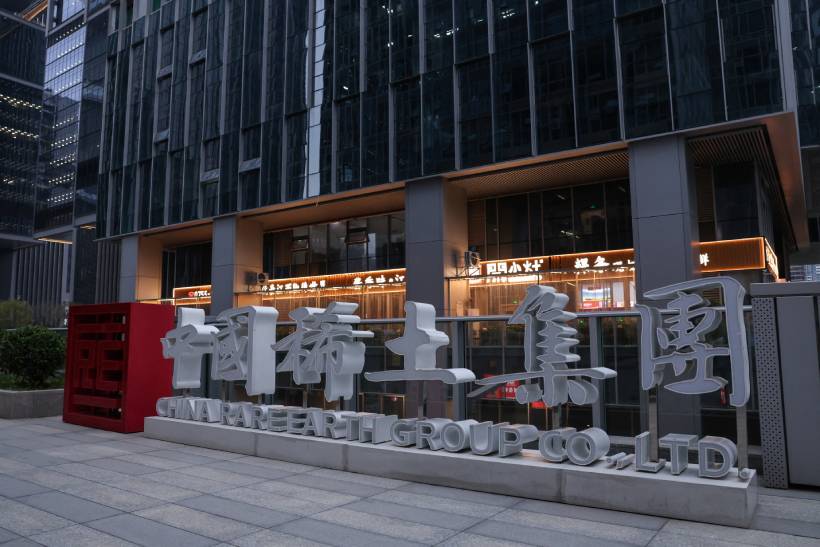
Rare Earth Elements

Trump Administration in Talks with Taiwan to Boost U.S. Semiconductor Workforce

The Trump administration is negotiating a trade deal with Taiwan aimed at increasing investment and training for U.S. workers in semiconductor manufacturing and advanced industries. Taiwanese firms, including TSMC, could commit capital and personnel to expand U.S. operations and help train Americans. The discussions also include potential tariff reductions on Taiwanese exports to the United States, although semiconductors are currently exempt.

Why It Matters

The deal could strengthen U.S. domestic manufacturing, particularly in semiconductors—a critical industry for AI, electronics, and national security. By importing Taiwanese expertise, the U.S. hopes to close skills gaps in high-tech industries. It also positions the U.S. competitively against rivals like South Korea and Japan, which have pledged hundreds of billions in investments under similar arrangements.

U.S. Government: Seeking to bolster domestic industry, reduce reliance on foreign semiconductors, and incentivize foreign investment.

Taiwanese Firms: TSMC, Foxconn, GlobalWafers, and others could expand U.S. operations while protecting their most advanced technology in Taiwan.

U.S. Workers: Stand to gain skills and employment opportunities in high-tech sectors.

China: Likely to monitor negotiations closely, as any expansion of Taiwanese presence in the U.S. could heighten tensions over Taiwan’s status.

Trade Observers and Investors: Watching for shifts in global semiconductor supply chains and investment patterns.

Next Steps

Negotiations are ongoing, and details may change until a deal is finalized. Taiwanese and U.S. officials are exchanging documents to firm up investment and training commitments. Any agreement would need to balance industrial expansion with Taiwan’s desire to keep its most advanced semiconductor technology at home.

With information from an exclusive Reuters report.

Source link

China Courts Germany to Ease Rare-Earth Strains and Boost Strategic Ties

China and Germany have moved quickly to mend trade tensions that escalated after Beijing restricted exports of rare earths and chips, disruptions that have snarled German production lines and prompted calls to “de-risk” supply chains. Premier Li Qiang met German Chancellor Friedrich Merz on the sidelines of the G20 summit in South Africa, pitching closer collaboration in strategic industries including new energy, smart manufacturing, biomedicine, hydrogen technology, and intelligent driving. German Finance Minister Lars Klingbeil and top diplomat Johann Wadephul have also resumed high-level dialogue with their Chinese counterparts. China is Germany’s top European trade partner, with German auto, chemicals, and pharmaceutical firms heavily reliant on Chinese markets.

Why It Matters

Rare earths and other strategic components are critical to global high-tech and industrial production. China’s curbs on exports earlier this year revealed vulnerabilities in Germany’s manufacturing base, including autos and electronics, and underscored Europe’s reliance on Chinese supply chains. Restoring dialogue signals Beijing’s willingness to stabilize industrial flows while asserting its role as a global supplier. For Germany, balancing economic dependence on China with political pressure from allies like the U.S. highlights the ongoing challenge of managing strategic supply risks without alienating a key trading partner.

German industry particularly automakers, chemicals, pharmaceuticals, and advanced manufacturing stands to benefit directly from eased export controls. German policymakers, led by Chancellor Merz and Finance Minister Klingbeil, are focused on securing reliable access to rare earths and high-tech inputs while navigating geopolitical tensions. China’s government and state-backed firms aim to maintain Germany as a top European market and investor, leveraging bilateral ties to offset U.S. trade and technology pressure. The European Union observes closely, given implications for broader supply-chain strategies and collective European responses to China’s industrial policies.

What’s Next

Chancellor Merz is expected to visit China soon to meet President Xi Jinping, while diplomatic channels with Foreign Minister Wadephul are resuming. Both countries are likely to deepen engagement in strategic industries to reduce bottlenecks in rare earths, chips, and emerging tech sectors. Germany will continue to balance economic pragmatism with pressure from EU allies and the U.S. on issues like human rights, industrial subsidies, and supply-chain resilience. China may also push for policy alignment or reduced interference on geopolitical matters as a precondition for deeper cooperation.

With information from Reuters.

Source link

FBI Chief Kash Patel Makes Secret Beijing Trip to Discuss Fentanyl

FBI Director Kash Patel visited Beijing last week to hold talks with Chinese officials on fentanyl and law enforcement issues, according to sources familiar with the trip. The visit came after a summit between U.S. President Donald Trump and Chinese President Xi Jinping, where both leaders highlighted a new “consensus” on controlling the flow of the deadly synthetic opioid.

Patel’s stay in Beijing lasted about a day and was not officially announced by either government. The trip coincided with China’s announcement that it would adjust its catalogue of drug-related precursor chemicals and require export licenses for shipments to the U.S., Canada, and Mexico.

Why It Matters

Fentanyl continues to be the leading cause of overdose deaths in the United States, making international cooperation on its regulation a critical security concern. The trip signals a shift in U.S. policy from punitive measures to bilateral collaboration with China on law enforcement issues.

It also has broader implications for trade relations, as President Trump had already halved tariffs on Chinese goods following the summit, linking law enforcement cooperation with broader economic negotiations.

The key stakeholders include the U.S. government, led by FBI Director Kash Patel and President Trump, as well as Treasury Secretary Scott Bessent, who is overseeing the implementation of mechanisms to curb fentanyl exports. Chinese authorities, including the Ministry of Public Security, the Ministry of Foreign Affairs, and the Commerce Ministry, are responsible for regulating precursor chemicals and managing export controls.

North American countries such as the U.S., Canada, and Mexico are also involved, as they are primary recipients of controlled chemical exports and partners in enforcement.

What’s Next

The details of the Trump-Xi consensus are expected to be finalized through a new bilateral working group. China will continue to regulate and monitor precursor chemical exports more strictly, while U.S. and Chinese law enforcement agencies may deepen their cooperation. The visit may also influence broader trade dynamics, including the resumption of U.S. soybean purchases by China and the suspension of previously announced rare-earth export curbs.

With information from Reuters.

Source link