RABAT, Morocco — A Moroccan court sentenced a rapper known for his criticism of the country’s ties with Israel and accusations of government corruption to eight months in prison, the latest in a string of penalties against young musical artists.
Souhaib Qabli’s songs sharply criticize Morocco’s 2020 decision to normalize ties with Israel in an accord brokered by the first Trump administration. His lyrics also call out problems with public services and restrictions on freedom of speech, grievances also voiced by Morocco’s Gen Z protesters last year.
The judge ruled Thursday that Souhaib Qabli, a 23-year-old rapper, was guilty of insulting a constitutional body, his attorney Mohamed Taifi told the Associated Press. Qabli, who is a member of Al Adl Wal Ihsane, a banned but tolerated Islamist association, was also fined $106.
“The court did not clarify what it meant by a constitutional body. No specific party was identified in the case file, and there are many constitutional institutions,” Taifi said.
The attorney said that his client is appealing the verdict. He also said Qabli was cleared of other charges, including insulting public officials and disseminating false allegations.
Before the public hearing, dozens of supporters gathered outside the court in Taza, a city in north-central Morocco about 160 miles from the capital, Rabat, holding banners calling for Qabli’s release. Rights groups in the North African kingdom have described the case as a political measure aimed at curbing freedoms.
Qabli, known by the stage name L7assal, was arrested earlier this month and remained in custody until the court delivered its verdict. He was studying refrigeration and air conditioning at a vocational training institute in addition to his music career.
His attorney said that Qabli was questioned in court about his songs and social media posts. Qabli said he had no intent to insult any constitutional body and was expressing his views through his music.
His songs include “No to the Normalization,” referring to Morocco’s decision to normalize ties with Israel in the U.S.-brokered Abraham Accords in 2020, in exchange for Washington’s recognition of Morocco’s claim to the disputed Western Sahara territory.
The move was criticized by Morocco’s pro-Palestinian supporters and sparked large protests in several cities. While authorities allowed the rallies, they have arrested activists who criticized the decision.
Morocco’s constitution generally guarantees freedom of expression, and the country is seen as relatively moderate compared with others in the Middle East. Yet certain types of speech can trigger criminal charges, and Morocco has seen tightening restrictions on dissent, including against journalists and activists.
Afroman has emerged victorious from an invasion of privacy and defamation case filed against him by seven members of Ohio’s Adams County Sheriff’s Office over mocking videos and social media posts the rapper put out after a failed 2022 raid on his home.
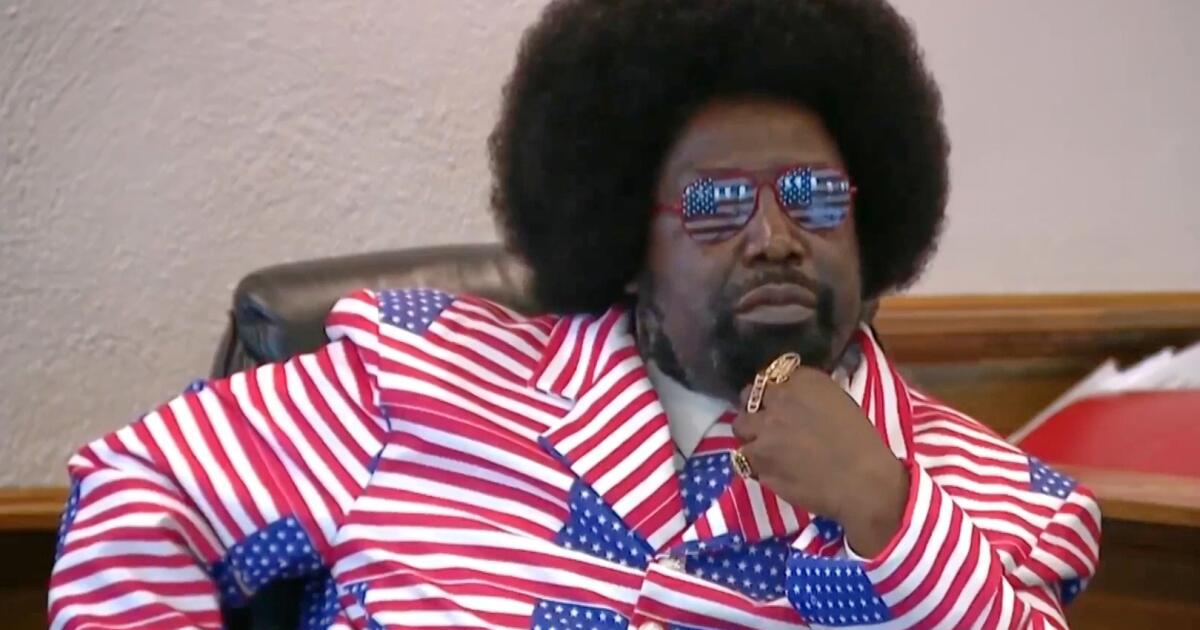
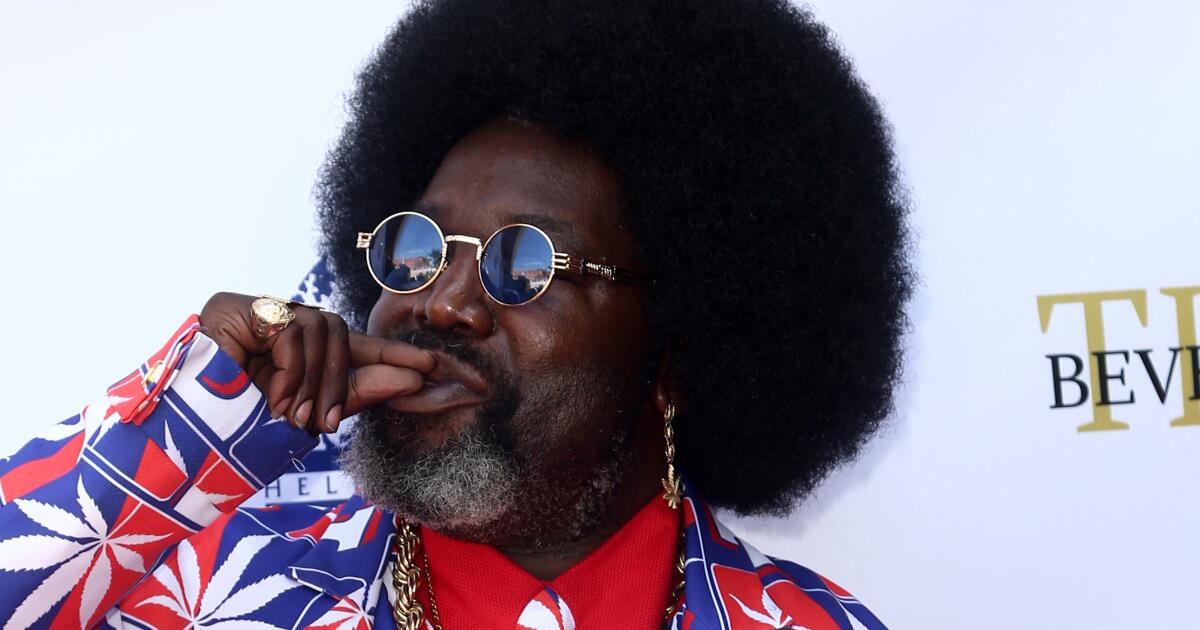
“We did it, America! Yeah, we did it! Freedom of speech! Right on! Right on! Yeah! God bless America!” the 51-year-old rapper, born Joseph Foreman, shouted outside the courthouse after the Wednesday evening verdict as supporters rallied behind him. In the clip, under a white fur coat, he was rocking the same American flag shades and red, white and blue suit and tie he had worn on the stand Tuesday.
Four deputies, two sergeants and a detective with the Adams County sheriff filed the lawsuit in March 2023, seeking to reclaim any money the rapper made from what they said was unauthorized use of their likenesses. The group wanted nearly $4 million in damages. Foreman used footage from the raid in videos for songs including “Lemon Pound Cake” to make money to pay for the damage done to his home during the raid, when his front gate was broken down and his front door smashed in.
The plaintiffs said in their lawsuit that the posts and videos caused them “humiliation, ridicule, mental distress, embarrassment and loss of reputation” and made it difficult to do their law enforcement work.
At trial, all seven plaintiffs testified about the harassment they had suffered because of the rapper’s music and videos. One, Deputy Lisa Phillips, had her gender identity called into question in Foreman’s videos and social media posts. She cried on the stand as a video suggesting she enjoyed sex with other women was played for the court.
The jury apparently agreed with the argument that the sheriff’s officers were acting in a public capacity during the raid and therefore were not shielded from criticism of their behavior.
“No reasonable person would expect a police officer not to be criticized. They’ve been called names before,” defense lawyer David Osborne said in closing arguments for the rapper and comedian, known for his breakout 2000 hit, “Because I Got High.”
In 2022, the sheriff’s team was acting on a warrant showing probable cause that drugs and drug paraphernalia would be found on the property and alleging that trafficking and kidnapping had happened there. No evidence of a crime was found, and no charges were filed.
Foreman wasn’t home during the raid but was able to see at least part of it via a video recorded by his ex-wife and footage captured on his home security system before law enforcement turned off those cameras. He said on the stand that the raid traumatized his children, who were 10 and 12 at the time.
“The whole raid was a mistake. All of this is their fault,” Foreman testified Tuesday. “If they hadn’t wrongly raided my house, there would be no lawsuit, I would not know their names, they wouldn’t be on my home surveillance system, and there would be no songs, nothing.”
Foreman also defended his right to use the raid footage as fodder for his work.
“After they left, I had the right to kick the can and to do what I had to do to repair the damage they brought to my house. Yes, I did,” he testified. “I have freedom of speech. I’m a rapper. I entertain.”
Foreman discussed his reaction to the lawsuit with local station WCPO Channel 9 in 2023. “From the first 10 seconds, I was offended. I was appalled. I was like ‘What?’ Then I started laughing,” he said. “These guys with their rifles are crying about my comedy songs.”
Meanwhile, as the jury deliberated Wednesday, an entirely different Adams County Sheriff’s Office was feeling online heat linked to the trial: the office in Colorado’s Adams County.
“The Adams County Sheriff’s Office has received a flood of social media comments, DMs, and phone calls about the #Afroman defamation trial,” the Colorado department said on X. “It’s clear this is important to a lot of people. There’s just one small issue: that’s the ACSO in Ohio. We are the ACSO in #Colorado. Different states, same name.”
Afroman testified Tuesday in a civil lawsuit brought by seven members of an Ohio sheriff’s office who allege he used their likenesses without permission in music videos and on merchandise and spread lies about them after they raided his home in August 2022.
The 51-year-old, whose real name is Joseph Edgar Foreman, said on the stand Tuesday that he was in the right, according to local station WCPO Channel 9 in Cincinnati.
“The whole raid was a mistake. All of this is their fault,” Foreman testified, taking the stand wearing sunglasses with American flag lenses and a red, white and blue suit and matching tie made of fabric recalling the American flag. “If they hadn’t wrongly raided my house, there would be no lawsuit, I would not know their names, they wouldn’t be on my home surveillance system, and there would be no songs, nothing.”
Officers were acting in 2022 on a warrant showing probable cause that drugs and drug paraphernalia would be found on the property. The warrant also alleged that trafficking and kidnapping had happened there. No evidence of a crime was found, and no charges were filed. Foreman wasn’t home during the raid but was able to see at least part of it via a video recorded by his ex-wife and footage captured on his home security system before law enforcement turned off those cameras.
It was that footage that was used in the various videos the rapper subsequently posted, including a music video for the song “Lemon Pound Cake,” which he wrote about the raid.
Officers tore down his door, he said, and damaged his house, taking money, vape pens and a small amount of marijuana. There was a discrepancy about the amount of money taken and returned to the rapper, which seemed to be a point of contention linked to whether he was misrepresenting what the deputies did during the raid.
“After they left, I had the right to kick the can and to do what I had to do to repair the damage they brought to my house. Yes, I did,” Foreman said. “I have freedom of speech. I’m a rapper. I entertain.”
His testimony came on the second day of the trial, after the deputies took the stand the first day and testified that though the raid wasn’t perfect, Foreman had been spreading lies about them for years since it occurred. Deputy Lisa Phillips, whose gender identity had been called into question in Foreman’s videos and social media posts, cried on the stand as some of those videos were played for the court.
Footage with a song called “Licc’em Low Lisa” showed Foreman saying he thought he would “crack some musical jokes” in the wake of the raid, then going to comfort a crying actor who resembled Phillips. “I didn’t know they hurt you that bad. … I was just having fun with a bad situation.” The same video showed the actor engaging in sexual activity with another woman.
In their lawsuit, WCPO said, the deputies said the posts and videos caused them “humiliation, ridicule, mental distress, embarrassment and loss of reputation” and made it difficult to do their law enforcement work.
In an amicus brief, however, the ACLU argued that the deputies’ lawsuit was a “classic entry into the SLAPP suit genre,” referring to a type of lawsuit that seeks to discourage criticism of public officials.
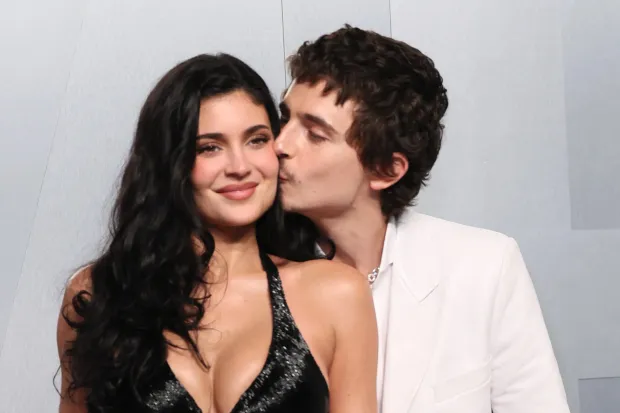
TIMOTHÉE Chalamet’s painful Oscars experience was made worse by love rival Travis Scott cheering for Michael B. Jordan, a source close to the star told The U.S. Sun.
Chalamet endured a brutal Academy Awards, from being roasted by host Conan O’Brien to missing out on a career-defining award.
Sign up for the Showbiz newsletter
Thank you!
Chalamet endured a difficult awards season, leaving the BAFTAs and Oscars empty handedCredit: APChalamet was forced to take a series of jibes from Oscars host Conan O’Brien following his recent controversial comments about the artsCredit: GettyThe U.S. Sun understands Chalamet was reportedly upset at Travis Scott for openly cheering on rival Michael B. JordanCredit: Getty
O’Brien targeted the Willy Wonka actor over his scathing remarks about opera and ballet, which had sparked global criticism and threatens to end his partnership with Cartier.
Chalamet said last month in a CNN town hall with Matthew McConaughey that “no one cares” about either artform, with one Academy insider labelling him as “arrogant.”
The night, however, reportedly worsened when controversial rapper Scott — girlfriend Kylie Jenner’s ex and father of her two children — openly supported Jordan, who beat Chalamet in the Best Actor category.
The insider said the 30-year-old was “shaken” after Marty Supreme failed to win any of its nine nominations.
While he was happy for Jordan, who impressed judges with his dual role in Sinners, Chalamet struggled to hide his disappointment, and his tension with Scott reportedly hit an “all-time low.”
“Travis’s support for Michael B. Jordan was seen as a direct snub, and it’s clear he has little respect for Timothée’s talent,” the source said. “While he isn’t confrontational, their relationship has grown colder than ever.”
Another source also told The U.S. Sun that the couple even walked out of the Oscars ceremony for an hour, leaving seat fillers in their spot.
Most read in Entertainment
People close to him said he leaned heavily on Jenner for comfort, appearing so reliant that she sometimes seemed overwhelmed.
It has been a dispiriting awards season for Chalamet.
Last month at the 2026 BAFTA Film Awards in London, he was nominated for Best Actor for Marty Supreme but lost to Robert Aramayo for his performance in I Swear.
Marty Supreme, which tells the true story of a table tennis player in the 1940s, went home empty-handed despite nine nominations.
Sources said Chalamet left the BAFTA ceremony visibly deflated, struggling to enjoy himself despite efforts from Jenner and his friends.
“Going home with nothing in London deeply bruised his ego, though he will certainly learn from the experiences of the last few months.
“He never truly settled into the vibe of the ceremony; his mood was tense and stressed, and he struggled to enjoy himself.”
It wasn’t just host O’Brien laughing at him, either.
Another roast came from Alexandre Singh, who accepted the award for Best Short Film (a tie between The Singers and Two People Exchanging Saliva) and addressed Chalamet’s ballet comments.
“Maybe it takes ten years’ time, but we can change people’s lives through art, through creativity — through theatre and ballet — and also cinema,” Singh said after collecting his award.
The insider said the energy throughout the night was tense, with Jenner’s behavior described as almost maternal.
“The atmosphere was strange for everyone involved. Kylie has become his primary safe space, to the point where those around him feel she is essentially babysitting him.
What did Timothee Chalamet say about ballet and opera? Oscars controversy explained
Timothée Chalamet has sparked a heated cultural debate following comments made at a CNN and Variety Town Hall on February 21, 2026.
Speaking alongside Matthew McConaughey about needing “draws” to pull in an audience to his movies, Chalamet made harsh comments about industries he claimed feel forced to stay afloat.
“I don’t want to be working in ballet or opera… where it’s like, ‘Hey, keep this thing alive, even though no one cares about this anymore,’” he said.
The remarks mirror sentiments Chalamet expressed as early as 2019 during a promotional event for The King, where he labeled the disciplines “dying art forms.”
The Royal Ballet and Opera issued a formal rebuttal, emphasizing that these art forms do not exist in isolation but rather “inform, inspire, and elevate” the broader cultural landscape, including the film industry itself.
“It is a bizarre dynamic; while she seems to embrace her influence over him, it often feels like she is acting as a maternal figure rather than a partner, which many find frustrating to witness.”
Sources said the Oscars provided Chalamet a reality check when he faced fellow nominees Jordan and Brazilian actor Wagner Moura.
Friends have advised him to adopt a more mature public persona, projecting confidence rather than appearing like a “young boy with a high school girlfriend.”
“The gap in maturity was obvious,” the insider said. “He’s been told multiple times he needs to project more maturity to be taken seriously as a leading man.”
Chalamet now plans to put the disappointment behind him by going on vacation, attending some NBA games, and “reconnecting with himself” before returning to work.
Chalamet and Kylie Jenner attended the Vanity Fair afterparty but it’s claimed he left earlyCredit: EPA
A FEMALE rapped has died aged 37 after suffering a heart attack as her devastated friends pay tribute.
Gianina Gheorghiu recently passed away with her close friends revealing she had been battling an alcohol problem.
Sign up for the Showbiz newsletter
Thank you!
Romanian rapper Gianina Gheorghiu has died aged 37 after suffering a heart attackCredit: Jam PressShe went by the stage name Chica Con Canna and forged an impressive careerCredit: Jam Press
Going by the stage name Chica Con Canna, the rapper dominated the scene in her country, forging an impressive career.
The news left her friends and fans devastated after her death was announced on March 9.
The Romanian rapper was huge in her local scene, collaborating with stars such as Tony Batrânu, Vladone and Mike Diamondz.
Her close friend Dana Marijauna spoke of her death in a heartbreaking tribute to the musician.
Although there is no official confirmation on what caused the heart attack Dana believes she “did not win the fight against alcohol”.
The rapper stated: “With tears in my eyes, with a fantastic love for Chica, who did not win the fight against alcohol.
“A girl with great talent, the best female voice and interpretation in English in the world of Romanian rap, soulful, generous, strong character.
“In vain, alcohol did not take into account all its countless qualities.
“We love you even in a billion years.
“We were supposed to record new songs, but we will do it without physical presence.”
The star’s untimely death has left a void in the Romanian rap industry with a number of artists, including Dana, claiming they had future projects with her.
The rapper confirmed that the projects will go ahead in her memory.
The news has left her friends and fans devastatedCredit: Jam Press
Irish rapper Liam O’Hanna welcomes ruling in case he says was ‘never about any threat to the public, never about terrorism’.
Published On 11 Mar 202611 Mar 2026
Share
British prosecutors have lost an appeal seeking to reinstate a “terrorism” charge against a member of Irish rap group Kneecap accused of waving a Hezbollah flag during a gig in London.
London’s High Court on Wednesday rejected prosecutors’ attempts to challenge a lower court’s decision to throw out the case against Liam O’Hanna in September due to a technical error.
Recommended Stories
list of 3 itemsend of list
The decision means the case will not proceed. In a statement, the Crown Prosecution Service said the High Court had “clarified how the law applies” to such cases and that it accepted “the judgement and will update our processes accordingly”.
O’Hanna – also known as Liam Og O hAnnaid (his name in Gaeilge, the Irish language) and by the stage name Mo Chara (“My Friend”) – was charged in May of last year with displaying a Hezbollah flag during a November 2024 concert in London, in violation of the United Kingdom’s 2000 Terrorism Act.
Kneecap’s members – who rap in Gaeilge and English and have been outspoken in their condemnation of Israel’s genocide against Palestinians in the Gaza Strip – have called the attempted prosecution a “British state witch-hunt”.
Liam O’Hanna (Liam Og O hAnnaid) welcomed the ruling during a news conference in Belfast, Northern Ireland [Charles McQuillan/Getty Images]
O’Hanna welcomed the ruling on Wednesday, saying during a news conference in Belfast that the case was “never about me, never about any threat to the public and never about terrorism”.
“It was always about Palestine, about what happens if you dare to speak up, about what happens if you can reach large groups of people and expose their hypocrisy, about the lengths Britain will go to cover up Israeli and US war crimes,” he said.
Cheered by supporters at the event, O’Hanna was joined by Kneecap bandmates JJ O Dochartaigh and Naoise O Caireallain – better known by their respective stage names, DJ Provai and Moglai Bap.
“Your own High Court ruled against you,” O’Hanna added, addressing the UK government.
“The pathetic thing about this whole process is that you falsely tried to label me a terrorist when it is the British government ministers that are arming and assisting a genocide in Gaza, the destruction of Lebanon, and the senseless slaughter of schoolkids in Iran.”
Balendra Shah (C), former mayor of Kathmandu, appears poised to become Nepal’s next prime minister after his party scored a landslide victory in national elections. Photo by Narendra Shrestha/EPA
March 8 (UPI) — Former rapper Balendra Shah appears poised to be Nepal’s next prime minister, after his party won the general election by a landslide.
Shah’s Rastriya Swatantra Party, or RSP, captured 117 out of the 165 directly-voted seats in the Federal Parliament of Nepal and is currently leading in eight more contested seats. Final results, including seats appointed by proportional representation, are expected to be announced in the coming days.
Shah, 35, transitioned from a rapper to a politician in 2022, when he was elected mayor of Kathmandu.
The former musician became a figurehead of the September 2025 movement that saw young people take to the streets to protest Nepalese Prime Minister Sharma KP Oli’s law banning social media use. The protests expanded into criticism of government corruption and the country’s political system as a whole.
A government crackdown on the protests resulted in the deaths of 19 protesters, and led to public unrest resulting in 70 deaths and the resignation of Oli’s government.
Shah’s party has pledged to create 1.2 million jobs, reduce forced migration, raise the per capital income from $1,447 to $3,000 and provide social safety nets including health insurance.
Kathmandu, Nepal – Facing thousands of raucous supporters, 35-year-old Balendra Shah lifted his signature black rectangular sunglasses, asked his audience to look him in the eye, and said: “I love you.”
It is a sentiment that millions of young Nepalis appear to reciprocate.
Recommended Stories
list of 4 itemsend of list
Balen – as he is popularly known – was a nobody until 2013, when he almost overnight became a rap sensation. Nearly a decade later, in May 2022, he stunned Nepal’s deeply entrenched mainstream political parties by winning the post of mayor of Kathmandu, the country’s capital, while contesting as an independent.
When the Himalayan nation of 30 million people erupted in popular protests against the government of then-Prime Minister KP Sharma Oli in September 2025, Balen emerged as a high-profile backer of the protesters. He was the first choice of many Gen Z activists to take over as interim leader after Oli was forced to resign. But he instead supported former Supreme Court Chief Justice Sushila Karki for the post. It is now that this was a tactical move.
As Nepal heads to its first election since the protests last year, and Karki’s brief term ends, Balen is positioning himself as the future prime minister the country needs. And true to style, he is doing it with a bang: He is contesting the parliamentary elections from Jhapa-5, a seat about 300km (186 miles) southeast of Kathmandu, against Oli, the man protesters deposed just five months ago.
On the surface, the odds appear stacked against him. The region is a stronghold of Oli and the Communist Party of Nepal – Unified Marxist Leninist (CPN-UML), which the former prime minister heads. Balen is contesting as a candidate of the Rastriya Swatantra Party (RSP), a centrist party formed less than four years ago, which won 10 percent of the national vote in the last elections in 2022.
Balen’s volatile public communication – he has abused mainstream parties, India, China and the United States, and threatened to burn down symbols of power in Nepal – has sparked criticism and questions over whether he is ready for high office.
But Balen defied the pundits when he won the Kathmandu mayoralty. And observers and analysts say that for many Nepalis, he represents a breath of fresh air in a country where more than 40 percent of the population is under the age of 35, but where the leadership of all major parties is in its 70s.
“Young Nepalis see him as a decisive actor, who is not beholden to traditional political or business interests,” Pranaya Rana, a journalist who writes for the Kalam Weekly newsletter, told Al Jazeera. “Many admire his macho public persona and his willingness to take on entrenched political patronage networks.”
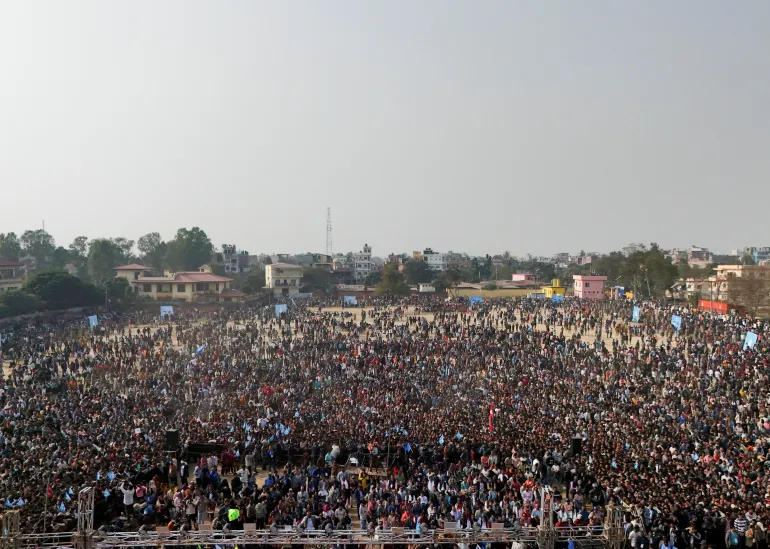
Supporters of Balendra Shah, a former Kathmandu mayor popularly known as ‘Balen’, gather for a campaign rally in Janakpur, Nepal, January 19, 2026 [Navesh Chitrakar/Reuters]
The craze
If young Nepal burned with anger in September, when protesters clashed with security forces and attacked senior politicians after a crackdown by authorities under Oli, Balen was still seething with rage two months later.
In a midnight post on Facebook in November, he lashed out: “F*** America, F*** India, F*** China, F*** UML, F*** Congress, F*** RSP, F*** RPP, F*** Maobaadi. You Guys all Combined can do nothing”, venting against the popular political parties and even nations that have close ties to Nepal. Being the Kathmandu mayor at the time, he deleted the post less than half an hour later.
Then in January, he quit as mayor and joined the RSP, one of the parties he cursed in the Facebook post. More recently, after Oli called on Facebook for a public debate among prime ministerial candidates of major parties, Balen rejected the suggestion and asked the ex-prime minister to take responsibility for the dozens of civilians killed during the Gen Z protests in September. He asked Oli to acknowledge that he was a “terrorist”.
Over the top? Not to many Nepalis.
The rapper-turned-politician’s confrontational style and rhetoric appear to have only endeared him to large sections of the youth. His beard and dandy, all-black clothing style – he occasionally wears the traditional Newari dress of the ethnic inhabitants of the Kathmandu valley – coupled with his trademark dark glasses, have become fashion symbols.
Kathmandu shops once ran out of the kind of black rectangular glasses he wears. Many online stores, including Daraz, the most popular seller in Nepal, still carry multiple choices of these shades, calling them “Balen Shah glasses”.
Unlike traditional politicians, Balen mainly stays away from mainstream media. Instead, he communicates with the wider public through podcasts, television shows where he is a judge, or through his favourite platform: social media. His 3.5 million followers on Facebook, 1 million on Instagram, 400,000 on X and nearly 1 million on YouTube give him an online audience unmatched in Nepal.
This is valuable capital with a generation constantly on their phones.
Yet Balen first made waves not as a politician, but as an upstart musician who shook Nepal.
Balendra Shah, a rapper-turned-politician and the prime ministerial candidate for the Rastriya Swatantra Party (RSP), along with Rabi Lamichhane, RSP president, takes part in an election campaign in Kirtipur, Kathmandu, Nepal, February 28, 2026 [Navesh Chitrakar/Reuters]
Big cars, bigger songs
The youngest of four siblings, Balen was born in 1990 in Kathmandu. Balen’s father, Ram Narayan Shah – who passed away in December – was a government practitioner of ayurveda, the ancient Hindu healing system.
In an interview with Al Jazeera in September – three months before his death – Shah recalled Balen as a “bright and simple” child. The father’s work took him away from home frequently, but one clear memory from Balen’s childhood stuck out for Shah: “He wrote poems. I remember that, because I also wrote poems.”
Balen graduated with a civil engineering degree from Himalayan Whitehouse International College in Kathmandu and received a postgraduate degree in structural engineering from Visvesvaraya Technological University (VTU) in Karnataka, India.
Then, in 2013, he engineered his first major career transition. The setting was a popular rap battle in Nepal, called Raw Barz, in which two contestants face-off live against each other. One of the organisers of the competition, who requested anonymity, told Al Jazeera that Yama Buddha, a popular rapper who has since passed away, recommended Balen to him.
Balen won the rap battle, gaining instant popularity. “More than a rapper, he was a poet. He was very good lyrically, and talked about suppressed [people],” the contest organiser recalled.
In 2021, Shah announced his candidature for the mayoral election and revealed that he had been plotting the run for at least two years. He swept the election, winning 61,767 votes, defeating candidates from the major political parties, the Nepali Congress and Communist Party of Nepal (UML), who received 38,341 and 38,117 votes, respectively.
As mayor, according to his aide and press coordinator, Surendra Bajgain, Shah would arrive at his office at the Kathmandu Metropolitan City (KMC) at about 10am. He would first meet all the department heads, go through files, “seek clarity” on questions he had, and then sign files, Bajgain told Al Jazeera.
He would wear his trademark black jacket and pants, and black shades, every day to the office. He would remove his glasses inside the office, Bajgain said. “But you’ll see him in those glasses when taking pictures or in public,” he added.
As a mayor, he lived in government-provided accommodation in the heart of Kathmandu with his wife and an infant daughter. A gym regular, he preferred lunch at home, but would sip on endless cups of tea and coffee in the office.
To get away from the public gaze, Balen “loves to go on long rides outside the valley, because here, people surround him very often in public,” Bajgain said.
His passion for cars also landed him in controversy, widely circulated online, when he was seen driving an expensive Land Rover Defender worth 40 million Nepali rupees ($275,0000) in January, while campaigning in Jhapa 5, his electoral constituency, for the March 5 election.
Given his strong anticorruption image, the sight of him in a high-end luxury vehicle drew heightened scrutiny. Critics accused him of a lack of transparency over the vehicle’s ownership and use, while some pointed out that, despite promoting modesty in public office, he rarely used public transport as the mayor. The car, it turned out, had been given to him by a wealthy businessman for use during his campaign.
Balen is now also pursuing a PhD in traditional infrastructure at Kathmandu University. But he is far from a reluctant public figure, nor is he an ivory-tower researcher.
Balen’s songs, which mock political parties, criticise corruption and talk of the sacrifices of everyday Nepalis, have been the soundtrack to the efforts by Nepal’s Gen Z to reshape the country’s politics in recent months.
One song, Nepal Haseko (Nepal Smiling), became an anthem during last year’s protests, and already has more than 10 million views on YouTube. In the song, children sing in the chorus: “I want to see Nepal smiling; I want to see Nepalis living happily.”
Another song, Balidan (Sacrifice) has 14 million views on YouTube. It talks about impunity and corruption. On the Discord server “Youth Against Corruption”, where Gen Z protesters picked the country’s interim leader after Oli’s resignation in September, the name “Balen” was mentioned 16,328 times — far more than anyone else’s.
But Balen also has his critics.
Balen plays a ‘damru’ percussion instrument during an election campaign in Janakpur, Nepal, on January 19, 2026 [Navesh Chitrakar/Reuters]
‘Set on fire’
In 2023, when Balen was mayor, his wife was in his official vehicle when a traffic policeman stopped it. Balen was not in the car. The government-plated vehicle was being used on a public holiday, which gives traffic personnel the right to ask the purpose of the vehicle use and whether the driver has a permit for it.
On social media, Balen blew up about the incident: “If any of our KMC vehicles are stopped by the government from tomorrow, I will set the Singha Durbar on fire. Remember, you thief government”. Singha Durbar houses many administrative offices along with the Prime Minister’s Office.
The Oli government initially wanted to charge him for the incendiary statement, but backed off – Balen’s comment on social media had drawn support. It was a sign of things to come. During the Gen Z uprising in September, Singha Durbar was severely damaged after being set on fire.
In another instance, in 2023, after India installed a mural of “Akhand Bharat” (a Greater India) – encompassing many of its neighbours – Shah hung a “Greater Nepal” map in his office, including territories that once belonged to Nepal but now lie within India’s borders.
The move instantly escalated into a diplomatic hurdle. Shah was accused of going beyond his mandate as a municipal leader and stoking nationalist sentiment for political gains. His supporters, however, hailed his move as an assertive counter to foreign dominance.
In 2023, Balen also banned the screening of Indian films in Kathmandu, alleging that an Indian movie had suggested that Sita, one of Hinduism’s most revered goddesses, was born in India. In fact, she was born in present-day Nepal according to Hindu scriptures.
As Kathmandu mayor, Balen bulldozed illegal structures and ordered rubbish to be dumped outside government offices. He temporarily halted waste collection from Singha Durbar. The move was a riposte to what he argued was the central government’s failure to coordinate with the city to address Kathmandu’s chronic waste management crisis.
Yet to many belonging to the generation most hungry for change in Nepal, Balen has an allure no one else appears to have.
Balen meets supporters during an election campaign rally in Jhapa, Nepal, on February 23, 2026 [Umesh Karki/ AP Photo]
‘Shake up the status quo’
Aayal Sah, a 20-year-old first-time voter, is a resident of Janakpur – where Sita, the Hindu Goddess, is believed to have been born. He took three of his friends to see Balen’s first public appearance after joining the RSP. “I cannot directly vote for Balen as he is not contesting from our area, but I’ll surely vote for his party,” he told Al Jazeera.
Rana, the journalist at Kalam Weekly, said that for many, Balen “embodies the outsider spirit that many young Nepalis are looking for to shake up the status quo”.
Yet, Rana acknowledged, questions over Balen’s ability to lead Nepal linger as the country heads to elections. “A primary concern for most critics is Balen’s immaturity and his refusal to engage with the public. During his time as mayor, he gave no interviews to local media and did not answer any questions,” Rana told Al Jazeera.
After Oli quit office, when Gen Z protesters voted most for Balen to take over as interim leader on Discord, the then-mayor was not available on the phone when the youth movement’s leaders tried to reach him to see if he would take charge of the nation.
That, say analysts, was yet another example of Balen’s communication style: It is always one way, at his time and place of choosing.
But for many young Nepalis like Sah, the Janakpur resident, none of these chinks in Balen’s public life matter. “It’s the trust he has gained among the young people,” Sah said.
“He is the only one who can take the country forward.”