Rand Paul

Senate plans series of votes to end record shutdown

Nov. 10 (UPI) — The U.S. Senate plans a series of votes Monday night to try to end the record-long shutdown as House Speaker Mike Johnson called representatives to return to Washington to be there when a bill reaches them.

Earlier, Senate Majority Leader John Thune of South Dakota said they were in a “holding pattern.”

Late Monday afternoon, the GOP’s whip office told CNN a vote would begin after 5 p.m. p.m. John Barrasso of Wyoming mobilizec members for key votes. A GOP aide confirmed the plans to CBS News.

On Sept. 19, the House approved short-gap spending legislation along party lines 217-213 that doesn’t include healthcare subsidies next year through the Affordable Care Act, known as Obamacare. Only a majority is needed in the House, but the Senate needs 60 votes in the 100-member chamber.

The Senate is scheduled to go into recess Tuesday for Veterans Day and was seeking to conclude business before then.

Thune said the American people “have suffered for long enough,” and other senators were reasonably optimistic.

“It’s very close,” said Sen. Mike Rounds, who also serves South Dakota. “We’ll work our way through a couple of issues.”

“I’m optimistic, yeah,” Florida Sen. Rick Scott said. “People want to, you know, they want to get — they want to go home.”

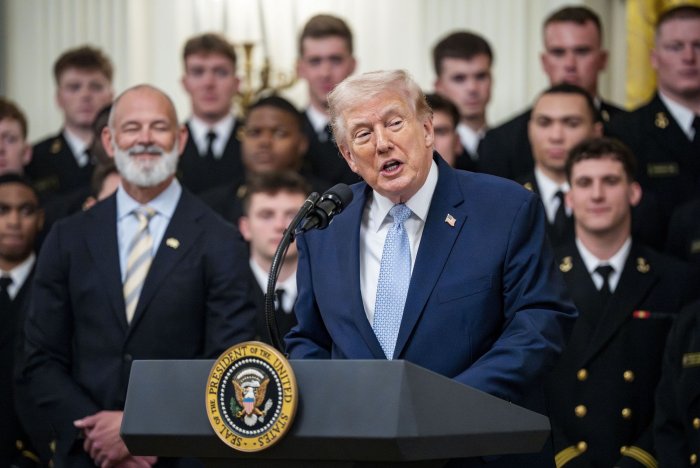
Sen. Rand Paul of Kentucky is the only Republican to vote against past funding bills. He wants hemp farming in the agriculture appropriations bill in exchange for allowing the legislation to move quickly. The Senate plans to vote on the amendment.

“If Rand wants to plant his flag and hold the government shut down for over hemp in Kentucky, take that fight on. I think he’ll lose that one pretty hard,” said Sen. Markwayne Mullin of Oklahoma, noting that another senator wants an amendment to withhold pay from members during government shutdowns.

Monday marked the 41st day of the United States’ longest-running government shutdown, which started Oct. 1. It beat the previous longest shutdown of 35 days, which took place in 2018 and 2019 during President Donald Trump‘s first term.

Despite the pending vote, Johnson further pushed against the Democrats’ battle to extend health insurance subsidies. The Senate would vote separately on the subsidies next month.

“There’ll be long days and long nights here for the foreseeable future to make up for all this lost time that was imposed upon us,” Johnson told reporters.

Senators held a procedural vote Sunday in which seven Democrats and one Independent joined Republicans to narrowly advance a funding measure 60-40.

In exchange for the Democrats’ votes, Republicans agreed to hold a vote in the future on extending Obamacare subsidies.

There are more steps to take before senators hold an official vote on legislation to fund the government through January, including a measure on how long the chamber will debate.

All but a few Democrats have voted 14 times against the House stopgap measure out of concerns over a lack of an extension to the ACA tax credits, set to expire end of December. More than 20 million U.S. citizens currently rely the ACA on for health insurance.

“The American people have now awoken to Trump’s healthcare crisis,” Senate Democratic leader Chuck Schumer of New York said.

“Healthcare is once again at the forefront of people’s minds,” Schumer said on the Senate floor. “People now see that premiums are about to skyrocket. They’re terrified about how they’re going to pay for their insurance.”

The new measure would reverse all shutdown-related job layoffs, guarantee federal worker pay during the shutdown, establish a specific budget process and fund the Supplemental Nutrition Assistance Program through September.

Johnson said he will give a 36-hour notice before any House votes, but did not offer a specific timeline.

The speaker, who has kept the lower chamber out of session since late September, indicated that a vote could occur as early as this week.

Any bill passed by both chambers will require a signature by Trump to become law. Trump said he intends to sign the legislation.

“Well, it depends what deal we’re talking about, but if it’s the deal I heard about … they want to change the deal a little bit, but I would say so,” Trump told CNN’s Kaitlan Collins in the Oval Office.

“I think, based on everything I’m hearing, they haven’t changed anything, and we have support from enough Democrats, and we’re going to be opening up our country. It’s too bad it was closed, but we’ll be opening up our country very quickly.”

That includes adhering to a provision that would reverse layoffs of federal workers his administration pushed during the shutdown.

In the House, Johnson plans to swear in Adelita Grijalva of Arizona when the members return, according to a CNN source.

Grijalva was elected Sept 23, but Johnson refused to swear her in until Senate Democrats agreed to reopen the government.

Once Grijalva is sworn in, she is expected to become the 218th signature necessary to bypass leadership and force a vote on compelling the release of files in the Jeffrey Epstein sex-abuse case.

Minority Leader Hakeem Jeffries said Monday that House Democrats would continue to oppose the spending bill that advanced in the Senate this weekend.

“As House Democrats, we know we’re on the right side of this fight, the right side of the American people, and we’re not going to support partisan Republican spending bill that continues to gut the health care of the American people, and we’re going to continue the fight to extend the Affordable Care Act tax credits,” he said at a news conference.

Furloughed federal workers line up as Jose Andres’ World Central Kitchen’s Relief Team sets up a free meal distribution site in Washington, D.C., on Monday. Photo by Bonnie Cash/UPI | License Photo

Source link

Sen. Chuck Schumer offers path to end government shutdown

Nov. 7 (UPI) — Democrats are ready to end the federal government shutdown if Republicans agree to extend Affordable Care Act credits for another year, Senate Minority Leader Chuck Schumer announced Friday afternoon.

Schumer, D-N.Y., said Senate Democrats favor passing a temporary funding measure and three other bills that would fund the federal government for one year, CNN reported.

“Democrats are offering a very simple compromise,” Schumer said on the Senate floor.

“Now, the ball is in the Republicans’ court,” he added. “We need Republicans to just say yes.”

Schumer’s announcement came after Senate Majority Leader John Thune, R-S.D., earlier said the Senate will work through the weekend to negotiate reopening the federal government and possibly vote after a bipartisan effort failed Thursday.

Thune wanted to hold another vote on the House-approved continuing resolution to fund the federal government through Nov. 21, but Senate Democrats aren’t on board, he told media earlier Friday.

“Our members are going to be advised to be available if, in fact, there’s a need to vote,” he said.

“We will see what happens and whether or not, over the course of the next couple of days, the Democrats can find their way to re-engage again,” Thune added.

Thune earlier this week expressed optimism that a funding agreement would be made this week, but that ended after Senate Democrats met on Thursday.

“All I know is that the pep rally they had at lunch yesterday evidently changed some minds,” he said Friday.

“We had given them everything they wanted and had asked for,” Thune explained. “At some point, I was gonna say they have to take ‘yes’ for an answer, and they were trending in that direction.”

The impasse is due to Senate Democrats not trusting President Donald Trump to agree to extend Affordable Care Act tax credits that expire after December and to stop firing federal employees, The Hill reported.

Senate Democrats held a working lunch on Thursday, as referenced by Thune, during which they rejected a bipartisan proposal to reopen the government.

Sens. Gary Peters, D-Mich., Jeanne Shaheen, D-N.H., and Angus King, I-Maine, had worked out a deal with the GOP, which buoyed Thune’s hope of ending the government shutdown on its record 38th day.

Senate Democrats discussed the bipartisan proposal during their Thursday lunch and rejected it due to their distrust of the president.

The proposal would have included a short-term funding measure to reopen the government and a three-year appropriations bill that would have funded the Agriculture Department, Veterans Affairs, military construction and the legislative branch.

The USDA funding would have meant full funding for currently suspended Supplemental Nutrition Assistance Program benefits.

Lacking strong guarantees that the president would support extending Affordable Care Act credits that initially were enacted during the COVID-19 pandemic and that are scheduled to expire at the end of the year, the Senate Democrats said they won’t support the bipartisan plan to move forward.

Despite the continued opposition from Senate Democrats, Thune doesn’t expect the shutdown to continue into the Thanksgiving holiday weekend at the end of the month, he said while appearing on Fox News Friday.

Thune needs at least five more Senate Democrats to join with Democratic Party Sens. John Fetterman of Pennsylvania, Catherine Cortez Masto of Nevada and King, who caucuses with Senate Democrats, to approve the continuing resolution.

Fetterman, Masto and King consistently have voted in favor of continuing the 2025 fiscal year budget while negotiating the budget for the 2026 fiscal year, which started on Oct. 1.

Republican Sen. Rand Paul of Kentucky is the only Republican senator to continually vote against the measure.

The House-approved continuing resolution consistently has received a majority of support in the Senate, but it has not received the 60 votes needed to overcome the Senate’s filibuster rule for passage.

Source link

Senate Republicans defeat bill requiring Congress to approve attacking Venezuela

Nov. 7 (UPI) — Republicans narrowly defeated a bipartisan bill in the Senate requiring congressional approval for military action against Venezuela as the Trump administration continues a military buildup in the region and attacks on alleged drug boats in nearby waters.

The GOP lawmakers rejected Senate Joint Resolution 90 in a 51-49 vote on Thursday evening, with Republican Sens. Rand Paul of Kentucky and Lisa Murkowski of Alaska casting ballots in favor of the measure with their Democratic colleagues.

The resolution was introduced by Paul, and Democratic Sens. Adam Schiff of California and Tim Kaine of Virginia in response to reporting that President Donald Trump was considering military ground strikes against Venezuela.

Venezuela has long been a target of Trump, who, during his first administration, launched a failed multiyear pressure campaign to oust its authoritarian leader, President Nicolas Maduro.

Since returning to the White House in January, Trump has used his executive powers to target drug cartels, including the Venezuelan Tren de Aragua gang. Trump has claimed, without providing evidence, that TdA has “invaded” the United States at Maduro’s direction, despite his own National Intelligence Council concluding in May that the regime “probably does not have a policy of cooperating” with TdA.

The vote was held as Defense Secretary Pete Hegseth announced a 17th known military strike on an alleged drug trafficking boat in Caribbean international waters. Since Sept. 2, the United States has killed around 70 people in the attacks.

The attacks have drawn domestic and international criticism and allegations of war crimes, murder and extrajudicial killings. Some Democrats called on the Trump administration to answer questions over the legality of the strikes without gaining proper congressional approval.

Following the Thursday vote, Kaine said the Trump administration told some members of Congress that it lacked legal authority to launch any attacks into Venezuela. Some worry that an attack could devolve into a full-scale war.

“Trump’s illegal strikes on boats in the Caribbean and threats of land strikes in Venezuela recklessly and unnecessarily put the U.S. at risk of war,” Kaine said in a statement.

In a separate statement, he criticized his Republican colleagues, stating: “If the U.S. is going to put our nation’s sons and daughters into harm’s way, then we should have a robust debate in Congress in front of the American people.”

Sen. Todd Young, a Republican of Indiana, voted against the bill on Thursday, and explained in a statement that he has been informed of the legal rationale behind the strikes and does not believe the resolution is appropriate right now, but that could change.

“My vote is not an endorsement of the administration’s current course in the Caribbean and Eastern Pacific. As a matter of policy, I am troubled by many aspects and assumptions of this operation and believe it is at odds with the majority of Americans who want the U.S. military less entangled in international conflicts,” he said.

Source link