The United States and Iran have engaged in hours of indirect talks through mediators on the sidelines of the United Nations General Assembly (UNGA) in New York, but accounts differed over whether officials from the two countries met directly.
US special envoy Steve Witkoff said mediators had “shuttled between” the American and Iranian delegations throughout Tuesday.
Recommended Stories
list of 4 itemsend of list
“Today, on the sidelines of the United Nations General Assembly, we engaged in lengthy talks with the Iranian delegation through the mediators, who shuttled between the two sides throughout the day,” Witkoff said in a post on X.
“They successfully completed a round of discussions that we hope will prove constructive and promising. The mediators will continue their work.”
US President Donald Trump gave a more direct account, saying Witkoff and Jared Kushner had held a three-hour meeting with Iranian officials.
“They had a very good meeting, a very productive meeting,” Trump told reporters at the UN, adding that he believed there was “a lot of momentum” towards an agreement. Trump later said talks were continuing and that he believed a settlement would eventually be reached.
Al Jazeera’s Kimberly Halkett, reporting from Washington, said Trump’s initial comments had created confusion over who had participated. She said the White House later clarified that Trump had not attended and that Witkoff and Kushner represented the US side.
Al Jazeera’s Tohid Asadi, reporting from Tehran, said state media had confirmed a meeting between Iranian Foreign Minister Abbas Araghchi and Witkoff after weeks without direct contact.
“This latest meeting was held at the request and insistence of the American side, and was aimed at conveying Iran’s messages and conditions, particularly around reopening the Strait of Hormuz,” Asadi reported.
Iranian state media said those conditions included lifting the US naval blockade, releasing frozen Iranian assets and ending the war on what Tehran describes as the “resistance” fronts.
Asadi also reported that an Iranian security source told Al Jazeera there could be room for further diplomatic engagement if Washington met Iran’s conditions and commitments.
The contacts came after a senior Iranian official told the Reuters news agency that Tehran’s delegation in New York had full authority to pursue diplomacy and described the UN gathering as a “golden opportunity” for Washington to return to negotiations.
The official said Iran had submitted its latest proposal to Washington through mediators on September 16 and that details of a possible agreement to end hostilities could be discussed in New York.
The official also said Iran could reopen Hormuz within seven days if the US eased military pressure and lifted its blockade of Iranian ports.
Regional powers push for de-escalation
The indirect talks have been accompanied by a broader diplomatic effort involving the Gulf and other regional states.
Qatar said it was working with Pakistan to reduce tensions between Washington and Tehran, safeguard freedom of navigation through the Strait of Hormuz and promote regional stability.
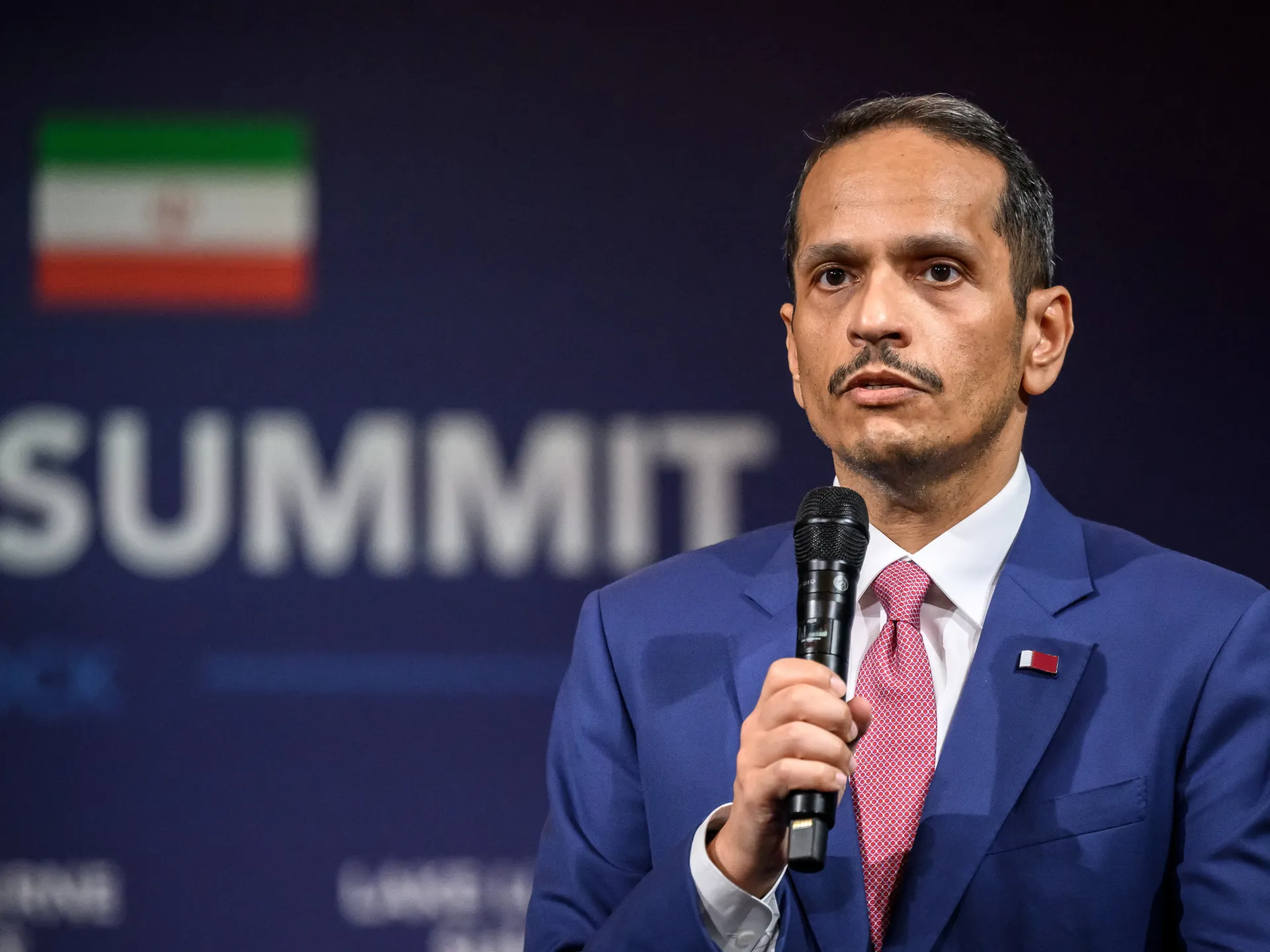
Qatar’s Prime Minister and Foreign Minister Sheikh Mohammed bin Abdulrahman bin Jassim Al Thani also met Araghchi in New York on Tuesday.
Qatar’s Ministry of Foreign Affairs said they discussed developments in the region, efforts to de-escalate tensions and ways of creating conditions for dialogue.
Oman has also been involved in maritime diplomacy over the waterway, having previously discussed maritime arrangements with Tehran aimed at facilitating navigation through the strait.
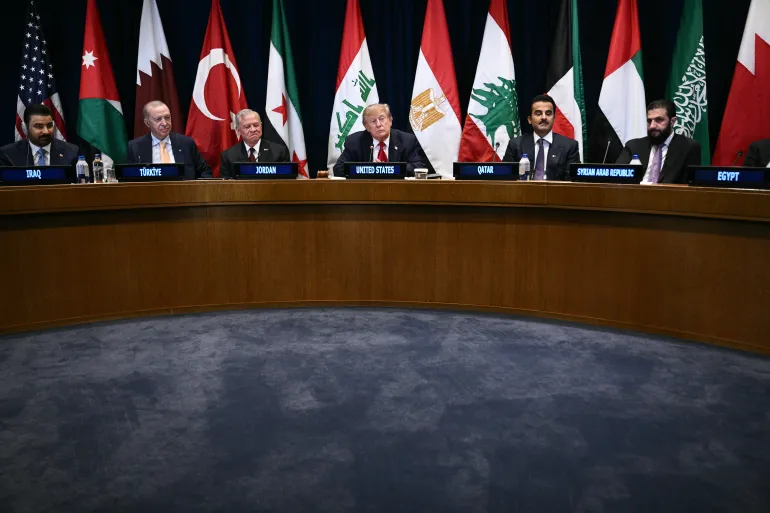
Trump also met leaders and senior officials from Gulf Cooperation Council states, Turkiye, Jordan, Syria and Iraq on Tuesday to discuss Iran and regional security.
Reuters reported that a Qatari proposal for a common security framework involving Iran and Gulf states was among the issues under consideration, with one regional source saying Tehran was reviewing it.
Qatar has not made the proposal public.
US President Donald Trump attends a multilateral meeting on the sidelines of the 81st UN General Assembly in New York with leaders and senior officials from Arab countries and Turkiye on September 22, 2026 [Brendan Smialowski/AFP]
Talks follow Trump’s warning
The indirect talks came hours after Trump used his UNGA address to combine the possibility of an agreement with another warning of military escalation.
Trump said he faced a “big decision” between reaching a deal that would allow Iran to rebuild and moving to “annihilate the Islamic Republic”. He also said Washington had previously offered Tehran “full economic cooperation” in return for ending its nuclear programme and what the US describes as Iranian support for terrorism.
Iran’s General Staff of the Armed Forces and Khatam al-Anbiya Central Headquarters responded in a statement carried by Iranian media, describing Trump’s threats as evidence of “strategic weakness” and saying Iran was ready to deliver “more severe, crushing, and unpredictable blows” in response to further attacks.
US officials have repeatedly suggested that negotiations were making progress following the collapse of the June memorandum of understanding. In early August, Trump said the sides had reached parameters for a possible agreement and later described talks over Hormuz as “moving along nicely”, although significant differences remained. Earlier this month, he again said he hoped the war was “towards the end”.
Tehran continues to condition the reopening of the Strait of Hormuz on the US easing military pressure and lifting its blockade of Iranian ports, while Witkoff said mediators would continue their efforts following Tuesday’s mediated exchanges.
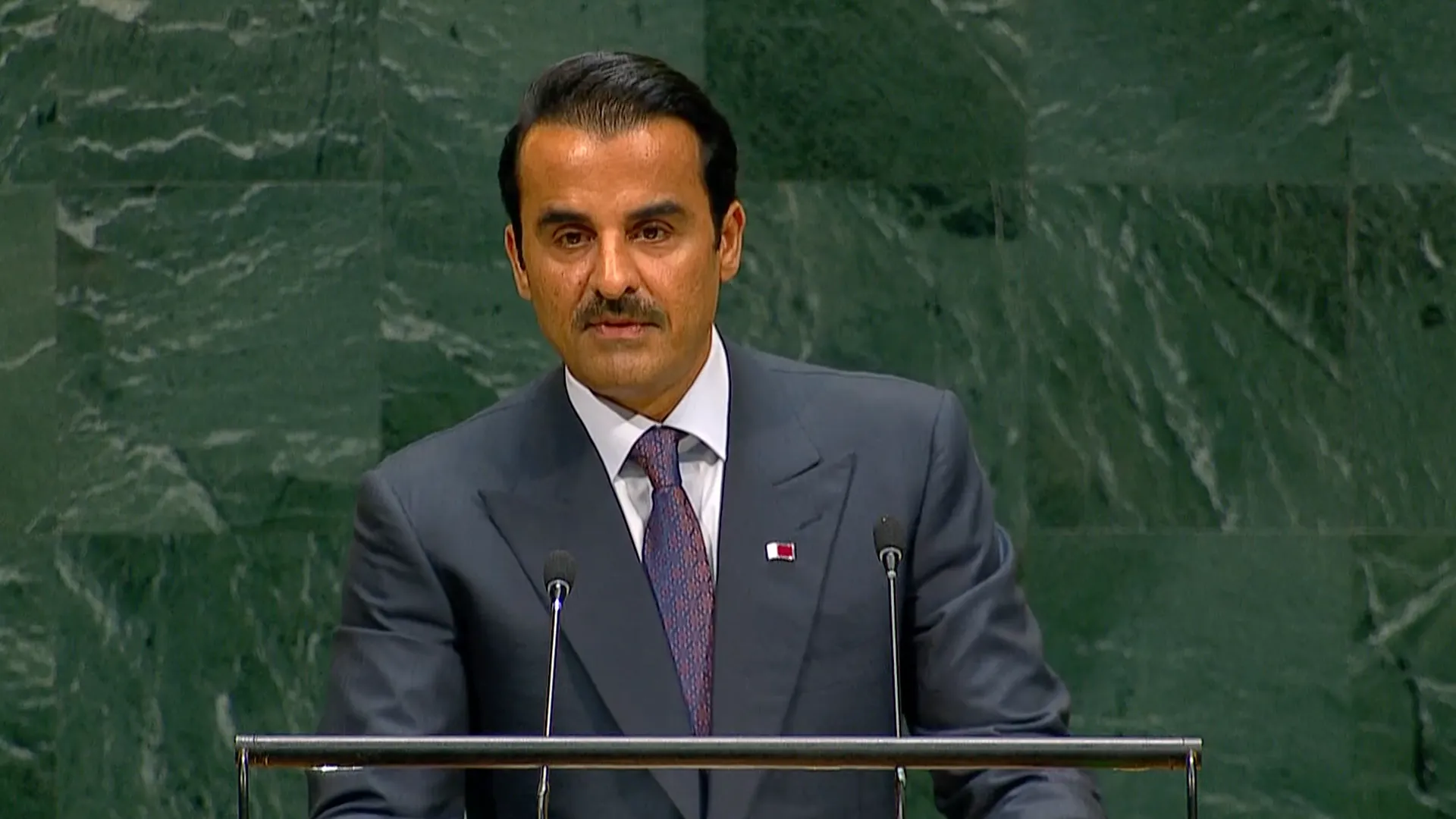
Qatari Emir Sheikh Tamim bin Hamad Al Thani has denounced Israeli aggression in neighbouring countries, saying Israel openly declares it will not abide by its agreements in Lebanon.
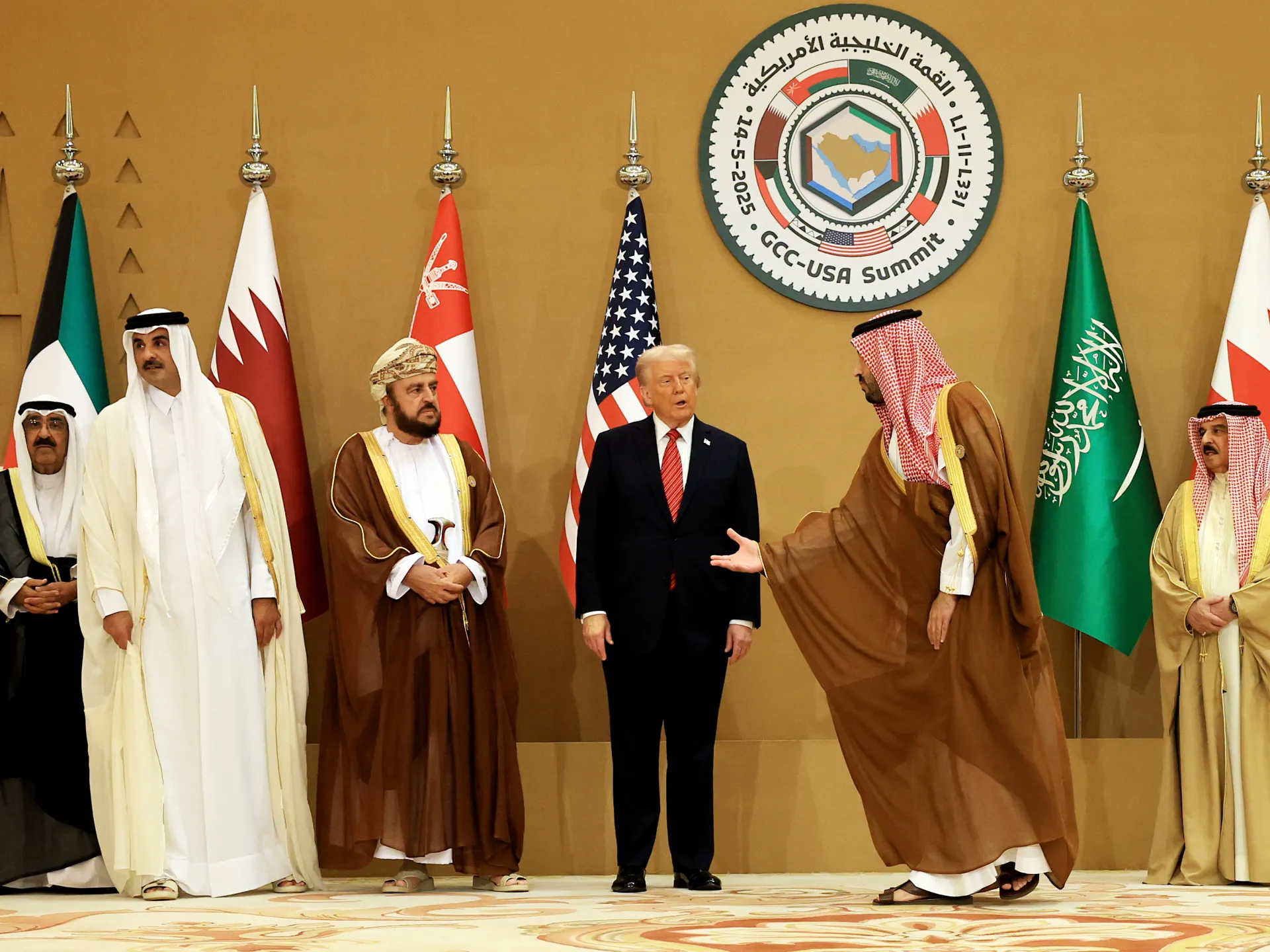
Leaders of the six Gulf Cooperation Council (GCC) states are set to meet United States President Donald Trump in New York on Tuesday, as the US-Israel war on Iran nears seven months.
The meeting, to be held on the sidelines of the United Nations General Assembly (UNGA), brings together countries that have borne much of the fallout from a war they did not start.
Recommended Stories
list of 4 itemsend of list
Since the war began on February 28, Iran has repeatedly struck US bases across the Middle East as well as airports, energy facilities and hotels. The war has particularly hit the Gulf nations hard, as their oil and gas exports – the mainstay of their economies – have been disrupted, causing a global energy crisis.
A June memorandum of understanding (MoU) briefly raised hopes of an end to the war, but it collapsed last month amid disputes over navigation through the Strait of Hormuz, which remains effectively closed.
These talks come as Trump says he faces a “big decision” on the war, and as Iran’s president and foreign minister are also in New York for the UNGA.
So what is on the table and what might come out of the talks? Here is all you need to know:
What do we know about the GCC-Trump meeting?
Trump is set to meet the leaders from Bahrain, Kuwait, Oman, Qatar, Saudi Arabia and the United Arab Emirates, which form the GCC, on the sidelines of the UNGA.
Trump told US media outlet Axios on Thursday that he wanted to meet the GCC leaders as he faced a “big decision” on the war and wanted to speak with them directly.
Experts say there are two interconnected issues – the US-Israel war on Iran and the conflict between Houthi rebels and the Saudi-backed government forces in Yemen.
What do the GCC countries want from the meeting?
Broadly, experts say, the GCC nations share a common goal for the meeting.
The GCC has “shared positions on the main principles of regional security and de-escalation”, Luciano Zaccara, a researcher with the New Ground Research think tank in Doha, Qatar, told Al Jazeera.
“With Trump recently threatening to ‘wipe out’ Iran, I expect the six GCC states, or at least most of them, to convey to the US president their grave concerns about the likely consequences of another round of intense US military strikes on Iran,” Giorgio Cafiero, CEO of Gulf State Analytics, told Al Jazeera.
“They will probably seek to underscore their own vulnerabilities to a renewed cycle of all-out fighting between the United States and Iran,” he said, adding that they will try to persuade Trump into making certain concessions to Tehran.
Cafiero said they will look to develop an arrangement that builds on the MoU and which “offers the most viable path toward winding down the crisis”.
Chief among their common concerns is freedom of navigation through the Strait of Hormuz and the Red Sea, according to Ahmed Helal, managing director for the Gulf region at The Asia Group.
‘Divergent’ goals
Despite common goals, the Gulf states have still experienced “divergent” outcomes from the war and will also look to persuade Trump to address their particular predicaments, Helal said.
The UAE, he explained, has been able to keep exporting oil by pipeline to its port of Fujairah, which bypasses the Strait of Hormuz, although not at the volumes it would like.
But fellow GCC member Qatar, whose gas exports depend on the strait, has seen its LNG shipments severely curtailed and wants to avoid any renewed escalation that could see its energy infrastructure targeted again, Helal said.
Speaking at an event in New York, US, on Sunday, Qatar’s Prime Minister Sheikh Mohammed bin Abdulrahman bin Jassim Al Thani described the economic fallout from the US-Israel war on Iran as an “earthquake”.
Saudi Arabia has another problem, as it is now under “enormous pressure” as the Houthis gain ground in Yemen, and has been “intensifying their lobbying” for US strikes on the group, he said.
What does Trump want from the meeting?
Predicting what the US president plans has been difficult since the outbreak of the US-Israel war on Iran, experts say.
“It could be possible that the US is expecting a more direct GCC engagement against Iran in exchange for a direct US intervention to stop the Houthi attacks against Saudi Arabia, but without the GCC leaving the main role in defending themselves”, Zaccara told Al Jazeera.
“Regarding Iran, Trump has not ruled out another major military escalation. At the same time, the administration seems to be open to exploring diplomatic options,” he said, adding there are rumours of a possible indirect US-Iran meeting on the sidelines before Iranian President Masoud Pezeshkian’s speech on Wednesday.
Helal said the administration’s focus is domestic, with the midterm elections weeks away and Trump’s approval ratings at a record low; there is “immense pressure” to lower petrol prices.
While Trump has threatened further military action, he remains politically sensitive to an “escalatory ladder” that could spike oil prices, Helal said.
The talks are unlikely to produce a breakthrough, he added, with the best-case scenario an agreement to return to negotiations potentially brokered by Qatar or Pakistan.
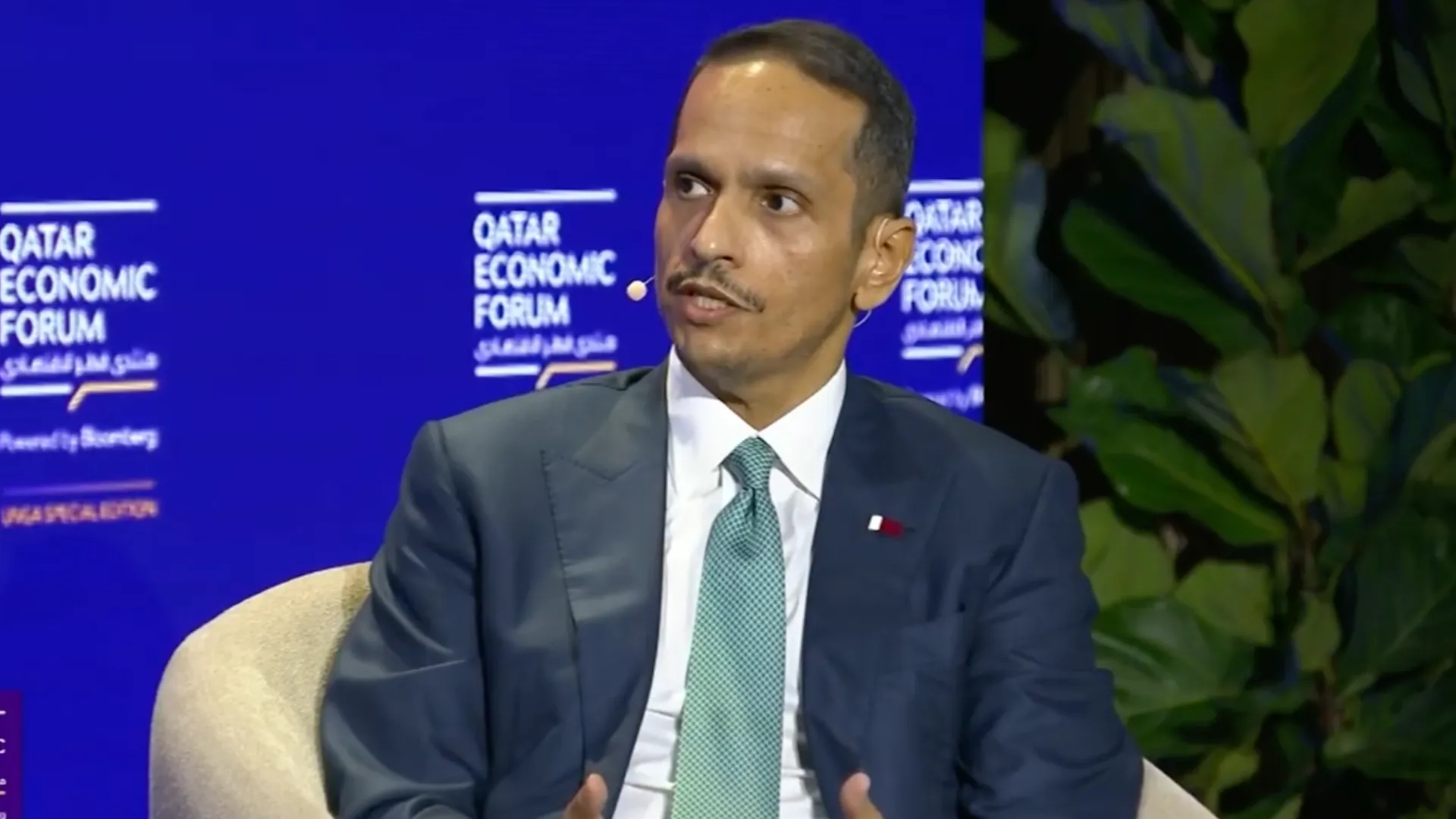
Qatar’s Prime Minister tells Bloomberg, the Gulf won’t be the same as before the war, unless there’s a security framework ensuring no one is a threat to each other. Speaking at the Qatar Economic Forum in New York, Sheikh Mohammed bin Abdulrahman Al Thani says the region needs to have good relations.
Qatar’s Prime Minister Sheikh Mohammed bin Abdulrahman bin Jassim Al Thani has called on states to respect sovereignty as a condition for security in the Middle East, warning against “cycles of escalation” after “an earthquake” caused by the US-Israeli war on Iran.
The region needs a “framework in which sovereignty is respected” and no state can pose a “threat to another”, Sheikh Mohammed said on Sunday at the opening of the Qatar Economic Forum’s UN General Assembly-adjacent event in New York City.
Recommended Stories
list of 3 itemsend of list
Sheikh Mohammed – who is also Qatar’s foreign minister – described the economic fallout from the US-Israel war on Iran as “an earthquake” with “its shock waves” reaching far beyond the borders of the Middle East, “challenging assumptions about security and stability”.
“During the crisis, almost every conversation began with security and de-escalation, then turn[ed] to energy supplies, shipping routes, and with our investments, plans will continue. These were different expressions of the same question. When so much is being disrupted, what can still be relied upon?”
He said that Qatar has weathered the test to the “foundations” of the country’s economy and security, but acknowledged that the ongoing conflict in the region is having an impact.
“Permanent security cannot be built through arrangements that leave any state permanently exposed to insecurity,” Sheikh Mohammed said. “We must address the sources of tensions and build confidence.”
Reporting from New York, Al Jazeera’s Kristen Saloomey said that message “no doubt will be repeated” when Gulf leaders meet US President Donald Trump on Tuesday during the UN General Assembly.
Qatar’s $38bn domestic investments
The PM also outlined a domestic shift in Qatar’s investment strategy by pledging more than $38bn in spending on Qatari infrastructure over the next five years.
“That’s meant to attract private investors and send a message of Qatar’s resilience,” Saloomey said, while the PM is nonetheless acknowledging that the ongoing conflict is “having an impact on the region”.
The UNGA starts on Monday and ends on Friday.
The situation in the Middle East and its global ramifications are expected to be high on the agenda during speeches and diplomacy.
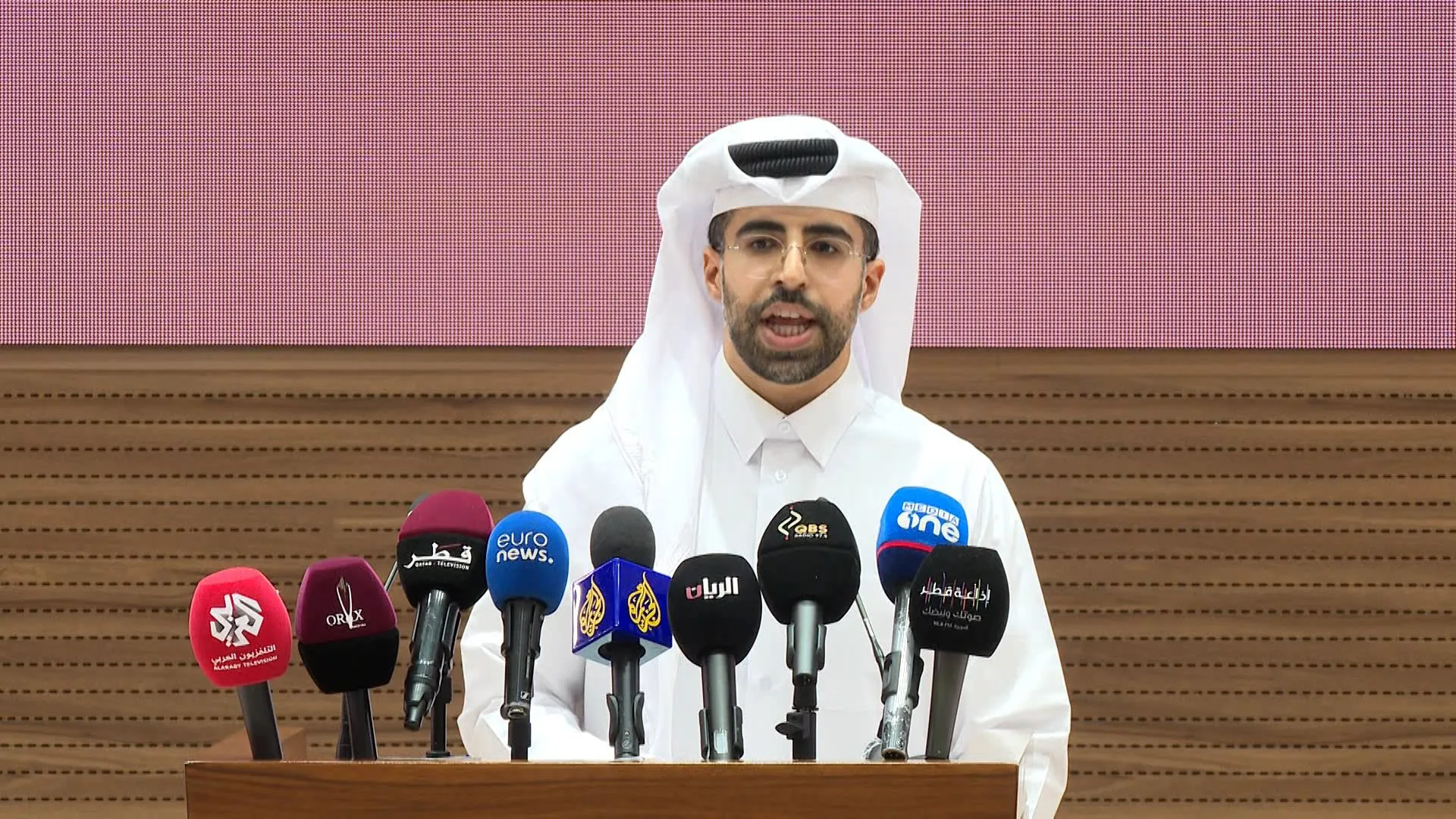
Also on Sunday, Qatar’s Foreign Ministry spokesman, Majed Al-Ansari, told US media in New York that the mediation efforts by his government are ongoing to restart talks between Tehran and Washington to end the US-Israel war on Iran.
The continental games will officially open on September 19, but several team competitions will get under way earlier.
Published On 10 Sep 202610 Sep 2026
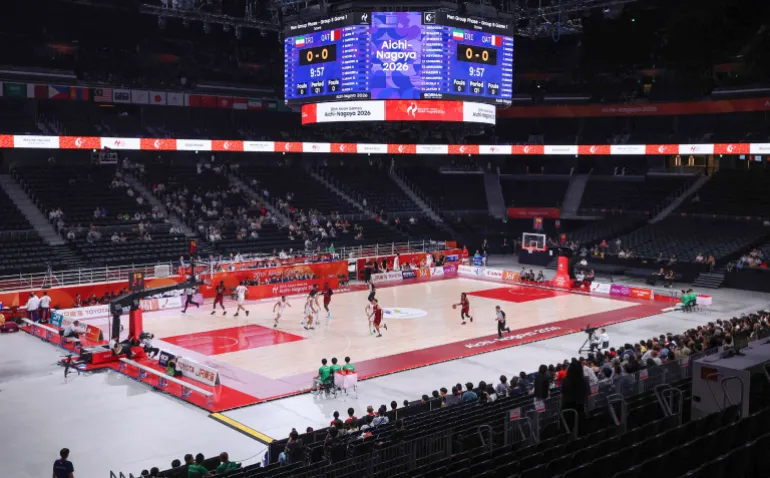
The Asian Games have begun in Japan with Qatar beating Iran in men’s basketball, the first action in the continental multisport showpiece that has more participants than the Olympics.
Qatar held off a comeback from Iran to win their Group B encounter 59-35 at the Aichi International Arena in Nagoya on Thursday.
It was the first match of a men’s basketball competition that will have medal finals on September 20, the day after the opening ceremony.
“We know we need to win at least one game so we can qualify for the next round,” said Qatar’s Michael Lewis, the United States-born player who scored a game-high 21 points.
“Feels good to get some team camaraderie back, and now we have got to keep going.”
Later in Group B, Taiwan beat Jordan 83-80.
The Qatar vs Iran men’s basketball match was the first one of the Asian Games 2026 [AFP]
More than 17,000 athletes and officials are expected to take part in 43 sports at the Nagoya-Aichi Games, which do not officially start until the opening ceremony on September 19 and will run until October 4.
Several events such as basketball, football, cricket, hockey and modern pentathlon will get under way before the opening ceremony.
Los Angeles 2028 Olympics qualifying spots are up for grabs in several sports at the Asian Games, which are returning to Japan for the first time since 1994.
Organisers hope the athletes will have a “unique experience” staying in accommodation ranging from a cruise liner and wooden containers to standard hotel rooms.
Officials are confident that the plan will not be affected by Japan’s typhoon season, which is usually in full swing in September-October.
Rainwater also leaked into some competition venues, with more wet weather forecast for the coming days.
Among those in action at the Games will be Philippine tennis sensation Alexandra Eala and a pair of world-class teenage talents: 15-year-old Indian cricketer Vaibhav Sooryavanshi and 13-year-old Chinese swimmer Yu Zidi.
Tokyo: The Asian Games began in Japan on Thursday when Qatar beat Iran in the men’s basketball opening group game, the first action in the continental multi-sport showpiece that has more participants than the Olympics.
Over 17,000 athletes and officials are expected to take part in 43 sports at the Nagoya-Aichi Games — which do not officially start until the opening ceremony on September 19 and will run until October 4.
Several events such as basketball, football, cricket, hockey and modern pentathlon will get under way before the opening ceremony.
Qatar held off a comeback from Iran to win their Group B encounter 59-35 at the Aichi International Arena in Nagoya in the first match of a men’s basketball competition that will hold medal finals on September 20, the day after the opening ceremony.
Los Angeles 2028 Olympics qualifying spots are up for grabs in several sports at the Asian Games, which are returning to Japan for the first time since 1994.
Organisers hope the athletes will have a “unique experience” staying in eye-catching accommodation ranging from a cruise liner and wooden containers to standard hotel rooms.
Officials are confident that the plan will not be affected by Japan’s typhoon season, which is usually in full swing in September-October.
Weather has already caused disruptions, with record rainfall on Tuesday forcing hundreds of athletes briefly to evacuate their accommodation.
Rainwater also leaked into some competition venues, with more wet weather forecast for the coming days.
Among those in action at the Games will be Philippine tennis sensation Alexandra Eala and a pair of world-class teenage talents in 15-year-old Indian cricketer Vaibhav Sooryavanshi and 13-year-old Chinese swimmer Yu Zidi.
RIYADH: Qatar on Wednesday condemned Houthi attacks on civilian and economic sites in southern Saudi Arabia during a phone call between the two countries’ foreign ministers.
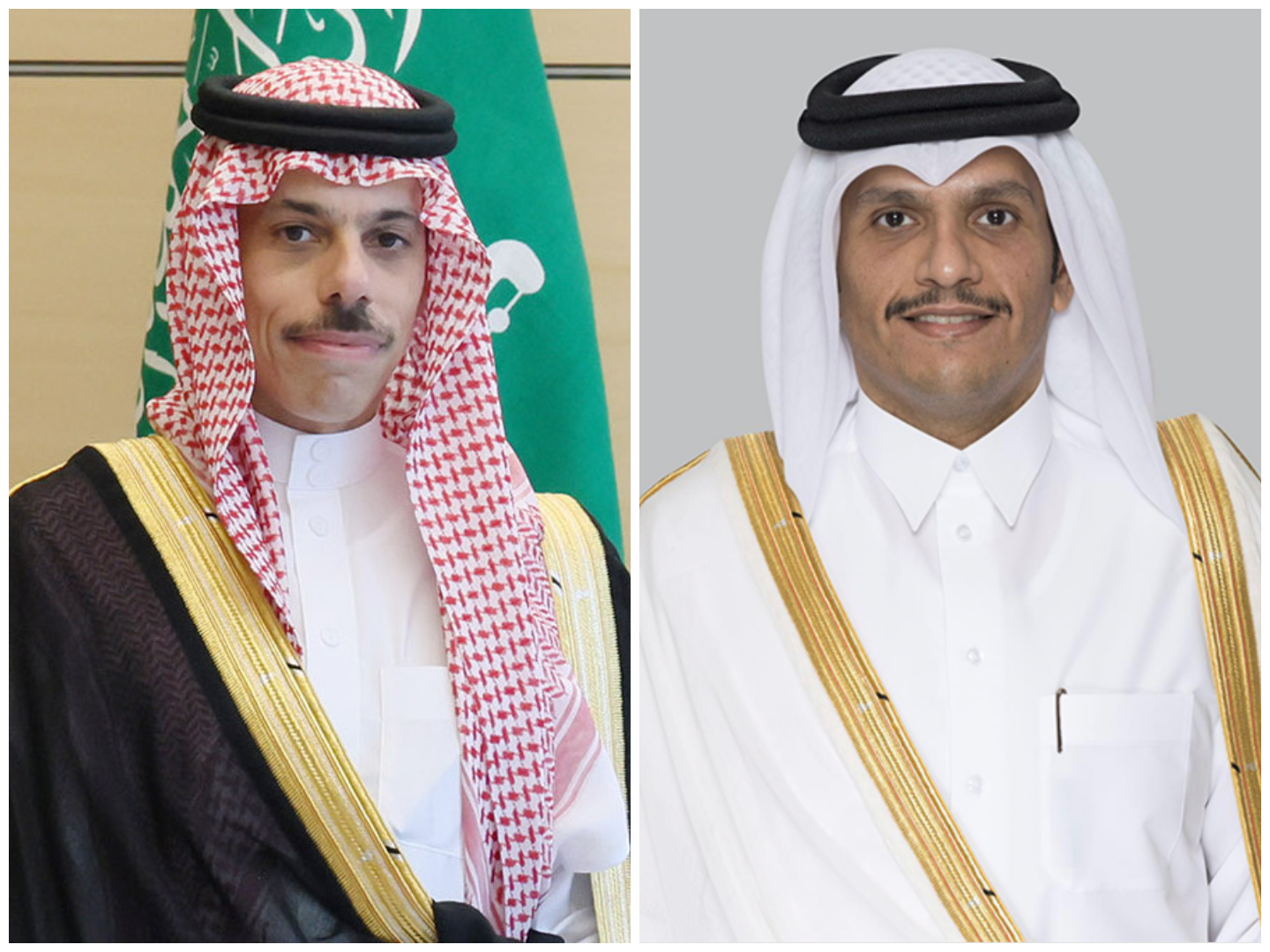
Qatari Prime Minister and Foreign Minister Sheikh Mohammed bin Abdulrahman Al-Thani expressed his country’s condemnation of the attacks during a call with Saudi Foreign Minister Prince Faisal bin Farhan, the Saudi Press Agency reported.
The two officials also discussed the latest regional developments and diplomatic efforts by Saudi Arabia and Qatar to de-escalate tensions and preserve regional security and stability, SPA said.
The call came as the Iran-backed Houthis targeted civilian and economic sites in the southern cities of Abha, Khamis Mushait, Jazan and Najran, injuring 73 civilians, including women and children.
Operations at some energy facilities were temporarily halted.
The Saudi-led coalition described the attacks as a “dangerous escalation” and said it would take measures to protect the Kingdom’s sovereignty, civilians and national assets.
Qatar’s Foreign Ministry separately condemned the attacks on Tuesday as a “dangerous escalation” and a violation of Saudi sovereignty and international law.
Doha reaffirmed its “full solidarity” with the Kingdom and its support for measures taken to protect its sovereignty, security and territorial integrity, adding that Saudi security was an integral part of the collective security of Gulf Cooperation Council states.
It also called on the international community to take a firm position against the attacks and ensure the implementation of relevant UN Security Council resolutions concerning Yemen and the security of navigation in the Red Sea.
Fighting between the Houthis and forces aligned with Yemen’s internationally recognized government has intensified in recent weeks, raising fears of a return to wider conflict after a UN-brokered truce in 2022 largely halted years of fighting between the Houthis and the Saudi-led coalition.
The Houthis, who control Sanaa and much of northern Yemen, declared a naval blockade against Saudi Arabia in July and have since stepped up attacks on the Kingdom and vessels in the Red Sea. Saudi-backed Yemeni government forces have meanwhile launched an offensive on several fronts against Houthi-held areas.
Israeli PM says money he facilitated Qatar in sending to Gaza was recommended by Israeli security agencies for humanitarian purposes.
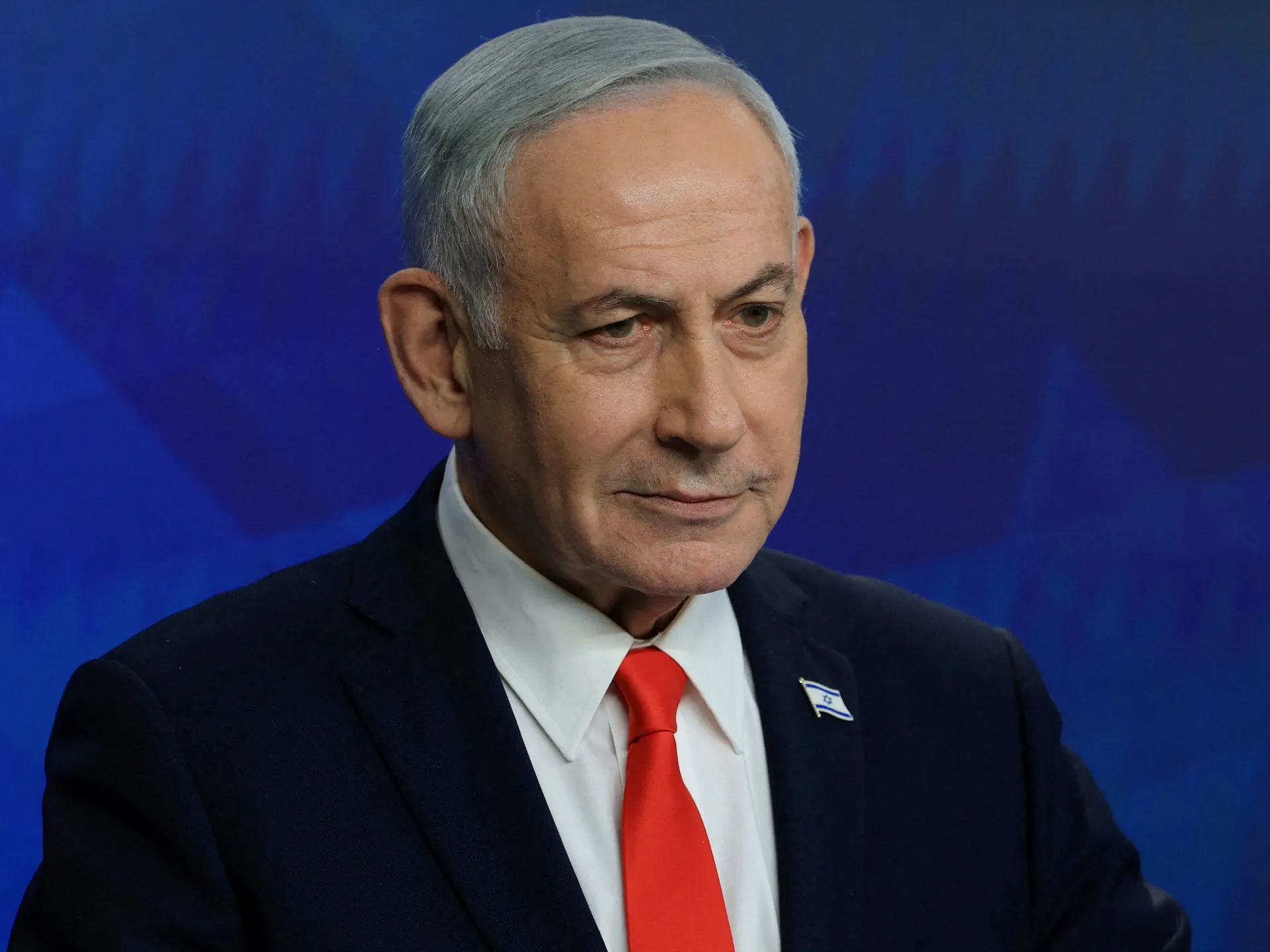
Israeli Prime Minister Benjamin Netanyahu has boasted about bombing Qatar, while dismissing domestic accusations that funds sent to Gaza were used for anything other than aid.
In an interview with Israel’s i24NEWS that he shared on social media on Saturday, Netanyahu said Qatar was a “hostile” state that did not dictate Israeli policy during its genocidal war on Gaza.
Recommended Stories
list of 3 itemsend of list
“I attacked Qatar, I also bombed it and attacked them during the war, and they attacked me,” Netanyahu boasted.
The interview comes just days before the one-year anniversary of Israel’s September 9, 2025, strike on Doha. The bombing killed five Hamas members and a Qatari security officer during a meeting to discuss the United States-backed Gaza ceasefire proposal.
Qatar, which has long served as a mediator in Middle East conflicts and beyond, has hosted Hamas’s political office since 2012, after what it says were requests from the US.
Doha condemned the strike as a “blatant violation of all international laws and norms”, with Qatari Ministry of Foreign Affairs spokesperson Majed al-Ansari calling it a “cowardly” assault.
Several countries in the region, including Iran and Pakistan, also condemned the attack, with leaders from Jordan, the United Arab Emirates and Saudi Arabia visiting Qatar shortly afterwards in a show of solidarity.
United Nations Secretary-General Antonio Guterres called the strikes a “flagrant violation” of Qatar’s sovereignty and territorial integrity.
During a meeting later that month at the White House, Netanyahu and US President Donald Trump called Qatar’s Prime Minister and Minister of Foreign Affairs Sheikh Mohammed bin Abdulrahman bin Jassim Al Thani to apologise for the strike.
During the i24NEWS interview, Netanyahu also defended the transfer of millions of dollars in Qatari funds to Gaza that Israel had facilitated, saying the funds were intended for humanitarian purposes and had been transferred on the recommendation of Israeli security agencies Mossad and Shin Bet.
“All this money is worth 2 percent – 2 percent of all the money that entered the Strip,” the prime minister said.
Some of Netanyahu’s detractors have alleged that the funds were used to help Hamas prepare its October 7, 2023, attack on Israel, which precipitated its genocidal war on Gaza.
Qatar denies such allegations, saying any claims that it funds Hamas are unfounded and pointing to the strict oversight governing its aid transfers.
“Today, when they [Israel] are claiming that this is the financing of Qatar to Hamas, it has no basis,” Sheikh Mohammed said during last year’s Doha Forum.
“All our aid … went to Gaza, went to the people, and was under a very transparent process that the United States is fully aware about.”
Netanyahu made the remarks weeks before Israelis head to the polls on October 27, in the country’s first general election since its war on Gaza began in 2023.
With the October vote approaching, Netanyahu faces mounting pressure at home over his government’s handling of the Gaza war, the economy and the war with Iran — all shaping up as central issues in the campaign.
Critics and analysts have long accused Netanyahu of stoking tensions with foreign states ahead of elections to rally nationalist support.
The global ratings agency has also maintained the country’s sovereign rating at AA.
Published On 5 Sep 20265 Sep 2026
Fitch Ratings has removed Qatar from “Rating Watch Negative” while maintaining its sovereign rating at AA amid the US-Israel war on Iran and the Strait of Hormuz blockade.
The global ratings agency announced the decision on Friday, citing reduced risks to the country’s liquefied natural gas (LNG) facilities since March.
Recommended Stories
list of 3 itemsend of list
The agency, however, kept a negative outlook on the rating, citing ongoing risks surrounding the movement of gas exports through the blockaded Strait of Hormuz.
“The impact of the war on the credit profile will take longer to discern,” the agency said in a statement.
Qatar, one of the world’s largest gas exporters, continues to face export disruptions and shortages caused by damaged energy facilities during the war on Iran, which began six months ago.
Earlier this year, credit agencies S&P and Moody’s also affirmed Qatar’s ratings, noting that the country’s sizeable financial cushion helps protect it from the economic impact of the war.
US President Donald Trump celebrated on Truth Social what he called the “biggest oil deal in history” – a 100-year concession on 17 oil fields in Venezuela that would secure 65 billion barrels of oil.
Around the same time, QatarEnergy informed Edison, one of its biggest European customers, that force majeure on its liquefied natural gas (LNG) deliveries would continue until early November. Five more cargoes were cancelled, taking the total to 29, or about 3.8 billion cubic metres of gas.
The contract has run since 2009 and normally covers roughly a tenth of Italy’s annual consumption. Edison has kept supplying its customers by finding replacement cargoes elsewhere, including in the US.
For decades, the bargain between Washington and the Gulf was clear. The US protected the region and kept its sea lanes open; Gulf producers supplied the energy on which the global economy depended and settled their sales in dollars to benefit the US economy.
That bargain has been turned on its head. America no longer simply protects Gulf energy. It competes with it, and increasingly profits when the Gulf cannot deliver due to insecurity.
Six months of war have reportedly impacted Qatar’s LNG exports significantly. Other Gulf countries like Kuwait, Saudi Arabia and the UAE have seen a substantial drop in oil exports as well. Meanwhile, US oil and gas have moved into the space left behind, with US energy giants raking in record-high profits.
It is important here to distinguish between the US as a government and the dense network of private interests that operates around it. Washington wants strategic leverage over Iran and continued influence over the Gulf states. Energy companies want access to reserves, favourable regulation, profitable prices and new customers. Trump brings the two together under the banner of energy dominance. State power opens the door; private capital walks through it.
Israel adds another layer. Chevron operates its two main offshore gas fields, owning almost 40 percent of the Leviathan gasfield and 25 percent of the Tamar gasfield. Leviathan is expanding after a $35bn agreement was signed last year to increase exports to Egypt.
Israel is therefore not an independent energy rival to the US in the way Qatar is. Its growing role as an Eastern Mediterranean gas hub is tied to a US operator and fits comfortably within a US-backed regional system linking Israel, Egypt and Jordan.
Chevron is the thread running through much of this story. It has major interests in US production, controls Israel’s most important gas assets and is positioned to expand in Venezuela. This does not mean Chevron determines foreign policy. It does show how easily the exercise of American power can translate into commercial opportunity for American companies.
Israel is also determined not to let the confrontation with Iran end on terms it considers not to be in its interest. The US-Iran memorandum of understanding signed in June fell well short of Israeli war aims. Israel said it was not bound by all its provisions, insisted on freedom of action in Lebanon and briefly resumed attacks while the US was trying to sustain negotiations.
For Israel, ceasefires have tended to be pauses, not settlements: opportunities to regroup while preserving the option of striking again. The reasons are chiefly strategic. Israel wants to prevent Iran from rebuilding its nuclear, missile and regional capabilities, while Israeli leaders fear accepting a deal and looking weak ahead of elections.
The consequences of Israel pushing for continuous conflict align with US energy interests. Continued pressure on Iran keeps the Strait of Hormuz insecure, Gulf exports vulnerable and risk premiums for energy transport high. Israel and US energy companies do not need to be following a common plan for their interests to reinforce one another.
Price is where the argument becomes clearest. Trump talks constantly about cheap oil, but US producers cannot prosper if it becomes too cheap. A Dallas Federal Reserve survey found that US companies needed an average price of about $43 a barrel to operate existing wells and $66 to drill new ones profitably. The two main Permian basins sit at roughly $61 to $62.
Trump therefore needs a narrow band: oil cheap enough to contain inflation, but expensive enough to keep shale, fracking and export investment alive. Gulf insecurity helps maintain it. The disruption need not be catastrophic. It only has to keep prices at a point where the next American well makes economic sense.
This may help explain the attraction of a no-war, no-peace outcome. A full regional war could close Hormuz, send prices soaring and threaten Chevron’s Israeli operations. A durable settlement would remove the risk premium, restore confidence in Gulf supply and limit Israel’s freedom of action.
Managed insecurity sits conveniently between the two: enough restraint to protect US-linked production, but not enough diplomacy to make Gulf energy entirely dependable again.
Israel keeps Iran under pressure. Washington retains leverage over its allies. US producers gain customers and commercially supportive prices. The danger lies in the convergence: Several powerful actors now have something to gain from preventing the crisis from reaching a final resolution.
The Gulf still holds vast reserves and enjoys production costs US companies cannot match. But reserves alone no longer decide market power. Reliability does. Only an estimated 3.5 to 5.5 million barrels a day can bypass Hormuz through Saudi and Emirati pipelines. The rest remains exposed to a single point of failure, despite decades of arms purchases, foreign bases and security guarantees.
The greatest threat to the Gulf’s energy future is not depletion. It is that customers learn to live without it. Every delayed tanker strengthens the case for an Atlantic alternative. Every Qatari cargo replaced by US LNG creates a relationship that may endure long after the war.
US power once rested partly on protecting the flow of Gulf energy. It now rests increasingly on replacing it.
The views expressed in this article are the author’s own and do not necessarily reflect Al Jazeera’s editorial stance.
Six months into the war on Iran, the largest US oil companies have posted their biggest profits since 2022, selling less oil at far higher prices. But the conflict is also putting their longstanding Gulf investments at risk, exposing the industry’s uneasy balance between wartime gains and mounting geopolitical vulnerability for investors worldwide.
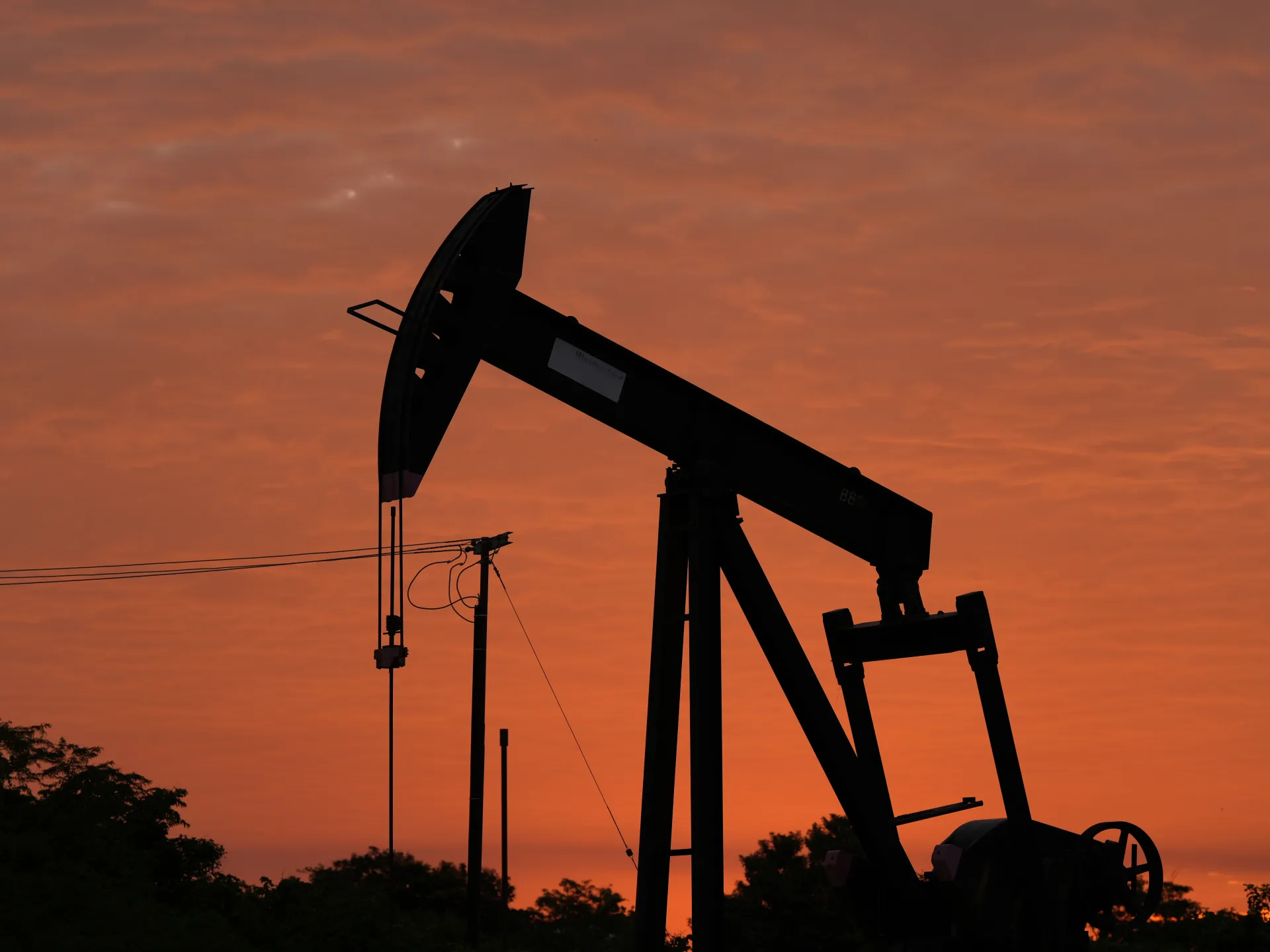
Since the war began on February 28, Brent crude has risen about 22 percent, from $72 to $88 a barrel.
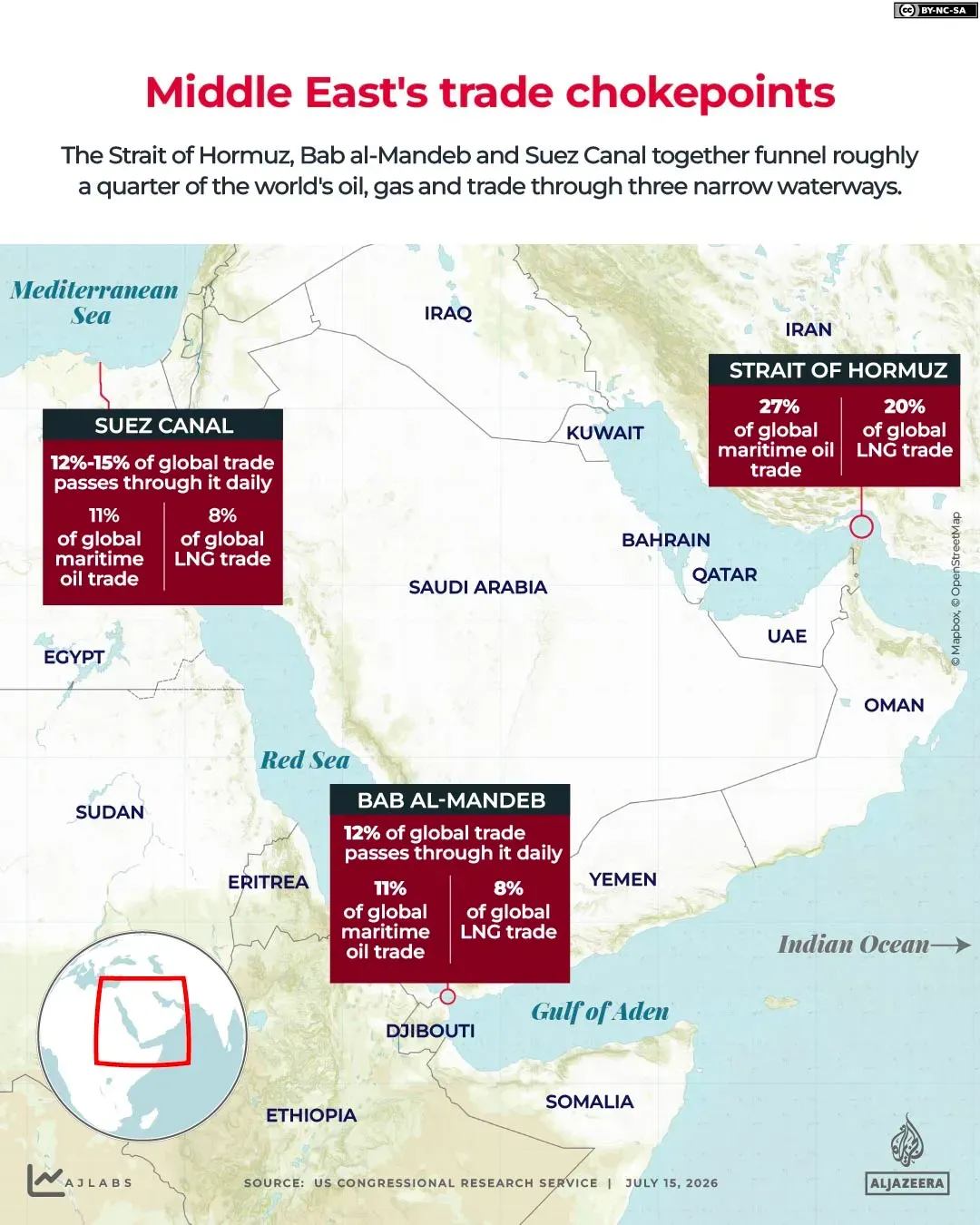
The Strait of Hormuz – through which one-fifth of the world’s oil and natural gas was shipped before the war – remains largely closed to commercial traffic, though Iran and Oman agreed last week on a temporary maritime route. Iran says the strait will not fully reopen until the United States fulfils its commitments under a lapsed interim peace deal, leaving longer-term security and management arrangements unresolved.
In the absence of a lasting resolution, the disruption is likely to continue supporting higher energy prices and creating windfalls for producers, despite placing energy companies’ regional assets and future projects at greater risk.
Rahul Choudhary, vice president of Upstream Research at Rystad Energy, an independent energy research company, said the conflict has already reduced the amount of oil and gas US energy firms are drawing from the Gulf region.
“Overall we expect US companies’ share of gas supplies [from the region] to fall by around 40 percent this year compared to last year [and] the share of oil supplies to drop by 30-35 percent,” he told Al Jazeera.
While higher commodity prices have helped offset the immediate financial impact, Choudhary said prolonged disruption is likely to delay major projects and weigh on the future growth plans of US oil and gas companies with a presence in the region.
Who has profited?
The surge in the oil price since early March, when Iran first closed the Strait of Hormuz, has delivered a windfall for oil companies, but gains have been tempered by challenges in the Gulf.
Chevron has limited exposure to Arab Gulf supply disruptions, with the region accounting for just 5 percent of its total global output. The group reported its highest quarterly profit in six years of $12bn in adjusted earnings on July 31.
Gas prices at a Chevron station in downtown Los Angeles, California, US [File: Kirby Lee-Imagn Images/Reuters]
ExxonMobil, by contrast, has been far more exposed to disruption in the Middle East, with the closure of the Strait of Hormuz and Iranian attacks on US-linked infrastructure in the region affecting its operations in Qatar and the United Arab Emirates (UAE), which together account for 20 percent of its global equity upstream supply, according to Choudhary.
“We already saw in H1 [the first half of] 2026, the company’s upstream earnings dropped by around $1.3bn compared to H1 2025, due to lower upstream volumes from the Middle East. However, the shortfall was covered well by higher commodity prices,” Choudhary said.
The contrast highlights a broader divide between those US energy companies which have benefitted from tighter global supply – and the corresponding rise in the oil price – and those with assets, partnerships or operations in the Gulf at greater risk of disruption caused by recent attacks on energy facilities.
Where are US energy companies exposed in the Gulf?
The Gulf’s energy sector is dominated by state-owned giants such as Saudi Aramco, Abu Dhabi National Oil Company (ADNOC) and QatarEnergy.
Although these national oil and gas companies retain control over the region’s reserves and core infrastructure, US energy firms have carved out strategic positions across the region.
US companies generate revenue through stakes in production assets, joint ventures, production agreements, refining and petrochemical projects, as well as through long-term contracts to provide equipment, engineering and operational expertise.
ExxonMobil has some of the largest US commercial interests in the Gulf.
The company has been a major partner in Qatar’s LNG sector for decades, holding stakes in several QatarEnergy LNG joint ventures linked to the expansion of the North Field. The field is the Qatari section of the North Field-South Pars structure, the world’s largest natural gas field, which Qatar shares with Iran, where it is known as South Pars. ExxonMobil also holds an interest in the UAE’s Upper Zakum offshore oilfield alongside ADNOC.
(Al Jazeera)
Similarly, ConocoPhillips joined the North Field East (NFE) and North Field South (NFS) expansion projects with QatarEnergy in 2022 to increase export capacity at Ras Laffan.
The US group, Occidental Petroleum, has become one of the largest foreign producers in Oman, operating the Mukhaizna heavy oilfield, the country’s biggest producing oilfield. It also holds interests in UAE gas and pipeline projects.
Chevron maintains a smaller but strategically important Gulf footprint. Through Saudi Arabian Chevron, the company operates oil assets in the Saudi-Kuwait Partitioned Zone, including the Wafra field. In July, it said it was exploring potential routes to move Iraqi crude to Mediterranean export terminals, which could reduce reliance on the Strait of Hormuz.
Where have attacks on energy facilities taken place?
According to the Armed Conflict Location and Event Data (ACLED), a US-registered independent conflict monitor, Iran and Iran-backed groups in the region have carried out at least 172 attacks on nonmilitary infrastructure across the six Gulf Cooperation Council (GCC) countries since the US and Israel launched their war on February 28.
Energy infrastructure has been hit hardest, with oil and gas facilities, along with power plants and desalination plants, accounting for nearly half (48 percent) of all strikes on nonmilitary targets.
The UAE, Kuwait and Bahrain have suffered the highest number of successful strikes, with the majority aimed at oil and gas facilities.
Among the sites that have been struck are Kuwait’s Mina Abdullah and Mina al-Ahmadi refineries, the Bahrain Petroleum Company oil refinery, and ADNOC’s al-Ruwais Industrial City and the Habshan gas complex.
There have also been several strikes on Saudi Aramco facilities, most recently a drone strike on July 27 on the Abqaiq processing complex, one of the most critical nodes in Saudi Arabia’s oil infrastructure, processing more than seven million barrels of oil per day.
Nasser Khdour, Middle East assistant research manager at ACLED, said: “Oil and gas facilities, power plants and water desalination plants are likely to remain key targets for Iran because disruption to these sectors can increase economic pressure on Gulf states, while disruption to global energy supplies increases prices and pressure on the US during periods of escalation.”
In March, a drone attack close to the Saudi Aramco-ExxonMobil SAMREF refinery in Yanbu disrupted oil loading at the city’s Red Sea port. While the attack had only minimal operational impact, it highlighted the vulnerability of US-linked energy assets in the region.
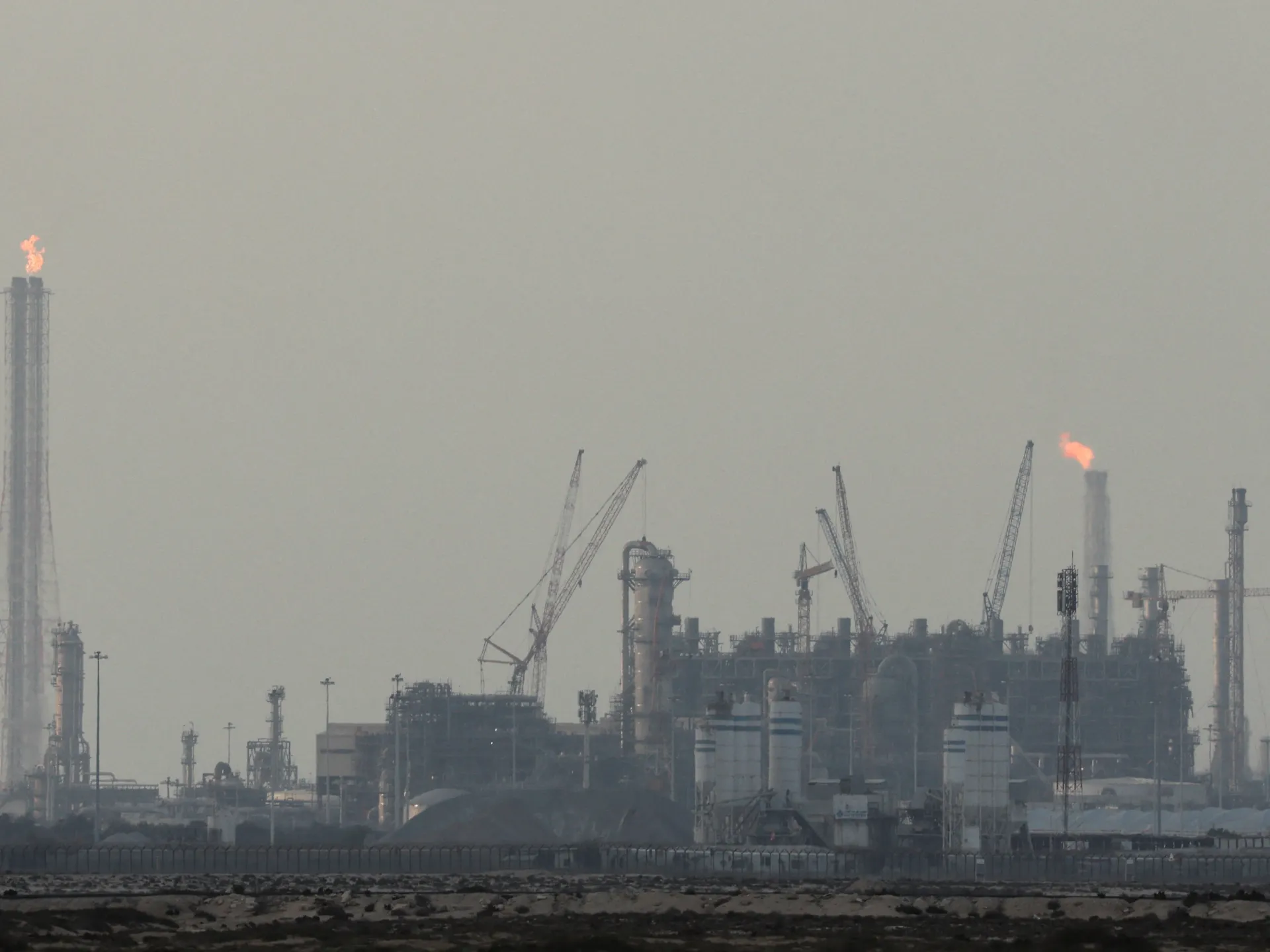
Qatar’s Ras Laffan Industrial City, the world’s largest LNG export hub, which hosts major joint ventures between QatarEnergy, ExxonMobil and ConocoPhillips, also came under repeated attack in March, at one point forcing the plant to halt production entirely. In June, an explosion as a result of a “technical malfunction” on Qatar’s Barzan gas project, where ExxonMobil holds a stake, killed at least 13 people.
“In terms of gas assets being impacted, major blows have been [dealt to] companies [that are] part of LNG projects in Qatar: ExxonMobil and ConocoPhillips,” Choudhary said.
He added that ExxonMobil’s share of LNG supply from Qatar is expected to fall significantly this year to about four million tonnes compared with 13 million tonnes last year, while ConocoPhillips has also experienced reduced volumes to one million tonnes this year compared with 2.5 million tonnes last year.
The attacks on Qatar’s LNG infrastructure could have longer-term consequences. Damage to LNG trains at Ras Laffan could take years to repair, according to QatarEnergy, while delays to Qatar’s North Field expansion projects could push back planned supply growth.
“The attack on LNG trains 4 and 6 at Rasgas damaged roughly 13 million tonnes of capacity, which will take anywhere between three to five years to come back online with a total repair cost estimate of around $3bn,” said Choudhary.
He added that the second most impacted gas project has been the Shah gas project in the UAE, in which Occidental Petroleum has a 40-percent stake and where drone attacks in March caused a fire at the gas plant that halted operations.
The conflict has also affected ExxonMobil’s oil interests in the UAE, Choudhary said. Production from Upper Zakum, where ExxonMobil has a 28 percent stake, was reduced between March and May when export routes were disrupted, limiting the ability to move offshore crude.
Beyond the UAE, the most significant impact on US companies’ oilfield operations played out in Iraq. A drone attack hit the Sarsang oilfield in March, followed by an explosion at one of its storage facilities in April, together causing damage to the field.
Looking ahead, Choudhary said higher prices could support cash flows, but prolonged conflict risks could threaten future growth. ExxonMobil’s $10bn Upper Zakum and Qatar LNG expansions could face delays, while ConocoPhillips remains exposed through investments in higher-risk markets, including its planned 42-percent stake in BP’s Kirkuk operations in Iraq.
“For companies like Chevron and Occidental Petroleum, whose presence are in less volatile countries like Israel and Oman respectively, the impact of escalations will not be as severe, as we have not seen significant disruption in these countries,” said Choudhary.
US oilfield service companies in the Gulf
Oilfield service giants, including US firms SLB (formerly Schlumberger), Halliburton and Baker Hughes, provide drilling technologies, equipment and operational expertise across the Gulf, supporting Saudi Aramco, ADNOC and QatarEnergy.
For oilfield service companies, the outlook is mixed, according to Chinmayi Teggi, energy research analyst at Rystad Energy, a research group. While higher oil prices and energy security concerns could lift demand over time, near-term margins remain under pressure from higher logistical costs, supply-chain disruptions and delayed projects.
“For the Big Three (SLB, Baker Hughes and Halliburton), the conflict continues to weigh on regional revenues,” Teggi told Al Jazeera, adding that second-quarter Middle East revenues were down 8-10 percent compared with the previous year across the three companies, while higher oil prices meant revenues were higher in other geographies.
However, a recovery in suspended operations and production could help drive growth into 2027.
For US companies, therefore, the Gulf remains both an opportunity and a risk.
“The impact on US companies will depend on the extent of exposure and countries in which these companies are present,” Choudhary said.
Their investments have secured US access to some of the world’s most important oil and LNG projects, but the conflict has exposed the risk of operating in a region where energy infrastructure has become increasingly vulnerable to geopolitical conflict.
US President Donald Trump has repeatedly warned Iran against restricting access to the Strait of Hormuz, arguing that the waterway must remain open to global commerce.
But for companies with billions of dollars invested across the Gulf, the challenge isn’t just about keeping shipments moving – it is ensuring the infrastructure remains secure, they say.
At least 17 companies linked to illegal Israeli settlements in the occupied West Bank hold United Kingdom public-sector contracts worth more than 2.1 billion pounds ($2.85bn), an Al Jazeera investigation reveals.
Our analysis of procurement records, company filings and corporate disclosures found that businesses named by the United Nations over their involvement in illegal Israeli settlements – and companies those businesses ultimately own or control as subsidiaries – have secured contracts across the British public sector, including in areas such as road maintenance, transport, emergency services and driving licensing.
“Evidence is growing that the UK may be in breach of its international obligations … by continuing to contract with entities identified by the UN as providing assistance of this sort,” Stephen Humphreys, professor of international law at the London School of Economics, told Al Jazeera.
Data compiled by public procurement analysts Tussell, and shared with Al Jazeera, shows the 17 companies and entities hold 125 public-sector contracts with a combined award value of 2.129 billion pounds ($2.89bn).
Companies owned by Motorola Solutions, the United States technology and communications giant, account for more than 1.7 billion pounds ($2.3bn) of the total – the vast majority through its British subsidiary Airwave Solutions. Other contracts we reviewed are held by firms within four other corporate groups including Heidelberg Materials, a German multinational building materials company; the French engineering group Egis; the Spanish train manufacturer CAF and Chinese conglomerate Fosun.
A report by the United Nations Human Rights Office identifies the five corporate groups as involved in business activities related to illegal Israeli settlements.
Heidelberg Materials’ Israeli subsidiary owns a quarry on Palestinian land in the occupied West Bank, while Motorola is embedded in the security infrastructure of illegal settlements. Egis and CAF are involved in Jerusalem’s expanding light-rail network – a project activists say entrenches Israel’s control by integrating settlements into the city while further fragmenting Palestinian neighbourhoods.
Fosun International, whose subsidiary Breas Medical receives UK public money, also owns the controversial Israeli cosmetics manufacturer Ahava, which operates in the Mitzpe Shalem illegal settlement in the occupied West Bank. Civil rights groups, including the Palestinian Solidarity Campaign in the UK, decry Ahava as a firm that is “complicit” in the theft of Palestinian land and livelihoods.
In July 2024, the International Court of Justice found Israel’s continued presence in the occupied Palestinian territory unlawful and said it must end “as rapidly as possible”. The court also placed obligations on other states “not to render aid or assistance in maintaining the situation created by Israel’s illegal presence in the Occupied Palestinian Territory”.
That raises questions over Britain’s continued commercial relationships with the companies identified in Al Jazeera’s investigation, observers said.
‘UK government is propping up apartheid’
Humphreys believes that Britain may also be failing to meet its legal obligations by “failing to launch its own investigation into their activities, with a view to preventing them if necessary”.
The UK has also warned businesses against bidding for construction tenders in illegal settlements.
“Businesses should not consider bidding for construction tenders,” a government statement issued this month said, warning of “legal and reputational consequences” and the risk of involvement in “serious breaches of international law”.
Former Labour leader Jeremy Corbyn said Al Jazeera’s findings expose a contradiction between the UK’s stated position and its economic ties.
“Quite simply, the UK government is propping up apartheid,” Corbyn told Al Jazeera. “Every day, the UK deepens its complicity in Israel’s economy of occupation and, in turn, Israel’s economy of genocide.”
The Cabinet Office told Al Jazeera that individual public authorities make decisions to exclude suppliers case-by-case for each contract. It said public procurement in the UK should not be used to boycott suppliers linked to other countries unless formal UK sanctions, embargoes or restrictions are in place.
Here’s what we found about some of the companies involved in settlement trade:
Motorola Solutions: Tech embedded in illegal settlements
The UN identifies Motorola in connection with two settlement-related activities: the “supply of security services, equipment and materials to enterprises operating in settlements” and the “provision of services and utilities supporting the maintenance and existence of settlements, including transport”.
Al Jazeera contacted the Motorola Solutions group for comment but received no response.
It is the largest beneficiary of UK public money that we investigated.
Motorola’s subsidiaries are entrusted with providing communications equipment to the emergency services in the UK. The largest contract identified by Al Jazeera is held by Airwave Solutions, a Motorola subsidiary. The Home Office awarded Airwave an extension worth 1.562 billion pounds ($2.13bn) to provide the secure communications network used by police, fire and ambulance services across England, Scotland and Wales. Motorola Solutions UK separately holds contracts worth 123.9 million pounds ($170m), including a 36.5-million-pound ($49.8m) Ministry of Defence contract for Airwave radios, accessories and airtime.
Five companies now ultimately controlled by Motorola Solutions Inc – Airwave Solutions Ltd, Motorola Solutions UK Ltd, CRFS Ltd, 3TC Software Ltd and Noggin IT Ltd – hold 91 active UK public-sector contracts worth 1.726 billion pounds ($2.3bn), according to the latest Tussell data.
Motorola Solutions Inc and its Israeli subsidiary, Motorola Solutions Israel Ltd, were included when the UN Human Rights Office first published its database of businesses involved in specified settlement-related activities in 2020. Both remain in its latest version.
Official records provide a glimpse of how the company’s technology has been embedded in settlements.
Tenders from Mateh Binyamin Regional Council and the municipal corporation of Ariel, both illegal settlements, show Motorola command-and-control technology being used in security and surveillance infrastructure.
Motorola equipment has also been bought by the Israeli Civil Administration, the military body through which Israel administers civilian affairs in the occupied West Bank.
In 2005, the UN reported that Motorola supplied surveillance systems to settlements including Hebron, Karmei Tzur and Bracha.
Motorola’s relationship with the Israeli authorities continues today. An Israeli government procurement document obtained by Al Jazeera shows Motorola Solutions Israel was awarded a 25.5-million-shekel ($8.7m) contract in May 2026 to maintain approximately 19,000 police radios and provide encryption licences until April 2028.
Heidelberg Materials: A controversial quarry on occupied land
The UN has listed Heidelberg Materials over the commercial use of natural resources in occupied Palestinian territory.
In Britain, five Heidelberg Materials companies hold 25 public-sector contracts worth 184.79 million pounds ($252m). Almost all of that – 179.03 million pounds ($244m) – is held by Hanson Quarry Products Europe Ltd. Its contracts include 60 million pounds ($81.9m) from Westmorland and Furness Council for road surfacing and highway works between 2024 and 2027, and a 50-million-pound ($68.3m) surfacing maintenance contract with Somerset Council.
Its Israeli subsidiary, Hanson Israel, owns the Nahal Raba quarry, south of Qalqilya in the West Bank. The quarry sits on land belonging to the Palestinian villages of az-Zawiya and Rafat, according to Who Profits.
An official Civil Administration planning notice reviewed by Al Jazeera shows a proposal was approved to expand the site.
Who Profits, a group that researches links between the private sector and the economy in the Israeli-occupied territories, said the approval was granted on May 28, 2025.
Heidelberg told Al Jazeera that in 2023, Hanson Israel “ceased all activities at the Nahal Raba quarry and the associated asphalt plant and ready-mix concrete plant”, adding that only security personnel are present on site.
Egis: Selling transport infrastructure that supports settlements
French engineering group Egis provides another type of connection via transport infrastructure linking illegal Israeli settlements in occupied East Jerusalem with the rest of the city.
The UN lists Egis in connection with the “provision of services and utilities supporting the maintenance and existence of settlements, including transport”.
Egis’s own material shows that its involvement in Jerusalem’s expanding light-rail network continues today, with the company website advertising a job for an engineering expert based in Jerusalem on its light-rail projects.
A general view shows Jerusalem’s light rail tram as it passes by the old city’s walls in Jerusalem November 13, 2014 [Ronen Zvulun/Reuters]
Jerusalem Transportation Master Plan procurement documents from 2017 also identify Egis Rail as its general consultant, responsible for supervising and coordinating planning and design work on the Blue and Green lines.
Jerusalem’s light rail crosses into occupied East Jerusalem and links illegal Israeli settlements there with West Jerusalem. UN reports have described the railway as “additional infrastructure serving the illegal settlement network” and said it further isolates occupied East Jerusalem from the rest of the occupied West Bank.
Egis told Al Jazeera it “formally expressed its disagreement with this inclusion” in the UN database.
In Britain, five companies and entities controlled by Egis hold six public-sector contracts worth 133.60 million pounds ($182.4m). Almost the entire amount comes from a single contract, with the Driver and Vehicle Licensing Agency awarding Egis Projects UK Ltd a 133.23-million-pound ($181.9m) contract for enforcement services across Britain. Egis businesses also hold UK public contracts, including Galson Sciences, Helios Technology, Egis Transport Solutions and architecture practice WestonWilliamson+Partners.
CAF: Constructing project to continue into 2027
Spanish train manufacturer CAF is also involved in Jerusalem’s light-rail network. The company has disclosed that the 1.8-billion-euro ($2.10bn) Jerusalem project was awarded in 2019 to TransJerusalem J-Net Ltd, a firm owned 50 percent by CAF and 50 percent by Israeli construction business Shapir.
CAF said the project includes construction of the Green Line and extension of the existing Red Line, “which partially run through East Jerusalem”. The construction phase is expected to continue until 2027.
The UN identifies CAF over the “supply of equipment and materials facilitating the construction and the expansion of settlements” and the “use of natural resources, in particular water and land, for business purposes”.
Al Jazeera contacted CAF for comment but received no response.
Meanwhile, CAF has an extensive relationship with Britain’s public sector, including supplying trams for one of the country’s major urban networks. The West Midlands Combined Authority awarded CAF an 83.5-million-pound ($114m) contract for a new generation of trams for the West Midlands Metro. The contract runs until December 2027, according to Tussell data.
Fosun: Owner of a cosmetics company accused of excavating Dead Sea mud in occupied territory
Chinese conglomerate Fosun International is identified by the UN under the category covering the commercial use of natural resources, particularly water and land.
Its connection to the occupied West Bank centres on Israeli cosmetics manufacturer Ahava Dead Sea Laboratories. Fosun itself announced in April 2016 that it had agreed to acquire Ahava for 290 million shekels ($76.8m).
Fosun’s subsequent statutory reporting recorded Ahava as 99.46-percent owned.
A European Commission statement in 2018 said Ahava “does have operations in the settlement Mitzpeh Shalem, located in Occupied Territories”.
According to the Quaker-founded organisation, American Friends Service Committee (AFSC), repeated site visits confirmed that Ahava’s former factory in the illegal Mitzpe Shalem settlement remained operational as of 2026.
The group said Dead Sea mud was excavated in the occupied Palestinian territory and initially processed at the site before being transferred to Ein Gedi for further production.
In Britain, Breas Medical, which is ultimately owned through Shanghai Fosun Pharmaceutical by Fosun International, holds two public-sector contracts worth 1.29 million pounds ($1.76m). Fosun International is the controlling shareholder of Shanghai Fosun Pharmaceutical.
Al Jazeera contacted Fosun for comment but received no response.
The Iran war is settling into attrition, with no regime collapse and Gulf economies facing growing uncertainty
Analysts broadly agree the United States and Israel’s war on Iran will not see regime collapse in Tehran or a definite victory for Washington, but rather a dragged-out affair of stagnation and attrition.
The hope among the US leadership at the start of the war, which began after surprise Israeli and US attacks on February 28, was that mounting economic and military pressure on Iran would force a structural shift in Tehran. Six months on, it is clear this vision will not come about, and instead many are preparing for a protracted war and managed fallout.
Recommended Stories
list of 4 itemsend of list
Oil-dependent economies are still absorbing supply shocks after traffic in the Strait of Hormuz slowed to a trickle of pre-war levels following Iran’s attacks on shipping and a US blockade on Iranian ports.
The US military is still entrenched in a region that remains its most militarised in years. Although the war’s intensity has lessened since a memorandum of understanding (MoU) was signed by Washington and Tehran in June, there is no sign it will conclude, leading to continued uncertainty about the future.
Existing tensions, such as those between the Houthi rebels and Saudi Arabia in Yemen, look only set to increase as the war drags on. The influence of rival powers, such as those of India and China, remains stalled rather than stopped, with Beijing’s Belt and Road Initiative having already established itself within the Middle East and North Africa. All in all, the region remains in flux where formal alliances with outside powers no longer guarantee safety.
The defence agreement between Turkiye, Pakistan and Saudi Arabia recently signed in Mecca will likely be the first of many such military pacts agreed in the region.
“The war has just accelerated trends, but hasn’t really started anything that wasn’t already under way. The Gulf countries were already diversifying their economies,” Sanam Vakil, director of the Middle East and North Africa Programme at Chatham House, told Al Jazeera. “Many were already looking at broadening their defence partnerships beyond existing US security guarantees, as well as increasing their own defence capability.”
Israel, for its part, is still pursuing its regional project of “paramountcy”, HA Hellyer of the Royal United Services Institute said, despite its failure to bring Iran to its knees this year.
“There is no chance of the government in Tehran falling in the next six months,” Hellyer told Al Jazeera. “If everything were to theoretically stay the same … with just increased economic pressure, that could eventually cause a ripple effect that could lead to state collapse in Iran. But we’re talking years, not months, and everything is not likely to stay the same.”
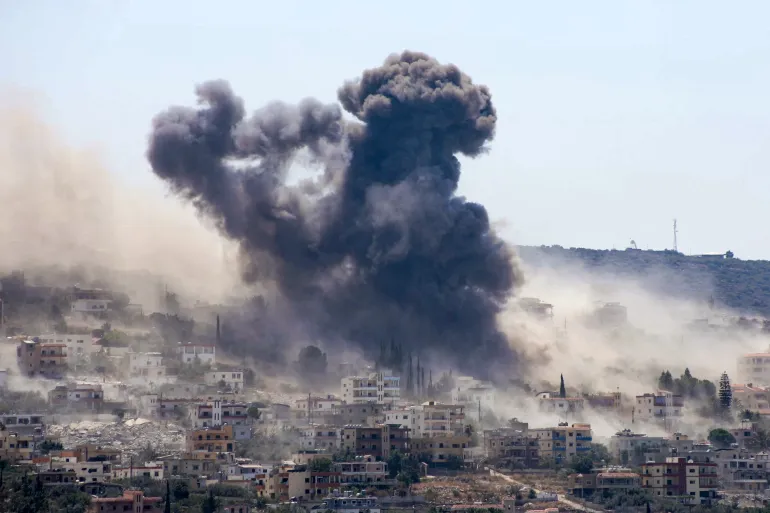
Smoke rises from the site of a string of Israeli air strikes that targeted the area of al-Mansouri, as seen from the southern Lebanese city of Tyre on August 25, 2026 [Kawnat Haju/AFP]
The effective closure of the Strait of Hormuz and strikes on regional cities have hindered Gulf states’ plans to use oil revenues as an engine to diversify their economies and build on their reputations as a safe haven to encourage investors.
Shipments of oil, derivative products and liquefied natural gas (LNG) have been repeatedly and severely disrupted since the US and Israel launched their attacks on Iran in February.
Transit through the Bab al-Mandeb Strait, which saw attacks on shipping by the Houthis during Israel’s genocidal war on Gaza, became even more hazardous in July, when the Iran-allied Houthis declared a naval blockade of Saudi Arabia.
“The price of oil has increased broadly in line with the Gulf states’ difficulties in exporting it,” John Sfakianakis, chief economist at the Gulf Research Center, told Al Jazeera. “Is this going to go for six months? Is it going to go on for longer?”
Exacerbating the Gulf states’ difficulties is that, although the price of oil has risen, so has inflation. In addition to the economic difficulties the war has created, there is also growing pressure for Gulf states to invest more in defence.
For now, the majority of the states caught in the middle will look at ways of living with the turmoil and managing the consequences.
Qatari Prime Minister Sheikh Mohammed bin Abdulrahman bin Jassim Al Thani is due to visit Tehran on Thursday for talks on de-escalating tensions and reviving dialogue between Iran and the United States.
A spokesman for Qatar’s Ministry of Foreign Affairs announced the visit in a statement on X on Wednesday.
Recommended Stories
list of 4 itemsend of list
Majed al-Ansari said Sheikh Mohammed, who is also Qatar’s foreign minister, will meet with “a number of Iranian officials” in Tehran to “discuss ways to de-escalate tensions” and “create the conditions conducive to dialogue”.
“The visit comes in line with the State of Qatar’s firm position that the diplomatic path is the best means of resolving differences & promoting security & stability in the region,” he added.
Iran also confirmed the visit, saying the discussions will cover “the continuation of Qatar’s mediation efforts and initiatives, as well as other regional developments”.
Qatar has served as a back-channel negotiator between Washington and Tehran and helped secure a memorandum of understanding in June that briefly paused hostilities. The agreement collapsed in July, and the conflict is now nearing its sixth month, with fighting largely paused but no diplomatic breakthrough in sight.
The US has, meanwhile, promised to increase economic pressure on Tehran by sanctioning its trade partners.
US President Donald Trump told Al Jazeera on Wednesday that he was in “no hurry” to resume talks with Iran, saying that he believed economic and military action against Tehran were both effective.
“I have no time schedule; whatever it takes,” he said.
‘Economic terrorism’
Iran has continued to denounce the economic pressure campaign.
Foreign Minister Abbas Araghchi wrote to the United Nations on Wednesday calling the new sanctions an “act of state and economic terrorism” and urging member states not to implement them.
“The sanctions deliberately harm civilians by restricting access to food, medicine, medical equipment, energy and other essentials, violating rights including the rights to life, health, food and an adequate standard of living”, he said.
The two sides also remain at odds over the Strait of Hormuz, the strategic waterway that handled one-fifth of global oil and liquefied natural gas shipments before the US-Israel war on Iran began in February.
Iran wants control over the strait, while the US wants it to remain an international waterway that is free for all. That disagreement in part led to the collapse of the memorandum signed in June.
Oil flows through the strait have since fallen to a three-month low, with just 5 million barrels per day (bpd) transiting on Monday. Before the war, the strait carried roughly 20 million bpd of crude oil.
Qatar’s Foreign Ministry said Sheikh Mohammed will also discuss the waterway in his meetings in Tehran on Thursday, focusing on “the need for it to return to the status quo prior to February 28”.
Regional diplomacy
Sheikh Mohammed’s visit comes two days after Omani Foreign Minister Badr Albusaidi met his Iranian counterpart, Araghchi, in Tehran.
Following those talks, Iran’s deputy foreign minister, Kazem Gharibabadi, said the two countries had agreed on a new temporary route for shipping in the strait.
But he insisted that the waterway will not reopen until the US fulfils its commitments under the June deal, including the lifting of sanctions and the release of frozen assets.
Pakistan’s army chief, Asim Munir, also visited Tehran earlier in the week in a bid to “end the stalemate” in the conflict, with Islamabad reporting “significant progress” in those talks.
Mostafa Khoshcheshm, a professor at the University of Applied Sciences in Tehran, said that regional countries were pushing for dialogue because “they believe that the situation is moving towards escalation”.
“They know that if war breaks out, it would be a fully-fledged war and the fire would spill over into the entire region and beyond, leaving a detrimental impact on the global economy,” he said. “So there are hectic diplomatic moves on the part of these countries.”
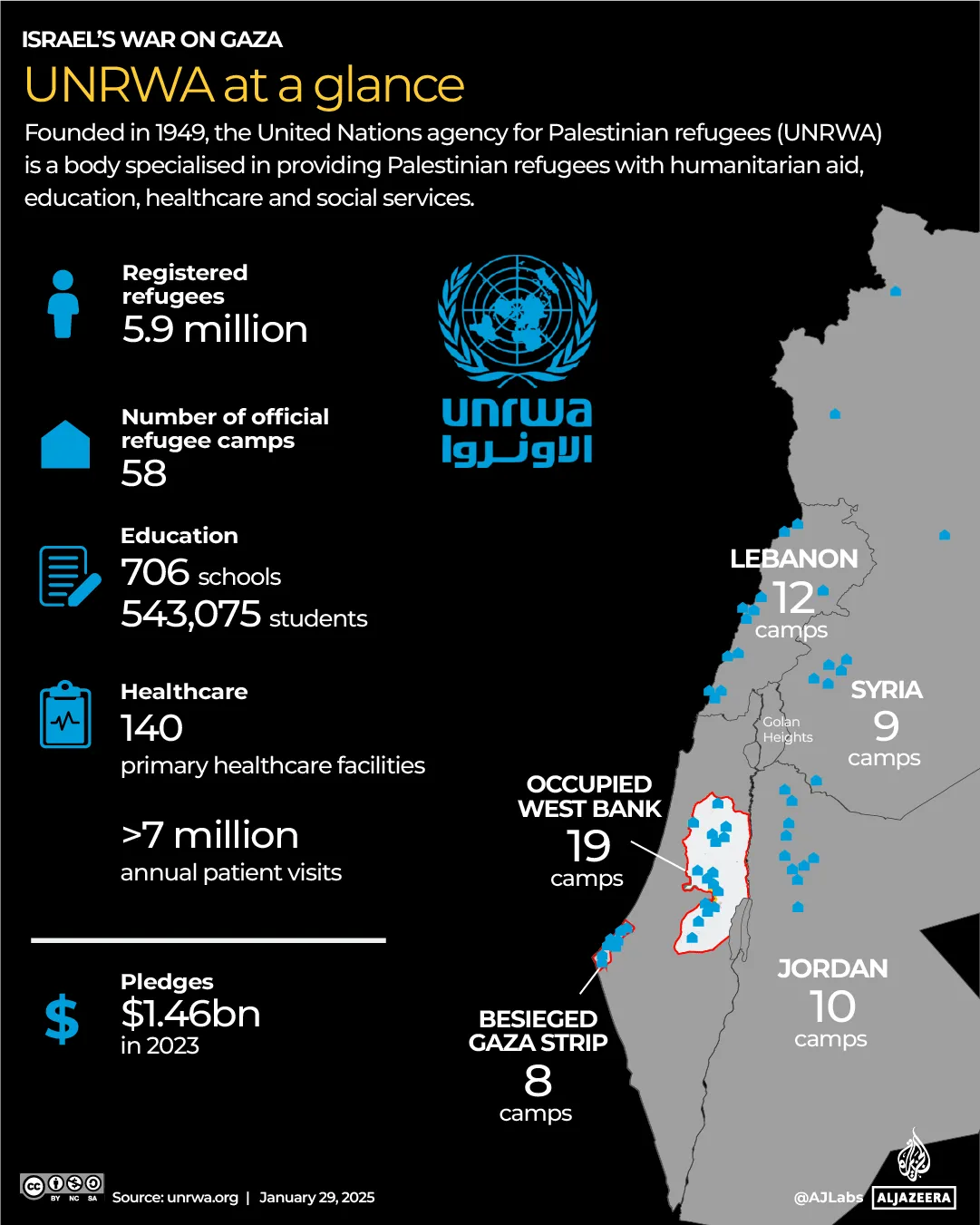
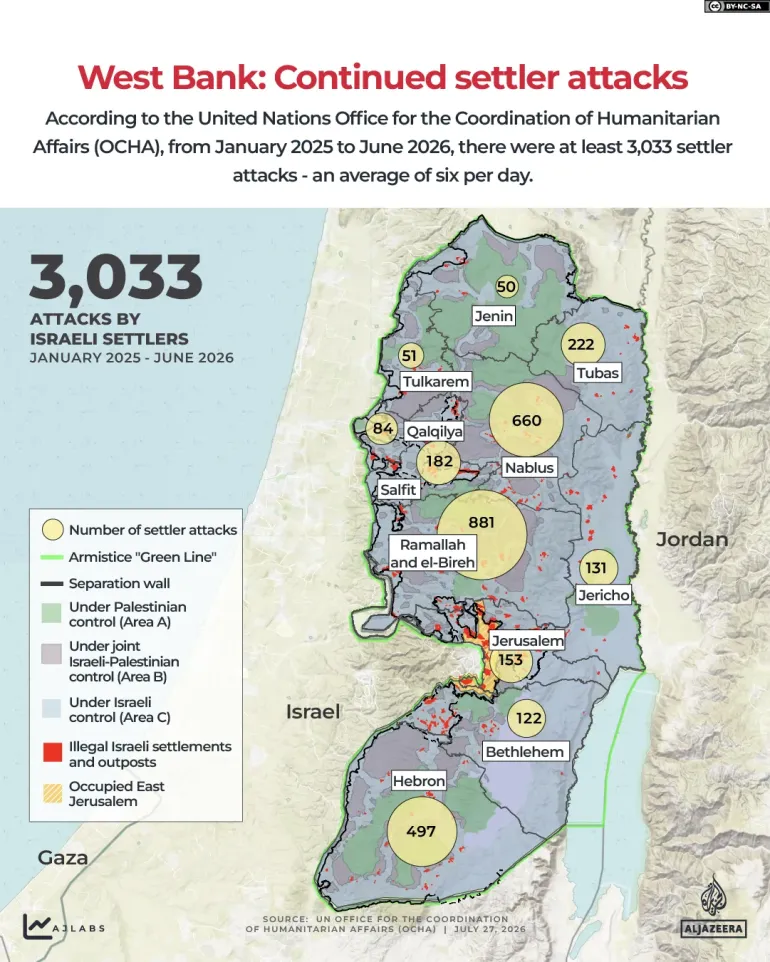
Israeli forces have raided the Qalandiya Training Centre, operated by the United Nations agency for Palestinian refugees (UNRWA) in occupied East Jerusalem in what officials and analysts describe as a pivotal step towards dismantling international refugee protections and consolidating control over the occupied West Bank.
Tuesday’s storming of the UNRWA facility, led by far-right National Security Minister Itamar Ben-Gvir, was justified by Israeli authorities under October 2024 legislation banning the UN agency, prompting sharp condemnation from Qatar, which warned of systematic efforts to strip millions of Palestinians of essential services.
Strategic annexation
Israeli affairs expert Adel Shadid identified broader territorial ambitions behind the raid, carried out on the boundary line between East Jerusalem and the West Bank. He told Al Jazeera the assault serves a larger geopolitical scheme involving a historic airport close to the training centre.
“The institute is directly adjacent to the historic Qalandiya Airport, which was built more than 106 years ago,” Shadid said.
“The occupation aims to gain complete control over the airport adjacent to the institute to establish a massive settlement comprising over 9,000 settlement units in addition to a Jewish heritage centre and to erase the historical and geographical Jordanian landmarks of the airport,” he explained.
“By controlling these two areas and annexing them to the occupation municipality, the pillars of the ‘Greater Jerusalem’ project are completed. This project alone will carve out between 12 to 13 percent of the total area of the West Bank,” he added.
Shadid noted that this expansion would allow the municipality to control an area exceeding 800sq km (310sq miles), essentially destroying Palestinian continuity.
“The ultimate goal of the occupation exceeds preventing the establishment of a future Palestinian state. Rather, it aims explicitly to prevent the establishment of any independent Palestinian entity or presence on this land,” he said.
Echoing this assessment, retired Lebanese Brigadier General and military analyst Elias Hanna pointed to Israel’s tactical encirclement of urban Palestinian hubs.
“The importance of Qalandiya is linked to the broader settlement project in the West Bank, which is based on creating settlement blocs aiming to control geographical continuity between Palestinian areas and isolate them from each other,” Hanna told Al Jazeera.
“The control over the area can affect the movement and connection between the two cities,” he added, referring to Jerusalem and Ramallah.
Targeting refugee rights
Detailing the immediate impact on UNRWA’s institutional mandate, the agency’s media adviser Adnan Abu Hasna outlined the unprecedented nature of the takeover.
“UNRWA was not informed [in advance] of any action by the Israeli government against the UNRWA institute and complex in Qalandiya,” Abu Hasna told Al Jazeera.
“This measure is unprecedented as the UN flag is lowered and this headquarters is taken over in this unusual manner, and it represents a dangerous escalation against international humanitarian law, against UN laws and against the mandate granted to UNRWA by the UN General Assembly,” he said.
Abu Hasna underscored how the raid violated historic bilateral frameworks that long governed UN operations.
“There is an agreement signed between UNRWA and Israel on June 14, 1967, providing for facilitating UNRWA’s operations and protecting its facilities and its employees and headquarters enjoying immunity and privileges, but unfortunately, all of this has ended now under the weight of escalating Israeli measures,” he said.
The agency operates schools and provides healthcare, social services and microfinancing for Palestinians. Compounding the Israeli raids, destructions of its compounds and offices, and restrictions on its operations, the agency is also facing a financial crisis. Abu Hasna cited major political defunding campaigns, particularly by the United States.
“We have a large deficit, especially after the Trump administration and Republican lawmakers cut $360m, which constitutes about 30 percent of UNRWA’s annual budget,” he noted.
Settler-military cooperation
Regarding the operational dynamics on the ground, Israeli affairs specialist Anas Abu Arqoub highlighted the deepening alignment between state forces and armed settlers.
“It is a division of roles accompanied by a state of complete integration,” Abu Arqoub told Al Jazeera.
“The settler phenomenon … [is] in fact armed organisations with a clear leadership hierarchy, a system of regular and reserve fighters called upon when needed, and they possess a military combat doctrine,” he explained.
“A large part of them are elements from within the Israeli army, armed with its weapons, and undergo joint military training,” he added.
Abu Arqoub said Israeli research institutions, such as the Institute for National Security Studies, have recognised the severe implications of this convergence.
“The Institute for National Security Studies recently pointed out that this military force of settlers has become capable, under the cover of ‘loss of control’, of executing complete ethnic cleansing in the West Bank,” he observed.
US green light
Examining the international impunity enabling these actions, Birzeit University political science Professor Ghassan Khatib emphasised Washington’s decisive role.
“The weakness of the United Nations position is one of the two main factors driving Israel to persist and increasingly rebel against international laws and violate the rights of the Palestinian people,” Khatib told Al Jazeera.
“The first and most important factor is the American position, the actual sponsor of this Israeli rebellion,” he stressed, pointing out a “direct correlation between the rising pace of Israeli violations and the reascent of [President Donald] Trump to the leadership of the United States about two years ago”.
“These settler militias have become an integral part of the occupation system, and the danger will inevitably escalate,” Khatib added.
Electoral basis
From the local community’s perspective, Mohammed Saeed – public relations director for the popular committee of the Qalandiya refugee camp, which Israeli forces also raided on Tuesday – framed the raid as both diplomatic defiance and domestic political posturing.
The Israeli incursion, he said, was a clear message of defiance stating: ‘We are the owners of the land, and we decide its fate,’” Saeed told Al Jazeera on Tuesday.











![A photograph taken from the southern Lebanese city of Tyre shows smoke rising from the site of a string of Israeli airstrikes that targeted the area of al-Mansouri on August 25, 2026. [Kawnat Haju/AFP]](https://i0.wp.com/www.aljazeera.com/wp-content/uploads/2026/08/AFP__20260825__C6G72NK__v3__HighRes__LebanonIsraelUsIranWar-1787675105.jpg?w=640&ssl=1)