He has just returned from the UAE with crucial advice
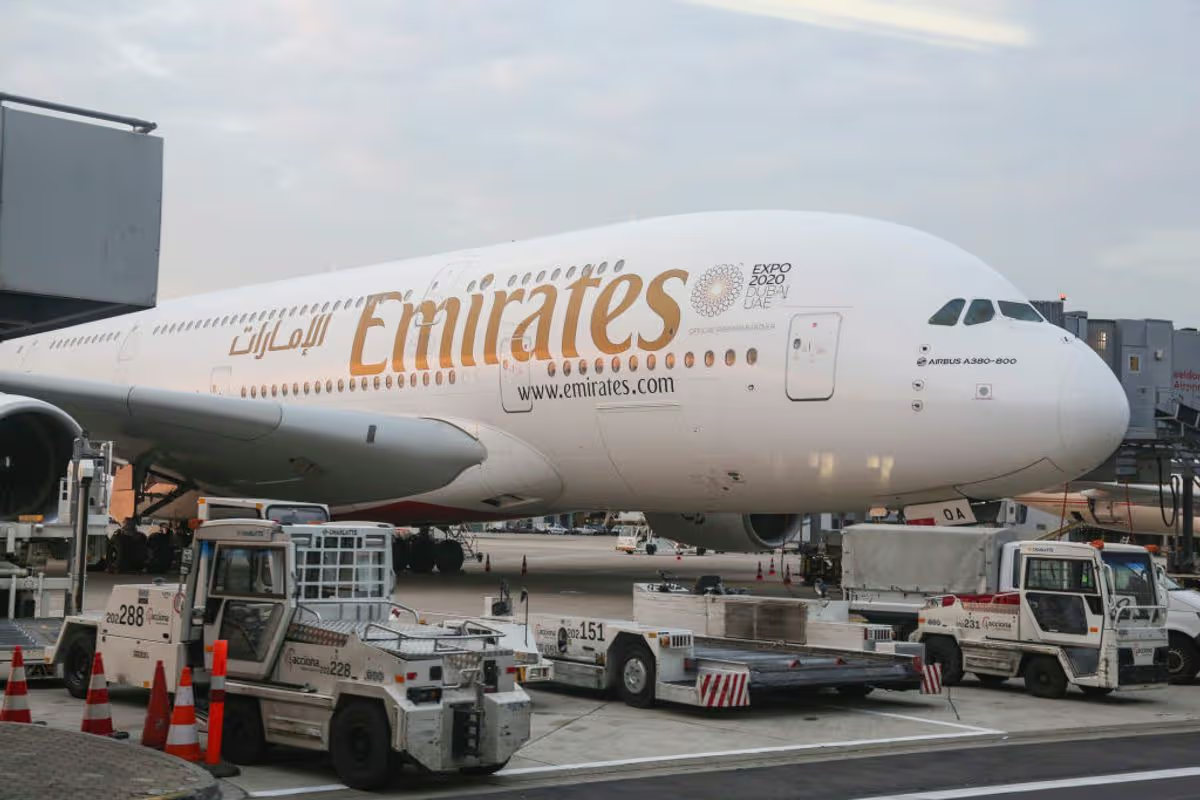
The war in the Middle East is having a major knock-on effect on international travel(Image: NurPhoto via Getty Images)
A travel expert has issued a warning to individuals with flights booked to or from the Middle East. The alert comes as tensions continue in the area, with Israel and the US maintaining their strikes on Iran which commenced over a fortnight ago.
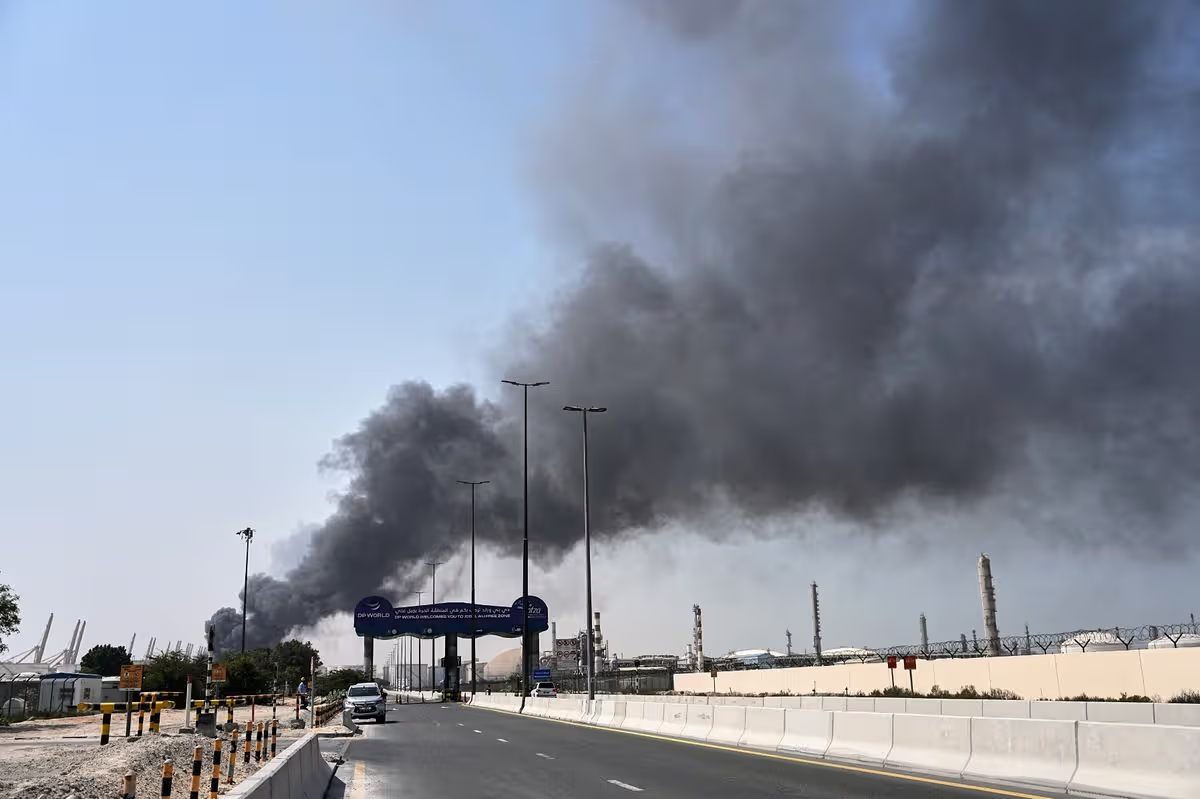
Iran continues to hit back with drone and missile attacks on several neighbouring and nearby nations. This resulted in Dubai, a major hub for international travel and home to the world’s busiest airport, temporarily closing its airspace for the second time in 48 hours due to strikes in the vicinity.
Simon Calder, a journalist with the Independent, has just returned from the United Arab Emirates. He provided an update on the current situation for those flying to or from the Middle East, including passengers transiting through the region en route to other destinations.
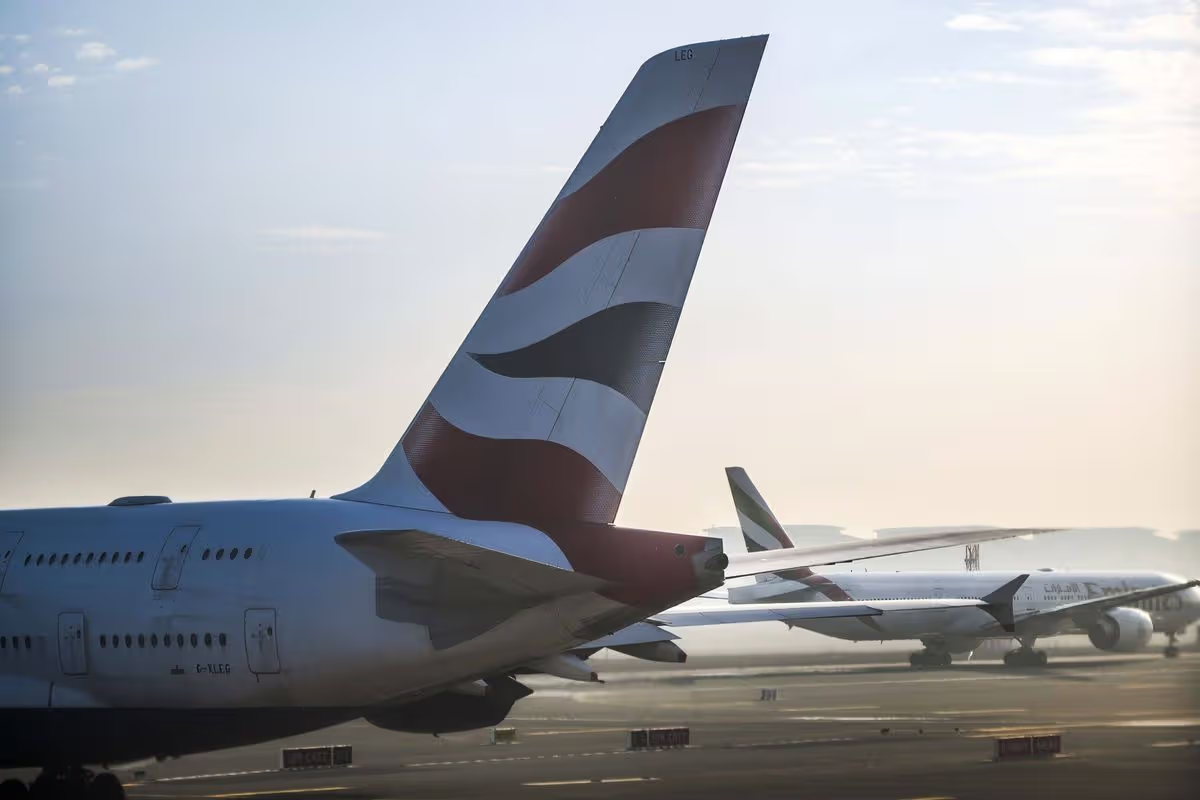
He stated: “I’ve just arrived at London Heathrow Terminal 4 after a fairly normal flight from Abu Dhabi on Etihad. What wasn’t normal was just how quiet it was when I arrived. Terminal 4, the main hub for the Middle East from London, is frankly a bit of a ghost town. Many of the flights that you would normally expect to see multiple departures on Qatar Airways to Doha and on Etihad to Abu Dhabi are not flying, and there’s also, for instance, Gulf Air based in Bahrain who are not going there.
Content cannot be displayed without consent
“Having said that, there’s perhaps more flights than you might expect, given that, for example, Qatar and the UAE are on the Foreign Office no-go list. There’s a departure this evening to Abu Dhabi on Etihad and one a little later on Qatar Airways overnight to Doha. As well as that, El Al is going out to Tel Aviv. Now, you might have heard that the airspace in Israel is closed; well, it kind of is, but if you’ve got permission, and El Al certainly has, then you can go in.
“And finally, Gulf Air is flying from here later on today, but not to the normal destination of Bahrain. Instead, it’s going to Dammam, which is very close by in Saudi Arabia, from where passengers can travel to that island quite happily over the causeway. But bear in mind that the UAE, Qatar, Kuwait, and Bahrain are all on the Foreign Office no-go list. If you choose to ignore that advice, then it’s likely your travel insurance will not be valid.
Unsurprisingly, the conflict has impacted international travel in numerous ways. Not only have passenger numbers and flights passing through the Middle East declined dramatically, but neighbouring countries favoured by Brits seeking spring sunshine, including Cyprus and Turkey, have also experienced a fall in visitor numbers.
Conversely, nations to the west boasting milder weather, including Spain and Portugal, have witnessed a surge in reservations – as has the Caribbean. The situation has not only left thousands of British holidaymakers stuck in the Middle East, but many are also anxious about their upcoming travel arrangements.
The Association of British Insurers attempted to address these worries with the following statement when questioned about whether insurance will cover the cancellation of a trip to the Middle East due to concerns over the conflict.
It stated: “As the situation evolves, we can understand why people may be reconsidering their future plans to travel to the region. If you wish to cancel your trip, contact your airline, accommodation provider or tour operator in the first instance. They may be able to rebook parts of your trip or offer a refund.
“Travel insurance may not cover cancellations linked to the conflict, depending on your policy’s terms, any war exclusions, and when you bought it. Policies differ, and insurers may take different approaches, so it’s important to check with your insurer to understand what’s covered.”
Many airlines are operating restricted schedules due to airspace restrictions in the Middle East, with 21,915 of the 38,193 services scheduled to fly since February 28 cancelled
15:11, 11 Mar 2026Updated 15:11, 11 Mar 2026
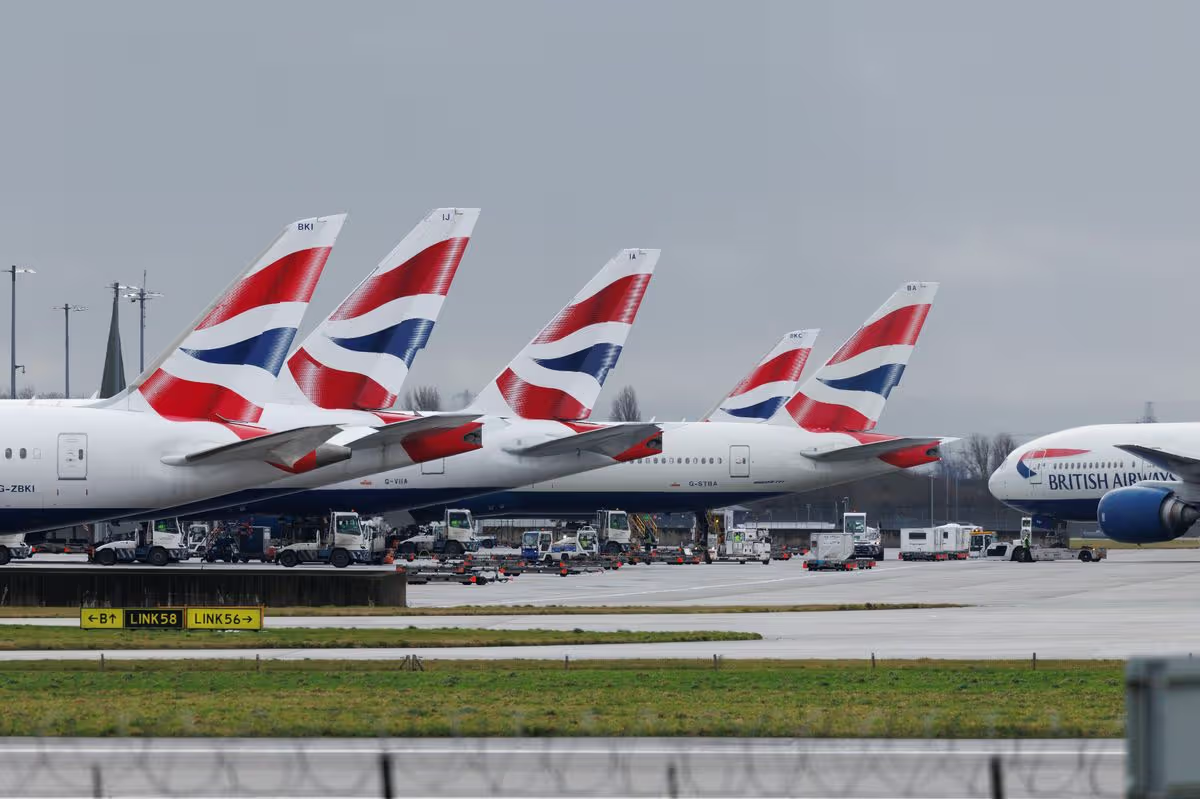
Yesterday, British Airways announced that it has suspended all flights to and from Amman, Bahrain, Doha, Dubai, and Tel Aviv until later this month,(Image: Getty Images)
Dozens of flights to and from the UK have been cancelled today as the war in Iran continues.
Many airlines are operating restricted schedules due to airspace restrictions in the Middle East, with 21,915 of the 38,193 services scheduled to fly since February 28 cancelled.
On Wednesday morning, Dubai International Airport was forced to temporarily pause operations due to a drone strike nearby, which wounded four people. Authorities have confirmed that flights have since continued.
Emirates and Etihad are still operating limited schedules from Dubai and Abu Dhabi airports, respectively. Qatar Airways said it is “doing everything possible to support affected passengers and help reunite them with family and loved ones” while Qatari airspace remains closed.
The airline said that operations will resume“ once the Qatar Civil Aviation Authority confirms the safe reopening of Qatari airspace.”
Yesterday, British Airways announced that it has suspended all flights to and from Amman, Bahrain, Doha, Dubai, and Tel Aviv until later this month, while its services to and from Abu Dhabi are cancelled until later this year. The decision means hundreds of BA services will be cancelled over the coming months.
Flight data shared exclusively with the Mirror by analytics firm Cirium shows that 55 of the planned services due to fly today had been cancelled as of 12.45 pm, which is 2.49% of the total scheduled to fly into the UK from the Middle East and vice versa.
UK flights cancelled on March 11
Arrival Country: Flights; Cancelled; Cancel %
Qatar: 18; 17; 94.44%
United Kingdom: 493; 15; 3.04%
United Arab Emirates: 32; 11; 34.38%
Bahrain: 3; 3; 100.00%
United States: 113; 2; 1.77%
Jordan: 3; 1; 33.33%
Israel: 7; 1; 14.29%
Germany: 116; 1; 0.86%
Denmark: 29; 1; 3.45%
Cyprus: 20; 1; 5.00%
Uganda: 1; 1; 100.00%
Ireland: 121; 1; 0.83%
If you are due to fly from or to the Middle East in the coming days, make sure you check your airline’s website for instructions and the Foreign Office website for the latest advice.
What have the airlines said?
Aegean Airlines – Greece’s largest carrier cancelled flights to Tel Aviv until March 20; Beirut, Erbil and Baghdad until March 25; Dubai and Abu Dhabi until March 19; and Riyadh until March 14.
Air France–KLM – Air France cancelled flights to Tel Aviv and Beirut through March 13, and to Dubai and Riyadh until March 12. KLM suspended flights to Dubai, Riyadh and Dammam until March 10, and to Tel Aviv for the rest of the winter season.
Cathay Pacific – Cancelled all flights to and from Dubai and Riyadh until March 31.
Delta – Cancelled flights from New York to Tel Aviv until March 22 and from Tel Aviv to New York until March 23.
Emirates – Operating a reduced flight schedule but expects to return to full operations within days, depending on airspace availability and operational requirements.
Etihad Airways – Resumed a limited commercial flight schedule between Abu Dhabi and several key destinations.
Iberia Express cancelled all flights to and from Tel Aviv through March 10.
Lufthansa Group – Lufthansa, Austrian Airlines, Swiss and Brussels Airlines suspended Tel Aviv flights through April 2 and Beirut flights through March 28. Flights to Tehran are suspended until April 30, and to Amman, Erbil, Dammam, Dubai and Abu Dhabi until March 15.
Norwegian Air – Now plans to start flights to Tel Aviv and Beirut on June 15, instead of the previously scheduled April 1 and April 4.
Qatar Airways – Operating a limited schedule to and from Doha, with some flights resuming from March 9 following temporary authorisation from Qatar’s civil aviation authority.
Saudia Airlines – Suspended flights to Amman, Kuwait, Abu Dhabi, Doha and Bahrain until March 10, and to Moscow and Peshawar until March 15. Limited operations to Dubai have resumed.
Wizz Air – Suspended flights to Israel until March 29, and flights from mainland Europe to Dubai, Abu Dhabi, Amman and Jeddah until mid-September.
Many Brits have been left stranded in Dubai after Israel and the US’ attacks on Iran. Here’s all the latest guidance from airlines
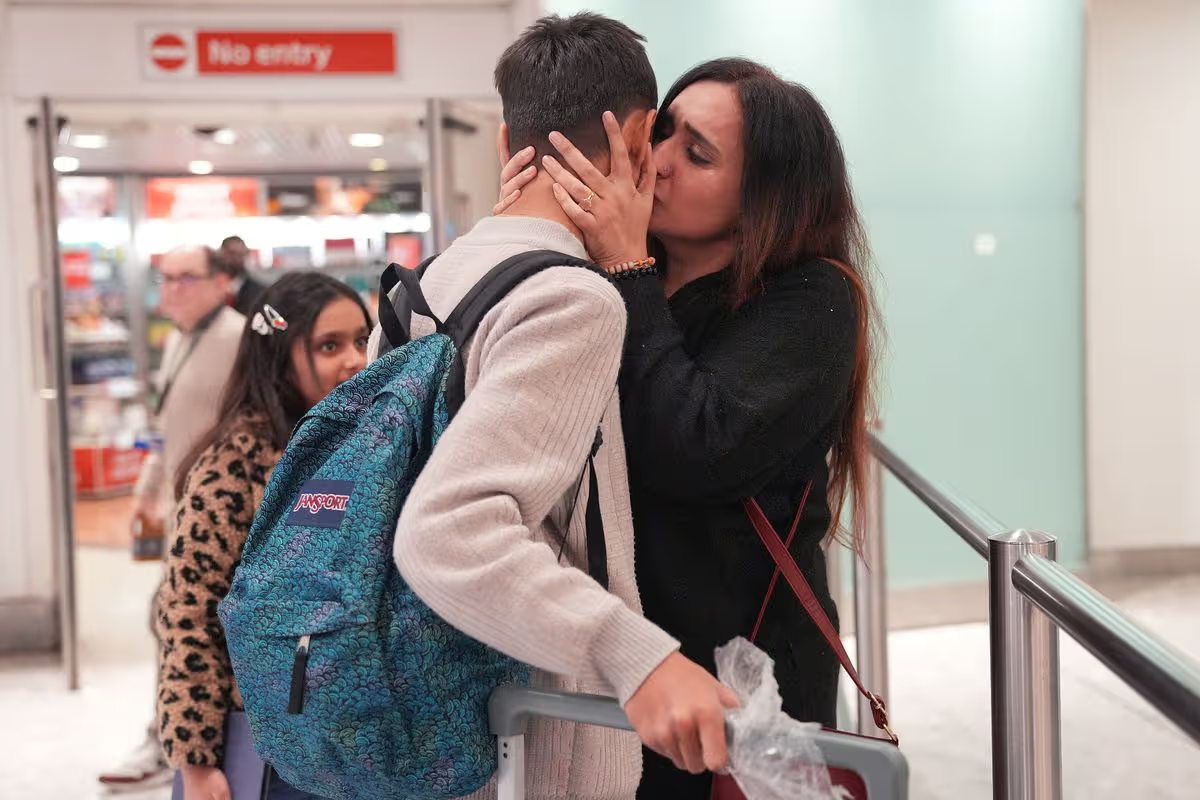
A 12 year old Brit, Ahmad Ali, was stranded alone in Dubai for three nights on his return to the UK from Pakistan. Yesterday, he finally made it back home(Image: PA)
Many Brits are still left stranded in the Middle East as Iran’s counter attacks continue.
Brits and Europeans from other nations are fearing being caught in the crossfire after the Iranian regime let loose at neighbouring nations, including the United Arab Emirates (UAE). Hundreds of people stranded abroad have said they are seeing and hearing bombs rain down near their accommodation, with some advised on ways to board up their windows to prevent them shattering in the event of an explosion.
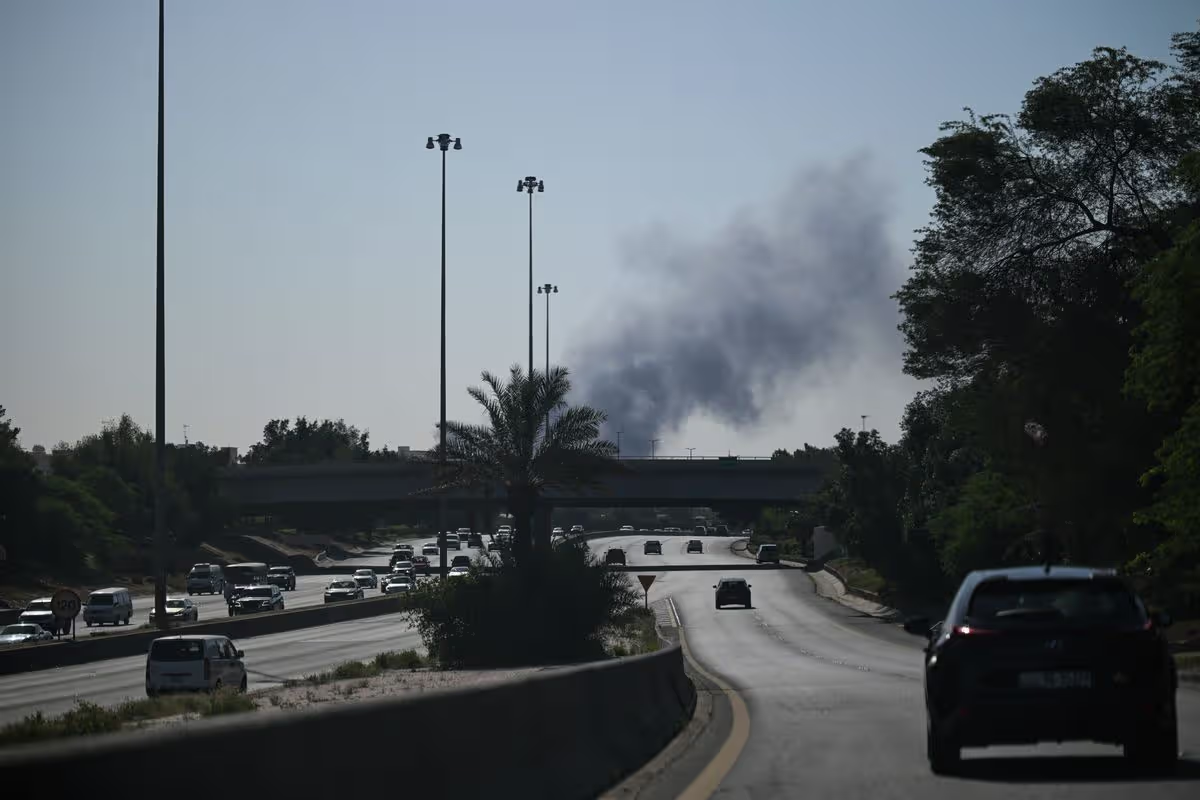
An explosion was heard close to the US consulate building in Dubai on Tuesday night, with a fire breaking out. There were also reports of explosions and air raid sirens going off in Doha, the capital of Qatar, and air raid sirens sounding in Kuwait city. Iran is continuing strikes in the Middle East after US-Israeli military action started at the weekend.
Brits stuck in the Middle East and those with holidays booked to tourist hotspots like Dubai are now scrambling for answers from airlines on what to do next.
After residents received a state-wide warning to remain vigilant and remind renters of basement bunkers, many British immigrants and visitors in Dubai are facing a new challenge – how to leave and return safely home.
Emirates says on its website: “All scheduled Emirates flights to and from Dubai remain suspended until 2359hrs UAE time on March 4, due to airspace closures across the region.
“Emirates continues to operate a limited number of passenger repatriation and freighter flights on March 3 and 4. We are accommodating customers with earlier bookings as a priority on these limited flights.
“Please do not go to the airport unless you have been notified directly by Emirates or hold a confirmed booking for these flights. Emirates continues to monitor the situation, and we will develop our operational schedule accordingly.”
Manchester Evening News reports that, overall, Emirates is now running 45 flights scheduled from Dubai for today, with seven returning Brits to the UK.
Qatar Airways
Yesterday morning (March 3), Qatar Airways stated flights were still “temporarily suspended”. Taking to X (Twitter), the official account wrote: “Qatar Airways will resume operations once the Qatar Civil Aviation Authority announces the safe reopening of Qatari airspace”.
They added that the next update will be posted on March 6, 0900 Doha time (0600 UTC) and that passengers should watch the official app or website for the latest flight information.
The UK government has confirmed that around 300,000 British nationals are currently in Gulf countries affected by the escalating conflict. Of those, 102,000 have registered their presence with the Foreign Office as officials draw up contingency plans, including the possibility of a large-scale evacuation.
Sir Keir Starmer said the government is “looking at all options to support our people”, while Foreign Secretary Yvette Cooper indicated that detailed preparations are under way. British nationals in Bahrain, Israel, Kuwait, Palestine, Qatar and the UAE have been urged to register online and monitor official travel advice, which could change rapidly.
British Airways
Speaking to the Mirror, British Airways said: “We’re continuing to do everything we can to support customers and colleagues in the region and are in regular contact with them”.
“We currently remain unable to operate flights from destinations including Dubai, Doha, Abu Dhabi, Bahrain, Amman, and Tel Aviv. We’re aware that a number of our customers are now in Oman, where the airspace is currently open. Working with the relevant authorities, we’ve been able to schedule a flight from Muscat to London, departing at 02:30 local time on March 5. Existing customers who are in Oman can let us know they wish to travel on this flight via a dedicated phone line: +44 203 467 3854”.
The advised: “Customers should continue to follow the latest safety advice from local government and the Foreign Office. Customers are advised NOT to travel to the airport unless they have a confirmed booking”. They added that “flights to Cairo, Riyadh, and Jeddah continue to operate as normal”.
The airline went on, saying: “We have actioned a flexible customer booking policy which allows all customers due to travel between London Heathrow and Abu Dhabi, Amman, Bahrain, Doha, Dubai, Tel Aviv in the coming days the option to change the date of their flights for free or get a refund. Customers travelling to Larnaca can rebook for a different date for free. Customers travelling to these destinations in the coming days can also change their booking to a different route with no change fee but will need to pay the fare difference,” ended BA.com.
British Airways has also said: “If you are due to fly between London Heathrow and Abu Dhabi, Amman, Bahrain, Doha, Dubai or Tel Aviv you can change your flight free of charge up to and including 29 March. Customers travelling up to and including March 4 may also request a full refund”. Those concerned have been recommended to keep up with the latest on the FCDO and their airline/travel provider websites for real-time guidance.
Wizz Air
Wizz Air states: “The airline is now suspending all flights to and from Israel, Dubai, Abu Dhabi and Amman up to and including Sunday, March 15 (previously March 7), pending structural schedule changes reflecting reduced demand. Flights to and from Saudi Arabia will recommence as planned from March 8 inclusive”.
Virgin Atlantic
Virgin Atlantic says that some flights were resumed yesterday between London Heathrow Airport, Dubai and Riyadh.
A spokesperson shared: “The safety and security of our customers and people is always our top priority, and our operation is subject to ongoing assessments”
“We are contacting customers regarding their travel arrangements. We’d like to thank them for their patience and understanding and recommend that all customers due to travel to or from Dubai and Riyadh over the next 48 hours check the status of their flight on virginatlantic.com before going to the airport.
“We continue to monitor the situation in the Middle East with ongoing dynamic assessments and active changes to our flight routings based on the latest information and guidance, if required”. These are the ongoing flights now resumed:
VS400 London Heathrow – Dubai, Tuesday March 3
VS242 London Heathrow – Riyadh, Tuesday March 3
VS401 Dubai – London Heathrow, Wednesday March 4
VS243 Riyadh – London Heathrow, Wednesday March 4
The airline ewill not fly over Iran and flights “to India and Maldives may experience slightly longer flight times,” says a recent update. A spokesperson tells the Mirror: “All flights will carry appropriate fuel to allow for short notice re-routing” and that “all cancellations are being continuously updated”.
“To provide greater flexibility for customers with affected upcoming travel plans, Virgin Atlantic and Virgin Atlantic Holidays has introduced flexible booking options, which remain under constant review. For full details and contact information for customer teams please see https://www.virginatlantic.com/travel-news/middle-east-airspace”.
“Virgin Atlantic customers with a cancelled flight who are away from home for longer than planned will have all reasonable expenses, accommodation and transport covered. They are asked to submit all receipts via our website”.
Ethiad
Etihad, Emirates and Qatar Airways have continued to suspend their commercial flights and are currently only operating a small number of repatriation flights, Manchester Evening News reports.
An Emirates flight from Dubai and a Qatar Airways departure from Doha landed at Manchester Airport this morning. In total, Emirates is operating seven flights from Dubai to the UK while Etihad has two Abu Dhabi departures.
The airline said on Wednesday that Etihad’s flights to and from Dubai are suspended until at least Friday morning. All scheduled flights to and from Abu Dhabi remain suspended until 2pm UAE time on Thursday. The airline has warned travellers to only head to the airport if contacted directly by Etihad.
Simon Calder said it ‘possibly points the way forward’ but there was still a long way to go
Strikes by US and Israeli forces are continuing on Iran
A travel expert has provided an update on when flights to and from the Middle East might resume normal service. Flights continue to be severely disrupted due to the US-Israeli strikes on Iran, which started over the weekend.
It is estimated that around 300,000 Brits are currently in the Gulf region. Airspace closures in the Middle East have led to numerous commercial flights being grounded, with over a third of today’s (Monday, March 2) scheduled flights to the area cancelled.
Major airlines such as British Airways, Virgin Atlantic, Qatar Airways, Etihad, and Emirates are among those to have cancelled flights. The Foreign, Commonwealth and Development Office is presently advising against all but essential travel to the United Arab Emirates.
Travel journalist Simon Calder gave an update on the Independent’s Instagram page about how the situation might unfold. He stated: “Day three of the crisis in the Gulf, which has seen all air operations cease at the key hubs of Dubai, Doha, and Abu Dhabi, and tens of thousands of passengers stranded as a result trying to head back to the UK.
Content cannot be displayed without consent
“The latest news is not encouraging from the airlines; Qatar Airways has just said we’re not going to tell you any more updates until Tuesday morning. Emirates says we will not be flying anything before 3:00 on Monday-I think it’s extremely unlikely that that will happen; similar story from Etihad, who are based in Abu Dhabi.
“At the moment, though, obey the Foreign Office advice, and if you are booked to travel on one of those airlines-Emirates, Etihad, or Qatar Airways-your flight will not be operating today, and I fear that it might be some time before we see those planes back in the sky.”
It is believed that out of the 300,000 Brits in the region, approximately 100,000 may require evacuation back to the UK. British citizens are being advised to heed the instructions of local authorities and keep a close eye on the Foreign Office’s travel advice, which officials anticipate will change rapidly.
One current proposal is that individuals may be transported overland to countries such as Oman and Saudi Arabia, before catching flights back from there. At present, these countries do not have any travel warnings against them.
Mr Calder added: “One development overnight, though, I think possibly points the way forward. A British Airways Boeing 787 flew out overnight from London Heathrow to Oman and landed at Muscat-that is the airport where there is no Foreign Office warning at the moment.
“It took on board pilots and cabin crew from British Airways who were stranded in the UAE when airspace was closed. Now, you might be thinking, ‘well, why didn’t they bring back any passengers?’ but there’s a good reason for that..
“The Foreign Office says, ‘no, you should not travel anywhere if you are in the UAE”. However, if the crisis drags on-and unfortunately, it shows every sign of doing that-then I fear we are going to be in a situation where the best option is to organise an airlift from Muscat, possibly another one also from Saudi Arabia for people travelling overland from Qatar.”
Thousands of Brits are thought to be stranded in the Middle East after US and Israeli airstrikes on Iran
Thousands remain stranded after military strikes rocked the Middle East(Image: AP)
A travel expert has issued three words of crucial advice for people stranded in the Middle East following US and Israeli air strikes on Iran. Simon Calder made the remarks after hundreds of thousands of travellers found themselves stuck in destinations such as Qatar and Abu Dhabi in the wake of the attacks.
Numerous airlines, including British Airways, Emirates, and Qatar Airways, grounded flights following Iranian retaliatory strikes throughout the region. When flights will resume normal service remains unclear, with thousands of Britons believed to be stranded.
Speaking on Radio 5 Live, Mr Calder had three key words he urged travellers to follow: “At the moment, the best advice I have for anyone who is stuck in various parts of the world is: just be patient.”
The situation will be resolved – I hope, very much sooner rather than later,” he added. “What we have seen is the extraordinary sight of the big three of Middle Eastern hubs – Dubai International, Doha, and Abu Dhabi – all closing because of the retaliatory strikes from Iran. We have never seen that. The last thing of this scale we saw in this area like that here was the Covid pandemic.
“Consider this. More than a quarter of a million passengers were due (on Saturday) to fly to and through Dubai International Airport alone. It is bigger than Heathrow Airport, handles more passengers, and everyone is desperate to get where they need to be.
“I have been speaking to people who were about to take off, they had the ‘boarding complete’ announcement, and suddenly the captain said, ‘Sorry, airspace closed, we are staying here’. It took them three hours to get off the aircraft because they all had to be processed through immigration, leaving them in a place where they really didn’t want to be. Many of them were just off a previous flight a few hours before and were waiting to travel on to their final destination of London Heathrow.”
It was subsequently confirmed that Iranian Supreme Leader Ayatollah Ali Khamenei was killed in the strikes, casting serious doubt over the future of the Islamic Republic. The death of Mr Khamenei, following decades in power, has triggered furious scenes across other parts of the Middle East and beyond, heightening the threat of potential regional instability.
Dubai International ranks as the world’s busiest airport, processing roughly 250,000 passengers daily. Doha Airport in Qatar handles approximately 150,000 travellers each day, meaning enormous travel chaos as both airports continue to be affected.
Doha holds particular significance for British passengers flying to and from the Middle East, Asia and the UK. Mr Calder went on to say: “Some people are in the difficult position of being stranded on the wrong side, and they are trying to get back to the UK but finding that air passenger rights rules – which are great when you are flying from Europe – don’t work the same way when you are flying to Europe on a non-UK or non-EU airline.
“They can basically just say, ‘well, good luck, we’ll try and get you there in a week or you can take a refund’. It’s really, really difficult Airlines like Emirates, Etihad, Qatar Airways, they are not legally obliged to find hotel accommodation for all these stranded passengers and get them back as soon as possible but hopefully they will do so.
“The other problem for people whose flights have been cancelled, when flights resume, they go to the back of the queue. If flights resume on Monday, anybody who has a flight booked on Monday will fly on Monday, and people whose flights were cancelled over the weekend – and we are talking hundreds of thousands now – they are going to be finding that they are at the back of the queue, scrabbling for whatever available seats there are.”
British Airways has cancelled flights to Tel Aviv, Bahrain and Amman with passengers offered free changes or refunds – as travellers are warned they may need to ‘get creative’ amid mass disruption
Flights to and from Dubai International Airport have been cancelled (Image: Getty)
Travellers will need to “get creative” if they want to fly in the coming days, an expert has cautioned, with hundreds of thousands of people stranded or rerouted to alternative airports following widespread airspace closures throughout the Middle East.
Israel, Qatar, Syria, Iran, Iraq, Kuwait and Bahrain have all closed their airspaces. Flight tracking website FlightRadar24 recorded no flight activity over the United Arab Emirates, with the UAE government announcing a “temporary and partial closure” of its airspace.
British Airways has confirmed flights to Tel Aviv and Bahrain will remain suspended until next week, whilst flights to Amman, Jordan, were scrapped on Saturday.
Ensure our latest headlines always appear at the top of your Google Search by making us a Preferred Source. Click here to activate or add us as your Preferred Source in your Google search settings.
This resulted in the shutdown of crucial hub airports in Dubai, Abu Dhabi and Doha, and the scrapping of over 1,000 flights by leading Middle Eastern carriers, reports the Express.
The three principal airlines operating from those airports – Emirates, Qatar Airways and Etihad – typically handle approximately 90,000 passengers daily through those hubs, with even greater numbers of travellers bound for Middle Eastern destinations, according to aviation analytics firm Cirium. Dubai international airport ranks as the world’s busiest airport for international flights.
Aviation industry analyst and president of Atmosphere Research Group Henry Harteveldt said, via AP: “For travellers, there’s no way to sugarcoat this… you should prepare for delays or cancellations for the next few days as these attacks evolve and hopefully end.
“Travellers should anticipate that there will be a lot of disruptions,” he said, before adding: “To be honest, if you haven’t left home, chances are you won’t be leaving home if you’re supposed to travel to or through these destinations for at least several days, if not longer. And if you are returning home, you will have to be very creative about how you get home.”
BRITISH AIRWAYS: FULL STATEMENT ON FLIGHTS TO AND FROM THE MIDDLE EAST.
BA released an official statement on its website late on Saturday (February 28) for passengers who may be affected by the rapidly developing situation in the Middle East.
Here is the statement in full:. “We are closely monitoring the situation and have cancelled a number of our flights to the Middle East. Safety is always our top priority and we would never operate a flight unless it was safe to do so.
“If you are due to fly between London Heathrow and Abu Dhabi, Amman, Bahrain, Doha, Dubai or Tel Aviv you can change your flight free of charge up to and including 6 March. Customers travelling up to and including 4 March may also request a full refund.
“Should you wish to do so, please ring our contact centres on 0800 727 800 within the UK or 020 3250 0145 where a member of our team will be happy to assist. You can also find useful information, including details of your consumer rights, at ba.com/helpme..
“Thank you for your understanding and we look forward to welcoming you on board soon.”
BA’s statement comes as airlines serving the Middle East cancelled or diverted flights en masse on Saturday in the wake of US and Israeli airstrikes against on Iran.
Iran hit back by launching a wave of attacks, targeting Israel and four Gulf Arab nations hosting US military bases – Bahrain, Kuwait, Qatar and the UAE.
British Airways, Virgin Atlantic and Wizz Air were amongst the carriers to reduce their schedules to Middle Eastern destinations, citing safety concerns. The UK Foreign Office urged British nationals in Bahrain, Qatar, Kuwait and the United Arab Emirates (UAE) to immediately shelter in place following explosions.
UK Foreign Office issues advice for Britons trapped in Dubai.
For any Britons currently in the UAE, the Foreign Office released new guidance overnight.
All citizens already present in the UAE are strongly encouraged to notify the UK government by registering their presence to receive further updates as the situation continues to develop across the Middle East. “Due to reported missile attacks, British nationals in the UAE should immediately shelter in place. Remain indoors in a secure location, avoid all travel and follow instructions from the local authorities.”
The FDCO also advised British nationals in the UAE to take sensible precautions, taking into account their own personal circumstances.
– Read the UK Government’s fact sheet If you’re affected by a crisis abroad. This includes guidance on how to prepare for a crisis with suggestions on what you might include in your emergency supplies and what to do in a crisis.
– Follow advice from the local authorities and sign up to receive information and alerts. Read the FDCO fact sheet: National Emergency Crisis and Disaster Management Authority’s guidance across numerous emergencies.
– Sign up to FCDO Travel Advice to get email notifications on updates as they happen.
Follow our live blog for the latest travel updates by clicking here.
Major airlines including British Airways, Emirates and Qatar Airways have cancelled flights following joint US-Israeli strikes on Iran
23:55, 28 Feb 2026Updated 00:00, 01 Mar 2026
Numerous airlines have cancelled routes or altered flights in the wake of the US-Israeli attack on Iran (stock image)
Travel expert Simon Calder has forecasted when flights between the UK and the Middle East might recommence. Several leading airlines, including British Airways, Emirates, and Qatar Airways, have suspended flights in the wake of joint US-Israeli attacks on Iran.
It is estimated that hundreds of thousands of travellers are stuck in the region, with no immediate hope of return flights due to the unstable situation. Airports in Dubai and Doha have halted all operations after US bases in Bahrain, Qatar, the UAE and Kuwait were hit by Iranian retaliatory strikes.
British Airways has called off all flights to Tel Aviv and Bahrain until 3 March. Speaking on Radio 5 Live, Mr Calder admitted it was difficult to predict when flights would start again.
He stated: “It’s possible that flights will resume tomorrow (Sunday). Looking at what Emirates are saying in Dubai, it is possible there will not be any more flights until 3pm on Sunday afternoon – that is 11am GMT – with the implication that flights may well resume again then.
“Etihad, just down the road in Abu Dhabi, are saying that flights will be resuming at 2pm local time, so 10am tomorrow morning GMT. We will see if that happens. Quite a lot would need to be said and done to make the airlines confident that the airspace was safe.
“At the moment though, if I had a flight booked back from Doha then, my goodness me, my absolute sympathy with anybody who is stuck in a war zone with missiles coming in, it is unbelievable and I am so, so sorry it is happening, but I would think March 5 is not a bad day to have planned your escape.”
Airports across London and Manchester have reported disruptions, with one British Airways flight from London to Doha forced to turn back to Heathrow after three hours in the air.
Leading global carriers including Delta, Lufthansa, Cathay Pacific and Turkish Airlines have suspended services to the Middle East, alongside certain routes traversing the region.
The UK Foreign Office (FCDO) urged British nationals in affected nations to “immediately shelter in place” and steer clear of travel to Israel and Palestine. “Remain indoors in a secure location, avoid all travel and follow instructions from the local authorities,” the FCDO stated.
The department confirmed it was working tirelessly to bring home thousands of stranded Britons following the attacks. UK citizens are being encouraged to register via Register Your Presence and sign up for travel advisory emails to receive the most current updates from the Foreign Office.