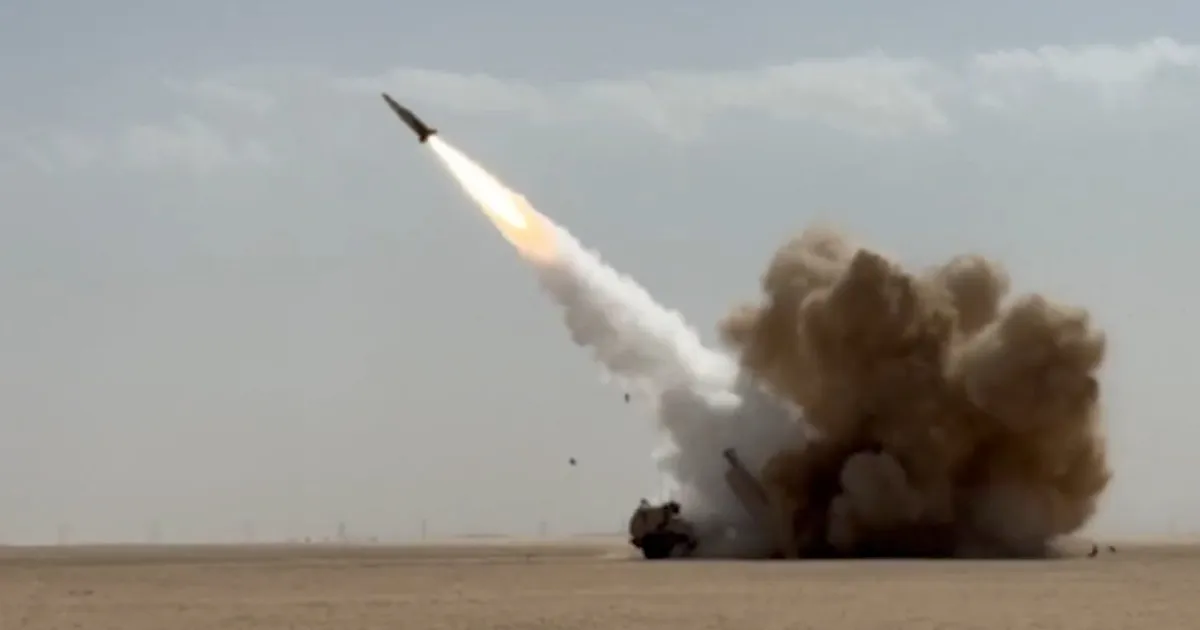
PrSM

What is the PrSM missile that the US used for the first time in Iran? | Israel-Iran conflict News

The United States used Precision Strike Missiles (PrSMs) for the first time during its ongoing war with Iran, US Central Command (CENTCOM) said on Wednesday.

The war entered its seventh day on Friday, with attacks continuing across Iran and other countries in the Middle East.

CENTCOM stated in an X post that PrSMs provide an “unrivaled deep strike capability”.

“I just could not be prouder of our men and women in uniform leveraging innovation to create dilemmas for the enemy,” the post quoted Admiral Brad Cooper, head of CENTCOM.

It is unclear where these PrSMs were launched from, or which specific targets they hit in Iran.

So what is the PrSM, and why is it significant that it has been used by the US for the first time?

What are Precision Strike Missiles?

PrSMs are described as long-range precision strike missiles by their developer, the Maryland, US-headquartered defence firm Lockheed Martin, which delivered the first PrSMs to the US Army in December 2023.

PrSMs can hit targets ranging from 60km (37 miles) to more than 499km (310 miles) away, according to Lockheed Martin.

The company’s website adds that PrSMs are compatible with the MLRS M270 and HIMARS family of launchers, both also developed by Lockheed and used by both the United Kingdom and US armies.

MLRS stands for multiple-launch rocket systems, used to launch missiles. The UK sent a number to Ukraine in 2022. HIMARS stands for High Mobility Artillery Rocket System. In 2022, the US sent a number to Ukraine, as well.

M-142 HIMARS is a high-tech, lightweight rocket launcher that is wheel-mounted, giving it more agility and manoeuvrability on the battlefield. Each unit can carry six GPS-guided rockets, or larger missiles like Army Tactical Missile Systems (ATACMs) and PrSMs, which can be reloaded in about a minute with only a small crew.

Lockheed Martin adds that PrSMs can be rapidly developed. “We are ready to produce and deliver to meet the US Army’s accelerated timeline for this long-range precision fires priority,” the website says.

PrSMs feature “open systems architecture”, which means that it is easier to plug in new components, upgrade parts, or work with equipment from other companies. Similarly, they are “modular and easily adaptable”, enabling components to be switched around.

They also feature “IM energetic payload”, or Insensitive Munitions energetic payload, which makes explosions safer, the producer says. This means the warhead is made from explosives that are less likely to blow up accidentally if hit by fire, shrapnel or by accident, but still explode properly when triggered as intended.

What is different about the PrSMs?

PrSMs will ultimately replace the ATACMs currently being fired from the HIMARS launchers, significantly increasing their range from 300km (186 miles) to more than 499km (310 miles), without changing the vehicle carrying the missile.

PrSMs also offer double the “missile load” of ATACMs. While a HIMARS launcher is able to carry one ATACMS missile in its pod, it can carry two PrSMs per pod.

Does the PrSM give the US a strategic advantage?

CENTCOM confirmed that PrSMs have been used in the US and Israel’s attacks on Iran, codenamed Operation Epic Fury and launched on February 28.

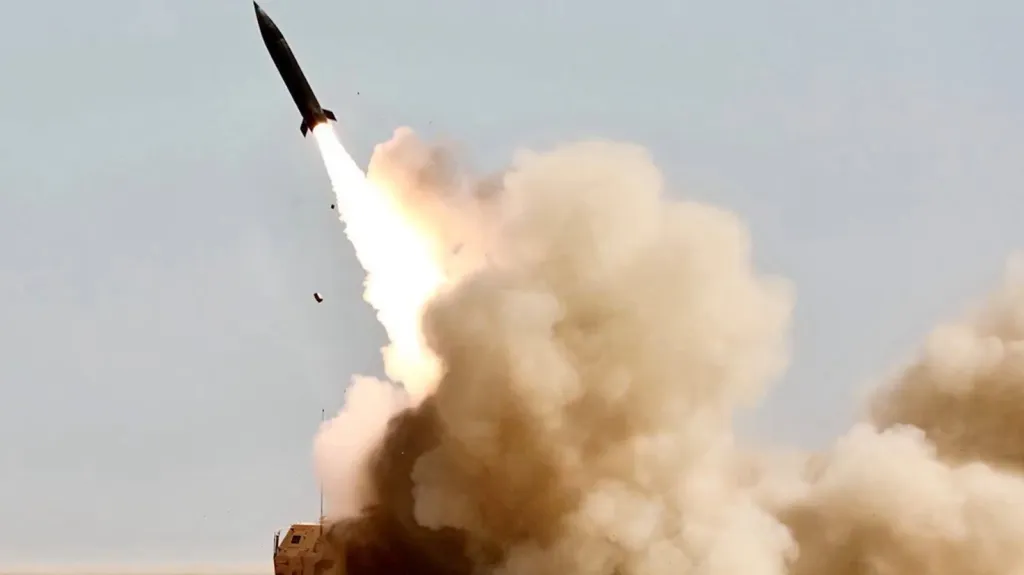
CENTCOM posted a video of the PrSMs being launched from M142 High Mobility Artillery Rocket Systems in an open desert terrain.

PrSMs do give the US military a boost for its pre-existing long-range capabilities.

Gulf countries such as Kuwait, Saudi Arabia, Bahrain, Qatar, the United Arab Emirates and Oman, specifically the Musandam Peninsula, which have military bases hosting US assets and troops, have at least some territory within 400km (250 miles) of Iran.

The US is using PrSMs in conjunction with other long-range missiles such as Low-Cost Unmanned Combat Attack System (LUCAS) one-way drones, MQ-9 Reaper drones, ATACMs and Tomahawk Cruise Missiles.

The range for LUCAS one-way drones is about 800km (500 miles), while the range for ATACMs is about 300km (186 miles) and the range for Tomahawk cruise missiles is about 1,600km (1,000 miles).

Why is the introduction of the PrSM significant?

The range of this missile is significant as it is likely that it would not have been permitted under the Intermediate-Range Nuclear Forces (INF) Treaty with Russia, which the Trump administration withdrew the US from in 2019. This is because it can exceed the maximum 500km (310-mile) range the treaty imposed on certain land-launched missiles.

The treaty was signed in 1987 by US and Soviet Union leaders Ronald Reagan and Mikhail Gorbachev. It sought to eliminate the presence of land-based nuclear missiles and medium-range arsenals between 500km and 5,500km (310 and 3500 miles) from Europe.

The US suspension of the treaty allowed Washington to resume development of its own medium-range, land-based arsenal.

Following the US suspension, Russia invited the US to reciprocate in a unilateral moratorium on the deployment of ground-launched intermediate-range missiles instead. While Washington initially rejected the offer, in 2022, it said it would be willing to discuss this.

In August last year, the Russian Ministry of Foreign Affairs announced Russia’s withdrawal from this moratorium, however, saying the US had “made significant progress” and “openly declared plans to deploy US ground-launched INF-range missiles in various regions”. INF stands for intermediate-range nuclear forces.

The statement added that such actions by Western countries posed a “direct threat” to Moscow’s security.
Source link

America’s New PrSM Ballistic Missile Just Made Its Combat Debut

The U.S. military has employed new Precision Strike Missile (PrSM) short-range ballistic missiles as part of ongoing operations against Iran. This looks to be the first combat use of the PrSM, which only began entering service roughly two years ago. The operational debut of the new missiles showcases the significantly greater range they offer compared to their predecessors, the Army Tactical Missile System (ATACMS), and much expanded target areas that American units can now hold at risk as a result.

Overnight, U.S. Central Command (CENTCOM) released a video montage of still pictures documenting the “first 24 hours of Operation Epic Fury.” This is the nickname American authorities have given to their component of ongoing U.S.-Israeli operations targeting Iran. Included in that montage, seen in the social media post below, is an image clearly showing the launch of a PrSM from a wheeled M142 High Mobility Artillery Rocket System (HIMARS) launcher.

First 24 hours of Operation Epic Fury:

“The President ordered bold action, and our brave Soldiers, Sailors, Airmen, Marines, Guardians, and Coast Guardsmen are answering the call,” – Adm. Brad Cooper, CENTCOM Commander pic.twitter.com/McrC7xeM0A

— U.S. Central Command (@CENTCOM) March 1, 2026

A picture showing a PrSM launch from an M142 HIMARS included in a recent CENTCOM video montage. CENTCOM

Defense and security columnist Colby Badhwar looks to have been the first to spot the PrSM image in the CENTCOM montage. The new missile is distinctly different, especially when it comes to the shape and configuration of its tail fins, from ATACMS.

There is also a picture of an M142 loaded with what looks to be a two-cell ammunition ‘pod,’ which is also in line with PrSM. The M142, as well as the tracked M270 Multiple Launch Rocket System (MLRS), fires munitions from pods with standardized dimensions. ATACMS pods only contain a single missile. M142 and M270 launcher vehicles can also fire 227mm artillery rockets, including guided variants, all of which come in six-round pods.

CENTCOM’s video montage also included this image showing an M142 with what looks to be a two-cell ammunition ‘pod.’ CENTCOM
A PrSM ‘pod’ seen in front of a U.S. Army M142 during an exercise in Australia. The M142 has a six-round 227mm rocket ‘pod’ loaded. Australian Army
A mock-up of an ATACMS missile next to one of a standardized ammunition ‘pod.’ US Army

Yesterday, CENTCOM also released a montage of video clips showing HIMARS launchers firing short-range ballistic missiles. That footage – which came along with the caption “The Iranian regime was warned. CENTCOM is now delivering swift and decisive action as directed.” – may also show at least one PrSM launch, as well as ATACMS being fired.

Screen captures from the video above showing what may be a PrSM launch, at left, and the launch of an ATACMS, at right. CENTCOM captures

As already noted, PrSM offers a major boost in range over ATACMS. The baseline PrSM variant, also known as Increment 1, has demonstrated its ability to hit targets at least around 310 miles (500 kilometers) away. The U.S. Army, the service in charge of the PrSM program, has a stated goal to eventually stretch that out to around 400 miles (650 kilometers), if that has not already been achieved. The service is also working toward an even longer-range version able to fly out to at least 620 miles (1,000 kilometers), if not further.

A test launch of a PrSM. US Army

The longest ranged variants of ATACMS can hit targets out to around 186 miles (300 kilometers).

Where PrSMs or ATACMS have been fired from during strikes on Iran as part of Operation Epic Fury is unclear. Regardless, PrSM offering roughly twice as much reach would substantially increase the total breadth of targets that could be held at risk from any location in the region.

In turn, this would allow U.S. forces to hit more targets where the unique benefits offered by ballistic missiles could be advantageous. Ballistic missiles, in general, fly at relatively high speeds, especially as they come down in the terminal phase of flight. This makes them especially well-suited for employment against time-sensitive targets, like Iranian missile launchers and air defense assets, which have been a focal point of strikes in the conflict so far, in general. Using short-range ballistic missiles to help neutralize air defense nodes, shore radar sites, and similar assets would have made particular sense in the opening stages of the conflict to help clear the way for follow-on strikes.

High speed also creates additional challenges for enemy air defenses attempting to engage them compared to other kinds of missiles, including some subsonic air-breathing cruise missiles. How fast ballistic missiles are going when they impact inherently enables ballistic missiles to burrow deeper into hardened targets, which are commonplace in Iran, as well.

Demonstrating PrSM in real combat against Iran could also send signals to other American opponents. The importance of PrSM’s extended reach is often discussed in the context of a potential high-end fight in the Pacific against China, where launch points, at least on land, are much more limited. An anti-ship version of PrSM, also referred to as Increment 2, which features an additional seeker and is capable of hitting moving targets, is also now under development. Another version of PrSM is also in the works that could dispense payloads consisting of kamikaze drones or small precision-guided bombs, as you can read more about here.

A low-resolution look at an Increment 2 PrSM being test-launched during an exercise in the Pacific in 2024. US Army

We still have more to learn about how PrSM (as well as ATACMS) is being employed as part of Operation Epic Fury. Whatever the case, America’s newest ballistic missile is now a combat-proven weapon, and its use against Iran puts a spotlight on the immense value its greater range, in particular, brings to the table.

Contact the author: joe@twz.com

Joseph has been a member of The War Zone team since early 2017. Prior to that, he was an Associate Editor at War Is Boring, and his byline has appeared in other publications, including Small Arms Review, Small Arms Defense Journal, Reuters, We Are the Mighty, and Task & Purpose.


Source link