prove

Frustrated Walsh Held Set to Take Administration to Court to Get Data : Iran-Contra: The independent counsel’s action to get potential evidence could prove politically troubling for the President.

Independent counsel Lawrence E. Walsh believes that the Bush Administration is attempting to delay and block his access to documents critical to completing the Iran-Contra investigation, sources familiar with his thinking said Thursday.

Walsh is known to regard alleged attempts by the White House and Justice Department to curtail his investigation as “an ironic” contrast to the forthcoming attitude of the Ronald Reagan Administration, which was deeply involved in the case.

In conversations with associates, Walsh has vowed not to be deterred and to take the Administration to court to pry loose the potential evidence.

Documents Walsh has been seeking for as long as six months include some involving the possible role of former Vice President Bush’s office in efforts to secretly supply the Nicaraguan rebels.

Trying to obtain the documents through court action could delay the scheduled spring completion of the investigation. More politically troubling for President Bush, such action could entangle his Administration in the scandal that plagued its predecessor.

A Justice Department spokesman insisted Thursday that it has been cooperating with Walsh’s office but declined to discuss the specifics of Walsh’s complaints “because of our respect for the confidentiality of the investigative process.”

C. Boyden Gray, Bush’s counsel, did not respond to questions about his decision to hire outside council to handle Walsh’s request for documents–a move that some have interpreted as indicating that the procedure does not have high priority at the White House. The attorney, Dennis Osterman of Bethesda, Md., did not return a call.

“People in the present Administration may have been peripheral” in the secret effort to sell arms to the Iranians and divert proceeds to support the Contras,” said a source. “But they (Administration officials) are being drawn into a pattern of resistance to the law.”

Among the documents Walsh is known to be seeking are materials involving Donald P. Gregg, the U.S. ambassador to South Korea and a 30-year CIA veteran who was foreign policy adviser to Bush when the President served as vice president under Reagan.

At his confirmation hearing last year, Gregg told the Senate Foreign Relations Committee that he “never discussed the Contras” with Bush. He added he was not aware of the illegal supply operation, although he talked frequently with former National Security Council aide Oliver L. North and others who were deeply involved in it.

But documents sought by the Senate committee at that time from the National Security Council, the CIA and the State Department were withheld. Walsh is believed to be seeking some of the same documents, along with related materials.

Jack Sears, a spokesman for Gregg at the embassy in Seoul, said that the ambassador “doesn’t have any comment. That’s been his response to inquiries.” Gregg’s lawyer, Judah Best, did not return a call for comment.

Walsh also is understood to be seeking government documents relating to the knowledge and statements of Elliott Abrams, former assistant secretary of state for Latin American affairs, about Contra aid.

W. DeVier Pierson, Abrams’ attorney, said that he had closed his file on the matter because he has had no inquiries from Walsh’s office in “a long, long time.”

Sources familiar with Walsh’s inquiry, which is being conducted with the aid of a federal grand jury in the District of Columbia, said that it had not reached the stage where notification would be sent to individuals who are potential targets of the investigation.

It is understood that Walsh also is seeking materials on former CIA officials who may have had knowledge or involvement in the diversion of funds from the arms sales.

Walsh is said to be aware that the stiffening of the Administration’s attitude comes at a time when his inquiry is under criticism because the investigation already has taken nearly four years and costs have exceeded $21.1 million.

The sources familiar with Walsh’s thinking said that he was particularly stung by the White House decision to downgrade his document requests by retaining an outside attorney, rather than having them handled by the White House counsel’s office, which carries more clout for dealings inside government.

Walsh regards this as “judgment tilting in favor of non-disclosure,” a sharp departure from Reagan’s decision to name David M. Abshire, who was retiring as North Atlantic Treaty Organization ambassador, to serve with Cabinet rank as special counsel on Iran-Contra matters.

As a result, an oral agreement to turn over material from Bush’s vice presidential office to investigators has been replaced “with very shallow, obstructionist tactics,” one source said. “They’re asking him to begin all over and work out guidelines as if that had not been done before.”

“They’re throwing in an insulation between the people with the power and the knowledge and Walsh,” said a source who has discussed the matter with him.

The Iran-Contra inquiry so far has resulted in these convictions and guilty pleas:

–Oliver L. North, for altering and destroying documents, accepting an illegal gratuity and aiding and abetting in the obstruction of Congress. Sentenced to a three-year suspended prison term, two years probation, $150,000 in fines and 1,200 hours of community service, North’s conviction was overturned last July by a 2-1 appeals court ruling. Walsh is seeking a rehearing of the case.

–Former National Security Adviser John M. Poindexter for five felonies involving conspiracy, obstruction of Congress and false statements. Sentenced to six months in prison, Poindexter’s appeal is scheduled for argument next Feb. 28.

–Retired Air Force Maj. Gen. Richard V. Secord, a businessman who helped arrange and finance the secret arms shipments. He pleaded guilty to making false statements to the Iran-Contra congressional committees. He was sentenced to two years of probation.

–Albert A. Hakim, an Iranian-born California businessman, who pleaded guilty to a misdemeanor charge of supplementing North’s salary. Lake Resources Inc., in which Hakim was the principal shareholder, pleaded guilty to theft of government property through the diversion of Iranian arms sales proceeds to the Nicaraguan rebels. Hakim was sentenced to two years of supervised probation and fined $5,000. Lake Resources was ordered dissolved.

–Thomas G. Clines, a former CIA official, was found guilty of under-reporting his earnings to the Internal Revenue Service and falsely stating on his 1985 and 1986 tax returns that he had no foreign financial accounts. He received profits from Iran-Contra accounts. With his sentencing set for Nov. 29, he faces maximum penalty of 16 years in prison and $1 million in fines.

–Robert C. McFarlane, former national security adviser, pleaded guilty to withholding information from Congress and was sentenced to two years’ probation, a $20,000 fine and 200 hours of community service.

–Richard R. Miller, who headed a Washington public relations firm, pleaded guilty to conspiracy in connection with raising funds to buy weapons for the Contras. He was sentenced to two years’ probation.

–Carl R. (Spitz) Channell, a conservative fund raiser, pleaded guilty to conspiring to defraud the United States and was sentenced to two years’ probation. He died last May 7 of complications from injuries suffered in an auto accident.

Source link

Nations Championship: Why Wales have a lot to prove despite Japan win

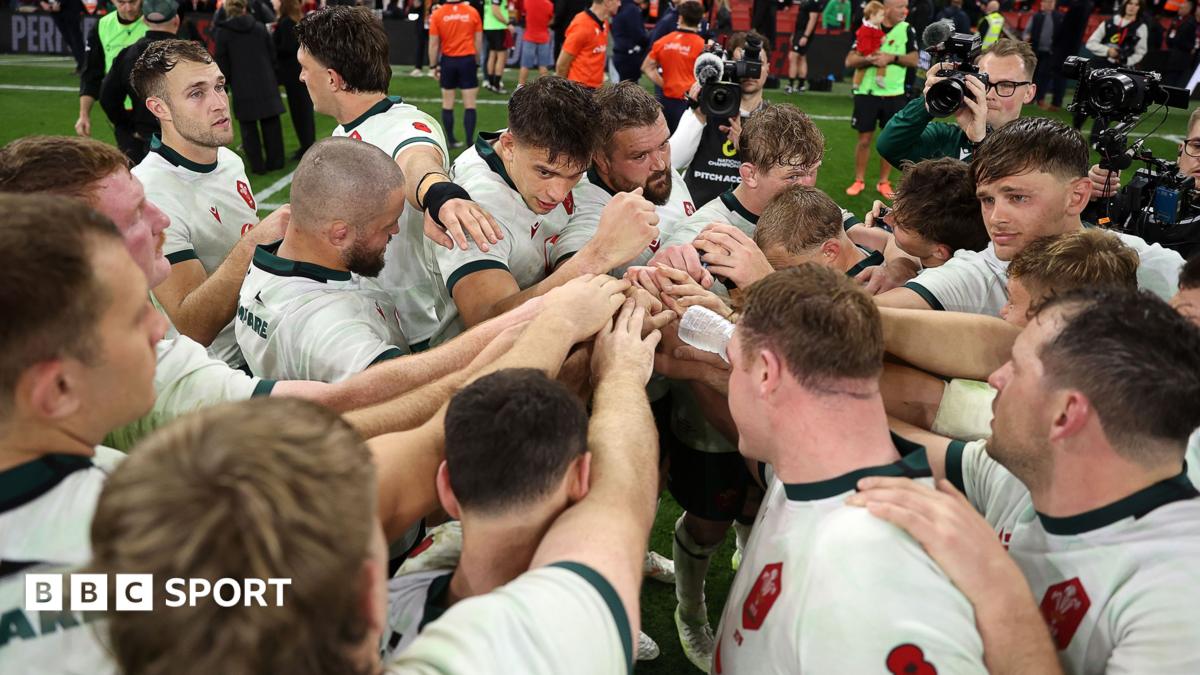
Wales fans were looking for a statement performance against Japan. A marker to put down as the World Cup looms in under a year.

They were not provided with that but did witness a victory, however scratchy.

So Wales woke up on a Sunday morning with a Test victory to mark. That has not happened often in recent times.

Some of these Wales players will still remember the record-breaking 18-Test losing sequence between 2023 and 2025. If Wales players can take any positives this weekend, it will be victory.

As Tandy said afterwards, it is always easier to debrief a bonus-point victory.

Among the disjointed team performance, there were notable impressive individual displays from the usual suspects.

Back-row duo Aaron Wainwright and Jac Morgan excelled in attack and defence, full-back Blair Murray was a constant attacking threat and wing Josh Adams popped up with two tries.

Centre Eddie James showed glimpses of his power game in a new-look midfield partnership with Max Llewellyn.

While the centre combination did not set the world alight, it warrants further opportunites.

Tandy will not be content with Wales spending long periods defending and only having 40% in territory and possession.

This was emphasised in the tackle count as the hosts made 227 compared to Japan’s 115, with Wales finishing with the top eight tacklers in the game.

He will be encouraged by the resolve with Morgan topping the official Nations Championship charts with 24, followed by lock Dafydd Jenkins (23) and Wainwright (20).

Wales also forced 10 turnovers with Alex Mann gaining three, while there were crucial interventions from Lake, Adams and prop Nicky Smith when Japan seemed destined to score.

Source link

US judge blocks Trump’s Medicaid rule forcing ill to prove impairment | Health News

US District Judge Richard Stearns sided with 25 states and the District of Columbia which sued the administration.

A federal judge has ruled against enforcing a new rule by the administration of US President Donald Trump that would require chronically ill people on Medicaid, a public health insurance programme for low-income individuals, to prove themselves “medically frail” to qualify for work exemptions.

US District Judge Richard Stearns blocked the rule on Thursday, siding with 25 states and the District of Columbia, which had sued the Trump administration in June over the change, arguing that it unlawfully limits exemptions for people with serious medical conditions.

Recommended Stories

list of 3 itemsend of list

The law says the definition of medically frail must include people who are blind or disabled, have substance use disorders or disabling mental disorders, have certain disabilities that significantly impair daily activities, or have serious or complex medical conditions.

Workers at a Medicaid call centre in Jefferson City, Missouri, field questions and review information regarding eligibility determinations
Workers at a Medicaid call centre in Jefferson City, Missouri, field questions and review information regarding eligibility determinations [File: David A Lieb/AP Photo]

‘Significantly impair’ abilities

But the administration’s rule went further, requiring people in those categories to show that their conditions also “significantly impair” their ability to comply with the law’s work requirements.

The plaintiffs argued that the stricter rule would prevent eligible Americans from accessing the care they need, and that it oversteps the law’s text.

“The states have met their burden of showing irreparable harm for which monetary damages would provide inadequate compensation – they face the burden of costly and intensive alterations to their eligibility verification systems,” Stearns said in his 16-page ruling.

The Centers for Medicare & Medicaid Services, the agency that adopted the rule, declined to comment.

Medicaid is a public health insurance programme for low-income people, funded by state and federal governments.

US President Donald Trump, left, speaks to reporters alongside Health Secretary Robert F Kennedy Jr and Centers for Medicare and Medicaid Services Administrator Mehmet Oz in West Palm Beach, Florida, on October 23, 2026
US President Donald Trump, left, speaks to reporters alongside Health Secretary Robert F Kennedy Jr and Centers for Medicare and Medicaid Services Administrator Mehmet Oz in West Palm Beach, Florida, on October 23, 2026 [File: Alex Wong/Getty Images via AFP]

Two restrictions upheld

Starting January 1, 2027, Medicaid expansion enrollees aged 19 to 64 must show that they work or do community service at least 80 hours a month, or are in school at least half the time. There are exceptions for those considered medically frail or in addiction treatment programmes, among others.

Notably, while the ruling will make it easier for some Medicaid recipients with qualifying medical conditions to obtain an exemption from the new work requirements, Stearns’s decision does not strike down the work requirements as unlawful.

Stearns serves in the District of Massachusetts and was appointed by President Bill Clinton.

His ruling upheld two other federal restrictions on how states can verify medical frailty that the states and the District of Columbia had also contested.

Source link

Gulf States Prove Resilient in the Face of US-Iran Conflict

Strong foreign reserves and new export routes help GCC economies weather the US-Iran conflict.

This article appears in the November issue of Global Finance Magazine.

For Iran’s neighbors in the Persian Gulf, proximity to the Islamic Republic has long meant geopolitical uncertainty.

Those concerns intensified in late February after U.S. and Israeli attacks on Iran triggered a conflict that effectively closed the Strait of Hormuz to normal commercial shipping. The strait normally carries about a fifth of global oil consumption.

The disruption threatened a major revenue source for Gulf states, raising concerns about pressure on their foreign exchange reserves.The disruption threatened a major source of revenue for Gulf states, raising concerns about pressure on their foreign exchange reserves.

Thus far, however, the region has demonstrated greater financial resilience than many thought possible.

The six Gulf Cooperation Council states entered the conflict with substantial foreign exchange reserves, which provided a buffer against lost oil revenues and higher costs.

“Foreign reserves have been more resilient than initially feared,” said Said Bakr, a research associate in political economy at the Arab Gulf States Institute. The region entered the conflict with substantial financial buffers, while rising crude prices have offset a decline in export volumes.

Finding New Routes

Iran’s disruption of the Strait of Hormuz and attacks by Yemen’s Houthi rebels near the Bab el-Mandeb Strait have forced Gulf oil exporters to seek alternative routes to international markets. Saudi Arabia continues to reroute crude through its East-West Pipeline to the Red Sea port of Yanbu after a temporary shutdown caused by a September drone attack. The UAE has relied on its Habshan-Fujairah pipeline, which carries oil to the Gulf of Oman, bypassing the Strait of Hormuz. Shipping has also been rerouted to Africa, where ports in countries like South Africa along the coast have benefited greatly.

The continued export of crude, albeit at lower volumes, coupled with prices rising from an average of $66 per barrel in January to over $100 in September, has been instrumental in sustaining Gulf-state revenues. Earnings from non-oil sectors are also booming as the Gulf Cooperation Council states diversify their economies.

All this has combined to keep their FX reserves resilient. Saudi Arabia’s reserves have increased to 1.82 trillion Saudi riyals ($485.3 billion) in August from 1.78 trillion riyals ($474.6 billion) in January. The UAE reserves have remained relatively stable, ending the second quarter at 931.4 billion dirhams ($253.6 billion). 

“The war and the Strait closure will impact the flow and direction of reserves but will not structurally dent the comparative advantage of the Gulf states,” said Bader Al-Saif, assistant professor at Kuwait University and associate fellow at Chatham House. Thus far, stable reserves have helped them maintain currency stability, meet trade obligations, and avoid disruptive measures like sharp spending cuts. Large sovereign wealth assets have provided additional buffers.

However, not all Gulf states have maintained positive flows. In Bahrain, servicing high government debt and a widening budget deficit pushed reserves down to $3.9 billion in June, down from $7.1 billion in February.

John Nijraini is a contributing writer based in Kenya.

Source link

Muslims have always had to prove our Americanness. Enter Abdul El-Sayed

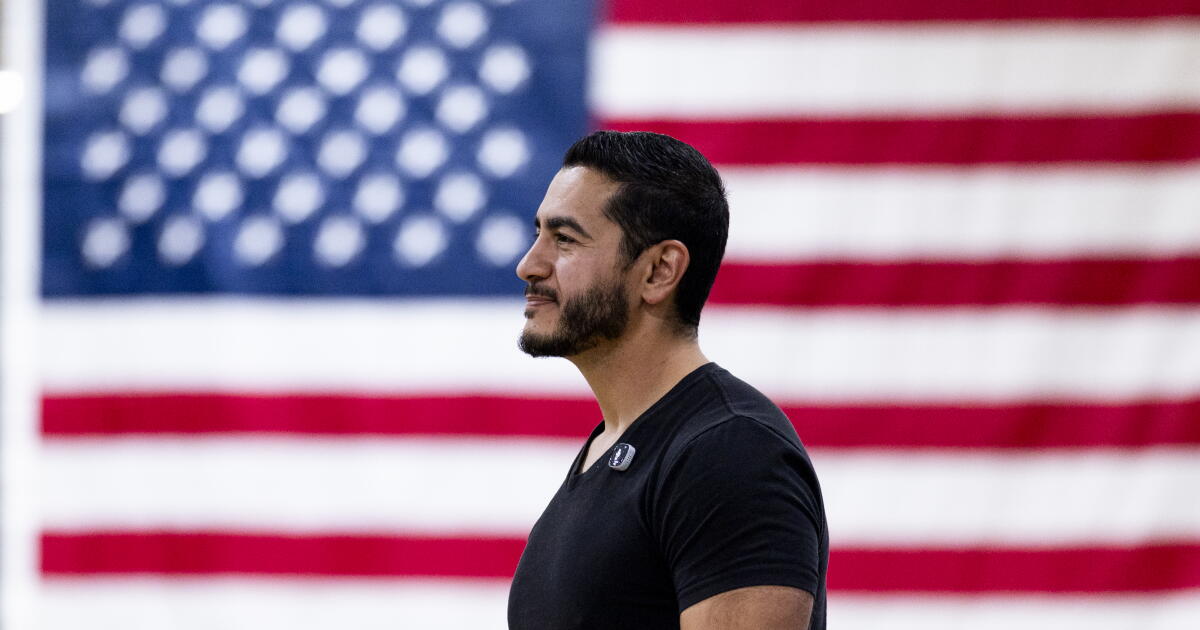
Michigan’s Democratic candidate for the U.S. Senate, Abdul El-Sayed, is many things to many people.

He represents change, part of a new generation of outspoken leaders who aren’t afraid to challenge the status quo.

He represents possibility: As the son of Egyptian immigrants, his trajectory is the American dream realized.

And he represents a threat to those who fear that his Muslim faith means he can’t possibly love America. El-Sayed is a handy bogeyman for Republican politicians who seek to scare their constituents into voting for them instead of the foreboding Arab name on the ballot.

But for people like me — American Muslims, or anyone with roots in the Middle East, North Africa, South Asia or other Muslim-majority regions — El-Sayed embodies the exhausting experience of having to explain yourself over, and over, and over …

We know what’s truly going on when someone discovers our lineage, then apropos of nothing asks, “How do you feel about the Oct. 7 Hamas attack?” In previous eras it was, “What are your thoughts about 9/11? The Iranian hostage crisis? The PLO?”

Regardless of the decade, the underlying question was the same: How American are you, really?

For generations, the insinuation has been that your loyalty lies somewhere else and that you have a predisposed soft spot for groups such as ISIS or Al Qaeda. Beneath that Taylor Swift-loving exterior, there must be a Bin Laden fighting to get out.

It was disappointing but hardly surprising when El-Sayed was asked at a recent town hall in Caro, Mich., if he would “disavow the Muslim Brotherhood.”

The questioner, who identified himself only as Tommy, was referring to a century-old Islamist movement with branches that have been designated as terrorist organizations by various countries and U.S. administrations.

It’s worth noting that El-Sayed was born and raised in Detroit, not Egypt or Jordan. He attended the University of Michigan medical school, not a radical madrassa, and received a Rhodes Scholarship to Oriel College, Oxford, where he completed a doctor of philosophy in public health (not bomb making).

El-Sayed answered the question without hesitation. “Sure, yeah, absolutely,” he said, then swiftly turned the tables and began interrogating the motives of his interrogator.

“You’re asking the question because implicitly, you assume that I’ll have dual loyalties, right?” El-Sayed said. “You assume that I wouldn’t disavow, or that I’ll have some higher order allegiance than to the Constitution, correct? Tommy, is that what you imply?”

The candidate spent four to five minutes laying bare the political motives behind what was clearly designed to be a “gotcha” moment.

His opponent in next month’s election, former Rep. Mike Rogers, has claimed without evidence that the Muslim Brotherhood funds El-Sayed’s campaign and that his family members have terrorist links. The attacks are on brand with a wider Republican strategy around sinking El-Sayed. Fearing a blue tsunami might flip the crucial swing state, Rogers and his allies have leaned heavily into Islamophobic attacks against the progressive Democrat.

It’s a campaign tactic endorsed at the highest levels. President Trump has referred to El-Sayed as a “radical jihadist” and claimed he is associated with the Muslim Brotherhood, mispronounced his name, infused it with nonsensical babble and called him “Muhammad Al-Fayad.” Trump has defended his racism by stating: “I’m the president. I can call him whatever the hell I want.”

El-Sayed preferred to talk about another president while addressing Tommy’s question at the town hall. He recalled that John F. Kennedy faced similar scrutiny during his 1960 presidential campaign when asked whether his Catholic faith would make him loyal to the pope and Vatican rather than the U.S.

“His answer, famously, was that he was not running to be a Catholic president,” El-Sayed said. “He was running to be president that happened to be Catholic. I’m not running to be a Muslim senator. I’m running for the U.S. Senate and happen to be Muslim.”

The standoff between El-Sayed and Tommy (who has since been outed as Thomas Teepell, the son of a Republican strategist and a former staffer to Republican Sen. Josh Hawley) has gone viral and is now being referred to as a 2026 election Rorschach test because both the right and left believe they prevailed.

It’s unclear to me how anyone might see El-Sayed’s evisceration of Teepell’s means-to-an-end question as a victory for the right. Perhaps it comes from eight years of watching Barack Obama weather insidious and overt racist attacks with the patience of a Shaolin monk. El-Sayed reacted, therefore they won?

On the left, El-Sayed’s articulate defense was widely applauded, but there were still criticisms that he may have come off as condescending. Liberal podcasters and influencers opined that El-Sayed should have just let it slide — for the 1,000th time.

Such an easy solution when it comes from those outside the sphere of suspicion.

But the reason we’re even having this conversation is because El-Sayed is challenging the norm. His rise to a formidable candidate who is willing to publicly dismantle loaded questions like Tommy’s represents progress wrought by successive generations of immigrants who’ve had to explain themselves ad nauseam.

Our parents and grandparents went out of their way to avoid those kinds of questions by taming their accents, changing their hard-to-pronounce names or eating their “ethnic” lunches outside the break room. The hope was that they’d melt into the proverbial pot with as little friction as possible.

My father, who emigrated from Iraq, did what all his Arab friends did here in L.A. — fit in. They used Brylcreem to tame their thick hair, listened to Johnny Cash and used terms like “guys and gals” as if they’d just stepped out of an Elvis movie.

As the next generation, I made it a point to openly embrace what my dad often downplayed — that we are Arab and Muslim. But given the post-9/11 climate, it came buffered with calming disclaimers: We are not a threat. Al Qaeda does not speak for Islam. And dolma is delicious, dammit.

El-Sayed’s refusal to brush off questions aligning him with terrorists may or may not cost him the election, but it’s a victory for all of us who’ve been defusing suspicion since we were kids.

The clip from the town hall ends with El-Sayed asking Thomas if he’s a Christian who has tried to live by Christian doctrine. Thomas affirmed. Then El-Sayed asked, “Do you disavow any attempt to read any religious doctrine into the laws of our country?” Thomas responded, “I do not.”

El-Sayed replied, “I think it’s you who needs to understand the Constitution, not me.”


Source link