Protests

Trump issues two pardons related to investigation into January 6, 2021 riot | Donald Trump News

Suzanne Ellen Kaye was convicted for threatening to shoot FBI agents, and Daniel Edwin Wilson for conspiring to impede or injure police offers and illegal firearm possession.

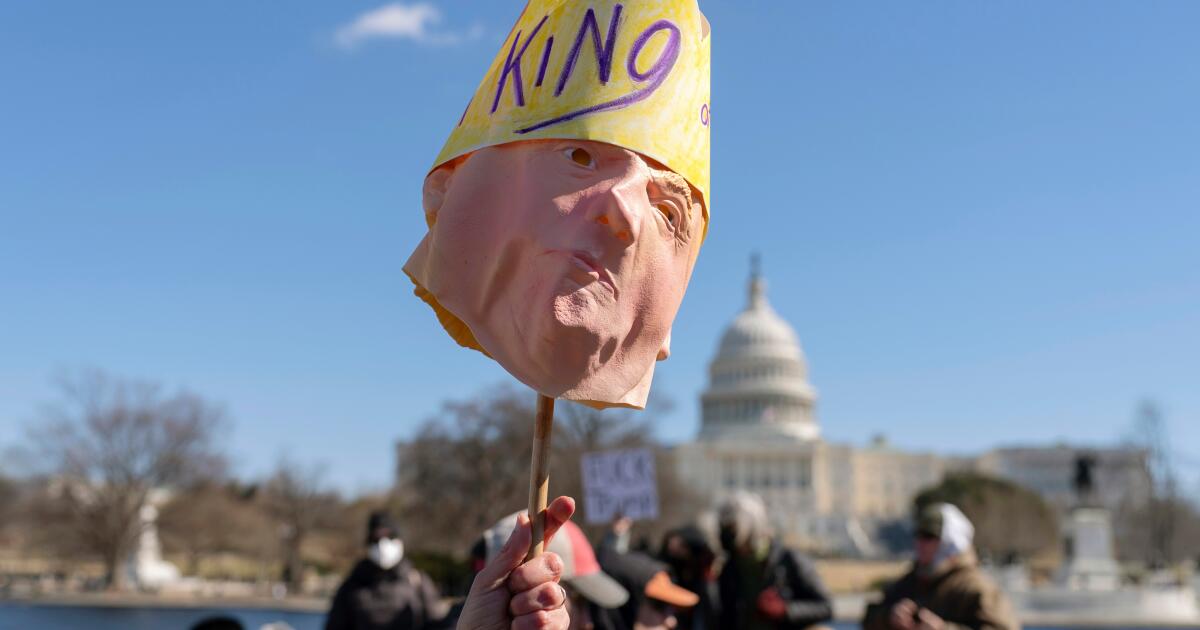
United States President Donald Trump has issued two new pardons related to the investigation into the January 6, 2021 US Capitol insurrection.

White House officials said on Saturday that one pardon was given to a woman convicted of threatening to shoot FBI agents who were investigating a tip that she may have been at the US Capitol. Trump issued the second pardon for a defendant who had remained behind bars despite the sweeping grant of clemency for Capitol rioters because of a separate conviction for illegally possessing firearms.

Recommended Stories

list of 3 itemsend of list

These pardons are the latest example of Trump’s willingness to use his constitutional authority to help supporters who were scrutinised as part of the massive January 6 investigation that was conducted by the administration of former US President Joe Biden and that led to charges against more than 1,500 defendants.

With a stroke of his pen and within hours of being sworn in for his second term in January of this year, Trump upended the largest prosecution in the history of the US Department of Justice.

He freed from prison people caught on camera viciously attacking police as well as leaders of far-right groups convicted of orchestrating violent plots to stop the peaceful transfer of power after Trump’s 2020 election loss.

Suzanne Ellen Kaye, of Florida, was released last year after serving an 18-month sentence. After the FBI contacted her in 2021 about a tip indicating she may have been at the Capitol on January 6, she posted a video on social media citing her right under the US Constitution’s Second Amendment to carry a gun, and threatened to shoot agents if they came to her house.

Kaye testified at trial that she didn’t own any guns and didn’t intend to threaten the FBI, according to court papers. She told authorities she was not at the Capitol on January 6 and wasn’t charged with any Capitol riot-related crimes.

Trump also pardoned Daniel Edwin Wilson of Kentucky, who was under investigation for his role in the riot when authorities found six guns and roughly 4,800 rounds of ammunition in his home.

Wilson, who had been scheduled to remain in prison until 2028, was released Friday evening following the pardon, his lawyer said on Saturday.

A White House official said on Saturday that “because the search of Mr. Wilson’s home was due to the events of January 6, and they should have never been there in the first place, President Trump is pardoning Mr. Wilson for the firearm issues”.

Wilson had been sentenced in 2024 to five years in prison after pleading guilty to conspiring to impede or injure police officers and illegally possessing firearms at his home.

Trump has said he would likely sue the British Broadcasting Corporation (BBC) next week for as much as $5bn after the British media company admitted it wrongly edited a video of a January 6, 2021 speech he gave, but insisted there was no legal basis for his claim.

The controversy centres on the BBC’s edit of Trump’s remarks on the day his supporters stormed the US Capitol.

Source link

‘I just want to breathe’: Protests over pollution in New Delhi | Climate Crisis News

A suffocating blanket of smog has engulfed India’s capital, permeating the air with an acrid smell as pollution levels soar, intensifying a public health emergency that has driven residents to demand governmental action.

By Monday morning, New Delhi’s air quality index had reached 344, categorised as “severe” and hazardous to breathe according to the World Health Organization’s recommended exposure thresholds.

In a compelling demonstration of public concern, dozens of protesters assembled in New Delhi on Sunday, calling for government intervention to combat the capital’s toxic air crisis as dangerous haze shrouded the city.

Children joined their parents at the demonstration, wearing protective masks and carrying placards, including one that starkly declared: “I miss breathing.”

New Delhi, home to a metropolitan population of 30 million people, persistently ranks among the world’s most polluted capital cities.

Every winter, a toxic smog obscures the skyline when cooler temperatures trap pollutants close to ground level, creating a deadly combination of emissions from agricultural burning, industrial operations, and vehicle exhaust.

Levels of PM2.5 – carcinogenic particles small enough to penetrate the bloodstream – regularly surge to concentrations 60 times above the UN’s recommended daily health guidelines.

“Today I am here just as a mother,” said protester Namrata Yadav, who attended the protest with her son. “I am here because I don’t want to become a climate refugee.”

At the protest location near India Gate, the historic war memorial, PM2.5 readings surpassed the World Health Organization’s recommended daily maximum by more than 13 times.

“Year after year, it is the same story, but there is no solution,” said Tanvi Kusum, a lawyer who explained she joined because she was “frustrated”.

“We have to build pressure so that the government at least takes up the issue seriously.”

Government measures to tackle the crisis have proven inadequate, including limited restrictions on fossil fuel vehicles and water trucks spraying mist to suppress airborne particulate matter.

“Pollution is cutting our lives,” declared a young woman who identified herself as “speaking for Delhi” and declined to provide her name.

Research published in The Lancet Planetary Health last year estimated that 3.8 million deaths in India between 2009 and 2019 were attributable to air pollution.

The United Nations children’s agency, UNICEF, cautions that contaminated air dramatically increases children’s susceptibility to acute respiratory infections.

As evening descended on the smog-veiled skyline, the crowd expanded until police stepped in, forcing several activists onto a bus and seizing their protest materials, claiming they lacked proper demonstration permits.

One partially torn sign captured the essence of their plea: “I just want to breathe.”

Source link

Kenya’s Ruto on protests, power, and the state of democracy | Politics

After deadly protests and a youth uprising, Kenya’s president defends his record on democracy, rights, and reform.

Kenyan President William Ruto talks to Al Jazeera about the nationwide protests that left dozens dead, accusations of police brutality and enforced disappearances, and whether he’s betrayed the “hustler” generation that helped elect him. He also addresses Kenya’s economic challenges, its leadership role in Haiti, and regional accusations of interference in Sudan’s war. As scrutiny grows at home, Ruto insists Kenya’s democracy remains intact, and his promise of transformation, unbroken.

Source link

Israel-Premier Tech cycling team loses title sponsor after protests | Cycling News

Canadian firm ends its sponsorship of the Israeli-owned team following multiple pro-Palestine protests at major cycling races.

The title sponsor of Israel-Premier Tech has ended its association with the cycling team with immediate effect after protests against the team’s participation in races and despite the outfit saying it would undergo a full rebrand for the 2026 season to operate under a new name.

Canadian company Premier Tech said on Friday it had broken off its sponsorship deal after the team was targeted by pro-Palestinian protesters at several races this year, with stages of the Vuelta a Espana grand tour in August and September disrupted by demonstrators before the race was abandoned by organisers.

The sponsors removed their full name from riders’ jerseys at the Vuelta.

The team, owned by Canadian-Israeli property developer Sylvan Adams, was created in 2014 by Ron Baron and Ran Margaliot and is based in Israel.

It was also subject to isolated protests during the sport’s other two main stage races: the Giro d’Italia and Tour de France, and had been accused of sportswashing by pro-Palestine groups.

After the Vuelta, the Canadian multinational Premier Tech called for the team to change its name to remove “Israel” and to adopt a new identity and brand image.

The team agreed to move away from its “Israeli identity”.

However, the Canadian-based manufacturer and horticulture firm Premier Tech said it would step down as co-title sponsor of the team with immediate effect.

“Although we took notice of the team’s decision to change its name for the 2026 season, the core reason for Premier Tech to sponsor the team has been overshadowed to a point where it has become untenable for us to continue as a sponsor,” the company added.

“We want to thank the team – riders and staff – for the four unforgettable seasons by their side, and to acknowledge their incredible accomplishments and professionalism, both on and off the road.”

Canadian cyclist Derek Gee, who finished fourth overall at this year’s Giro d’Italia, also left Israel-Premier Tech shortly before the Vuelta over what he described as “personal beliefs”.

Last month, Gee said he was facing a damages claim of 30 million euros ($35m) from the team.

In September, a United Nations inquiry found that Israel’s war on Gaza was a genocide and held the Israeli government responsible for the war that has killed at least 68,875 Palestinians.

Although the team is privately-owned rather than state-run, Adams had dubbed himself an unofficial ambassador for Israel, and the outfit had been hailed by Israeli Prime Minister Benjamin Netanyahu for refusing to quit the Vuelta ahead, despite protests, until the race was eventually abandoned.

In October, Adams stepped back from his day-to-day involvement with the team and no longer speaks on its behalf.

The team joined the World Tour elite level of road racing before the 2020 season and in July that year recruited four-time Tour de France winner Chris Froome.

Amid the pro-Palestine protests at the Vuelta, Spanish Sports Minister Pilar Alegria had called for a ban on Israeli sports teams in the same way that Russian sides broadly were banned in 2022 after the country invaded Ukraine, highlighting a “double standard”.

“It is difficult to explain and understand that there is a double standard,” Alegria told Spanish radio station Cadena SER in September.

“Given that there has been such a massacre, a genocide, such an absolutely terrible situation we are living through day-by-day, I would agree that the international federations and committees should take the same decision as in 2022,” she added.

“[The protests] are a clear representation of what the people feel, sport cannot be distanced from the world that surrounds it.”

Source link

Tanzania arrests senior opposition figure as hundreds face treason charges | Protests News

Opposition party Chadema said that its deputy secretary-general, Amani Golugwa, was arrested early on Saturday.

Police in Tanzania have arrested a senior opposition official after more than 200 people were charged with treason over a wave of protests against last month’s general election.

Opposition party Chadema said that its deputy secretary-general, Amani Golugwa, was arrested early on Saturday. He is the third senior Chadema official in detention, after leader Tundu Lissu and deputy leader John Heche were arrested before the October 29 vote.

Recommended Stories

list of 3 itemsend of list

The arrest comes a day after more than 200 people were charged with treason for alleged involvement in the protests triggered by the disputed election.

Lawyer Peter Kibatala told the news agency AFP that more than 250 people “were arraigned in three separate cases … and they’re all charged with two sets of offences.”

“The first set of offences is a conspiracy to commit treason. And the second set of offences is treason itself,” he said.

President Samia Suluhu Hassan, who took office in 2021 after the death of her predecessor, won the poll with 98 percent of the vote, according to the electoral commission, but Chadema has branded the election a “sham”.

It said in a statement on X that the government intended to “cripple the Party’s leadership” and “paralyse its operations”, adding that police were now targeting “lower levels”, with some being “forced to confess to organising demonstrations”.

Police confirmed the arrest of Golugwa and nine other people in connection with an investigation into the unrest, which saw security forces launch a crackdown on protesters.

“The police force, in collaboration with other defence and security agencies, is continuing a serious manhunt,” the police said in a statement, adding that Chadema’s Secretary-General John Mnyika and the party’s head of communications, Brenda Rupia, were on its wanted list.

High death toll

Protests erupted on October 29 in the cities of Dar-es-Salaam, Arusha, Mwanza and Mbeya, as well as several regions across the country, police said in Saturday’s statement, laying out the extent of the unrest for the first time.

The authorities have so far declined to release the death toll.

The Catholic Church in Tanzania has said that hundreds of people were killed. Chadema has claimed that more than 1,000 people were killed and that security forces had hidden bodies to cover up the scale of the brutality.

The Kenya Human Rights Commission, a watchdog group in the neighbouring country, asserted in a statement on Friday that 3,000 people were killed, with thousands still missing.

The commission provided a link to pictorial evidence in its possession showing many victims “bore head and chest gunshot wounds, leaving no doubt these were targeted killings, not crowd-control actions”.

The African Union said this week that the election “did not comply with AU principles, normative frameworks, and other international obligations and standards for democratic elections.”

AU observers reported ballot stuffing at several polling stations, and cases where voters were issued multiple ballots.

Single-party rule has been the norm in Tanzania since the advent of multiparty politics in 1992. But Hassan is accused of ruling with an iron fist that does not tolerate opposition.

Source link

Cameroon’s Biya, world’s oldest ruler at 92, sworn in for eighth term | Conflict News

Deadly protests followed the 92-year-old president’s re-election, which opponents have called ‘fraudulent’.

Cameroon’s longtime leader, Paul Biya, has been sworn in for a new seven-year term following his victory in last month’s presidential election, which his opposition rival has described as “a constitutional coup”.

Addressing Parliament on Thursday, the world’s oldest president promised to stay faithful to the confidence of the Cameroonian people and pledged to work for a “united, stable and prosperous” country.

Recommended Stories

list of 3 itemsend of list

There were deadly protests in several parts of Cameroon days after the October 19 vote, followed by a three-day lockdown this week after former minister and key contender Issa Tchiroma claimed victory and alleged vote tampering.

The government has confirmed that at least five people were killed during the protests, although the opposition and civil society groups claim the figures are much higher.

The incumbent, Africa’s second-longest serving leader, took the oath of office during a session of Parliament in what residents describe as the heavily militarised and partially deserted capital, Yaounde.

Priscilla Ayimboh, a 40-year-old seamstress in Yaounde, does not see a new term for Biya as likely to change anything.

“I’m tired of Biya’s rule and I no longer care whatever he does. It’s a pity. I wonder what will become of Cameroon in the next seven years: there are no roads, water, and jobs,” she said.

Munjah Vitalis Fagha, a senior politics lecturer at Cameroon’s University of Buea, told The Associated Press news agency that Biya’s inauguration was “taking place in a tense yet controlled political atmosphere, marked by deep divisions between the ruling elite and a growingly disillusioned populace”.

Fagha added: “The ceremony occurs amid calls for political renewal, ongoing security challenges in the Anglophone regions, and widespread concerns over governance and succession.”

President Paul Biya's campaign poster
President Paul Biya’s campaign posters are visible in Anglophone [File: Beng Emmanuel Kum/Al Jazeera]

Cameroon’s top court on October 27 declared Biya the winner of the election, with 53.66 percent of the vote, ahead of his ally-turned-challenger, Tchiroma, who secured 35.19 percent.

Tchiroma insists Biya was awarded a “fraudulent” victory in the election.

“The will of the Cameroonian people was trampled that day, our sovereignty stolen in broad daylight,” Tchiroma wrote on Wednesday night. “This is not democracy, it is electoral theft, a constitutional coup as blatant as it is shameful.”

Biya came to power in 1982 following the resignation of Cameroon’s first president and has ruled since, following a 2008 constitutional amendment that abolished term limits. His health has been a topic of speculation as he spends most of his time in Europe, leaving governance to key party officials and family members.

He has led Cameroon longer than most of its citizens have been alive – more than 70 percent of the country’s almost 30 million population is below the age of 35. If he serves his entire term, Biya will leave office nearly 100 years old.

The results of his nearly half-century in power have been mixed; armed rebellions in the north and the west of the country, along with a stagnant economy, have left many young people disillusioned with the leader.

Source link

Tanzania’s President Samia Suluhu Hassan keeps job amid election protests

Supporters of Tanzania’s President Samia Suluhu Hassan attend the launch of her presidential campaign in Dar es Salam on August 28. She was declared the winner Saturday in the election. File photo by Anthony Siami/EPA

Nov. 1 (UPI) — Tanzania’s President Samia Suluhu Hassan on Saturday was declared the winner of the presidential election amid unrest in the African nation over her candidacy and exclusion of her rivals.

Samia, 65, received 31.9 million votes, which was 97.66% of the total in Wednesday’s election among 17 parties, the electoral commission said.

Almost 87% of the country’s 37.6 million registered voters turned out, in sharp contrast with the 50% who voted in 2020.

Tanzania, which has a population of 71 million, is in eastern Africa and is bordered by the Indian Ocean on the east and south of the Equator.

“We thank the security forces for ensuring that the violence did not stop voting,” Samia, who came into office in 2021 as Tanzania’s first female president, said in a victory celebration in Dodoma. “These incidents were not patriotic at all.”

Although the politician from Zanzibar said the election was “free and democratic,” election observers and European Parliament members say the election was rife with irregularities, according to The New York Times.

Samia’s two main opposition contenders were barred from running.

Tundu Lissu, of the Party for Democracy and Progress, is being held on treason charges, which he denies, and Luhaga Mpina of the Alliance for Change and Transparency was excluded on legal technicalities.

During the unrest, Internet nationwide was been shut down and a curfew is in place.

On Friday, United Nations Secretary General Antonio Guterres called for “a thorough and impartial investigation into all allegations of excessive use of force” and Tanzanian authorities to uphold accountability and transparency in the post-election unrest.

There were no protests on Saturday, one day after demonstrators in several cities took to the streets, tearing down Samia’s posters and attacked police and polling stations.

Foreign Minister Mahmoud Kombo Thabit said the violence was a “few isolated pockets of incidents here and there.”

And electoral commission chief Jacobs Mwambegele said the election was run smoothly.

“I would like to thank all election stakeholders, especially political parties, candidates for various positions, your friends and members for conducting civilized campaigns and maintaining peace and tranquility throughout the campaign,” he said.

Tanzania’s semi-autonomous archipelago of Zanzibar elects its own government.

Hussein Mwinyi, who is the incumbent president, won with nearly 80% of the vote.

Sania was vice president and became president when John Magufuli died on March 17, 2021, of a heart condition at 61.

Her ruling party, Chama Cha Mapinduzi, and its predecessor, Tanu, have dominated the country’s politics and have never lost an election since independence from Britain.

The mainland territory of Tanganyika gained independence in 1961 and the islands of Zanzibar became independent as a constitutional monarchy two years later.

In 1964, they merged to become the United Republic of Tanzania.

Source link