How Virunga Park protects people and gorillas from Ebola in eastern DRC | News
Bunia, Democratic Republic of the Congo – As Ebola cases continue to emerge in the eastern Democratic Republic of the Congo (DRC), Virunga National Park – Africa’s oldest – is strengthening health measures to protect communities and the endangered mountain gorillas living in it.
The measures are part of the park’s emergency response after the World Health Organization (WHO) declared the Ebola outbreak in the DRC and neighbouring Uganda a Public Health Emergency of International Concern in May.
“It is a terrible disease and one that poses a threat first and foremost to human populations. Protected areas such as Virunga National Park are vast natural spaces where there are no human populations. They act as barriers to the spread of the disease,” Emmanuel de Merode, director-general of Virunga National Park, told Al Jazeera.
Virunga previously supported efforts to contain the DRC’s 10th Ebola outbreak between 2018 and 2020, which killed nearly 2,300 people in North Kivu and Ituri provinces. De Merode believes the park can again contribute to slowing transmission during the country’s 17th outbreak, which has killed more than 1,400 people, according to Congolese health authorities.
Rangers and health workers join the response
The park has established six health checkpoints within and around its territory, a 300km (186-mile) stretch of protected forest that park officials describe as a natural barrier across North Kivu. It has also deployed 40 paramedics alongside 80 rangers as part of an initial six-month emergency response.
De Merode told Al Jazeera the checkpoints on roads crossing the park allow authorities to monitor movement through the protected area.
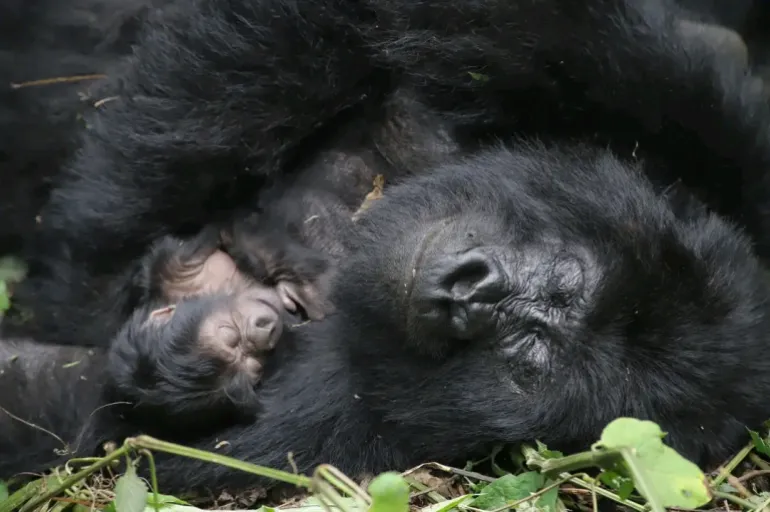
![Mountain gorillas in Virunga National Park. [Courtesy of Virunga National Park]](https://i0.wp.com/occasionaldigest.com/wp-content/uploads/2026/08/1007015277-1785575646.jpg?w=640&ssl=1)
“We are setting up checkpoints, which act as roadblocks, together with health units for handwashing and temperature screening, and a first-level isolation centre next to each checkpoint,” he said.
In Ituri province, the epicentre of the outbreak, checkpoints north and south of Bunia, the provincial capital, are screening travellers arriving from areas affected by Ebola.
“We have supported the health service with protective equipment, body bags, thermometers and vehicles because, when the disease first broke out, the health services faced real difficulties, particularly in North Kivu,” de Merode said.
Virunga, a United Nations Educational, Scientific and Cultural Organization (UNESCO) World Heritage Site since 1980, is located in a region that has experienced more than two decades of armed conflict. More than 800 rangers protect the park, which is home to a number of the world’s most threatened species.
A wider role in the Ebola response
De Merode said experience from previous outbreaks has strengthened cooperation between Virunga and Congolese health authorities, particularly in surveillance and early detection.
Reflecting on the 2018-2020 Ebola response, he said members of the outbreak response committee considered Virunga an important factor in limiting the spread of the virus.
“The response committee at the time noted that the fact the disease never widely spread to Goma or to other parts of the country was also due to Virunga National Park, which was considered a major factor in preventing the disease from spreading southwards or eastwards,” he said.
De Merode stressed that Virunga remains only one part of a wider response led by Congolese health authorities and supported by technical and financial partners.
“All the information collected at our checkpoints is immediately transmitted to the Congolese National Institute of Public Health for follow-up,” he said.
In Ituri province, three checkpoints managed by the Congolese Institute for Nature Conservation within Virunga are screening travellers arriving from areas most exposed to Ebola.
Park officials say two suspected cases have been identified at the checkpoints and referred to public health authorities for monitoring.
“If, unfortunately, cases do arise beyond the checkpoint, we are able to trace them and all the contacts who were travelling with them, and this enables us to monitor any potential cases that may be on the move,” de Merode said.
The threat to the world’s remaining mountain gorillas
Mountain gorillas (Gorilla beringei beringei) are among Virunga National Park’s most iconic species. Classified as endangered by the International Union for Conservation of Nature (IUCN), their population is estimated at just above 1,000 across the Greater Virunga Landscape, which spans the DRC, Rwanda and Uganda.
The DRC is home to a significant share of the world’s remaining mountain gorillas, with Virunga protecting one of the last populations of these great apes.
Eddy Syaluha, a veterinarian with Gorilla Doctors, a conservation organisation working to protect the health of great apes in the DRC, Rwanda and Uganda, told Al Jazeera that the close biological relationship between humans and mountain gorillas makes them vulnerable to diseases carried by people.
![Motorbike riders have their temperatures checked by a Virunga National Park health agent at an Ebola screening checkpoint in northern Bunia, Democratic Republic of the Congo. [Prosper Heri Ngorora/Al Jazeera]](https://i0.wp.com/occasionaldigest.com/wp-content/uploads/2026/08/1007094932-1785575652.jpg?w=640&ssl=1)
“Mountain gorillas share more than 90 percent of their DNA with humans, which means they are susceptible to many of the same infectious diseases, including Ebola and respiratory illnesses,” he said.
Syaluha said the risks underline the importance of a One Health approach, which recognises that human, animal and environmental health are interconnected.
Keeping Ebola away from the forest
Despite repeated Ebola outbreaks in the region over the past five decades, Syaluha said no mountain gorilla has ever been infected with the virus in Virunga National Park or elsewhere in the DRC.
He said conservation teams continue to monitor gorilla health and screen visitors to reduce the risk of human-to-animal transmission. Previous Ebola outbreaks have shown the devastating impact the virus can have on great apes, with some studies documenting mortality rates above 90 percent among western lowland gorilla populations in Central Africa.
Syaluha said the close relationship between humans and great apes makes prevention and surveillance essential to keeping Ebola away from Virunga’s gorillas.
“We are doing everything we can to ensure that what happened in other countries does not happen to our gorillas here,” he said.
“We are focusing primarily on preventive measures centred on humans to prevent transmission to our gorillas. We regularly monitor the health of our gorillas to remain on high alert.”