prosecutors

Police pass Mohamed Al Fayed case file to prosecutors

The Metropolitan Police have sent a file of evidence to the Crown Prosecution Service (CPS) relating to a man in his 80s as part of its investigation into Mohamed Al Fayed.

A man and a woman, both in their 80s, were interviewed under caution last month on suspicion of aiding and abetting rape and sexual assault, and assisting the commission of sexual offences.

The CPS will now decide whether a charge can be made.

Earlier this year, three women, aged in their 40s, 50s and 60s, and one man in his 60s were also questioned. The former Harrods owner died three years ago aged 94 having never faced any charges.

A Met Police spokesperson said “detectives submitted a full evidential file” to the CPS for a “charging decision”.

“The file relates to one suspect, a man in his 80s, and relates to two indecent assaults on two women in London. Officers will continue to work closely with CPS prosecutors as the case progresses.

“To date, seven suspects have been interviewed under caution on suspicion of offences including aiding and abetting rape and sexual assault, assisting in the commission of sexual offences, and human trafficking for the purposes of sexual exploitation.”

Co-chairs of the Justice for Fayed and Harrods Survivors Jen Mills and Lindsay Mason welcomed the latest development.

“The submission of a full evidential file to the CPS is a significant step, and it matters most of all for the two women whose allegations are at the centre of it,” the statement said.

“Both are members of Justice for Fayed and Harrods Survivors and, as with all those impacted by this scandal, we stand alongside them with love and empathy.”

Source link

‘No serious dispute’ that Comey’s seashell post could be read as a Trump threat, prosecutors say

The Department of Justice is defending its prosecution of former FBI Director James Comey, saying “there is no serious dispute” that a social media post of seashells he made last year could be understood as a threat against President Trump.

Prosecutors also called into question Comey’s account that he had found the seashells in the numerical arrangement of “86 47” while walking on a beach in North Carolina and suggested that his May 2025 post on Instagram was an effort to generate attention for a forthcoming novel about a social media personality whose words inspire his fans to attack his foes.

The arguments in motions late Tuesday represent the government’s most detailed explanation of its indictment and were filed in response to wide-ranging defense efforts to dismiss the case on grounds including that it constitutes a vindictive prosecution and that Comey’s post did not amount to a true threat. Comey’s lawyers contend that investigators in the case misled judges, submitted documents containing false statements, withheld key facts and repeatedly came up empty in their efforts to prove that Comey intended a physical threat or knew that the number 86 could suggest violence.

The entry for “86” from Merriam-Webster, the dictionary used by the Associated Press, says its meaning is “to throw out,” “to get rid of” or “to refuse service to.” Trump, a Republican, is the 47th president.

The Justice Department maintains that the post constituted a real threat

Federal prosecutors maintain that the photo of the seashells, which Comey said he found on the beach, constituted a threat against Trump. Comey deleted the post shortly after he put it up, saying he did not know that anyone interpreted the numbers as a call to violence. His lawyers have said that the slogan has long meant to “get rid of” or “eject” and has been featured on thousands of items sold online and is regularly displayed at protests.

But the department sought in its filings to place the post against the backdrop of assassination plots or attempts against Trump in the months before and after Comey’s post. Prosecutors say that two minutes before the post was made, Comey’s wife texted him a screenshot of a definition of “86” that said “to get rid of or refuse service.”

“There is no serious dispute that an objective viewer of Comey’s post could read it to mean ‘Kill President Trump,’” prosecutors wrote.

The photo was posted days before Comey was set to release a novel he wrote titled “FDR Drive,” in which a prosecutor pursues a far-right social media personality who has called out his adversaries by name and inspired violence against them by his fans, the department said.

After the Instagram post provoked an outcry, according to the government’s filings, Comey’s publishing agent observed in a text message to him that he had “gone viral.” Comey responded that that was “not my intention, but I’ll be OK if it sells books.” The agent replied, ”Music to an agent’s ears.”

Prosecutors also asserted there was “reason to doubt” Comey’s account of having come upon the seashells while on a walk, saying they were located four miles “down from the beach from beachfront property where Comey was staying, in an area separated from the ocean by a sand dune.” They said there was “no evidence that anyone else arranged, photographed, or even saw the shells.”

Comey has called the case vindictive, but prosecutors deny that

Comey’s lawyers have called the indictment, which was filed months after an earlier and unrelated case against him was dismissed, part of a Trump retribution campaign targeting one of the president’s vocal critics. Trump fired Comey as head of the FBI in 2017 as Comey was overseeing an investigation into potential ties between Trump’s 2016 presidential campaign and Russia. Trump since then has called for him and other perceived adversaries to be jailed.

But the Justice Department denied allegations of vindictiveness, saying the decision to indict Comey was made by the U.S. attorney in the area and did not stem from a directive from the president or the attorney general.

To bolster their claims that Comey was unjustly targeted, the defense team argued that investigators struggled to develop compelling evidence from witnesses that Comey had intended the post as a threat, but they concealed that from federal magistrates as they applied for warrants to search digital accounts associated with Comey and his wife.

For instance, defense lawyers have said, the FBI searched an internal database of information about open and closed investigations for any indication of an association between Comey and the term “86” but found inconclusive results. An FBI agent also requested a review of the FBI file for the case against reputed mobster John Gambino, which Comey worked on as a young prosecutor, but found no references to the term “86.”

Investigators also interviewed a key government cooperator in the case, Salvatore “Sammy the Bull” Gravano, who said he did not recall ever discussing the term “86” with Comey or hearing it in connection with the trial.

The latest filings made clear that the administration was standing behind the premise of the case.

“No Government theory was disproved at that time, or now. No intentionally false omission exists, much less one made with reckless disregard for the truth,” prosecutors wrote. “The evidence still supports that Defendant acted at least recklessly by consciously disregarding a substantial risk that his coded message of “8647” that he sent to his 200,000 or so Instagram followers, and the millions of secondary social media users who would view this as threatening violence against the President of the United States.”

Tucker writes for the Associated Press.

Source link

Tupac’s murder was act of revenge, prosecutors allege in trial’s opening day

In opening arguments, the prosecution portrayed Davis as the ringleader of the group responsible for the shooting – and point to a memoir he co-authored where he wrote in detail about the night of the shooting.

“Let’s be clear, Duane Davis did not pull the trigger. But he did plan the shooting in retaliation of the beating of his nephew,” Chief Deputy District Attorney Binu Palal told the jury. “Remarkably, you will learn that from Duane Davis himself.”

Davis’ attorneys called the narrative “fiction”, dubbing the case a product of a flawed-decades-long investigation. Davis has distanced himself from the memoir, saying he didn’t write all of it and parts were fictionalised to sell more copies.

Davis, wearing a navy suit and blue tie, sat with his defence team as they questioned why no one had been arrested for nearly three decades and asked why “no one corroborates any of this”.

“What facts do they have after 30 years?” his attorney Michael Sanft questioned.

The prosecution’s first witness was Garry Dale, who was working for the Las Vegas Metropolitan Police Department at the time of the shooting in September 1996.

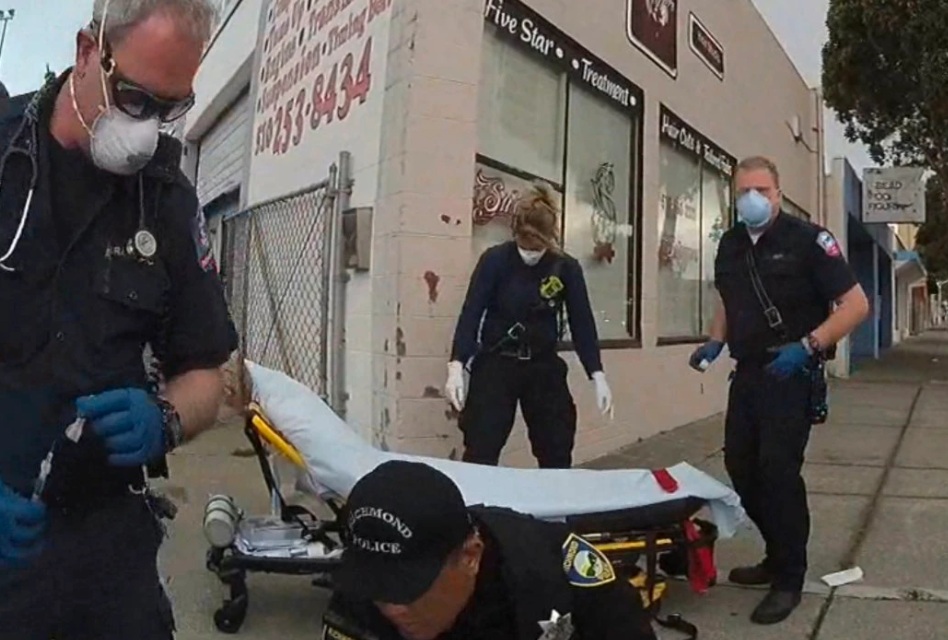
The officer detailed riding in an ambulance with Shakur after he’d been shot. He said the rapper refused to offer any information on what happened and who had shot him. “We’ll take care of it,” Shakur said, according to the officer’s testimony.

At the core of the case is East Coast vs West Coast rap rivalries and turf wars between the Bloods and the Crips street gangs that were immortalised in rap lyrics and news reports in the 1990s.

Police have long said said a lack of cooperation in the case led to dead ends in their investigation. Members of the rapper’s entourage, though, have accused authorities of initially treating them like suspects and failing to follow important leads.

Throughout the day on Monday, prosecutors painted that picture for the jury, explaining that there were no formal criminal charges in the shooting because in the world of guns and gangs “silence means survival”.

But “one person” who had a hard time staying silent was the defendant, prosecutors said, noting that Davis gave a “number” of statements on the case between 1998 and 2003.

Prosecutors allege Davis planned the shooting after his nephew Orlando Anderson was involved in a fight with Shakur in Las Vegas hours earlier. They argued Davis believed the attack on his nephew could not “go unanswered”.

The iconic rapper was just 25 years old when he was gunned down after a Mike Tyson boxing match on 7 September 1996. He died six days after the shooting.

Prosecutors contend that Davis – a former leader of the South Side Compton Crips street gang – was the “on-ground, on-site commander” who “ordered the death” of Shakur.

The murder case had largely gone cold until public statements made by Davis himself, who published a memoir in 2019. In it, and in various interviews, Davis has claimed he was a passenger in the vehicle that fired into Shakur’s car that night.

He said in the book that he gave the gun used in the murder to his nephew, Anderson, who shot the rapper.

His attorneys have argued the book is fiction and shouldn’t be used as evidence in a criminal trial relating to a case from three decades ago, but a judge ruled it could be used in court.

His defence team has pointed to missing police reports, disputed evidence and “biased, sloppy and incomplete” detective work.

They alleged prosecutors relied on “unreliable people with criminal records, financial motivations and inconsistent statements”.

The defence also argued witnesses changed their stories over time and were influenced by money, media attention or information supplied by investigators.

Source link