Saudi Crown Prince MBS urges Trump to ‘prioritise dialogue’ in US-Iran war | US-Israel war on Iran News
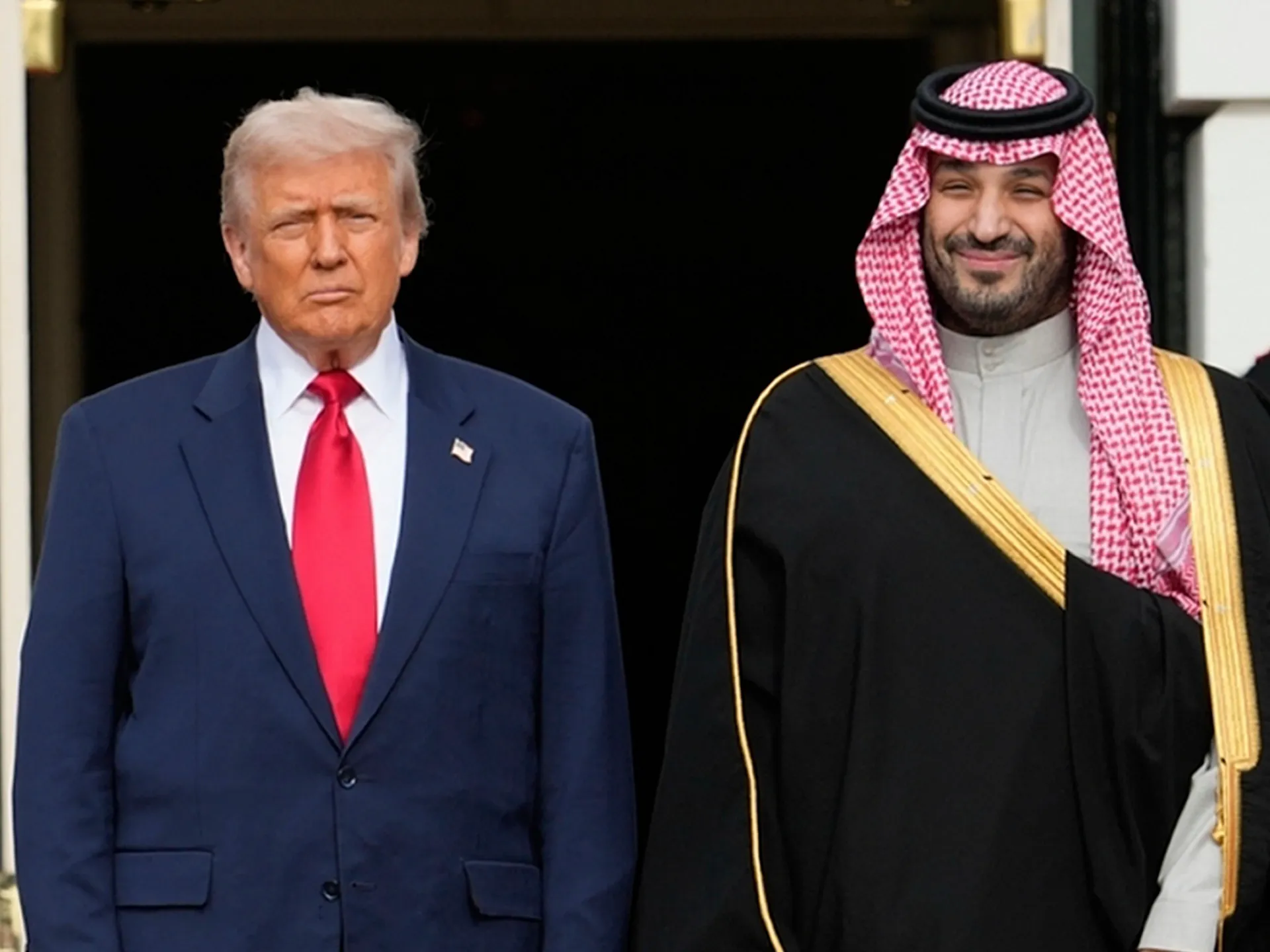
Saudi Arabia’s crown prince spoke to Donald Trump about the deepening crisis between Washington and Tehran, urging a renewed push for dialogue over further military escalation, hours before the United States president halted his latest attacks on Iran.
The Saudi Press Agency (SPA) reported on Sunday that Crown Prince Mohammed bin Salman (MBS) spoke to Trump by phone and “stressed the need to prioritise dialogue to reduce escalation and the importance of making every possible effort to achieve calm that paves the way for diplomatic solutions”.
Recommended Stories
list of 3 itemsend of list
MBS also highlighted the need to preserve the Gulf’s security and stability and prevent a wider conflict “whose repercussions would affect regional and international security and stability”, SPA added.
Trump announced on his Truth Social platform early on Sunday that he would hold off on new strikes against Iran, citing the outline of a deal to end five months of war.
On Saturday, he had struck a very different note, declaring the US “locked and loaded and ready to go against the Islamic Republic of Iran”, at levels of force not seen “since World War II”.
The reversal capped a day of dramatic swings in tone from Washington, after weeks in which the conflict has repeatedly threatened to widen into a broader Gulf confrontation.
Trump said he was calling off the planned attack only because Iran and other Middle Eastern governments had asked Washington to hold back, insisting “the perimeters of a deal has been agreed to”.
That deal, he wrote, would involve reopening the Strait of Hormuz and ending Iran’s “nuclear threat,” with Israel joining the US “in this commitment”.
Iranian state media quoted military officials dismissing Trump’s claim that Tehran had sought a pause as “nothing but a new lie”, insisting Iranian forces remained on high alert.
‘Keep the dialogue going’
The Saudi crown prince’s intervention, according to a person familiar with the call cited by US media, centred on concern that a major US strike on Iran’s energy infrastructure could trigger Iranian retaliation against Gulf oil and gas facilities.
The kingdom has already faced direct attacks in recent weeks, intercepting drones aimed at its eastern oil facilities and at Riyadh, while Iran-aligned Houthi rebels in Yemen have separately struck Saudi crude infrastructure and threatened a Red Sea naval blockade.
The war began on February 28, when the US and Israel launched strikes aimed at destroying Iran’s missile programme, preventing a nuclear weapon and cutting off support for allied armed groups.
A June ceasefire collapsed within weeks in a dispute over shipping routes through the Strait of Hormuz, a waterway carrying roughly a fifth of the world’s oil and gas exports, reigniting the fighting in July.
US Secretary of State Marco Rubio said US strikes had destroyed much of Iran’s navy, air force and missile defences, leaving it without the “conventional shield” it once relied on. “That’s changed the whole dynamic,” he told Fox News, arguing that the US was now approaching negotiations with Iran “from a position of strength, not from a position of weakness.”
Marlin Hardinger, a professor at the University of Wisconsin-Eau Claire, said direct Saudi involvement in mediation, alongside Qatar, Pakistan and Oman, appeared to have pushed Trump to reconsider, “letting some of the senior leaders in the region step forward and take charge of this”, as he put it.
Diplomats’ central task now, Hardinger told Al Jazeera, was simply to “keep the dialogue going”.
Mediators in Islamabad and Doha say they are cautiously optimistic that stalled talks could resume within days.