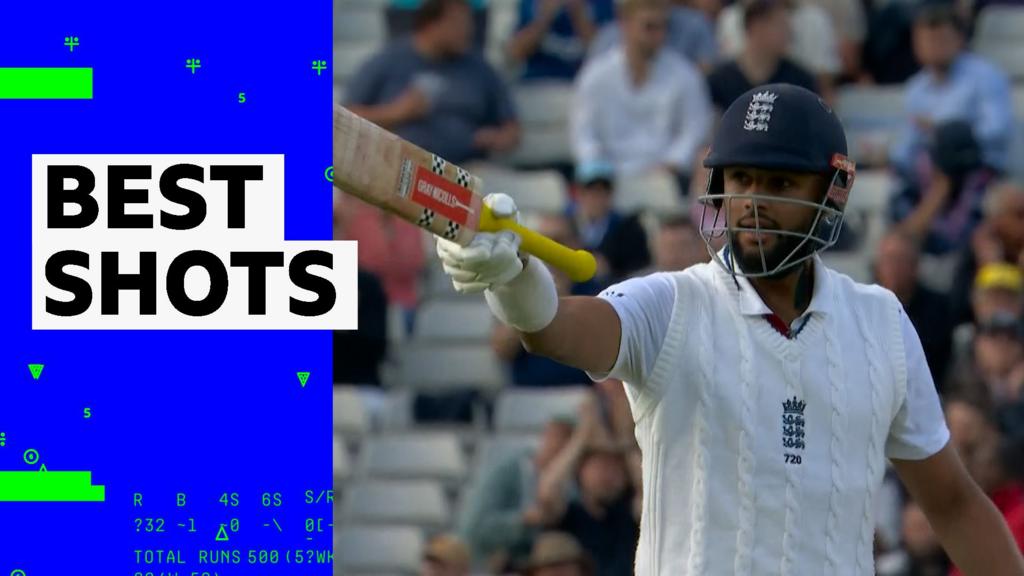
Emilio Gay produces a gritty, determined innings to guide England out of early trouble as he hits 60 off 114 balls to help his side recover from 39-3 to 143-4 on day one of the third and final Test against Pakistan at Edgbaston.
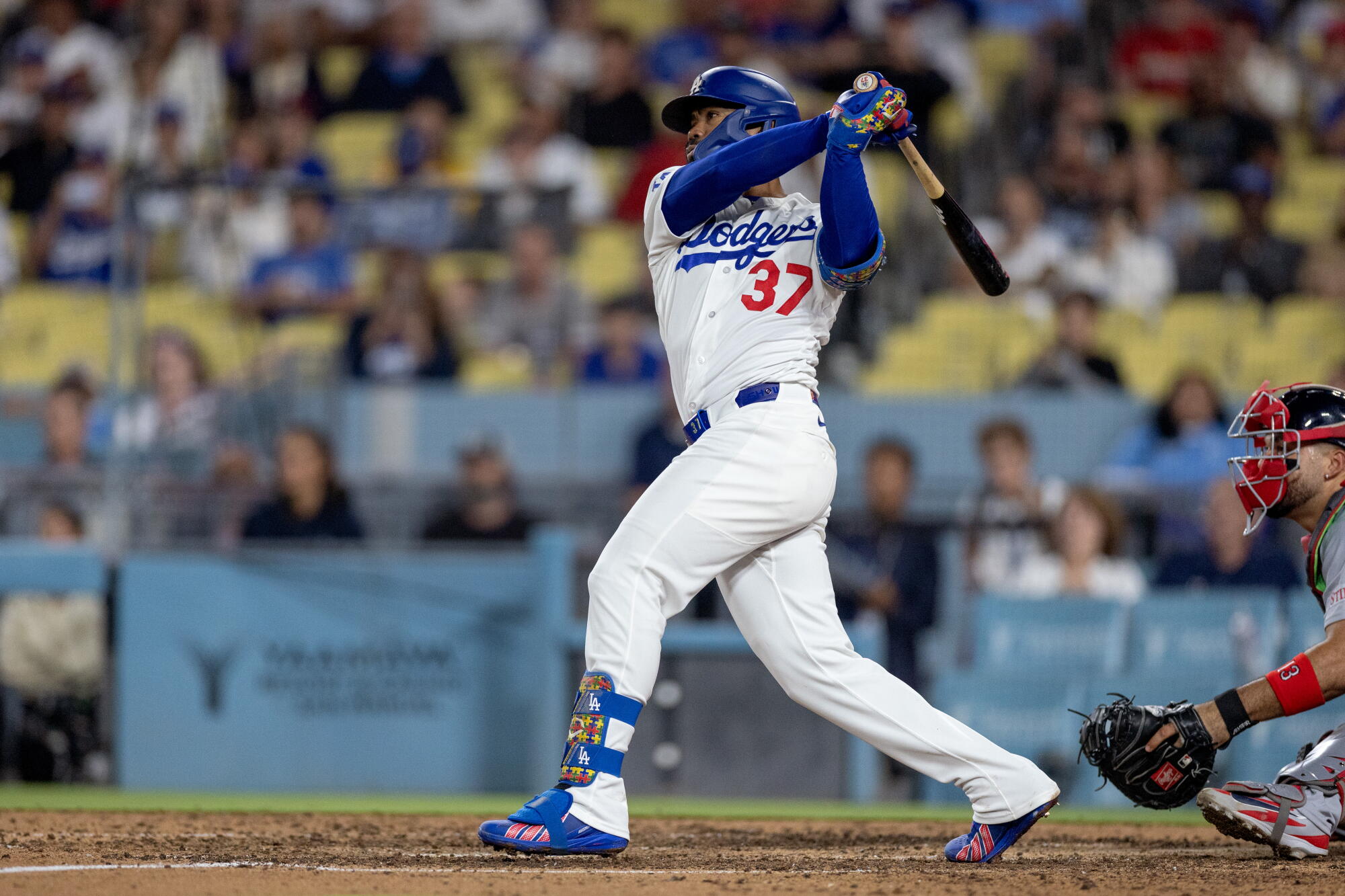
Teoscar Hernández stepped into exactly the kind of situation the Dodgers had failed to capitalize on during the past couple of games: runners in scoring position. And with one out in the ninth inning, the Dodgers were running out of chances for a comeback.
Hernández worked a full count against St. Louis closer Riley O’Brien with runners on first and second. Then he got a sinker up and over the middle of the plate, a pitch he could drive. And he did.
Hernández lined it into the left-center field gap. Tommy Edman scored easily, and Mookie Betts slid across the plate head first as the throw came in high and too late.
The Dodgers walked off the Cardinals with a 3-2 victory Thursday, narrowly avoiding a series sweep at Dodger Stadium.
“We needed it,” manager Dave Roberts said. “Obviously for seven innings, it didn’t look good at all. Then we found a way to scratch one across. But a win’s a win, however it looks.”
Before Hernández’s walk-off double, the Dodgers (83-57) had taken 26 at-bats with runners in scoring position over two games. Only one of those had resulted in a hit.
Hernández, however, unlocked something on a long fly out he hit in Detroit on Saturday.
“It’s just the way my body was reacting, was more under control,” he said. “I was able to notice everything that I was doing, even though it was an out. …That was the swing that is leading to all the good results that I’ve been having lately.”
Hernández, who entered this series with a .668 OPS against right-handed pitchers, had been struggling for so long that Roberts contemplated a left-field platoon.
Teoscar Hernández hits a walk-off double against the St. Louis Cardinals in the ninth inning Thursday at Dodger Stadium.
(Eric Thayer / Los Angeles Times)
“I told Dave, if you feel like you have to use somebody else in there, just do it,” Hernández said. “But know that I am going to keep working and I’m going to try to be ready for the times that you need me.”
On Sunday in Detroit, Hernández hit a home run off Framber Valdez. And when rosters expanded on Sept. 1, the Dodgers decided against bringing up an outfielder who could share playing time with Hernández, betting that he could end his slump.
Hernández went six for 13 in three games against the Cardinals (70-71), with Roberts remarking it was “as good as I’ve seen him versus [right-handers] since April.”
“I’ve always said that we’re better when he’s in the lineup,” Roberts said. “But performance certainly matters, and this series, albeit a small sample, was really good. As you get to the postseason and towards the end of the season, we’ve got to start figuring out who we can play, who we can count on, who’s dependable. And the at-bats he’s taken these last three games, really good.”
Hernández and Edman — hitting leadoff in place of Shohei Ohtani, who got the day off while dealing with a nagging biceps problem — were the only Dodgers with hits Thursday. Edman led the team with four, but Hernández’ second knock was the most important one.
“It was huge to finally get that big hit,” Edman said of Hernández. “We were kind of pressing a little bit in those first two games. Everybody was kind of trying to do too much in the big spots. Teo came through huge in that moment. Just can’t say enough about him, and that was just such a huge at-bat, and able to kind of steal that win today.”
California lawmakers have approved a bill that seeks to throw a lifeline to the state’s struggling journalism organizations.
Assembly Bill 2222, which would create refundable tax credits for California local news organizations based on the number of journalists they employ, joins a litany of bills on Gov. Gavin Newsom’s desk.
The state Senate passed the bill on Sunday and the Assembly narrowly approved its amendments on Monday to send the bill to the governor’s desk, with some Republican lawmakers pulling their previous “yes” votes.
The approval comes just as the Legislature is set to adjourn its two-year session early this week.
The bill, introduced by Assemblymember Christopher M. Ward (D-San Diego) would work by assigning a “job retention credit” of $20,000 per journalist for up to five positions, and after that $15,000 for every additional journalist. Part-time positions would be awarded half-credits. It also stacks an additional $15,000 credit for each new hire, to incentivize expanding journalist head counts.
“This measure is a safety net for news outlets on the verge of closure,” said former state Sen. Steve Glazer, who is a proponent of the bill and during his Senate term pushed similar legislation.
Proponents may face an uphill battle persuading Newsom to sign the bill, which creates a unique revenue stream to pay for the program. Newsom typically spurns laws that make changes to the state budget after those fiscal discussions conclude in the first half of the calendar year.
AB 2222 represents the latest attempt by California lawmakers to bolster the news business, with governments globally discussing similar efforts. Canada implemented newsroom payroll tax credits in 2019 amounting to about $13,750 per journalist in an eligible newsroom.
AB 2222 would create the largest relief plan in the U.S. to date, with the state tax board estimating it would make more than $40 million available to the state’s newsrooms annually.
The California Taxpayers Assn. and groups representing business interests such as the California Chamber of Commerce opposed the bill because it raises taxes on employers.
The governor’s finance office issued an analysis opposing the bill for failing to outline a cap on tax credits and for seeking to subsidize existing jobs rather than encouraging the creation of more journalism jobs.
The bill is supported by the California News Publishers Assn., of which the Los Angeles Times is a member.
WASHINGTON — A former White House teleprompter operator accused of using inside knowledge to make bets on the prediction market Kalshi has been ordered to turn over more than $100,000 in profits and pay a $65,000 fine as part of a settlement with federal authorities.
The settlement with the Commodity Futures Trading Commission, announced Friday, also dealt Gabriel Perez a three-year trading ban. Perez was placed on unpaid leave from his job at the White House after reports emerged that he used his position to make bets on what President Trump would say in speeches.
The White House did not immediately comment on the settlement. A White House official said in July that Perez was no longer in his position but did not say if he had been fired or resigned.
The commission found that Perez made $107,500 on prediction markets by betting on words and phrases that would appear in Trump’s speeches between December 2025 and February 2026.
“In his position, Perez had access to presidential speeches prior to those speeches being delivered and Perez misappropriated that information — in breach of his duty of trust and confidence,” according to a release from the commission.
Perez was ordered to repay his profits in full, along with the $65,000 civil penalty, which the commission said was a reduction because of his “exemplary cooperation.”
As details emerged July 16, then White House press secretary Karoline Leavitt said it was “unfortunate” and “a disgrace.”
Omani and Iranian foreign ministers hold a call as Washington prepares economic sanctions amid ongoing shipping disruptions in the Strait of Hormuz.
Published On 22 Aug 202622 Aug 2026
Iranian President Masoud Pezeshkian has called for an end to the months-long war with the United States, stating that Tehran holds a position of strength as diplomatic talks remain stalled.
“It is better that we bring the war to an end now as we are in a position of power and dignity,” Pezeshkian said in a meeting with doctors on Friday. “The whole world acknowledges our victory and emphasises that America has attacked our schools, hospitals and infrastructure in violation of all regulations and is hated around the world.”
Recommended Stories
list of 3 itemsend of list
Pezeshkian – whose authority as president is ultimately subordinate to Iran’s Supreme Leader Mojtaba Khamenei – also defended the June memorandum of understanding agreed with Washington against hardline domestic critics in parliament, who accused his administration of giving concessions to the US.
“They cannot find even a single clause in this agreement that indicates capitulation. All the commitments concern the other side,” he said.
However, days after the memorandum of understanding expired, Iran’s military leadership has warned that the country remains ready to strike back against any new threats.
“With preparedness across land, sea, air, air defence and cyberspace, Iran’s armed forces will respond to the enemy’s new threats with crushing, punishing and devastating responses,” Major-General Ali Abdollahi, chief of staff of Iran’s armed forces, was quoted as saying by Iranian media.
Strait of Hormuz
Meanwhile, Omani and Iranian foreign ministers discussed in a phone call on Friday ways to create suitable conditions for resuming dialogue and negotiations, as well as developments affecting navigation in the Strait of Hormuz, according to Oman’s state news agency.
Tehran continues to keep the key waterway partially shut while Washington persists with a naval counterblockade. Reports in US media indicate the US navy has been organising and protecting secret convoys of tankers through the southern sector of the strait, enabling between five and 10 million barrels a day of oil to be exported.
In Washington, President Donald Trump expressed scepticism over Tehran’s willingness to negotiate, telling reporters when asked if US military options with Iran were limited: “It just means that we’re seeing what happens.”
“We have total control of that entire region having to do with the Strait of Hormuz, and that means well into it, the land areas. So, they would love to make a deal, but they’re not ready to make the right deal, in my opinion,” Trump added.
He has also warned of economic consequences against any country that provides “any type of lifeline to Iran”.
The comments came as US Treasury Secretary Scott Bessent warned that Washington would “collapse” the Iranian government with a sanctions campaign.
Bessent will hold a news conference at the Department of the Treasury on Monday, where he is expected to outline planned sanctions against Iran, marking a shift by the Trump administration towards economic rather than military pressure as the war nears the six-month mark.
Iran’s Ministry of Foreign Affairs has already condemned the US plan, accusing Washington of “economic terrorism” and stating that “the instigators of these sanctions are deserving of trial and punishment”.
China’s Ministry of Foreign Affairs spokesman Lin Jian also criticised the US measures, stating that “sanctions and pressure will not help resolve the issue” and urging all parties to “take responsible measures and resolve the problem through political and diplomatic means”.
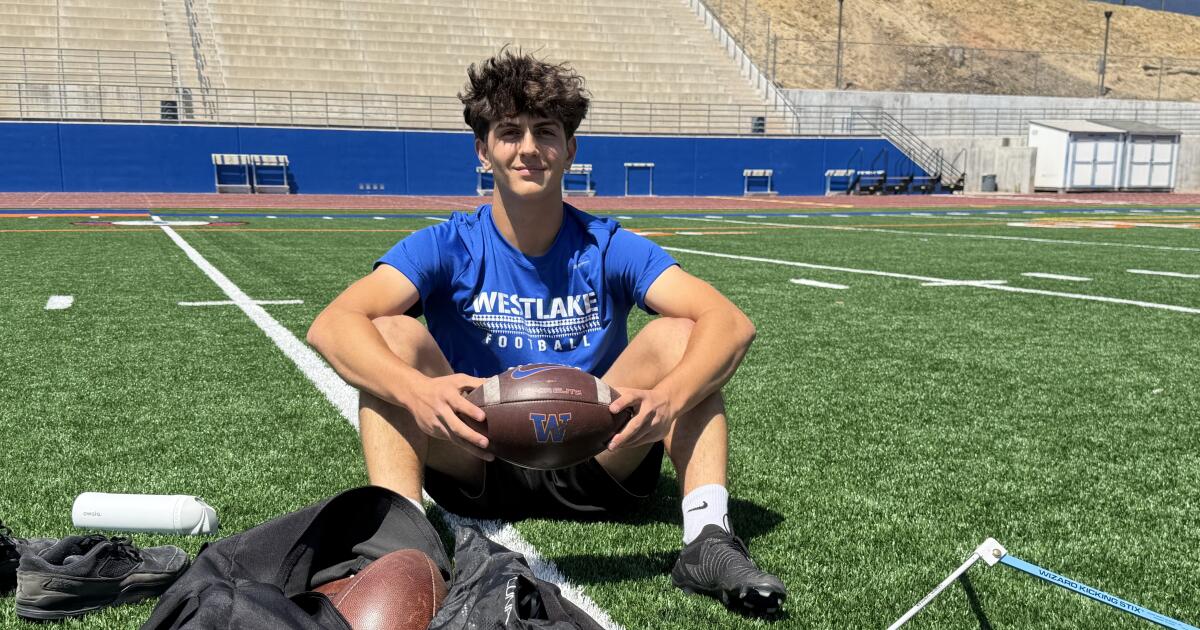
Ninth and final in a series of stories profiling top high school football players by position. Today, Gabriel Goroyan, Westlake kicker.
Gabriel Goroyan, a senior kicker at Westlake High with a 4.77 grade-point average, revealed stunning news during an interview.
“I’m OK with being normal,” he said.
That goes against everything previously known about kickers. They’re almost always surfer dudes with the fearless spirit of a pole vaulter and the willingness to experiment. If anyone were going to volunteer for a mission to Mars, it would be a kicker.
“I would like to think I’m not one of the weirder personalities,” Goroyan said.
He is like most kickers — a former soccer player. He began in eighth grade when he was still playing soccer but beginning to like kicking.
For the first time I have found a kicker who says he’s normal. Gabriel Goroyan of Westlake. But he does use his left foot to kick. Starts summer No. 1. pic.twitter.com/wz0d6CB9YF
At a camp, when he made a 54-yard field goal in a competition, that’s the moment he realized, “I can do this.”
“I started taking it more serious,” he said. “I was hungry for that No. 1 spot.”
He enters his senior season as No. 1 at his position in the Southland and committed to Stanford. The 5-foot-11, 180-pounder makes booming kickoffs, was 50 of 51 on PATs last season and made seven field goals. He also averaged 40.3 yards on punts. He kicks balls with his left foot, which requires long snappers to make an adjustment and change blocking schemes because most kickers use their right foot.
He’s never received a grade other than A on his report card at Westlake. His father is Armenian and his mother Bulgarian. He has an 8 handicap in golf and can drive a ball 300 yards from the tee, so if you need a ringer for a charity tournament, Goroyan will play the role.
He has figured out the mental requirements needed to deal with the highs and lows of being a kicker.
“A lot of it is staying calm and not getting too hyped up and too energized,” he said. “l feel a good kicker is able to come back from a miss and a lot of it is being yourself. You have to know not to overthink things and be able to go back to your normal mental state and not get trapped in a cycle of you’re not good enough. A lot of it is trusting yourself.”
He stands on the sideline waiting for his moment. You’ll never see him asking coach Rick Clausen to put him in for a field goal.
“I let them tell me,” he said.
It’s all about preparation and routine. His soccer background has provided him the tools to succeed.
“Train like a sprinter,” he said. ”That’s where the leg speed comes from. It’s not about having to squat 500 pounds but more being able to run and have fast legs. That’s where the power comes.”
As for dealing with pressure, Goroyan said camp competitions such as “last man standing,” where you have to make a kick to stay in the competition, provides preparation for a game-winning field-goal attempt that he has yet to experience.
He’s already demonstrated that he’s different — otherwise known as normal. When he made that 54-yard field goal, the longest of his career, in eighth grade, he did not scream.
“I gave a quiet clap and ran to get my ball,” he said.
Kickers to watch
Noah Ahari, Chino Hills, 6-2, 155, Sr. Made nine of 10 field goals last season
Peter Batsaras, Cypress, 5-10, 170, Sr. A summer of success sets the stage for big senior season
Ayden Brannum, Fontana, 6-3, 190, Sr. Averaged 48 yards on punts and made 47-yard field goal
Colin Elia, Temecula Valley, 6-0, 160, Sr. Made 10 of 11 field goals as a junior
Gabriel Goroyan, Westlake, 5-11, 180, Sr. Stanford commit has worked relentlessly on mastering his technique
Jackson Hauducoeur, Upland, 5-6, 140, Sr. All-CIF kicker made eight of 10 field goals
Ethan Miller, San Clemente, 6-2, 175, Jr. Made nine fields, cool under pressure
Jerry Shifman, Mater Dei, 5-10, 165, Jr. Had nine field goals, with a long of 43 yards
Carter Sobel, Sierra Canyon, 5-9, 160, Sr. Strong on kickoffs and made nine field goals
Caleb Sylvia, Mission Viejo, 5-10, 190, Sr. Had 49-yard field goal last season
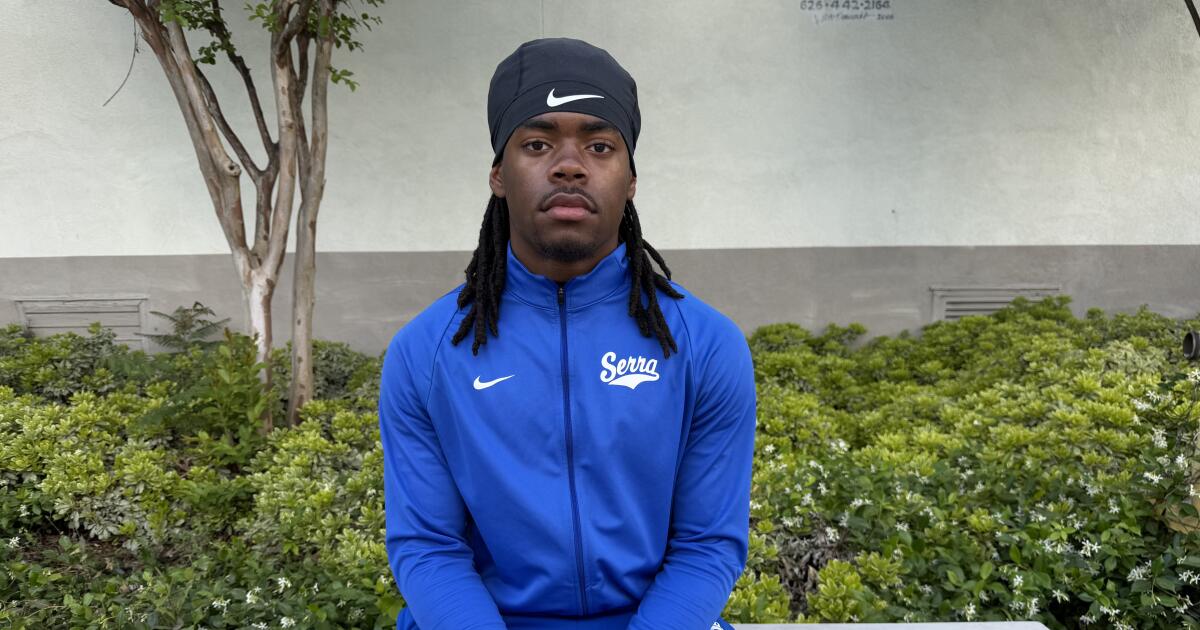
Eighth in a series of stories profiling top high school football players by position. Today, Wesley Ace, Gardena Serra defensive back.
Wesley Ace has no complaints when people underestimate his football ability.
“A couple coaches just walk by,” he said of recruiters showing up at practices and bypassing him.
At 5 feet 9 and 180 pounds, the Gardena Serra High cornerback is used to the skepticism because of his size.
“It’s all good,” he said. “My film speaks for itself. If you’re a baller, you’re a baller.”
And Ace is a fast baller, having run the 100 meters last spring in 10.51 seconds at the school that produced state 100-meter champion Rodrick Pleasant. Ace also has video of him running down the speedy Deshonne Redeaux last season to prevent a touchdown against Oaks Christian. Redeaux is a freshman at USC this season.
Playing the nickel position in Serra’s 4-2-5 defensive alignment, Ace contributed 52 tackles. He’s an aggressive tackler. He’s far stronger than people think, bench-pressing 275 pounds.
He’s been playing tackle football only since eighth grade.
“My whole life, I’ve been playing baseball,” he said.
Then he got bored and switched to football.
“I had to get stronger, faster and learn the rules of the game,” he said.
His first position was defensive end. The coach must have wanted someone to be a pest going after quarterbacks with his lack of size.
“I was so fast, big guys that age couldn’t keep in front of me,” he said.
Ace learned to play defensive back and was most effective last season covering slot receivers. This season he’ll get a chance to show what he can do against taller players as a cornerback. He’s confident his speed and strength will make it a smooth adjustment.
“As a defensive back, you’re going to mess up eventually,” he said. “Speed allows you to recover and get back.”
His father, Wesley Sr., was a standout defensive back at Westchester and San Diego State who never encouraged his son to play football because of head injury concerns. He’s been training him while serving as an assistant principal in the Los Angeles Unified School District.
“My dad always says be everything but big,” Ace said.
Don’t be surprised to see Serra taking advantage of Ace’s speed by letting him return kickoffs and make some plays on offense. Regardless, he finds a way to contribute on defense with his quickness, instincts and fearless attitude. He committed to San José State during the summer.
“For sure, I play with a chip on my shoulder,” he said.
Wednesday: Gabriel Goroyan, Westlake kicker.
Defensive backs to watch
Isala Aisa Wily-Ava, St. John Bosco, 6-2, 195, Sr.: Washington commit has been starting so long he might have grey hair
Wesley Ace, Gardena Serra, 5-9, 180, Sr.: San José State commit ran 10.51 seconds for 100 meters
Myles Baker, Sierra Canyon, 6-2, 205, Sr.: UCLA commit is built like the Rock of Gibraltar
Jordan Hicks, Mission Viejo, 6-1, 180, Jr.: Ambitious, confident and decisive on any field
Jaden Walk-Green, Corona Centennial, 6-0, 195 Sr.: Washington commit had 10 interceptions last season
JuJu Johnson, Long Beach Poly, 5-11, 175, Sr.: UCLA commit is most improved player anywhere
Danny Lang, Mater Dei, 6-1, 165, Sr.: USC commit thrives on hand-to-hand combat with receivers
Jaxson Rex, San Clemente, 6-1, 190, Sr.: Put him anywhere on the field and BYU commit would excel
Gavin Williams, Damien, 6-1, 185, Sr.: USC commit will set highest standard at safety this season
Donte Wright, Long Beach Poly, 6-2, 180, Sr.: Miami commit is physical cornerback with speed
Fifth in a series of stories profiling top high school football players by position. Today, Vincent Shields, Murrieta Valley offensive lineman.
For those who love dogs, offensive tackle Vincent Shields of Murrieta Valley High needs to be on your must-invite list. His mother and father run a dog training business. There are five dogs living at their home. All the female dogs are named after Disney characters. Vincent swears dogs can be trained to do anything, like open the refrigerator.
He just got a golden retriever puppy named Nala, the wife of Simba from “The Lion King.” The question is will Shields train her to rush the passer so he can practice his blocking techniques against someone with agility and a hunger to do anything for biscuits?
“That would be a good challenge,” he said.
The football journey of the 6-foot-6, 285-pound junior involves a change of positions, a change in eating habits and a recognition he has found his calling.
“He’s a freak athlete,” former Murrieta Valley offensive line coach Alex Rosenblum said. “That kid has had an amazing offseason.”
Teammates share a laugh with Vincent Shields as he engages in a power lifting exercise.
(Sandy Huffaker / For The Times)
By the end of the summer, Shields was nearing 20 scholarship offers after just one season as an offensive lineman. That’s what happens when college recruiters discover someone with size, good footwork and the ability to improve.
He started at right tackle last season for a school that has been producing outstanding linemen.
“We love to run the ball,” Shields said.
He was a defensive end as a freshman before Rosenblum convinced him to become a blocker. It opened a path that Shields has embraced.
“He told me at the end of my freshman year, ‘You’re going to start and if you make a mistake, it’s OK. Everything is a learning experience.’ I made mistakes and he was supportive,” Shields said.
He has been receiving private instruction to understand his role of blocking specific defenders and adjusting when linebackers blitz. All that was thrown at him as a sophomore, so it was no surprise he had some offside penalties. A year later, there’s no telling how dominant he can become.
“It takes a different person to play O-line,” he said. “It’s violent and that takes a special person. Not everyone is meant for the mental part and physical part. Are you going to take another man against his will and drive him down the field?”
Murrieta Valley offensive tackle Vincent Shields, center, does exercises during practice.
(Sandy Huffaker / For The Times)
Shields said he has been playing tackle football since he was 11. He was primarily a linebacker to take advantage of his athleticism. Then he started to grow and eat and eat.
Those were the days he loved French fries, chips, hamburgers and anything fried. He once ordered three 4×4 burgers from In-N-Out, which is four beef patties and four slices of cheese. He used to order from Chick-fil-A two chicken sandwiches, four chicken strips and 10 chicken nuggets.
Then he learned about nutrition and choices. He’s been eating steak and grilled chicken lately.
“I’ve done a good job shedding the bad weight,” he said.
His father, a former Marine, likes to cook, so everyone is watching Shields’ eating habits. He’s 17 with an appetite like a dog.
And speaking of dogs, the family has Shields’ golden retriever, a Rottweiler named Fancy, a giant schnauzer named Goose and two Belgian Malinois named Hero and Baymax.
That’s enough dogs to form a starting offensive line. But one of them has to beat out Shields, who intends to cause a whole lot of trouble blocking opponents over the next two seasons.
“I can’t wait,” he said. “You’re going to see a jump and a lot of people are going to wonder how it happened.”
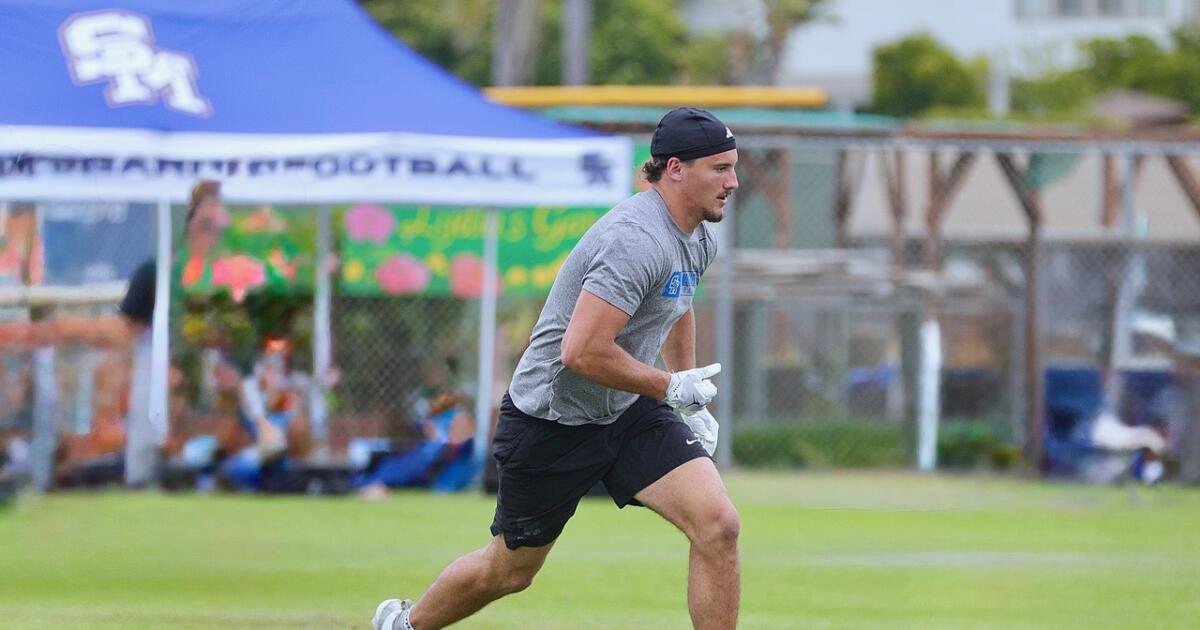
Fourth in a series of stories profiling top high school football players by position. Today, Luke Gazzaniga, Santa Margarita tight end.
You’re unlikely to feel sympathy for 6-foot-4, 235-pound tight end Luke Gazzaniga, a senior at Santa Margarita High who enjoys the idea of running over tacklers after catching a pass or sending an opponent crashing to the ground with a bone-crushing block.
Except understand that he’s the smallest brother in his family. The others are 6-7 and 6-5, so imagine the little brother in the front yard doing the Oklahoma drill, a legendary one-on-one football drill from years ago that tested toughness via collisions.
“We’d literally just run at each other,” he said.
Some brothers play video games or collect baseball cards. The Gazzanigas were into seeing who would be the last one standing.
“It was fun,” Luke said. “I was quick when I was a little kid. I wouldn’t go down. I’ve had to fight for myself. I had to find my way to win.”
Their father, David, who played football at Dartmouth and became an orthopedic surgeon, welcomed the competition. If any of the boys came into the house before a game was over, Dad’s response was, “Suck it up and go back.”
“He taught us how to be tough,” Luke said.
You can sense the enjoyment Luke has on a football field. After he catches a pass, he looks up and gets excited if there’s a defender nearby.
“I love seeing people there,” he said. “I’m letting them know if you’re going to try to tackle me, it’s going to hurt you more than me. I’m glad someone thinks they can tackle me.”
Future Hall of Fame tight end Rob Gronkowski has been the player he’s most admired, and Gazzaniga has been able to see pro players up close because his father worked as a physician with the Chargers. Luke got to hang out in the training room and on the field.
“They’re impressively big and impressively fast,” he said. “People were huge.”
42 seconds left in first quarter. Santa Margarita 19, De La Salle. Luke Gazzaniga TD. About the only thing the Eagles need to work on are PATs. 1 for 3. pic.twitter.com/WA6IY0blgI
During Santa Margarita’s run to the Southern Section Division 1 and Open Division state titles last season, Gazzaniga became an important offensive weapon over the middle, even though he suffered an ankle injury and missed six weeks. He caught 20 passes for 332 yards and four touchdowns.
“God gave me the blessing to catch anything,” he said.
Santa Margarita coach Carson Palmer used to take advantage of throwing to the tight end when playing at USC and in the NFL, and there’s no doubt Gazzaniga feels comfortable in the Eagles’ offensive schemes. Tight ends continue to gain attention at the highest levels.
“It’s a super important position,” Gazzaniga said. “People love looking at receivers and forget the tight end is almost the glue between passing and running. The Rams use three tight ends and there’s a bunch of big personnel types all over the league. I can envision myself being there one day and making an impact.”
Gazzaniga is committed to Kansas. He comes from a family of athletes. Two older sisters played water polo at USC, with Rachel now a candidate to play for the U.S. Olympic team in 2028. Brother John is a quarterback at Alabama. His mother is an avid mountain climber. John used to throw bullet passes to Luke growing up, which helped prepare him for any and all quarterbacks.
Thanksgiving always has produced an interesting dynamic with five tall, energetic kids circling for a turkey leg.
“It’s hard to know how much we eat,” Luke said.
Saturday: Vincent Shields, Murrieta Valley offensive lineman.
Tight ends to watch
Luke Gazzaniga, Santa Margarita, 6-4, 235, Sr.: Kansas commit makes big catches in traffic
JJ Haley, Corona del Mar, 6-3, 200, Jr.: The next top tight end from the tight end school
Max Markofski, Mission Viejo, 6-4, 230, Sr.: Arizona commit is known for his receiving skills
Hudson Ploog, Orange Lutheran, 6-5, 235, Sr. Nevada Las Vegas commit is like a sixth offensive lineman to clear defenders
Jaylin Smalls, Rancho Cucamonga, 6-4, 230, Jr.: This is the season he begins to show his talents
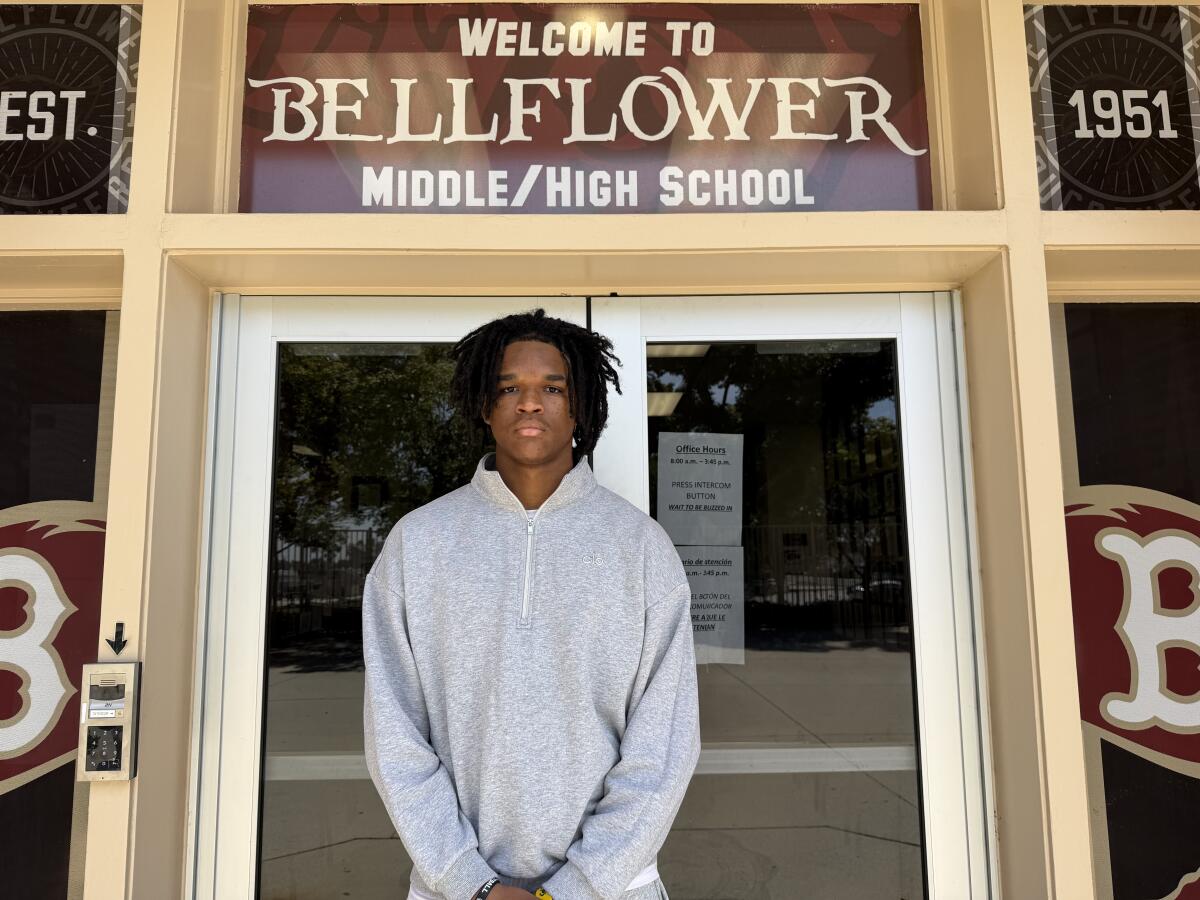
Third in a series of stories profiling top high school football players by position. Today, Austin Miller, Bellflower receiver.
Dozens of college football recruiters traveling in their rental cars to powerhouse St. John Bosco have learned there’s a new must-stop place on the way to Bellflower.
“Don’t come through Bellflower and not come through Bellflower,” is the motto of Bellflower High, where the emergence of 6-foot-5, 200-pound sophomore receiver Austin Miller is proving to be as attractive as a stop at In-N-Out.
“Bosco is a great program, but we don’t take a backseat to anyone,” said the 15-year-old Austin , whose father, Keith, is the head coach. “We’re here to put Bellflower on the map.”
Videographers covering Bellflower games know Austin is capable of dong something spectacular at any moment because of his speed, size, athleticism and jumping ability. He caught 35 passes for 609 yards and eight touchdowns as a freshman. He rushed for 885 yards and 13 touchdowns. He had four sacks and 35 tackles.
Imagine the highlight films coming this season with added strength and a maturing body.
He’s been fed hundreds of footballs from a Jugs machine to develop hands that don’t drop passes. He has the size and physicality of a tight end, which creates mismatches with smaller cornerbacks. He has no sympathy.
“As a receiver being bigger than everybody, you play to your advantage,” he said.
Because he has been playing multiple sports since he was young, versatility is his superpower, allowing him to catch passes, block, sack quarterbacks from the edge or play any position his father needs him to play.
Just hearing him describe the importance of blocking as a receiver shows the effect having a coach as a father has had on him.
“My dad taught me staying low, driving through your hips and making sure you block for your teammates like they block for you,” he said. “For receivers, sometimes you watch the play instead of doing your job. The biggest thing is putting your man in the dirt. Being bigger receiver, taking contact and delivering contact is a big thing for me.”
Austin is one of those rare teenagers who looks and acts like someone destined to reach the highest level possible because of his physical gifts and mental outlook. He committed to Ohio State in June even though he has three seasons left of high school football. His goals are high, and he feels the Buckeyes are the perfect landing place to fulfill his dreams.
Austin Miller, a 15-year-old sophomore receiver, is helping bring attention to Bellflower’s football program.
(Eric Sondheimer / Los Angeles Times)
His parents wanted nothing to do with the flavor of the month, holdbacks. It has become so common that most assume a top freshman or sophomore are holdbacks, which means repeating a grade or two to look for a competitive advantage in high school.
Austin welcomes competition of any and all ages, seeing it as a worthy challenge and a path that will only make him better. He certainly more than held his own as a 14-year-old playing against some 19-year-olds.
To understand his journey, you have to go back years and visualize the scene from his days as an 11-year-old.
“We’d wake up, go to football practice, go to basketball practice, go to baseball practice, then work out more,” he said.
Keith Miller wanted the chance to become a head coach after being an assistant to his brother, Jason, who’s coached at Bellflower, Verbum Dei and Leuzinger among his stops. With Austin and his talented friends serving as the early believers, Miller is trying to build a program from the ground up.
“The college coaches say they respect what we are doing,” Austin said. “We don’t take a back seat to any school.”
There’s also a little bit of pride in father and son proving that talent isn’t just found at top private schools. When a public school kid gains similar attention, it makes him a community hero for life.
Austin is certainly headed on that path. He’s embraced the idea that you can be the youngest on a field and still be one of the best through hard work, dedication, preparation and a belief in yourself.
Friday: Luke Gazzaniga, Santa Margarita tight end.
Receivers to watch
Nico Bland, Orange Lutheran, 6-1, 185, Sr.: Arizona State commit led Lancers with 57 catches
Charles Davis, Westlake, 6-5, 205, Sr.: Cal commit has size and speed
Coach Jim Harbaugh said roughly 15 starters won’t play in the Chargers’ preseason opener against the Houston Texans, and there are several spots on the depth chart that still need to be decided.
“The preseason games will give us a window of insight into where everybody is,” Harbaugh said.
Here are five position groups to monitor when the Chargers face the Texans on Thursday at 5 p.m. PDT (CBS, NFL+).
Left guard battle
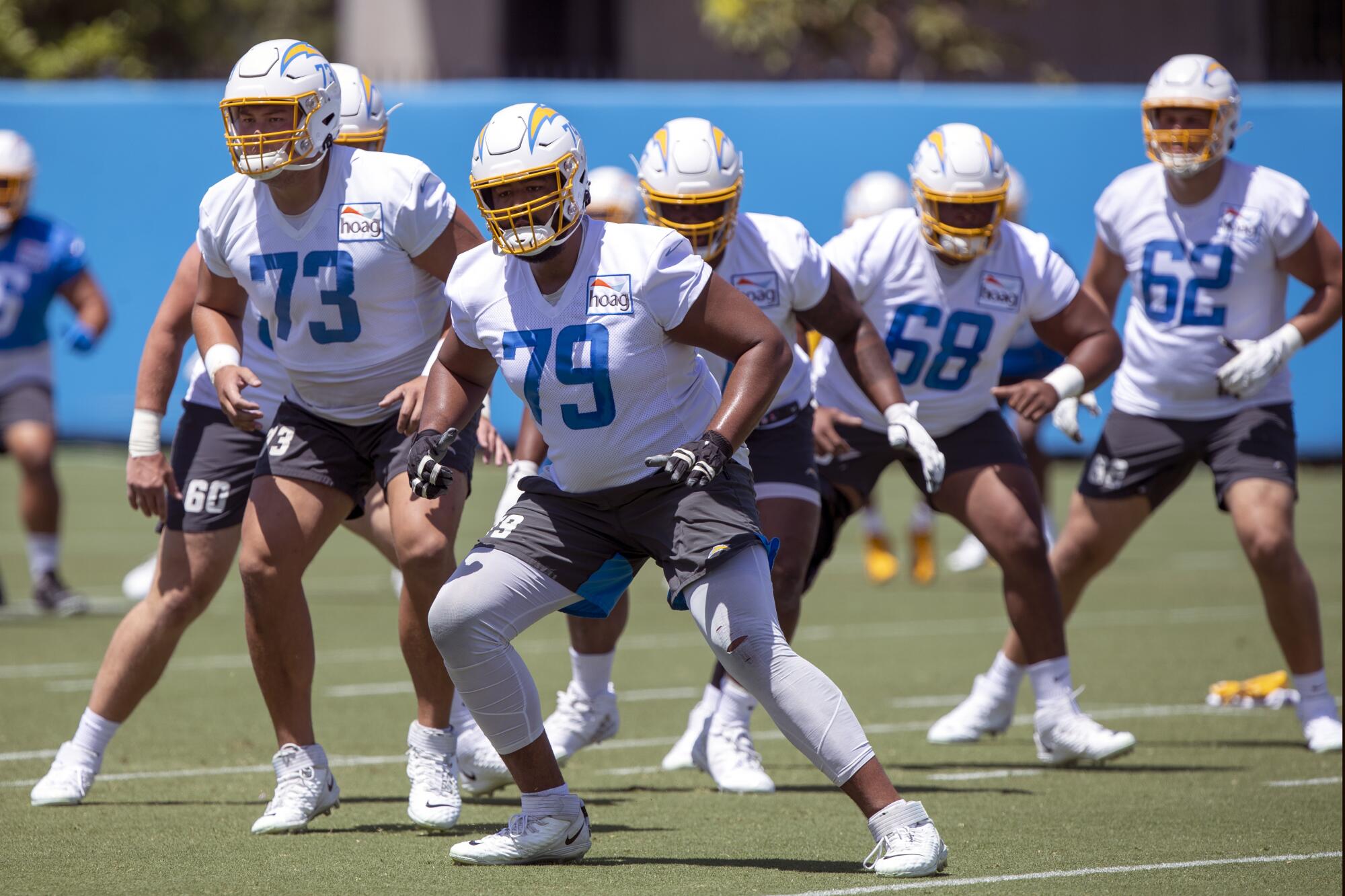
Chargers offensive lineman Trey Pipkins (79) works out with his teammates during drills in June.
(Alex Gallardo / Associated Press)
Who will line up to the left of center Tyler Biadasz remains to be determined.
Slaughter appears to be in the lead, with Awosika and Taylor behind.
“Jake Slaughter had a great weekend,” Harbaugh said Tuesday. “If we were right up to the minute right now, [I] really liked [Slaughter’s] tape from the weekend — and his confidence. Like, he’s getting it.”
It’s a given that Biadasz will start at center, Cole Strange at right guard, Joe Alt at right tackle and Rashawn Slater at left tackle.
But the Chargers need someone to seize control of the left guard spot sooner rather than later.
“No one has eliminated themselves from the tournament,” offensive coordinator Mike McDaniel said.
The list might be narrowed by Friday morning.
Tight end trio?
Chargers tight end Charlie Kolar takes part in drills at minicamp in June.
(Eric Thayer / Los Angeles Times)
Unlike the left guard competition, the Chargers believe they have a three-headed monster at tight end with Charlie Kolar, David Njoku and Oronde Gadsden.
“They’re all great dudes,” Njoku said of the tight end room. “Everyone has their own thing … I think we complement each other and push each other to strive for greatness.”
Each has seen a good amount of reps in various packages throughout training camp, and all should see the field quite a bit during the regular season.
Perhaps the Chargers’ first preseason game — and who plays first, most or not at all during it — will indicate a pecking order.
Third safety
Chargers safety Genesis Smith goes through drills during rookie minicamp in May.
(William Liang / Associated Press)
Derwin James Jr. and Elijah Molden have their starting safety spots locked up. However, James is a Swiss Army Knife who often plays nickel, meaning the Chargers need a solidified third safety.
Who will be that guy?
“The standard is the standard,” James said of the defensive backs. “I feel like everyone’s going out there competing. We got a lot of depth. We got a lot of guys who can make a lot of plays. When their numbers [are] called, guys are stepping up. So, it’s good to see.”
It appears to be a three-way race between rookie Genesis Smith, Tony Jefferson and RJ Mickens.
Cutting corners
Chargers safety Derwin James Jr. (3) and cornerback Rodney Shelley run a drill during training camp on Aug. 1.
(William Liang / Associated Press)
Tarheeb Still is the Chargers’ No. 1 outside cornerback with Donte Jackson and Cam Hart following.
“I feel very comfortable and very confident,” Still said. “I think that’s just a credit to my coaches [and] my teammates. … I feel really good about where I’m at personally, and where the team and the defense is.”
But after that trio is a deep mix of options competing for spots on the 53-man roster.
Avery Smith and Rodney Shelley have impressed as undrafted rookies like Nikko Reed and Eric Rogers did in 2025. And Deane Leonard is probably a lock to stay in L.A. as a special-teamer.
So Thursday’s game will be pivotal, as teams rarely keep eight-plus cornerbacks; the Chargers kept seven last season.
“We always encourage each other,” Jackson said of the room. “No selfish demeanors on this team.”
Herbert insurance
Chargers quarterback Trey Lance throws during offseason workouts in May.
(William Liang / Associated Press)
Harbaugh said backup signal-callers DJ Uiagalelei and Trey Lance will each play one half against the Texans as they battle to be Justin Herbert’s primary replacement.
“Both have really acquitted themselves well,” Harbaugh said. “From what I’ve seen in practice, it’s going to be pretty close. They’re both good.”
Uiagalelei and Lance, once a pair of big-named prospects, have had their share of highs and lows throughout training camp. Each could use a good, live outing.
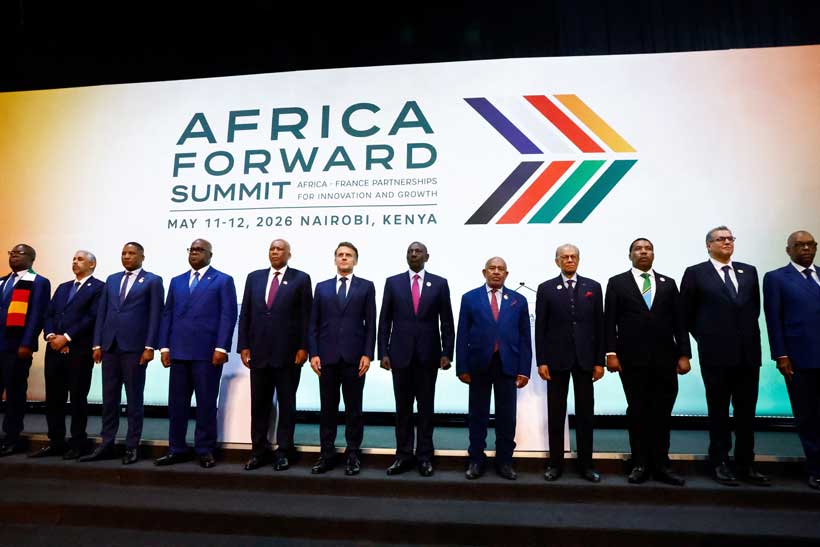
It is a crucial time for Africa in terms of how it interacts with the rest of the world. Africa is no longer viewed as a place of humanitarian interest or of mere charity. Instead, Africa is increasingly seen as a prize, as a place that contains large populations and is a place where great and emerging powers struggle to win influence. With fifty-five states, more than one billion people, and the youngest population of any continent, Africa’s future will determine the politics of the world for decades to come. However, this potential strategic significance exists in an uneasy context of instability, dependency, and weak governance. The key question this paper seeks to address is whether Africa will remain a subject of outside influence and internal problems, or be able to turn its potential into real strategic power.
A Continent in Transition: Crisis, Change and Transformation
The transition of Africa is evident in its economic output. According to the IMF, it should come as no surprise that sub-Saharan Africa will grow at about 4.3% in 2026 and that the region will be one of the fastest growing in the world, even beating out developed nations facing the challenges of monetary tightening and shrinking populations. It is estimated that nations such as Ethiopia, Guinea, Uganda, Rwanda, and Benin will have growth rates of 7% or more because of mining, construction, industrial parks, and infrastructure spending. Africa’s aggregate nominal GDP will reach around 3.3 trillion dollars in 2026.
This data indicates true evolution; however, these very reports indicate that growth in Africa is uneven since economies relying on resources and importing oil experience worsening trade accounts and increasing cost of living. The contradiction within Africa’s transition process is that while there is economic momentum, there is also economic fragility, which means that growth indicators do not mean development per se.
Stay ahead of the geopolitical week.
MD Briefing delivers expert analysis across five global fronts — the Indo-Pacific, energy, geoeconomics, European security, and the Middle East — every Monday morning. Free.
Shifting Security Landscapes and the Crisis of Regional Stability
One does not have to look further than the Sahel region to see just how critical this problem of stability becomes. Military coups seized control in Burkina Faso, Mali, and Niger; in these regions, the Alliance of Sahel States was formed and left the Economic Community of West African States. According to the information available from Armed Conflict Location & Event Data Project, the level of violence in central Sahel increased dramatically from 2018 to 2024.
Humanitarian organizations working within the United Nations reported approximately nine thousand three hundred casualties in Mali, Burkina Faso, and Niger in 2025. While the withdrawal of French troops and UN peacekeepers was not completed by an improvement of local armies, the Russia-based Africa Corps, a successor to the Wagner Group, became the main security partner of junta regimes with varied success. Extremist organizations such as Jama’at Nusrat al Islam wal Muslimin and the Islamic State Sahel Province expanded their operations and started to use more often armed drones in their actions with a possibility of destabilization spreading to the countries of the Gulf of Guinea coast.
Economic Crossroads: Resources, Growth and Strategic Dependency
The development of the economy in Africa has a direct connection with the natural resources present in the continent, including the minerals used in the process of energy transition in the world such as copper, cobalt, manganese, and lithium. China has been the largest trading partner of Africa for the past sixteen years, and the expected value of the total trade between these two regions in 2025 is three hundred and forty-eight billion dollars, which is an increase by eighteen percent compared to the preceding year.
The main countries contributing to the largest share of trade include South Africa, Nigeria, Democratic Republic of Congo, Angola, and Egypt. China is involved in the continent’s economy not only in traditional sectors like natural resources but also in renewables, digitalization, and low carbon technology, as China plans to invest over fifty billion dollars in the continent by 2027 under the Beijing Action Plan. According to Boston University Global Development Policy Center, Africa’s exports to China are mostly raw material and the trade deficit with China is approximately equal to three percent of regional GDP.
Diplomatic Repositioning in an Emerging Multipolar World
The states of Africa are increasingly seeking to assert their independence in a multipolar world. With the admission of the AU to the G20 in 2023, the continent has secured a place among the major powers of the world permanently. Some of the African states have sought membership to BRICS, a power bloc which included Egypt and Ethiopia in addition to the founders and some other new members, making it another power bloc which its supporters argue is an alternative to the Western dominated groupings.
This diplomatic maneuver by the continent represents the larger strategy that the Africans follow in terms of strategic non alignment where they seek relations with all the major centers of power, including the US, China, Russia, Europe, and the Gulf countries. The Africans have used this diplomatic clout to their advantage in securing better deals on debt, trade, and security cooperation. But this diplomatic repositioning itself faces limitations because of the divide among the African states and lack of ability to capitalize on it.
Domestic Politics, Governance and the Crisis of Legitimacy
Underlying the security crossroads and the economic crossroads is a more fundamental crisis of political legitimacy. Since 2020, there have been coups across the Sahel and Central Africa as a manifestation of public discontent with corruption, poor service delivery, and the inability of the civilian government to ensure security. While military regimes in Mali, Burkina Faso, Niger, and Guinea partly justify their takeover of power by invoking issues of sovereignty and anti-colonial rhetoric – an argument that struck a chord with a lot of people while the indicators of good governance in those countries continued to decline rather than improve.
In other cases, disputed elections, the manipulation of constitutions to prolong the rule of presidents, and the constriction of civic space challenge the viability of the democratic institutions that were put in place after the opening up period of the 1990s. At the same time, a number of countries such as Ghana, Kenya, and Zambia have shown the potential for power transitions and active civil societies, which means that the crisis of legitimacy in Africa is not consistent.
External Powers and the Contest for African Influence
Today’s contest for influence in Africa is characterized by a larger and broader coalition of players than has been seen since the attainment of independence. The United States has attempted to make a comeback through efforts aimed at the development of critical minerals and infrastructure, in response to the increasing influence of China and Russia in the region, although the future of favorable trade policies like the African Growth and Opportunity Act appears to be in doubt due to changes in American trade policy.
The influence of Russia has primarily been gained through security collaboration and disinformation, rather than economic investment. Russian interests lie in forming partnerships without having to be conditional upon the governance of the partner country. Countries from the Gulf region, such as the UAE, Saudi Arabia, and Qatar, have invested heavily in ports, agriculture, and renewable energy, especially in the Horn of Africa. The influence of Turkey has been formed in the form of business and military connections, especially in the Sahel and East Africa regions. With so many external partners involved in Africa, there is an increase in the chance that the continent becomes a battleground for great powers, rather than a partner in determining the outcome.
From Strategic Importance to Strategic Agency
The concept of strategic importance and strategic capability is essential to understand the strategic positioning of Africa at present times. Strategic importance is bestowed upon a country by external actors due to the recognition of the natural resources and markets of the region. Strategic capability on the other hand involves the setting of terms by African institutions and states rather than mere reactions to the interests of external forces.
In this regard, the African Continental Free Trade Area, which seeks to create a common market of over one point three billion people is an attempt to exercise such a strategic capability through reduction of dependency on external trade partners and increased intra-African trade which currently constitutes only a limited portion of total trade in the continent. Credibility of organizations like the African Union and Economic Community of West African States in conflict and coup mediation will determine whether African diplomacy will be conducted through collective institutions or ad hoc decisions made by individual African nations.
Now which direction will Africa take?
The geopolitical position of Africa in international politics is that of a paradoxical nature. The African continent can be characterized by both immense economic potential and security crises, both rising diplomatic power and an area of contestation between foreign forces, both a land of resilient democracy and an example of authoritarianism. The statistical information provided above gives evidence of a rising continent, despite the existing weaknesses. Whether or not Africa becomes a strategic player on its own or stays an object of contestation in the new multipolar world will depend solely on decision-making of the African continent. Whether the African continent will follow the path of development or the road of stagnation depends on how Africa will deal with the issues of governance, regional integration and economic diversification.