Trump says he wants to ‘permanently pause’ migration to U.S. from poorer countries
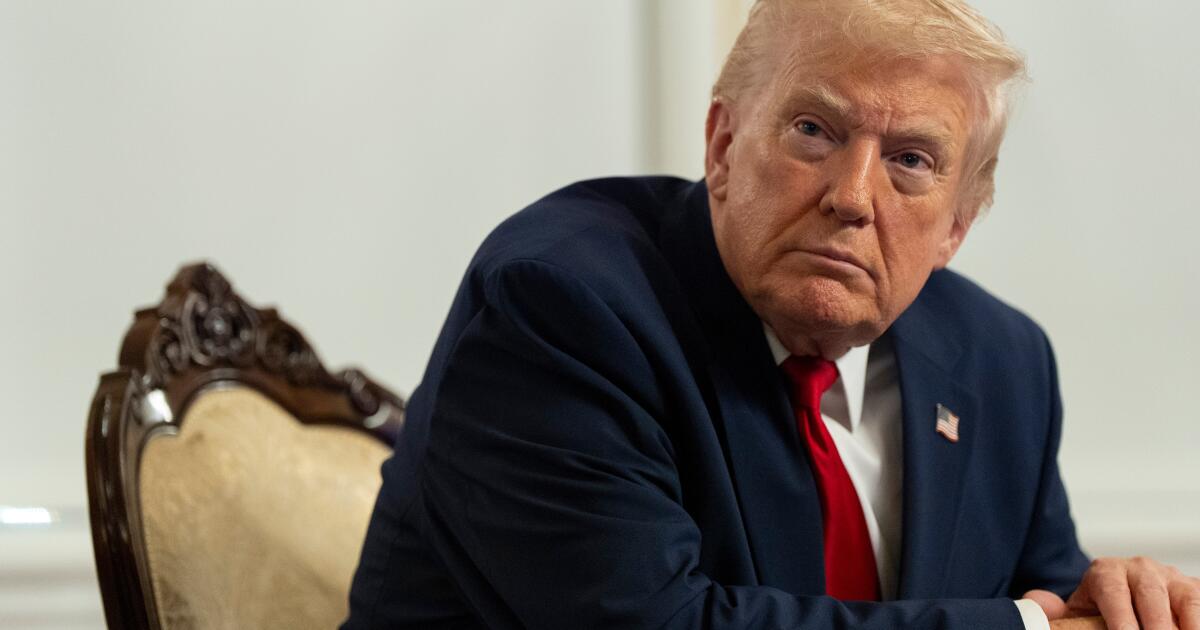
WEST PALM BEACH, Fla. — President Trump says he wants to “permanently pause migration” from poorer nations and is promising to seek to expel millions of immigrants from the United States by revoking their legal status.
Trump is blaming immigrants for problems from crime to housing shortages as part of what he calls “social dysfunction” in America and demanding “REVERSE MIGRATION.”
His most severe social media post against immigration since returning to the Oval Office in January came after the shooting Wednesday of two National Guard members who were patrolling the streets of the nation’s capital under his orders. One died and the other is in critical condition.
A 29-year-old Afghan national who worked with the CIA during the Afghanistan war is facing charges. The suspect came to the U.S. as part of a program after U.S. withdrawal from Afghanistan to resettle those who had helped American troops.
Trump’s threat to stop immigration would be a serious blow to a nation that has long defined itself as welcoming immigrants.
Since Wednesday’s shooting near the White House, administration officials have pledged to reexamine millions of legal immigrants, building on a 10-month campaign to reduce the immigrant population. In a lengthy social media post late Thursday, the Republican president asserted that millions of people born outside the U.S. and now living in the country bore a large share of the blame for America’s societal ills.
“Only REVERSE MIGRATION can fully cure this situation,” Trump posted on his Truth Social platform. “Other than that, HAPPY THANKSGIVING TO ALL, except those that hate, steal, murder, and destroy everything that America stands for — You won’t be here for long!”
Trump was elected on a promise to crack down on illegal migration, and raids and deportations undertaken by his administration have disrupted communities across the country. Construction sites and schools have been frequent targets. The prospect of more deportations could be economically dangerous as America’s foreign-born workers account for nearly 31 million jobs, according to the Bureau of Labor Statistics.
The president said on Truth Social that “most” foreign-born U.S. residents “are on welfare, from failed nations, or from prisons, mental institutions, gangs, or drug cartels” as he blamed them for crime across the country that is predominantly committed by U.S. citizens.
There are roughly 50 million foreign-born residents in the U.S., and multiple studies have found that immigrants are generally less likely to commit crimes than are people who were born in the country.
The perception that immigration breeds crime “continues to falter under the weight of the evidence,” according to a review of academic literature last year in the Annual Review of Criminology.
“With few exceptions, studies conducted at both the aggregate and individual levels demonstrate that high concentrations of immigrants are not associated with increased levels of crime and delinquency across neighborhoods and cities in the United States,” it said.
A study by economists initially released in 2023 found immigrants are 60% less likely to be incarcerated than people born in the U.S. Immigrants have been imprisoned at lower rates for 150 years, the study found, adding to past research undermining Trump’s claims.
Trump seemed to have little interest in a policy debate in his post, which the White House, on its own rapid response social media account, called “one of the most important messages ever released by President Trump.”
He pledged to “terminate” millions of admissions to the country made during the term of his predecessor, Democrat Joe Biden. He also wants to end federal benefits and subsidies for those who are not U.S. citizens, denaturalize people “who undermine domestic tranquility” and deport foreign nationals deemed “non-compatible with Western Civilization.”
Trump claimed immigrants from Somalia were “completely taking over the once great State of Minnesota” as he used a dated slur for intellectually disabled people to demean that state’s governor, Tim Walz, the Democratic vice presidential nominee last year.
On Wednesday night, Trump called for the reinvestigation of all Afghan refugees who had entered under the Biden administration. On Thursday, the director of U.S. Citizenship and Immigration Services, Joseph Edlow, said the agency would take additional steps to screen people from 19 “high-risk” countries “to the maximum degree possible.”
Edlow did not name the countries. But in June, the administration banned travel to the U.S. by citizens of 12 countries and restricted access from seven others, citing national security concerns.
The shooting of the two National Guard members appeared to trigger Trump’s anger over immigrants, yet he did not specifically refer to the event in his social media post.
The suspect, Rahmanullah Lakanwal, is accused of driving across the country to the District of Columbia and shooting two West Virginia National Guard members, Army Spc. Sarah Beckstrom, 20, and Air Force Staff Sgt. Andrew Wolfe, 24. Beckstrom died Thursday; Wolfe is in critical condition.
Lakanwal, currently in custody, was also shot and had wounds that were not believed to be life-threatening.
Trump was asked by a reporter Thursday if he blamed the shootings on all Afghans who came to the U.S.
“No, but we’ve had a lot of problems with Afghans,” the president said.
Boak writes for the Associated Press.