Some high schools still utilize JV teams to develop players
There are high school basketball players, and even parents, who cringe when a coach says, “You’re playing with the junior varsity.”
Yes, times have changed. The days of varsity programs using JV teams to build up their programs are largely gone. Freshmen with potential end up playing varsity. Others are put on frosh-sophomore teams trying to develop chemistry with other freshmen. The attitude of players and parents alike is: Playing JV isn’t cool.
But those looking to be developed and perhaps get better when their inevitable growth spurt kicks in are missing out on what JV basketball is really for — player development.
It seems to have worked out for three varsity standouts this season who started out on their school’s JV team: Drew Anderson of Santa Margarita, Pierce Thompson of Harvard-Westlake and Isaiah Williamson of Los Alamitos. Fortunately, a little patience by everyone involved gave them the time and opportunity to wait for their bodies to mature and the rest is history. All three will one day be playing college basketball.
Anderson was 6-foot-3 as a freshman. He had a growth spurt, and this season is listed at 6-9. He and his family embraced the idea of learning to play on JV. Now he’s committed to Oregon State and is starring on the No. 4-ranked team in the Southland as a senior.
“My parents were athletes in college,” Anderson said. “They knew with time I’d get better.”
Thompson was a JV guard his freshman year and unlikely to contribute on varsity with many guards ahead of him in the program. Under less pressure, he was a standout. This season as a junior, his defensive prowess and three-point shooting make him the next top Harvard-Westlake guard following in the footsteps of Trent Perry.
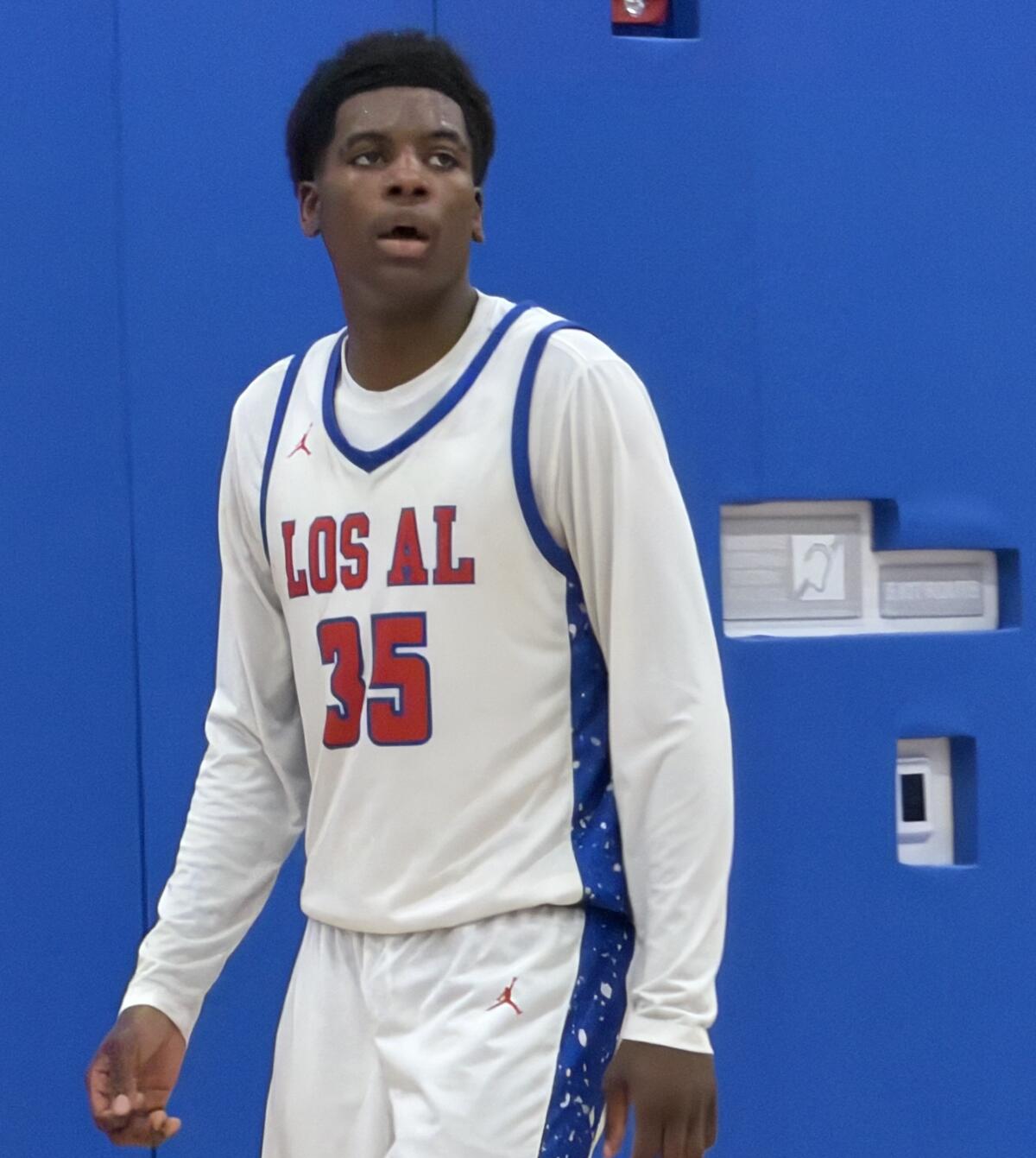
Williamson had the family background to play on varsity as a freshman. His brother, Issac, was a star guard for state champion Eastvale Roosevelt. But Los Alamitos was loaded with seniors on varsity, so the decision was made to be patient and have him play on the JV team. This season as a sophomore, he has blossomed into an outstanding prospect from the class of 2028. He’s a 6-4 left-hander who can score from a variety of spots on the court.

Sophomore Isaiah Williamson of Los Alamitos was a JV player last season.
(Eric Sondheimer / Los Angeles Times)
One program that still believes in using the JV team to develop its players is Harvard-Westlake and coach David Rebibo. He has five exceptional freshmen on a JV team this season that is 24-0. They have embraced their journey of preparing to play varsity next season.

Freshman Dekoda Ray has led Harvard-Westlake’s unbeaten JV basketball team.
(Eric Sondheimer / Los Angeles Times)
Dekoda Ray, a 6-3 freshman guard, could play varsity for many programs, but he and his parents huddled and decided a year on JV would be good for his development.
“We felt we have to trust the process,” Ray said. “Don’t play your game like you’re playing JV’s. Play like you’re playing for something greater.”
Rebibo said “transparency” is the only way to communicate with parents and players.
“We want kids who want to be on varsity,” he said. “But there’s an understanding we have to do what’s in the best interest of their development and playing behind four senior guards doesn’t mean you’re going to be able to play. We’re very honest.”
The five freshmen on JV will be heard from in the coming years: Ray, 6-7 Nairobi Ebi, 6-5 Jackson Thomas, 6-1 Max Paquin and 6-5 Nathan Kashper. Most will move up to varsity for the playoffs and they practiced with the varsity in the fall.
Another program that believes in JV teams as a training ground is St. John Bosco and coach Matt Dunn.
“Proudly,” Dunn said.
He lets everyone know that 11 St. John Bosco players who have gone on to play college basketball started out on JV.
The JV team is an environment for learning. If you make a mistake, a coach isn’t going to immediately put you on the bench like they do on varsity. Also not every 14-year-old is ready socially to play with 19-year-olds on varsity.
Anderson reminds everyone in the end, it doesn’t matter what team you start out on as a freshman.
“The work you put in will always win,” he said.