phone

Arab News | Officials turn to mobile phone data to track Ebola spread in Congo

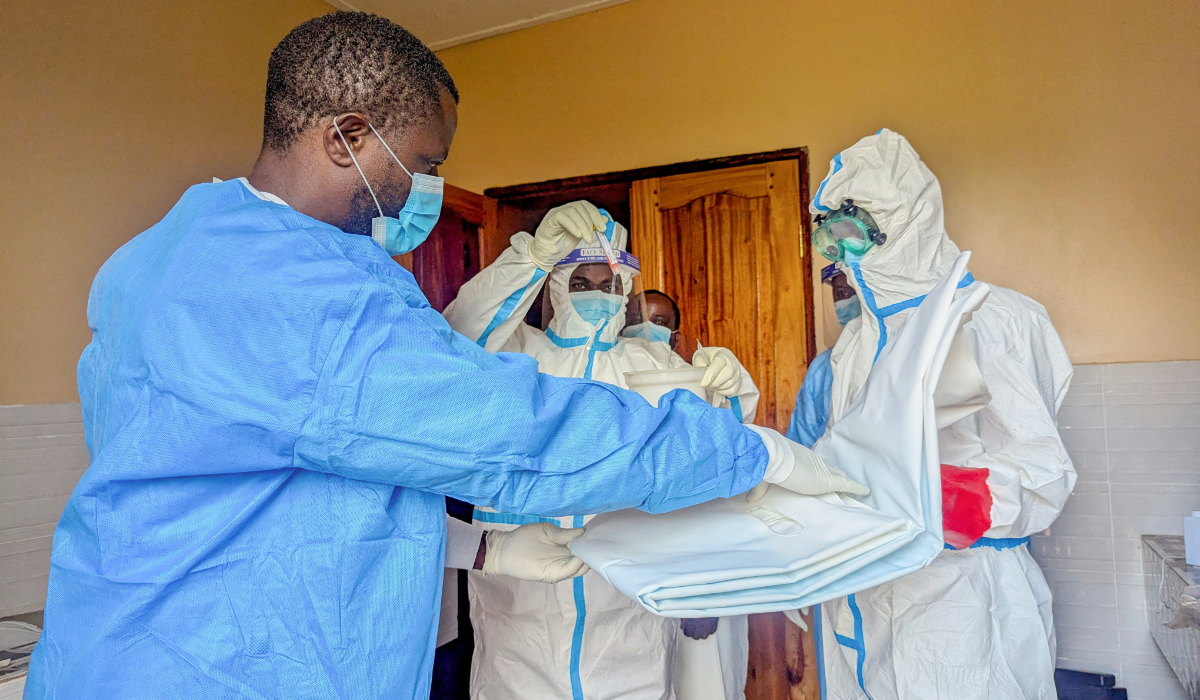
DAKAR: Health officials battling the Ebola outbreak in eastern Democratic Republic of Congo are using anonymised mobile-phone ​data to map population movements and identify areas where the virus could spread next, according to the World Health Organization and researchers working with it. 

The approach, which has not been used before in an Ebola response, comes as authorities struggle to contain what the WHO has described as the fastest-growing Ebola outbreak on record. Cases have been confirmed in six provinces, with more than 6,250 people infected and 3,039 killed since the outbreak was declared on May 15, according to the latest government data. 

The outbreak, Congo’s 17th, is caused by the Bundibugyo species of Ebola, for which there are no approved vaccines or treatments. 

As the virus spreads, health officials are looking for ways to anticipate where cases could emerge next and direct limited surveillance and response resources. 

“Population movements have always been a factor in outbreaks, but they are particularly important in the ‌current epidemic,” said Olivier ‌Le Polain, head of epidemiology and analytics for response at the WHO Health Emergencies Programme. 

Traditional ​risk ‌assessments focus ⁠on outbreak ​hotspots ⁠and assume the virus is most likely to spread to surrounding areas.Analizing mobility data allows responders to identify risks in places that may be geographically distant but closely connectedthrough travel patterns. 

“It gives us a more nuanced understanding of risk,” Le Polainsaid, citing the example of Ituri province, in the northeast, where the virus is believed to have started circulating. 

“There are very significant population movements in Ituri linked to mining activities and trade. Understanding those movements is crucial to understanding how the outbreak spreads.” 

The analysis is produced by Swedish non-profit Flowminder, using anonymised records generated when mobile phone users connect to telecommunications networks. As people move around the country, their phones connect to different antennas on the network, generating records that show where those connections took place. Researchers use ⁠those records to estimate how people travel between different areas. 

The data is provided free of charge by ‌Vodacom, Congo’s largest operator. Vodacom did not respond to a request for comment. 

Flowminder says it ‌receives aggregated and anonymised records and does not have access to information identifying individual subscribers. 

“We seek ​to provide estimates of how people move, which in turn is ‌a predictor of how infectious people move,” Flowminderfounder Linus Bengtsson said. 

Flowminder’s first analysis, published in early June, focused on the three ‌areas where the outbreak is believed to have started: Bunia, Mongbwalu and Rwampara. Researchers tracked where people who had spent time in those areas between April 3 and April 23 later traveled. 

The largest flows were to nearby areas in Ituri province and North Kivu province. By the end of June, all 10 of the destinations receiving the largest flows of travelers from the original outbreak areas had reported confirmed Ebola cases. 


Source link

Eric Swalwell briefly detained as feds seize his phone at S.F. airport, source says

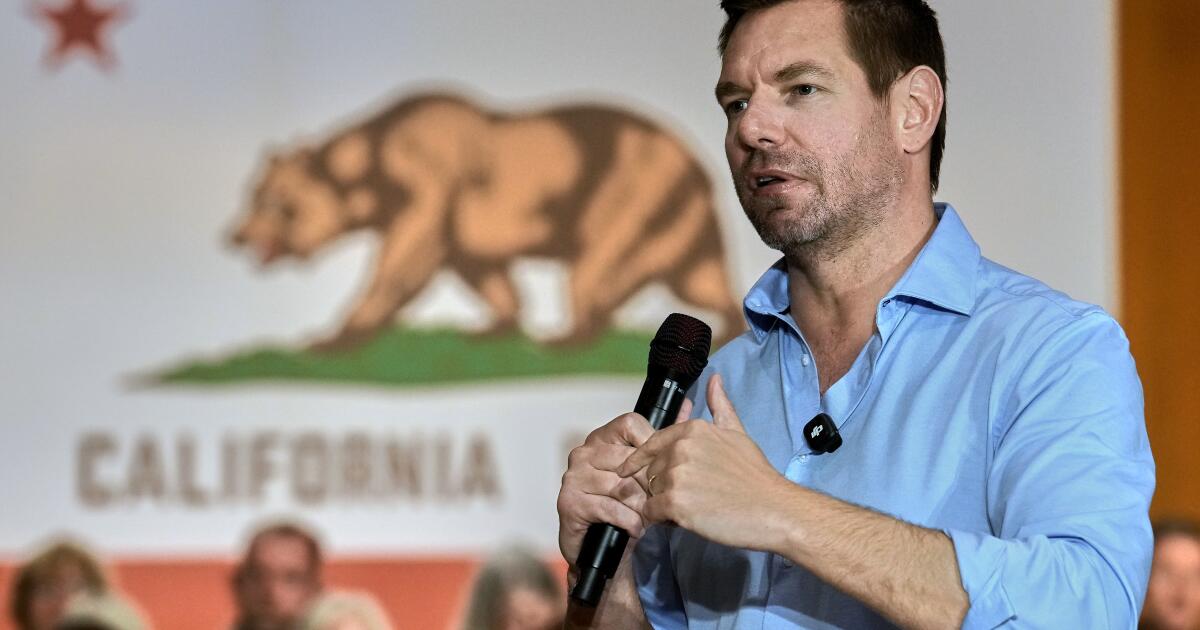
A federal investigation into former Rep. Eric Swalwell appeared to gain steam this week after agents seized his electronic devices and raided his Washington home over the weekend, even briefly holding the former lawmaker at San Francisco International Airport, a person familiar with the inquiry told The Times.

Swalwell dropped out of the California governor’s race and resigned from Congress in April after allegations that he sexually assaulted a former staffer and acted inappropriately with other young women, which he denied at the time. Before dropping out of the race, polls indicated that Swalwell was the front-runner.

The source said Swalwell was held on Saturday at SFO and released the same day he was detained for search purposes. Federal prosecutors are using civil rights law to pursue a probe of his conduct as a member of Congress. Authorities in New York and Los Angeles County are conducting separate investigations.

His home was searched on Sunday by federal agents, the source added, based on a search warrant in connection with a civil rights investigation concerning the sexual assault allegations.

Swalwell has denied any wrongdoing, but the accusations upended the California governor’s race and shook Capitol Hill, where both parties reckoned with a culture of secrecy and silence around sexual impropriety.

Another accuser, Lonna Drewes, said at a news conference that she was drugged and raped by the one-time politician in 2018 in Beverly Hills. Drewes said she met Swalwell three times as she was growing her fashion software company and toying with the idea of a political career.

On the third occasion, Drewes said she believes that Swalwell drugged her glass of wine. She said they were supposed to go to a political event and stopped by his hotel room to retrieve some paperwork.

She said she found herself incapacitated despite having had only one drink.

“He raped me and he choked me and while he was choking me I lost consciousness and I thought I died,” she said. “I did not consent to any sexual activity.”

Sara Azari, an attorney for Swalwell, denied Drewes’ characterization of the incident at the time. “Two adults consenting, which is our position, is not against the law,” she said.

The former staffer for Swalwell told the San Francisco Chronicle that Swalwell began sending her nude pictures on Snapchat and messages after she was hired by his office in 2019. She was 21 at the time.

In September of that year, she said she had drinks with the congressman, blacked out and woke up naked in Swalwell’s hotel bed, according to the Chronicle.

In 2024, when she no longer worked for Swalwell, she said she attended a charity event honoring the congressman and met him for drinks afterward. She was intoxicated but recalled Swalwell forcing himself upon her, and pushing him away and saying, “No,” according to the Chronicle.

Azari said in April that he denied all allegations of sexual misconduct and assault and would pursue “every legal remedy” against those making the claims.

“These accusations are false, fabricated and deeply offensive — a calculated and transparent political hit job designed to destroy the reputation of a man who has spent twenty years in public service,” Azari said.

Winton reported from Los Angeles, Smith from Sacramento and Wilner from Washington.

Source link