Pennsylvania

Josh Shapiro running for 2nd term as Pennsylvania governor, trailed by talk of 2028 White House bid

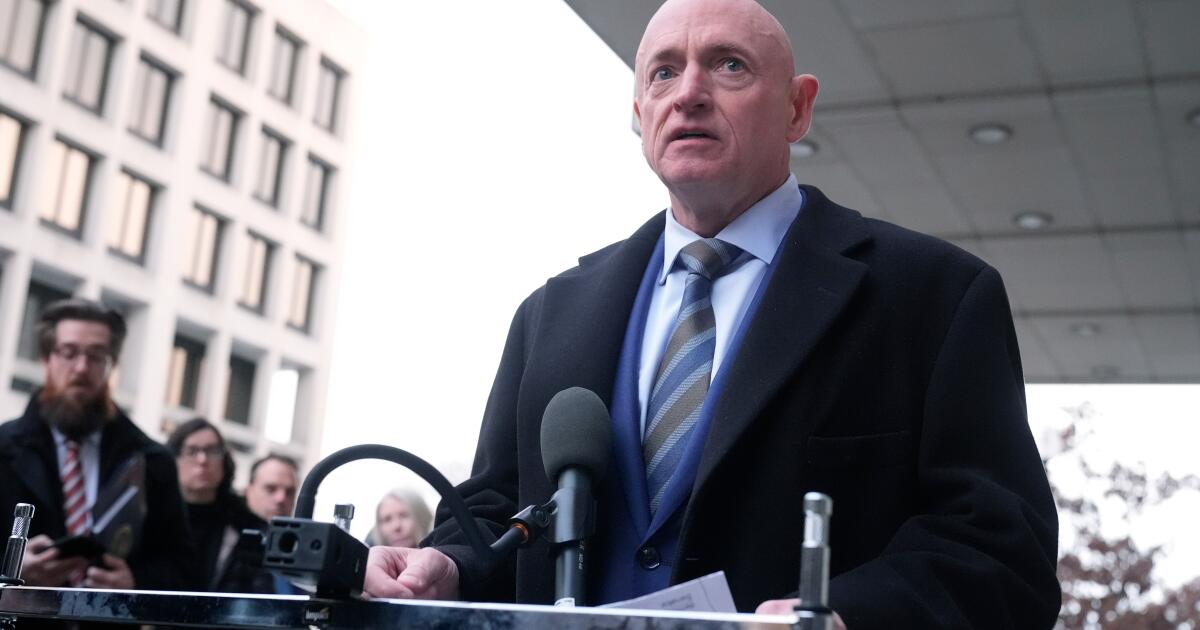
Pennsylvania Gov. Josh Shapiro is running for a second term in the pivotal battleground state after a first term that put him on the Democratic Party’s radar as a potential presidential contender in 2028.

He made the formal announcement Thursday at an event at a carpenters’ union hall in Pittsburgh and, later, at a similar event in Philadelphia. Shapiro’s announcement demonstrated a unified party behind him — including introductions by the state party chair, labor leaders and top local Democratic officials — as he ticked off his accomplishments during a nearly 30-minute speech.

Shapiro warned that his opponents promise “darkness and division and extremism,” and — without mentioning President Trump by name — he slammed the “chaos and toxicity” emanating from Washington, D.C., that he said threatened livelihoods, rights and freedoms.

“Every step of the way, I’ve stood up for my fellow Pennsylvanians, sometimes in a court of law and other times simply refusing to back down, refusing to cast certain Pennsylvanians aside and always by speaking truth to power,” Shapiro said.

He added, “I will not let anyone mess with Pennsylvania and I will always have your backs.”

Although Shapiro hasn’t disclosed any ambitions for higher office, his reelection effort will be closely watched as another test of whether he’s White House material.

Ever since he won the governor’s office in a near-landslide victory in 2022, Shapiro has been mentioned alongside Democratic contemporaries like California Gov. Gavin Newsom, Illinois Gov. JB Pritzker, Maryland Gov. Wes Moore and others as someone who could lead a national ticket.

Shapiro, 52, has already made rounds outside Pennsylvania. Last year, he campaigned for Democrats running for governor in New Jersey and Virginia, and he’s a frequent guest on Sunday talk shows that can shape the country’s political conversation.

He was also considered as a potential running mate for Kamala Harris in 2024. She chose Minnesota Gov. Tim Walz instead.

A pivotal first term as governor

Shapiro’s first term repeatedly put him in the spotlight.

He was governor when Pennsylvania was the site of the first attempted assassination of Trump; the capture of Luigi Mangione in the killing of United Healthcare Chief Executive Brian Thompson; and the murder of three police officers in the state’s deadliest day for law enforcement since 2009.

Last year, an arsonist tried to kill Shapiro by setting the governor’s official residence on fire in the middle of the night. Shapiro had to flee with his wife, children and members of his extended family, and the attack made him a sought-out voice on the nation’s recent spate of political violence.

As Shapiro settled into the governor’s office, he shed his buttoned-down public demeanor and became more plain-spoken.

He pushed to quickly reopen a collapsed section of Interstate 95 in Philadelphia, debuting his new and profane governing slogan — “get s— done” — at a ceremony for the completed project.

He crossed the partisan divide over school choice to support a Republican-backed voucher program, causing friction with Democratic lawmakers and allies in the state.

Shapiro regularly plays up the need for bipartisanship in a state with a politically divided Legislature, and positions himself as a moderate on energy issues in a state that produces the most natural gas after Texas.

He’s rubbed elbows with corporate executives who are interested in Pennsylvania as a data center destination and thrust Pennsylvania into competition for billions of dollars being spent on energy, manufacturing and artificial intelligence.

A repeat winner in competitive territory

Shapiro has enjoyed robust public approval ratings and carries a reputation as a disciplined messenger and powerhouse fundraiser. For 2026, Pennsylvania’s Republican Party endorsed Stacy Garrity, the twice-elected state treasurer, to challenge Shapiro.

Garrity has campaigned around Pennsylvania and spoken at numerous Trump rallies in the battleground state, but she is untested as a fundraiser and will have to contend with her relatively low profile as compared with Shapiro.

Shapiro, meanwhile, keeps a busy public schedule and has gone out of his way to appear at high-profile, nonpolitical events like football games, a NASCAR race and onstage at a Roots concert in Philadelphia.

He is a regular on TV political shows, podcasts and local sports radio shows, and became a leading pro-Israel voice among Democrats and Jewish politicians amid the Israel-Hamas war, confronting divisions within the Democratic Party over the war.

He has tempered it with calls for more aid for Gaza’s residents and criticism of Prime Minister Benjamin Netanyahu’s handling of the war, but some activists argued against him being the party’s nominee for vice president in 2024.

Harris, in her recent book, wrote that she passed on Shapiro after determining that he wouldn’t be a good fit for the role.

Shapiro, she wrote, “mused that he would want to be in the room for every decision,” and she “had a nagging concern that he would be unable to settle for a role as number two and that it would wear on our partnership.” Shapiro disputed the characterization.

An audition on the 2026 campaign trail

In a September appearance on NBC News’ “Meet the Press,” the host, Kristen Welker, asked him whether he’d commit to serving a full second term as governor and whether he’d rule out running for president in 2028.

“I’m focused on doing my work here,” he said, sidestepping the questions.

His supposed White House aspirations — which he’s never actually admitted to in public — are also mentioned frequently by Garrity.

“We need somebody that is more interested in Pennsylvania and not on Pennsylvania Avenue,” Garrity said recently on a radio show in Philadelphia. On Thursday, the Republican Governors Assocn. accused Shapiro of being “more focused on his political ambitions” than leading Pennsylvania.

For his part, Shapiro criticizes Garrity as too eager to get Trump’s endorsement to be an effective advocate for Pennsylvania.

In any case, the campaign trail could afford Shapiro an opportunity to audition for a White House run.

For one thing, Shapiro has been unafraid to criticize Trump, even in a swing state won by Trump in 2024. As governor, Shapiro has joined or filed more than a dozen lawsuits against Trump’s administration, primarily for holding up funding to states.

He has lambasted Trump’s tariffs as “reckless” and “dangerous,” Trump’s threats to revoke TV broadcast licenses as an “attempt to stifle dissent” and Trump’s equivocation on political violence as failing the “leadership test” and “making everyone less safe.”

Many of Shapiro’s would-be competitors in a Democratic primary won’t have to run for office before then.

Newsom is term-limited, for instance. Others — like ex-Transportation Secretary Pete Buttigieg — aren’t in public office. A couple of other governors in the 2028 conversation — Moore and Pritzker — are running for reelection this year.

Levy writes for the Associated Press.

Source link

Trump’s economic claims collide with reality in a Pennsylvania city critical to the midterms

When Idalia Bisbal moved to this Pennsylvania city synonymous with America’s working class, she hoped for a cheaper, easier life than the one she was leaving behind in her hometown of New York City.

About three years later, she is deeply disappointed.

“It’s worse than ever,” said the 67-year-old retiree, who relies on Social Security, when asked about the economy. “The prices are high. Everything is going up. You can’t afford food because you can’t afford rent. Utilities are too high. Gas is too expensive. Everything is too expensive.”

Bisbal was sipping an afternoon coffee at the Hamilton Family Restaurant not long after Vice President JD Vance rallied Republicans in a nearby suburb. In the Trump administration’s second high-profile trip to Pennsylvania in a week, Vance acknowledged the affordability crisis, blamed it on the Biden administration and insisted better times were ahead. He later served food to men experiencing homelessness in Allentown.

The visit, on top of several recent speeches from President Trump, reflects an increasingly urgent White House effort to respond to the economic anxiety voiced by people across the country. Those worries are a vulnerability for Republicans in competitive congressional districts like the one that includes Allentown, which could decide control of the U.S. House in next year’s midterms.

But in confronting the challenge, there are risks of appearing out of touch.

Only 31% of U.S. adults now approve of how Trump is handling the economy, down from 40% in March, according to a poll from the Associated Press-NORC Center for Public Affairs Research. Yet Trump has called affordability concerns a “hoax” and gave the economy under his administration a grade of “A+++++.” Vance reiterated that assessment during his rally, prompting Bisbal to scoff.

“In his world,” Bisbal, a self-described “straight-up Democrat,” responded. “In the rich man’s world. In our world, trust me, it’s not an ‘A.’ To me, it’s an ‘F,’ ‘F,’ ‘F,’ ‘F,’ ‘F,’ ‘F.’”

Agreement that prices are too high

With a population of roughly 125,000 people, Allentown anchors the Lehigh Valley, which is Pennsylvania’s third-largest metro area. In a dozen interviews last week with local officials, business leaders and residents of both parties, there was agreement on one thing: Prices are too high. Some pointed to gas prices while others said they felt the shock more at the grocery store or in their cost of healthcare or housing.

Few shared Trump’s unbridled boosterism about the economy.

Tony Iannelli, the president and CEO of the Greater Lehigh Valley Chamber of Commerce, called Trump’s grade a “stretch,” saying that “we have a strong economy but I think it’s not yet gone to the next stage of what I would call robust.”

Tom Groves, who started a health and benefits consulting firm more than two decades ago, said the economy was at a “B+,” as he blamed the Affordable Care Act, widely known as Obamacare, for contributing to higher health costs, and he noted stock and labor market volatility.

Joe Vichot, the chairman of the Lehigh County Republican Committee, referred to Trump’s grade as a “colloquialism.”

Far removed from Washington’s political theater, there was little consensus on who was responsible for the high prices or what should be done about it. There was, however, an acute sense of exhaustion at the seemingly endless political combat.

Pat Gallagher was finishing lunch a few booths down from Bisbal as she recalled meeting her late husband when they both worked at Bethlehem Steel, the manufacturing giant that closed in 2003.

Now retired, Gallagher too relies on Social Security benefits, and she lives with her daughter, which helps keep costs down. She said she noticed the rising price of groceries and was becoming exasperated with the political climate.

“I get so frustrated with hearing about the politics,” she said.

A front-row seat to politics

That feeling is understandable in a place that often gets a front-row seat to the national debate, whether it wants the view or not. Singer Billy Joel’s 1982 song “Allentown” helped elevate the city into the national consciousness, articulating simultaneous feelings of disillusionment and hope as factories closed.

In the decades since, Pennsylvania has become a must-win state in presidential politics and the backdrop for innumerable visits from candidates and the media. Trump and his Democratic rival in 2024, Kamala Harris, made several campaign swings through Allentown, with the then-vice president visiting the city on the eve of the election.

“Every race here, all the time,” Allentown’s mayor, Democrat Matt Tuerk, recalled of the frenzied race last year.

The pace of those visits — and the attention they garnered — has not faded from many minds. Some businesses and residents declined to talk last week when approached with questions about the economy or politics, recalling blowback from speaking in the past.

But as attention shifts to next year’s midterms, Allentown cannot escape its place as a political battleground.

Trump’s win last year helped lift other Republicans, such U.S. Rep. Ryan Mackenzie, to victory. Mackenzie, who unseated a three-term Democrat, is now one of the most vulnerable Republicans in Congress. To win again, he must turn out the Republicans who voted in 2024 — many of whom were likely more energized by Trump’s candidacy — while appealing to independents.

Mackenzie’s balancing act was on display when he spoke to the party faithful Tuesday, bemoaning the “failures of Bidenomics” before Vance took the stage at the rally. A day later, the congressman was back in Washington, where he joined three other House Republicans to rebel against the party’s leadership and force a vote on extending Obamacare subsidies that expire at the end of the year.

Vichot, the local GOP chairman, called Mackenzie an “underdog” in his reelection bid and said the healthcare move was a signal to voters that he is “compassionate for the people who need those services.”

A swing to Trump in 2024

Lehigh County, home to Allentown and the most populous county in the congressional district, swung toward Trump last year. Harris’ nearly 2.7-percentage-point win in the county was the tightest margin for a Democratic presidential candidate since 2004. But Democrats are feeling confident after a strong performance in this fall’s elections, when they handily won a race for county executive.

Retaking the congressional seat is now a top priority for Democrats. Gov. Josh Shapiro, a Democrat who faces reelection next year and is a potential presidential contender in 2028, endorsed firefighter union head Bob Brooks last week in the May primary.

Democrats are just a few seats shy of regaining the House majority, and the first midterm after a presidential election historically favors the party that’s out of power. If the focus remains on the economy, Democrats are happy.

The Uline supplies distribution factory where Vance spoke, owned by a family that has made large donations to GOP causes, is a few miles from the Mack Trucks facility where staff was cut by about 200 employees this year. The company said that decision was driven in part by tariffs imposed by Trump. Shapiro eagerly pointed that out in responding to Vance’s visit.

But the image of Allentown as a purely manufacturing town is outdated. The downtown core is dotted by row homes, trendy hotels and a modern arena that is home to the Lehigh Valley Phantoms hockey team and hosts concerts by major artists. In recent years, Latinos have become a majority of the city’s population, driven by gains in the Puerto Rican, Mexican and Dominican communities.

“This is a place of rapid change,” said Tuerk, the city’s first Latino mayor. “It’s constantly changing ,and I think over the next three years until that next presidential election, we’re going to see a lot more change. It’s going to be an interesting ride.”

Sloan writes for the Associated Press.

Source link