peak

Hiking on the roof of North Africa: a trek to Morocco’s tallest peak | Morocco holidays

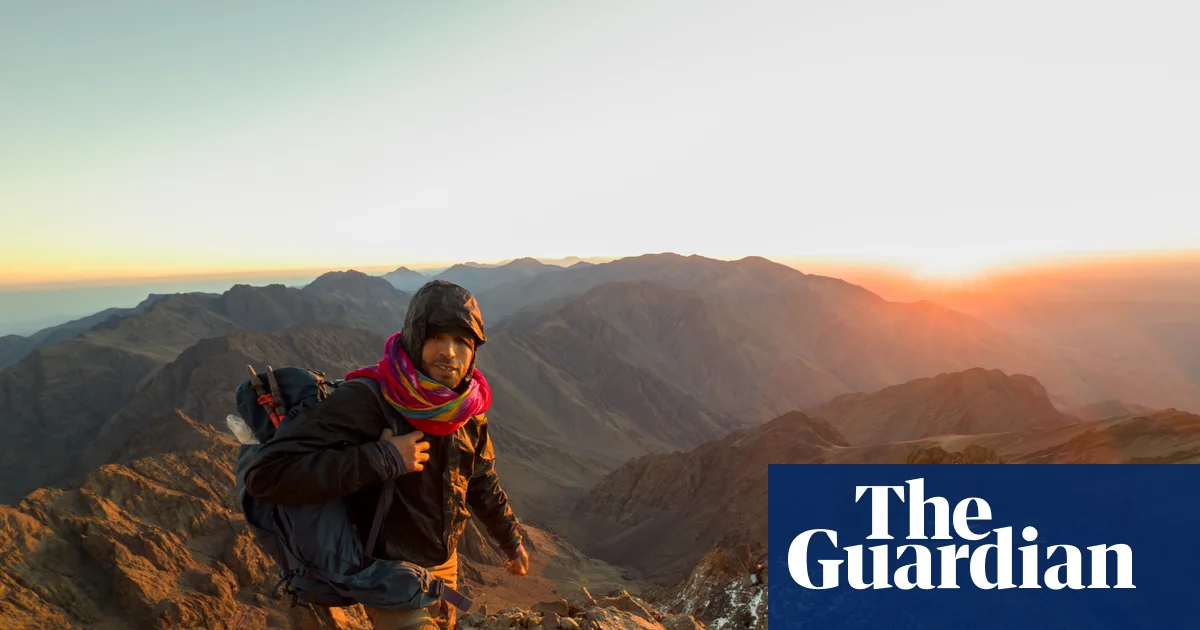
Coming up the footpath from Imlil, Hussein and I step aside to let a laden mule go past and I look back. On the wooded lower slopes of the valley are clusters of tall houses, some plumed with wood smoke. There appears to be a lot of building work going on, some of it to repair the damage caused by the 2023 earthquake. The sound of a concrete mixer comes cutting through the cool mountain air mixed with birdsong and human voices. Turning back to face south, I can see the Atlas mountains, austere and aloof, a few snow patches on the upper slopes. That’s where we are going, to the top of Toubkal at 4,167 metres, the highest peak in North Africa.

Hussein has been a guide in this beautiful Moroccan valley all his adult life. “Most people here work in tourism now,” he says, waving a greeting to a muleteer who is passing us. The man is clutching the tail of his animal to steady himself up the steep track. “Twenty years ago everyone grew walnuts and subsistence food,” Hussein says. “Now we’ve still got walnuts, but we’ve also planted apple trees as a cash crop. It leaves time for the tourist work.”

Is all the change good? He nods, confidently.

Not everyone likes change, of course, and it’s possible that a country such as Morocco, where half the population is under 30, has an advantage in this respect. There just isn’t so much dewy-eyed, middle-aged, nostalgia for the past.

Kasbah du Toubkal is a 15-minute walk from the nearest road

We move up the mountain, passing the little holy shrine of Sidi Chamharouch where the cafes sell freshly squeezed orange juice and the tumbling river is almost pristine, but not quite. I take off my boots and wade into the cold water to grab some discarded plastic bottles. Hussein and two other guides jump in to help. “City people,” they complain.

“You might think that in a holy place, they would try to be clean,” I observe, which makes one man laugh.

He says: “My grandfather told me that the shrine used to be an animal shelter and they built the dome over a dead donkey.”

Morocco always surprises me with its bracing honesty, never afraid to make a joke about anything. Even the haggling in the markets has a gritty element of truthfulness: a face-to-face negotiation that arrives at a price agreeable to both parties. The previous evening, down in Imlil market, I had bought a bag of amlou, a mix of almonds, honey and argan oil – Moroccan trail mix. I got to taste it before buying, at the seller’s insistence: “It’s the best in all Morocco!” Then we discussed the price, settling on an extra scoop of walnuts to seal the deal. It’s not a system that would work in Tesco, but it does make shopping fun.

I had spent that first night in the Kasbah du Toubkal, a gorgeous boutique hotel that sits on a plug of rock a 15-minute walk from the nearest road. Once a citadel belonging to a notorious feudal chieftain, it had fallen into ruin, only to be spotted in the 1970s by British traveller Mike McHugo and his brother Chris. Together with local guide Hajj Maurice, they transformed the place into a celebrated haven for all things Moroccan, bringing school and university groups to experience the magic, too. Mike’s love for the place has never wavered and he’s still often found in the expansive dining lounge, chatting to staff and guests.

Kasbah du Toubkal has stunning views

Back on the mountain, Hussein and I reach the overnight hut Les Mouflons – actually a complex of buildings built to cope with the rise in tourist numbers. Toubkal, for better or worse, has become one of those Instagram peaks, attracting many visitors. Hussein, characteristically pragmatic, sees the benefits: “Lots of guides and muleteers needed.” And he has a solution for anyone who doesn’t like crowds: “Go somewhere else.”

There are, in fact, several peaks nearby that top the 4,000-metre mark. “I like Ouanoukrim,” he says. “It’s only a few metres lower than Toubkal and you hardly see anyone up there.”

For a moment, I am tempted. These alternative peaks are also accessible from Les Mouflons, but like everyone else, the thought of standing on the highest summit is irresistible for me. At 4am the next morning, we join the snail trail of head torches heading up the last thousand metres. The wind, cold and altitude sap some energy and we pass a few people slumped over their rucksacks. You need good boots, warm clothes and a reasonable level of fitness for this, but no technical climbing is involved. The summit is large, easily coping with everyone, and offers great panoramas of the Atlas range.

We take an alternative route down; Hussein wants to show me something. In a rocky col, we leave our bags and scramble up to a second mountain at 3,900 metres. Here, a surprise awaits us, an aircraft engine embedded in the peak. This strange, tragic site marks a little piece of African history. In November 1969, a Lockheed Constellation aircraft set off from Portugal for Biafra, the breakaway war-torn region of Nigeria. By that time, a terrible famine was gripping the rebel state and its struggle looked doomed, but an international airlift was delivering food and guns via São Tomé island. This particular plane smashed into the peak of Tibhirine, killing all eight people on board and leaving one engine embedded in the rock, plus a trail of destruction all down the mountain.

Back at Kasbah du Toubkal, after the long trudge down, the hammam is absolute bliss. The appearance of an ancient, traditional room, however, is deceptive. Most of the Kasbah had to be rebuilt after the earthquake. “No one here was hurt,” says Mike, “but the buildings were damaged. We took the chance to move things on a bit. The lives of the people here in the valley had been changing and it was time.”

Mules are a common sight on the mountain trails

The hotel now has a swimming pool and underfloor heating. Some things, however, remain the same: the convivial atmosphere where guests and staff chat and the energetic climb on foot from the village high street (there is still no drivable road to the door). The educational connection continues, too: it still hosts school and university fieldwork groups and, through a small levy on visitors, supports the work of improving girls’ school opportunities in remote mountain villages.

Next day, I manage to hobble down to the town. Change is very evident here. You can buy all kinds of second-hand mountain equipment, even skis. Traditions live on, however. I admire the woven rugs and buy more amlou from the trader who seems like an old friend now. Then I wander up the valley through a forest of pines and out on to a rounded peak. There are dozens of treks here, many which you can have to yourself. And sitting there, alone on a minor summit, listening to the echoes of voices from below, I have to admit a sneaking regret that I hadn’t taken Hussein up on the offer of Ouanoukrim. Next time I will.

The trip was provided by Kasbah du Toubkal lodge, which organises packages that can include trekking, painting and yoga. Its five-night supported mountain trek, including the ascent of Toubkal, is €1,188pp; doubles from €200 B&B. In Marrakech, Riad Les Yeux Bleus has doubles from €170 B&B

Source link

How Lakers star LeBron James has maintained peak performance

Slowly, LeBron James put on a pair of ice bath toe booties and dipped his left foot and then his right foot into a bucket that had been prepared for him following a Lakers game at Crypto.com Arena. His longtime personal trainer and athletic performance coach, Mike Mancias, next wrapped both of James’ knees and his back in ice.

James closed his eyes for a few seconds and leaned back in his chair as the media gathered around him for his postgame interview.

This was just another step James has taken to care for his body, a step that shows the lengths he takes in the maintenance of his 6-foot-9 frame that has helped him have an illustrious 23-year career, longer than any player before him.

“Obviously I didn’t know it would be 23 years. I didn’t know that, but I know I didn’t want to have no six- or seven-year career. I can’t become legendary in six or seven years,” James told The Times. “I always had a mission. When I knew I could play this game at a high level, like, going to Chicago and playing with MJ [Michael Jordan] and all those guys when I was a sophomore [in high school]. And then when I went up to Cleveland and played against the Cavs when I was a junior and I was like, ‘Oh … I belong. I belong.’ I knew I still had to learn and I still had to continue to get my body right, continue to learn the game and nuances.

“But I was playing against NBA guys for a long time and I was like, ‘If I get the opportunity to crack the league, if I get the opportunity to showcase what I’m able to do, the only thing that can stop me is if I don’t take care of my body. The only thing that can stop me from being the greatest or one of the greatest to ever play this game is if I do not take care of myself.’ I did take care of my body. That’s it.”

James’ dedication to self care has become legendary in the sporting world. He is known to invest moire than $1.5 million annually for a comprehensive approach to keeping his body fine-tuned.

James considers himself a biohacker: someone who uses science and technology to make their body function better and more efficiently.

He talked about using Normatec leg compression boots, hyperbaric chambers to restore oxygen, cryotherapy, red-light therapy and other cutting-edge technologies to maintain elite performances and longevity at the age of 41.

He talked about prioritizing sleep and nutrition, avoiding artificial sugars and fried foods.

When he missed the first 14 games this season because of sciatica, James cut back on drinking wine, one of his passions, in order to get his body back to full health.

“Obviously it’s gotten even more detailed as me and Mike have built a program,” James said. “It’s been 22 years of our program.”

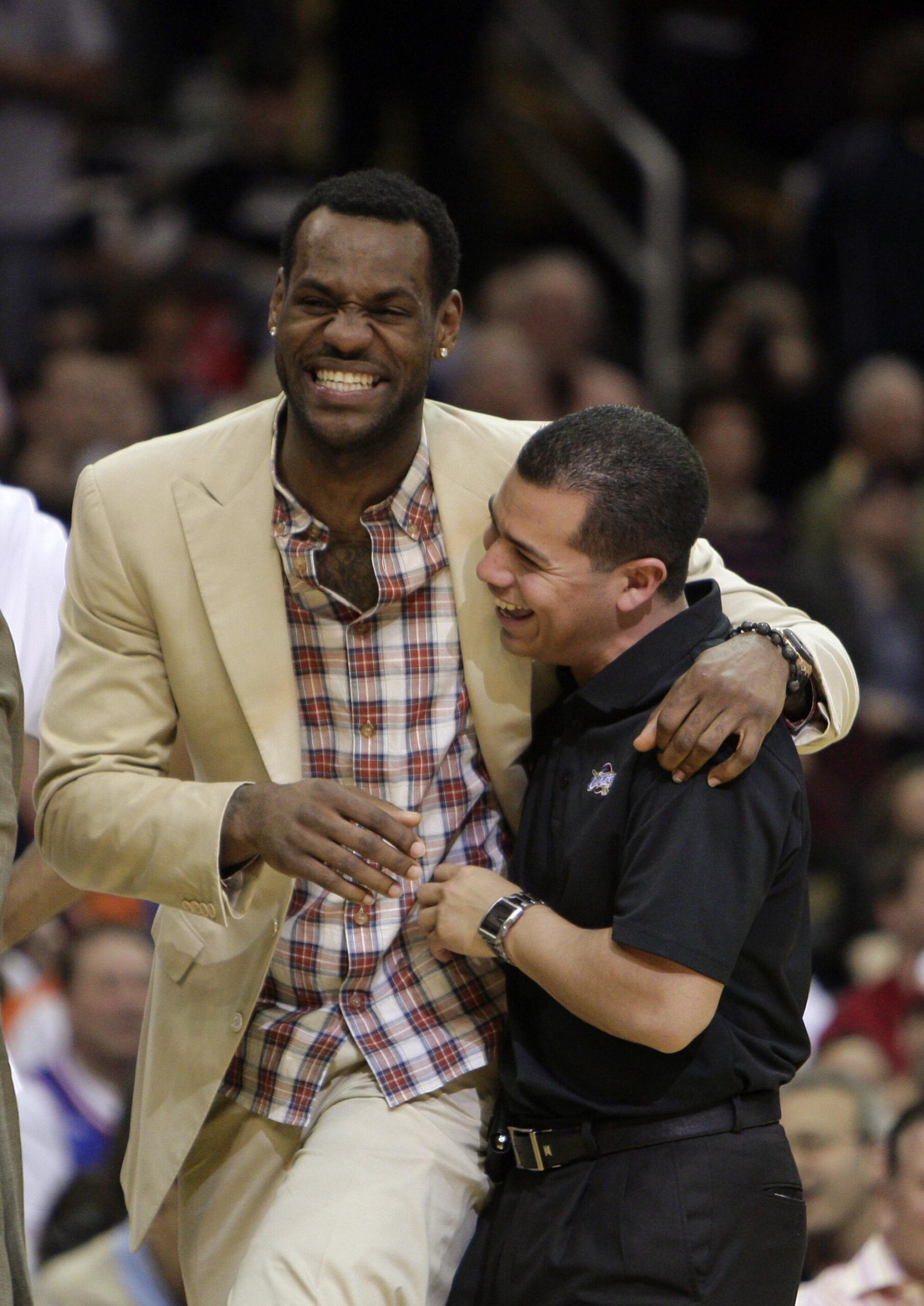
LeBron James, left, jokes with trainer Mike Mancias, right, while sitting out a game with the Cavaliers in 2010.

LeBron James jokes with trainer Mike Mancias while sitting out a game with the Cavaliers in 2010 to rest for playoffs.

(Mark Duncan / Associated Press)

It has worked for James to the highest order, as he has become the leading scorer in NBA history with 42,975 points.

Though his streak of being voted as a starter to the All-Star team was snapped at 21 years in a row, James still extended his NBA record to 22 selections when the coaches voted him in as a reserve for the tournament that will be played Sunday at Intuit Dome.

Over his career, James said, he’s received plenty of offers to try new ways to do his physical therapy. For the most part, he has said no.

“It’s all type of … that is presented to you,” James said, smiling. “[People] are always trying to get you to do s—. But once we got the connection, it wasn’t really many people that we allowed to come and be in what we do. We had a couple of guys obviously throughout the process that helped along the way. But, nah, we knew what we wanted to do.”

When James was growing up in Akron, Ohio, and it became obvious he was athletic, he said his uncle, Curt, encouraged him to start taking care of his body immediately. His mother, Gloria, advised him to listen.

“I used to stretch before I went to bed and when I woke up, when I was like 10 or 11 years old,” James said. “My uncle Curt, my mom’s younger brother, used to make me do 100 calf raises a day and he used to make me do 50 pushups and 50 situps a day.”

James shook his head and laughed recalling those moments.

Lakers forward LeBron James, right, glides past Kings forward DeMar DeRozan for a reverse dunk during a game in December.

LeBron James glides past Kings forward DeMar DeRozan for a reverse dunk during a game in December.

(Eric Thayer / Los Angeles Times)

“He told me I had to get my calves stronger if I wanted to be great,” James said, smiling. “I never knew what that meant, whatever. But yeah, my uncle used to tell me to do that, and then a good friend of mine used to always tell me to stretch before I got in the bed and after I got out of the bed when I woke up the next morning. I don’t know, man. I’ve been doing this for a long time.”

At no time during all this did James know what that advice would mean for his future.

“No, but I had people that I trusted,” James said. “I was icing after every game my rookie year. I was 18 years old. I was icing after games when I was a high school senior, a high school junior. Like, I was lifting [weights] my senior year.”

James told a story about playing in an AAU tournament with Kendrick Perkins when he was 14 and how some players were sitting in the stands eating fast food.

“They were eating McDonald’s,” James said, smiling, “and I was eating fruits.”

Jason Kidd, the Hall of Fame point guard who’s now coach of the Dallas Mavericks, was an assistant with the Lakers when James led them to the 2020 championship, and the two were teammates on the 2008 USA Olympic team that won the gold medal in Beijing.

Kidd has watched how James is averaging 22 points on 50.2% shooting, 7.1 assists and 5.8 rebounds this season and can’t help but marvel at how he continues to be a highly effective player with so many miles on his body.

“He’s had some injuries, but he’s taken care of his body, he’s always prepared himself for the marathon,” Kidd said. “But I think it’s the mental side. I think that’s the hardest part is to wake up and say, ‘Do I need to go play against a 20-year-old or a 19-year-old?’ He’s won championships, he’s been MVP, he’s been the face of the league. He’s a billion-dollar company.

“So, it’s the mental side. Understanding that he loves competition and he loves the game of basketball. So I think for him to do it at 41 is incredible.”

When the Lakers faced Kidd’s Mavericks on Thursday night, James was back in the lab early getting his body ready about six hours before tipoff.

Lakers forward LeBron James, right, talks with assistant coach Jason Kidd, right, during a 2020 playoff game against Portland

LeBron James talks with assistant coach Jason Kidd during a 2020 playoff game.

(Associated Press)

It didn’t matter that it was the last game before the weeklong All-Star break. In James’ eyes, if you take care of your body, it will take care of you.

“I woke up this morning, went straight downstairs, got a stretch, did a little activation, like a little small lil’ lift” of weights, James said after the game. “Then I iced after that. Then I used the Normatec to pump my legs for an hour. Then I took a nap in the hyperbaric chamber for an hour and a half. Then I got in the cold tub, again, before I came here. So, I started my process here when I got here at 1:15 and prepared for a 7 o’clock game. It’s just around the clock.”

And as it turned out, all his work led to yet another record for James.

His triple-double of 28 points, 12 assists and 10 rebounds made him the oldest player to accomplish the feat, pushing him past Karl Malone, who was 40 when he did it in November 2003.

And now comes another record with the All-Star Game.

Source link

Beautiful village with cosy pubs sits under a spectacular mountain peak

A small village in the Yorkshire Dales is just as picturesque as it is welcoming, especially when it comes to good food and drink.

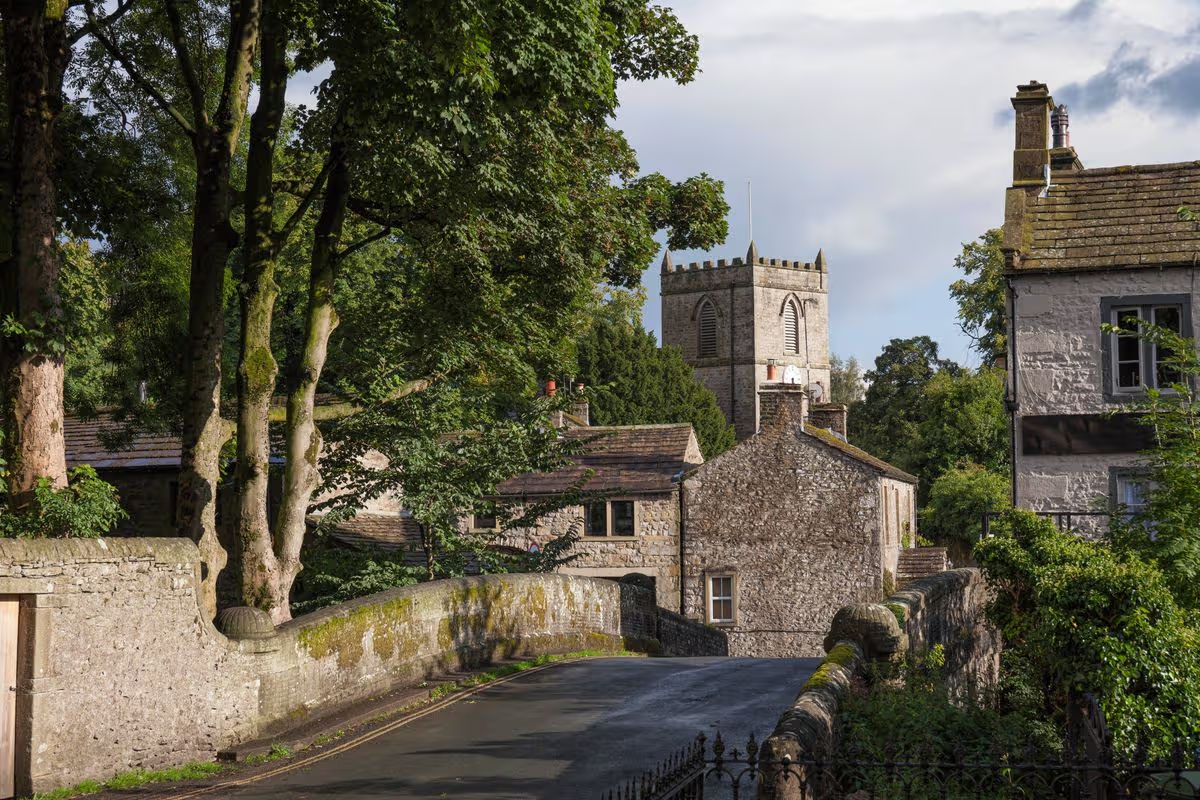
Tucked away amidst the breathtaking greenery of the Yorkshire Dales lies a charming grey stone village that serves as an excellent launching pad for countryside expeditions.

Boasting numerous campsites, Kettlewell provides the perfect pit stop for keen ramblers and explorers seeking somewhere to put their feet up and enjoy quality food and refreshments.

The village features three historic inns – a testament to its previous role as a key transport centre – which continue to operate as pubs today.

One visitor described it as having “views beyond compare” in a TripAdvisor review. They said: “Driving around the dales was an absolute delight; we had to keep stopping to take piccies of stunning scenery. Any town or village is worth visiting.”

Save on the best holiday cottages in Yorkshire

This article contains affiliate links, we will receive a commission on any sales we generate from it. Learn more
Sykes cottages

From £31 per night

Sykes Cottages

See the deals

Famous for its dramatic landscapes, historic cities, hearty food, and rich cultural heritage Yorkshire is just waiting to be explored. Sykes Cottages has a large number of properties to choose from with prices from £31 per night.

Another shared: “Beautiful village with 3 amazing pub restaurants and two tea rooms. The properties and scenery are amazing. We have stayed on 4 occasions over the years and plan on another visit soon.”

Dining Options

What secures Kettlewell’s special place in walkers’ affections is its array of dining and drinking establishments. The Blue Bell stands as the oldest, positioned at the village centre beside the water.

Complete with crackling log fires and exposed timber beams, this traditional pub offers travellers a perfectly pulled pint year-round. Their menu features classic pub fare including fish and chips and humble pies – ideal for recharging following an extensive day’s hiking.

Sitting alongside them are the village’s two other beloved watering holes, The Kings Head and Racehorses Hotel, an 18th-century establishment that has retained its character throughout the decades.

However, it’s actually the Kings Head that claims the top spot for dining on TripAdvisor, with patrons describing it as a “proper Dales pub”.

One review said: “We’ve been to this pub several times over the last few years. It’s compact and very cosy; it can get crowded with only 20 or 30 visitors, but that’s one of the things we love about it. The locals are friendly; they love this place and are very welcoming to everybody who supports it.”

The culinary delights don’t end there, as this peaceful village boasts two charming cafes as well, with the more traditional option being The Cottage Tea Room. A few streets away sits And Then – Tasting Deli, praised by guests for its “outrageously good coffee” and warm hospitality.

One customer said: “We visited a couple of times during our stay in Kettlewell and were impressed with the quality of the food and drink, and we found the service very friendly from the owner and all the staff.”

They added: “Prices were reasonable given how good everything was, and we enjoyed our visits sat in by the cosy log burner. Our takeout Wensleydale sandwiches were top-notch too!”.

Summit

Right on its doorstep lies an extensive selection of rambles through the stunning Dales, yet the most popular route from Kettlewell remains the trek to Great Whernside. This peak’s highest point looms majestically over the village and attracts keen walkers from across the nation.

It wasn’t until 1997 that public access to the summit was officially established, leading to the construction of two footpaths reaching the top. One route starts directly from Kettlewell, whilst the other follows along the summit ridge.

The challenging walk can take up to four hours, though the route is clearly marked with well-defined footpaths and signage throughout the ascent. Upon reaching the summit, you’ll find yourself at an elevation of approximately 1,800 feet.

Part of Yorkshire’s tourist attractions is the ‘Dales 30’ – a collection of 30 mountains with some exceeding 2,000 feet in height, and this happens to be amongst them. Though the climb shouldn’t be mistaken for Whernside, which forms one of Yorkshire’s three highest peaks, located on the Cumbrian border.

Source link