pardon

Trump Media-linked fraudster funded pro-Trump film in hopes of pardon, suit says

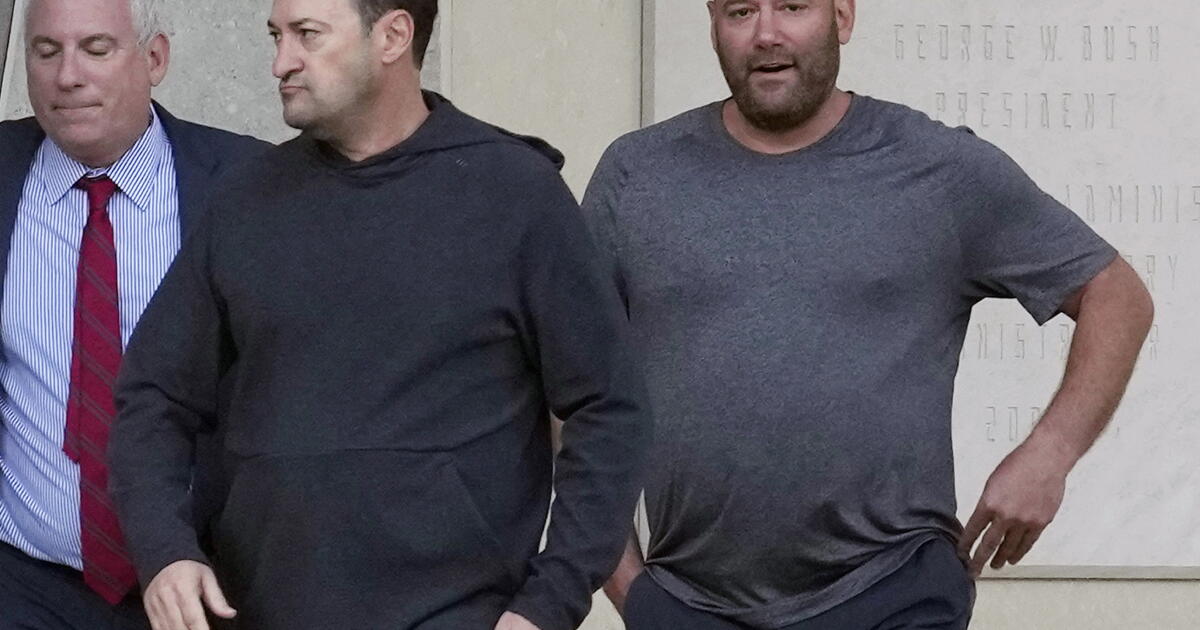
A Miami investor who pleaded guilty to making insider trades connected to the parent company of President Trump’s Truth Social platform helped fund a pro-Trump documentary film in hopes of securing a presidential pardon, according to a lawsuit by an L.A. studio that accuses him of threats and extortion.

Michael Shvartsman pleaded guilty in 2024 to insider trading associated with the Trump Media & Technology Group, which federal prosecutors said netted him $18.2 million in ill-gotten gains.

Four months later, Shvartsman helped fund the documentary “The Man You Don’t Know” in an effort to obtain a pardon, according to the lawsuit filed last month in Los Angeles. He denies the allegations.

A company controlled by Shvartsman provided a $425,000 loan in August 2024 to help fund the film, according to the suit. The film featured interviews with Trump’s sons Eric Trump and Donald Trump Jr. and painted a flattering portrait of the president.

Shvartsman attended the film’s premiere that October at Trump’s Mar-a-Lago club in Palm Beach, Fla., where he revealed, according to the lawsuit, that he had provided financing for the movie and “was hoping his participation would enable him to get a pardon.”

The event featured a who’s who of Trump-world insiders, including former New York Mayor Rudolph W. Giuliani, the late pro wrestler and media personality Hulk Hogan, Eric and Donald Trump Jr., as well as the former and soon-to-be president.

Shvartsman and his associates “arranged meetings” with “contacts and stars” associated with the movie in the hopes of achieving his goal of a pardon, the lawsuit said, though it doesn’t state specifically whom he targeted.

Shvartsman had good reason to seek their help.

Days before the event, he had been sentenced by a federal judge in New York to two years and four months in prison for insider trading connected to the announcement of a merger that would make Trump Media & Technology Group a publicly traded company.

Shvartsman, who is a Canadian citizen, also faced the prospect of deportation after his sentence.

Shvartsman said he “disputes all facts and allegations” in the lawsuit and plans to file a countersuit.

“We are not going to litigate this matter through the press,” he wrote in a message to The Times. “We intend to address the issues through the appropriate legal process, where the relevant facts and documentation can be properly presented and considered.”

Shvartsman’s efforts to mitigate his penalty weren’t limited to the documentary film. A day before his sentencing, the Aleph Institute, a Jewish criminal justice reform group, filed a letter to the federal court in New York laying out a proposed community service plan for Shvartsman to follow. The group had been instrumental in helping secure clemency during Trump’s first term for Philip Esformes, a south Florida man who was serving a 20-year prison sentence for his role in a $1.3-billion Medicare fraud scheme.

But Shvartsman’s story didn’t have a Hollywood ending: He failed to secure a pardon.

He went to prison in January 2025 and was held in federal custody until May 29, 2026, according to Bureau of Prison records. It isn’t clear whether he remains in the U.S.

Though Shvartsman was unsuccessful, dozens of other wealthy convicted individuals have been able to win clemency during Trump’s time in office by spending big bucks on influence campaigns to secure their freedom.

Many of them have ponied up millions of dollars to lobbyists and political insiders who have built a cottage industry out of helping monied convicts secure their freedom.

Some pardon chasers have also made big donations to pro-Trump super PACs as part of their efforts.

Scammers have even tried to get in on the action.

Trump’s pardon czar, Alice Marie Johnson, recently took to social media saying that people have been impersonating her and asking for a “processing fee” to help smooth the path to clemency. She said that neither she nor her office would ever ask for such a payment.

The lawsuit against Shvartsman, brought by the Los Angeles film production company Global Ascension Studios and its chief executive, Joshua Macciello, alleges that Shvartsman and his associates demanded immediate repayment of the loan the day after the 2024 Mar-a-Lago event — nine months before it was due — and threatened Macciello’s “physical safety” if the film company didn’t pay immediately or transfer control of the company to Shvartsman.

The lawsuit alleges that Macciello modified the loan agreement under duress and agreed to give Shvartsman and his company a greater share of the film’s potential proceeds.

It isn’t clear whether the loan has yet been repaid.

The proceeds from the film would prove to be middling.

The film was released days before Trump’s 2024 election victory, but its producers blamed political bias for the movie’s lackluster box office performance after fewer theaters than expected agreed to show it.

“In 37 years, I’ve never seen creative work get censored by theaters in this country,” Arthur Sarkissian, Global Ascension Studios’ former head of production, who was involved in the project, told Deadline at the time.

Sarkissian, best known as a producer of the “Rush Hour” franchise, is also being sued by Global Ascension and Macciello, who accused him of fraud and breach of contract in a lawsuit filed last year in Los Angeles.

Sarkissian has filed a counterclaim against Global Ascension, Macciello and others connected to the film production company, also accusing them of fraud and breach of contract.

The case is ongoing.
Source link

Hunter Biden says pardon was ‘not good’ for America or his father’s legacy

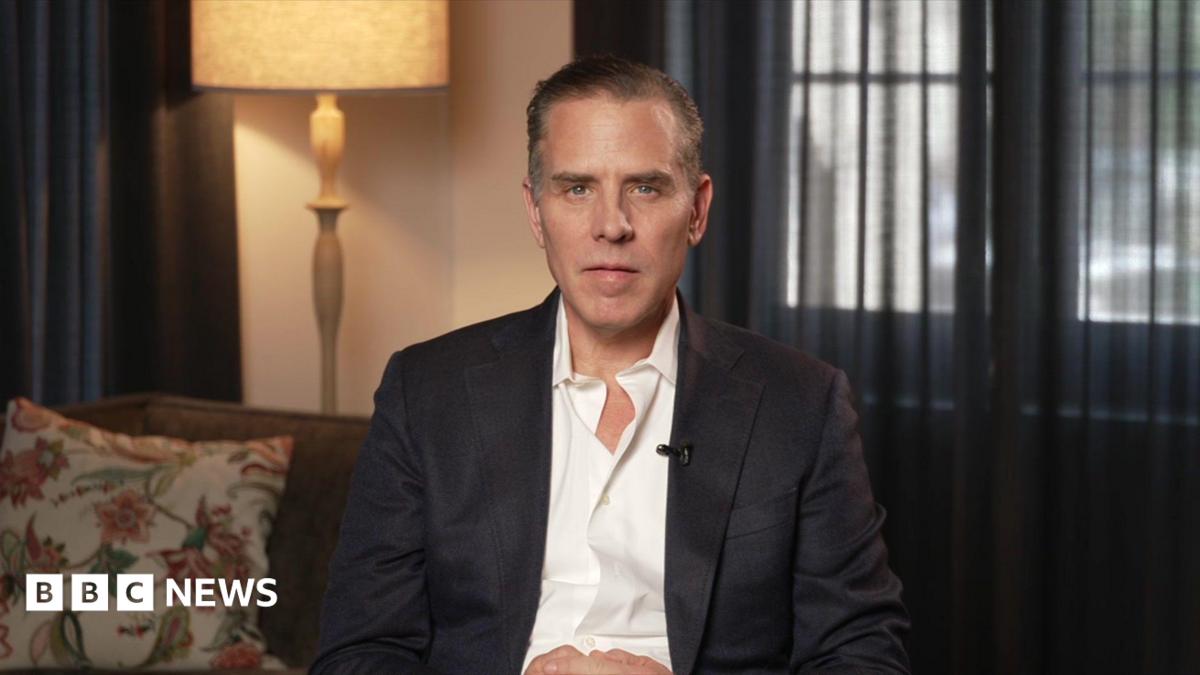
Hunter Biden has told the BBC he is “the most privileged person there is” after receiving a presidential pardon from his father, former US President Joe Biden, acknowledging it was not a good choice for America or his father’s legacy.

In a wide-ranging interview with the BBC’s Newsnight, Hunter Biden defended the controversial pardon, reflected on his father’s declining health, ruled out seeking elected office and spoke about helping others recover from addiction.

Asked about the 2024 pardon, he said he understood the criticism but noted: “What would you have thought of my dad if he did not do that for me.”

“It’s something that is easily criticised and for good reason,” he added.

“It’s not fair… All I know is that I’m grateful that he did it for me,” he said, acknowledging the pardon was “not good” for the American people, the Constitution – or his father’s legacy.

He argued to the BBC that his father ultimately acted out of concern that he would become a target under Donald Trump’s incoming administration.

“I was the only one in the world that could have gotten what I got from the only person in the world who could give it, my father.”

Hunter Biden also insisted he and his father had never discussed the possibility of a pardon before it was granted.

“There is no way that you can have those kinds of discussions that would not become public,” he said.

President Biden granted his son a full and unconditional pardon in December 2024, despite repeatedly saying beforehand that he would not use the powers of the presidency to intervene in his son’s legal cases. In announcing the decision, the former president said his son had been “selectively and unfairly prosecuted”.

The pardon covered his son’s federal gun conviction, a tax case he’d pled guilty to and any federal offences committed between 2014 and 2024.

Source link

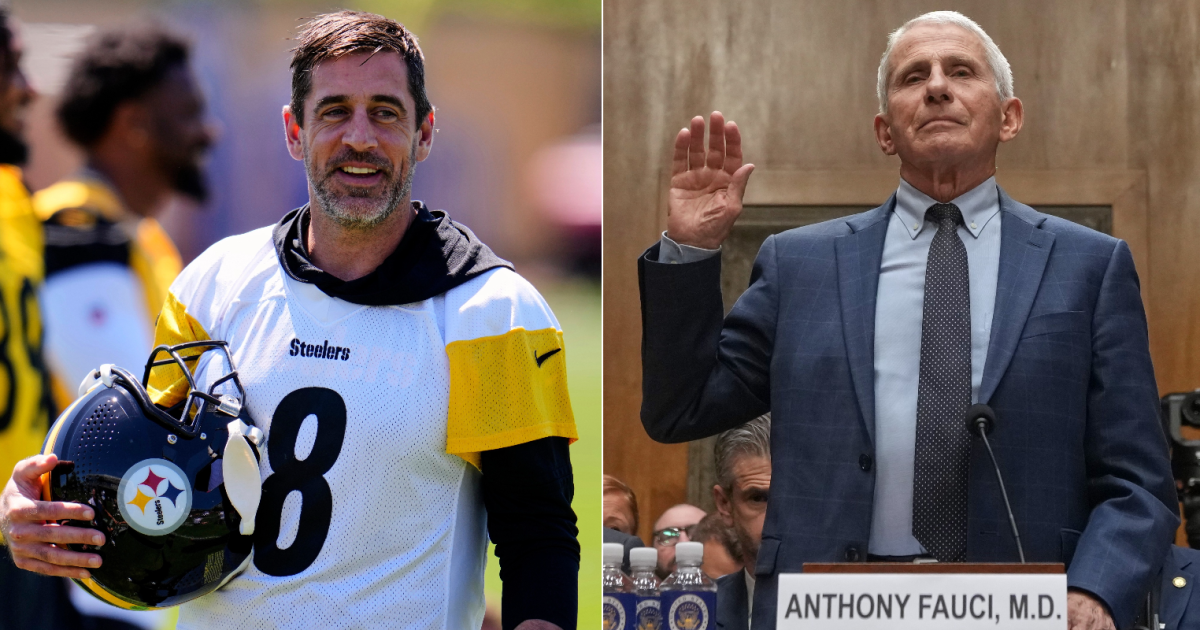
Dr. Fauci’s attorney says Aaron Rodgers should ‘stick with football’

p]:text-cms-story-body-color-text”>

During the 2021 season, NFL players who had not received a COVID-19 vaccination were subject to daily tests for the virus and restrictions, such as wearing masks inside team facilities and practicing social distancing.

Rodgers did not get vaccinated — he has said he’s allergic to an ingredient in the vaccines — and instead opted for an alternative treatment to help prevent him from getting the virus. Still, he told reporters he was “immunized” and did not follow all of the league’s protocols for unvaccinated players.

In early November 2021, Rodgers tested positive for COVID-19 and admitted he had “misled people about my status.” He was fined $14,650 for the protocol violation and missed a game because unvaccinated players had to isolate for 10 days after testing positive.

Rodgers clearly still had a lot to get off his chest during Tuesday’s show.

“A lot of people had probably fake vac cards back in the day, too,” Rodgers said. “They didn’t have a problem with that. I mean, I remember seeing some of the vax cards. It was, like, written in crayon. I’m like, all right, so we’re gonna pass that on, but we’re gonna be second-rate citizens over here — I gotta wear a yellow armband, train in the back, can’t be around more than three people.

“Oh, you know, you got to wear a mask when you do your your interview, and all of us are going to be masked up the entire time back here, 20 feet away from you, because that’s safety first. What crock of s— we had to go through! Crazy times.”

Although McAfee tried changing the subject multiple times during the first several minutes of the interview, the host eventually embraced the topic and applauded Rodgers for standing “on your side of the truth throughout the entirety of that thing.”

“Your name was slandered,” McAfee told Rodgers. “You were called a murderer. You were called a lot of things.”

Source link

Honduras’s Hernandez returns home after Trump pardon: How it happened | Explainer News

Nearly four years after being extradited to the United States for a drug-trafficking trial, former Honduran President Juan Orlando Hernandez returned home after a pardon by US President Donald Trump at the end of last year.

Trump claimed the trial was a “set up” orchestrated by former President Joe Biden’s administration.

Hernandez still faces corruption charges in Honduras but returned on Sunday after an arrest warrant against him was cancelled.

Human rights activists and lawyers fear a trial on home soil, where his party holds the presidency, would be a sham.

So why did Trump pardon and release the former president of Honduras despite abducting and arresting Venezuela’s Nicolas Maduro on drug and gun charges in January?

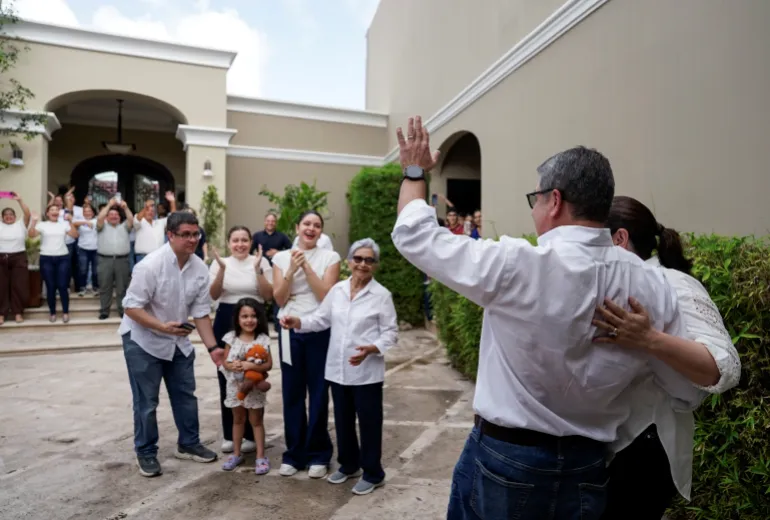
Former Honduran President Juan Orlando Hernandez is greeted by family and friends after arriving at his home in Tegucigalpa following his return to Honduras on July 26, 2026
Former Honduran President Juan Orlando Hernandez is greeted by family and friends after arriving at his home in Tegucigalpa following his return to Honduras on July 26, 2026 [Leonel Estrada/Reuters]

Why did Hernandez return to Honduras?

Hernandez was able to return after being pardoned by Trump, released from a US prison and then having an arrest warrant against him suspended last month.

He arrived at Palmerola International Airport, where he was greeted by his family and supporters of his National Party.

Hernandez led his country from 2014 to 2022, during which, according to US prosecutors, he once boasted he would “shove the drugs right up the noses of the gringos”, referring to Americans.

Shortly after leaving office, he was extradited to the US, where he was found guilty by a federal jury and sentenced to 45 years in prison for involvement in a scheme to export cocaine to the US.

Prosecutors described the scheme as “one of the largest and most violent drug trafficking conspiracies in the world”. He was convicted of accepting millions of dollars in bribes from violent drug-trafficking organisations over 18 years, which he was alleged to have used to fuel his rise in politics.

“During his political career, Hernandez abused his powerful positions and authority in Honduras to facilitate the importation of over 400 tons of cocaine into the US,” the US Department of Justice said after he was sentenced last year.

During his trial, Hernandez denied taking bribes from drug dealers, arguing he in fact cracked down on the narcotics trade and citing his administration’s cooperation with the US military.

“I cannot deny the profound emotion and joy I feel in my heart to be returning home,” Hernandez wrote on social media earlier this month, saying he was counting down the days to see his family.

“It wasn’t easy. The process has been extremely difficult … and what I experienced in prison, I truly wouldn’t wish on anyone,” he added.

Hernandez is expected to appear in court on August 3 to face the Honduran corruption charges.

Hernandez shakes hands with US President Donald Trump on September 25, 2019, in New York during the signing of an agreement under which Honduras would accept more asylum seekers heading to the US
Hernandez shakes hands with US President Donald Trump on September 25, 2019, in New York during the signing of an agreement under which Honduras would accept more asylum seekers heading to the US [Handout/Honduran Presidential Palace via Reuters]

Why did Trump pardon him?

Under the US Constitution, a president may offer two types of clemency for federal crimes: pardons, which forgive defendants their federal charges and restore their civil liberties, and commutations, which reduce people’s punishment without addressing their convictions.

Hernandez was pardoned by Trump in December. The US president said Hernandez had not received a fair trial and had been “set up” by the Biden administration.

Trump added that Hernandez was “treated very harshly and unfairly”.

At the same time, Trump also threw his weight behind right-wing candidate Nasry “Tito” Asfura, a member of Hernandez’s party. He ran in November’s presidential election and was declared the winner a month later in the close race after delays and allegations of fraud. He took office in January.

A Pandora Papers corruption investigation also accused Hernandez of diverting nearly $11m in state funds to political campaigns from 2010 to 2013.

Venezuelan President Nicolas Maduro and his wife, Cilia Flores, are moved out of a helicopter and into a New York courthouse on January 5, 2026, for an initial appearance to face US federal charges including ‘narcoterrorism’, conspiracy, drug trafficking and money laundering shortly after US forces abducted them from Caracas
Venezuelan President Nicolas Maduro and his wife, Cilia Flores, are moved out of a helicopter and into a New York courthouse on January 5, 2026, for an initial appearance to face US federal charges including ‘narcoterrorism’, conspiracy, drug trafficking and money laundering shortly after US forces abducted them from Caracas [Adam Gray/Reuters]

Why a pardon for some but jail for others?

The Trump administration has faced criticism at home for pardoning the Honduran leader while at the same time abducting former President Maduro of Venezuela and his wife, Cilia Flores, in January on similar charges.

Maduro and Flores were seized in Caracas by the US military and flown to New York, where he is facing a range of guns and drugs charges and accusations of being a “narcoterrorist”.

At the time of Maduro’s abduction and since then, the Trump administration has targeted small boats in the Caribbean and eastern Pacific that it claims, without providing evidence, are involved in drug trafficking. More than 220 people have been killed in more than 60 such strikes on small boats in what many lawyers and activists have deemed extrajudicial killings.

Since taking office for a second term in January 2025, Trump has ordered more than 1,800 acts of clemency benefitting a range of personalities, including cryptocurrency billionaires, disgraced politicians and hundreds of political allies.

Some of the most controversial beneficiaries are supporters of his Make America Great Again (MAGA) movement, including hundreds of rioters who attacked the US Capitol on January 6, 2021, in a bid to prevent the certification of Biden’s electoral victory over Trump two months earlier.

Legal experts have argued that while the president’s clemency power is broad, using it for allegedly corrupt purposes, such as to protect political allies or obstruct justice, could form the basis for impeachment proceedings.

US constitutional expert Bruce Fein told Al Jazeera that the US Constitution’s framers “understood the abuse of the pardon power to shelter political or personal friends to constitute an impeachable high crime and misdemeanour justifying the removal of the president through the impeachment process”.

“If Democrats gain control of Congress in the midterm elections, Trump will be in impeachment jeopardy for pardoning Hernandez,” Fein said, referring to elections in November.

Source link

Text of Walsh Response to Bush Pardon

Following is independent counsel Lawrence Walsh’ statement on the presidential pardon of former Defense Secretary Caspar W. Weinberger and others charged in the Iran-Contra scandal:

President Bush’s pardon of Caspar Weinberger and other Iran-Contra defendants undermines the principle that no man is above the law. It demonstrates that powerful people with powerful allies can commit serious crimes in high office–deliberately abusing the public trust–without consequence.

Weinberger, who faced four felony charges, deserved to be tried by a jury of citizens. Although it is the President’s prerogative to grant pardons, it is every American’s right that the criminal justice system be administered fairly, regardless of a person’s rank and connections.

The Iran-Contra cover-up, which has continued for more than six years, has now been completed with the pardon of Caspar Weinberger. We will make a full report on our findings to Congress and the public describing the details and extent of this cover-up.

Weinberger’s early and deliberate decision to conceal and withhold extensive contemporaneous notes of the Iran-Contra matter radically altered the official investigations and possibly forestalled timely impeachment proceedings against President Reagan and other officials. Weinberger’s notes contain evidence of a conspiracy among the highest-ranking Reagan Administration officials to lie to Congress and the American public. Because the notes were withheld from investigators for years, many of the leads were impossible to follow, key witnesses had purportedly forgotten what was said and done, and statutes of limitation had expired.

Weinberger’s concealment of notes is part of a disturbing pattern of deception and obstruction that permeated the highest levels of the Reagan and Bush administrations. This office was informed only within the past two weeks, on December 11, 1992, that President Bush had failed to produce to investigators his own highly relevant contemporaneous notes, despite repeated requests for such documents. The production of these notes is still ongoing and will lead to appropriate action.

In light of President Bush’s own misconduct, we are gravely concerned about his decision to pardon others who lied to Congress and obstructed official investigations.

Source link

Trump pardons Republican ex-congressman convicted of insider trading

President Trump has issued a pardon to Stephen Buyer, a Republican former congressman from Indiana who served nearly two years in prison for making illegal stock trades based on inside information after he left office.

Buyer was sentenced to 22 months in prison in 2023 for trades made while working as a consultant and lobbyist. He was ordered to forfeit more than $350,000, representing the amount of the illegal gains, and pay a $10,000 fine. He was released in 2025.

The Supreme Court in May rejected Buyer’s appeal without comment or noted dissent.

In granting “a full, complete, and unconditional pardon,” Trump cited Buyer’s career as a judge advocate general in the Army and in the House that was “distinguished and highly productive.” The pardon was dated Thursday and released by the White House late Friday.

Buyer asserted that the pardon “corrects a politically motivated prosecution” and that it was “horrific to be imprisoned for a crime that I did not commit.”

Trump used his social media platform May 31 to share a pair of letters requesting a presidential pardon for Buyer, a lawyer and Persian Gulf War veteran who left office in 2011. He was a House prosecutor at President Clinton’s 1999 impeachment trial and in 2016 he served on Trump’s transition team focusing on veterans issues.

A letter signed by more than 40 Republican former members of Congress said Buyer was “targeted by the deep state” because of his involvement in Clinton’s trial a generation ago.

A second letter, from five current House Republicans, including Ken Calvert of Corona, said pardoning Buyer would bring justice to his case. The June 2025 letter was also signed by Tom Cole of Oklahoma, Marlin Stutzman of Indiana, Jack Bergman of Michigan and Pete Sessions of Texas.

Buyer, 67, was convicted in connection with insider trading involving the $26.5-billion merger of T-Mobile and Sprint, announced in April 2018, and illegal trades in the management consulting company Navigant when his client Guidehouse was set to acquire it in a deal publicly disclosed weeks later.

The Constitution gives a president broad power to grant pardons for federal crimes. The pardons do not erase a recipient’s criminal record but can be seen as an act of mercy or justice.

Source link