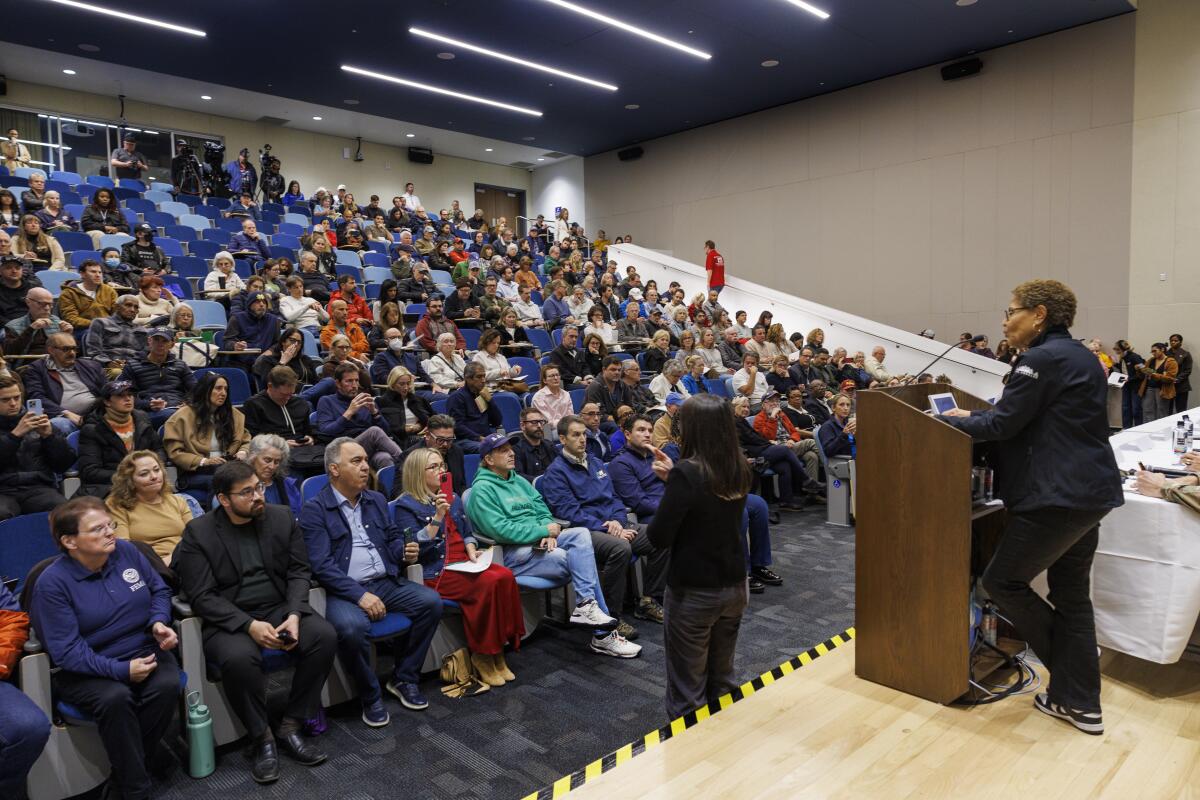
pacific palisades

This city government veteran thinks Los Angeles is in deep trouble

Good morning, and welcome to L.A. on the Record — our City Hall newsletter. It’s Julia Wick, giving you the latest on city and county government.

Rick Cole has forgotten more about municipal government than most of us will ever know.

The 72-year-old former mayor (Pasadena), city manager (Ventura, Azusa, Santa Monica) and deputy mayor (Los Angeles) returned for a third stint at Los Angeles City Hall in 2022, bringing a depth of experience to political neophyte and then-newly elected City Controller Kenneth Mejia’s office as Mejia’s chief deputy.

After two and a half years in City Hall East, Cole announced last month that he would be leaving his post to focus on the Pasadena City Council, which he joined again last year.

Cole knew that holding down “a more-than-full-time role in LA and a more-than-part-time role in Pasadena” would be difficult to juggle, he wrote in a LinkedIn post, and ultimately decided he couldn’t do both jobs justice.

Newsletter

You’re reading the L.A. on the Record newsletter

Sign up to make sense of the often unexplained world of L.A. politics.

You may occasionally receive promotional content from the Los Angeles Times.

In a goodbye presentation to the L.A. City Council, he sounded the alarm, saying he has never been more worried about the city.

We sat down with Cole to discuss that speech and his fears. Here’s some of our conversation, very lightly edited and condensed for clarity.

Tell me about the speech you gave at council. What motivated it?

I’ve never been more alarmed about the future of Los Angeles. I delineated the existential challenges facing the city, which have been decades in the making. Politics needs to be looking out at the future and not just reacting to the crises of the day. And Los Angeles needs bold, systemic reform to meet the moment.

Why are you so alarmed about the future of Los Angeles?

It’s a converging set of crises. You have a homelessness emergency, an affordable housing crisis, a billion-dollar structural financial challenge that’s resulted in the loss of thousands of key city jobs. You had a firestorm that destroyed an entire neighborhood. And you have the federal government at war with the people in the government of Los Angeles.

And underneath that, you have an existential challenge to Hollywood, which is unfolding. And you have crumbling infrastructure.

And you have people feeling that government can’t really fix any of these things, that the money we spend gets wasted, fair or unfair. That’s a challenge.

Do you think the government is wasting taxpayer money?

Every institution has some level of waste. The problem with Los Angeles government and the public sector in California is an aversion to innovation.

We’ve fallen behind the private sector in adapting to the new world of advancing technology and changing demographics. That’s fixable, and that’s what I was advocating for.

What would it look like to fix these problems? Who’s responsible, and who is currently dropping the ball?

The lack of responsibility is built into the City Charter.

Tell me more about what you mean by that.

The people who originally wrote the charter a hundred years ago intentionally designed the system to diffuse authority, which therefore diffused accountability. So it’s really difficult to know who is in charge of any given thing.

A clear example is that the department heads have 16 bosses. They report to the mayor, but in each of the council districts, the council members think that the department heads report to them. That they … have to make the council member happy with what’s going on in their district, whether it’s trimming trees on a particular street or fixing a sidewalk in front of a constituent’s home, the general managers [of city departments] are subject to extreme and constant political pressure.

That distracts them from fixing the system so that we’re doing a better job, so that there are fewer resident complaints, so that a constituent wouldn’t have to go to their council member to get their street fixed. The street would get fixed every 10 years.

But if you are have 16 bosses and and a continually shifting set of priorities, it’s difficult, if not impossible, to put in place systemic solutions.

And in terms of who do you blame: Do you blame the general manager? Do you blame the mayor? Do you blame your council member? Do you blame the lack of resources that the city has to allocate?

The answer is yes.

What needs to change?

What I advocated is designing the city to work in the 21st century, which means a chief operating officer who works for the mayor to make sure the city runs effectively across 44 departments. We don’t have such a person now.

It means a chief financial officer. The responsibilities of a chief financial officer are [currently] divided between four different offices in the city, so it’s difficult, again, to point to one person who’s in charge of keeping the city fiscally sound.

The charter calls for a one-year budget, but we could do a two-year budget and simply update it once a year and be consistent with the City Charter. But then we would have a much broader view of the city’s financial future, and we wouldn’t waste so much time on a budget process that takes 11 of the 12 months and produces very little change.

State of play

— SAFER CITY: L.A. is on pace for its lowest homicide total in nearly 60 years as killings plummet, according to an LAPD tally. The falling murder rate mirrors a national trend in other big cities. As my colleague Libor Jany reports, it also paints a decidedly different picture than the Gotham City image offered by President Trump and other senior U.S. officials as justification for the deployment of military troops in L.A. in recent weeks.

MORE RAIDS FALLOUT: Mayor Karen Bass announced a plan Friday to provide direct cash assistance to people who have been affected by the Trump administration’s sweeping immigration raids. The money will come from philanthropic partners, not city coffers, and the cash cards will be distributed by immigrant rights groups.

—MOTION TO INTERVENE: The city and county of Los Angeles are among the local governments seeking to join a lawsuit calling on the Trump administration to stop “unlawful detentions” during the ongoing immigration sweeps. The lawsuit was filed by the American Civil Liberties Union of Southern California, Public Counsel and immigrant rights groups last week.

IN MEMORIAM: Longtime former executive director of the Pat Brown Institute for Public Affairs Jaime Regalado died last month at age 80. Born in Boyle Heights, Regalado served in the U.S. Navy and was the founding editor of California Politics & Policy and the California Policy Issues Annual. He led the Pat Brown Institute at Cal State L.A. from 1991 to 2011.

“SOMEONE GOOFED”: When L.A. County Supervisors Lindsey Horvath and Janice Hahn co-wrote Measure G, a sprawling overhaul of county government that voters passed last November, they didn’t realize they would also be repealing Measure J, a landmark criminal justice measure that voters had passed four years earlier. Thanks to an administrative screw-up for the ages, that’s exactly what happened. The relevant changes won’t go into effect until 2028, so county leaders have some time to undo their oops.

—DISASTER AVERTED: A potentially tragic situation was averted Wednesday night, after all 31 workers in a partially collapsed Los Angeles County sanitation tunnel were able to make their way to safety. Work on the tunnel has been halted, and the county sanitation district board is looking into what caused the collapse.

POSTCARD FROM SANTA MONICA: In the long shadow of White House Deputy Chief of Staff Stephen Miller‘s hard-line anti-immigration policies, local and national observers alike are paying renewed attention to Miller’s upbringing in the famously liberal enclave once dubbed “the People’s Republic of Santa Monica.” Join me for a deep dive into Miller’s time at Santa Monica High School and learn why some of his former classmates think he’s getting his revenge on Southern California.

QUICK HITS

  • On the docket for next week: The city’s charter reform commission will meet Wednesday afternoon. The City Council remains on recess.
  • Where is Inside Safe? The mayor’s program to combat homelessness was in South Los Angeles this week, according to a tweet from Bass’ office.
  • A political poem to pair with your morning coffee: “I Am Waiting” by Lawrence Ferlinghetti.

Stay in touch

That’s it for this week! Send your questions, comments and gossip to [email protected]. Did a friend forward you this email? Sign up here to get it in your inbox every Saturday morning.

Source link

‘Performative politics’ on the council floor? That’s an eye roll

Good morning, and welcome to L.A. on the Record — our City Hall newsletter. It’s Noah Goldberg with an assist from David Zahniser, giving you the latest on city and county government.

A few Los Angeles city councilmembers got in some final zingers before packing their bags for summer recess.

It was the final council session before the three-week pause, and members were working their way through a thick agenda Tuesday. After weeks in which the main focus has been President Trump’s immigration crackdown in the city, it didn’t appear there would be fireworks.

Then, Councilmember Traci Park rolled her eyes at Councilmember Hugo Soto-Martínez while he was speaking. And Councilmember Monica Rodriguez had some sharp words for both of them.

Let’s backtrack and figure out how we got there.

In May, the council passed an ordinance to raise the minimum wage for hotel and airport workers to $30 per hour — higher than the city’s minimum wage — with Park, Rodriguez and Councilmember John Lee voting against it.

Soto-Martínez, a former organizer with the hotel and restaurant union Unite Here Local 11, which pushed for the minimum wage hike, led the charge at City Hall.

Park said she voted against the ordinance because she thought that it didn’t take into account economic realities and that it would result in hotel and airport workers losing their jobs. Park’s opponent in a bitterly contested general election for her Westside council seat in 2022 was a Unite Here-backed candidate, Erin Darling.

After the minimum wage hike passed, a business coalition called the L.A. Alliance for Tourism, Jobs and Progress began a campaign to overturn it by gathering signatures to place it on the June 2026 ballot, which would at least delay its implementation.

Things quickly got ugly. Unite Here’s lawyer alleged in a letter to the L.A. County district attorney and the city attorney that petition circulators for the business coalition misrepresented their campaign to voters and even assaulted activists on multiple occasions.

Meanwhile, a petition circulator alleged that she was assaulted outside a Food 4 Less in Inglewood by an SEIU-USWW executive board member while gathering signatures. The woman filed a police report, and a judge granted her request for a temporary restraining order against the board member.

Enter Soto-Martínez and Park.

Soto-Martínez quickly drafted a motion asking for the LAPD to investigate the petition circulators for fraud and other misconduct alleged in the Unite Here letter.

When Soto-Martínez introduced his motion at the City Council’s Economic Development and Jobs Committee last month, Park spoke up, saying it was hypocritical for Unite Here to complain about misleading campaigns when it engaged in the same tactics “on a regular basis.”

Park quoted from a text message campaign that she said dozens of her constituents had brought to her attention.

“A new complaint alleges paid signature gatherers are using misdirection and misconduct to collect these signatures. Don’t sign the petition. Email Traci Park to tell her to stop this misleading effort to lower the minimum wage,” read a text message from Citizens in Support of the LA Olympic Wage, a campaign backed by Unite Here in favor of the hotel and airport minimum wage.

Park said the text made it sound as if she were involved in the campaign to repeal the ordinance.

“I have nothing to do with it. No one ever consulted me about it. No one ever asked my opinion about it,” she said at the committee meeting.

When the committee approved Soto-Martínez’s motion on June 17, she voted “no,” saying any investigation should scrutinize both sides of the wage campaign. The motion reached the full council on Tuesday.

Park quoted from the text campaign again and introduced an amendment asking for the LAPD to investigate both sides of the petition fight — those aligned with the L.A. Alliance for Tourism and those aligned with Unite Here.

“We know that engaging in misleading tactics are not unique to one group or one organization,” she said. “I know this because I have personally been targeted by misleading smear campaigns by the very group now complaining about this behavior.”

Soto-Martínez fired back at his colleague.

“There have been plenty of things said about me that have been misleading and I didn’t agree with, but I didn’t bring it into this chamber,” he said.

Soto-Martínez also said he wanted to draw a distinction between the text message campaign about Park and the alleged physical assaults against Unite Here campaigners.

Still, in the end, he said he supported Park’s amendment.

Park could be seen in a video recording of the council meeting rolling her eyes as Soto-Martínez finished his speech.

In a statement, Unite Here co-President Kurt Petersen called Park’s comments at the council meeting “unbelievably narcissistic.”

“Working people plea for her help after they were allegedly assaulted while they campaigned to raise wages. Instead of focusing on helping the victims, Councilmember Park complains about being criticized for her vote against the minimum wage, and equates criticism of her to the alleged political violence,” Petersen said. “This kind of greedy self involvement in the face of injustice is a hallmark of the billionaire allies of Councilmember Traci Park, and it’s why working people don’t trust her.”

Park responded in a statement, “Kurt Petersen is killing jobs and tanking our local economy. Iconic restaurants are closing, airport workers are being replaced by kiosks, hotels are pulling out, and working families are losing, not winning. His divisive and reckless tactics are speeding up automation and driving opportunity out of Los Angeles.”

Councilmember Rodriguez chastised both Park and Soto-Martínez.

“I think this idea that’s trying to assign blame to one side or another is kind of futile, given the demands of what we need LAPD to be focused on, but I think performative politics is the name of the game these days,” Rodriguez said. “Everyone needs to grow the hell up.”

Newsletter

You’re reading the L.A. on the Record newsletter

Sign up to make sense of the often unexplained world of L.A. politics.

You may occasionally receive promotional content from the Los Angeles Times.

State of play

— SANCTUARY SUIT: The Department of Justice filed suit against the city of Los Angeles on Monday over its sanctuary ordinance, calling the ordinance illegal and saying that it discriminates against Immigration and Customs Enforcement. L.A.’s refusal to cooperate with federal immigration authorities has resulted in “lawlessness, rioting, looting, and vandalism,” according to the lawsuit. Mayor Karen Bass called the lawsuit part of an “all out assault on Los Angeles” by President Trump. Immigrant rights groups filed their own lawsuit against the Trump administration Wednesday, seeking to block the administration’s “ongoing pattern and practice of flouting the Constitution and federal law” during immigration raids in the L.A. area.

HOMELESSNESS DROP: Homelessness declined by 15% overall in three areas of Los Angeles in 2024, according to a new Rand study. The biggest drop came in Hollywood, where the report found that the number of homeless people decreased 49% from 2023. The number fell 22% in Venice and went up 9% in Skid Row, according to the report. The Rand study linked the Hollywood decrease to a series of Inside Safe operations in 2024.

— SEE YA, CEQA: As part of the state budget, the California State Legislature passed Assembly Bill 130 and Senate Bill 131 Monday, which exempts most urban housing projects from the California Environmental Quality Act. The act, known as CEQA, has often mired construction projects in years of litigation. Gov. Gavin Newsom muscled the new rules through the Legislature despite concerns from progressive lawmakers and environmental interest groups.

— MANSION SPEND: The L.A. City Council approved a plan Tuesday to spend almost $425 million collected from the city’s “mansion” tax on property sales over $5 million. Backers of the controversial tax — which has been criticized by the real estate industry for limiting property sales and reducing property tax revenue — say the fund is producing crucial dollars for affordable housing and homelessness prevention programs.

— FROZEN FUNDS: The Trump administration moved to withhold $811 million from California that would have helped students who are learning English or are from migrant families. “The [Education] Department remains committed to ensuring taxpayer resources are spent in accordance with the President’s priorities and the Department’s statutory responsibilities,” the administration said in a letter to states on Monday.

QUICK HITS

  • Where is Inside Safe? The mayor’s signature homelessness program returned to locations of past operations in Echo Park, Watts and South L.A. this week, according to the mayor’s office.
  • On the docket for next week: The Los Angeles County Board of Supervisors will vote to appoint Sarah Mahin as the first executive director for the county’s new Department of Homeless Services and Housing.

Stay in touch

That’s it for this week! Send your questions, comments and gossip to [email protected]. Did a friend forward you this email? Sign up here to get it in your inbox every Saturday morning.
Source link

How does NYC primary win reverberate in Los Angeles politics?

Good morning, and welcome to L.A. on the Record — our City Hall newsletter. It’s Noah Goldberg, giving you the latest on city and county government.

Zohran Mamdani’s resounding victory in the New York City Democratic mayoral primary has turned the heads of progressive elected officials in Los Angeles.

Councilmember Hugo Soto-Martínez called it the “biggest victory for a socialist candidate probably in America.”

Councilmember Eunisses Hernandez said Angelenos should take note.

“What it shows is that we can win. We can win in major cities,” she said.

Councilmember Ysabel Jurado was bursting with excitement about the results from a city 3,000 miles away.

“Having a DSA-backed mayor is freaking amazing,” she said about the prospect of Mamdani, who was backed by the Democratic Socialists of America, winning the general election in November.

While Mamdani’s primary upset over former New York Governor Andrew Cuomo injected new excitement into the left flank of the Los Angeles political scene — one DSA member called it a “we’re so back moment” — it also highlighted vastly different political terrains in the two coastal cities, starting with executive leadership.

Mamdani is a 33-year-old democratic socialist who was elected to the New York state assembly in 2020. He ran in the Democratic mayoral primary on a far-left agenda, promising to freeze the rent in rent-stabilized apartments and to make city buses free.

New York’s current mayor, Eric Adams, ran as a Democrat in 2021 but will be an independent candidate in the general election, after Trump’s Department of Justice dropped bribery charges against him. In line with his offer to assist in enforcing federal immigration laws if the charges were dropped, Adams has since attempted to allow Immigration and Customs Enforcement agents into the city jails (a judge blocked that plan after the City Council sued).

Southern California, on the other hand, has emerged as the epicenter of the president’s crackdown on undocumented immigrants, and Mayor Karen Bass has been an outspoken critic of the president’s immigration agenda.

Trump’s ramping up of immigration enforcement and subsequent deployment of the California National Guard and U.S. Marines to Los Angeles has prompted the city’s progressive and moderate Democratic politicians to band together and set aside their differences.

Councilmembers on the left flank cited the different political realities in the two cities when speaking about the 2026 Los Angeles mayoral election, with the field of candidates still taking shape.

“We don’t have a candidate on the left … as a progressive. We have Mayor Karen Bass, who is running again,” Hernandez said. “She’s moving how she needs to move and has been doing a good job at least in handling this crisis that we’re in right now.”

Hernandez said she is focused on winning her own reelection bid in a crowded field.

Soto-Martínez said the city is “under siege” by the federal government.

“We are trying to show unity against the federal takeover of our city, and so that’s how I feel about it right now, and that might change a year from now, but that’s how I feel,” he said. “I support the mayor and her reelect, and I think her roots from community organizing is something we need right now.”

No progressive candidate has emerged to run against Bass. Before the immigration raids, Bass’ performance in the wake of January’s devastating wildfires led to speculation that she would be challenged from the right again by businessman Rick Caruso, whom she beat handily in 2022. Caruso is also weighing a bid for governor.

Lefty Angelenos shouldn’t hold their breath for a DSA candidate. While the process is member-driven, DSA-LA does not plan at the moment to run anyone for mayor, said Marc Krause, a co-chair of DSA-LA.

Krause said the group’s focus is legislative change, starting with representation on the City Council.

“I think for DSA-LA, our big goal and recent strategy is to try to win a majority on the L.A. City Council,” he said.

DSA-LA’s Mamdani moment came when Hernandez and Soto-Martínez won in 2022, joining Nithya Raman, who had DSA support in her 2020 election.

“It proved to us that what we were aiming to do had some viability to it,” Krause said.

Jurado, also backed by DSA-LA, joined the bloc in 2024.

Those four have helped push the council further to the left in recent years, from passing a $30 minimum wage for tourism industry workers to voting for a budget that sought to slow down police hiring — though those hires may return.

Krause cited a stronger rent stabilization ordinance, higher pay for workers in the city and improved transit infrastructure as some of DSA-LA’s top legislative goals.

To secure those wins, Krause hopes to elect eight DSA-backed city councilmembers or to build a coalition with other elected officials who agree with the policies DSA-LA champions.

And Krause said the movement is growing. The night Mamdani won the primary, DSA-LA gained 50 new members — without even trying.

“We’ll likely be doing more intentional recruitment,” Krause said.

Newsletter

You’re reading the L.A. on the Record newsletter

Sign up to make sense of the often unexplained world of L.A. politics.

You may occasionally receive promotional content from the Los Angeles Times.

State of play

— INNOCENT IMMIGRANTS: Most of the undocumented immigrants arrested between June 1 and June 10 by Immigration and Customs Enforcement in the Los Angeles region had no criminal convictions, according to a Times analysis. The review of data from the Deportation Data Project, a repository of enforcement data at UC Berkeley Law, found that 69% of those arrested had no criminal convictions and 58% had never been charged with a crime.

— RECEIVERSHIP HAS SAILED: A federal judge decided not to put L.A.’s homelessness programs into receivership Tuesday, though he found that the city failed to adhere to the terms of a legal settlement focused on handling the humanitarian crisis on the streets.

— TRUMP SUIT: The city took steps to sue the Trump administration to stop immigration agents from making unconstitutional stops or arrests. The seven councilmembers who signed the letter asking City Atty. Hydee Feldstein Soto to prioritize “immediate legal action” against the administration argued that the litigation is necessary to prevent racial profiling and unlawful detention of Angelenos.

—UNION DOOZY: L.A. County’s agreement with its biggest labor union will cost more than $2 billion over three years, according to the county chief executive office. The deal with SEIU 721, which represents 55,000 county workers, includes a $5,000 bonus in the first year. Union members still need to ratify the agreement.

—CALIFORNIA VS. TRUMP: The Trump administration may soon be forced to turn over documents related to the activities of the military in Southern California, a federal judge said Tuesday. The U.S. 9th Circuit Court of Appeals had previously allowed Trump to maintain control over the California National Guard.

—SCHOOLS BUDGET: The Los Angeles Board of Education approved an $18.8-billion budget that allows the district to avoid layoffs this year, in part by reducing proposed contributions to a trust fund for retiree health benefits.

QUICK HITS

  • Where is Inside Safe? The mayor’s signature homelessness program went to Marmion Way and North Avenue 57 in Councilmember Eunisses Hernandez’s district, according to the mayor’s office.
  • On the docket for next week: The City Council goes on summer recess beginning Wednesday and will be OOO until July 29.

Stay in touch

That’s it for this week! Send your questions, comments and gossip to [email protected]. Did a friend forward you this email? Sign up here to get it in your inbox every Saturday morning.
Source link

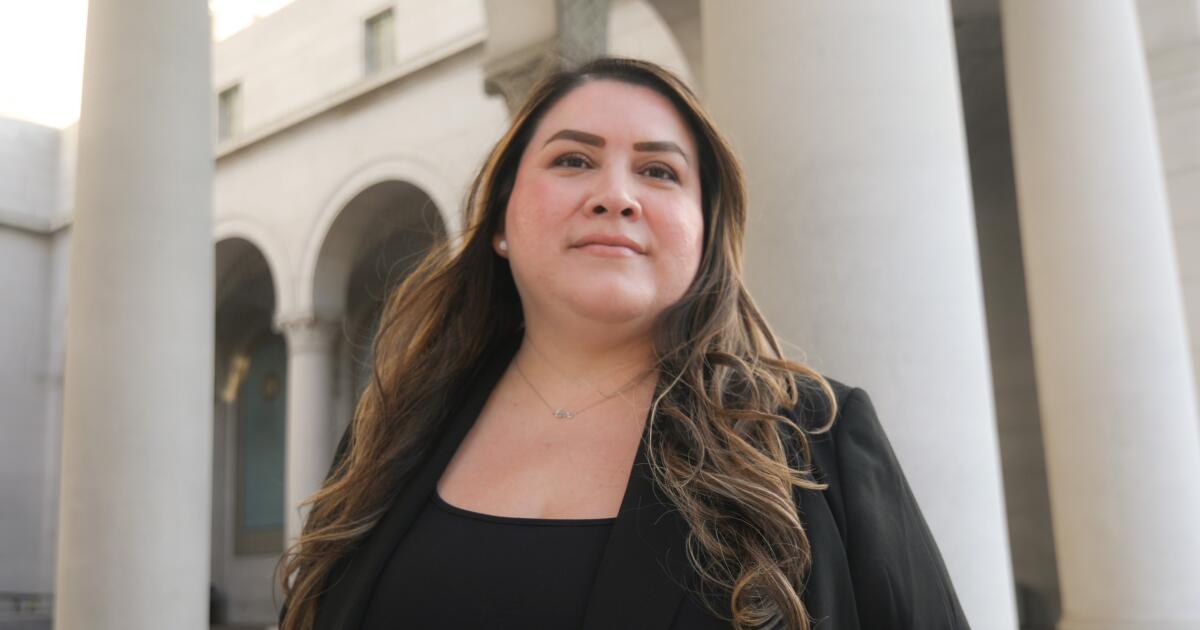
Meet the face of L.A. Mayor Karen Bass’ immigrant outreach

Claudia Aragon was headed home after dropping her puppy off at obedience school when the first text came in early on Friday, June 6.

“Ice showed up at the Home Depot in cypress park. Want to make sure we can help people,” an immigrant service provider texted her. “this is awful claudia.”

Aragon, who has directed Mayor Karen Bass’ Office of Immigrant Affairs since March 2023, had been sick and was planning to stay home that day.

But she lives only a few miles from the Cypress Park site and decided to drive over.

She arrived outside the Home Depot in the aftermath of the raid — an environment she described as akin to “calm after the storm” in the wake of a natural disaster.

“Everyone’s kind of trying to find their bearings and looking around like, ‘What happened?’ Some of the food vendors that were there were sort of putting things back,” Aragon said.

There would be little calm for Aragon over the next days and weeks.

Within an hour or so of getting home that Friday morning, Aragon’s phone rang again, with someone telling her that federal authorities were at a sprawling fast-fashion warehouse in the Garment District.

Far from being isolated incidents, the Cypress Park Home Depot raid and the arrests at Ambiance Apparel were initial blasts in what would be much broader upheaval, as the Trump administration’s immigration enforcement teams descended on Los Angeles and a military deployment soon followed.

Through it all, Aragon’s phone kept buzzing, as she connected with activists and a host of immigrant service providers.

The next few hours were a surreal and overwhelming frenzy, as Aragon, immigrant advocacy groups and the city all tried to piece together what was happening with little communication from the federal government.

Aragon, who worked in Bass’ congressional office before joining the mayor’s office, has known and collaborated with many of her community counterparts for years.

Those relationships were battle-tested early in Aragon’s city tenure, as Texas Gov. Greg Abbott began sending buses of migrants to Los Angeles in 2023. Aragon was responsible for coordinating the response, as the city, faith and nonprofit partners helped situate the new arrivals.

A day or two after Donald Trump was elected to a second term in the White House, Aragon also sat down with the mayor’s senior staff to strategize on how the city could prepare for potential immigrant raids, since Trump had made no secret of his intentions during the campaign.

The city’s immigrant affairs office is currently a lean two-person team, with Aragon and a language access coordinator. The department was first created under Mayor James Hahn and then resurrected by then-Mayor Eric Garcetti.

Aragon herself is “a very proud immigrant,” having come to the United States from El Salvador when she was 7.

“To be here with Mayor Bass, having the opportunity to elevate the immigrant community through policy, through funding to provide support for providers who champion the community — my community, for families that are like mine — is amazing and an honor,” Aragon said.

It can also be painful at this particular moment in history, when the promise of the immigrant American dream that made her life possible now seems in existential jeopardy and so many are living in fear.

“People can’t even go down the street without being detained … I can’t even look at them and tell them they’ll be okay,” Aragon said.

Newsletter

You’re reading the L.A. on the Record newsletter

Sign up to make sense of the often unexplained world of L.A. politics.

You may occasionally receive promotional content from the Los Angeles Times.

State of play

— THE CHAOS CONTINUES: Federal immigration raids continued across L.A. County this week, reaching into Hollywood, Pico Rivera and other locations. In San Fernando, L.A. Councilmember Monica Rodriguez and San Fernando Vice Mayor Mary Solorio went on Instagram Thursday to spread the word about residents being swept up from the areas around a Home Depot in San Fernando and a Costco in Pacoima, in hopes of alerting their families.

“We only have first names of some of the individuals,” Solorio said. “Those individuals are Omar, Elmer, Antonio, Saul and Ramiro.” Rodriguez read out contact information for immigrant defense groups, saying: “We need to protect one another in these very scary times.”

In Hollywood, L.A. Councilmember Hugo Soto-Martínez voiced his fury over a raid in his district at the Home Depot on Sunset Boulevard.

“Despicable doesn’t even begin to describe what this is,” he told The Times. “You hear about this happening in military dictatorships and totalitarian governments. To happen here in the second-largest city in America is — I don’t have words, just outrage.”

— ‘PROFOUND HARM’: Several people were also detained at a bus stop near a Winchell’s Donut House in Pasadena, evoking angry responses from County Supervisor Janice Hahn and U.S. Rep. Judy Chu. Hahn, who chairs Metro’s transit board, worried that residents will be too afraid to go to work, attend church and, now, hop on public transit. “The fear they are spreading is doing profound harm in our communities,” she said. Metro officials underscored those concerns, saying the transit system has seen a 10% to 15% drop in bus and rail ridership since immigration enforcement activities began.

— BEHIND THE MASK: County Supervisor Kathryn Barger voiced fears this week that some of the masked men pulling over Angelenos may not be immigration agents but rather “bad players” impersonating federal law enforcement. “I tell you this story because we don’t know if they were ICE agents or not,” she said at Tuesday’s board meeting. Hahn wasn’t convinced, replying: “Make no mistake about it: It isn’t people impersonating ICE. It is ICE.”

— DODGER MANIA: Yet another part of the city caught in the uproar was Dodger Stadium. Raul Claros, a community organizer now running for an Eastside seat on the City Council, held a press conference Wednesday to demand that the team do more to help families devastated by the raids. “The largest economic engine in this area is silent!” he told ABC7 and other news outlets. “Wake up! Do better!”

The Dodgers later signaled the organization was willing to help. Before the team made its announcement, federal law enforcement agents were spotted outside the stadium, generating new protests. “People are out here because they don’t want to see their families torn apart,” Councilmember Eunisses Hernandez said in an interview with NBC. The team, in a statement on X, said it had denied entry to those agents. (Dodgers referred to them as ICE, federal officials said they were from U.S. Customs and Border Protection.)

— DOWNTOWN SETTLES DOWN: Confrontations between law enforcement agencies and anti-ICE protesters tapered off this week, prompting Mayor Karen Bass to scale back, and then repeal, her curfew order for downtown, Chinatown and the Arts District. But those showdowns have caused legal and financial shock wages.

— RISING PRICE TAG: For example: City Administrative Officer Matt Szabo reported Friday that the costs of the protests to the city had jumped to more than $32 million, including $29.5 million in costs to the LAPD. The City Council voted 12-3 on Wednesday to loan the LAPD $5 million from the city’s reserve fund to cover the associated police overtime. Councilmember Ysabel Jurado, who represents downtown, voted no, as did two of her colleagues: Hernandez and Soto-Martínez.

— A NEW GIG: Former Mayor Eric Garcetti (who, until recently, was serving as U.S. ambassador to India) has been named Ambassador for Global Climate Diplomacy on behalf of C40 Cities Climate Leadership Group.

— HEADING TO COURT: Free speech advocates have begun filing lawsuits to stop what they call the “continuing abuse” of journalists covering protests in L.A. One federal lawsuit, which targets the city, described instances where journalists have been tear-gassed, detained without cause and shot with less-lethal police rounds.

— THROUGH THE ROOF: The overall cost of legal payouts reached a new peak for City Hall this year, driven in large part by lawsuits over policing and “dangerous conditions,” such as cracked or damaged streets and sidewalks.

— TOURISM TURMOIL: The battle between tourism workers and a coalition of airline and hotel groups intensified this week, with the hotel employees’ union launching a pair of new ballot measures. Unite Here Local 11, which recently won approval of a $30 minimum wage hike for its members, proposed an ordinance to require voter approval for any hotel project that adds 80 or more rooms. Union co-president Kurt Petersen portrayed the measure as a response to an ongoing effort by the L.A. Alliance for Tourism, Jobs and Progress, a business group, to repeal the $30 wage.

— THAT’S NOT ALL: Unite Here also unveiled a ballot proposal to hike the minimum wage for employees in non-tourism industries. Under city law, hotel employees currently receive a minimum wage of $20.32 per hour, compared to $17.28 for most non-tourism workers. The union’s new proposal would bring every worker in L.A. up to their level, jumping first to $22.50 and eventually reaching $30 in 2028.

— ALL ABOARD: Officials with the Metropolitan Transportation Authority plan to lease 2,700 buses to get people around the city for the 2028 Olympic and Paralympic Games. The agency needs $2 billion to make that happen — and is hoping to secure the funding from the federal government.

— COLE FOR THE SUMMER: Chief Deputy Controller Rick Cole is stepping down on July 11 from his job with City Controller Kenneth Mejia. In his announcement on LinkedIn, Cole called Mejia an “inspiring young leader” who “blazed a new path for transparency and accountability.” He also acknowleged the demands he’s faced since winning a seat on the Pasadena City Council, which he called a “more-than-part-time role.” “Kenneth has been incredibly flexible and supportive but I recognize that I couldn’t do justice to both jobs indefinitely,” he wrote.

MAKING THE ROUNDS

In the wake of the protests and weeklong curfew, L.A.’s mayor has been offering support to businesses in Little Tokyo, the Civic Center and other areas hard hit in downtown by vandalism, graffiti and theft. Bass spent about half an hour on Wednesday visiting restaurants on 1st Street, whose windows were covered in plywood.

Bass dropped into Far Bar, Kaminari Gyoza Bar and other spots, chatting up the proprietors and posing for photos with customers. Afterward, she made an appeal to Trump to withdraw the U.S. Marines, saying things were safe and stable.

“In light of the fact that L.A. is peaceful, there are no protests, there isn’t any sign of vandalism or violence, I would call on the administration to please remove the troops,” she said.

Bass was quickly interrupted from Clemente Franco, an Echo Park resident who said he was frustrated with the state of the city — dirty streets, broken sidewalks, streetlights that are out because of copper wire theft.

“A year and a half with no lights,” he told deputy mayor Vahid Khorsand, who attempted to form a buffer between Franco and Bass. “A year and a half the lights have been off. They took the wires. The whole street is black.”

Khorsand asked Franco to provide him a list of problem locations.

QUICK HITS

  • Where is Inside Safe? The mayor’s signature program to tackle homelessness did not launch any new outreach operations this week, according to her team.
  • On the docket for next week: The council’s transportation committee is set to meet Wednesday to take up a proposal to regulate public space around L.A.’s “ghost kitchens,” which have generated complaints about unsafe traffic behavior and other neighborhood woes.

Stay in touch

That’s it for this week! Send your questions, comments and gossip to [email protected]. Did a friend forward you this email? Sign up here to get it in your inbox every Saturday morning.


Source link

Remnants of 1920s utopia in the Pacific Palisades survived fire

On a recent walk through the charred and twisted remains and scraped-flat plateau of the Pacific Palisades, local historian Randy Young paused a couple of hundred yards into the mouth of Temescal Canyon, above Sunset Boulevard, to let the eerie randomness of the January flames sink in. So much was erased in so little time, leaving the lasting impression, whether from afar or close-up, of a wasteland — a place almost wiped off the map.

But here, in the narrows of the canyon, where Temescal Creek tickled the roots of sycamores and cooled the air beneath the heavy branches of valley oaks, Young lighted up with the enthusiasm of an amateur botanist.

“The oak trees took all of the fire’s embers. They caught them like catcher’s mitts,” said Young, who grew up in adjacent Rustic Canyon and until recently lived in a Palisades apartment near Temescal.

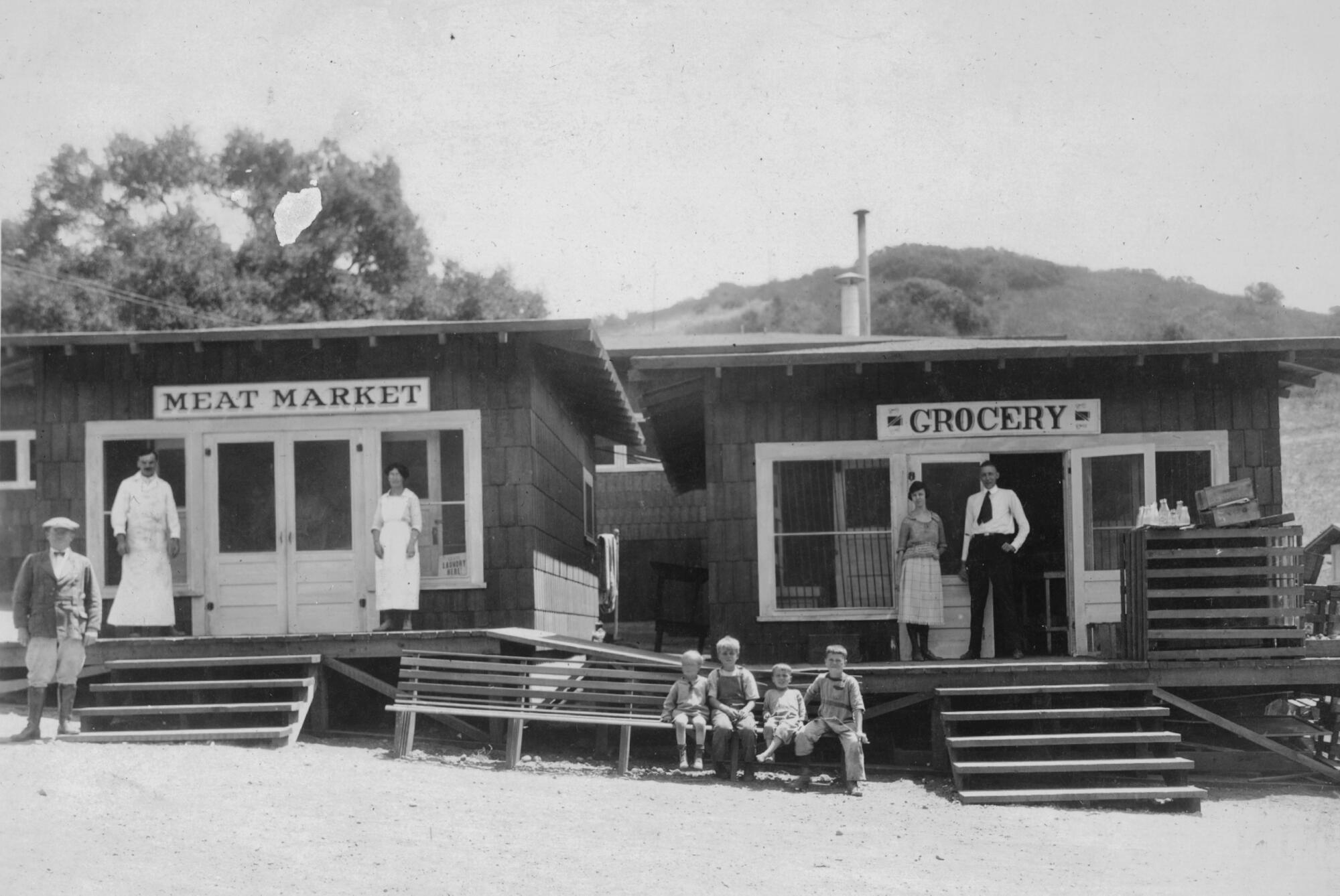
The 1920s Chautauqua Conference Grounds in what became Pacific Palisades included a grocery and meat market.

The 1920s Chautauqua Conference Grounds in what became Pacific Palisades included a grocery and meat market.

(Pacific Palisades Historical Society)

Those trees, and the green (and thus less flammable) edges of the creek, helped to save a row of small, wooden cottages and a cluster of wood-shingled, pitched-roof buildings that were the remains of the 77-acre Chautauqua Assembly Camp, once the thriving nucleus of a 1920s effort to shape the Palisades as a spiritual and intellectual lodestar on the California Coast. The Chautauqua movement — founded in 1874 at Lake Chautauqua, N.Y., to better train Sunday-school teachers — swept the country in the late 19th century, blossoming into a network of assemblies drawing rural and working-class Americans hungry for education, culture and social progress. While short-lived, the local camp would form the blueprint for Pacific Palisades to this day.

Young, who has co-written books about the Palisades and its surrounding communities, stepped onto the short boardwalk fronting a modest wooden structure. “This was the grocery store and meat market,” he noted. Rounding the slope at the back, he pointed to an old Adirondack-style dining hall — now called Cheadle Hall but originally Woodland Hall — its simple post-and-beam and wood wainscoting preserved from the early 1920s. He also spoke of what had been lost over the decades: Across the glade had stood a barnlike, three-tiered auditorium. Nearby, he said, had been a log-cabin library. Up and down the canyon were dozens of river-rock cottages and timbered casitas, and 200 canvas tents raised on wooden platforms.

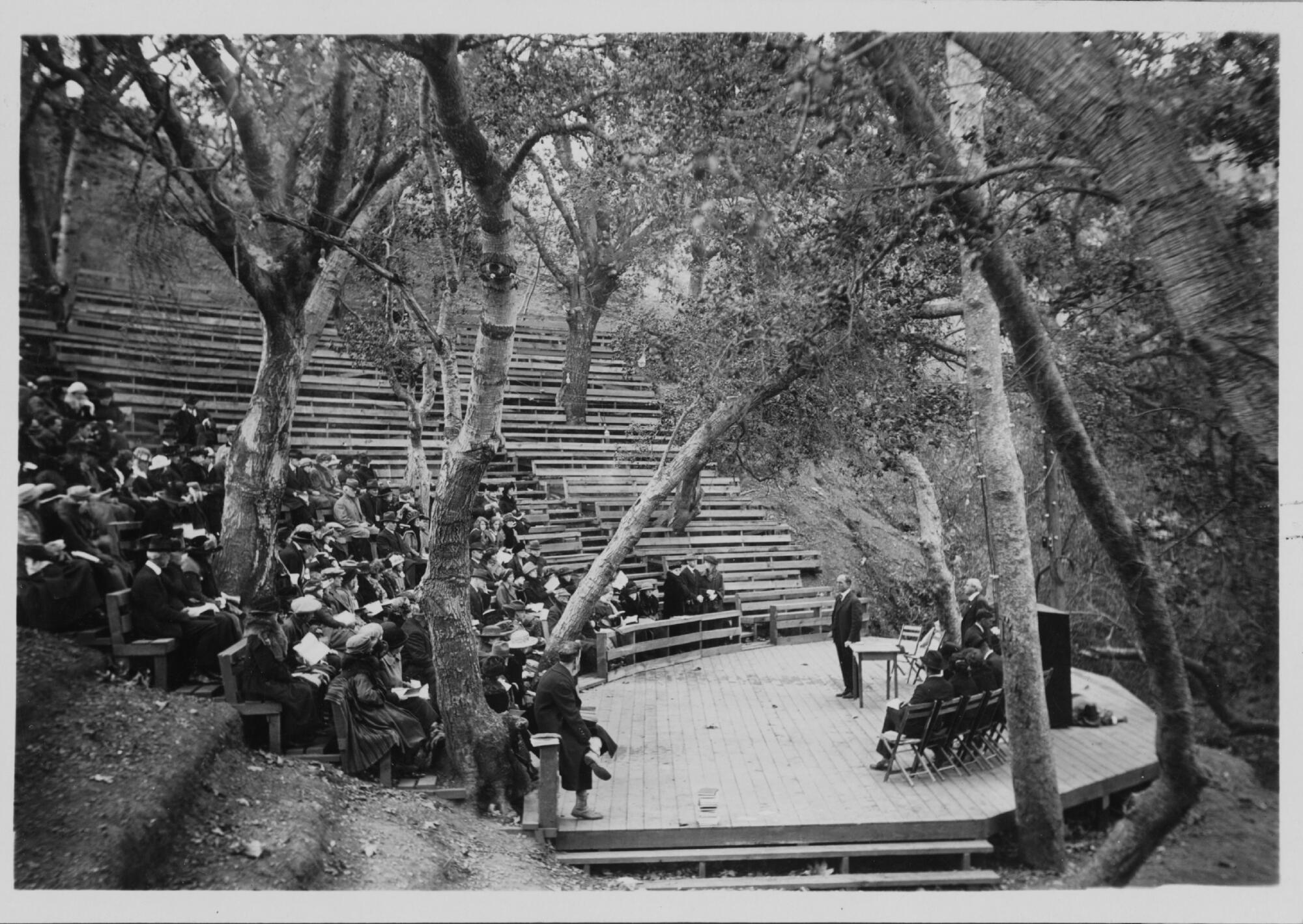
South of Sunset Boulevard (then known as Marquez Road), on a site that now includes Palisades Charter High School, was the Institute Camp, containing an amphitheater carved out of a natural bowl, where thousands of summertime campers would hear the likes of Leo Tolstoy’s son, Illya, speaking on “The True Russia,” or Bakersfield-born Lawrence Tibbett, who would become one of the country’s greatest baritones, perform selections from his Metropolitan Opera repertoire. The Institute Camp also housed the Founders Oak, a tree that marked the site of the community’s 1922 founding ceremony, and lots for independent groups, like the WE Boys and Jesus our Companion (J.O.C.), Methodist-affiliated clubs who made a former Mission Revival home into the Aldersgate Lodge (925 Haverford Ave.) in 1928.

A 1922 Thanksgiving gathering fills rows of the since-destroyed amphitheater set under oaks and sycamores in Temescal Canyon.

A 1922 Thanksgiving gathering fills rows of the since-destroyed amphitheater set under oaks and sycamores in Temescal Canyon.

(Pacific Palisades Historical Society)

In the sylvan canyon, the Palisades Chautauqua offered a bewildering array of ways to lift oneself up: hiking and calisthenics, elocution and oratory, homemaking and child psychology, music, history, politics, literature and theater. Tinged with piety, these were, in their own words, “high class, jazz-free resort facilities.”

The official dedication of the Palisades Chautauqua on Aug. 6, 1922, would be the last of its kind in the country. It was spearheaded by Rev. Charles Holmes Scott, a Methodist minister and educational reformer who dreamed of creating the “Chautauqua of the West.” The influence of the movement was so central to the Palisades’ identity that in 1926, one of its main thoroughfares — Chautauqua Boulevard — was named in its honor.

Scott, inspired by the Chautauqua tradition’s ideals of self-transformation, envisioned Pacific Palisades as a place where character would matter more than commerce. “Banks and railroads and money is always with us. But the character and integrity of our men and women is something money cannot buy. We will prove the worth of man,” Scott declared. Residents signed 99-year leases to ensure the community’s cooperative nature. The leasehold model was also meant to prevent speculation, fund cultural facilities and events, and uphold moral standards. Alcohol, billboards and architectural extravagance were all prohibited — as was, alas, anyone who wasn’t Protestant or white.

The Palisades Assn., under Scott’s guidance, purchased nearly 2,000 acres of mesa, foothills and coastline. Pasadena landscape architect Clarence Day drew up the first plans, establishing a new axis, Via de la Paz, or Way of Peace, eventually home to Pacific Palisades United Methodist Community Church (1930) and terminating at a neoclassical, Napoleonic-scaled Peace Temple, atop Peace Hill. He laid out two tracts: Founders Tract I, a tight-knit grid of streets (now known as the Alphabet Streets) for modest homes above Sunset Boulevard, and the curving Founders Tract II, closer to the coast with larger lots for more affluent residents.

Soon after, Day was replaced by the renowned Olmsted Brothers, who refined the layout to follow natural contours, planted thousands of trees and designed a stately civic center in which they wanted to include a library, hotel, lake, a park with a concert grove and a far larger, permanent auditorium. Only one major element of that center was realized: Clifton Nourse’s Churrigueresque-style Business Block building at Swarthmore and Sunset, completed in 1924.

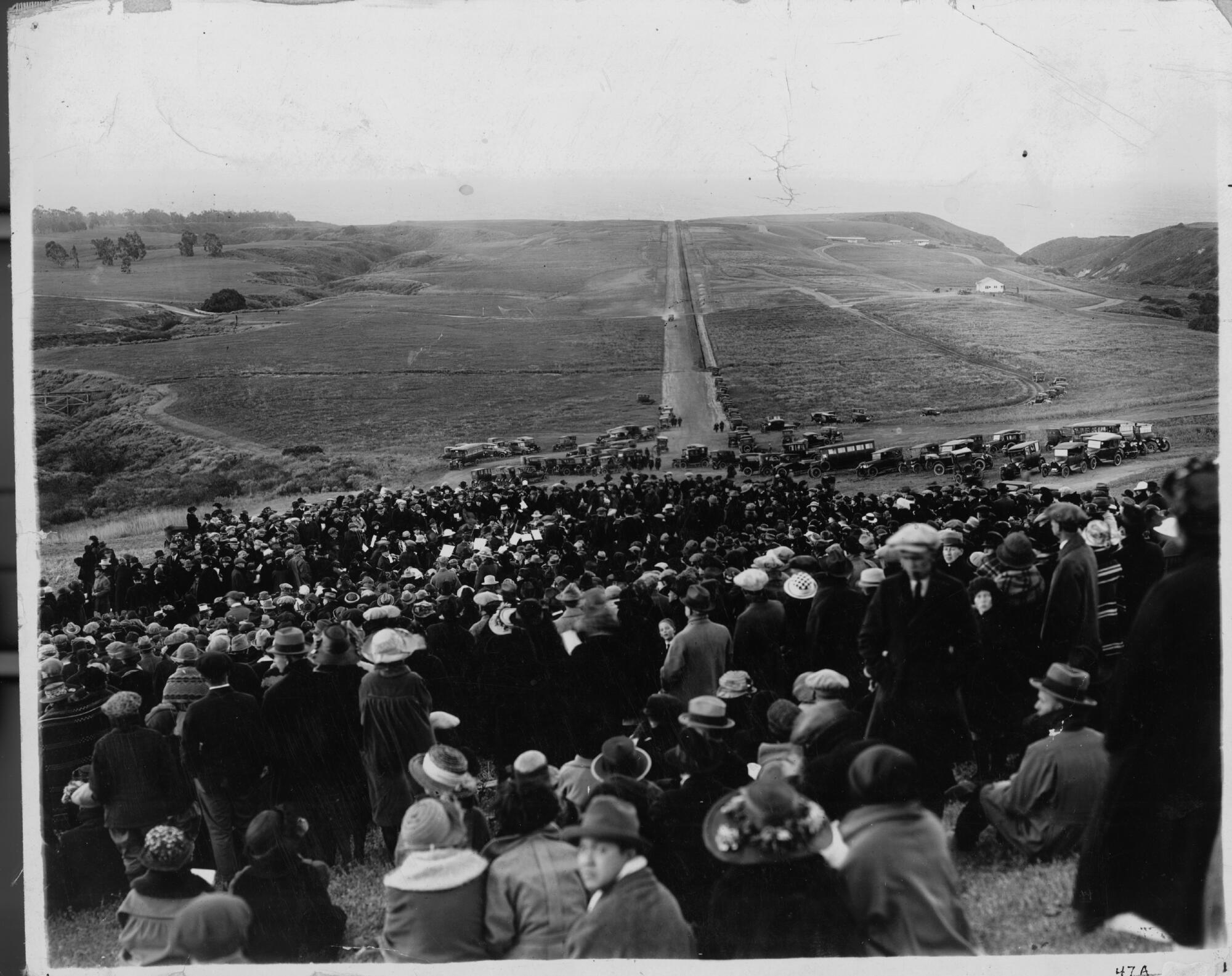
Residents gather on Peace Hill on Easter Sunday in 1922.

Residents gather on Peace Hill on Easter Sunday in 1922.

(Pacific Palisades Historical Society)

By the end of 1923, it seemed as if the Palisades was destined to become a boom town, with 1,725 people making down payments totaling more than $1.5 million on 99-year renewable leases. In early 1924, demand slumped, never to revive. To preserve the dream, in 1926 Scott abandoned the lease-only model and began selling lots. That same year the association borrowed heavily to purchase 226 more ocean-view acres from the estate of railway magnate Collis P. Huntington, installing underground utilities and ornamental street lighting in an area that would become known as the Huntington Palisades. Debt soared from $800,000 in 1925 to $3.5 million by the end of 1926.

As the 1929 stock market crash hit and revenue dried up in the Great Depression, the association collapsed. Its assets were sold off. Grand plans, like the Civic Center and the Peace Temple, were abandoned. The dream withered.

“There wasn’t a moment where they said ‘we’re stopping,’” Young said. “It just sort of petered out.”

Yet fragments endured, stubbornly. In 1943, the Presbyterian Synod purchased the Chautauqua site and operated it as a retreat. In the late ‘70s and early ‘80s, local activists fought off a plan to extend Reseda Boulevard right through Temescal Canyon (though buildings like the library and assembly hall had already been torn down in anticipation of the roadway). In 1994, the Santa Monica Mountains Conservancy acquired the land. Today, it survives as the city-run Temescal Gateway Park, its board-and-batten cabins and rustic halls weathered but largely intact.

The Business Block — since January a fire-blackened shell awaiting its undetermined fate — narrowly escaped demolition in the 1980s when a developer proposed replacing it with a concrete and glass mall. A preservationist campaign under the slogan “Don’t Mall the Palisades” saved the structure.

But by then, the character of the Palisades had begun to shift. Faint echoes of the quiet, rustic past remained, but modest bungalows had given way to mansions. The artists, radicals and missionaries were largely gone.

“It’s not Chautauqua anymore — it’s Château Taco Bell,” Young quipped, of much of the area’s soulless new built forms.

Today, thanks to the fire’s brutality, the original Chautauqua sites offer something unusual: a landscape where past and present momentarily coexist. Slate roofs held firm. Ancient oak groves performed better than modern landscaping. For Young, the fires stripped away modern gloss to reveal what continues to matter.

“When you go through a fire,” he said, “you get down to the basics.” He added: “The fires brought us back to 1928.”

Pacific Palisades is one of a long list of failed California utopias. Like Llano del Rio, the socialist settlement in the Antelope Valley, or the Kaweah Colony, a cooperative in the Sierra foothills, it was a high-minded gamble dashed on the shoals of capitalism and human nature. The idealistic outpost lingers, etched into the land, embossed in the Palisades’ deeper memory. The dream may no longer be intact, but its traces are still legible.

Source link

What should L.A. politicians call those who cause protest chaos?

Good morning, and welcome to L.A. on the Record — our City Hall newsletter. It’s David Zahniser, with an assist from Julia Wick, giving you the latest on city and county government.

Newsletter

You’re reading the L.A. on the Record newsletter

Sign up to make sense of the often unexplained world of L.A. politics.

You may occasionally receive promotional content from the Los Angeles Times.

L.A.’s Little Tokyo neighborhood was a mess on Monday. Windows were shattered in multiple locations. Graffiti seemed like it was everywhere. State Assemblymember Mark Gonzalez (D-Los Angeles) had had enough.

Gonzalez, who took office in December, had already voiced outrage over the immigration raids being conducted in his downtown district. But this time, he took aim at the people he called “anti-ICE rioters,” portraying them as narcissists and urging them to stay far away from the demonstrations happening downtown.

“Causing chaos, damaging neighborhoods, and live-streaming for likes helps no one,” he said in a lengthy press release. “Our elders, small businesses, and public spaces deserve better.”

Gonzalez did not stop there. He chided demonstrators for spray-painting historic landmarks and pointing fireworks at police, telling them that “terrorizing residents is not protest.”

“If you’re out here chasing clout while our neighbors are scared and storefronts are boarded up — you’re not helping, you’re harming,” said Gonzalez, a former chair of the Los Angeles County Democratic Party. “You’re playing right into Trump’s hands and undermining the very movement you claim to support.”

Politicians in L.A. have been reacting all week to the reports of violence, theft and vandalism that accompanied a week of anti-ICE protests. But each has had a somewhat different way of naming the perpetrators — and summing up their actions.

Los Angeles City Councilmember Ysabel Jurado, whose district also includes much of downtown, was more muted in her description of the people who created mayhem this week, referring to them as “agitators” and “opportunists.”

“Look, for the most part, this has been a peaceful protest,” she said in an interview. “But there are definitely some other folks that join that are not here to support immigrants and peacefulness, but are taking this as an opportunity to do something else. And I definitely condemn that.”

Jurado has spent the last few days highlighting her efforts to secure small business loans for struggling downtown businesses, especially those that were vandalized or had merchandise stolen. She is also pushing for city leaders to find another $1 million to pay for the legal defense of immigrants who have been detained or face deportation.

At the same time, the events of the past week have put Jurado in an awkward spot. Luz Aguilar, her economic development staffer, was arrested last weekend on suspicion of assaulting a police officer at an anti-ICE protest.

Normally, an aide like Aguilar might have been tasked with helping some of the downtown businesses whose windows were smashed or wares were stolen. Instead, Jurado faced questions about Aguilar while appearing with Mayor Karen Bass at the city’s Emergency Operations Center.

The LAPD has repeatedly declined to provide specifics on the allegations against Aguilar, whose father is Chief Deputy Controller Rick Cole. The Los Angeles Police Protective League, the union representing rank-and-file officers, said in an email to its members that Aguilar has been accused of throwing a frozen water bottle at officers.

Neither Cole nor Jurado’s staff would confirm or refute that assertion. Jurado, in an interview, also declined to say whether she sees her staffer as one of the agitators.

“She is on unpaid leave, and we’ll see what happens,” she said.

The search for the right words has not been limited to downtown politicians.

Council President Marqueece Harris-Dawson offered a lengthy soliloquy, saying police in recent days had encountered “looters coming out of stores with merchandise in their hands” who are using the ongoing protests as cover.

“Someone at midnight running around looting, even though there was a protest earlier, that person’s not a protester,” Harris-Dawson told his colleagues Tuesday. “That person’s a looter. That person’s a criminal.”

The same terms apply after Dodgers victories, Harris-Dawson said, when someone in a street celebration decides to set things on fire. “We don’t say Dodger fans burned a building. We say criminals burned a building,” he said.

Bass declared a local state of emergency in the wake of the downtown chaos, citing the violence against police, the vandalism and the “looting of businesses.” The declaration, issued Tuesday, simply refers to the perpetrators as criminals.

The mayor sounded genuinely frustrated, telling The Times on Thursday that she was “horrified” by the graffiti that covered the Japanese American National Museum, which highlights the struggle of immigrants, and other buildings in Little Tokyo.

“Anybody that is committing vandalism or violence does not give a crap about immigrants,” she told another news outlet.

Gonzalez, for his part, said he produced his anti-rioter screed after hearing from senior citizens in Little Tokyo who were terrified to leave their homes and walk into the melee on the street.

“They were literally throwing fireworks at cops’ faces at San Pedro and 3rd,” he said.

Other downtown residents sounded unfazed, telling The Times that the disruptions were “kind of the usual.” In recent years, major sports victories have been just as likely to end with illegal fireworks, graffiti and burning or vandalized vehicles downtown — even when the games aren’t played there.

Jurado said she is searching for “creative solutions” to prevent such crimes in the future, such as promoting the fact that downtown businesses are in “full support of the protests.”

“There were Little Tokyo businesses that weren’t graffitied on because they had a sign on the window that was pro-actively ‘Know your Rights,’ or against ICE,” she said. “So they didn’t get graffitied on. At least that’s from my anecdotal evidence.”

“So I think if we put that at the forefront, we can help educate our community members to keep our neighborhoods safe and beautiful,” she said.

State of play

— CITY IN CRISIS: The crisis sparked by the immigration sweeps reverberated throughout the week, with Bass urging President Trump to end the raids, ordering a curfew for downtown and Chinatown and speaking out against the tackling of U.S. Sen. Alex Padilla by federal agents. By the time the week ended, City Hall and surrounding government buildings were being guarded by scores of law enforcement officers from around the state — Hermosa Beach Police, San Fernando Police, Riverside County Sheriff, Santa Barbara County Sheriff, just to name a few. Amid the heavy police presence, Friday’s city council meeting was canceled.

— TAKING OFF THE GLOVES: For most of her time at City Hall, Bass has avoided public confrontations with other elected officials, including President Trump. But with ICE fanning out across L.A. and her city engulfed in protest, those days are over. As she navigates the crisis, Bass has also gained the opportunity for a crucial reset after the Palisades fire.

— CHAFED AT THE CHIEF: Earlier in the week, members of the City Council grilled LAPD Chief Jim McDonnell over his agency’s handling of anti-ICE protests. Harris-Dawson bristled at the idea that the LAPD would refer to federal immigration authorities as “law enforcement partners.” “If we know somebody is coming here to do warrant-less abductions of the residents of this city, those are not our partners,” he said. “I don’t care what badge they have on or whose orders they’re under. They’re not our partners.”

— PADILLA PUSHBACK: City Councilmember Imelda Padilla, in a separate line of questioning, asked if the LAPD could warn city officials when it hears from federal law enforcement that immigration raids are coming. McDonnell said such actions would amount to obstruction of justice. “That would be completely inappropriate and illegal,” he said.

— A ‘MIX OF EMOTIONS’: McDonnell has been offering support to LAPD officers who may have mixed feelings about the ongoing federal crackdown. In one message, he acknowledged that some in the majority-Latino department have been “wrestling with the personal impact” of the immigration sweeps. “You may be wearing the uniform and fulfilling your duty, but inside, you’re asked to hold a complex mix of emotions,” the chief wrote.

— WHAT HAPPENS IN VEGAS: Los Angeles City Councilmember John Lee broke his silence on the pivotal 2017 Las Vegas trip that later resulted in the criminal conviction of his onetime boss, Councilmember Mitchell Englander. Lee took the virtual witness stand last week in his own Ethics Commission case, repeatedly denying allegations that he accepted gifts in Vegas — food, drink, travel — in violation of city laws. At one point in his Zoom testimony, Lee said he stuffed $300 into the pocket of businessmen Andy Wang, a key witness in the proceedings, in an attempt to cover his share of the expenses at a pricey nightclub.

— RAPID RESPONDERS: Faced with an onslaught of ICE raids locally and threats from politicians nationally, L.A.’s immigrant rights groups are in the fight of their lives. Those groups have been participating in the Los Angeles Rapid Response Network, a coalition of 300 volunteers and 23 organizations formed last year to respond to ICE enforcement.

— COUNTING THE BEDS: We told you last week that City Administrative Officer Matt Szabo was the city’s star witness in its court battle with the L.A. Alliance for Human Rights, which is seeking to place the city’s homelessness programs in receivership. On Wednesday, Szabo filed a declaration in federal court that pushes back on assertions that the city may have massively double counted the homeless beds it included under a pair of legal settlements. Szabo said city officials identified 12 instances of double counting in an agreement requiring 12,915 beds, and would appropriately correct the record.

— DEAL FOR MORE COPS? It seems like a lifetime ago, but last weekend Bass announced that she had struck a deal with Harris-Dawson, the council president, to find the money to restore her plan for hiring 480 police officers next year. Bass said Harris-Dawson has committed to identify the funding for those hires within three months. Councilmember Bob Blumenfield, who sits on the budget committee, said he is open to finding the money but was not part of any promise to do so within 90 days.

QUICK HITS

  • Where is Inside Safe? The mayor’s signature initiative to combat homelessness did not launch operations in any new locations this week. However, the council did go behind closed doors to confer with its lawyers on the legal battle with the L.A. Alliance for Human Rights.
  • On the docket for next week: The City Council is set to take up the mayor’s latest declaration of a local emergency, this one in response to “violence against first responders, vandalism of public and private property, looting of businesses, and failure to follow” LAPD dispersal orders.

Stay in touch

That’s it for this week! Send your questions, comments and gossip to [email protected]. Did a friend forward you this email? Sign up here to get it in your inbox every Saturday morning.



Source link

After months of checkpoints, Pacific Palisades will reopen to the public Saturday

Pacific Palisades will reopen to the general public Saturday, Los Angeles Police Department Chief Jim McDonnell told The Times Friday afternoon.

The affluent coastal enclave has remained closed to the public since the devastating January wildfires, months after other fire-damaged neighborhoods reopened. Access to the neighborhood was limited to residents and workers with passes. Dozens of LAPD officers have been staffing 16 checkpoints on major streets into the community, according to the mayor’s office.

Those checkpoints will no longer be staffed as of Saturday, but there “will still be a heavy police presence for the foreseeable future there,” McDonnell said.

The decision was made in conjunction with Mayor Karen Bass, with input from members of the community, McDonnell said. Bass did not immediately respond to a request for comment.

The city is bracing for widespread demonstrations against the Trump administration on Saturday that will include a heavy law enforcement presence. The need to shift personnel to other parts of the city ahead of the protests was “a factor” in McDonnell’s decision, but he said it was also a necessary evolution months after the fires.

The status of the checkpoints will be reassessed after this weekend, LAPD spokesperson Jennifer Forkish said.

Source link

This Los Angeles city official testified for four days so Karen Bass wouldn’t have to

Good morning, and welcome to L.A. on the Record — our City Hall newsletter. It’s David Zahniser, with an assist from Noah Goldberg and Laura Nelson, giving you the latest on city and county government.

Newsletter

You’re reading the L.A. on the Record newsletter

Sign up to make sense of the often unexplained world of L.A. politics.

You may occasionally receive promotional content from the Los Angeles Times.

If Los Angeles Mayor Karen Bass manages to hold on to her power to oversee the city’s homelessness programs, she may well have one person to thank: City Administrative Officer Matt Szabo.

Szabo, a fixture in the administrations of the past three mayors, was effectively the city’s star witness in its legal battle against the L.A. Alliance for Human Rights, the nonprofit group that sued the city in 2020 over its handling of the homelessness crisis.

During a seven-day hearing that concluded Wednesday, the alliance pressed U.S. Dist. Judge David O. Carter to take authority over homeless services away from Bass and the City Council and give it to a to-be-determined third party overseen by the court.

On four of those seven days, Szabo sat in the witness chair, defending the city’s decisions and occasionally offering cutting remarks about the city’s critics. Above all, he insisted the city would meet its obligation to provide 12,915 additional homeless beds by June 2027, as required under a settlement agreement with the alliance.

Szabo, who reports to both Bass and the council, is well known within City Hall for his work preparing the city budget, negotiating with city unions and providing policy recommendations on homelessness and other issues. During his time in Carter’s courtroom, he was also a human shield, taking the brunt of the hostile questions and helping to ensure that Bass and others would not be called to testify.

Throughout the proceedings, the city’s lawyers lodged hundreds of objections to the alliance’s questions, sometimes before they had been fully asked. Carter cautioned them that the rapid-fire interruptions could make things difficult for inexperienced witnesses.

He also made clear that the group did not include Szabo.

“Mr. Szabo,” the judge said, “certainly is used to the stress.”

The alliance had placed not just Bass but also Councilmembers Monica Rodriguez and Traci Park on its witness list, saying all three had made public statements criticizing the response system. Bass herself called the system “broken” during her State of the City address in April, a fact highlighted by Matthew Umhofer, an attorney for the alliance.

Those statements, Umhofer said, only reinforce the alliance’s argument that the city’s homelessness programs are beyond repair and must be placed into receivership.

“The city is not fixing that broken system,” he said during closing arguments. “It’s simply doubling down on that broken system.”

Bass spokesperson Zach Seidl, asked to explain the mayor’s use of the word “broken,” said she was referring to a number of obstacles, including “an urge from many to return to the old way of doing things that allowed homelessness to explode.”

“But change is happening,” he said. “Under the Mayor’s leadership, we are moving forward.”

The city’s newly hired legal team from Gibson Dunn, the law firm that persuaded the Supreme Court to uphold laws barring homeless encampments on public property, sought to amplify that message. They also claimed the mayor and council members were shielded by the “apex doctrine,” which bars high-level, or apex, government officials from testifying except in extraordinary circumstances.

The city’s lawyers offered up just two witnesses of their own: Szabo and Etsemaye Agonafer, Bass’ deputy mayor for homelessness programs, saying they were the most familiar with the issues. The alliance initially sought 15.

Agonafer testified for about four hours, highlighting progress made by the mayor’s Inside Safe program, which moves people out of encampments and into hotels and motels.

Umhofer ultimately withdrew his subpoenas targeting Bass and the others, saying he didn’t want to incur additional delays. But he called Bass cowardly for failing to show up. By then, he said, his team had enough evidence to show that the city’s elected officials should no longer control homeless programs.

“We have quite literally put the homelessness response system in Los Angeles on trial,” said Elizabeth Mitchell, another alliance attorney, on the final day of proceedings.

The alliance used much of the questioning to highlight problems at the Los Angeles Homeless Services Authority, also known as LAHSA. That agency, overseen by a board of appointees from the city and county, has been criticized repeatedly in audits dating back to 2001 — documents highlighted by the alliance during the proceedings.

Szabo acknowledged that LAHSA has faced issues with data collection. But he insisted that the city is closely tracking the beds required under its settlement with the alliance. “We have taken steps to ensure that the data we are reporting is accurate,” he told the court.

Carter, who has yet to rule in the case, did not sound as confident in the city’s attention to detail. On Wednesday, he demanded that the city turn over records regarding its compliance with another agreement in the case — this one known as the “roadmap.” The roadmap agreement, which expires June 30, required the city to produce 6,700 beds.

In his order, Carter raised questions about whether city officials had double counted “time-limited subsidies” — money used to help homeless people move into apartments and pay their rent — by applying them both to the roadmap requirements and to the obligations within the alliance settlement agreement.

Szabo said city officials are collecting the records for the judge.

Councilmember Hugo Soto-Martínez, whose district includes Hollywood, voiced confidence in Szabo. He also praised Bass for taking on the issue of homelessness, pointing out that LAHSA reported that the city had made progress last year.

“We’re doing things that are showing results,” said Soto-Martínez, whose office has participated in 23 Inside Safe encampment operations. “Is it perfect? No. But we’re working through it.”

State of play

— ICE RAID OUTRAGE: L.A.’s elected officials voiced their anger on Friday over a series of federal immigration sweeps in Westlake, Cypress Park and other parts of the city. L.A. County Supervisor Hilda Solis said the individuals detained were “hardworking Angelenos who contribute to our local economy and labor force every day.”

Bass issued her own statement, saying: “We will not stand for this.”

“As Mayor of a proud city of immigrants, who contribute to our city in so many ways, I am deeply angered by what has taken place,” she said. “These tactics sow terror in our communities and disrupt basic principles of safety in our city.”

— WELCOME, AECOM: Nearly five months after a firestorm laid waste to a wide swath of Pacific Palisades, Bass announced that the city has hired the global infrastructure firm AECOM to develop a plan for rebuilding the area and reconstructing utilities and other infrastructure. The firm will work alongside both the city and Hagerty Consulting, which Bass tapped as a recovery contractor in February, according to the mayor’s office.

— SWITCHING HORSES? Businessman and gubernatorial candidate Stephen J. Cloobeck offered praise for L.A.’s mayor last year, commending her for her work addressing homelessness. He even said he had donated $1 million to LA4LA, an initiative promoted by Bass during her 2024 State of the City address, an event he attended. But last weekend, while making the rounds at the California Democratic Convention, he told The Times he wasn’t so keen on Bass’ leadership. “I would support Rick Caruso in a heartbeat over Mayor Karen Bass, and that’s a quote,” he said.

— MISSED MESSAGES: Bass has come under heavy scrutiny for deleting text messages she sent during the January firestorms. But she wasn’t the only one. L.A. County Supervisor Kathryn Barger, who represents the area devastated by the Eaton fire, has an iPhone that “auto deletes” messages every 30 days, her spokesperson said.

— ENGINE TROUBLE: Earlier this year, then-Fire Chief Kristin Crowley cited disabled engines, and a lack of mechanics, as one reason why fire officials did not dispatch more personnel to Pacific Palisades before the Jan. 7 fire. But a Times analysis found that many of the broken engines highlighted by department officials had been out of service for many months or even years — and not necessarily for a lack of mechanics. What’s more, the LAFD had dozens of other engines that could have been staffed and deployed in advance of the fire.

— SAYONARA, CEQA: State lawmakers are on the verge of overhauling the California Environmental Quality Act, which has been used for decades to fight real estate development and public works projects in L.A. and elsewhere. One proposal would wipe away the law for most urban housing developments.

— PADRINOS PAYOUT: L.A. County has agreed to pay nearly $2.7 million to a teenager whose violent beating at Los Padrinos Juvenile Hall launched a sprawling criminal investigation into so-called “gladiator fights” inside the troubled facility. Video of the December 2023 beating, captured on CCTV, showed Jose Rivas Barillas, then 16, being pummeled by six juveniles as probation officers stood idly by.

— EVADING EVICTION: A 70-year-old homeless man who illegally moved into a state-owned house in the path of the now-canceled 710 Freeway extension is fighting his eviction. Benito Flores, who seized a vacant residence in El Sereno several years ago, recently holed up in a tree house he built in the backyard — and so far has warded off attempts by sheriff’s deputies to lock him out.

— AIRPORT AHEAD: The long-awaited LAX/Metro transit center at Aviation Boulevard and 96th Street finally opened on Friday, bringing commuters tantalizingly close to Los Angeles International Airport. For now, free shuttle buses will run every 10 minutes along the 2.5-mile route between the transit center and LAX.

— BREAKING BARRIERS: The first transgender captain in the Los Angeles Fire Department died last month at age 80. Michele Kaemmerer joined the LAFD in 1969, retiring in 2003. She transitioned in 1991 and later led Engine 63 in Marina del Rey. In a 1999 interview with PBS, Kaemmerer said that some firefighters who knew her before she transitioned refused to work with her. Despite those hardships, she “always had a good attitude,” said her widow, Janis Walworth.

QUICK HITS

  • Where is Inside Safe? The mayor’s signature program to combat homelessness did not launch any operations at new locations this week.
  • On the docket for next week: The city’s newly formed Charter Reform Commission holds its first meeting on Tuesday, discussing the process that will be used to select its remaining members.

Stay in touch

That’s it for this week! Send your questions, comments and gossip to [email protected]. Did a friend forward you this email? Sign up here to get it in your inbox every Saturday morning.

Source link

There will soon be a ‘mayor of L.A. County.’ How much power should come with the job?

Newsletter

You’re reading the L.A. on the Record newsletter

Sign up to make sense of the often unexplained world of L.A. politics.

You may occasionally receive promotional content from the Los Angeles Times.

Soon, the most powerful Los Angeles County politician won’t be the mayor of L.A. It won’t be a county supervisor.

It will be the elected chief executive.

“It’s probably going to be the second most powerful position in the state next to the governor,” said former West Covina Mayor Brian Calderón Tabatabai, one of 13 people now tasked with deciding just how much power should come with the post.

This week, the final five members were named to the county’s “governance reform task force.” The former politicians, union leaders, advocates and business owners will make recommendations on how to move forward with Measure G, the sprawling ballot measure approved by voters in November to overhaul L.A. County government.

Measure G was massive in scope but scant on details. That means members of the task force — five of whom were picked directly by supervisors — must figure out the contours of a new county ethics commission by 2026. They’ll also help expand the five-person board to nine by 2032.

Perhaps most consequentially, they will have to hammer out the powers of the new chief executive, an elected official who will represent 10 million county residents — a position that some task force members don’t even think should exist.

“I’m extremely concerned about the elected CEO,” said former Duarte Mayor John Fasana, a task force member. “At this point, we have to try and find a way to make it work.”

Rewind to last November’s election. The elected chief executive position was, by far, the most controversial part of the overhaul, and a bitter pill to swallow for some who were otherwise eager to see the Board of Supervisors expanded and ethics rules strengthened.

Currently, the chief executive, a role filled by Fesia Davenport, is appointed by the supervisors and works under them. She takes the first stab at the county budget and wrangles department heads, putting out whatever fires are erupting.

It’s not a glamorous job — many people don’t know it exists — but the chief executive, more than any other county leader, is responsible for keeping the place running smoothly.

With the passage of Measure G, the position will become a political one, beholden only to voters. Some have dubbed it the “mayor of L.A. County.”

Supervisor Lindsey Horvath, who spearheaded the overhaul, said that one of the most influential positions in local government will now come out of the shadows and be directly accountable to voters.

Supervisor Kathryn Barger has been deeply skeptical, warning that it will diminish the supervisors’ power and politicize a position that functions best behind the scenes. Supervisor Holly Mitchell had similar hesitations, as did some county employee unions.

Now, they’ve got to make it work.

Derek Hsieh, who heads the Assn. for Los Angeles Deputy Sheriffs as well as chairs the Coalition of County Unions, said both labor groups opposed Measure G and the creation of the elected chief executive. But now, as a member of the task force, he vowed to “bring success to that decision.”

In interviews, some task force members — both supporters of Measure G and opponents — said they plan to tread carefully.

“I’ve heard murmuring, like what if we get someone like an [Alex] Villanueva running amok and burning bridges unnecessarily,” said Marcel Rodarte, who heads the California Contract Cities Assn., referring to the bombastic former sheriff. “It’s a possibility it could happen. I want to make sure that those nine supervisors have the ability to rein in the CEO.”

Rodarte and his colleagues will take the first stab at creating checks and balances. Should the chief executive be able to hire and fire department heads? What are the veto powers? How much control will the executive have over the county’s purse strings? Currently, the position has no term limits — should that change?

Sara Sadhwani, a politics professor at Pomona College and a task force member, said she’s already hearing concerns about the lack of term limits, which would put the chief executive on an uneven footing with supervisors, who must leave after three four-year terms. She said the task force may consider a change in state law that would permit term limits.

“Looking at the federal government, there need to be very real constraints on executive power,” she said. “There has to be a healthy friction.”

Sadhwani said she’s expecting some pushback to parts of the proposal from county supervisors, who may be less than pleased to see their power siphoned away.

“We can imagine there are board members who do not want to see those powers move to an executive branch,” she said.

Rob Quan, a transparency advocate, said he’ll be watching closely.

“What I would like to see is this task force have the freedom and independence and insulation to come up with good, thoughtful recommendations,” he said. “What I don’t want to see is these supervisors using their commissioners as gladiators.”

State of play

— THREE-RING CIRCUS: L.A. city and county officials spent the past week in U.S. Dist. Judge David O. Carter’s courtroom — either monitoring or participating in a multi-day evidentiary hearing on the city’s settlement agreement with the L.A. Alliance for Human Rights. The stakes are high: the Alliance wants to place the city’s homelessness programs into receivership, effectively removing control from Mayor Karen Bass, on the grounds that the city is not meeting its legal obligations for providing such services. The city says it has made its best efforts to comply with the agreement.

So who was in the room? City Atty. Hydee Feldstein Soto monitored the hearing at various points. City Administrative Officer Matt Szabo was grilled on the stand over multiple days. Dr. Estemaye Agonafer, deputy mayor for homelessness, was sometimes prickly during three-plus hours of questioning.

WHEN DOES IT END? The testimony in the Alliance case is expected to spill into next week, although it’s not clear how many more days are needed. Carter, who has remained unusually muted during this week’s proceedings, declared at one point: “Time’s not a concern.”

— READY TO MOVE ON: Speaking of homelessness, Councilmember Tim McOsker is looking to bring an end to Bass’ emergency declaration on homelessness, rescinding the mayor’s power to award no-bid contracts and lease buildings without council approval. The move comes two and a half years after Bass declared an emergency. Councilmember Monica Rodriguez, an outspoken critic of the city’s homeless programs, also has been a longtime supporter of terminating the emergency.

WAGE WARRIORS: A coalition of airlines, hotels and concession companies at Los Angeles International Airport filed paperwork Thursday to force a citywide vote on a new ordinance hiking the minimum wage of hotel and airport workers to $30 per hour by 2028.

— FEELING POWERLESS: Former Animal Services General Manager Staycee Dains said in a series of interviews with The Times that she felt powerless to solve entrenched problems at her agency, including severe understaffing and mistreatment of shelter animals. Dains said she was repeatedly told by the city’s personnel department that she couldn’t fire problem employees. And she clashed with a union that represents shelter employees.

MONEY IN THE MAIL: Many residents who lost their homes in the January wildfires should have received a tax refund after their damaged or destroyed properties were reassessed. But about 330 checks are in limbo after postal workers tried unsuccessfully to deliver them to vacant or destroyed homes.

— NO CHARGES: A former L.A. County probation official who was accused by more than two dozen women of sexually abusing them when they were minors will not be criminally prosecuted because the alleged incidents happened too long ago. Thomas Jackson, 58, has been named in dozens of lawsuits that were part of a historic $4-billion settlement.

— WHAT DISASTER? L.A. leaders declined to dramatically increase the budget of the city’s Emergency Management Department, despite the many natural disasters that could hit the region in years to come. Facing a nearly $1-billion shortfall, the City Council passed a budget that rejected the funding bump asked for by department leaders.

— I SUED THE SHERIFF: Former Times reporter Maya Lau is suing Los Angeles County and Villanueva, the former sheriff, arguing that her 1st Amendment rights were violated. Lau’s attorneys said she was the target of a sheriff’s investigation that was “designed to intimidate and punish” her for reporting about a leaked list of deputies with a history of misconduct.

QUICK HITS

  • WHERE IS INSIDE SAFE? The mayor’s signature program to address homelessness went to the area around 103rd Street and Wilmington Avenue in Watts, according to the mayor’s team. That area is represented by Councilmember Tim McOsker.
  • On the docket for next week: The supervisors meet Tuesday to consider a plan for holding regular meetings with city officials about the formation of the county’s new homelessness department. According to the motion, put forward by Horvath, the meetings would ensure “open communication” with the city after the supervisors voted to pull more than $300 million out of the Los Angeles Homeless Services Authority, or LAHSA.

Stay in touch

That’s it for this week! Send your questions, comments and gossip to [email protected]. Did a friend forward you this email? Sign up here to get it in your inbox every Saturday morning.
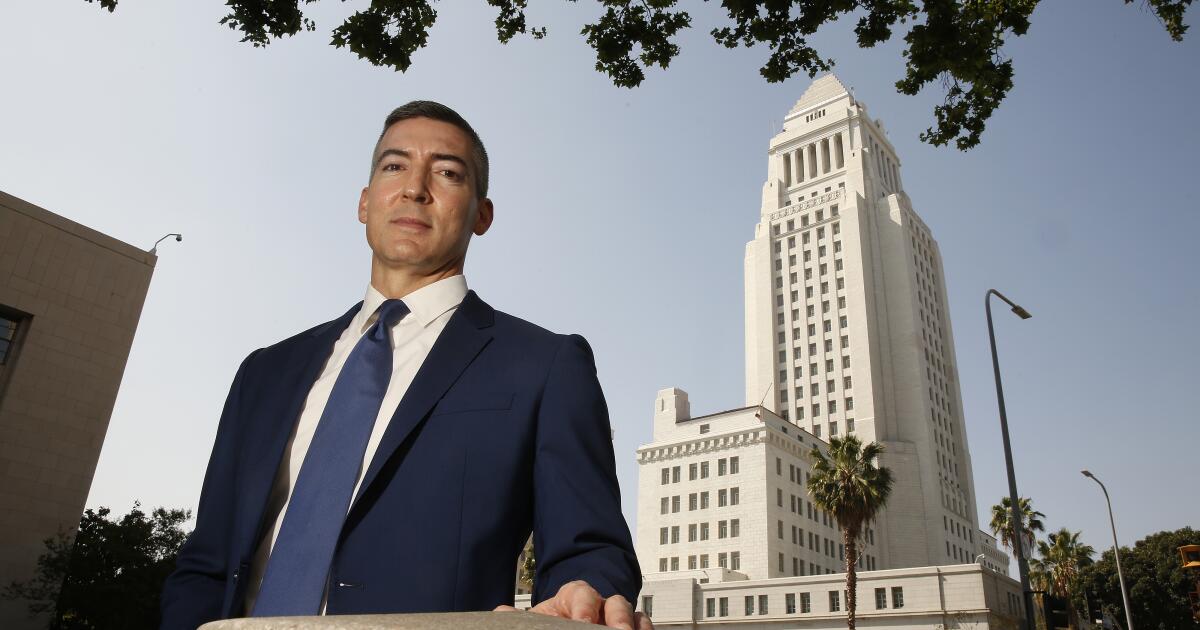
Source link

With L.A.’s latest budget, has the political pendulum firmly swung at City Hall?

Newsletter

You’re reading the L.A. on the Record newsletter

Sign up to make sense of the often unexplained world of L.A. politics.

You may occasionally receive promotional content from the Los Angeles Times.

When tenant rights attorney Ysabel Jurado ran for Los Angeles City Council last year, she positioned herself as a potential fourth vote against Mayor Karen Bass’ plan to hire more police officers.

While she was waging her campaign, the council’s three-member super progressive blocEunisses Hernandez, Nithya Raman and Hugo SotoMartínez — voted against the mayor’s budget, decrying the amount of money allocated for the Los Angeles Police Department. Jurado, who went on to unseat Councilmember Kevin de León, said she would have joined them, turning the 12-3 budget vote into an 11-4.

Turns out it none of that was necessary.

On Thursday, the council approved a $14-billion annual budget that would cut police hiring in half, while sparing hundreds of other city workers from layoffs. Jurado, now on the council, praised the spending plan, then voted for it.

And this time around, the council members on the losing end of a 12-3 vote were those who occupy the body’s more moderate wing: Monica Rodriguez, Traci Park and John Lee.

The shift in budget votes from last year to now offers perhaps the strongest evidence of the political pendulum swing under way at City Hall. When other recent votes are added to the equation, the council chamber might even be undergoing a permanent realignment.

The council also voted 12-3 last week to hike the city’s minimum wage for hotel employees and private-sector tourism workers, boosting it to $30 per hour by 2028. Park, Rodriguez and Lee were in the minority on that issue as well, arguing that hotel and airport wages were rising too much and too quickly, jeopardizing the financial health of L.A.’s tourism industry.

The three ultra moderates also voiced alarm at their colleagues’ decision to scale back the mayor’s plan for increasing hiring at the fire department. Rodriguez, who gave a long and passionate speech against the budget, said in an interview she thinks “there’s clearly a shift in the politics of the council.”

“We have different ideology with respect to how we need to be making sure that the city is safe,” she said.

Soto-Martínez, who represents an Echo Park-to-Hollywood district, wouldn’t pin the political shift on any one vote, arguing instead that “the realignment has been happening for quite some years now.” The move to the left at City Hall, he said, has been driven by the election of candidates — including himself — who have sworn off contributions from corporations and real estate interests.

Because this year’s financial situation was so dire, and the list of proposed cuts so large, the council had no sacred cows when preparing the 2025-26 spending plan, he said. That paved the way for the council to scale back the recruitment of new police officers, he said.

“For many years, including the first two years that I was here, that issue was untouchable. No one would touch it or go near it,” said Soto-Martínez, who was elected in 2022. “And this year, we were realistic about police hiring.”

The realignment is in part of the product of years of campaigning and grassroots advocacy from the hotel workers’ union, LA Forward, Democratic Socialists of America-Los Angeles and many other organizations. But it also reflects the choices of Council President Marqueece Harris-Dawson, who is still in his first year in his leadership role.

Harris-Dawson reshuffled the council’s committee assignments last year, offering plum spots to the newest arrivals. Hernandez, who promised during her 2022 campaign not to hire any additional police officers, landed a coveted spot on the budget committee. She then forged a strong working relationship with Councilmember Heather Hutt, another new appointee to the budget committee, who broke into tears on Thursday as she described Hernandez’ contributions to their deliberations.

Over the course of the budget committee’s nine meetings, Hernandez worked with her colleagues to restore funding for programs that help day laborers, an LGBTQ+ liaison in the city’s civil rights department and $1 million for the legal defense of immigrants facing deportation. She also fought for core services, such as street light repairs, graffiti removal and crews that address illegal dumping.

By contrast, Rodriguez, Park and Lee made clear they felt excluded from key decisions, particularly the budget committee’s vote to shift management over certain homelessness initiatives out of the office of City Administrative Officer Matt Szabo and into the Los Angeles Housing Department.

After a lengthy debate, the three moderates picked up two votes in their effort to delay those changes, not enough to win the day. Instead, their biggest victory — one that took multiple tries — was securing the votes to restore $376,961 at the fire department, which will allow the city to send 45 firefighters to paramedic training.

Park, whose district includes the fire-scarred Pacific Palisades, sounded furious by the time the entire budget came up for a vote.

“I don’t think we should agree to spend another penny on homelessness until we as a full council — not just the few of you who get invited into the conversation — have the chance to chime in,” she said, adding: “But instead of fixing that mess, what did we decide to go after? The increase [Bass requested for] our fire department, after all we literally just witnessed in January.”

One day after the budget vote, Councilmember Bob Blumenfield acknowledged that the pendulum had swung left at City Hall, pointing to the results of several recent elections. Still, he cautioned against reading too much into a single budget, saying a pendulum can swing in opposing directions.

Blumenfield, who represents part of the west San Fernando Valley, said he voted to slow down police hiring as part of a compromise to protect civilian jobs at the LAPD and elsewhere. “I hate seeing the lower number of police recruitment,” he said.

Blumenfield, who occupies the terrain between super progressive and ultra moderate, said he’s still hoping the council will find additional funds later in the budget year to allow the LAPD to hire more officers beyond the 240 that received funding from the council.

“I don’t like to look at the council as a spectrum. I don’t see myself on that spectrum,” he said. “On different issues, I feel like I’m on different parts of it.”

State of play

— SEEKING A VETO: Business groups pressed Mayor Karen Bass to veto the measure hiking the minimum wage of tourism workers, saying hotels and other businesses cannot afford to wage hikes of 50% between now and 2028. Bass, appearing Tuesday at the Hollywood Chamber of Commerce, sounded sympathetic to their complaints but stopped short of stating her opposition.

“I’m concerned about the hit to tourism and just the hit in general, especially with downtown, but citywide, because downtown was already suffering,” she told the audience. She also raised doubts that she would intervene, calling the initial wage vote “veto proof.”

— BAD CALL: Former deputy Mayor Brian Williams struck a plea deal with federal prosecutors, admitting he called in a fake bomb threat to City Hall late last year that was blamed on anti-Israel sentiment. Williams, who handled public safety issues for Bass, falsely stated that he had just received a call on his city-issued cellphone from an unknown male caller who made a bomb threat against City Hall, according to his plea agreement.

— HOORAY FOR HOLLYWOOD: L.A.’s mayor promised to reduce barriers to filming in Los Angeles this week, signing an executive directive aimed at streamlining city permit processes and increasing access to legendary L.A. locations, such as Griffith Observatory and the Central Library. “We’ve taken the industry for granted,” Bass said. “We know that the industry is a part of our DNA here. And sometimes, if you think it’s a part of your DNA, you can think it’s always going to be here.”

— ZOO STORY: The elephants Billy and Tina were whisked out of the Los Angeles Zoo this week, relocated to a zoo in Tulsa over the fierce objections of animal advocates. The late night relocation drew complaints from Blumenfield and an array of activists, who argued that the pachyderms needed a much larger expanse of land for their health and well being.

— PUBLIC PAYOUTS: Two fired employees who received a combined $800,000 in legal settlements from the Los Angeles Homeless Services Authority had accused the agency’s chief executive, Va Lecia Adams Kellum, of hiring cronies for top jobs, attempting to destroy records and being “extremely inebriated” at an out-of-state conference, according to two settlement demand letters released this week. LAHSA “strenuously” denied the allegations, saying the agency “made a business decision” to pay the fired workers and resolve the employee dispute.

— PUSHBACK OVER PCH: Officials from city and state government tussled this week over plans for reopening an 11-mile stretch of Pacific Coast Highway. Nancy Ward, who leads the Governor’s Office of Emergency Services, complained that her office had been kept “in the dark” about the city’s security plan for the fire-ravaged Pacific Palisades area. A Bass spokesperson pushed back on that claim, saying the city would deploy 112 officers to staff 16 checkpoints 24 hours a day in the Palisades. Either way, traffic was flowing Friday afternoon.

— COUNTY CRIME: A veteran emergency management official with Los Angeles County has been arrested on charges of murdering his mother. Robert Barreras, 42, was suspended without pay, and had been on leave when the crime took place, a county official said.

QUICK HITS

  • Where is Inside Safe? The mayor’s signature program to address homelessness carried out operations in two locations: the area around Lankershim Boulevard and Strathern Street in Councilmember Imelda Padilla’s San Fernando Valley district and the area around Vermont Avenue and 73rd Street in Harris-Dawson’s South L.A. district. Outreach workers also returned to other parts of South L.A. and Hollywood, according to the mayor’s team.
  • On the docket for next week: The Los Angeles County Board of Supervisors is scheduled to take up appointees to its new governance reform task force, which will help oversee the implementation of Measure G, last year’s voter-approved measure to overhaul county government.

Stay in touch

That’s it for this week! Send your questions, comments and gossip to [email protected]. Did a friend forward you this email? Sign up here to get it in your inbox every Saturday morning.

Source link

As L.A. rebuilds from the fires, residents ask: What’s the plan?

Carol Parks, the chief of Los Angeles’ Emergency Management Department, sat before a budget committee last year and painted a dire picture.

Although tasked with responding to crises in the nation’s most disaster-prone region, her department had received just a tiny fraction of the city’s budget and was getting by with a staff of roughly 30.

There was no staffer devoted full-time to disaster recovery, which meant that if an earthquake or major wildfire struck, the city would have to scramble.

But the City Council and Mayor Karen Bass balked at devoting more money to the department.

Seven months later, flames tore through Pacific Palisades and nearby communities, destroying more than 6,000 structures and displacing tens of thousands.

Now, the Emergency Management Department is in charge of coordinating the monumental task of recovery — but with a budget smaller than what the city’s Police Department uses in roughly two days.

To supplement the bare-bones emergency management team, Bass turned to an Illinois-based disaster recovery firm, Hagerty Consulting, inking a yearlong contract for up to $10 million. She also brought a former EMD general manager, Jim Featherstone, back from retirement to serve as the de facto recovery chief.

More than four months after the fire, Palisades residents and some of their elected officials are increasingly frustrated, asking: Who is in charge? What have they been doing? How is Hagerty spending its time? And what is the plan to restore the Palisades?

L.A. brings on Hagerty

As flames chewed through the Palisades on Jan. 7, EMD assigned a mid-level staffer to take on the recovery. Soon, Featherstone — a former firefighter who once served as interim LAFD chief — arrived at the emergency operations center.

In public, Bass touted civic leader Steve Soboroff as the city’s recovery czar, with a controversy over his salary taking center stage for a period.

Los Angeles Mayor Karen Bass, left, and her disaster recovery czar Steve Soboroff, right.

Los Angeles Mayor Karen Bass, left, and her disaster recovery czar Steve Soboroff, right, at Palisades Recreation Center in January.

(Brian van der Brug/Los Angeles Times)

In practice, Featherstone — a self-described “operator” and “tactical person” — assumed the recovery director role, helping to choreograph a massive, multiagency response.

Zach Seidl, a spokesperson for Bass, disputed that characterization and said the two men had different roles. Featherstone’s “role is largely internal to the City,” while Soboroff, whose term ended last month, “worked externally with the community along with other engagement teams within the Mayor’s Office,” Seidl said in an email.

While the city code puts EMD in charge of coordinating disaster recovery, it operates with fewer resources than similar departments in other large California cities. A 2022 audit found that L.A. spent $1.56 per resident on emergency management — far less than Long Beach at $2.26 and San Francisco at $7.59.

With such a small team for a 469-square-mile city, EMD has struggled to staff its emergency operations center in crises, prepare for events like the 2028 Olympics and help residents recover from smaller-scale calamities like building fires, storms and mudslides.

Parks told the City Council in a 2024 memo that her department “lacks the experience and dedicated staff to oversee long-term recovery projects.” After recent emergencies, EMD handled recovery duties “on an ad hoc basis,” yielding “delays, postponements and possible denial of disaster relief funds,” she wrote.

To boost EMD, Bass in early February tapped Hagerty after hearing proposals from firms including AECOM and IEM. Her reasons for choosing Hagerty were unclear, although the firm had already signed a wildfire recovery contract with L.A. County’s emergency management office and had long worked with the state Office of Emergency Services.

It’s not unusual for a state or local government to retain a recovery consultant after a disaster, even if it has a recovery arm of its own. Hagerty has routinely been hired to help with hurricane recovery, including managing billions of dollars in funding after Superstorm Sandy in New York in 2012.

Because Bass hired Hagerty under her emergency authority, the city has also solicited bids for a longer-term recovery contract worth $30 million over three years, with Hagerty among the companies vying for it.

Initially, Hagerty spent “a significant amount” of time compensating for the lack of a city recovery team, said Featherstone, who supervises Hagerty’s work, at a budget hearing last month.

By contrast, L.A. County had a dedicated recovery operation that consultants could plug into — and the muscle memory from recent disasters like the Woolsey fire.

“The structure had to be built out,” Featherstone told council members at the budget hearing. “Folks were pulled out of their regular day-to-day functions … to start to build out a recovery capability.”

Los Angeles Mayor Karen Bass speaks with Pacific Palisades residents at a debris removal town hall.

Los Angeles Mayor Karen Bass speaks with Pacific Palisades residents at a debris removal town hall on Jan. 26 in Santa Monica.

(Gina Ferazzi/Los Angeles Times)

That structure is a series of tactical teams focused on issues including infrastructure, economics, health and housing. Under each umbrella are multiple working groups composed of several city departments working with federal and regional agencies.

Under the infrastructure team, for example, is a debris removal group, a utilities team and a group for hazards such as mudslides, according to a recording of a recovery meeting reviewed by The Times. The housing team, meanwhile, brings together the Department of Building and Safety and the city Planning Department to streamline the permitting process.

Debris removal was one of the first orders of business — so that group was among the first to be organized and has been the “busiest,” as one EMD staffer said in a recording of an internal March meeting.

The U.S. Army Corps of Engineers has the primary responsibility for clearing debris from lots, with most expected to be done by Memorial Day and the rest largely due to be finished this summer. The city, with Hagerty, helped explain the debris removal process to residents, including the decision to opt in to the Army Corps cleanup or do it on their own.

With Hagerty’s guidance, the Emergency Management Department also created a dashboard showing the progress of debris removal, with real-time maps tracking the status of each lot.

Tracey Phillips, a Hagerty executive, told City Council members in March that her firm was organizing these tactical teams and holding weekly meetings so that “we can develop a short-term and mid-term operational framework.”

“This is the first step to that: [determining] who the players are, getting them in the room, getting them trained up and developing that operational cadence,” Phillips explained. “It’s already happening — it’s just not being reported and it’s not kind of coalesced yet.”

As of mid-March, Hagerty had about 22 employees working on Palisades fire recovery, billing the city at hourly rates ranging from $80 to nearly $400 per employee.

City Councilmember Monica Rodriguez is among those who say that some of the money used for Hagerty would have been better spent bolstering the Emergency Management Department’s rank and file — as Parks had requested last year.

“I don’t understand their purpose. I don’t need another contractor,” Rodriguez said in an interview. “What my city staff needs is staff to do the work.”

Asked whether funding for Hagerty would be better spent on EMD, Seidl, the spokesperson for Bass, said most of the firm’s work is reimbursable by the federal government, a point that Featherstone made at a March budget hearing. Featherstone also suggested that Hagerty’s guidance could yield more funding in the long run because of the firm’s expertise with the Federal Emergency Management Agency.

Hagerty and Featherstone declined interview requests from The Times. Joseph Riser, a spokesperson for EMD, provided written responses to questions.

EMD was “very pleased” with Hagerty for building out recovery teams “where they did not previously exist,” Riser said, noting that the firm has improved coordination and provided “high-level briefings” to City Hall and department general managers, among other duties.

Seidl emphasized that the mayor has taken steps to preserve EMD’s budget, “even in difficult budget times like this year.” He also touted steps the city has taken to hasten the recovery, like a one-stop permitting and rebuilding center, measures to allow for the re-issuance of permits for homes built in recent years, and restoring water and power in two months compared to the 18 months it took in Paradise after the 2018 Camp fire.

“Despite one of the worst natural disasters in recent history, L.A.’s recovery effort is on track to be the fastest in modern California history,” Seidl said.

Palisades residents strike back

Some Palisades residents say that Hagerty and EMD — and ultimately, Bass and her team — have done a poor job of communicating what their plan is going forward.

Citing the cornucopia of government agencies involved in the rebuild, City Councilmember Traci Park, whose district includes the Palisades, said, “Sometimes it feels like there are so many people in charge that no one is in charge.”

Maryam Zar, who runs the Palisades Recovery Coalition, said that at times, “we feel like we are doing this ourselves.”

Pacific Palisades residents attend a town hall.

Pacific Palisades residents attend a town hall on the L.A. Fire Health Study featuring leading scientists on post-fire health in the backyard of a private residence on Tuesday in Los Angeles. The study is a 10-year effort to study the exposures to dangerous substances and consequent health effects.

(Gina Ferazzi/Los Angeles Times)

Zar and her group have been among the most vocal advocates for a logistics plan governing how thousands of homes will be rebuilt in a community with narrow streets and already-snarled traffic.

The group has circulated ideas that include a concrete plant in the Palisades, short-term housing for construction crews and one-way roads to ease congestion.

Zar said that Hagerty has “shown up to community meetings, and they have been so unable to deliver any kind of information.”

In an interview, Park said that “for weeks and weeks now,” she also has been asking Hagerty and city departments for “a logistics and operations plan” for moving people, vehicles and materials in and out of the Palisades.

Park has visited Lahaina, Hawaii, which was devastated by a wildfire in 2023, and studied other communities rebuilding from fires. She said those areas had consultants who were “very, very engaged” with communities in identifying priorities and solving problems. She wants the city and Hagerty to push forward on a longer-term recovery plan that establishes criteria for fire-safe rebuilding and a timeline for restoring parks, schools, libraries and businesses.

“I know that those things can take significant time to develop. But this is Los Angeles, and this is the Pacific Palisades, and we are not waiting around,” she said, adding that she and her constituents were “moving at warp speed.”

Riser, the EMD spokesperson, said that traffic and logistics were not handled in a “single, static, formal plan,” but that problems were being addressed in coordination with city and state agencies. He also said EMD has brought in traffic experts to “structure this work more effectively.”

“Recovery is dynamic and complex and changes daily as debris is cleared, infrastructure is repaired, and reentry phases evolve,” Riser said.

Frustration with Hagerty boiled over at an April 10 meeting of the Palisades community council, where Hagerty representative Harrison Newton touted recovery as “a chance to become more resilient to the next disaster.”

Residents could barely contain their fury, criticizing Newton for an abstract presentation that seemed divorced from their real needs around rebuilding, permitting and traffic control.

“It feels extremely generic,” said Lee Ann Daly, who then turned her ire toward City Hall. “You need to know that we have a trust issue with the people who are paying you. … We have a trust issue, and it’s huge.”

Palisades resident Kimberly Bloom, whose home burned in the fire, pressed Newton to provide a “concrete example” of Hagerty’s work in a prior disaster “that is not just another layer of bureaucracy, because that’s what it feels like at the moment.”

Newton referred residents to Hagerty’s website and spoke of how his firm provides “augmentation support,” prompting residents to interrupt and criticize his use of jargon.

After some back and forth, Newton emphasized that he and his team were trying to accelerate the city’s response to the issues raised by residents. Hagerty, he said, was “bringing more people to bear so they’re less thinly stretched, and you’re achieving work faster.”

What lies ahead

So far, more than 1,500 parcels in the Palisades have received a final sign-off from L.A. County that they are cleared of debris, paving the way to begin rebuilding.

As of this week, 54 construction permits for 40 addresses have been issued in the Palisades, said Seidl, who noted that hundreds of permit applications are now under review.

The burden will increasingly shift onto city agencies like the Department of Building and Safety to serve thousands of homeowners and businesses seeking plan checks, permits, inspections and certificates of occupancy.

The logistics of whole neighborhoods undertaking simultaneous construction projects on hillside streets, with only a few major arteries in and out, will test the recovery framework that EMD and Hagerty have been working to erect.

In the coming weeks, Bass is expected to name a new chief recovery officer, and her team is “currently interviewing … qualified candidates,” Seidl said. Featherstone, who was initially hired on a 120-day appointment, is now serving as an assistant general manager at EMD, and Parks, the EMD chief, has asked for funding in the coming fiscal year’s budget to keep him.

Hagerty could be replaced by a different firm if it loses the competitive bidding process for the multi-year recovery contract. One of the many “deliverables” for that contract is developing a long-term recovery plan.

That type of overarching plan governing the rebuilding — and direct communication about the plan — is what residents and local officials say they have been pleading for.

“We have more debris clearing to do, but we are also breaking ground on new buildings,” said Councilmember Park. “If we don’t get those plans under control and in place, this is going to turn into ‘The Hunger Games’ very quickly.”

Source link

Newsom says bailing L.A. out of budget crisis is ‘nonstarter.’ Bass remains hopeful

For anybody confused about whether Gov. Gavin Newsom planned to come to Los Angeles’ rescue Wednesday when he announced his May revision to the state budget, a clue could be found on the front page of his spending plan.

In an AI-generated image, the budget cover page featured the Golden Gate Bridge and the San Francisco skyline, along with office workers who appear to be chatting it up in a forest glade next to an electric vehicle charging station. Not a hint of Los Angeles was anywhere to be seen.

Deeper in the budget proposal, no salvation was found for L.A. And at a news conference Wednesday, Newsom said flatly that he did not plan to provide cash to help dig the city out of its budget hole. The city is facing a $1-billion shortfall due to inflated personnel costs, higher than ever liability lawsuit payouts and below-expected revenues.

“The state’s not in a position to write a check,” Newsom said. “When you’re requesting things that have nothing to do with disaster recovery, that’s a nonstarter … I don’t need to highlight examples of requests from the city and county that were not related to disaster recovery and this state is not in a position, never have been, even in other times, to address those requests, particularly at this time.”

The governor’s rejection of Mayor Karen Bass’ pleas for state aid came as he discussed the state’s own economic woes. The state is confronting a $12-billion budget deficit in part due to a “Trump Slump,” Newsom said. The governor had to make cuts to his own signature program offering healthcare to immigrants without proper documentation.

Los Angeles Mayor Karen Bass delivers her State of the City address at L.A. City Hall on April 21.

Los Angeles Mayor Karen Bass delivers her State of the City address at L.A. City Hall on April 21.

(Carlin Stiehl/Los Angeles Times)

The governor made sure to remind reporters Wednesday that the state had been more than willing to help with fire recovery efforts, but said that was the limit of its generosity. Newsom said that of the $2.5 billion offered to Los Angeles after the fires, more than $1 billion remained unused. That funding helped with emergency response and initial recovery from the January wildfires.

Despite Newsom’s edict, Bass didn’t appear ready to throw in the towel. She said she and the governor were “in sync” and in regular contact about the situation. State money to help with the budget crisis would be fire-recovery-related, Bass insisted.

“We had to spend a great deal of money of our general fund related to the wildfires. If we are able to get that reimbursed that relieves some of the pressure from the general fund,” Bass said in an interview with The Times. “We submitted a document to him where we are asking him if the state would be willing to give us the money up front that FEMA will reimburse — so we are requesting 100% fire-related.”

Bass visited Sacramento in March and April. She and L.A. legislators first requested $1.893 billion in state aid to help with the budget crisis and disaster recovery. The mayor has since pared down the request, but the amount she is now requesting is not public.

In the initial request, they asked for $638 million for “protecting city services under budgetary strain.” That request is likely dead. But the $301-million request for “a loan to support disaster recovery expenses pending FEMA reimbursement” still stands.

Bass said she most recently met with the governor two weeks ago, and he informed the mayor that the state’s financial situation was not looking good.

The revision is just a starting point for final budgetary negotiations between the governor and the Legislature, and the state budget won’t be completed until at least mid-June, weeks after the deadline for the City Council to approve its own budget.

“We have 36 members of the L.A. delegation fighting for the city and we’ll just have to wait and see what happens in June,” said Assemblymember Tina McKinnor, who chairs the Los Angeles County Legislative Delegation.

McKinnor said she is confident that the state budget will have money not just for fire recovery, but also to help the city manage its broader financial woes.

“We will not fail L.A.,” McKinnor said.

With the state lifeline in serious doubt, the cuts the city will have to make to balance its budget took another step toward reality.

While Bass is still hopeful for state aid, the council seemed less hopeful.

“We expected and planned for this outcome, but that doesn’t make it any less frustrating. The governor’s decision to withhold support from California’s largest city after we experienced the most devastating natural disaster in the state’s history is a serious mistake, with consequences for both our long-term recovery and the strength of the state’s economy,” said Katy Yaroslavsky, who chairs the council’s budget committee.

“This will not be a ‘no-layoff’ budget,” Yaroslavsky said on May 8 at a budget hearing.

Bass stressed that she is still trying to avoid any layoffs. The city plans to avert further layoffs by transferring employees to the proprietary departments, like the harbor, the airport and perhaps the Department of Water & Power.

“We’re all working very, very hard with the same goal in mind and that is having a balanced, responsible budget that avoids laying off city workers,” she said Thursday.

Newsletter

You’re reading the L.A. on the Record newsletter

Sign up to make sense of the often unexplained world of L.A. politics.

You may occasionally receive promotional content from the Los Angeles Times.

State of play

MOURNING ONE OF CITY HALL’S OWN: Former chief of staff to Councilmember Kevin de León and longtime L.A. politico Jennifer Barraza Mendoza died Tuesday at 37 following a long battle with cancer. Barraza Mendoza began her career organizing with SEIU Local 99, helped lead De León’s Senate campaign and also served as a principal at Hilltop Public Solutions, among other roles. “In a political world of shapeshifters, she stood out as fiercely loyal and guided by principle,” De León said in a statement. “She never sought the spotlight — but when tested, she rose with unmatched strength to protect her team, her community, and what she knew was right.”

— MINIMUM WAGE WAR: The City Council voted Wednesday for a sweeping package of minimum wage increases for hotel workers and employees of companies at Los Angeles International Airport. One hotel executive said the proposal, which would take the wage to $30 in July 2028, would kill his company’s plan for a new 395-room hotel tower in Universal City. Other hotel companies predicted they would scale back or shutter their restaurant operations. The hotel workers’ union countered by saying business groups have made similar warnings in the past, only to be proved wrong.

— SECOND TIME’S A CHARM: Surprise! On Friday, the City Council had to schedule a do-over vote on its tourism wage proposal. That vote, called as part of a special noon meeting, came two days after City Atty. Hydee Feldstein Soto’s office warned that Wednesday’s vote had the potential to violate the city’s public meeting law.

Los Angeles Councilwoman Eunisses Hernandez at a lectern outdoors

Los Angeles Councilwoman Eunisses Hernandez in December in Los Angeles.

(Genaro Molina/Los Angeles Times)

— READY TO RELAUNCH: Councilmember Eunisses Hernandez plans to host her campaign kickoff event for her reelection bid Saturday in Highland Park, where she was born and raised. She already has a few competitors in the race, including Raul Claros, who used to serve on the Affordable Housing Commission, and Sylvia Robledo, a former council aide.

The left-wing councilmember has already won the endorsements of Council President Marqueece Harris-Dawson and from colleagues Heather Hutt, Ysabel Jurado, Hugo Soto-Martinez and Nithya Raman. Controller Kenneth Mejia also endorsed her.

PHOTO BOMB: Recently pictured with Eunisses Hernandez: Political consultant Rick Jacobs — the former senior aide to then-Mayor Eric Garcetti who was accused of sexual harassment. Jacobs now works as a consultant for the politically powerful Southwest Regional Council of Carpenters. Per a post on Jacobs’ LinkedIn, Hernandez posed for a photo this week with Jacobs and several union members while presenting the group with a city certificate of recognition.

Jacobs has denied the harassment allegations, but the scandal bedeviled Garcetti in his final years in office and nearly derailed his ambassadorship to India. Jacobs has remained in the political mix — some may remember his controversial appearance at Bass’ exclusive 2022 post-inauguration Getty House afterparty. Also worth noting: The Carpenters are major players in local elections, and their PAC spent nearly $150,000 supporting Hernandez’s then-opponent Gil Cedillo in the 2022 election.

“Councilmember Hernandez was proud to stand with the carpenters who built the little library at North East New Beginnings, the first-of-its-kind interim housing site she opened in 2024. She was there to honor their craftsmanship and community contribution — nothing more. She did not choose who else appeared in the photo,” said Naomi Villagomez Roochnik, a spokesperson for Hernandez.

— PARK GETS AN OPPONENT: Public Counsel attorney Faizah Malik is challenging Councilmember Traci Park from the left, the tenants rights lawyer announced Thursday. Malik is styling her campaign in the mold of prior progressive incumbent ousters, she said, though she has yet to garner any of their endorsements. But she did get an Instagram signal boost from former CD 11 Councilmember Mike Bonin, who characterized her as “A Westside leader who will fight for YOU and your family.” Meanwhile, centrist group Thrive LA had a fundraiser for Park this week, and declared her its first endorsement of the 2026 cycle.

— FIREFIGHT: Active and retired firefighters blasted the council’s recommendation to nix 42 “Emergency Incident Technicians,” who help develop firefighting strategy and account for firefighters during blazes. In a letter to the council, the firefighters said the 1998 death of firefighter Joseph Dupee was linked to removal of EITs during a previous budget crisis.

“Please do not repeat the same mistake that was made in 1998 when EITs were removed and said removal was found to be a contributing factor in the death of LAFD Captain Joseph Dupee,” the firefighters wrote.

— EMPLOYMENT LAW AND ORDER: Some LAPD officers are hitting the jackpot on what are known as “LAPD lottery” cases. The city has paid out nearly $70 million over the last three years to officers who have sued the department after alleging they were the victims of sexual harassment, racial discrimination or retaliation against whistleblowers.

The massive payouts are not helping the city’s coffers. One of the leading causes of the current fiscal crisis is the ballooning liability payments that the city makes in settlements and jury verdicts.

— WATER OLYMPICS: L.A. County’s plan to run a water taxi between Long Beach and San Pedro during the Olympics paddled forward this week. Supervisor Janice Hahn introduced a motion, with co-author Mayor Bass, to launch a feasibility study assessing ridership demand, cost and possible routes.

“[The water taxi] would give residents, workers and tourists an affordable alternative to driving and parking at these Games venues,” Hahn said.

— ROBO-PERMIT: City and county residents submitting plans to rebuild their burned down properties could have their first interaction with an AI bot who would inspect their plans before a human. Wildfire recovery foundations purchased the AI permitting software, developed by Australian tech firm Archistar, and donated it to the city and county. The tech was largely paid for by Steadfast L.A., Rick Caruso’s nonprofit.

TRUMP’S VETS MOVE: President Trump signed an executive order calling on the Department of Veterans Affairs to house up to 6,000 homeless veterans on its West Los Angeles campus, but even promoters of the idea are skeptical of the commander in chief’s follow-through.

“If this had come from any other president, I’d pop the Champagne,” said Rep. Brad Sherman (D-Sherman Oaks), whose district includes the West Los Angeles campus. Trump, he said, follows up on “like one out of 10 things that he announces. You just never know which one. You never know to what extent.”

— ADDRESSING THE ELEPHANTS IN THE ROOM: A Los Angeles County Superior Court judge denied a motion for a temporary restraining order Thursday that sought to stop the L.A. Zoo from transferring elephants Tina and Billy to the Tulsa Zoo. The judge said the decision was out of the court’s purview. The zoo said Thursday that the “difficult decision” to relocate the pachyderms was made with the “care and well being” of the animals at top of mind.

“Activist agendas and protests are rightfully not a consideration in decisions that impact animal care,” the statement said.

— CHARTER SQUABBLE: Bass made her four appointments to the Charter Reform Commission this week. She selected Raymond Meza, Melinda Murray, Christina Sanchez and Robert Lewis to serve as commissioners. She also named Justin Ramirez as the executive director of the commission. Bass’s appointments came on the heels of reform advocate Rob Quan sending out mailers about the mayor’s delay in making appointments, which left the commission unable to get to work.

“Karen Bass wasted eight months. That was when her appointments were due. Eight months ago,” Quan said in an interview.

— WORKDAY TROUBLE: The Department of Water and Power is slated to adopt a new human resources software, Workday, in mid-June. But Gus Corona, business manager of IBEW Local 18, warned of “serious concerns” and the potential for “widespread problems and administrative chaos.” In a letter this week to DWP CEO Janisse Quiñones, which The Times obtained, Corona said there was a “consistent lack of clarity” about the new system, especially around union dues and benefit deductions, retroactive pay and cost of living adjustments. “The level of uncertainty so close to a planned launch date is deeply troubling,” Corona wrote.

Quick Hits

  • Where is Inside Safe? The mayor’s signature homelessness program went to Councilmember Curren Price’s district: 37th Street and Flower Street, according to the mayor’s office.
  • On the docket for next week: The full City Council is scheduled to take up the proposed city budget for 2025-26 — and the mayor’s proposal for city employee layoffs — on Thursday.

Stay in touch

That’s it for this week! Send your questions, comments and gossip to [email protected]. Did a friend forward you this email? Sign up here to get it in your inbox every Saturday morning.
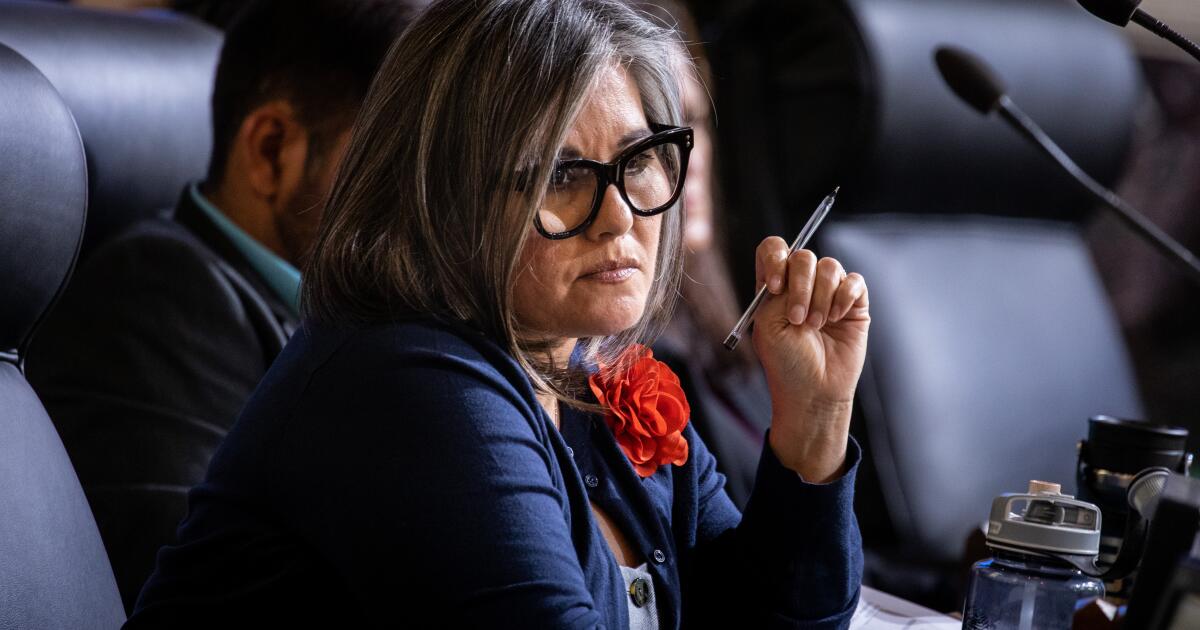
Source link