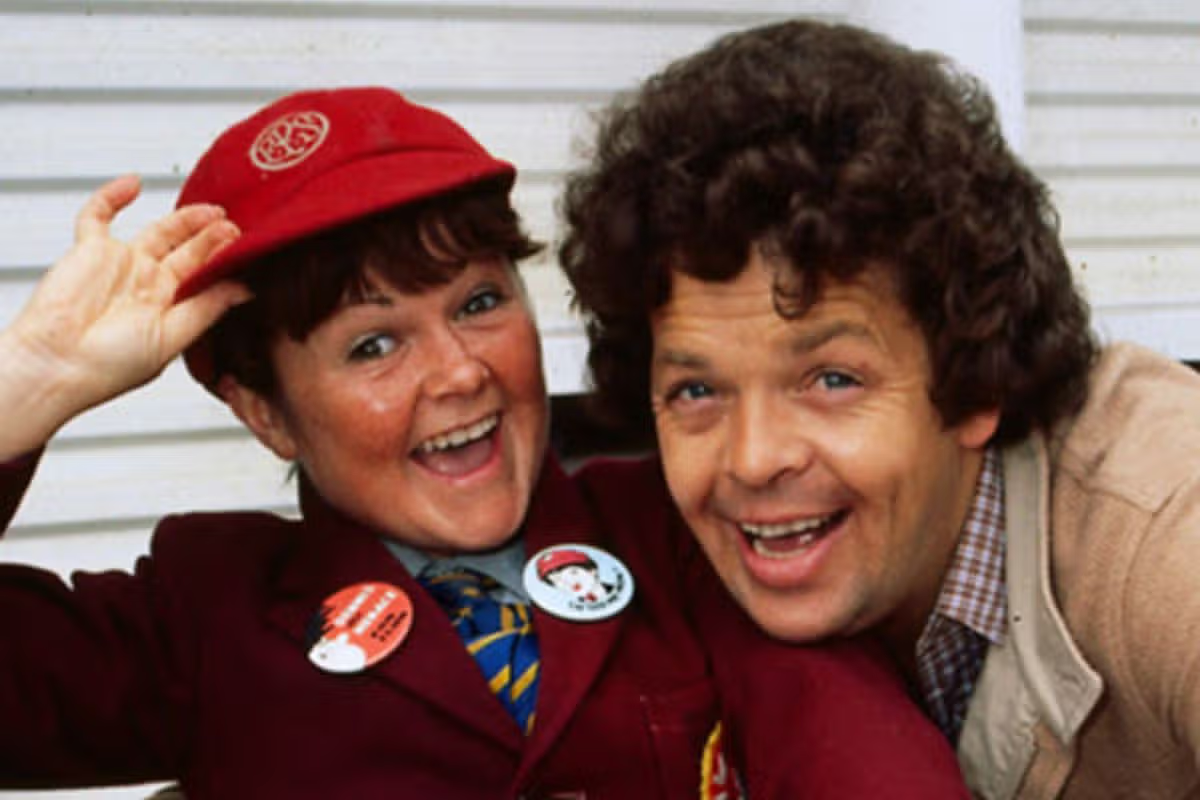
The Krankies – Scottish comedy duo Ian and Janette Tough – were a huge hit on TV in the 1980s, but Janette’s health battle sadly forced Wee Jimmy Krankie to retire permanently

Ian and Janette Tough are the real-life husband and wife duo behind iconic double act The Krankies
For a generation of TV viewers, few catchphrases trigger nostalgic memories of anarchic 1980s television quite like “Fan-dabi-dozi!” From the late 1970s through to the 1990s, Ian and Janette Tough – the real-life husband and wife duo behind iconic double act The Krankies, who coined the catchphrase – were titans of light entertainment.
Playing a long-suffering dad and his naughty son, Wee Jimmy Krankie, the pair – now both 79 years old – were staples of Saturday night prime shows and children’s TV.
After shooting to stardom on the Royal Variety Performance in 1978, they became household names on programmes like Crackerjack before landing their own series, from The Krankies Klub to The Krankies Elektronik Komik.
A TV resurgence followed in the 1990s when they featured on Dawn French and Jennifer Saunders‘ TV programmes and also starred in a number of pantomimes.
But after several decades at the top, the pair eventually stepped away from the spotlight, leaving a legion of fans wondering what came of the beloved Scottish duo.
Speaking to the Mirror seven years ago, the couple refuted claims from friend Christopher Biggins that political correctness had brought an end to their innuendo-laden panto performances.
Instead, they revealed that medical issues had sadly forced Wee Jimmy to hang up his school uniform for good.
“I was diagnosed with osteoporosis three years ago,” Janette disclosed, then aged 73. “My back’s not good and I can’t do as much as I used to. So, when Ian and I went off on a Caribbean cruise to celebrate our golden wedding last month we decided it’s time to put our feet up.”
The pair had accidentally courted controversy in 2017, during their run in Dick Whittington alongside close friend John Barrowman. “One woman called it smutty” Janette recalled. “We did a scene in bed with John. Wee Jimmy said ‘I can feel your Tinkie Winkie’ and pulled out a Teletubby. Then John said ‘No – this is MY Tinkie-Winkie’ and pulled out a big one.”
But they denied longstanding ‘swinging’ rumours in the Mirror’s interview, with Ian explaining: “It was never orgies or wife-swapping parties or swingers’ clubs. We just had a bit of a wild spell when we had lots of fun – our Dirty Thirties.”
Janette continued: “We were doing a revue act in 1981, which featured a magician who had a leopard called Scorpio in his act.
“He had a lion tamer called Rocky and an assistant called Angie – so I had a little ding-dong with Rocky and Ian did the same with Angie. Ian used to joke that I’d come home smelling of leopard while he’d get back with glitter on his bits. We had an anywhere, anytime attitude to sex but we each knew what the other was doing.”
Despite announcing their retirement in 2019 – with Janette also still feeling the lasting effects of a horrific pantomime fall in which she fractured her skull in the early noughties – the pair have continued to make occasional TV appearances.
And fans were delighted last year when the pair unexpectedly popped up in the remastered version of the classic 90s video game Tomb Raider.
A framed pictured of the pair was seen hanging on an office wall as Lara meet the editor of The Times before combing through the newspaper archives.
Reacting to the unexpected appearance, Janette joked to The Scottish Sun: “She did well to dig us up – we’ve been retired for years now.”