Oman

Strategic oil release may calm markets but cannot fix Hormuz disruption | Conflict News

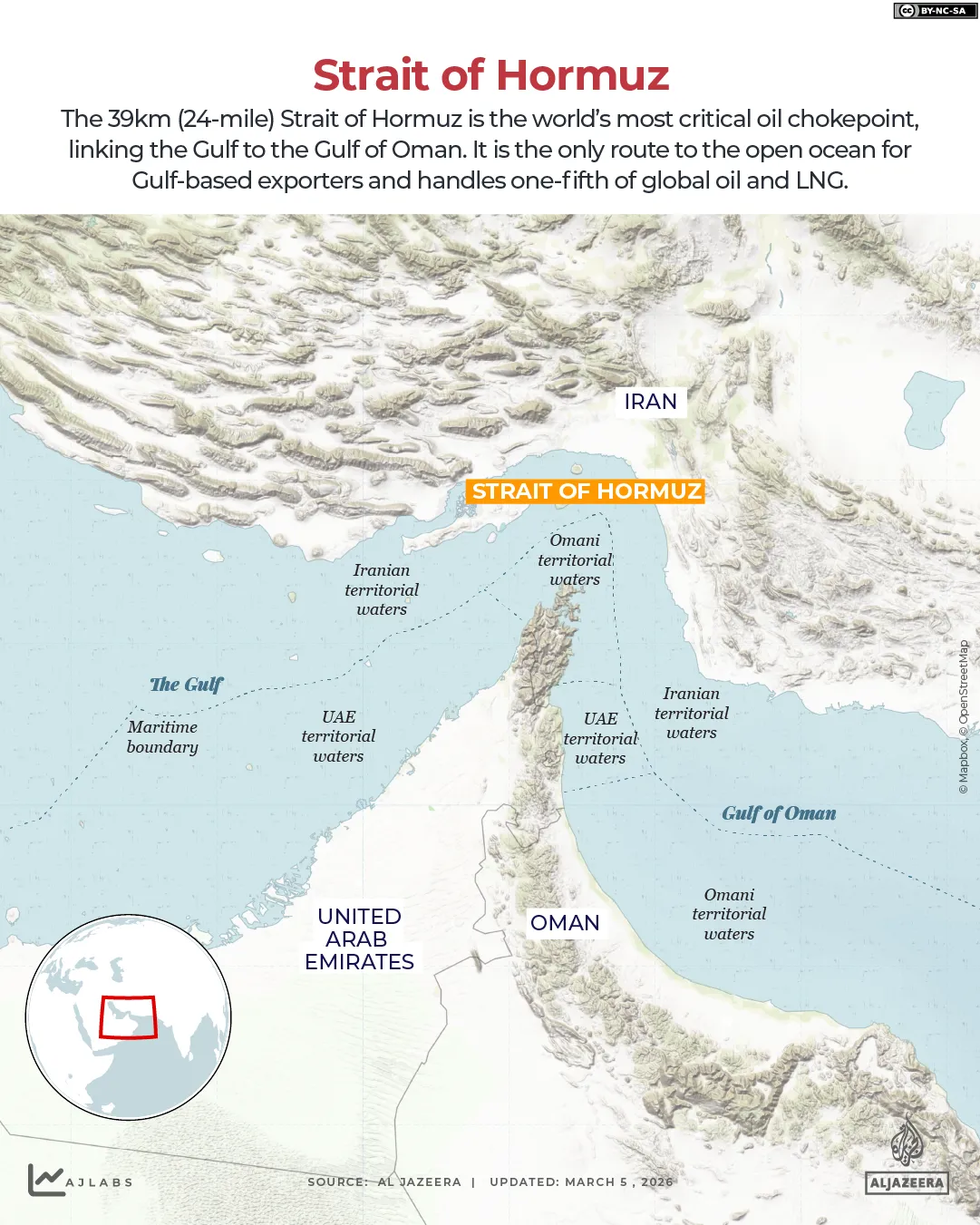
Hundreds of tankers sit idle on both sides of the Strait of Hormuz as Iran has effectively closed the waterway, pushing oil prices above $100 – the highest since 2022, after the start of the Russia-Ukraine war.

Oil tanker traffic in the strait, through which one-fifth of global oil passes, has plunged after Israel and the United States launched attacks on Tehran on February 28. Asian countries, including India, China and Japan, as well as some European countries, source large portions of their energy needs from the Gulf. A disruption in supply will rattle the global economy.

With an aim to cushion from the shock, the International Energy Agency (IEA) has decided to release 400 million barrels of oil from emergency reserves, the largest coordinated drawdown in the agency’s history. But it has failed to push the prices down.

The agency had released about 182 million barrels after Russia’s invasion of Ukraine to stablise the oil prices.

According to the agency, oil shipments through the strategic waterway have fallen to less than 10 percent of pre-war levels, threatening one of the most critical arteries in the global energy system.

IEA members collectively hold about 1.25 billion barrels in government-controlled emergency reserves, alongside roughly 600 million barrels in industry stocks tied to government obligations.

A large number in a massive market

The figure may appear vast, but it shrinks quickly against the scale of global energy demand.

“This feels like a small bandage on a large wound,” energy strategist Naif Aldandeni said, describing the world’s largest coordinated emergency oil release as governments scramble to steady markets shaken by war.

The US Energy Information Administration (EIA) estimates world consumption of petroleum and other liquids will average 105.17 million barrels per day in 2026. At that rate, 400 million barrels would theoretically cover just four days of global consumption.

Even when compared with normal traffic through the Strait of Hormuz – around 20 million barrels per day – the released oil equals only about 20 days of typical flows.

Aldandeni told Al Jazeera that emergency reserves can calm panic in markets but cannot replace the lost function of a disrupted shipping corridor.

“The release may soften the shock and calm nerves temporarily,” he said, “but it will remain limited as long as the fundamental problem — the freedom of supply and tanker movement through Hormuz – remains unresolved.”

Oil prices reflect those anxieties. Brent crude ended trading on Friday at $103.14 per barrel, after surging to nearly $120 earlier as fears of disrupted production and shipping intensified.

Geopolitical risk premium

Oil expert Nabil al-Marsoumi said the price surge cannot be explained by supply fundamentals alone.

“The closure of the Strait of Hormuz added roughly $40 per barrel as a geopolitical risk premium above what market fundamentals would normally dictate,” he told Al Jazeera.

From that perspective, releasing strategic reserves serves primarily as a temporary tool to dampen that premium rather than fundamentally rebalance the market.

Prices above $100 per barrel are uncomfortable for major consuming economies already struggling to curb inflation and protect economic growth.

Recent EIA projections suggest global demand has not yet declined significantly because of the war, remaining close to 105 million barrels per day. The market pressure, therefore, stems less from falling consumption and more from fears of supply shortages and delays in deliveries to refineries and consumers.

Threats to oil infrastructure

The latest escalation could deepen those fears.

United States President Donald Trump said on Friday that the US Central Command (CENTCOM) had “executed one of the most powerful bombing raids in the History of the Middle East and totally obliterated every MILITARY target in Iran’s crown jewel, Kharg Island”.

He added that “for reasons of decency” he had “chosen NOT to wipe out the Oil Infrastructure on the Island”, but warned Washington could reconsider that restraint if Iran continues to disrupt shipping through the Strait of Hormuz.

CENTCOM confirmed the operation, stating US forces had struck “more than 90 Iranian military targets on Kharg Island, while preserving the oil infrastructure”.

Iranian officials have meanwhile warned they would target energy facilities linked to the US across the region if Iranian oil infrastructure comes under direct attack.

Kharg Island is not simply a military location. It serves as the primary export terminal for Iranian crude, making it a critical node in the country’s oil supply network.

If attacks move from obstructing shipping to targeting export infrastructure itself, the crisis could shift from a chokepoint disruption scenario to one involving direct losses of production and export capacity.

In such circumstances, the oil released from emergency reserves would act only as a temporary bridge rather than a lasting solution to lost supply.

Major oil companies such as QatarEnergy, the world’s largest producer of liquefied natural gas (LNG), Kuwait Petroleum Corporation and Bahrain state oil company Bapco have shut production and declared force majeure, while Saudi Aramco, the world’s largest oil producer, and UAE state oil company ADNOC have shut down their refineries.

Limits of emergency reserves

Even under a less severe scenario – where maritime disruption persists but infrastructure remains intact — the ability of strategic reserves to stabilise markets remains constrained by logistics.

The US Department of Energy said the US Strategic Petroleum Reserve held 415.4 million barrels as of 18 February 2026. Its maximum drawdown capacity is 4.4 million barrels per day, and oil requires about 13 days to reach US markets after a presidential release order.

That means even the world’s largest emergency stockpile cannot flood the market with crude immediately. The release must move through pipelines, shipping networks and refining capacity before reaching consumers.

Aldandeni said the current intervention would likely produce only a temporary stabilising effect, while al-Marsoumi warned that prolonged disruption in the Strait of Hormuz – or the spread of threats to other chokepoints such as the Bab al-Mandeb Strait in the Red Sea could quickly send prices further higher.

Source link

Iran’s president sets terms to end the war: Is an off-ramp in sight? | US-Israel war on Iran News

Iranian President Masoud Pezeshkian has laid out terms for ending the war with the United States and Israel in what analysts say is a possible sign of de-escalation from Tehran as the US-Israel war on Iran entered its 13th day on Thursday.

In a post on Wednesday on social site X, Pezeshkian said he had spoken to his counterparts in Russia and Pakistan, and that he had confirmed “Iran’s commitment to peace”.

Recommended Stories

list of 4 itemsend of list

“The only way to end this war – ignited by the Zionist regime & US – is recognizing Iran’s legitimate rights, payment of reparations, and firm int’l guarantees against future aggression,” Pezeshkian wrote.

This is a rare posture from Tehran, which has maintained a defiant stance and initially rejected any possibility of negotiations or a ceasefire when war broke out nearly two weeks ago.

Pezeshkian’s statement comes as pressure mounts on the US to halt what has become a very costly mission. Analysts say speculation from Washington that Iran would quickly submit after the killing of Supreme Leader Ayatollah Ali Khamenei were misguided.

Tehran is likely going to determine the end of this war, not the US or Israel, because of its ability to inflict economic pain broadly, they say.

Amid a military pummelling by the US and Israel, Iran has launched heavy retaliatory strikes at US assets and other critical infrastructure in Gulf countries, upsetting global supplies. It has also adopted what analysts call “asymmetric” tactics – such as disrupting the critical Strait of Hormuz and threatening US banking-linked entities – to inflict as much economic pain on the region and wider world as it can.

This is what we know about Pezeshkian’s stance and what the pressures are on both sides to draw the conflict to a close, quickly.

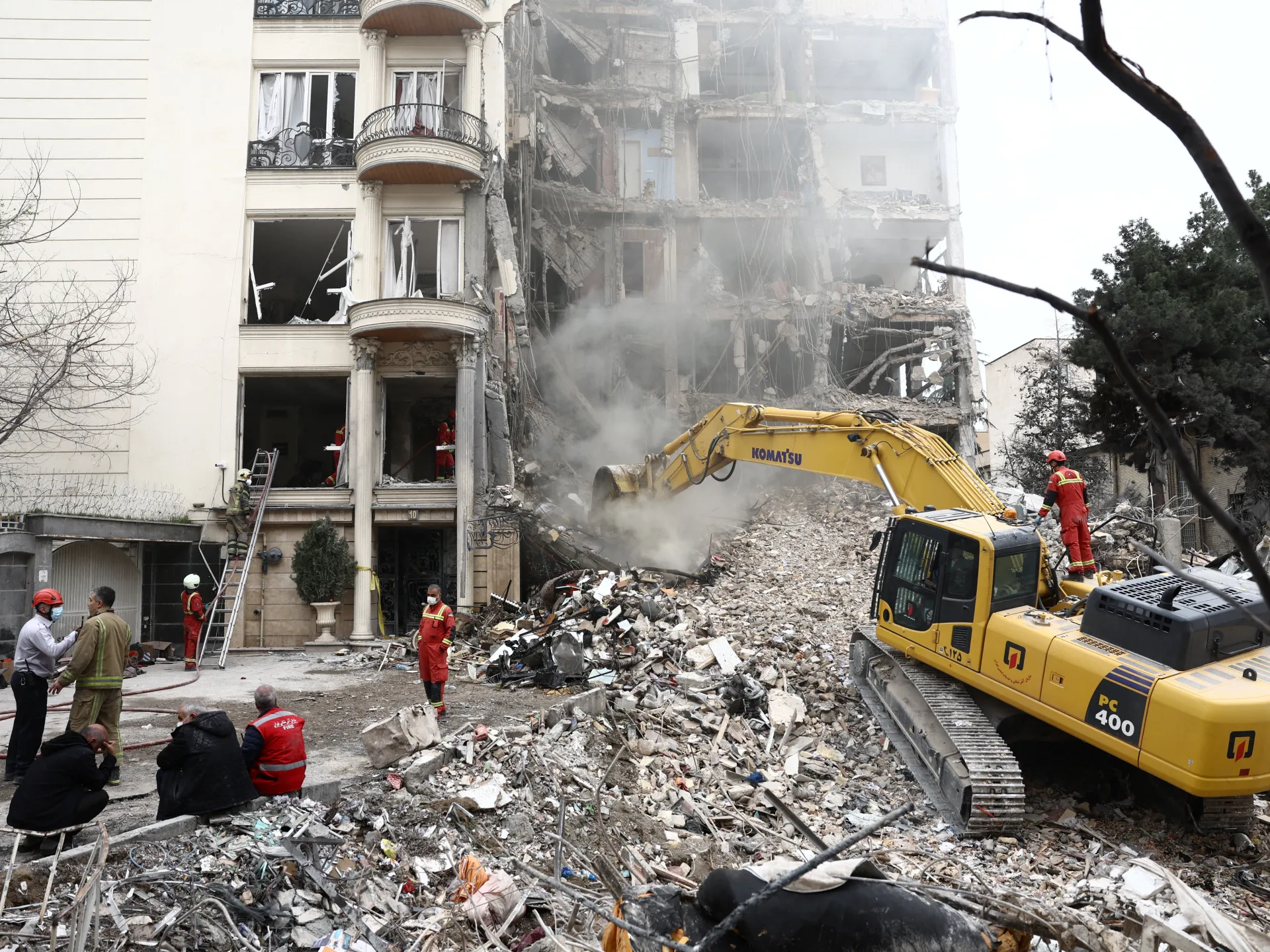
Emergency personnel work at the site of a strike
A building lies in ruins after a strike, amid the US-Israeli conflict with Iran, in Tehran, Iran, on March 12, 2026 [Majid Asgaripour/WANA (West Asia News Agency) via Reuters]

What has the war cost so far?

Economically, both sides have weaponised energy. Israel first targeted Iran’s oil facilities in Tehran on March 8, prompting an outcry from global health experts over the potential risk of air and water pollution.

Iran has, meanwhile, tightened its chokehold on the Strait of Hormuz shipping route – the only route to open sea for oil producers in the Gulf – with its military promising on Wednesday that it has the capabilities to wage a long war that could “destroy” the world economy.

Attacks on ships in the strait, through which about 20 percent of global oil and gas traffic normally passes, have effectively closed the route.

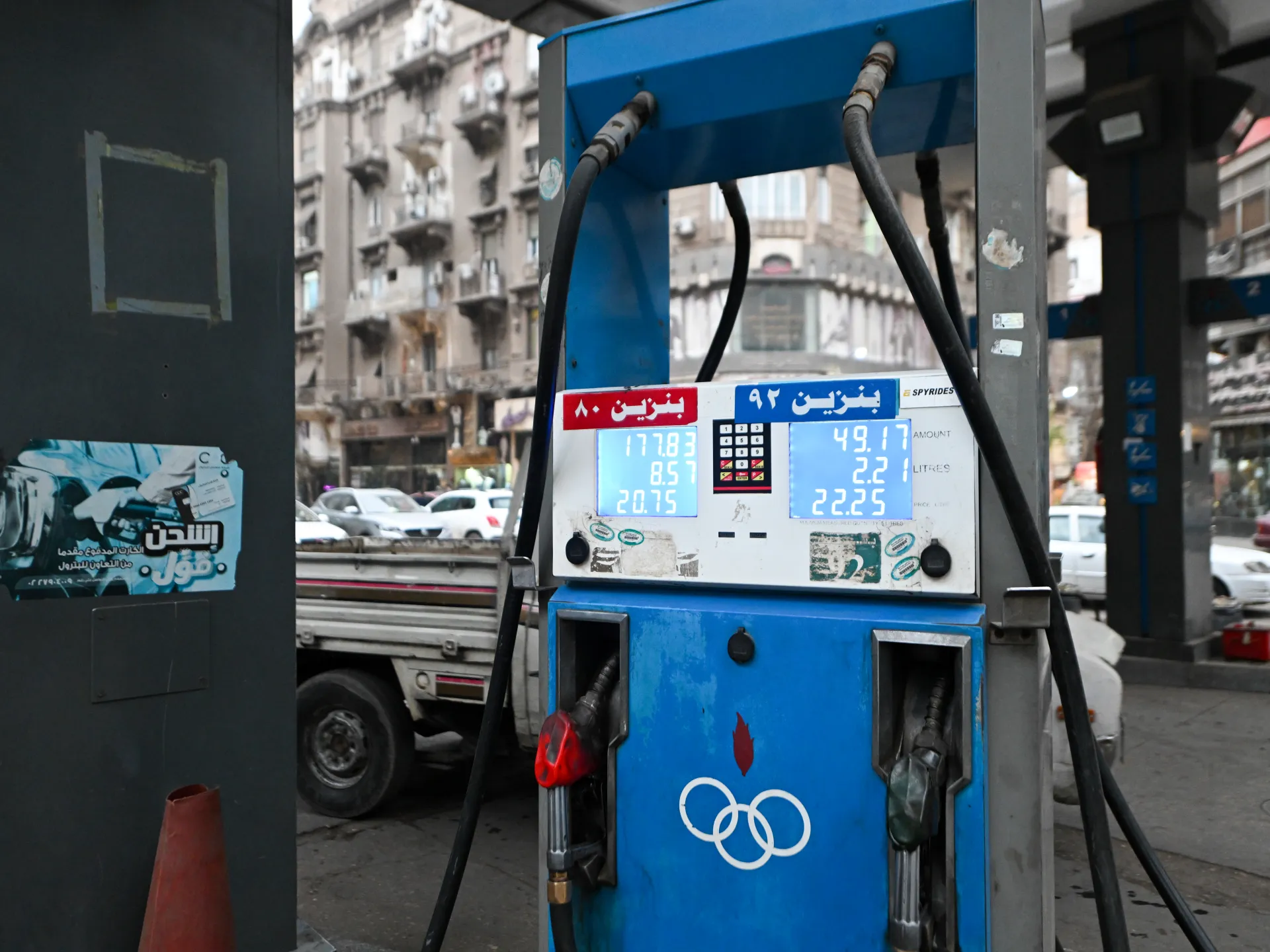
Oil prices rocketed above $100 per barrel late last week, up from around $65 before the war, with ordinary buyers feeling the increases at pumps in the US, Europe and parts of Africa.

On Wednesday, Iran upped the ante, saying it would not allow “a litre of oil” to pass through the strait and warned the world to expect a $200-per-barrel price tag.

“We don’t know how quickly it’ll revert back,” Freya Beamish, chief economist at GlobalData TS Lombard, told Al Jazeera. “We do think it’ll revert back to $80 in due course, but the ball is to some degree in Iran’s court,” she said, adding that because Iran needs oil revenue, the price hikes are expected to be time-limited.

The International Energy Agency agreed on Wednesday to release 400 million barrels from the emergency reserves of several member states but it is not yet clear what impact that will have, nor how quickly this quantity of oil can be released.

Tehran has also been accused of directly attacking oil facilities in neighbouring countries this week. Iraq shut all its oil port operations on Thursday after explosive-laden Iranian “drone” boats appeared to have attacked two fuel tankers in Iraqi waters, setting them ablaze and killing one crew member.

A drone was filmed striking Oman’s Salalah oil port on Wednesday, although Tehran has denied involvement.

What are Iranian officials saying about ending the war?

There has been conflicting messaging from the Iranian leadership.

Iran’s elite army unit and parallel armed force, the Islamic Revolutionary Guard Corps (IRGC), continues to show defiance, issuing threats and launching attacks on Israel and US military assets and infrastructure in neighbouring Gulf countries.

However, the political leadership has appeared more inclined towards diplomacy, analysts say. On Wednesday, President Pezeshkian said that ending the war would take the US and Israel recognising Iran’s rights, paying Iran reparations – although it’s unclear how much is being asked for – and providing strong guarantees that a future war will not be waged.

In a video recording last week, he also apologised to neighbouring countries for the strikes and promised that Iran would stop hitting its neighbours as long as they do not allow the US to launch attacks from their territory.

“I personally apologise to the neighbouring countries that were affected by Iran’s actions,” the president said, adding that Tehran was not looking for confrontations with its neighbours.

However, it is not known how much sway the political leadership has over the IRGC. Hours after the president’s apology last week, air defence sirens went off in Saudi Arabia, Qatar, the UAE and Bahrain, as strikes continued on the Gulf.

So, what is Iran’s actual position?

“Iran wants to go to the end to make sure that the United States and Israel never attack Iran again … so this has to be the final battle,” Al Jazeera’s Resul Serdar Atas explained.

Indeed, the IRGC sees this as an existential war, but the timing of Pezeshkian’s statement about ending the conflict also shows Tehran is pressured economically, politically and militarily, Zeidon Alkinani of Qatar’s Georgetown University told Al Jazeera.

“These differences and divisions [between IRGC and political leaders] always existed even prior to this war but we may notice it now more, given the fact that the IRGC believes that it has the right to take the front seat in leading this regional war, which is why a lot of the statements and positions are contradicting with the official ones from Pezeshkian,” he said.

The IRGC reports directly to Iran’s Supreme National Security Council (SNSC) and not to the country’s political leadership. That council is led by Ali Larijani, a top politician and close aide to the late supreme leader, Ali Khamenei, who analysts describe as a “hardliner”.

In a post on X on Tuesday, Larijani responded to threats from Trump about attacks on the Strait of Hormuz, saying: “Iranian people do not fear your hollow threats; for those greater than you have failed to erase it … So beware lest you be the ones to vanish.”

The newly elected supreme leader, Mojtaba Khamenei, was once in the IRGC and was put forward by the unit as the next ayatollah after his father was killed on the first day of the war, analysts say. He is thus not expected to follow the reformist, diplomatic ideals of President Pezeshkian and other political leaders which his father managed to marry with the IRGC militarised stance, they say.

Mojtaba Khamenei, son of Iran's supreme leader Ayatollah Ali Khamenei, attends a gathering.
Mojtaba Khamenei, son of Iran’s late Supreme Leader Ayatollah Ali Khamenei, attends a gathering in Tehran on March 2, 2016. Iran marked the appointment of Ayatollah Mojtaba Khamenei to replace his father as its supreme leader with a barrage of missiles against Israel and the Gulf states [File: Rouhollah Vahdati/ISNA via AFP]

What do the US and Israel say about ending the war?

There have also been conflicting messages from the Trump administration and Israel regarding when the war mission on Iran, codenamed Operation Epic Fury, is likely to end.

Trump told US publication Axios on Wednesday that the war on Iran would end “soon” because there’s “practically nothing left to target”.

“Anytime I want it to end, it will end,” he added. He had said earlier on Monday that “we’re way ahead of our schedule” and that the US had achieved its goals, even as speculation mounts about a possible US ground mission.

On the other hand, Israel’s Defence Minister Israel Katz said on Wednesday that the war would go on “without any time limit, for as long as necessary, until we achieve all the objectives and decisively win the campaign”.

Analysts say Trump’s stance that the conflict will be quick reflects increasing pressure on his administration ahead of upcoming mid-term elections in November.

Trump’s advisers privately told him this week to find a quick end to the war and avoid political backlash, according to reporting by The Wall Street Journal. That came as polls from Quinnipiac University and The Washington Post suggested that most Americans are opposed to the war in Iran.

In his 2024 presidential campaign, Trump promised to lower prices, and inflation had stabilised at 2.4 percent ahead of the war, according to government data released on Wednesday. Analysts speculate the conflict will likely push it back up.

The US spent more than $11.3bn in the first six days of the war, Pentagon officials told lawmakers in a classified briefing on Tuesday, Reuters reported this week – nearly $2bn a day.

The Washington-based think tank, Center for Strategic and International Studies (CSIS), estimated that the war cost Washington $3.7bn in its first 100 hours alone, or nearly $900m a day, largely due to its expenditure on costly munitions.

“It’s quite ironic that [Trump] chose a war that would make affordability worse, not better,” Rebecca Christie, a senior fellow at the Bruegel think tank, told Al Jazeera’s Counting the Cost.

“Every time the US loses even one object, air defence or a plane or something like that, that represents an awful lot of money that could have been used on some of these issues that have an impact on people’s day-to-day lives in the United States.”

Source link

Where do the 35 million foreigners living in the GCC come from? | Infographic News

More than half of the 62 million people in the six Gulf Cooperation Council (GCC) countries are foreign workers.

Nearly 62 million people living in the six Gulf Cooperation Council (GCC) countries have been caught in the crossfire of the latest US-Israel war on Iran.

Known for their economic opportunities, these countries, including Bahrain, Kuwait, Oman, Qatar, Saudi Arabia and the United Arab Emirates (UAE), collectively host nearly 35 million foreign workers from around the world, predominantly from South Asia.

Recommended Stories

list of 4 itemsend of list

With the exception of Saudi Arabia and Oman, foreign workers make up the bulk of the populations of people living in the remaining four GCC countries.

The map below illustrates the national and non-national populations in each of the GCC countries.

Interactive_WhereDo_Expats_GCC_MARCH9_2026

Where do GCC foreign workers come from?

Generations of foreign workers in the GCC countries have significantly contributed to the workforce, including labourers, construction workers, household staff, security personnel, and cleaners, all vital to building the modern infrastructures that Gulf nations are known for.

Millions consider the Gulf their home, despite holding nationalities from other countries.

Additionally, highly skilled foreign workers have a long history in industries such as banking, finance, technology, engineering, aviation, medicine and the media.

According to Global Media Insight, a digital marketing agency based out of the UAE,  the 10 largest groups of non-nationals living across the six GCC countries are from:

  • India: 9.1 million
  • Bangladesh: 5 million
  • Pakistan: 4.9 million
  • Egypt: 3.3 million
  • Philippines: 2.2 million
  • Yemen: 2.2 million
  • Sudan: 1.1 million
  • Nepal: 1.2 million
  • Syria: 694,000
  • Sri Lanka: 650,000

Interactive_WhereDo_Expats_GCC_COUNTRY_NATIONALITY_MARCH9_2026

Saudi Arabia

Saudi Arabia is the largest of the six GCC countries, with a population of nearly 37 million.

riyadh
Aerial view of Riyadh city is seen from Mamlaka tower, a 99-story skyscraper, in Riyadh, Saudi Arabia [Amr Nabil/AP Photos]

The oil-rich country has a local population of about 20.5 million and an additional 16.4 million foreign residents.

The five largest groups of non-nationals living in Saudi Arabia are people from:

  • Bangladesh: 2,590,000
  • India: 2,310,000
  • Pakistan: 2,230,000
  • Yemen: 2,210,000
  • Egypt: 1,800,000
  • Sudan: 1,000,000

The UAE

The United Arab Emirates has the second-largest population in the GCC, totaling some 11.3 million people.

Dubai skyline
Dubai skyline is visible with the Burj Khalifa, the world’s tallest building, during the COP28 U.N. Climate Summit, in Dubai, United Arab Emirates, Thursday, November 30, 2023 [Kamran Jebreili/ AP Photo]

It consists of seven emirates, including the capital Abu Dhabi, Dubai, Sharjah, Ajman, Umm Al Quwain, Ras Al Khaimah, and Fujairah.

Emiratis make up nearly 12 percent of the population, with foreigners at almost 88 percent.

The five largest groups of non-nationals living in the UAE are from:

  • India: 4,360,000
  • Pakistan: 1,900,000
  • Bangladesh: 840,000
  • Philippines: 780,000
  • Iran: 540,000
  • Egypt: 480,000

Kuwait

With a population of 4.8 million, Kuwait has the third-largest population in the GCC.

Kuwait
A drone view shows Kuwait City in Kuwait, February 28, 2026 [Stephanie McGehee/Reuters]

Approximately 1.56 million are Kuwaiti citizens, and 2.16 million are foreign workers.

The five largest groups of non-nationals living in Kuwait are from:

  • India: 1,000,000
  • Egypt: 700,000
  • Bangladesh: 350,000
  • Philippines: 250,000
  • Pakistan: 200,000
  • Nepal: 120,000

Oman

Oman’s population stands at approximately 4.7 million people. Oman’s 2.5 million citizens account for nearly 59 percent of the population, while the remaining 2.05 million (or 41 percent) are foreign workers.

Oman
General view of old Muscat the day after Oman’s Sultan Qaboos bin Said was laid to rest in Muscat, Oman, January 12, 2020 [Christopher Pike/Reuters]

The five largest groups of non-nationals living in Oman are from:

  • India: 766,735
  • Bangladesh: 718,856
  • Pakistan: 268,868
  • Egypt: 46,970
  • Philippines: 45,213
  • Uganda: 20,886

Qatar

Qatar skyline
The Doha skyline, seen here [Showkat Shafi/Al Jazeera]

Qatar has a population of some 3.2 million people, with 2.87 million foreign workers accounting for about 88 percent of them. Qatari citizens number around 330,000, making up 12 percent.

The five largest groups of non-nationals living in Qatar are from:

  • India: 700,000
  • Bangladesh: 400,000
  • Nepal: 400,000
  • Egypt: 300,000
  • Philippines: 236,000
  • Pakistan: 180,000

Bahrain

With a total population of 1.58 million, Bahrain has the smallest population in the GCC. Bahraini citizens make up just under half of the population.

Manama
A general view of residential buildings in the Juffair district of Manama, Bahrain, June 22, 2025 [Hamad I Mohammed/Reuters]

The five largest groups of non-nationals living in Bahrain are from:

  • India: 350,000
  • Bangladesh: 150,000
  • Pakistan: 120,000
  • Philippines: 80,000
  • Egypt: 60,000
  • Nepal: 35,000

Source link

Vicky Pattison and husband Ercan flee Dubai amid Iran war and drive 11 hours to Oman in desperate effort to return to UK

VICKY Pattison and her husband Ercan Ramadan are making their way back to the UK after becoming stranded in Dubai amid the Iran war.

Last Saturday (February 28), Iran launched a barrage of rockets at nations across the Middle East after vowing revenge for Trump and Israel’s huge blitz on the rogue nation.

Vicky and Ercan shared an update after fleeing Dubai in favour of nearby OmanCredit: Instagram
The pair shared they chartered a bus to take them and their friends across the borerCredit: Instagram
The star thanked the company for their help amid the crisis, and assured fans she was OKCredit: Instagram
The pair travelled for 11 hours, including spending three hours at the border on the busCredit: Instagram

Among their targets was Dubai, where black smoke was seen billowing across the skyline after debris from Iran’s missile blitz hit a hotel on the Palm Jumeirah.

Vicky was en-route with Ercan for a planned trip to Australia and New Zealand, and had a planned stop in Dubai when the attacks started.

She’s since only given small updates, noting how she didn’t want to speculate to scare her followers and was “limiting time spent on social media due to a growing amount of misinformation that feels really counterproductive to staying calm.”

However, she returned to Instagram today to share “a little update” on where she and Ercan were, after Dubai airport was also subject to a drone attack amid the evening of strikes, with both Iranian and Iraqi airspace closed as the conflicts intensify.

STRANDED STAR

Vicky Pattison updates fans on being stranded in Dubai amid missile strikes


stuck in dubai

Vicky Pattison and Love Island star stranded in Dubai as flights cancelled

Sharing a photograph of herself and Ercan with a group of other people on a mini-bus this afternoon, she apologised for the “radio silence” over the past week, noting things were “changing so rapidly” and she didn’t want to say anything that could be deemed insensitive.

“We really appreciate all your messages of concern and just wanted to reassure everyone that we’re fine,” she wrote.

“After three cancelled flights and the realisation that we definitely weren’t going to make it on to Australia and New Zealand we wanted to try and get home as quickly and safely as possible.

“I understand that there are a lot of people still in Dubai feeling really calm and safe however, we wanted to be back to our babies, work and normality and we felt like Oman was our best option.”

The star went on to explain that she had arranged a public transfer van with friends, with the team driving for 11 hours to get to Oman – including two to three hours to cross the border.

“For anyone stuck in Dubai and wanting to get home via Oman, I will put more information on @vickysvacays,” she said. “I just don’t want to overwhelm or bore anyone on here.

“We are going to try and enjoy our last days away and explore Oman hopefully 🥹”

“The last week has been quite unsettled and we understand people feeling unsafe and uncertain,” she added. “We have experienced moments like that, but ultimately feel like it’s important we acknowledge our position of privilege.

“We are extremely grateful to be making our way home and are thinking of anyone feeling fearful or unsettled, anywhere in a world that is rapidly becoming an increasingly scary place to be.”

“Finally just a little Thankyou to @addressbeachresort and [the UAE government] for keeping us safe, calm and informed when possible 🩵”

Friends and fans were quick to send their well-wishes to the star, saying they were glad she and Ercan were somewhere safe.

“Glad you’re both okay! Not what you had planned, but such is life. Not long until you’re reunited with the boys” wrote one.

Candice Brown added: “So glad you are on your way back darling x”

“So happy you’re both safe, sending you all the love” wrote another.

Vicky and Ercan have limited their social media use to prevent spreading misinformationCredit: Alamy
The star said she was “extremely privileged” to charter a bus to drive her and her friends across the borderCredit: Instagram
Vicky and Ercan were in Dubai while on route to go to AustraliaCredit: Instagram/vickypattison
The couple have said that they are safeCredit: Instagram

Source link

What is the PrSM missile that the US used for the first time in Iran? | Israel-Iran conflict News

The United States used Precision Strike Missiles (PrSMs) for the first time during its ongoing war with Iran, US Central Command (CENTCOM) said on Wednesday.

The war entered its seventh day on Friday, with attacks continuing across Iran and other countries in the Middle East.

CENTCOM stated in an X post that PrSMs provide an “unrivaled deep strike capability”.

“I just could not be prouder of our men and women in uniform leveraging innovation to create dilemmas for the enemy,” the post quoted Admiral Brad Cooper, head of CENTCOM.

It is unclear where these PrSMs were launched from, or which specific targets they hit in Iran.

So what is the PrSM, and why is it significant that it has been used by the US for the first time?

What are Precision Strike Missiles?

PrSMs are described as long-range precision strike missiles by their developer, the Maryland, US-headquartered defence firm Lockheed Martin, which delivered the first PrSMs to the US Army in December 2023.

PrSMs can hit targets ranging from 60km (37 miles) to more than 499km (310 miles) away, according to Lockheed Martin.

The company’s website adds that PrSMs are compatible with the MLRS M270 and HIMARS family of launchers, both also developed by Lockheed and used by both the United Kingdom and US armies.

MLRS stands for multiple-launch rocket systems, used to launch missiles. The UK sent a number to Ukraine in 2022. HIMARS stands for High Mobility Artillery Rocket System. In 2022, the US sent a number to Ukraine, as well.

M-142 HIMARS is a high-tech, lightweight rocket launcher that is wheel-mounted, giving it more agility and manoeuvrability on the battlefield. Each unit can carry six GPS-guided rockets, or larger missiles like Army Tactical Missile Systems (ATACMs) and PrSMs, which can be reloaded in about a minute with only a small crew.

Lockheed Martin adds that PrSMs can be rapidly developed. “We are ready to produce and deliver to meet the US Army’s accelerated timeline for this long-range precision fires priority,” the website says.

PrSMs feature “open systems architecture”, which means that it is easier to plug in new components, upgrade parts, or work with equipment from other companies. Similarly, they are “modular and easily adaptable”, enabling components to be switched around.

They also feature “IM energetic payload”, or Insensitive Munitions energetic payload, which makes explosions safer, the producer says. This means the warhead is made from explosives that are less likely to blow up accidentally if hit by fire, shrapnel or by accident, but still explode properly when triggered as intended.

What is different about the PrSMs?

PrSMs will ultimately replace the ATACMs currently being fired from the HIMARS launchers, significantly increasing their range from 300km (186 miles) to more than 499km (310 miles), without changing the vehicle carrying the missile.

PrSMs also offer double the “missile load” of ATACMs. While a HIMARS launcher is able to carry one ATACMS missile in its pod, it can carry two PrSMs per pod.

Does the PrSM give the US a strategic advantage?

CENTCOM confirmed that PrSMs have been used in the US and Israel’s attacks on Iran, codenamed Operation Epic Fury and launched on February 28.

CENTCOM posted a video of the PrSMs being launched from M142 High Mobility Artillery Rocket Systems in an open desert terrain.

PrSMs do give the US military a boost for its pre-existing long-range capabilities.

Gulf countries such as Kuwait, Saudi Arabia, Bahrain, Qatar, the United Arab Emirates and Oman, specifically the Musandam Peninsula, which have military bases hosting US assets and troops, have at least some territory within 400km (250 miles) of Iran.

The US is using PrSMs in conjunction with other long-range missiles such as Low-Cost Unmanned Combat Attack System (LUCAS) one-way drones, MQ-9 Reaper drones, ATACMs and Tomahawk Cruise Missiles.

The range for LUCAS one-way drones is about 800km (500 miles), while the range for ATACMs is about 300km (186 miles) and the range for Tomahawk cruise missiles is about 1,600km (1,000 miles).

Why is the introduction of the PrSM significant?

The range of this missile is significant as it is likely that it would not have been permitted under the Intermediate-Range Nuclear Forces (INF) Treaty with Russia, which the Trump administration withdrew the US from in 2019. This is because it can exceed the maximum 500km (310-mile) range the treaty imposed on certain land-launched missiles.

The treaty was signed in 1987 by US and Soviet Union leaders Ronald Reagan and Mikhail Gorbachev. It sought to eliminate the presence of land-based nuclear missiles and medium-range arsenals between 500km and 5,500km (310 and 3500 miles) from Europe.

The US suspension of the treaty allowed Washington to resume development of its own medium-range, land-based arsenal.

Following the US suspension, Russia invited the US to reciprocate in a unilateral moratorium on the deployment of ground-launched intermediate-range missiles instead. While Washington initially rejected the offer, in 2022, it said it would be willing to discuss this.

In August last year, the Russian Ministry of Foreign Affairs announced Russia’s withdrawal from this moratorium, however, saying the US had “made significant progress” and “openly declared plans to deploy US ground-launched INF-range missiles in various regions”. INF stands for intermediate-range nuclear forces.

The statement added that such actions by Western countries posed a “direct threat” to Moscow’s security.

Source link

Oman renews push for diplomacy, says ‘off-ramps available’ in Iran war | News

Oman had been mediating talks between Iran and the US before Washington attacked Tehran.

Omani Minister of Foreign Affairs Badr al-Busaidi, who mediated the US-Iran talks before the war, has said that diplomatic options are still “available” to de-escalate the situation in the Middle East.

“Oman reaffirms its call for an immediate ceasefire and a return to responsible regional diplomacy. There are off ramps available. Let’s use them,” he said on X on Tuesday.

Recommended Stories

list of 3 itemsend of list

Al-Busaidi did not provide details on what the options to end the ongoing conflict between Iran and joint Israeli and US forces could be.

Oman had been mediating talks between Iran and the US and said that peace was “within reach” hours before the US-Israeli air strikes began on Saturday, plunging the region into a crisis.

On Tuesday, US President Donald Trump told journalists in Washington, DC, that the US had attacked Iran because “he had a feeling” that Iran would strike first, as negotiations over its nuclear programme stalled.

However, US Secretary of State Marco Rubio had said on Monday that the US attacked Iran because it knew Israel was about to bomb the country, and because the Trump administration believed that Tehran would then strike US facilities in the region.

But Oman’s foreign minister pushed back on the Trump administration’s characterisation that Iran was an “imminent threat” to the US. He maintained that “significant progress” had been made in the nuclear talks before the US and Israel launched attacks on Iran.

In its retaliatory strikes, Iran has attacked Israel and US forces across the Gulf region. While Oman does not host any US forces, it has also been struck and dragged into the conflict.

The Oman News Agency reported on Sunday that the Duqm commercial port, located in Al Wusta Governorate in central Oman, was struck by two drones. It said that an expatriate worker was injured in the attack.

A fuel tank at Duqm Port was also hit in a drone attack on Tuesday, but there were no casualties.

Majed al-Ansari, a spokesperson for Qatar’s Ministry of Foreign Affairs, said the strike on Oman was “an attack on the very principle of mediation”.

Trump expressed solidarity with Gulf countries on Tuesday, saying, “Iran is hitting countries that had nothing to do with what is going on.”

Source link

Black smoke pours from oil tanker near Strait of Hormuz | Israel-Iran conflict

NewsFeed

Footage from near the Strait of Hormuz shows a Palau-flagged oil tanker ablaze after what Oman’s maritime security centre said was a hit from an unidentified projectile. At least three ships have been struck in the area. More than 150 others have dropped anchor to avoid entering the strait.

Source link

US-Israel attacks on Iran: Death toll and injuries live tracker | Conflict News

Explosions are being heard in Iran, Israel and across several Middle Eastern states after the United States and Israel began attacking Iran on Saturday.

Tehran has responded by launching waves of missiles and drones at Israel and towards several military bases in the Middle East where US forces operate.

Iran had previously warned that if it were attacked, it would respond by targeting US military facilities across the region, which it considers legitimate targets.

Which countries have been attacked?

Israel’s air force says it dropped more than 1,200 munitions across 24 of Iran’s 31 provinces over the past day in its joint attack with the US.

Iran’s Islamic Revolutionary Guard Corps (IRGC) says it has launched attacks on 27 bases in the Middle East where US troops are deployed as well as Israeli military facilities in Tel Aviv and other parts of Israel.

So far, Iran has launched strikes across eight countries in the region: Bahrain, Iraq, Jordan, Kuwait, Oman, Qatar, Saudi Arabia and the United Arab Emirates.

Most of these attacks have been intercepted.

Interactive_Iran_US_Israel_March1_2026-01-1772368294
(Al Jazeera)

US military presence in the Middle East

The US has operated military bases in the Middle East for decades.

According to the Council on Foreign Relations, the US operates a broad network of military sites, both permanent and temporary, across at least 19 locations in the region.

Of these, eight are permanent bases in Bahrain, Egypt, Iraq, Jordan, Kuwait, Qatar, Saudi Arabia and the UAE.

As of mid-2025, there are about 40,000 to 50,000 US soldiers in the Middle East stationed in both large, permanent bases and smaller forward sites.

The countries with the most US soldiers are Qatar, Bahrain, Kuwait, the UAE and Saudi Arabia. These installations serve as critical hubs for US air and naval operations, regional logistics, intelligence gathering and force projection.

INTERACTIVE - US Military presence in the Middle East June 2026 - FEB24, 2026-1772272732
(Al Jazeera)

How many people have been killed or injured?

Below are the confirmed casualties across the 10 countries that have been subject to attacks as of Sunday at 13:40 GMT.

Due to the rapidly evolving situation, all figures may change as more information becomes available.

Iran – killed: 201, injured: 747

As of Sunday morning, the Iranian Red Crescent Society and official state-linked media have reported preliminary casualty figures of 201 people killed and at least 747 injured as rescue operations continue.

Since then, explosions continue to be heard across Iran with Israel saying it has carried out a large aerial attack on the “heart of the capital”.

The deadliest single incident occurred in the city of Minab in southeastern Iran, where a strike on an elementary girls school reportedly killed at least 148 people and injured 95. The attack occurred on Saturday, and the death toll has been climbing since.

Israel – killed: 9, injured: 121

On Sunday afternoon, an Iranian ballistic missile strike on central Israel’s Beit Shemesh killed eight people and injured about 20. Rescue workers are still combing through the rubble.

Late on Saturday, one woman in the Tel Aviv area was confirmed killed after being struck by falling shrapnel.

At least 121 others have been reported injured, at least one seriously.

At least 40 buildings in Tel Aviv were damaged in Iranian strikes on Saturday, the Israeli newspaper Haaretz reported, citing the city government.

An explosion caused by a projectile impact after Iran launched missiles into Israel following Israel and the U.S. launched strikes on Iran, in Tel Aviv, Israel, February 28, 2026. REUTERS/Gideon Markowicz ISRAEL OUT. NO COMMERCIAL OR EDITORIAL SALES IN ISRAEL
An explosion occurs in Tel Aviv on February 28, 2026, after Iran launched missiles into Israel [Gideon Markowicz/Reuters]

Bahrain – killed: 0, injured: 4

Iranian missiles targeted the headquarters of the US Navy’s 5th Fleet in Bahrain’s Juffair area.

Bahrain’s Ministry of Interior also confirmed that the country’s international airport was targeted with a drone, “resulting in material damage without loss of life”.

On Saturday night, several residential buildings in the capital, Manama, were struck by Iranian drones.

Government hospitals said four people were receiving treatment for shrapnel-related injuries.

A building that was damaged by an Iranian drone attack, after Israel and the U.S. launched strikes on Iran, in Seef, Manama, Bahrain, March 1, 2026. REUTERS/Hamad I Mohammed
A building was damaged in the Seef commercial district of Manama, Bahrain, on March 1, 2026, in an Iranian drone attack [Hamad Mohammed/Reuters]

Iraq – killed: 2, injured: 5

The US and Israel also targeted the Jurf al-Sakher base, also known as Jurf al-Nasr, in southern Iraq, which houses the Popular Mobilisation Forces, made up of mostly Shia fighters, and the Iran-supported Iraqi paramilitary group Kataib Hezbollah.

Iraqi state media and sources within Kataib Hezbollah confirmed that two fighters were killed in the strikes and five were wounded.

In northern Iraq‘s semiautonomous Kurdish region, where the US is reported to still have troops, several powerful explosions were reported near the US consulate and international airport in Erbil.

Air defences intercepted the drone attacks on Saturday, according to reports.

A plume of smoke rises near Erbil International Airport in Erbil on March 1, 2026. Loud explosions were heard early on March 1 near Erbil airport, which hosts US-led coalition troops in Iraq's autonomous Kurdistan region, an AFP journalist said. (Photo by Shvan HARKI / AFP)
A plume of smoke rises near Erbil International Airport in Erbil, Iraq, on March 1, 2026 [Shvan Harki/AFP]

Jordan – killed: 0, injured: 0

The Jordanian armed forces reported intercepting 49 drones and ballistic missiles that entered Jordanian airspace. While their fragments caused localised property damage, there have been no deaths or injuries within the kingdom.

Kuwait – killed: 1, injured: 32

Kuwait’s Ministry of Defence says Ali al-Salem Air Base came under attack by a number of ballistic missiles, all of which were intercepted by Kuwaiti air defence systems.

A drone targeted Kuwait International Airport on Saturday, resulting in minor injuries to a number of employees and limited damage to the passenger building.

On Sunday, Kuwait’s Ministry of Health said one person had been killed and 32 wounded.

Kuwait City, in the aftermath of strikes
Kuwait City in the aftermath of strikes by Israel and the US on Iran [Stephanie McGehee /Reuters]

Oman – killed: 0, injured: 5

On Sunday morning, the Oman News Agency, quoting a security source, said two drones had targeted the Duqm port, injuring one foreign worker.

Later, Oman’s Maritime Security Centre said a Palau-flagged oil tanker was ‌attacked about 5 nautical miles (9km) off Oman’s Musandam governorate, injuring four people.

Qatar – killed: 0, injured: 16

As of Sunday morning, the Qatari Ministry of Interior confirmed that the number of injured was at 16 people. Most injuries were reported to be from falling shrapnel and debris with one person seriously hurt.

The Qatari Ministry of Defence confirmed that two ballistic missiles struck the Al Udeid military base, where US forces are stationed, while a drone targeted an early warning radar installation.

Qatari air defence systems, in coordination with regional partners, successfully intercepted about 65 missiles and 12 drones over Qatari airspace, it said.

The Qatar Civil Aviation Authority suspended all air navigation indefinitely. Qatar Airways grounded all flights and advised passengers that updates will be provided on Monday by 9am (06:00 GMT).

All schools have moved to remote learning, and public gatherings for Ramadan have been suspended until further notice to ensure public safety.

Saudi Arabia – killed: 0, injured: 0

The Saudi Ministry of Foreign Affairs confirmed that Iranian attacks targeted both the capital, Riyadh, and Eastern Province, home to major oil infrastructure and the King Abdulaziz Air Base.

The kingdom has officially reported no casualties as of Sunday afternoon.

United Arab Emirates – killed: 3, injured: 58

As of Sunday afternoon, at least three people in the UAE were confirmed killed and 58 others wounded.

A Pakistani national was killed and seven people were injured when debris from intercepted missiles and drones fell on a residential area near Zayed International Airport in Abu Dhabi.

The Ministry of Defence confirmed that another individual, identified as an Asian national, was killed by falling shrapnel in a residential district of the capital.

Additionally, four airport staff at Dubai International Airport sustained injuries, and four people were injured at Palm Jumeirah after a fire in a building caused by falling debris.

As of Sunday afternoon, The UAE’s Defence Ministry says it detected 165 ballistic missiles, destroying 152, and intercepted two cruise missiles.


Source link

Peace ‘within reach’ as Iran agrees no nuclear material stockpile: Oman FM | Military News

Oman’s Foreign Minister says most recent indirect talks between US, Iran ‘really advanced, substantially’ and diplomacy must be allowed do its work.

Iran agreed during indirect talks with the United States never to stockpile enriched uranium, said Oman’s top diplomat, who described the development as a major breakthrough.

Oman’s Foreign Minister Badr bin Hamad Al Busaidi also said on Friday that he believed all issues in a deal between Iran and the US could be resolved “amicably and comprehensively” within a few months.

Recommended Stories

list of 4 itemsend of list

“A peace deal is within our reach … if we just allow diplomacy the space it needs to get there,” Al Busaidi said in an interview with CBS News in Washington, DC, after Oman brokered the third round of indirect talks between the US and Iran in Geneva on Thursday.

“If the ultimate objective is to ensure forever that Iran cannot have a nuclear bomb, I think we have cracked that problem through these negotiations by agreeing [on] a very important breakthrough that has never been achieved any time before,” Al Busaidi said.

“The single most important achievement, I believe, is the agreement that Iran will never ever have nuclear material that will create a bomb,” he said.

“Now we are talking about zero stockpiling, and that is very, very important because if you cannot stockpile material that is enriched, then there is no way that you can actually create a bomb,” he added.

There would also be “full and comprehensive verification by the IAEA [International Atomic Energy Agency]”, he said, referring to the UN’s nuclear watchdog.

Oman’s top diplomat also said Iran would degrade its current stockpiles of nuclear material to “the lowest level possible” so that it is “converted into fuel, and that fuel will be irreversible”.

“This is something completely new. It really makes the enrichment argument less relevant, because now we are talking about zero stockpiling,” Al Busaidi said.

Regarding recent US demands regarding Iran’s missile programme, Al Busaidi said: “I believe Iran is open to discuss everything”.

Asked if he thought enough ground was covered in the most recent talks in Geneva to hold off a US attack on Iran, the minister said, “I hope so.”

“We have really advanced substantially, and I think, obviously, there remains various details to be ironed out, and this is why we need a little bit more time to really try and accomplish the ultimate goal of having a comprehensive package of the deal,” he said.

“But the big picture is that a deal is in our hands,” he added.

The foreign minister’s comment followed after he met earlier on Friday with US Vice President JD Vance and as US President Donald Trump continued to sabre-rattle while at the same time declaring he favoured a diplomatic solution with Tehran.

Trump said on Friday that he was not happy with the recent talks that concluded in Geneva.

“We’re not exactly happy with the way they’re negotiating,” Trump told reporters in Washington, adding that Iran “should make a deal”.

“They’d be smart if they made a deal,” he said.

Trump later said that he would prefer it if the US did not have to use military force, “but sometimes you have to do it”.

The US and Iranian sides are expected to meet again on Monday in Vienna, Austria, for more indirect negotiations.

Source link

Mediator Oman says 3rd round of Iran-U.S. nuclear talks showed progress

1 of 2 | An Iranian woman walks near a huge anti-U.S. billboard in a street in Tehran, Iran, on Thursday, February 26, 2026, the day Iran and the U.S. held their third round of nuclear talks in Geneva. Photo by Abedin Taherkenareh/EPA

Feb. 26 (UPI) — The third round of U.S.-Iran nuclear talks concluded Thursday in Geneva with signs of progress and plans for further negotiations, amid heightened tensions between Tehran and Washington as President Donald Trump threatens military action if a deal is not reached.

Oman said after the day-long talks that progress had been made and more talks are needed.

“We have finished the day after significant progress in the negotiation between the United States and Iran,” Minister Badr bin Hamad Albusaidi of Oman said in a statement.

“We will resume soon after consultation in the respective capitals.”

Minister Abbas Araghchi of Iran concurred with his Omani counterpart. Further progress had been made, he said.

“This round of talks was the most intense so far,” he said in a statement.

“It concluded with the mutual understanding that we will continue to engage in a more detailed manner on matters that are essential to any deal — including sanctions termination and nuclear-related steps.”

Technical-level discussions are scheduled to start in Vienna on Monday, officials said.

Representatives from the United States did not immediately comment.

The negotiations were indirect, with Iran and the United States communicating through Omani mediators.

There was a four-hour meeting in the morning followed by more than two hours of discussions in the afternoon, according to Araghchi, who said IAEA Director General Rafael Grossi’s involvement “was valuable for the technical discussions.”

“Regarding some issues, there is no understanding, and on others, it’s natural that we have differences,” Iran’s top diplomat said.

“However, there was perhaps more seriousness on both sides than before, with the aim of reaching a negotiated solution.”

Trump is seeking to secure a long-term deal aimed at preventing Iran from securing a nuclear weapon, a decades-long fear of Washington and Israel, and has threatened military action if negotiations falter.

The removal of sanctions appears to be Iran’s most pressing issue for Iran, as its economy has been under severe strain from years of sanctions imposed amid the years-long impasse over its nuclear program.

Ahead of the Thursday talks, Foreign Ministry spokesman Esmaeil Baghaei of Iran told reporters that Tehran’s delegation had come fully prepared.

“Right now, the relevant experts in the fields of sanctions relief and economic issues, as well as nuclear and legal matters, are with us, and we are prepared to continue these talks as long as necessary,” he said, the Islamic Revolutionary Guard Corps-affiliated Fars News Agency reported.

“As far as we are concerned, we are here with full preparedness and seriousness in order to realize the country’s national interests.”

He added that they will be watching for “contradictory statements” between what U.S. officials say in the meetings and what they tell the press.

“These contradictions do not help advance this diplomatic process and increase doubts and suspicions about their purpose and intentions,” he said.

Grossi and Oman’s Albusaidi held a meeting Thursday before the talks officially kicked off on technical matters related to Iran’s nuclear dossier.

The second round of talks was held earlier this month, with Araghchi stating that an agreement had been reached “on general guiding principles.”

However, significant gaps remained between the United States and Iran.

Though it officially began Thursday, Iran’s Foreign Ministry said in a statement that Araghchi met with Albusaidi on Wednesday night and conveyed Tehran’s views on nuclear-related issues and the lifting of sanctions.

Araghchi stressed to the representative of Oman that “the success of the negotiations depends on the seriousness of the other side and its avoidance of contradictory behavior and positions.”

Trump has pursued a new nuclear deal with Iran since early in his first term, when in 2018 he unilaterally withdrew the United States from a landmark Obama-era multinational accord aimed at preventing Tehran from securing a nuclear weapon.

The first Trump administration applied a maximum pressure campaign of sanctions and economic pressure to coerce Tehran back to the negotiating table. Under the economic coercion, Iran began breaching its nuclear commitments and advanced its enrichment program.

Then, under the Biden administration, the United States attempted to revive negotiations with Iran — an effort that stalled by the fall of 2022 and was shelved when Iran-backed Hamas attacked Israel on Oct. 7, 2023.

Last June, after Trump was elected to a second term, he ordered strikes on three known nuclear sites as the United States joined Israel’s military campaign against Tehran. The White House later claimed Iran’s facilities had been “obliterated,” though international inspectors have not been able to gain access to them to verify the extent of the damage.

Despite the assertion, Trump has expanded the United States’ military presence in the Middle East in recent weeks ahead of the talks, sparking worries it may precede another attack if negotiations falter.

During his State of the Union address to a joint session of Congress on Tuesday night, Trump said Iran is seeking to restart its program but also wants to make a deal with the United States.

“They are at this moment again pursuing their sinister ambitions,” he said without providing proof. “My preference — my preference is to solve this problem through diplomacy. But one thing is certain, I will never allow the world’s No. 1 sponsor of terror — which they are by far — to have a nuclear weapon. Can’t let it happen.”


Source link

Oman confirms US-Iran talks will take place in Geneva on Thursday | Politics News

Oman’s Foreign Minister Badr Al Busaidi has confirmed that further talks between the United States and Iran will take place on Thursday amid spiralling tensions between the two countries.

“Pleased to confirm US-Iran negotiations are now set for Geneva this Thursday, with a positive push to go the extra mile towards finalizing the deal,” Albusaidi said in a social media post on Sunday.

Recommended Stories

list of 3 itemsend of list

The announcement comes as the US continues to amass military assets in the Middle East, raising concerns about an all-out war against Iran.

Hours before Oman’s announcement, Iran’s Foreign Minister Abbas Araghchi said Tehran was ready to put in place a “full monitoring mechanism” to guarantee the peaceful nature of its nuclear programme and ease tensions.

Asked by Face the Nation moderator Margaret Brennan why Iran would want to pursue enrichment on its soil rather than buy enriched uranium from abroad, given the US military build-up and risk of an escalation, Araghchi said the issue was a matter of “dignity and pride” for Iranians.

“We have developed this technology by ourselves, by our scientists, and it is very dear to us because we have created it – we have paid a huge expense for that,” he said.

Araghchi cited among the costs two decades of US sanctions, the targeted killings of Iranian scientists, and US-Israeli attacks on nuclear facilities in June.

“We’re not going to give [our nuclear programme] up; there is no legal reason to do that while everything is peaceful and safeguarded” by the United Nations nuclear watchdog, the International Atomic Energy Agency (IAEA), Araghchi said.

As a “committed member” of the Non-Proliferation Treaty (NPT), which requires non-nuclear-weapon states not to seek or acquire nuclear weapons, Iran is “ready to cooperate with the agency in full”, Araghchi added.

But he stressed that under the treaty, Tehran also has “every right to enjoy a peaceful nuclear energy, including enrichment”.

“Enrichment is a sensitive part of our negotiations. The American team knows about our position, and we know their position. We have already exchanged our concerns, and I think a solution is achievable,” the minister noted.

Enrichment is the process of isolating and garnering a rare variant, or isotope, of uranium that can produce nuclear fission. At low levels, enriched uranium can power electric plants. If enriched to approximately 90 percent, it can be used for nuclear weapons.

US officials, including President Donald Trump, have previously suggested that Washington is seeking “zero enrichment” by Tehran.

Earlier this month, US Secretary of State Marco Rubio said any deal with Iran would need to include agreements on ballistic missiles and support for its allies in the region.

Araghchi, however, said on Sunday that Iran was “negotiating only nuclear” at the present time.

“There is no other subject,” he told CBS News, adding that he was optimistic that a deal could be reached.

The second round of nuclear talks concluded in Geneva on February 17. The US and Iran also held indirect talks in Oman earlier this month.

The Iranian delegation is working ahead of the meeting to present a draft that includes “elements which can accommodate both sides’ concerns and interests” to reach a “fast deal”, Araghchi said.

The top Iranian diplomat added the agreement would likely be “better” than the Joint Comprehensive Plan of Action (JCPOA), negotiated by former US President Barack Obama in 2015.

“There are elements that could be much better than the previous deal,” he said, without elaborating. “Right now, there is no need for too much detail. But we can agree on our nuclear programme to remain peaceful forever and at the same time, for more sanctions [to be] lifted.”

Some observers were less optimistic about the chances of striking a deal. Trita Parsi, executive vice president of the Quincy Institute, told Al Jazeera that Iran is likely to put forward a proposal that goes beyond anything they ever offered, but even that may not be enough.

“Trump has been sold a narrative by the Israelis that portrays Iran far, far weaker than it actually is. As a result, he’s adopting maximalist capitulation positions that are simply unrealistic based on how the power reality actually looks,” Parsi told Al Jazeera.

“Unless this gets corrected, even if the Iranians put forward a very far-leaning proposal that is extremely attractive to the US, Trump may still say no because he’s under the false belief that he can get something even better.”

Source link