Oil and Gas

From blackouts to food shortages: How US blockade is crippling life in Cuba | Explainer News

A US oil blockade is causing a severe energy crisis in Cuba, as the government has been forced to ration fuel and cut electricity for many hours a day, paralysing life in the communist-ruled island nation of 11 million.

Bus stops are empty, and families are turning to wood and coal for cooking, living through near-constant power outages amid an economic crisis worsened by the Trump administration’s steps in recent weeks.

President Miguel Diaz-Canel has imposed harsh emergency restrictions – from reduced office hours to fuel sales – in the backdrop of looming threats of regime change from the White House.

The Caribbean region has been on edge since the US forces abducted Venezuela’s President Nicolas Maduro last month and upped the pressure to isolate Havana and strangle its economy. Venezuela, Cuba’s closest ally in the region, provided the country with the much-needed fuel.

So, how dire is the situation in Cuba? What does United States President Donald Trump want from Havana? And how long can Cuba sustain?

cuba
A man carries pork rinds to sell as Cubans brace for fuel scarcity measures after the US tightened oil supply blockade, in Havana, Cuba, February 6, 2026 [Norlys Perez/Reuters]

What are Cuba’s emergency measures?

Blaming the US for the crisis, Cuba’s Deputy Prime Minister Oscar Perez‑Oliva Fraga appeared on state television on Friday to inform the millions of the emergency steps “to preserve the country’s essential functions and basic services while managing limited fuel resources”.

Now, the Cuban state companies will shift to a four‑day workweek, with transport between provinces dialled down, main tourism facilities closed, shorter schooldays and reduced in‑person attendance requirements at universities.

“Fuel will be used to protect essential services for the population and indispensable economic activities,” said Perez-Oliva. “This is an opportunity and a challenge that we have no doubt we will overcome. We are not going to collapse.”

The government says it will prioritise available fuel for essential services – public health, food production and defence – and push the installation of solar-based renewable energy sector and incentives therein. It will prioritise shifting energy to selected food production regions and accelerate the use of renewable energy sources, while cutting down on culture and sport activities and diverting resources towards the country’s early warning systems.

cuba oil
US Secretary of State Marco Rubio looks on as President Trump speaks during a cabinet meeting at the White House in Washington, DC, January 29, 2026 [Evelyn Hockstein/Reuters]

Why has the US blocked oil to Cuba?

Decades of strict US economic sanctions against Cuba, the largest island nation in the Caribbean, have destroyed its economy and isolated it from international trade. Cuba relied on foreign allies for oil shipments, such as Mexico, Russia, and Venezuela.

However, after the US forces abducted Venezuelan President Maduro, Washington blocked any Venezuelan oil from going to Cuba. Trump now says the Cuban government is ready to fall.

Under Trump, Washington has pivoted to the Western Hemisphere, which it wants to dominate. The military actions in Venezuela, the pledge to take over Greenland and changing the government in Cuba are part of the new policy.

Last month, Trump signed an executive order – labelling Cuba a threat to national security – imposing tariffs on any country that sells or provides oil to the island nation. Further pressure on the Mexican government reportedly led to oil stocks reaching a record low in Cuba.

“It looks like it’s something that’s just not going to be able to survive,” Trump told reporters last month, when questioned about the Cuban economy. “It is a failed nation.”

Havana has rejected accusations that it poses a threat to US security. Last week, the Cuban Ministry of Foreign Affairs issued a statement calling for dialogue.

“The Cuban people and the American people benefit from constructive engagement, lawful cooperation, and peaceful coexistence. Cuba reaffirms its willingness to maintain a respectful and reciprocal dialogue, oriented toward tangible results, with the United States government, based on mutual interest and international law,” a statement from the ministry said on February 2.

Trump’s goals in Cuba remain unclear; however, US officials have noted on multiple occasions that they would like to see the government change.

Responding to a question during a US Senate hearing on Venezuela, Secretary of State Marco Rubio said, “We would like to see the regime there change. That doesn’t mean that we’re going to make a change, but we would love to see a change.”

Rubio, who is of Cuban descent, is one of the most powerful figures in Trump’s administration.

“The Cuban-American lobby, which Rubio represents, is one of the most powerful foreign policy lobbies in the United States today,” Ed Augustin, an independent journalist in Havana, told Al Jazeera’s The Take.

“In the new Trump administration, [with] an unprecedented number of Cuban Americans, the lobbyists have become the policymakers,” he said, adding that Rubio has built firm control over the lobby.

On January 31, Trump told reporters, “It doesn’t have to be a humanitarian crisis. I think they probably would come to us and want to make a deal. So Cuba would be free again.”

He said Washington would make a deal with Cuba, but offered no clarity on what that means.

castro
A woman walks past a building with an image of former President Fidel Castro as people prepare for the arrival of Hurricane Melissa in Santiago de Cuba, Cuba, October 27, 2025 [Norlys Perez/Reuters]

History of US-Cuba relations

Since Fidel Castro overthrew the pro-US regime in the Cuban revolution in 1959, the country has been under US embargo. Decades of sanctions have denied Cuba access to global markets, making even supply medicines difficult.

Castro nationalised US-owned properties, mainly the oil sector, and Washington responded with trade restrictions that soon became a full economic embargo that continues to this day, undermining Cuba’s economy.

The US also cut diplomatic ties with Havana, and three years later, a missile crisis almost brought Washington and the erstwhile USSR, an ally of Cuba, to the brink of nuclear war.

In 2014, Washington and Havana restored ties after 50 years. Two years later, US President Barack Obama travelled to Havana to meet Raul Castro.

However, during his first term as president, Trump reversed the historic move in 2017. Since then, the US has reimposed a raft of sanctions against Cuba, especially economic restrictions, leading to one of the worst economic crises in the island nation’s history. Within hours of his inauguration in January 2025, Trump reversed the previous administration’s policy of engagement with Havana.

cuba
People wait for transport at a bus stop as Cubans brace for fuel scarcity measures, Havana, Cuba, February 6, 2026 [Norlys Perez/Reuters]

How long can Cuba sustain?

Until last month, Mexico reportedly remained Cuba’s major oil supplier, sending nearly 44 percent of total oil imports, followed by Venezuela at 33 percent, while nearly 10 percent was sourced from Russia and a smaller amount from Algeria.

According to Kpler, a data company, by January 30, Cuba was left with oil enough to last only 15 to 20 days at current levels of demand.

Cuba currently needs an estimated 100,000 barrels of crude oil per day.

cuba
A man rides a bicycle in Havana, Cuba, on February 6, 2026 [Yamil Lage/AFP]

What has the UN said about the Cuban crisis?

United Nations spokesperson Stephane Dujarric told reporters on Wednesday that “the secretary-general is extremely concerned about the humanitarian situation in Cuba, which will worsen, and if not collapse, if its oil needs go unmet”.

Dujarric said, for more than three decades, the UN General Assembly has consistently called for an end to the embargo imposed by the US on Cuba, adding that the UN urges “all parties to pursue dialogue and respect for international law”.

Francisco Pichon, the senior-most UN official in Cuba, described “a combination of emotions” in the country – “a mix of resilience, but also grief, sorrow and indignation, and some concern about the regional developments”.

The UN team in Havana says the vast majority of Cubans are hit by rolling blackouts, with the number of people in vulnerable situations increasing significantly.

“The last two years have been quite tough,” Pichon said, adding that urgent changes are needed to sustain Cuba “in the midst of the severe economic, financial and trade sanctions”.

Source link

Can India switch from Russian to Venezuelan oil, as Trump wants? | Energy News

New Delhi, India – When US President Donald Trump announced a trade deal with India on Monday this week, he declared that New Delhi would pivot away from Russian energy as part of the agreement.

Indian Prime Minister Narendra Modi, Trump said, had promised to stop buying Russian oil, and instead buy crude from the United States and from Venezuela, whose president, Nicolas Maduro, was abducted by US special forces in early January. Since then, the US has effectively taken control of Venezuela’s mammoth oil industry.

In return, Trump dialled down trade tariffs on Indian goods from an overall 50 percent to just 18 percent. Half of that 50 percent tariff was levied last year as punishment for India buying Russian oil, which the White House maintains is financing Russian President Vladimir Putin’s war in Ukraine.

But since Monday, India has not publicly confirmed that it has committed to either ceasing its purchase of Russian oil or embracing Venezuelan crude, analysts note. Dmitry Peskov, a Kremlin spokesperson, told reporters on Tuesday that Russia had received no indication of this from India, either.

And switching from Russian to Venezuelan oil will be far from straightforward. A cocktail of other factors – shocks to the energy market, costs, geography, and the characteristics of different kinds of oil – will complicate New Delhi’s decisions about its sourcing of oil, they say.

So, can India really dump Russian oil? And can Venezuelan crude replace it?

Donald Trump and his advisors announce an attack on Venezuela
US President Donald Trump speaks during a news conference on Saturday, January 3, 2026 at his Mar-a-Lago estate in Palm Beach, Florida, the US as Secretary of State Marco Rubio listens [Alex Brandon/AP]

What is Trump’s plan?

Trump has been pressuring India to stop buying Russian oil for months. After Russia invaded Ukraine in 2022, the US and European Union placed an oil price cap on Russian crude in a bid to limit Russia’s ability to finance the war.

As a result, other countries including India began buying large quantities of cheap Russian oil. India, which before the war sourced only 2.5 percent of its oil from Russia, became the second-largest consumer of Russian oil after China. It currently sources around 30 percent of its oil from Russia.

Last year, Trump doubled trade tariffs on Indian goods from 25 percent to 50 percent as punishment for this. Later in the year, Trump also imposed sanctions on Russia’s two biggest oil companies – and threatened secondary sanctions against countries and entities that trade with these firms.

Since the abduction of Maduro by US forces in early January, Trump has effectively taken over the Venezuelan oil sector, controlling sales cash flows.

Venezuela also has the largest proven oil reserves in the world, estimated at 303 billion barrels, more than five times larger than those of the US, the world’s largest oil producer.

But while getting India to buy Venezuelan oil makes sense from the US’s perspective, analysts say this could be operationally messy.

india
A man sits by railway tracks as a freight train transports petrol wagons in Ajmer, India, on August 27, 2025. US tariffs of 50 percent took effect on August 27 on many Indian products, doubling an existing duty as US President Donald Trump sought to punish New Delhi for buying Russian oil [File: Himanshu Sharma/AFP]

How much oil does India import from Russia?

India currently imports nearly 1.1 million barrels per day (bpd) of Russian crude, according to analytics company Kpler. Under Trump’s mounting pressure, that is lower than the average 1.21 million bpd in December 2025 and more than 2 million bpd in mid-2025.

One barrel is equivalent to 159 litres (42 gallons) of crude oil. Once refined, a barrel typically produces about 73 litres (19 gallons) of petrol for a car. Oil is also refined to produce a wide variety of products, from jet fuel to household items including plastics and even lotions.

FILE - Russian President Vladimir Putin, left, and Indian Prime Minister Narendra Modi greet each other before their meeting in New Delhi, India, on Dec. 6, 2021. (AP Photo/Manish Swarup, File)
Russian President Vladimir Putin, left, and Indian Prime Minister Narendra Modi greet each other before a meeting in New Delhi, India, on December 6, 2021 [File: Manish Swarup/AP]

Has India stopped Russian oil purchases?

India has reduced the amount of oil it buys from Russia over the past year, but it has not stopped buying it altogether.

Under increasing pressure from Trump, last August, Indian officials called out the “hypocrisy” of the US and EU pressuring New Delhi to back off from Russian crude.

“In fact, India began importing from Russia because traditional supplies were diverted to Europe after the outbreak of the conflict,” Randhir Jaiswal, India’s Foreign Ministry spokesperson, said then. He added that India’s decision to import Russian oil was “meant to ensure predictable and affordable energy costs to the Indian consumer”.

Despite this, Indian refiners, currently the second-largest group of buyers of Russian oil after China, are reportedly winding up their purchases after clearing current scheduled orders.

Major refiners like Hindustan Petroleum Corporation Ltd (HPCL), Mangalore Refinery and Petrochemicals Ltd (MRPL), and HPCL-Mittal Energy Ltd (HMEL) halted purchasing from Russia following the US sanctions against Russian oil producers last year.

Other players like Indian Oil Corporation (IOC), Bharat Petroleum Corporation, and Reliance Industries will soon stop their purchases.

india
A man pushes his cart as he walks past Bharat Petroleum’s storage tankers in Mumbai, India, December 8, 2022 [File: Punit Paranjpe/AFP]

What happens if India suddenly stops buying Russian oil?

Even if India wanted to stop importing Russian oil altogether, analysts argue it would be extremely costly to do so.

In September last year, India’s oil and petroleum minister, Hardeep Singh Puri, told reporters that it would also sharply push up energy prices and fuel inflation. “The world will face serious consequences if the supplies are disrupted. The world can’t afford to keep Russia off the oil market,” Puri said.

Analysts tend to agree. “A complete cessation of Indian purchases of Russian oil would be a major disruption. An immediate halt would spike global prices and threaten India’s economic growth,” said George Voloshin, an independent energy analyst based in Paris.

Russian oil would likely be diverted more heavily towards China and into “shadow” fleets of tankers that deliver sanctioned oil secretly by flying false flags and switching off location equipment, Voloshin told Al Jazeera. “Mainstream tanker demand would shift toward the Atlantic Basin, most likely increasing global freight rates as a result,” he noted.

Sumit Pokharna, vice president at Kotak Securities, noted that Indian refineries have reported robust margins in the last two years, majorly benefitting from the discounted Russian crude.

“If they move to higher-costing, like the US or Venezuela, then raw material cost would increase, and that would squeeze their margins,” he told Al Jazeera. “If it goes beyond control, they may have to pass the excess onto consumers.”

venezuela
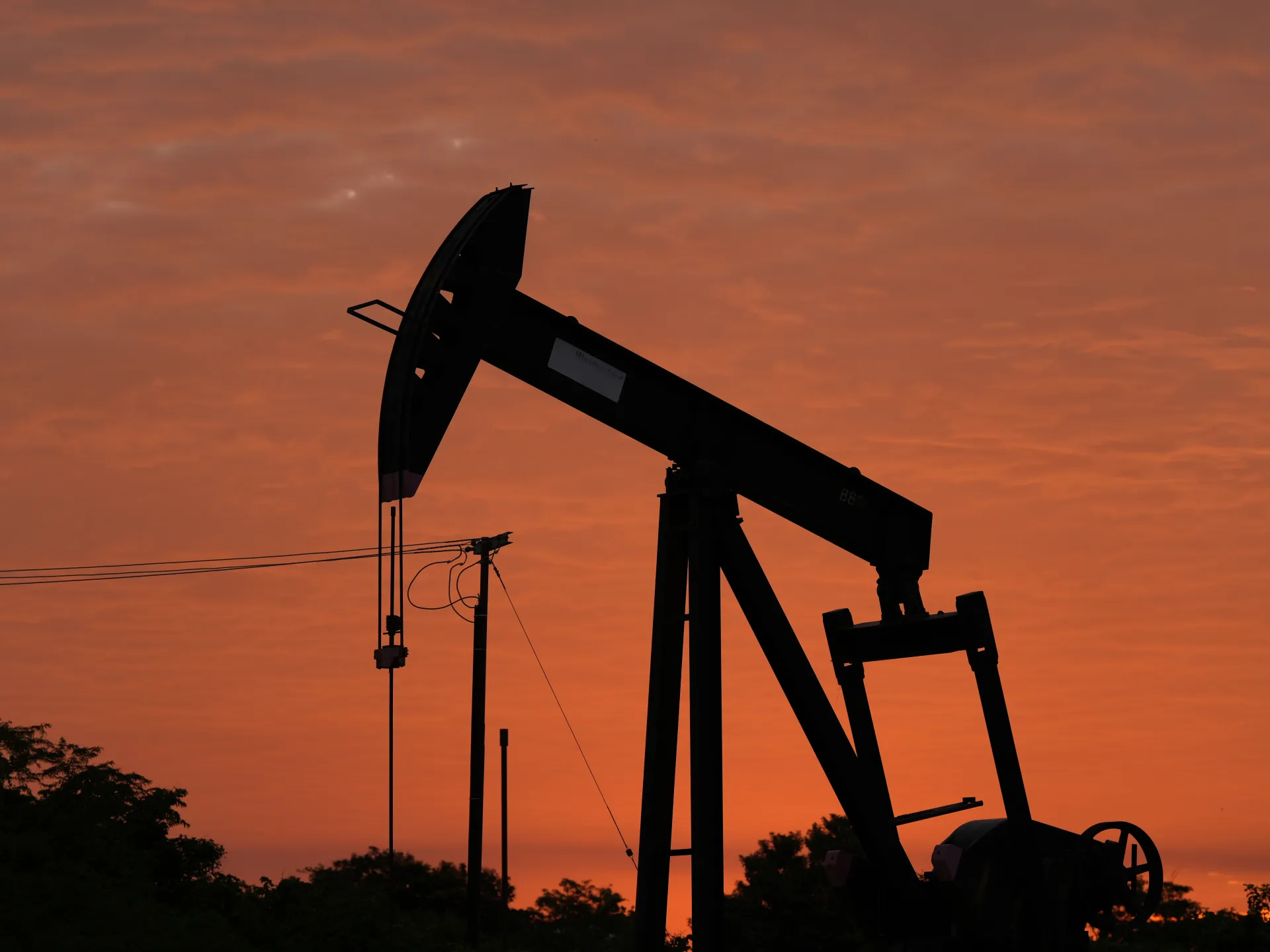
A pumpjack for oil is pictured at the Campo Elias neighbourhood in Cabimas, south of Lake Maracaibo, Zulia state, Venezuela, on January 31, 2026 [File: Maryorin Mendez/AFP]

Can India stop buying Russian oil altogether?

It may not be able to. One of India’s two private refiners, Nayara Energy, is majority-Russian-owned and under heavy Western sanctions. The Russian energy firm Rosneft holds a 49.13 percent stake in the company, which operates a 400,000-barrel-per-day refinery in India’s Gujarat, PM Modi’s home state.

Nayara is the second-largest importer of Russian crude, buying about 471,000 barrels per day in January this year, accounting for nearly 40 percent of Russian supplies to India.

Its plant has relied solely on Russian crude since European Union sanctions were imposed on the company last July.

Nayara is not planning to load Russian oil in April as it shuts its refinery for more than a month for maintenance from April 10, according to Reuters.

Pokharna said the future of Nayara hangs in the balance, with the US unlikely to grant India an overt exemption for the Russia-backed company to import crude.

Can India switch to Venezuelan oil?

India has been a major consumer of Venezuelan oil in the past. At its peak, in 2019, India imported $7.2bn of oil, accounting for just under 7 percent of total imports. That stopped after the US slapped sanctions on Venezuelan oil, but some officials of the government-owned Oil and Natural Gas Corporation are still stationed in the Latin American country.

Now, major Indian refiners have said they are open to receiving Venezuelan oil again, but only if it is a viable option.

For one thing, Venezuela is roughly twice as far from India as Russia and five times further than the Middle East, meaning much higher freight costs.

Venezuelan oil is more expensive as well. “Russian Urals [a medium-heavy crude blend] has been trading at a wide-ranging discount of about $10-20 per barrel to Brent, while Venezuelan Merey currently offers a smaller discount of around $5-8 per barrel,” Voloshin told Al Jazeera.

“Importing from Venezuela and forgoing the Russian discount would be a costly affair for India,” said Pokharna. “From transportation cost to forgoing discounts, it could cost India $6-8 more per barrel – and that is a huge increase in the importing bill.”

Overall, a complete pivot away from Russia could raise India’s import bill by $9bn to $11bn – an amount roughly equal to India’s federal health budget – per year, according to Kpler.

“Venezuelan crude must be discounted by at least $10 to $12 per barrel to be competitive,” argued Voloshin. “This deeper discount is necessary to offset the much higher freight costs, increased insurance premiums for the longer Atlantic voyage, and the somewhat higher operational expenses required to process Venezuela’s extra-heavy high-sulfur crude.”

Without deeper discounts, the longer journey and complex handling make Venezuelan oil more expensive on a delivered basis, he added.

Another major issue is that many Indian refiners simply do not have the facilities to process very heavy Venezuelan oil.

Venezuelan crude is a heavy, sour oil, thick and viscous like molasses, with a high sulphur content requiring complex, specialised refineries to process it into fuel. Only a small number of Indian refineries are equipped to handle it.

“[Venezuelan oil’s heaviness] makes it an option only for complex refineries, leaving out older and smaller refineries,” Pokharna told Al Jazeera. “The shift is operationally difficult and would require blending with more expensive light crudes.”

Then there is the question of availability. Today, Venezuela produces barely a million barrels per day when pushed to its limit. Even if all production was sent to India, it would not match the total Russian oil import.

Where else could India buy oil?

India’s Minister Puri has said that New Delhi is looking to diversify sourcing options from nearly 40 countries.

As India has reduced Russian imports, it has increased them from Middle Eastern nations and other countries in the Organization of the Petroleum Exporting Countries (OPEC). Now, while Russia accounts for nearly 27 percent share in India’s oil imports, OPEC nations, led by Iraq and Saudi Arabia, contribute 53 percent.

Reeling from Trump’s trade war, India has also increased purchases of US oil. American crude imports to India rose by 92 percent from April to November in 2025 to nearly 13 million tons, compared to 7.1 million in the same period in 2024.

However, India would be competing for these supplies with the European Union, which has pledged to spend $750bn by 2028 on US energy and nuclear products.

Meanwhile, for Venezuela to return to higher production, Caracas needs political stability, changes in foreign investment and oil laws, and to clear debts. That will take time, experts say.

nayara
Customers refuel their vehicles at a Nayara Energy Limited fuel station, the Russian oil major Rosneft’s majority-owned Indian refiner, in Bengaluru, India on December 12, 2025 [File: Idrees Mohammed/AFP]

Source link

What does 303 billion barrels of Venezuelan oil look like? | US-Venezuela Tensions News

Oil becomes more meaningful when you turn it into fuel.

A barrel contains 159 litres of crude oil, or 42 gallons.

To use this oil, it must be refined. The refining process produces various products, including petrol, diesel, jet fuel and numerous household items, such as cleaning products, plastics and even lotions.

Once refined, a barrel typically produces about 73 litres, or 19.35 gallons, of petrol to power cars and trucks.

A pick-up truck that can drive 24 miles on 1 gallon of petrol, or 100km on 10 litres, can travel about 730km, or 450 miles, from one barrel of oil.

Put another way, one barrel of crude oil can fuel that pick-up on a trip from New York City to Cleveland, Ohio.

INTERACTIVE - Venezuela oil - How many Michigan stadiums could hold Venezuelas oil-1770023997
(Al Jazeera)

Now let’s scale that up to US national consumption. According to the US Energy Information Administration, the US has about 285 million motor vehicles and consumes nearly 9 million barrels of petrol every day.

If all of Venezuela’s crude oil were refined into petrol, it could supply US vehicles for roughly 40 years at today’s consumption rate.

INTERACTIVE - Venezuela oil - How long Venezuelas oil could fuel US cars-1770023993
(Al Jazeera)

Source link

Venezuela’s Rodriguez signs oil reform law while the US eases sanctions | US-Venezuela Tensions News

Venezuela’s interim President Delcy Rodriguez has signed into law a reform bill that will pave the way for increased privatisation in the South American country’s nationalised oil sector, fulfilling a key demand from her United States counterpart, Donald Trump.

On Thursday, Rodriguez held a signing ceremony with a group of state oil workers. She hailed the reform as a positive step for Venezuela’s economy.

Recommended Stories

list of 3 itemsend of list

“We’re talking about the future. We are talking about the country that we are going to give to our children,” Rodriguez said.

The ceremony came within hours of the National Assembly – dominated by members of Rodriguez’s United Socialist Party – passing the reform.

“Only good things will come after the suffering,” said Jorge Rodriguez, the assembly’s head and brother of the interim president.

Since the US military’s abduction of Venezuela’s former leader Nicolas Maduro and his wife Cilia Flores on January 3, the Trump administration has sought to pressure President Rodriguez to open the country’s oil sector to outside investment.

Trump has even warned that Rodriguez could “pay a very big price, probably bigger than Maduro”, should she fail to comply with his demands.

Thursday’s legislation will give private firms control over the sale and production of Venezuelan oil.

It would also require legal disputes to be resolved outside of Venezuelan courts, a change long sought by foreign companies, who argue that the judicial system in the country is dominated by the ruling socialist party.

The bill would also cap royalties collected by the government at 30 percent.

While Rodriguez signed the reform law, the Trump administration simultaneously announced it would loosen some sanctions restricting the sale of Venezuelan oil.

The Department of the Treasury said it would allow limited transactions by the country’s government and the state oil company PDVSA that were “necessary to the lifting, exportation, reexportation, sale, resale, supply, storage, marketing, purchase, delivery, or transportation of Venezuelan-origin oil, including the refining of such oil, by an established US entity”.

Previously, all of Venezuela’s oil sector was subject to sweeping US sanctions imposed in 2019, under Trump’s first term as president.

Thursday’s suite of changes is designed to make Venezuela’s oil market more appealing to outside petroleum firms, many of whom remain wary of investing in the country.

Under Maduro, Venezuela experienced waves of political repression and economic instability, and much of his government remains intact, though Maduro himself is currently awaiting trial in a New York prison.

His abduction resulted in dozens of deaths, and critics have accused the US of violating Venezuelan sovereignty.

Venezuela nationalised its oil sector in the 1970s, and in 2007, Maduro’s predecessor, Hugo Chavez, pushed the government to increase its control and expropriate foreign-held assets.

Following Maduro’s abduction, Trump administration officials have said that the US will decide to whom and under what conditions Venezuelan oil is sold, with proceeds deposited into a US-controlled bank account.

Concerns about the legality of such measures or the sovereignty of Venezuela have been waved aside by Trump and his allies, who previously asserted that Venezuelan oil should “belong” to the US.

Source link

Mexico vows ‘solidarity’ with Cuba after oil shipment cancellation reports | Oil and Gas News

The president says Mexico’s decision ‘to sell or give oil to Cuba for humanitarian reasons’ was a ‘sovereign’ one.

Mexican President Claudia Sheinbaum says her country will continue to show “solidarity” with Cuba after media reports that her government halted a shipment of oil to Havana.

Mexico has in recent years become a top supplier of oil to Cuba, which relies on cut-price oil supplies from its allies to survive a US trade embargo and keep the lights on through a severe energy crisis.

Recommended Stories

list of 3 itemsend of list

Venezuela had been a major supplier of discounted crude to Cuba, but US President Donald Trump said he would halt the shipments after the United States military abducted long-term Venezuelan President Nicolas Maduro this month.

As recently as December, Mexico was still sending oil to Cuba, but several media outlets, including Bloomberg and the Mexican newspaper Reforma, have reported that a shipment planned in January was called off.

Sheinbaum refused to confirm or deny the reports on Tuesday. She told reporters during her regular morning news conference that Mexico’s decision “to sell or give oil to Cuba for humanitarian reasons” was a “sovereign decision”.

“It is determined by [Mexican state oil company] Pemex based on the contracts, or, in any case, by the government, as a humanitarian decision to send it under certain circumstances,” Sheinbaum said.

When asked if Mexico would be resuming oil shipments to Cuba, the president sidestepped the question and said, “In any case, it will be reported”. She also said Mexico would “continue to show solidarity” with Cuba.

The Reuters news agency last week reported that the Mexican government was reviewing whether to keep sending oil to Cuba amid growing concerns within Sheinbaum’s government that continuing the shipments could put the country at odds with the US.

Trump on Tuesday told reporters that “Cuba will be failing very soon”, adding that Venezuela has ‌not ‌recently sent ⁠oil or money ‌to Cuba.

According to shipping data and internal documents from state company PDVSA, Venezuela has not sent crude or fuel to Cuba for about a month.

Last year, Mexico sent approximately 5,000 barrels per day to Cuba. With Venezuela’s shipments now offline, Mexico’s supplies are critical.

Source link