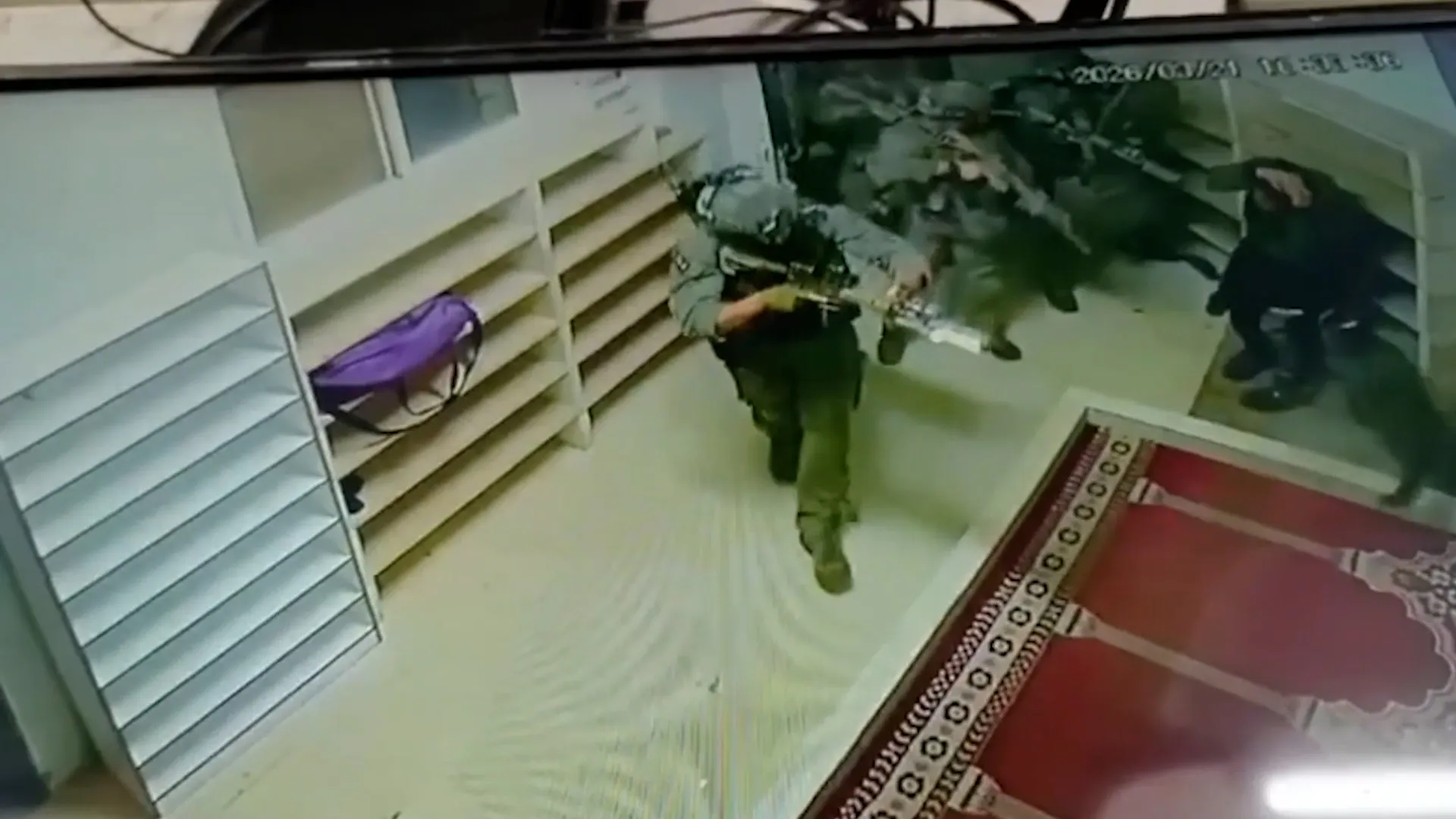
CCTV footage circulated online shows the moment that a military dog attacks a worshipper leaving a mosque during an Israeli raid on Tarqumiyah in the occupied West Bank.
Hebron, occupied West Bank – Hebron’s Ibrahimi Mosque is no more than 50 metres from Aref Jaber’s home, in the neighbourhood that bears his surname, reflecting his family’s long history in the Palestinian city.
The 51-year-old has taken advantage of that proximity since his childhood, regularly praying at the mosque, one of the most important Islamic sites, and a Palestinian national symbol.
Recommended Stories
list of 3 itemsend of list
But the Ibrahimi Mosque of Jaber’s childhood is not the one of today. A 1994 massacre of Muslim worshippers by the Israeli settler Baruch Goldstein killed 29 Palestinians. Instead of getting justice, Palestinians faced more restrictions in the aftermath of the attack.
Israeli settlers began establishing an illegal presence in Hebron, part of the occupied West Bank, in 1968, the year after Israel seized control of the Palestinian territory. The settlers have been working to grow their presence ever since, with increased support from the Israeli government.
After 1994, Israel began taking steps to, in effect, control the Ibrahimi Mosque – known to Jews as the Cave of the Patriarchs – by closing off large areas in Hebron’s Old City and the southern area surrounding the mosque, then dividing it between Muslims and a few hundred Jewish settlers, granting the latter the right to pray there.
This was followed by the signing of the Hebron Agreement with the Palestinian Authority in 1997, which stipulated the division of the city into two parts: H1, under Palestinian control, comprising 80 percent of the area, and H2, under Israeli control, comprising 20 percent, but including the Ibrahimi Mosque and the Old City.
Following this series of events, settlement activity intensified in the heart of Hebron. Settlers established illegal outposts within the Old City and began gradually expanding and seizing new homes under the protection of the Israeli army.
Meanwhile, Palestinians were subjected to closures, restrictions and repressive measures aimed at forcing them to leave the Old City, thus facilitating Israeli control over the mosque.
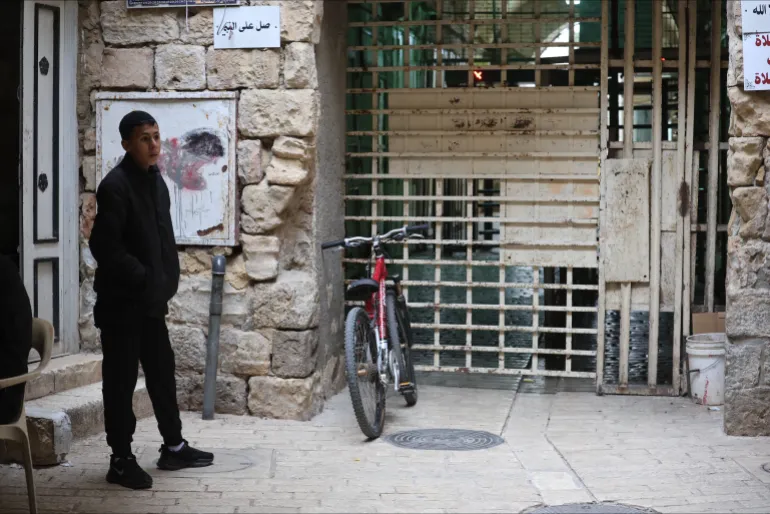
Israeli forces have erected metal barriers throughout the neighbourhoods surrounding the Ibrahimi Mosque, restricting access for Palestinians [Mosab Shawer/Al Jazeera]
Neighbours of the Ibrahimi Mosque
Jaber had hoped that his children would pray at the mosque daily and become familiar with it, but Israeli measures prevented this.
He explained that since 1994, the southern gate of the mosque, which residents of his neighbourhood used for access, has been closed. They have instead been forced to take alternative routes, turning a journey of 50 metres into one that now spans almost three kilometres.
Things have gotten worse since the beginning of Israel’s genocidal war on Gaza in October 2023, when Israel also ramped up its attacks in the West Bank.
Israel tightened its grip on the mosque and its surroundings, closing more of the alternative routes.
“The difficulty of reaching the mosque is compounded by the procedures at the iron and electronic gates installed at its entrances and in its vicinity,” Jaber said. “We are subjected to searches, detention, and harassment without any justification, and often young men, boys, and even women are arrested.”
The Israeli government says that the restrictions are necessary for security reasons – to protect Israeli settlers whose presence in the West Bank’s most populous city is illegal under international law.
Jaber explained how the Israeli army closes barriers and gates around the mosque and the neighbourhoods that surround it for extended periods under security pretexts. Palestinian residents are not allowed to leave their homes, even to shop, while settlers are permitted to move freely throughout the Old City.
Israeli authorities also used the justification of the current conflict with Iran to close access to the Ibrahimi Mosque for Palestinians for six days from February 28, allowing it to reopen for a limited number of worshippers on March 6.
The Ibrahimi Mosque is an important Islamic holy site and a Palestinian national symbol, also holy to Jews who call it the Cave of the Patriarchs [Mosab Shawer/Al Jazeera]
Increased control
But these measures aren’t only aimed at restricting Palestinians in the vicinity of the mosque, but also seem to be an attempt to establish complete Israeli security control over it, with measures similar to those Israel employs at the Al-Aqsa Mosque in occupied East Jerusalem.
In Al-Aqsa, the third holiest site in Islam, renewable expulsion orders are used to prevent the entry of worshippers deemed troublesome. Searches are also regularly conducted at the gates of Al-Aqsa, as well as detentions, confiscation of identity cards and restrictions on entry to certain parts of the mosque compound.
Israel now regularly conducts similar actions at the Ibrahimi Mosque.
The Israeli army issued orders to remove Moataz Abu Sneineh, the director of the Ibrahimi Mosque, and other employees from the mosque for 15 days in January. The Palestinian Authority said that the orders were part of “an attempt to reduce their role in the administration and supervision of the Ibrahimi Mosque’s religious and administrative affairs”.
Israeli officials have also tried to push through construction work in the mosque without the approval of Palestinian officials.
On February 9, the Israeli cabinet approved the transfer of licensing, building and municipal administration powers in Hebron from the municipality to the Israeli Civil Administration, in addition to establishing a separate settlement municipality within the city.
The change, part of an internationally condemned Israeli push to increase control over the West Bank and make Israeli settlement easier, is seen as illegitimate and dangerous to the existing status quo, threatening freedom of worship and public order, according to a statement issued by the Hebron Municipality in response to the decision.
Abu Sneineh told Al Jazeera that Israel has transformed the mosque into something resembling a “military barracks” due to the stringent measures it imposes, which “aim to reduce the number of worshippers there”.
According to Abu Sneineh, the Israeli government interfered in the authority of the Ministry of Religious Endowments, and the call to prayer was prevented from being performed dozens of times a month. Worshippers were subjected to humiliating treatment at the mosque entrance, including beatings, verbal abuse and expulsion. Abu Sneineh said the measures were part of a systematic Israeli policy aimed at transforming the mosque into a Jewish synagogue.
“Israel is trying to impose a new reality by controlling the mosque and obstructing worshippers’ access to it, whether during Ramadan or at other times. After October 2023, the measures became even more stringent to erase the Islamic identity of the place, as if it were racing against time to seize control of it,” he added.
On February 28, coinciding with the start of Israeli-American strikes on Iran, the Israeli army expelled worshippers and staff from the mosque and informed them of its closure until further notice, just as it had done at Al-Aqsa Mosque in Jerusalem on the same day under the declared state of emergency measures.
The director of the Youth Against Settlements group and a resident of the Old City, Issa Amro, believes that the situation at the Ibrahimi Mosque is more dangerous than at Al-Aqsa Mosque because it has suffered from temporal and spatial division since 1994.
The “arbitrary” barriers, the closure of surrounding markets and main roads leading to it, and recently the closure of checkpoints in the southern area of the city – which includes the Old City and the Ibrahimi Mosque – prevent approximately 50,000 citizens from accessing it, along with the transfer of supervisory authority of parts of the mosque to the Religious Council in the illegal Kiryat Arba settlement, are extremely dangerous steps that threaten the Palestinian identity of the site, Amro said.
“The Jewish area [of the mosque] has been expanded, and recently, residents around the mosque have been living a difficult life due to soldier violence, settler terrorism, the constant closure of barriers, and restrictions on leaving their homes. They live as prisoners in their own homes in fear of settlers and soldiers, and disturbed by the constant gatherings held by settlers in the mosque,” he added.
According to the Applied Research Institute – Jerusalem (ARIJ) – a Palestinian research institute – approximately 40,000 Palestinians live in the H2 area, alongside about 800 Israeli settlers residing in 14 small illegal settlement outposts. These outposts are under heavy protection from thousands of Israeli soldiers deployed around the perimeter of the area and in the streets of the Old City, preventing Palestinians from leading normal lives.
The outposts are managed by the Hebron Settlements Council, which is linked to the parent settlement, Kiryat Arba, located east of the city.
A research study published by the institute in November 2025 revealed a significant increase in the forced displacement of Palestinians from the H2 area over the past two decades.
The Israeli human rights group B’Tselem said in a 2019 report that about 35,000 Palestinians lived in Hebron’s H2 area when the Hebron Agreement was signed in 1997. Today, only around 7,000 remain. Roughly 1,000 of them live in a particularly restricted zone around the Tel Rumeida neighbourhood and Shuhada Street – formerly Hebron’s main shopping street, which is now closed to Palestinians, due to the presence of several illegal Israeli settlements.
Palestinian families in the Old City and the vicinity of the Ibrahimi Mosque are subjected to various forms of pressure, including demolition orders under the pretext of unlicensed construction, frequent arrests, settler attacks on residents and students travelling to and from school, economic restrictions, shop closures, and movement restrictions, particularly regarding access to places of worship and hospitals.
According to the United Nations Office for the Coordination of Humanitarian Affairs, the area contains 97 various military checkpoints and barriers.
These are often closed for hours or even days at a time without prior notice, paralysing movement within the Old City and the residential areas adjacent to the mosque.
Towards full annexation
Observers see these measures in Hebron as a prelude to establishing a fait accompli in the West Bank as a whole, which has been subjected for more than two years to accelerated policies aimed at controlling the largest possible area of land and expanding settlements.
Settlement affairs researcher Mahmoud al-Saifi told Al Jazeera that Israel has sought over the past two years to solidify the annexation of the West Bank, particularly Area C, which constitutes more than 61 percent of the total area of the West Bank.
Israeli authorities have approved 54 new official settlements and 86 smaller outposts in 2025 alone, according to data from Peace Now, which monitors settlement activity.
Planning was approved or advanced for some 51,370 settlement units in the West Bank from late 2022 to the end of 2025, a figure also announced by Israeli government agencies based on data from the Higher Planning Council.
In addition, 222 kilometres of secondary and bypass roads were constructed in the two years preceding January 2025, aimed at connecting outposts to main settlements.
As a result of these policies, the Palestinian presence has dwindled in many areas, particularly the Jordan Valley, where their number has decreased to no more than 65,000.
“Israel is implementing a policy of encirclement and strangulation of small villages in the West Bank by confiscating land and preventing Palestinian construction, in contrast to the frenzied settlement wave that Smotrich called a ‘settlement revolution,’ and the accompanying bitter reality for Palestinians,” al-Saifi said.
There are now thousands of armed settlers spread throughout the West Bank, al-Saifi noted. Skilfully trained and often called settlement guards, they are essentially a rear guard force for the Israeli army, used to attack and intimidate Palestinians and seize their land.
“All Bedouin communities are located in Area C, and 47 of them have been forcibly displaced since October 2023, meaning more than 4,000 Palestinians have been displaced in just two and a half years,” al-Saifi said. “This is part of ethnic cleansing and de facto annexation on the ground.”
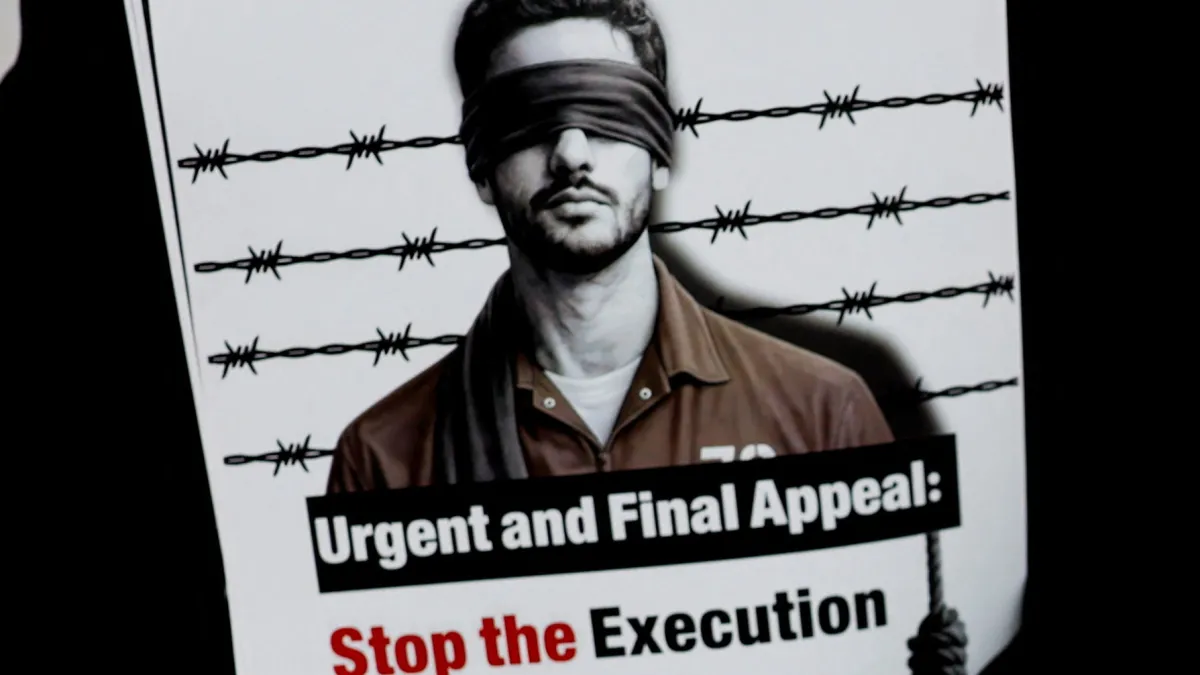
The Israeli parliament’s approval of a legislation that seeks the death penalty for Palestinians convicted of deadly attacks has stoked fears among the Palestinians and drawn condemnation from the international community, dismayed at the further entrenching of what rights groups have long described as Israel’s “system of apartheid”.
The law, which does not apply to Jewish citizens of Israel, was met with jubilation among its backers in the country’s far right.
Recommended Stories
list of 4 itemsend of list
France, Germany, Italy and the United Kingdom have all raised concerns over what many describe as the overtly racist nature of the bill, whose nature and wording appear to exclusively target Palestinians.
“We are particularly worried about the de facto discriminatory character of the bill. The adoption of this bill would risk undermining Israel’s commitments with regards to democratic principles,” the foreign ministries wrote in a joint statement on Sunday.
Rights groups have also criticised the bill, with Amnesty International in February saying the legislation would make the death penalty “another discriminatory tool in Israel’s system of apartheid”.
Human Rights Watch (HRW) on Tuesday called the law discriminatory as it would primarily, if not exclusively, be applied to Palestinians.
“Israeli officials argue that the imposing the death penalty is about security, but in reality, it entrenches discrimination and a two-tiered system of justice, both hallmarks of apartheid,” Adam Coogle, deputy Middle East director at Human Rights Watch, said in a statement.
“The death penalty is irreversible and cruel. Combined with its severe restrictions on appeals and its 90-day execution timeline, this bill aims to kill Palestinian detainees faster and with less scrutiny.”
Nevertheless, on its successful passage through parliament, amidst the celebrating lawmakers, the legislation’s principal champion, far- right National Security Minister Itamar Ben-Gvir – who has previous convictions for far-right “terrorism” – was seen brandishing a champagne.
Israeli Prime Minister Benjamin Netanyahu, who had attended the chamber to support the bill, could also be seen congratulating lawmakers on its passage.
So, how can Israel pass a law targeting one ethnic group and not others? Is that legal, and is this the first time Israel has passed legislation that deliberately discriminates against Palestinians?
Here’s what we know.
How does the law target Palestinians and not Israelis?
By limiting the bulk of the legislation to the military courts that only try Palestinians under occupation.
Under the new legislation, anyone found guilty of the killing of an Israeli citizen within the occupied West Bank will, by default, be sentenced to death by the military courts overseeing the occupied territory.
While the courts do not regularly publish statistics on convictions, in 2010, the court system did concede that, of the Palestinians tried for offences committed in the occupied West Bank, 99.74 percent were found guilty.
In contrast, Israeli settlers, who have killed seven Palestinians in just the weeks following the start of their country’s war on Iran in late February, are tried in civilian courts in Israel. According to an analysis by the UK’s Guardian newspaper in late March, Israel has yet to prosecute any of its citizens for killing Palestinians in the occupied West Bank since the start of this decade.
Under the new legislation, Israel’s civilian courts are granted an extra degree of leniency in sentencing Israelis found guilty of killing Palestinians in the occupied West Bank, with judges having the option to choose between the death penalty and life imprisonment.
Sentences for the military courts trying Palestinians, in contrast, carry an automatic death penalty, with life imprisonment only available under extreme circumstances.
According to a study by the Israeli rights group, Yesh Din, conviction rates for settlers found guilty by civilian courts of committing crimes against Palestinians in the West Bank (excluding East Jerusalem) between 2005 and 2024 ran to about 3 percent. Some 93.8 percent of investigations into settler violence were closed at the end of an investigation with no indictment filed, the group noted.
Underpinning much of this is Israel’s 2018 Nation State law, which, in the eyes of many, codifies Israel’s apartheid system of government, defining Israel as the exclusive homeland of the Jewish people and prioritising Jewish settlement as a national value.
Critics argue that it downgrades the status of Palestinian citizens, who make up about 20 percent of the population, by omitting any guarantee of equality.
How is that even legal?
According to many, it isn’t.
Despite the best efforts of Prime Minister Netanyahu and his Finance Minister Bezalel Smotrich – who has administrative power over the occupied West Bank – to annex the Palestinian territory, it remains a foreign territory under military occupation.
According to Amichai Cohen, a senior fellow at the Center for Security and Democracy of The Israel Democracy Institute, international law does not permit Israel’s parliament to legislate for the West Bank, since the area is not legally part of Israel’s sovereign territory.
In September 2024, the United Nations General Assembly overwhelmingly called for end to Israeli occupation of the occupied West Bank and East Jerusalem within a year. The UNGA resolution backed an advisory opinion by the International Court of Justice (ICJ), which called Israeli occupation “unlawful”.
Similarly, the Association of Civil Rights in Israel announced it had already taken the matter to Israel’s highest court only minutes after the bill was approved. The group argued that the measure was “discriminatory by design” and that lawmakers had no legal authority to impose it on Palestinians living in the occupied West Bank, who are not Israeli citizens.
Is this the first time Israel has been accused of using its legal system to target Palestinians?
Far from it.
Human rights groups – including HRW and Amnesty International – have long argued that the legal systems applying to Palestinians and to Israeli settlers in the West Bank are fundamentally unequal.
Palestinians live under military law, while settlers fall under Israeli civil law, creating two parallel systems in the same territory.
According to rights groups, this structure enables discriminatory detention practices, such as administrative detention (where people can be held indefinitely without charge), dramatically unequal protections under the law, and the selective enforcement of those laws, which have all underpinned widespread accusations of apartheid.
As of March 2026, approximately 9,500 Palestinians are detained in Israeli prisons under harsh conditions, with about half held under administrative detention or labelled “unlawful combatants”, denied trial and unable to defend themselves.
Legislation relating to the treatment of children in custody has led to concern among many international observers and rights groups. Palestinian minors can be interrogated without parental present and are often denied timely access to legal counsel in defiance of Israel’s own and international law, the HRW noted.
Another key area of international concern is the ongoing demolition of Palestinian homes built without permits, which are nearly impossible for Palestinians to obtain. Unauthorised settler outposts, in contrast, are rarely troubled and increasingly retroactively legalised.
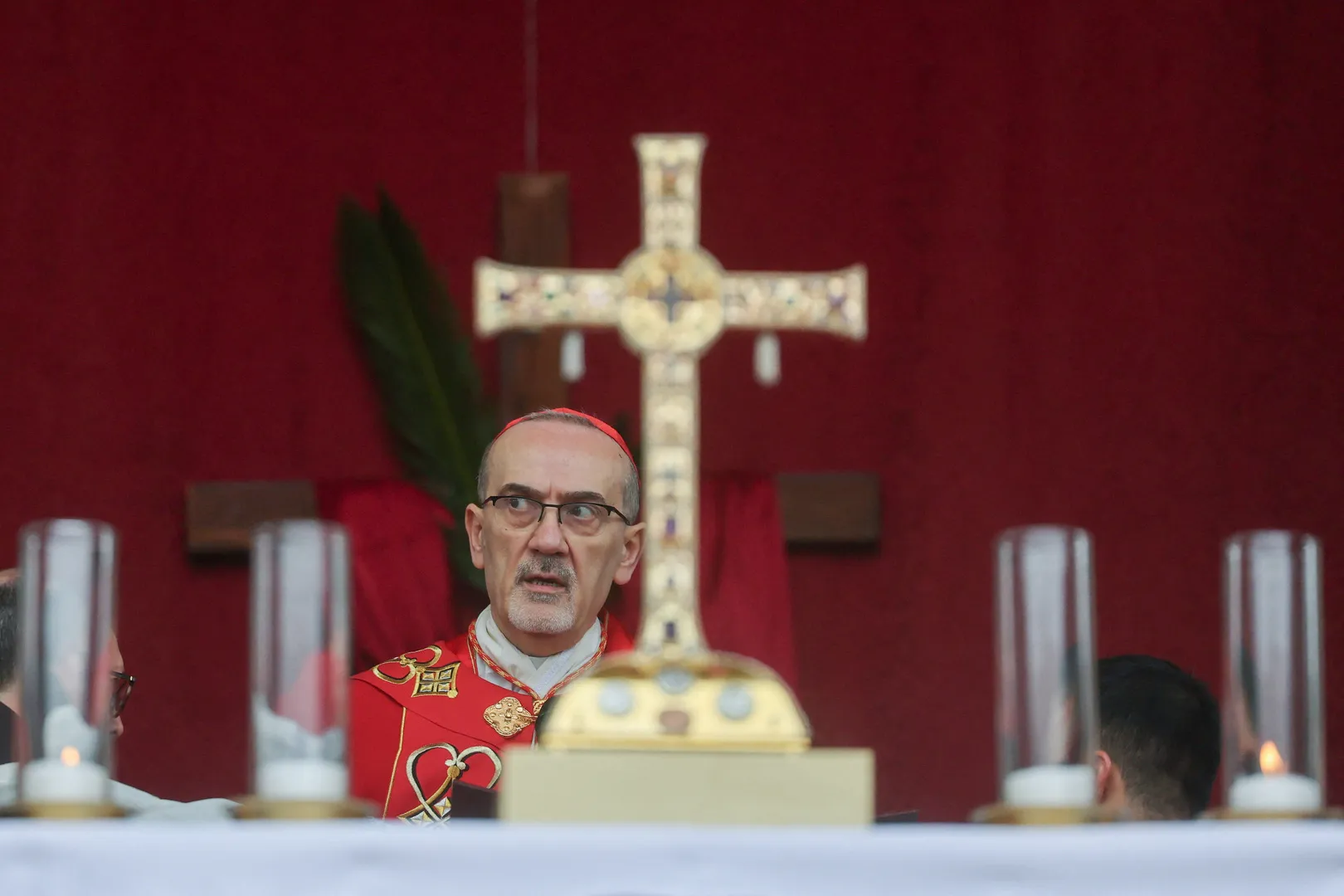
Christians in Jerusalem and Gaza marked Holy Week under wartime restrictions, with Israeli police blocking the Latin Patriarch from the Holy Sepulchre for the first time in centuries. In Gaza, a small Christian community continued Palm Sunday rites despite ongoing attacks and severe shortages of basic essentials.
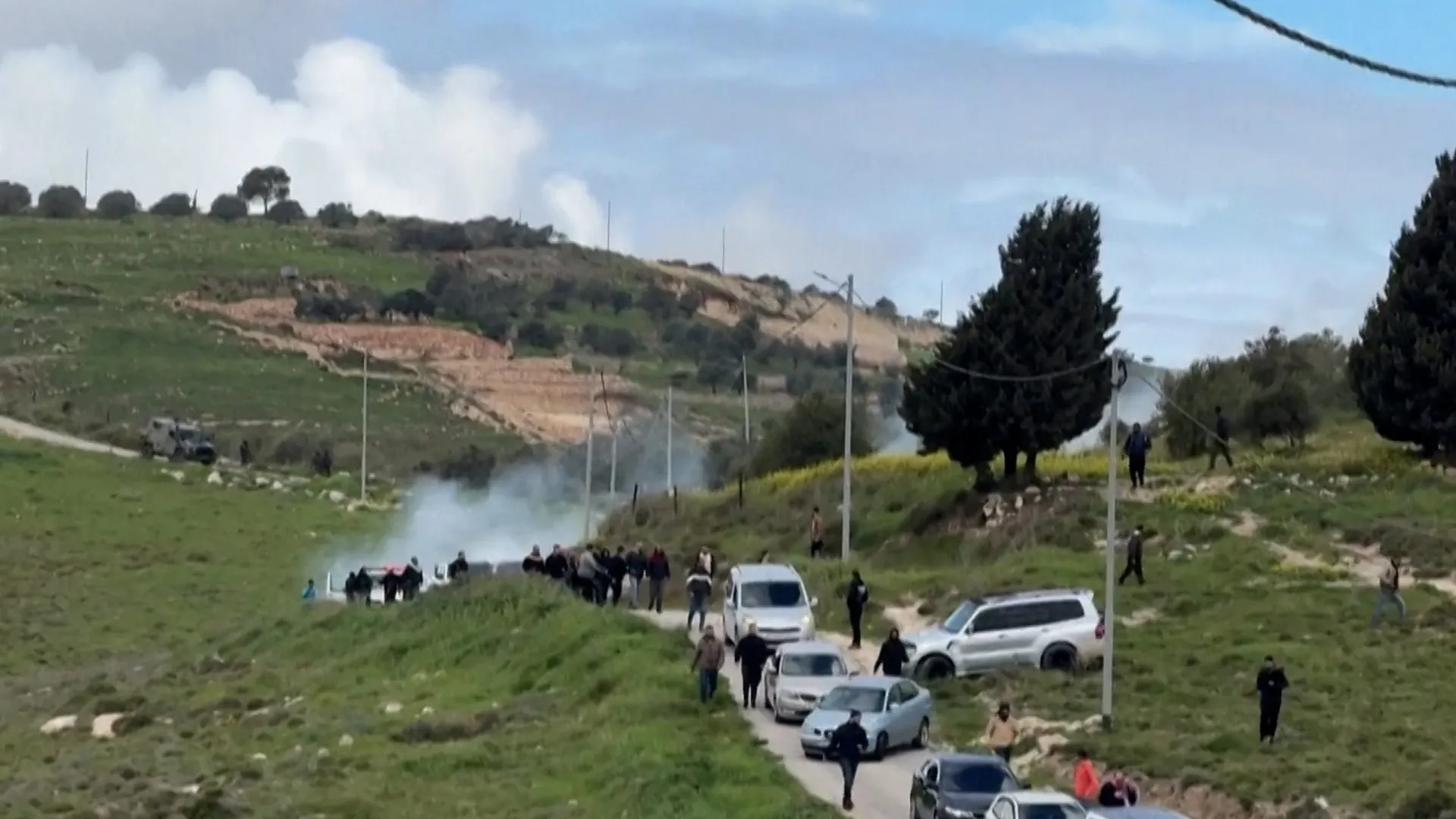
The Israeli army fired tear gas at Palestinian residents of the Beit Imrin village, northwest of Nablus in the occupied West Bank. Israeli settlers can be seen setting up tents, while gunfire is heard as the Palestinians fled.
Settler attacks, restrictions on aid, and land seizures marked a week that was supposed to be one of celebration for Palestinians. Al Jazeera’s Nida Ibrahim and Tareq Abu Azzoum explain what’s been going on in the occupied West Bank and Gaza.
Israeli settlers set fire to homes and vehicles near Jenin amid reports of widespread violence across the occupied territory.
Published On 22 Mar 202622 Mar 2026
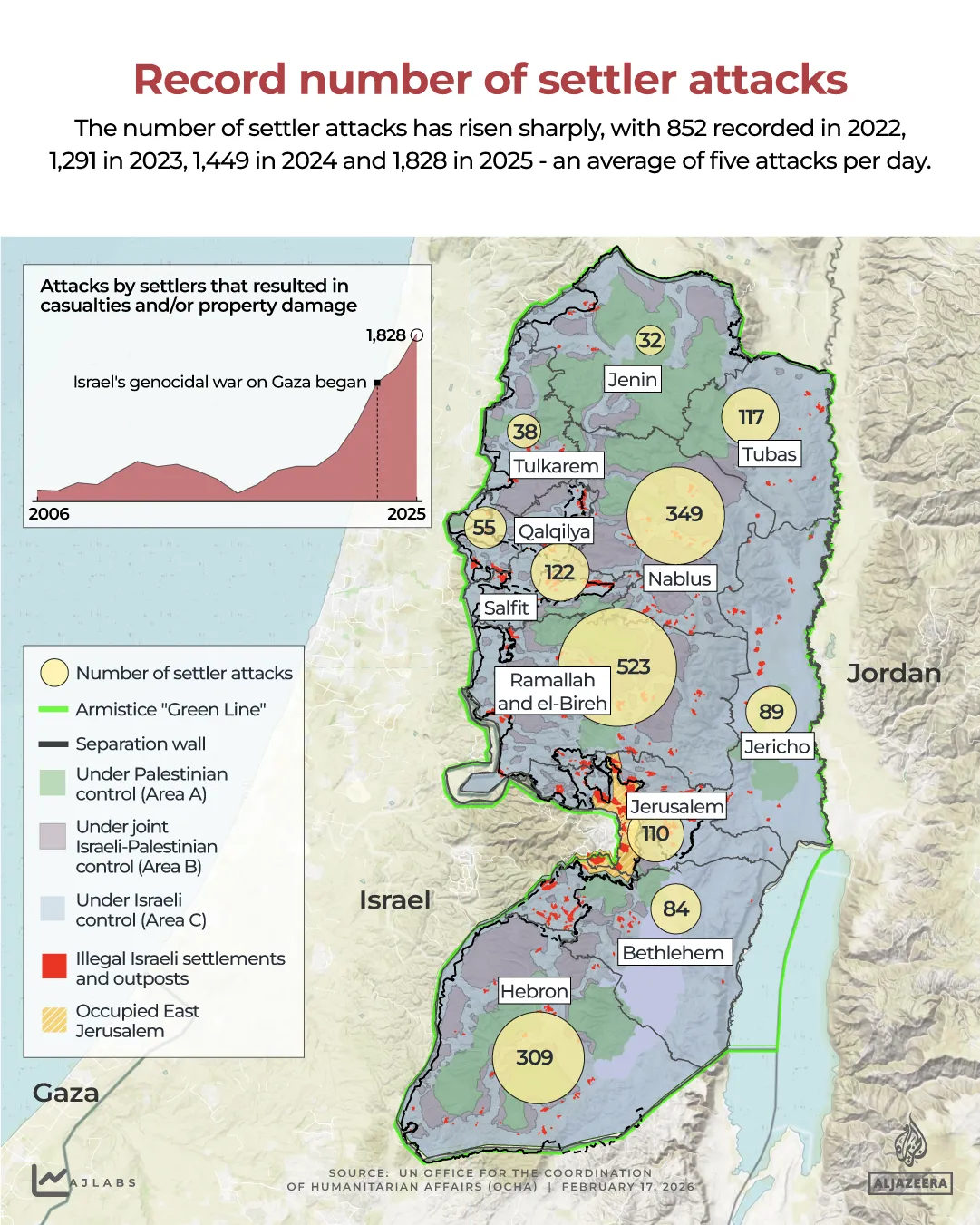
Israeli settlers have torched homes and vehicles in at least two areas of the occupied West Bank, wounding at least one person, amid reports of settler violence across the Palestinian territory.
The Palestinian Wafa news agency, citing local sources, said Israeli settlers stormed the village of al-Fandaqumiya and the town of Seilat al-Dahr, south of Jenin, late on Saturday.
Recommended Stories
list of 3 itemsend of list
In al-Fandaqumiya, Israeli settlers set “homes and vehicles ablaze and damaged additional houses by smashing windows” as Palestinians “attempted to confront them and put out the fires”, the agency reported.
In Seilat al-Dahr, the settlers targeted several homes, attempted to set them alight and physically assaulted a resident, leaving him wounded.
Footage verified by Al Jazeera showed large fires burning inside homes in Seilat al-Dahr, and another house engulfed in flames in al-Fandaqumiya as residents frantically tried to extinguish them.
There was also an attack on Masafer Yatta, south of Hebron, where settlers wounded two Palestinians. Three others were arrested as settlers stormed the area under the protection of Israeli forces, Wafa reported.
The attacks, which took place late on Saturday during Eid al-Fitr celebrations, are the latest in a wave of settler violence in the occupied territory that has previously resulted in killings.
Other images and videos shared by Palestinian authorities showed settler attacks on the villages of Qaryut and Jalud, south of Nablus. In Jalud, a four-wheel-drive vehicle was seen completely burned out following the attack.
Violence was reported elsewhere across the occupied West Bank.
Near the town of Haris, west of Salfit, settlers gathered on the main road and pelted Palestinian vehicles with stones, according to Wafa.
In Ramallah, settlers near Rawabi Square on the Ramallah-Nablus Road threw stones at passing Palestinian-registered vehicles, with no injuries reported.
Similar incidents were reported in Tuqu, southeast of Bethlehem.
Settler violence in the West Bank has intensified in the shadow of Israel’s genocidal war on nearby Gaza.
More than 1,000 Palestinians have been killed by Israeli troops and settlers in the West Bank since the Gaza war began in October 2023, according to the latest United Nations figures.
In late February, Israeli settlers defaced and set fire to a mosque near Nablus in the occupied West Bank during the Muslim holy month of Ramadan.
In February, the UN Human Rights Council warned in a new report (PDF) that Israeli policies in the occupied West Bank – including “the systematic unlawful use of force by Israeli security forces” and unlawful demolitions of Palestinian homes – aim to uproot Palestinian communities.
Human rights groups say Israeli authorities have allowed the settlers to operate with total impunity in their attacks against Palestinians.
Israeli organisation B’Tselem has also accused its government of actively aiding the settlers’ violence “as part of a strategy to cement the takeover of Palestinian land”.
Elsewhere in the occupied West Bank, two Palestinians were injured on Saturday night by live fire from Israeli forces south of Tulkarem.
The Palestine Red Crescent Society (PRCS) reported that at least two people were wounded after being shot by Israeli forces at the Jabara checkpoint.
Two Palestinian brothers are the only survivors after Israeli troops killed their parents and two siblings in Tammun in the occupied West Bank, according to Palestinian health authorities. The boys say soldiers opened fire on their family car and beat them after the shooting.
Several Palestinians were killed after armed Israeli settlers attacked the village of Abu Falah in the occupied West Bank. Witnesses say the settlers carried out the attack under the protection of Israeli forces.
A father and his daughter have been killed in an Israeli drone attack in central Khan Younis, southern Gaza, as Palestinians continue to suffer amid worldwide attention on the United States-Israeli war on Iran.
The two were killed early on Saturday. In a separate attack later in the day in Khan Younis, another person was killed and a young girl wounded, according to Al Jazeera correspondents on the ground.
Recommended Stories
list of 4 itemsend of list
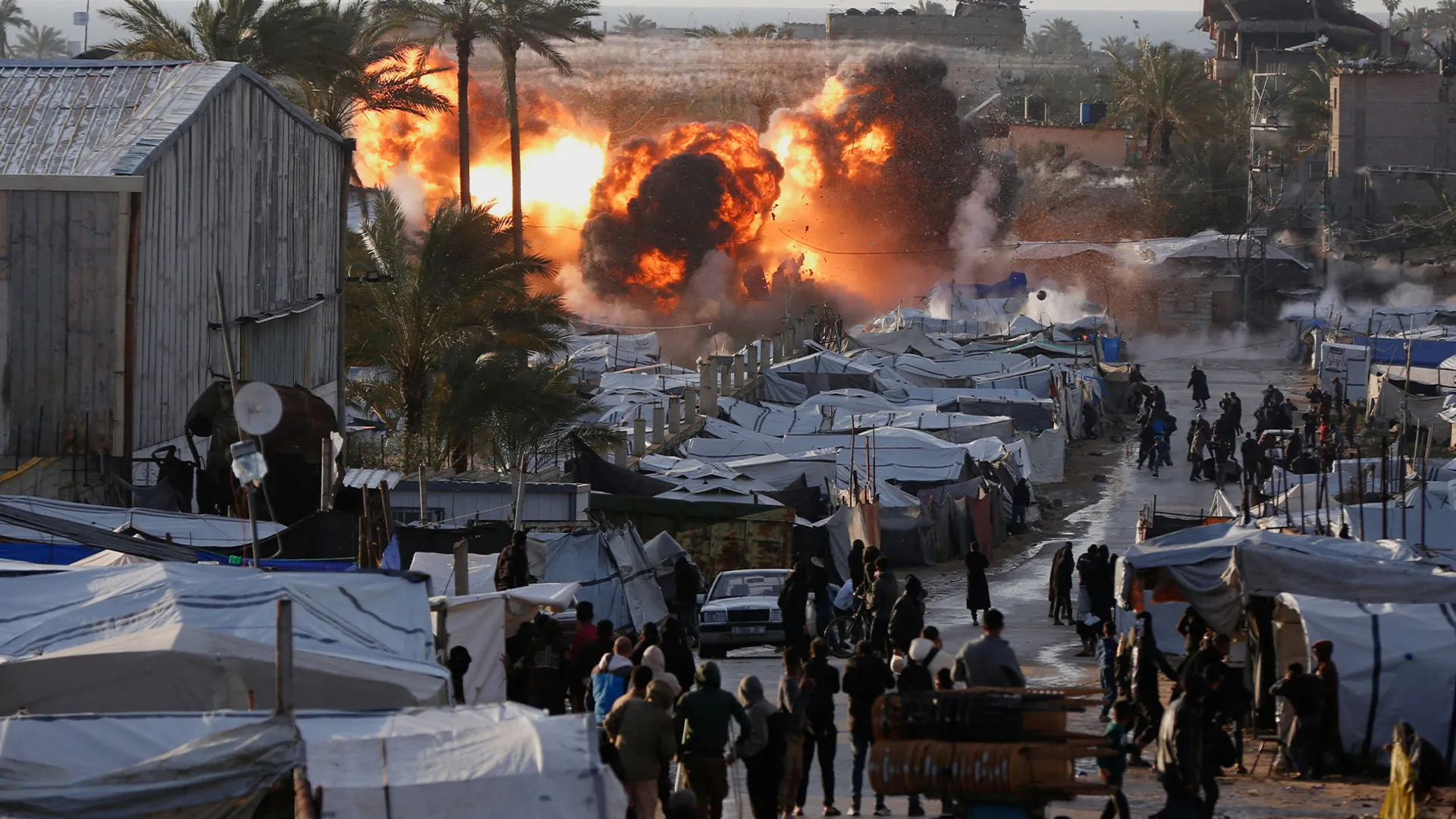
Israeli forces continue carrying out air strikes, artillery shelling, and naval bombardment on Gaza on a daily basis, despite an October 11 “ceasefire” as Israel continues its ongoing genocide.
Suffering in Gaza and the occupied West Bank remains acute as the world focuses on the US-Israeli bombardment of Iran.
In the past 48 hours, two additional people have been wounded, the Palestinian Ministry of Health said.
Israeli army-affiliated militias, meanwhile, have advanced east of Gaza City, with heavy gunfire reported in the area. Initial reports also stated a member of the Palestinian police was abducted.
Israeli warplanes also struck several locations east of the Tuffah neighbourhood, near Gaza City, while the Israeli navy fired heavy machineguns and shells towards the coast of Gaza City, Palestinian news agency Wafa reported.
The Rafah border crossing, meanwhile, remains closed. Israel had shut it amid its attacks on Iran.
The Rafah crossing, located on Gaza’s southern border, had reopened only last month allowing a limited number of Palestinians to leave for the first time in months, including patients in urgent need of medical care. Thousands remain blocked from travelling for treatment.
The Karem Abu Salem crossing, also known to Israelis as Kerem Shalom, is partially open for the entry of humanitarian aid only, under strict restrictions.
Nearly all of Gaza’s population of more than two million people was displaced during Israel’s war on the territory, and the enclave remains heavily dependent on humanitarian assistance.
In a February report, Human Rights Watch said Israeli restrictions had contributed to shortages of medicine, reconstruction materials, food and water inside the Strip.
Since the ceasefire in Gaza, 640 Palestinians have been killed and at least 1,700 wounded, according to the Health Ministry. At least 72,123 Palestinians have been killed since October 2023, while 171,805 people have been injured.
Meanwhile, in the occupied West Bank, the Palestinian Red Crescent Society reported its teams in Hebron are treating a Palestinian injured by live fire near the illegal Karmei Tzur settlement, built on Palestinian land north of Hebron.
Three Palestinians were also injured on Saturday after being physically assaulted by Israeli settlers in the Ras al-Ahmar area, south of Tubas, Wafa reported. Medical sources at the Palestinian Red Crescent Society said their teams responded to three people with injuries.
Israeli forces also conducted raids in the towns of Qaffin and Kafr al-Labad, north of Tulkarem, early on Saturday, Wafa said.
A Palestinian man was also injured after being assaulted by Israeli soldiers near the village of Azmut, east of the occupied West Bank city of Nablus.
Palestinians have faced a wave of intensified Israeli military and settler violence across the West Bank since the war on Gaza began in October 2023.
At least 1,094 Palestinians have been killed by Israeli troops and settlers in the West Bank since October 2023, according to the latest United Nations figures.