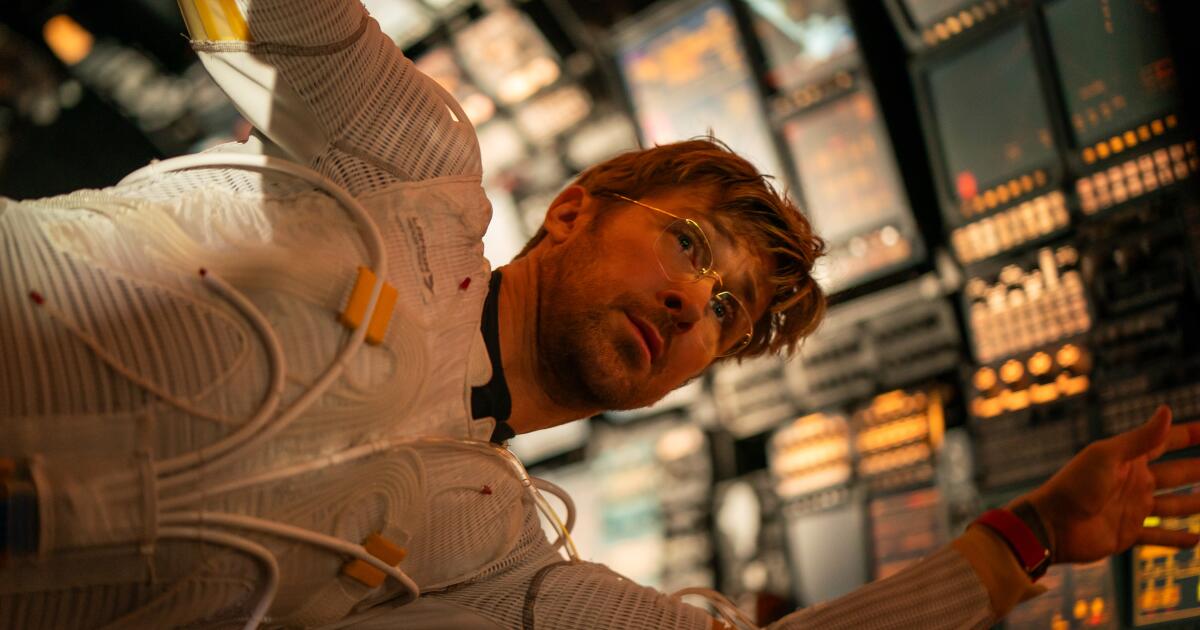
The Ryan Gosling-led “Project Hail Mary” rocketed to the top of the box office this weekend, marking a big win for Amazon MGM Studios.
The film — which stars Gosling as a science teacher who embarks on a space mission to save humanity — hauled in $80.5 million in the U.S. and Canada, making it the biggest domestic debut of the year so far. Globally, “Project Hail Mary” brought in $140.9 million.
The movie is an adaptation of a novel by Andy Weir, author of “The Martian” — another successful book-to-screen adventure. The big opening weekend for “Project Hail Mary” is a boost for Amazon MGM Studios, which had heavily promoted the film as an example of the big blockbusters it could produce.
“We believe deeply in the Hail Mary, and it’s clear audiences do as well,” Kevin Wilson, head of domestic theatrical distribution for Amazon MGM Studios, said in a statement. “What we’re seeing in theaters —the energy, the exit scores, the word of mouth — is everything we believed this film would deliver.”
Walt Disney Co. and Pixar’s “Hoppers” came in second at the box office this weekend with a domestic total of $18 million. The original animated film has now garnered $120.4 million in the U.S. and Canada since it debuted in theaters earlier this month.
Indian action film “Dhurandhar The Revenge” came in third with $10 million, followed by Disney-owned Searchlight Pictures’ horror film “Ready or Not 2: Here I Come” and Universal Pictures’ romance “Reminders of Him” rounding out the top five.
If you buy books linked on our site, The Times may earn a commission from Bookshop.org, whose fees support independent bookstores.
Pierre Choderlos de Laclos, the author of “Dangerous Liaisons,” is often credited with “Revenge is a dish best served cold.” Given our aggrieved times, it’s not surprising how many of this year’s new mysteries explore revenge, but these four recent releases are especially notable.
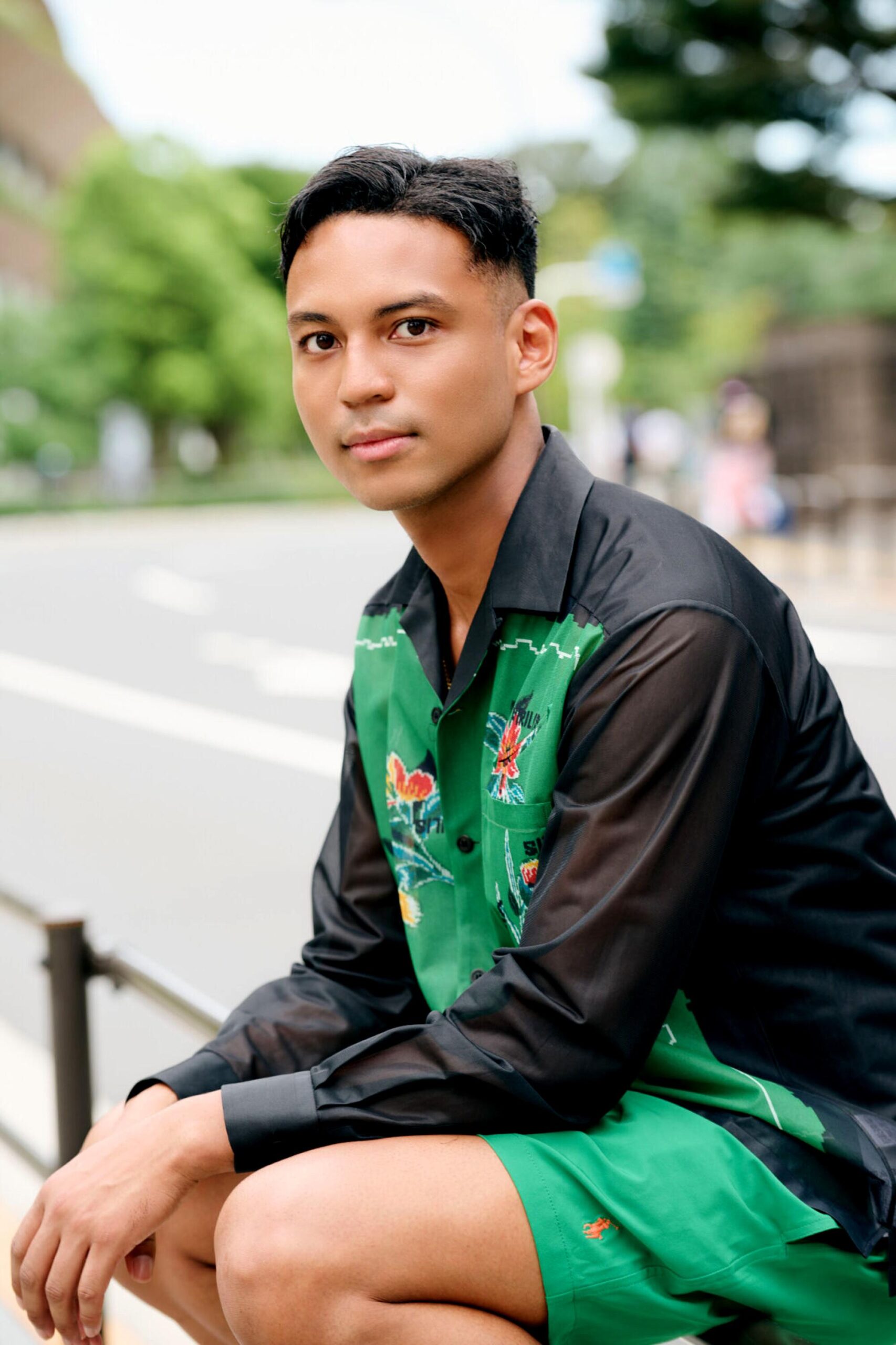
Author Jose Ando
(Yuka Fujisawa)
Jackson Alone By Jose Ando Soho Press; 160 pages; $29
While English translations of Japanese crime novels have increased in the last 20 years, most still focus on a culturally homogeneous, straight, Japanese society. Now comes Jose Ando’s “Jackson Alone,” published in Japan in 2022 andtranslated into English by Kalau Almony, which centers on a mysterious African Japanese massage therapist whose life is upended after his clients and colleagues at a fictional sports conglomerate discover a violent revenge porn featuring someone who looks like him. Despite having no memory of the incident, Jackson joins three other outraged, queer men like him in switching identities to seek out and confront their abusers, who can’t seem to tell them apart.
As the quartet’s scheme plays out, this slim novel becomes less a revenge thriller and more a satiric unmasking of Japanese racism and homophobia which spurs “the four Jacksons” to claim their right to exist authentically without the judgment and stereotyping of the hetero, “pure Japanese” gaze. This bold debut earned “Jackson Alone” wide praise and Japan’s Bungei Prize, awarded to first-time novelists, and makes Ando, now in his early 30s, a writer to watch. (The author’s answers to the following questions were translated by Almony.)
Why was it important for you to tell the stories of queer African Japanese men in your novel?
The primary reason was that those characters never really showed up in Japanese literature, and even when they did, they’d be reshaped into something that was easily digestible for the majority. Before I became an author, I would get irritated whenever I encountered that sort of representation. I wrote “Jackson Alone” to submit to a competition for new writers. In my head, it felt like Jackson and the other characters were there the whole time hollering, “Hurry up and get us out there!”
While there are some frank sex scenes in the novel, what shocked me was how dehumanizing encounters with many “pure Japanese” were for Jackson and his friends. Why were those scenes important to the story?
Living as a minority, you often get questions along the lines of, “What kind of painful things have you experienced?” Right? When you’re asked something like that, don’t you always want to shoot back, “Before you ask me about my experience, why don’t you tell me what you’ve done?” Victimization doesn’t just happen because a person from a minority group is standing around, there’s almost always a perpetrator. The different kinds of dehumanization I wrote about in this book are based on the sorts of things I experience almost every day.
In terms of novels I’ve read, there’s “Out”by Natsuo Kirino and the works ofMieko Kawakami. My direct inspiration though comes mostly from my own life.
Author Caroline Glenn
(William Morrow)
Cruelty Free By Caroline Glenn William Morrow; 320 pages; $30
In Glenn’s fiction debut, Lila Devlin, once one of the most famous actresses on the planet, returns to Los Angeles 10 years after the kidnapping and death of her daughter, Josie. The kidnapping caused a media frenzy, which precipitated Devlin’s meme-worthy downward spiral and the end of her marriage to a rising young Hollywood actor. After an “Eat Pray Love” retreat from the spotlight, Devlin is back with Glob, a line of ethical skincare products with a higher purpose: “A way for Josie to live on by applying the principles of self-actualization and inner peace that she learned in India. She wanted to help people heal just as she had.”
But Hollywood has a short memory and most of the people who benefited from Devlin’s meteoric rise and the kidnapping can’t be bothered to help her now. After a meeting with one of them goes horribly wrong, Devlin and her publicist Sylvie, another a victim of Hollywood’s censure, find revenge offers a unique albeit gruesome ingredient for Glob’s products. Although the novel’s flashbacks seem to digress at times, it all clicks into place once Lila starts exacting her increasingly unhinged revenge. “Cruelty-Free” is an edgy journey with razor-sharp observations about fame and revenge. Readers will be looking forward to what comes next for this talented creator.
What inspired your novel?
I love Sondheim’s “Sweeney Todd.” So much. And the core of that story, a man falsely imprisoned for a crime he didn’t commit and eventually driving him insane, is unfortunately pretty evergreen. Other inspirations: the Lindbergh baby, how much I hate true crime media, NYC publicist Lizzie Grubman, cash grab celebrity beauty brands, rich white women going on “Eat Pray Love” trips to Asia, the city of Los Angeles (go Dodgers).
Lila Devlin makes a journey from being a grieving mother to being a villain. How do you keep the reader’s sympathies?
I don’t think the reader’s sympathies are supposed to necessarily stay with Lila. The core of this book, stripping away the weird digressions, is about how society makes monsters. Lila’s career, her body, her entire life was consumed by the world until she was left with nothing, and now she’s holding a mirror back up to it. You can understand where she’s coming from, but after a certain point … she’s gonna hit diminishing returns.
In your thinking, is revenge ever justified?
The point isn’t whether or not it’s justified. It’s whether or not it’ll make you feel better. And it can’t, it’s hollow. Nothing will ever undo the original sin, and devoting your life to ruining someone else’s is a loss for both of you.
Author Leodora Darlington
(YellowBelly Photo)
The Exes By Leodora Darlington William Morrow; 384 pages; $29
This UK fiction editor’s debut centers on Natalie, driven into therapy to get to the root of her blackouts and the murderous impulses toward former boyfriends they may be hiding. But then Natalie meets “the one” — James, her boyishly handsome boss at a London start-up — and becomes even more terrified that the monster inside her may strike again.
In carefully interwoven flashbacks and letters to her exes, readers learn why: Natalie’s disastrous dating histories — and the deaths of her abusive boyfriends — are detailed as well as her early relationship with James and the family trauma she and her younger sister suffered at the hands of a father who they saw abuse, and almost kill, their mother.
But, empathy aside, does any amount of family or romantic trauma justify revenge, even murder? By the time Darlington builds her case for and against Natalie, James and the other characters in this tightly drawn circle, readers will be taken through a number of sometimes shocking reveals that suggest that the family ties that bind can also cut off opportunities for forgiveness. Darlington has crafted a dark, edgy thriller whose engaging protagonist and intriguing psychological insights linger in the mind long after the memory of that last, jaw-dropping twist fades away.
What inspired your novel? “The Exes” began with a title that just popped into my head: “To All the Boys I Killed Before.” I adore the romance genre — I’m a huge fan of tropes, from enemies-to-lovers to fake dating. But that love for romance exists alongside a growing frustration with the rollback of women’s rights globally. That convergence of feelings made me wonder: What kind of girl would write letters to former flames, not out of love, but out of despair?
For much of the novel, readers can’t be sure whether Natalie has murdered her exes in a fit of rage or if something else is at play. How did you draw on this uncertainty to build the reader’s sympathies for the character?
What felt important in drawing readers close to Natalie was letting them see through a window into her past and why she is the way she is. Understanding her as a vulnerable child or anxious teen feels crucial to making sure we’re invested in all of the twists that slam through the second half of the novel. I really do think a great twist requires deep character empathy as much as it does clever plotting.
In your thinking, is revenge ever justified? Yes. Ha! Well, in all seriousness, quite a few characters in this story are pursuing their own revenge plots. I do think it is possible to justify revenge to a jury, but never to oneself. Not in a soul-deep way. The pursuit of revenge takes a spiritual tax on a person that can sometimes cost more than they’ve bargained for, and we see the unraveling effects of that in “The Exes.”
Author W. M. Akers
(Gianna Smorto)
To Kill a Cook By W.M. Akers G.P. Putnam’s Sons; 384 pages; $30
After so much revenge, W.M. Akers has just the palate cleanser in “To Kill a Cook”, a homage to 1970s Manhattan and its fine dining temples. Bernice Black, a sharp-tongued restaurant critic for the Sentinel, a struggling newspaper, is meeting chef Laurent Tirel, her culinary mentor and friend, at his restaurant to plan her fiancé’s birthday party. But Tirel, once lauded as “King of the Butter Boys,” is struggling too. Caviar and truffle prices are skyrocketing, forcing Tirel to cut corners while clinging to his restaurant’s former glory. When Bernie finds the restaurant empty and a veal stock reduced to the consistency of “cold blood,” she thinks Tirel is making an aspic for the party. Instead, she finds Tirel’s head in the refrigerator, suspended in the aspic along with the decorative veggies.
Thus begins an intense romp through New York’s finest restaurants when Bernice — who realizes the NYPD doesn’t know their aspics from a hole in the ground — decides to get the scoop of the decade by finding Tirel’s killer herself. Akers nails 1970s New York’s glitz and grime as Bernie interviews an assortment of renowned chefs, fellow critics, criminals as well as Tirel’s business associates and son, Henri, who also happens to be an old flame. But the pièce de résistance of this delectable mystery is Bernice herself — a bold, brash feminist who’s trying to figure out her sexuality while being honest with the ones she loves. Here’s Bernice replying to an NYPD detective’s accusation that she’s not a lady: “I guess that was supposed to hurt my feelings, but I quit trying to be ladylike sometime around the first grade.” “To Kill a Cook” is a decadent treat, with enough loose ends in Bernice Black’s life and career to leave readers hungry for more.
Why did you decide to set your novel in 1970s Manhattan?
1972 was a key turning point in the history of American fine dining. It’s the moment when old-school French — think white tablecloths, heavy sauces and snooty maitre’d’s — faded into the background, allowing nouvelle cuisine and what we now call New American to take its place. It’s also a moment when exceptional, modern cooking would share a menu with “parsleyed ham in aspic” or something else that today’s diners would consider repulsive. That tension between old and new, and the question of what fine dining would become, drives a lot of the conflict in the book.
How did you research the restaurants you describe so well in the book? Did any of those chefs/restaurateurs inspire Laurent Tirel, the murder victim?
I have a big pile of old cookbooks that inspired a lot of the specific dishes in the book, but the best resource was the New York magazine archives, particularly Gael Greene’s old columns. Bernice Black’s name is a little nod to Greene. And Tirel is very much inspired by Henri Soulé, whose Le Pavillon was the definitive New York restaurant for a generation, and whom Greene wrote about beautifully.
Bernice spends a lot of time trying to perfect a Charlotte Russe for her fiancé. Why that particular dish?
The Charlotte Russe is a specialty of my mother, a former caterer who helped run New York’s Hard Rock Café in the ’70s. It’s the kind of lavish, creamy, boozy party dessert that you don’t see often anymore, and it’s involved enough to offer Bernice a challenge. Julia Child’s got a good recipe in “Mastering the Art of French Cooking,” but I relied on my mom’s recipe, whichreaders can find on my Patreon, and which my mom once cooked for Jacques Pépin!
Woods is abook critic, editor and author of several anthologies and crime novels.
There are few greater muses than one’s own childhood. In recent months, this idea has taken visual form across fashion runways, with brands from Chanel to Acne Studios showcasing childlike sketches, often referred to as ‘naive design’. The aesthetic favors deliberate roughness and mistakes over a sterile, polished sheen.
Book covers are the latest medium to embrace the trend. Scribbles, doodles, crayon marks and stickers — evoking Lisa Frank and anime cartoons — have begun appearing on prominent Gen Z contemporary fiction covers. The more childish and unrefined, the better.
The covers, which often accompany literary fiction written by women, signal a particular emotional register of naive, sticky chaos that youth promises. The visual language recalls a simpler time — a reclamation of an innocence lost. For millennials and Gen Z readers who worship collectibles like Labubus, friendship bracelets and butterfly hair clips, it’s natural that art direction would follow suit — sometimes with an ironic twist. Often, the design’s playfulness obscures the protagonist’s malaise.
The book cover trend, imbued with nostalgia for childhood, promises fiction that grapples with the pangs of adulthood in an age of precarity. In her Substack, cultural critic and novelist Natasha Stagg commented on the trend, noting, “Reverse-image searching these images turn up books on early childhood education, dealing with anxiety or migraines, or teaching a kid to color outside the lines as an artistic parent.” The book trend cover suggests collective angst about adulthood, highlighted by a cultural fixation on “girlhood” that sparked a spate of online think pieces in recent years.
It’s fitting, then, that the aesthetic has been adopted by Gen Z fiction writers like Honor Levy, whose paperback edition of “My First Book” includes girlish heart stickers on a hot pink background. The Y2K aesthetic elicits a young girl’s diary. Meanwhile, the 2025 novel “Unfit” by Ariana Harwicz, about a mother losing her children in a custody battle, uses erratic crayon scribbles on its cover. In the fall, McSweeney’s Quarterly Concern was contained in a binder with a Lisa Frank-style aquatic wonderland on the cover. This month, Cazzie David released a book of essays about early adulthood titled “Delusions: Of Grandeur, of Romance, of Process” with a cover resembling a child’s birthday cake.
(New Directions Publishing, Penguin Books)
Writer and culture critic Drew Zeiba noted the trend in his June 2025 Substack post. “I wonder if it represents a fed-up-ness with prior or concurrent trends in book design,” writes Zeiba over email. “A move away from the layered, the blobby, the clean — to something with more illusion of or allusion to an id.”
“Not for nothing, I assume adult coloring books sell better than literary fiction,” says Zeiba. “I’m struck by that in a way the crayon or marker drawing is provisional — there’s no final form to it.”
This January, novelist and Forever Magazine co-founder Madeline Cash released her highly anticipated debut novel, “Lost Lambs.” The story follows a family unraveling amid open marriages, conspiracy and emotional turmoil. Designed by Na Song, the cover features drooping blue crayon text and a small illustration of a girl.
The cover was heavily influenced by Henry Darger’s Vivian Girls. “I was attached to this Henry Darger painting when I was writing the book. I felt like that was a really accurate visual representation of little girls running away from utter chaos,” says Cash.
“The childish scribbling handwriting is also a red herring for some of the more serious and sinister themes in the book, “ says Cash.
“Having read Cash’s, I’m struck by the fact that the children in the book — and children are central to the book — are really insightful and transformative, and ‘lost lambs’ actually refers in the text to a specific group of adults,” adds Zeiba.
A similar artistic logic underpins Sophie Kemp’s breakout 2025 novel, “Paradise Logic,” which gained attention for its unsettling cover. The book cover is an existing painting by Brooklyn-based artist Naruki Kukita, selected by veteran art director Martha Kennedy with Kemp’s input. Kennedy had come across “Virtual Temptation in Eden” in a weekly art newsletter called “It’s Nice That.” The image invokes a children’s coloring book with darker undertones, blending various cartoon and drawing styles to depict Adam and Eve in paradise. A cartoon snake lurks behind them.
The design mirrors the memorable prose. “This novel showcased one of the most original voices I’ve ever read. I would describe it as a psychosexual fever dream,” says Kennedy. “I recall the editor calling it ‘the first true Gen Z novel.’”
Kemp recalls sending a lengthy email about the book cover inspiration. “I want something super maximalist. I want it to be a preexisting image. And I wanted to do something that is shocking or crazy,” says Kemp. Kennedy presented Kukita’s painting, and it was love at first sight for Kemp.
(New Directions Publishing, Simon & Schuster)
“Kukita’s combination of finely crafted painterly portraiture and flat graphic anime (often in very intense sexual combination) seemed like a perfect match for the tone of this novel,” says Martha Kennedy, who served as the art director at Simon & Schuster.
Then, enter Comic Sans typeface — a perfect dash of irony. “Let’s use a typeface that feels kind of wrong,” Kemp recalls prescribing. “I used Comic Sans for the first time in my 35-year career for the rest of the type. I felt that was some sort of weird pinnacle in itself,” Kennedy explains over email.
Kemp sees a thematic alignment between her and Cash’s book designs. “Mine and Madeline’s books are about naive female characters,” Kemp says. “It makes a lot of sense with the protagonist of my novel, who’s an extremely naive young woman, for the book cover to match that tone that I created.”
While working in marketing, Cash recalls another book cover trend she calls “book blob.” The blob was earth-toned and splashed bestselling covers for years. “With any kind of viral aesthetic: one of those books did well, so they engineered every cover to emulate that, because people were drawn to them,” says Cash. “It looks like all the content was the same and ubiquitous. It is a disservice to a lot of those books.”
“I really wanted it to stand out,” says Cash about her own cover.
Connors is a writer living in Los Angeles. She hosts the literary reading event Unreliable Narrators at Nico’s Wines in Atwater Village every month.