Notebook

Reporter’s Notebook: Portugal’s far right surges in presidential election | The Far Right

The Algarve, Portugal – After fierce storms that brought days of torrential rain, the sun is finally out in Portugal’s Algarve.

In the coastal town of Portimao, cafe terraces are busy with people enjoying a respite from the bad weather. In nearby Albufeira, tourists, mostly from northern Europe in search of winter warmth, stroll on the sandy beach. The ocean is gleaming; the cliffs are topped with lush vegetation.

Recommended Stories

list of 3 itemsend of list

But behind the idyllic scenery is an increasingly disaffected population that may be on the cusp of embracing Portugal’s first right-wing nationalist president since the country’s dictatorship ended half a century ago.

The Algarve has long been a popular destination for holidaymakers, and tourism fuels much of the region’s economy. But it also pushes up housing prices and the cost of living, and attracts a high number of foreign workers. Some residents say they are fed up with the situation. Others will tell you wistfully that the Algarve is not what it once was.

Outside a supermarket in Albufeira, a man tells Al Jazeera he knows people who can barely pay their rent because salaries are so low. Another says that the Algarve and Portugal need change and new leadership.

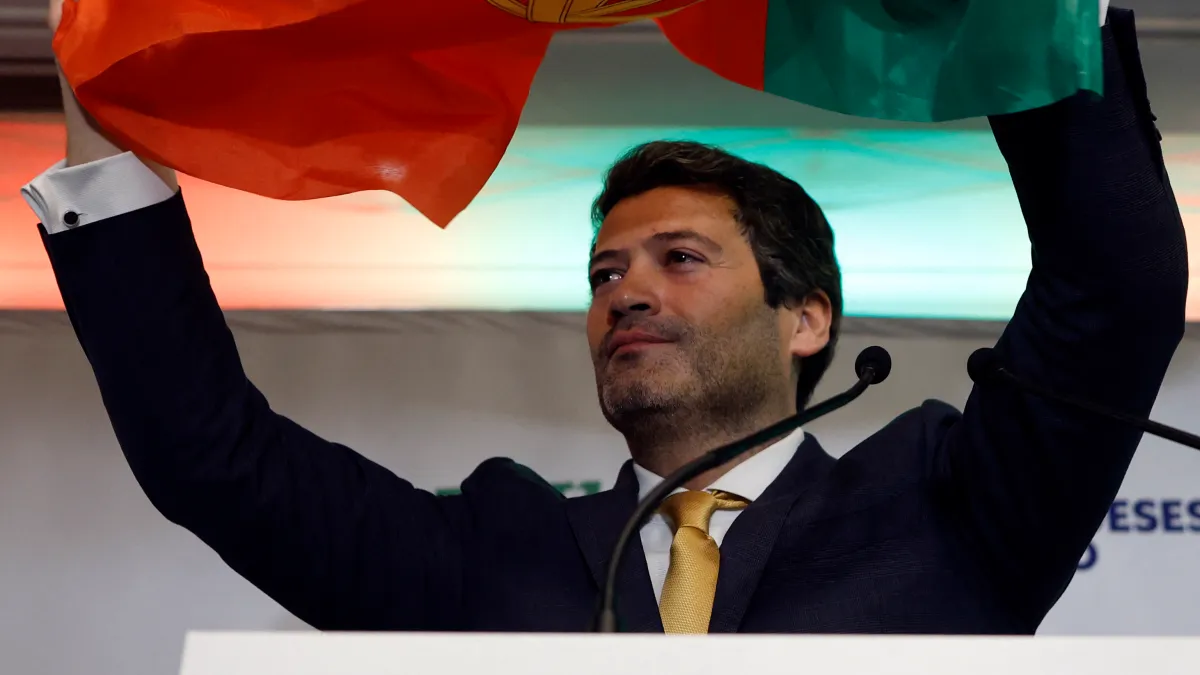
The sense for many people here is that politicians in Lisbon are disconnected from the struggles of people outside of the capital. It is partly why the Algarve has become a stronghold for Andre Ventura’s far-right Chega party. Its anti-establishment and anti-immigration message resonates with voters here who feel unheard and unseen by mainstream parties.

A former TV football commentator, Ventura founded Chega, which means “Enough”, seven years ago. Since then, Chega’s made large gains in a region that has become a springboard for its leader’s ambitions, including the presidency.

Ventura is in the second round of the presidential run-off vote on February 8.  He is the first populist candidate in Portuguese history to make it that far. Ventura may well believe that momentum is on his side.

In the 2024 parliamentary elections, Chega grew to become the main opposition to the centre-right government of Luis Montenegro. Its rapid rise has shaken a political landscape long dominated by socialists and liberals. It has also rattled opponents and critics who believed Portugal was immune to the far-right surge seen elsewhere in Europe.

In Portimao and Albufeira, Ventura’s campaign billboards tower over roads and roundabouts. He is also a regular on TV shows and prolific on social media, much like Donald Trump, whom Ventura admires. Like the United States president, Ventura rails against immigration and immigrants. He has even been sanctioned by Portuguese courts for discriminatory comments.

Not everyone in the Algarve would welcome a Ventura presidency. At the Timing temporary employment agency in Albufeira, people come looking for work, mainly in the region’s many hotels and restaurants. Most are from outside Portugal.

Al Jazeera spoke with Tariq Ahmed and Saidul Islam Said from Bangladesh, and Gurjeet Singh from India. They work during the holiday season to save money. All say they like Portugal.

When asked whether they worry about Chega’s rhetoric, Saidul says he is aware of it but isn’t concerned for now. He says that every country has its problems and that he stays focused on work, not politics.

The agency has thousands of workers on its books, and about 70 percent come from abroad, says manager Ricardo Mariano. They work hard and are welcome, he says. He insists the Algarve could not function without immigrant labour and says neither could the rest of Portugal.

The country faces worker shortages in several industries. Portugal has a long tradition of emigration, and a lack of affordable housing, jobs and low wages mean young Portuguese people continue to seek opportunities abroad.

Successive socialist and liberal governments are viewed by some as having failed to reverse the trend. Nevertheless, it is a veteran socialist politician who faces Ventura in the presidential race. Antonio Jose Seguro has served as an MP, a junior minister and a member of the European Parliament.

He had retired from politics to teach but returned with a mission, saying he wanted to unite an increasingly divided country and defend Portugal’s institutions. Seguro says voters will have to choose between democracy and radicalism.

Opinion polls suggest Seguro could win, and several politicians from across the political spectrum are urging their supporters to rally behind him and block a Ventura victory. The presidential role is largely ceremonial, but it has the power to dissolve parliament or veto laws.

Back in Portimao, Chega MP Joao Graca is out campaigning for Ventura. He’s come to a food market wearing a suit jacket over a T-shirt printed with Ventura’s portrait.

He weaves through the stalls, chatting to sellers and shoppers. More than a dozen supporters chant behind him, enthusiastically handing out Chega pens and bags. The reception for them is noteworthy in that it is universally warm.

For some Portuguese voters, a Ventura win would be a disaster, widening divisions in society and destroying Portugal’s image as one of Europe’s most tolerant nations, but for Graca, it would be the best thing that could happen to the country. Portugal, he tells Al Jazeera, needs Ventura.

Source link

Reporter’s Notebook From Tokyo : For Bush, It’s Been Snapshots With the Kids–but Focus on Tower

There is in George Bush, as in many successful politicians, an element that is always on stage, an element of the eternal campaigner who responds with the instinctive gesture, sometimes incongruous and sometimes just right.

And so it was in Tokyo, notwithstanding the dreary mood of a rainy February afternoon, the solemnity of the state funeral of Emperor Hirohito and, on top of all that, the worrisome political problems posed by his troubled nomination of John Tower to be secretary of defense. Incongruity and the perfect touch, moments apart.

The funeral for the emperor who had reigned in wartime Japan was not a simple rite. It was a precisely staged ceremony of official mourning. The name of the man it memorialized brought back from fading memory the atrocities of World War II.

Arriving at the U.S. Embassy after this affair of state, the formally attired President flashed a thumbs-up sign–the simple gesture in incongruous contrast to the somber tenor of the occasion.

Moments later, he tossed aside a prepared address, delivered an off-the-cuff speech to a crowd of Americans at the embassy, and then spied a cluster of youngsters in the group. That gave him an idea.

Singling out the personal aide who accompanies him throughout his day, whether in Washington, Tokyo, or points in between, Bush said, “Tim McBride’s a good photographer.” With that, the President invited the children to hand McBride their cameras. They obliged, and he posed with each of them for pictures, McBride snapping away as the brief visit was stretched out by 15 minutes.

“It was like a campaign stop,” said the senior White House official who recounted the story, satisfied with his boss’ spontaneous, crowd-pleasing gesture.

Bush’s presidential campaign was marked in its final months by its careful control of each week’s agenda. No matter how Michael S. Dukakis would attack, Bush steadfastly kept to his script, making sure that the focus remained wherever he shined his light. Thus, Willie Horton and the American flag became the enduring symbols of the autumn.

In the opening days of the Bush Administration, however, the light has occasionally flickered. Its beam has been cast with less certainty, as outside events have distracted public attention from the President’s message. And nowhere has that become more evident than here in Tokyo.

Bush was invited to Japan to attend the Hirohito funeral. He took advantage of the ceremony to schedule individual meetings with nearly two dozen other leaders from countries large and small, squeezing 17 into a 30-hour period.

Much as Bush threw open the doors of the White House on the morning after his inauguration to a symbolic sampling of the American populace, he opened the Spanish-style residence of the U.S. ambassador to a representation of the world leadership–prime ministers and presidents and even a king (Baudouin I of Belgium).

One after another, they arrived in the same room in which Gen. Douglas MacArthur received Hirohito in September, 1945, a month after the end of World War II.

And with time running out, the President arranged a dinner Friday with one more visitor to Tokyo–meeting King Juan Carlos I of Spain, in a hotel restaurant.

But it was the Tower- mondai , as the Tower problem is called here, that riveted the attention of the White House staff and most of the 80 or so American reporters who accompanied Bush to Tokyo when they woke up Friday morning to the news that the Senate Armed Services Committee was about to reject the nomination.

Those who struggled to keep track of the funeral on large television screens in the White House press room at the Okura Hotel were swimming upstream: The tide Friday was swelled by a torrent of stories bearing Tokyo datelines and they were all about Tower.

And what about the President’s daylong effort to review the issues of the day with such foreign leaders as Presidents Richard von Weizsaecker of West Germany, Corazon Aquino of the Philippines and Prime Minister Benazir Bhutto of Pakistan?

What about evolving East-West relations, Afghanistan and Iran, U.S. support for President Aquino? All became afterthoughts.

The White House took particular pains not to offend Japanese sensitivities on a day of mourning.

Tokyo had instructed dignitaries on proper funeral attire, down to the black handkerchief in the pocket of the rented morning coat Bush brought from Washington.

Communications went back and forth between Tokyo and Washington, for example, on one particular point of concern: Barbara Bush’s request to wear her trademark triple string of fake pearls.

(Mrs. Bush’s identification with fake pearls has become so well known that it came as a surprise to some aides when she made a quick shopping stop after the funeral and purchased real Japanese pearls–a double-strand bracelet, with a silver clasp. Mrs. Bush herself was surprised when the jeweler refused to take a personal check. So she cashed her check–about $200–with U.S. Embassy personnel and paid in cash.)

The Japanese said pearls would not be suitable at the funeral. But after a time, this difficult decision was reversed. It seems that the pearls–artificial or otherwise–would be permissible, because pearls are, in the Japanese view, “the tears of the oyster.”

Times staff writer Betty Cuniberti contributed to this story.

Source link