North Korea

North Korea’s Kim oversees test launch of long-range cruise missiles | Kim Jong Un News

Kim Jong Un urges ‘unlimited and sustained’ development of nuclear combat forces as North Korea gears up for a key party congress.

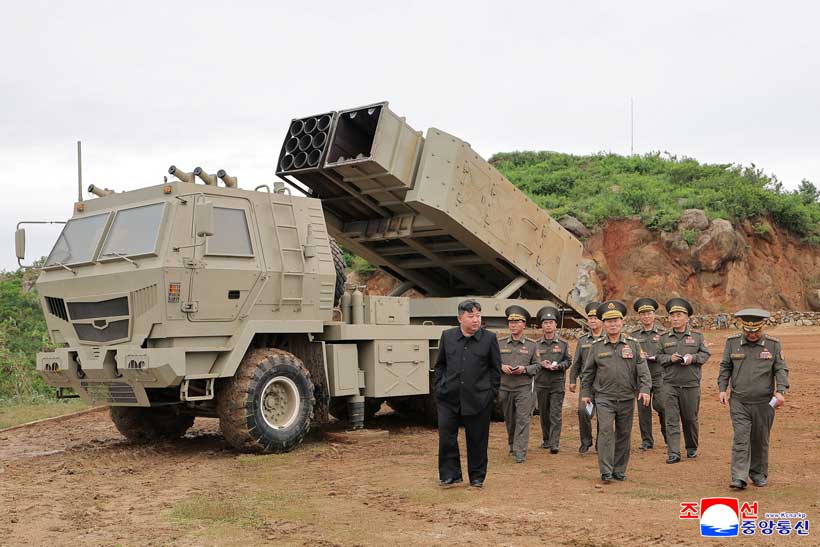
North Korean leader Kim Jong Un has overseen a test launch of long-range strategic cruise missiles and called for the “unlimited and sustained” development of his country’s nuclear combat forces, according to state media.

The Korean Central News Agency (KCNA) reported on Monday that Kim expressed satisfaction as the cruise missiles flew along their orbit, set above the sea west of the Korean Peninsula, and hit their target.

Recommended Stories

list of 3 itemsend of list

The launch, which took place on Sunday, was the latest event Kim attended, in a flurry of activity by the North Korean leader to underscore the country’s military and economic progress before a key party congress expected to be held in early 2026.

The meeting will set a development plan for North Korea for the next five years.

Kim said that “checking the reliability and rapid response of the components of [North Korea’s] nuclear deterrent on a regular basis … [is] just a responsible exercise”, as the country “is facing various security threats”. He also affirmed that Pyongyang would keep devoting “all their efforts to the unlimited and sustained development of the state nuclear combat force”, KCNA reported.

KCNA did not specify the area in which the missiles were launched.

South Korea’s state news agency Yonhap reported on Monday that South Korea’s military detected the launch of multiple missiles from the Sunan area near Pyongyang on Sunday morning.

It warned that North Korea may conduct additional missile tests at the end of the year.

Separately, the KCNA reported on Thursday that Kim also inspected an 8,700-tonne “nuclear-powered strategic guided missile submarine” under construction and warned that South Korea’s plan to build nuclear-powered submarines will be a threat to North Korea’s security that “must be countered”.

It was the first time North Korean state media had released images of the submarine since March, when they mostly showed the lower sections of the vessel.

During the Thursday event, Kim was accompanied by his daughter, a possible successor, and oversaw the test-firing of long-range surface-to-air missiles.

Kim has attended multiple openings of facilities, including factories and hotels, during the past month, as the country races to wrap up its current “five-year plan” of development before convening the ninth Congress of the ruling Workers’ Party of Korea in early 2026.

Last November, North Korea also staged a ballistic missile test, just more than a week after United States President Donald Trump, on a tour of the region, expressed interest in meeting with Kim. Pyongyang did not respond to the offer.

At that time, Trump had just approved South Korea’s plan to build a nuclear-powered submarine.

Since Kim’s 2019 summit with Trump collapsed over the scope of denuclearisation and sanctions relief, Pyongyang has repeatedly declared itself an “irreversible” nuclear state.

Kim has since been emboldened by Russia’s war on Ukraine, securing critical support from Moscow after sending thousands of troops to fight alongside Russian forces.

Source link

President Lee questions blocks on North Korean media, orders access opened

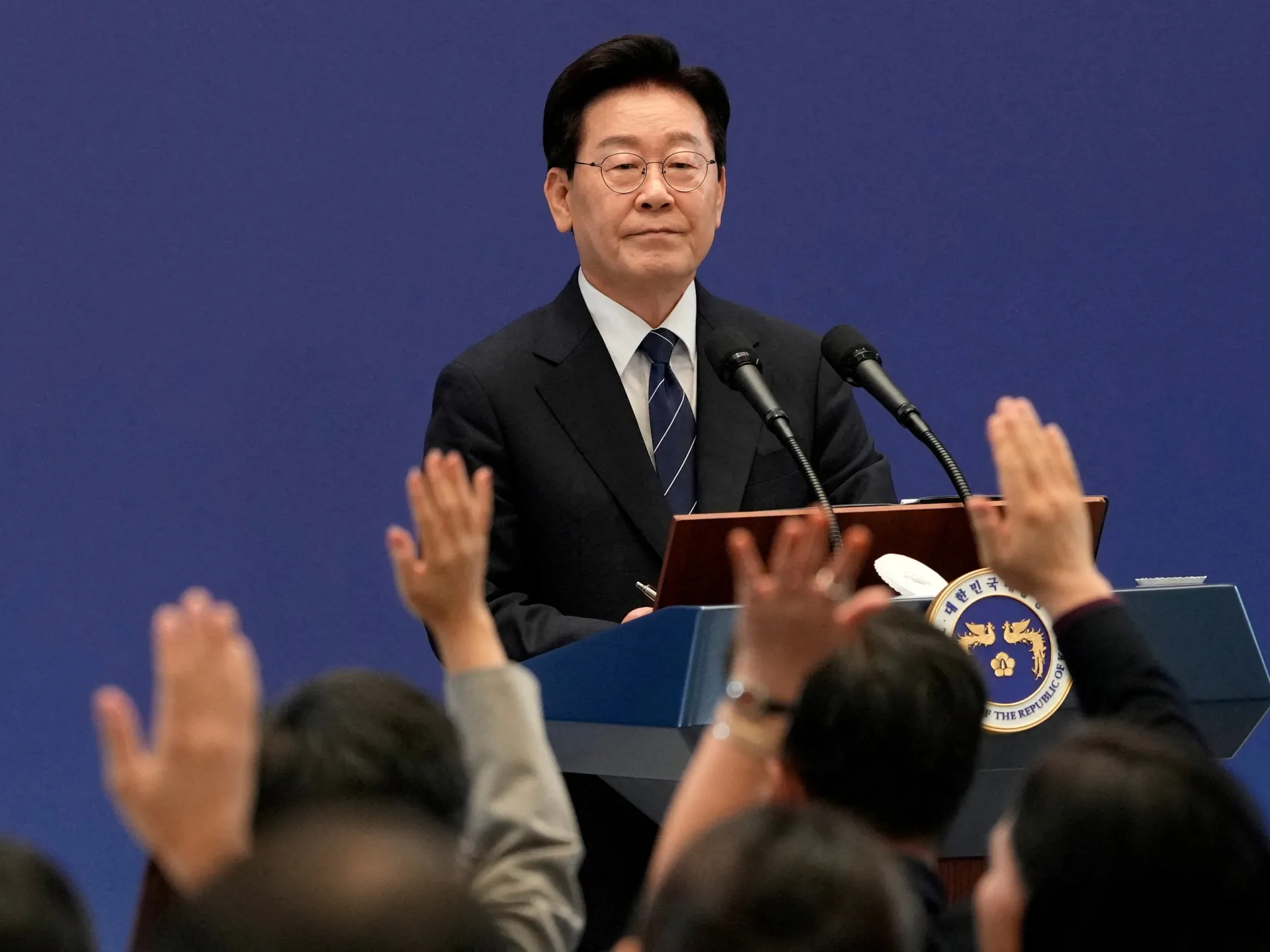
South Korean President Lee Jae Myung takes questions during a news conference to mark 100 days in office at the Blue House in Seoul, South Korea, 11 September 2025. File Photo by EPA/KIM HONG-JI / REUTERS POOL

Dec. 19 (Asia Today) — President Lee Jae-myung on Friday questioned South Korea’s restrictions on access to North Korean state media such as Rodong Sinmun and the Korean Central News Agency, saying the policy treats citizens as if they could be swayed by propaganda.

“Isn’t the reason for blocking access to Rodong Sinmun because they fear the public might fall for propaganda and become communists?” Lee said during a joint briefing by the Foreign Ministry and the Unification Ministry at the Government Complex Seoul.

Lee criticized the approach as treating the public “not as autonomous beings” but as people susceptible to “propaganda and agitation,” and he ordered that access to North Korean media be opened.

Lee asked a Unification Ministry official whether opening access could trigger political backlash, including accusations that the government is trying to turn South Korea into a communist state.

The official cited Rodong Sinmun as an example, saying ordinary citizens and researchers currently cannot access it in real time under existing rules, even though South Korean media and scholars frequently cite it.

“There is a gap between the system and reality,” the official said.

Lee pressed the point, asking why citizens should be prevented from seeing it and whether officials were afraid they might be influenced by propaganda.

Lee said greater access could help the public better understand North Korea and its realities. He argued the restriction, as currently applied, assumes citizens are vulnerable to manipulation.

When a Unification Ministry official said the ministry would pursue opening access to North Korean information, including Rodong Sinmun, as a national policy task, Lee said it did not need to be treated as a solemn initiative.

“Why pursue this as a national policy task? Just open it up,” he said.

– Reported by Asia Today; translated by UPI

© Asia Today. Unauthorized reproduction or redistribution prohibited.

Source link

President Lee says North Korea hostility reflects Seoul’s approach

South Korean President Lee Jae Myung delivers a speech during a ceremony to mark the 77th Armed Forces Day in Gyeryong, South Korea, 01 October 2025. File Photo by KIM HONG-JI /EPA

Dec. 19 (Asia Today) — President Lee Jae-myung said Friday that while North Korea’s “hostile two-state” line may reflect current realities, South Korea must “return to our proper place” and work to restore channels for contact, dialogue and cooperation.

Speaking at a joint work report by the Foreign Ministry and the Unification Ministry at the Government Complex Seoul, Lee pointed to what he described as an unprecedented buildup along the inter-Korean boundary.

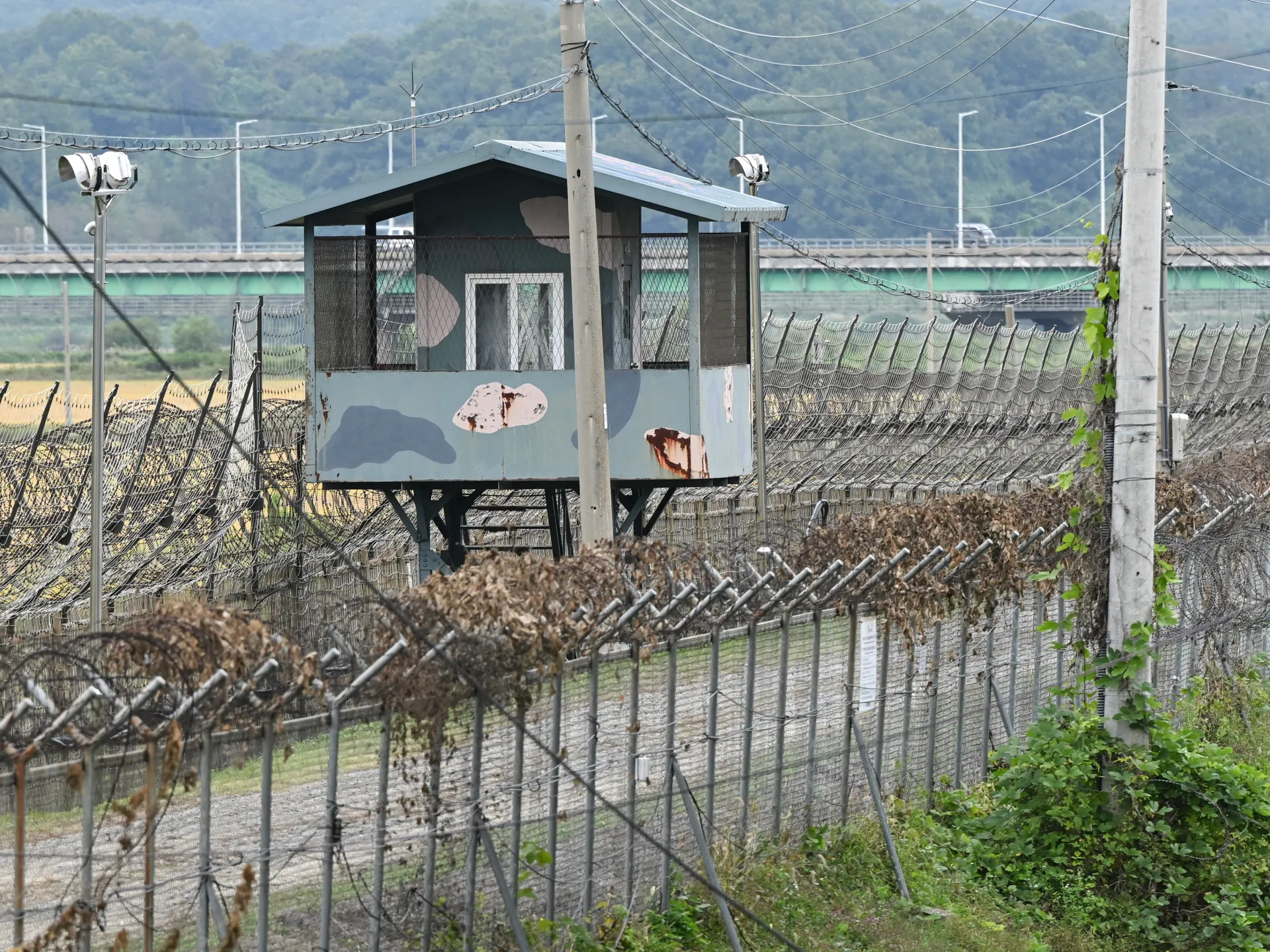
“For the first time since the 1950s war, North Korea has erected triple fences along the entire demarcation line, severed bridges, cut off roads and built retaining walls,” Lee said. He added that North Korea may have acted out of concern that the South could invade, but said it was regrettable and appeared tied to “strategic desires.”

Lee said the moves could be part of Pyongyang’s strategy, but argued South Korea must respond with patience and sustained effort to improve what he described as a situation in which the North “fundamentally refuses contact itself.”

“As I’ve said before, we must find even the smallest opening,” Lee said. “We need to communicate, engage in dialogue, cooperate and pursue a path of coexistence and mutual prosperity between the North and South.”

He said there is currently “not even a needle’s eye of an opening,” repeating that the situation is “truly not easy.”

Lee also appeared to criticize the previous administration’s approach to North Korea, saying “one could call it a kind of karma.” He added that if a strategy contributed to the current impasse, “then we must change it now.”

Lee said the government should make proactive efforts to ease tensions and create conditions for trust to emerge, adding that the Unification Ministry should now take a leading role.

“It is certainly not an easy task, but it is equally clear that it is not something we should give up on,” he said.

– Reported by Asia Today; translated by UPI

© Asia Today. Unauthorized reproduction or redistribution prohibited.

Source link

USFK commander says DMZ should not become ‘politicized,’ amid bill to ease access

USFK Commander Gen. Xavier Brunson said Friday that the DMZ should not be “politicized,” as debate swirls around a South Korean bill calling for government control of non-military access. In this July photo, Brunson speaks at a ceremony in Goyang marking U.N. Forces Day. Photo by Yonhap

The commander of the U.S. Forces Korea (USFK) said Friday that the Demilitarized Zone (DMZ) should not be “politicized,” voicing opposition to a bill in South Korea that seeks to grant the government control of non-military access to the buffer zone.

The remarks by USFK Commander Gen. Xavier Brunson, who also doubles as commander of the U.N. Command (UNC), followed a recent UNC statement in opposition to the pending bill.

He said the armistice agreement that ended the 1950-53 Korean War should remain the barometer governing behavior. Under the armistice, the UNC currently has the authority to approve or deny access to the DMZ.

“What we want to try to make sure that we do is, number one, we don’t allow that area to become politicized … we signed an agreement to say that we will maintain this buffer here,” Brunson said in an episode of security-focused podcast series “War on the Rocks.”

Brunson noted that South Korea recently proposed military talks with North Korea to discuss how to clarify the Military Demarcation Line in the DMZ in a bid to prevent possible clashes near the inter-Korean border, but emphasized that all actions should be based on the armistice agreement.

“What governs our behavior is the armistice, and we’ve got to adhere to the standards put forward in the armistice. And as long as we do that, there won’t be any challenges,” he said. “What we can’t do is seek to change the way we do business in abrogation of a legal document, which is the armistice.”

The USFK commander’s call urging the need to adhere to the armistice came just days after the UNC issued a rare statement underscoring its role as the “administrator” of the DMZ, which stretches about 250 kilometers in length and 4 km in width, and has served as a buffer between the two Koreas since the end of the Korean War.

Speaking on Seoul’s plan to seek a conditions-based handover of wartime operational control from Washington within President Lee Jae Myung’s five-year term ending in 2030, Brunson said the United States has no intention to “hold this up at all.”

He still emphasized that the bilaterally agreed-upon conditions should be met for the transfer.

“We’ve got to make sure that we’ve met all those conditions whether they be operational, whether they be material based, whether it might be something as simple as protection that those things are all in place before we go and do this,” he said.

Against such a backdrop, Brunson touted how South Korea’s “thriving” defense industry and participation in multinational drills like Talisman Sabre, held in Australia, have strengthened its capabilities as well as role in the wider Indo-Pacific region and called on the country to further “pull away from the Peninsula and become more engaged.”

“I’ve talked a lot about the centrality and importance of the Republic of Korea to the entirety of the Indo-Pacific by virtue of their economy, by virtue of the size of their military, by virtue of their ability to continue to develop technologies,” he said, referring to South Korea by its formal name.

“They are just preeminently important to peace in the Indo-Pacific.”

Copyright (c) Yonhap News Agency prohibits its content from being redistributed or reprinted without consent, and forbids the content from being learned and used by artificial intelligence systems.

Source link

North Korea increasingly uses Kim’s Workers’ Party title, report says

Russia’s President Vladimir Putin (center R) and North Korea’s leader Kim Jong Un (center L) leave after their meeting in Beijing, China, on Wednesday, September 3, 2025. File Photo by Kremlin Press Office/UPI | License Photo

Dec. 18 (Asia Today) — North Korean media increasingly refer to Kim Jong Un as general secretary of the ruling Workers’ Party rather than chairman of the State Affairs Commission, a shift a South Korean government-affiliated research report said reflects a further consolidation of party-centered rule.

The National Institute for Strategic Studies said in a report released Thursday that the 8th Central Committee, which has functioned as North Korea’s main decision-making body over the past five years, has reinforced a governance model centered on the Workers’ Party as the country prepares for its 9th Party Congress, expected in early 2026.

Senior research fellow Kim In-tae wrote that the committee’s efforts to regularize and institutionalize party leadership organs resemble Kim Il Sung-era governance from the 1960s through the 1980s. He said the policy decision-making structure shows a more pronounced concentration of the “single-leader system,” according to the report.

Kim said the increased use of the Workers’ Party title suggests the regime has further strengthened party-centered state management.

The report said the 8th Central Committee, launched in 2021, held 13 plenary meetings at an average interval of about 4.6 months, more than double the number held under the 7th Central Committee, which convened six plenary meetings.

It also said the volume of agenda items submitted for discussion rose sharply, from 14 items during the 7th term to 68 items during the 8th term.

The report contrasted Kim Jong Il’s “military-first” approach under the National Defense Commission during the economic crisis known as the “Arduous March” in the 1990s and 2000s with Kim Jong Un’s return to a Workers’ Party-centered governance structure, which it said has been further refined.

On the second five-year plan for national economic development expected to be presented at the next party congress, the report projected it would be framed as a stage of “qualitative development” aimed at advancing what it called “comprehensive socialist development” across the economy.

The report said the period leading up to a party congress, typically held every five years, is a crucial political season in North Korea’s system. It said Kim is likely to use the congress to reinforce his leadership structure while pursuing economic development goals, nuclear-centered military capabilities and international standing.

– Reported by Asia Today; translated by UPI

© Asia Today. Unauthorized reproduction or redistribution prohibited.

Source link

S. Korea calls for China’s role in fostering conditions to resume talks with N. Korea

First Vice Foreign Minister Park Yoon-joo (L) poses with Chinese Executive Vice Foreign Minister Ma Zhaoxu during their strategic dialogue in Beijing on Thursday. South Korea called for China to play a role in resuming dialogue with North Korea. Photo courtesy of South Korea Foreign Ministry

South Korea on Thursday called on China to play a role in fostering conditions to resume dialogue with North Korea, with China reaffirming its commitment to ensuring stability on the Korean Peninsula, Seoul’s foreign ministry said.

First Vice Foreign Minister Park Yoon-joo made the call when he met with Ma Zhaoxu, China’s executive vice foreign minister, during the bilateral strategic dialogue in Beijing, the ministry said in a release.

The talks came as South Korea seeks to stably manage its ties with China, its largest trade partner and key economic benefactor of North Korea, amid the strategic rivalry between China and the United States, and Seoul’s drive to mend ties with Pyongyang.

“Vice Minister Park explained the government’s policy direction for peace and stability on the Korean Peninsula, and asked for China’s role in fostering conditions to resume dialogue with North Korea,” the ministry said in a release.

Ma reaffirmed that China will “continue its constructive role in ensuring peace and stability on the Korean Peninsula,” according to the ministry.

They also agreed to work together to enhance “political and friendly” mutual trust, continuing the positive momentum in bilateral relations to further develop their ties.

It marked the first such talks since the launch of the Lee Jae Myung government in June.

The two sides exchanged opinions on issues of mutual concern, including China’s steel structures built in the overlapping sea zone in the Yellow Sea. The steel towers have raised speculation that China has installed them to lay territorial claims to the area, as was done in the South China Sea.

Noting that bilateral relations have recovered with the recent summit talks between President Lee Jae Myung and Chinese President Xi Jinping in Gyeongju, they agreed to implement follow-up steps in a substantive manner, through robust exchanges both at the government and private sector levels.

They also discussed ways to revitalize cultural exchanges between the two countries in a way that will “narrow the emotional distance between their peoples,” the ministry said.

Although China has never officially confirmed it, it has restricted the inflow of Korean cultural content and exchanges between relevant industries, including K-pop concerts and Korean films.

Copyright (c) Yonhap News Agency prohibits its content from being redistributed or reprinted without consent, and forbids the content from being learned and used by artificial intelligence systems.

Source link

UNC objects to South Korea bill on civilian DMZ access

SEOUL, Dec. 17 (UPI) — The United Nations Command objected to a legislative effort in South Korea that would transfer authority over non-military access to the Demilitarized Zone from the UNC to Seoul, as debate grows over control of one of the world’s most sensitive border areas.

The UNC’s rare public statement follows renewed calls by Unification Minister Chung Dong-young and ruling party lawmakers for a bill that would allow the South Korean government to approve civilian entry into the DMZ without prior UNC authorization.

In a press release issued Tuesday, the U.S.-led UNC reiterated its authority to implement and enforce the 1953 Korean Armistice Agreement, including control over access to the DMZ.

“Since 1953, UNC has been the successful administrator of the Demilitarized Zone, a role that has been essential in maintaining stability, especially amid periods of heightened inter-Korean tensions,” it said.

Citing provisions that assign “civil administration and relief” within the zone to the UNC commander and grant the UNC Military Armistice Commission exclusive jurisdiction over entry approvals, the command stressed that no person, military or civilian, may enter the DMZ without specific authorization.

“Civil administration and relief in that part of the Demilitarized Zone which is south of the Military Demarcation Line shall be the responsibility of the Commander-in-Chief, United Nations Command,” the statement said.

The release added that the UNCMAC reviews access requests under established procedures designed to avoid actions that could be perceived as provocative or that could endanger safety.

The issue resurfaced earlier this month after Chung publicly backed legislation that would allow South Korea to grant access for “peaceful use” without UNC approval, arguing that current restrictions undermine Seoul’s sovereignty and the civilian use of the DMZ.

Chung cited recent cases in which Deputy National Security Adviser Kim Hyun-jong and Cardinal Lazzaro You Heung-sik were denied access to the buffer zone.

Seoul’s defense and foreign ministries have expressed reservations about the proposal, however, warning that separating civilian access from UNC procedures could complicate armistice maintenance and military coordination.

The UNC statement noted that the South Korean military already carries out “critical tasks such as policing, infrastructure support, medical evacuation [and] safety inspections,” highlighting what it described as Seoul’s sovereignty and primary role in its own defense.

In a follow-up release Wednesday, the UNC said it had granted Kim access to the DMZ for a briefing on North Korean military activities and South Korea’s response measures, as well as discussions on preventing accidental clashes.

“UNC is committed to maintaining peace and stability on the Korean Peninsula and actively supports measures that reduce the risk of miscalculation between military forces near the Military Demarcation Line,” it said.

Source link

Prospect of Trump–Kim summit rises in 2026, report says

SEOUL, Dec. 16 (UPI) — The likelihood of a renewed summit between U.S. President Donald Trump and North Korean leader Kim Jong Un has increased, even as Pyongyang presses ahead with nuclear weapons development, a South Korean think tank said Tuesday.

In an annual forecast released by the Foreign Ministry-linked Korea National Diplomatic Academy, analysts said Trump is expected to continue a top-down approach to North Korea under which leader-level talks could resume.

“The likelihood of a North Korea-U.S. summit has increased somewhat due to common ground in the two leaders’ desire to hold a summit, pursue peaceful coexistence and lower the priority of the denuclearization issue,” the report said.

Trump met Kim three times during his first term — in Singapore in 2018, in Hanoi in 2019 and briefly at the Demilitarized Zone later that year — but talks collapsed amid disagreements over sanctions relief and steps toward denuclearization.

Since returning to office, Trump has floated another summit with Kim on numerous occasions, telling reporters in October he “would love” to meet the North Korean leader during a visit to South Korea.

Kim has also signaled a willingness to resume diplomacy with Washington, saying he has “fond memories” of Trump, while warning that any discussion of giving up his regime’s nuclear arsenal would be off the table.

Despite the prospect of renewed diplomacy, the KNDA report said engagement with Washington is unlikely to slow Pyongyang’s military buildup.

North Korea is expected to “accelerate the production of nuclear materials and the development and deployment of new missile systems” in 2026 as it works to operationalize a broader range of nuclear strike capabilities, the report said.

The academy added that a seventh nuclear test remains a “military and technological necessity,” although Pyongyang is likely to exercise restraint as it weighs the impact on its relations with China and the United States.

North Korea last conducted a nuclear test in September 2017 at its Punggye-ri site. During a period of detente with Seoul and Washington the following year, Pyongyang demolished the entrances to two test tunnels in a highly publicized move.

Those steps have since been reversed, however. The U.N. nuclear watchdog International Atomic Energy Agency said North Korea began restoring tunnels at the site in 2022, and a 2025 U.S. Defense Intelligence Agency assessment concluded the country is now “postured to conduct a seventh nuclear test at a time of its choosing.”

Prospects for inter-Korean relations remain dim, the report said, despite efforts by South Korean President Lee Jae Myung to rehabilitate ties since taking office in June

Communication between Seoul and Pyongyang is unlikely to resume as the North continues to promote its “hostile two-state doctrine,” which defines the two Koreas as permanently separate adversaries.

“The likelihood of inter-Korean dialogue reopening is not high,” the report said.

Source link

Revising the Espionage Act is the first step toward normalization

Dec. 16 (Asia Today) — “Decade of the Spy” was a label used by U.S. media in the 1980s, when major espionage cases involving the former Soviet Union were uncovered year after year. In 2025, the phrase has resurfaced in a different context: most information is now digital, physical distance matters less, and the security environment has shifted toward a broader “all-against-all” competition.

Against that backdrop, South Korea is pushing amendments to Article 98 of the Criminal Act, commonly referred to as the Espionage Act. Enacted in 1953, the law has historically been applied primarily to North Korea, even as alleged espionage activity linked to other countriesh as increased. The proposed revision would allow espionage acts carried out on behalf of any foreign country to be prosecuted under the same statute.

But practitioners argue that changing the law is not enough. Bae Jeong-seok, an adjunct professor at Sungkyunkwan University’s Graduate School of National Strategy and a former National Intelligence Service counterespionage bureau chief with more than 30 years of experience, said revising the law is “normalization,” not a full upgrade of counterintelligence capacity.

In an interview with Asia Today on Dec. 8, Bae said counterespionage should be treated not only as a criminal matter but as a national security function that requires long-term operations and can carry diplomatic value.

-What structural limitations existed for counterespionage activities under the current legal framework?

“Today’s intelligence environment is not like the Cold War, when you mainly focused on one adversary. It involves many state actors. But in South Korea, activity linked to foreign intelligence services other than North Korea often could not be charged as espionage. It was handled under separate laws protecting military secrets or industrial technology. In counterintelligence, the core is recruiting sources and running counter-operations, including using double agents, to gather more information. If everything is treated only as a standard criminal case, it limits intelligence work that needs time and flexibility.”

-How does this revised espionage bill compare to major advanced nations?

“This is not ‘toughening’ the law so much as bringing South Korea in line with what many advanced countries already have. But legal tools to deal with influence operations are still limited. Efforts to shape public opinion, cultivate media ties, or influence policymaking can be hard to prosecute under traditional espionage charges. A separate reporting-based system like the U.S. Foreign Agents Registration Act, which requires disclosure of certain activities performed on behalf of foreign principals, is also needed.”

-What will change with this amendment?

“It can help deter and disrupt foreign intelligence activity. If recruiting agents or providing information to a foreign intelligence service is itself treated as espionage, authorities can investigate earlier and more directly. That reduces the risk of South Korean citizens being recruited. It also gives counterintelligence more room to run long-term operations instead of moving immediately to prosecution in every case.”

-What aspects of the amendment require further refinement?

“The most important point is allowing strategic decision-making. Counterespionage should not be limited to catching spies and quickly building a prosecution. It requires understanding how networks operate over time, then recruiting and turning sources. In some cases, captured agents can also be used as leverage in security and diplomatic channels. Without that kind of approach, you fall behind in modern intelligence competition.”

-Beyond legal amendments, what direction should counterespionage personnel, technology, and organizational culture take?

“Police are expanding counterespionage efforts, but the main responsibility should remain with the NIS, which has the specialized experience. Police, which have investigative authority, can focus on arrests and prosecution. Coordination between the two needs to improve. Over the long term, South Korea should consider a dedicated counterintelligence body. This work requires continuity, and the typical government job-rotation system is not well suited to long-term operations.”

– Reported by Asia Today; translated by UPI

© Asia Today. Unauthorized reproduction or redistribution prohibited.

Source link

From Sinai to Seoul: What the Six-Day War Teaches About a Future North Korean Blitzkrieg

In June 1967, when the sun was rising over the Eastern Mediterranean Sea, Israeli fighter squadrons skimming through the coastlines at low altitude struck Egyptian airbases with a devastating blow. Within barely a couple of hours, most of the Egyptian air forces were destroyed. Operation Focus was not a mere initiation of the Six-Day War, but it determined the final outcome of the war. When the ground offensives advanced across the Sinai, Gaza, the West Bank, and the Golan Heights, Israel had already established its critical military superiority, namely, air supremacy. The Six-Day War remains a typical case of how a short, incisive, and highly compressed conflict could overturn the premise of regional deterrence and restructure the long-term strategic reality.

Almost 60 years later, a very different state is studying similar lessons. Based on its nuclear and missile capabilities and deepened defense cooperation with the Russians, nuclear-armed North Korea is refining tools that could enable its own version of a swift and high-impact attack. North Korea’s KN-23 and KN-24 series—quasi-ballistic missiles modeled upon the Russian Iskander-M—have irregular, low-altitude trajectories that are designed to complicate missile defense. Through their recent use by Russia against Ukraine, North Korea has gained invaluable live-fire battlefield data, accelerating improvements in precision, reliability, and mobility during flight. In addition, thanks to Russian assistance—advanced technology, training assistance, and potential space-oriented targeting support—North Korea is securing capabilities that were unattainable in the past.

The strategic risk lies not in whether Pyongyang could literally replicate Operation Focus. Instead, the genuine risk lies in Kim Jong-un drawing wrongful lessons from the Six-Day War and the Russia-Ukraine War: that surprise, speed, and concentrated firepower could overwhelm the opponent before activating an effective response. If Pyongyang is convinced that a blitzkrieg is achievable or judges that nuclear blackmail could suppress the US and Japan’s intervention for a certain timeframe, the incentives for war could increase.

Ways That North Korea Could Attempt a Six-Day War-Style Blitzkrieg

Such perception—that momentum has changed—endangers the nowadays Korean Peninsula. North Korea’s nuclear capabilities are expanding both in terms of magnitude and precision. Meanwhile, North Korea’s SRBM and MLRS systems could strike almost all major airbases and C2 nodes located within South Korea. North Korean SOF, who have long trained themselves with penetration operations via tunnels, submarines, and UAV drops, are carefully analyzing Russian tactics used in the Russia-Ukraine War, ranging from loitering munition to precision targeting of critical infrastructures. Pyongyang may imagine that by combining missile salvos, swarm drones, electronic jamming, SOF penetration, and nuclear escalation, it could paralyze South Korea’s initial response in the first few hours of the war and create a meaningful fissure in alliance coherence.

Here the Six-Day War offers a second powerful lesson. The opening phase of the war has greater importance than other phases. In 1967, Israel’s preemptive strike wiped out Arab air forces on the ground, granting unlimited air dominance to the IDF. Although North Korea could not attain air superiority, it could attempt something functionally similar—denying the US, Japan, and South Korea’s ability to conduct operations normally in the initial hours of the war. This could include simultaneous missile saturation on air defense batteries, fuel depots, hardened aircraft shelters, runways, and long-range sensors. Meanwhile, missiles with irregular trajectories might avoid radar detection and try to penetrate interception layers comprised of PAC-3, L-SAM, THAAD, and Aegis destroyers. Swarm drones could overwhelm short-range air defense or neutralize petroleum, oil, and lubricant (POL) depots and movable C2 vehicles. Cyber operations and GPS jamming would complement such a kinetic assault, creating friction and delays in the alliance response cycle.

Eventually, Pyongyang could conduct its own version of Operation Focus ‘in reverse,’ not to secure air dominance but to prevent opponents from achieving air supremacy. This is to enable North Korea to conduct SOF penetration, a limited armored push in and around the DMZ, and nuclear blackmailing to prevent reinforcement. Such an operation would be based on the similar logic—the ideal mixture of shock, speed, and confusion—that Israel showcased in Sinai and the Golan Heights.

Deterring Blitzkrieg: Lessons for the US, Japan, and South Korea

By using the Six-Day War as a reference, the US, Japan, and South Korea could figure out ways to deter North Korea’s aforementioned provocations. Israel’s victory in 1967 was not achieved solely by air supremacy but also through resilience in its mobilization system and the adaptability of its reserve forces. Once securing air dominance, the IDF swiftly mobilized its reserve forces, stabilized major frontlines, and executed critical maneuvers before Arab countries coordinated with one another. Meanwhile, North Korea might use an intensive SOF operation in the initial phase of the war to wreak havoc on South Korea—recreating the chaos that Israel’s opponents had to experience in 1967—by attacking leadership, transportation centers, and communication nodes.

The solution is clear. If South Korea could prevent internal paralysis in the first 24 to 48 hours of the war, North Korea’s ambitious surprise attack would be largely unsuccessful. Therefore, Seoul should treat protection against SOF, city defense, and civil-military resilience at a level equivalent to ‘air superiority.’ This means diffusion of C2, reinforcement of police and reserve forces, hardening communication, and ensuring that local governments could fully function even under missile strikes and SOF infiltration. Irrespective of the high intensity of an opening barrage, state function should be able to survive, maintain consistency, and prepare for countermeasures.

The political aftermath of the 1967 war is also an important lesson. Israel’s swift victory engendered long-term strategic burdens: the occupation problem, regional backlash, and disputes on legitimacy. It well demonstrates that a short and decisive war could create unpredictable, long-term spillover effects. Applying it to the Korean Peninsula, the US and its allies should have a clear picture regarding North Korea’s failed surprise attack or a regime change. Issues like securing WMD, China’s intervention, refugee flow, humanitarian stabilization, and restructuring North Korea’s political order cannot be managed in an impromptu manner.

The strategic task for Washington, Tokyo, and Seoul is to deny Pyongyang any illusion of a short war. Deterrence should be based on the confidence that North Korea cannot achieve within 6 hours what Israel achieved in 6 days. To make that happen, integration of missile defense systems, real-time intelligence sharing, enhancing the survivability of air bases, diffusion of key assets, and rapid counter-strike capabilities are necessary. Moreover, the US and its allies should establish a political foundation that could withstand a war of attrition—a type of conflict that North Korea cannot tolerate.

Source link