California crypto firm accused of inflating Katy Perry NFTs and fraud
Four years ago, California startup Theta Labs’ cryptocurrency was soaring, and its future appeared bright when it landed a partnership with pop star Katy Perry.
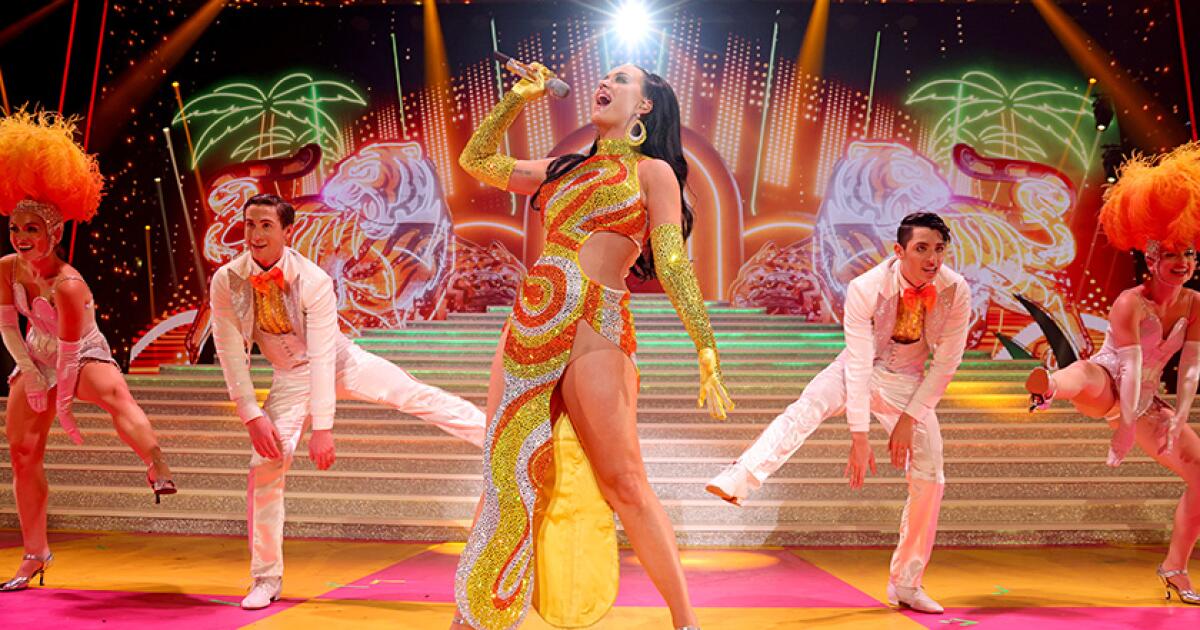
The Bay Area company had built a marketplace for digital collectibles known as nonfungible tokens, or NFTs, and had teamed up with Perry to launch NFTs tied to her Las Vegas concert residency. Its THETA token jumped by more than 500% in early 2021, reaching a peak of more than $15, making it one of the world’s most valuable cryptocurrencies. Later in the year, the spotlight shone on the company when it announced the Perry partnership.
“I can’t wait to dive in with the Theta team on all the exciting and memorable creative pieces, so my fans can own a special moment of my residency,” Perry said in a June 2021 news release.
Today, like many cryptocurrencies, THETA is 95% off its 2021 peak. It took a hit this week after former executives accused it of manipulating markets to dupe consumers into buying its products. On Tuesday, it was trading at less than 30 cents.
Two former executives from Theta Labs sued the startup, alleging in separate lawsuits that the company and its chief executive, Mitch Liu, engaged in fraud and manipulated the cryptocurrency market for his benefit. Liu retaliated against them after the employees refused to engage in deceptive business practices and raised concerns, the lawsuits say.
Some of the alleged misconduct involved placing fake bids on Perry’s NFTs, engaging in token “pump and dump” schemes and using celebrity endorsements and “misleading” partnerships with high-profile companies such as Google to deceive the public, according to the December lawsuits filed in Los Angeles Superior Court.
Perry is not accused of any wrongdoing in the suit, and Theta denies the charges.
The lawsuits against Theta Labs are the latest controversy to rattle an industry beset by scandals.
Cryptocurrency exchange FTX collapsed, and its founder, Samuel Bankman-Fried, was sentenced to 25 years in prison in 2024 after being found guilty of multiple fraud charges. Binance founder and former Chief Executive Changpeng Zhao also got prison time after he pleaded guilty to violating money laundering laws, but President Trump pardoned him this year.
The U.S. Securities and Exchange Commission previously charged celebrities such as Kim Kardashian, Lindsay Lohan, Jake Paul and Ne-Yo for promoting crypto without disclosing they were paid to do so.
Theta Labs created a network that rewarded people with cryptocurrency for contributing spare bandwidth and computing power to enhance video streaming and lower content delivery costs. The company describes Theta Network as a “blockchain-powered decentralized cloud for AI, media and entertainment.” The network has two tokens: THETA, used to secure the network, and TFUEL, used to pay users for services and power operations.
The whistleblowers suing Theta Labs are Jerry Kowal, its former head of content, and Andrea Berry, previously the company’s head of business development.
“Liu used Theta Labs as his personal trading vehicle, perpetrating fraud, self-dealing, and market manipulation,” said Mark Mermelstein, Kowal’s attorney, in a statement. “His calculated ‘pump-and-dump’ schemes repeatedly wiped out employee and investor value. This suit is about demanding accountability and proving no one is above the law.”
Theta, Liu and its parent company, Sliver VR Technologies, deny the allegations and “intend to prove with evidence the fallacy of the stories being told in the lawsuits,” according to Kronenberger Rosenfeld, the law firm representing the defendants. The lawsuits are an attempt to paint the company in a negative light in hopes of securing a settlement, a lawyer for the firm said.
Kowal has sued his former employers before. In 2014, he accused Netflix of spreading false claims that he stole confidential information and Amazon of wrongful termination.
The latest lawsuits allege that Liu profited from buying and selling THETA tokens using insider knowledge about partnerships with celebrities, studios and others in the entertainment industry.
“Liu’s true motive in pursuing such partnerships was not to develop a sustainable content business but to generate publicity that could be used to artificially inflate token prices for Liu’s personal gain,” Kowal’s lawsuit says.
Kowal worked for Theta from 2020 to 2025.
In 2020, Liu traded and sold tokens knowing that the company would close a content licensing deal with MGM Studios, according to the lawsuit. After the deal’s announcement, THETA token’s market capitalization increased by more than $50 million in just 24 hours, the lawsuit says.
When NFTs started to take off in 2021, Kowal closed deals with high-profile partners such as Perry, Fremantle Media and Resorts World Las Vegas for the startup’s NFT marketplace.
As part of the deal with Perry, the singer received $8.5 million and additional warrants for the right to license her image and likeness for the NFTs.
To inflate the price and demand for these digital collectibles, Liu allegedly made bids on NFTs and directed employees to do the same. This led to people overpaying for the Perry NFTs.
Representatives for Perry didn’t immediately respond to a request for comment.
Multiple examples of alleged manipulation are outlined in the lawsuits. In one instance from 2022, the startup launched a new token called TDROP that employees also received as part of a bonus.
Liu gained control of 43% of the supply of the cryptocurrency, according to Kowal’s lawsuit. When the TDROP token reached a high, he then sold the token, and its price collapsed by more than 90% within months.
Berry’s lawsuit also alleges that Theta Labs announced “misleading” or fake partnerships with high-profile companies such as Google and entities including NASA to pump up the value of the THETA token. Theta paid for Google Cloud products but claimed it was a partner when it was a Google customer, according to the lawsuit.