Sports Illustrated is attempting a rebound after layoffs
One of the hottest tickets for the events surrounding Super Bowl LX in February was a party thrown at the Cow Palace in San Francisco by Sports Illustrated, where attendees could hang with Justin Bieber, Kevin Hart and Travis Kelce.
The magazine’s logo and a team of models from its latest annual swimsuit issue were present at another pre-game bash at the Michelin three-star restaurant Quince.
Sports Illustrated journalists were getting requests from peers looking to score invites to the gatherings, which symbolized a turnaround at the 72-year-old title. Just two years earlier, many of its writers were told their jobs were being eliminated.
But Authentic Brands Group, the New York-based company that purchased Sports Illustrated in 2019 for $110 million, says the title is now thriving after reducing its reliance on advertising and circulation revenue. The privately held firm — which expects $38 billion in global retail sales this year, up from $35 billion in 2025 — does not break out the finances for its businesses but says SI is highly profitable after a rocky period. Less than half of SI’s revenue comes from its media business.
“It took us a little while and we had a couple of bumps along the way,” Daniel W. Dienst, executive vice chairman for Authentic, said in a recent interview from his New York office, where a photo of baseball legend Hank Aaron taken by acclaimed SI photographer Neil Leifer hangs on the wall behind his desk.
For decades, SI was where every sports journalist aspired to work, hoping to become the next Frank DeFord or Gary Smith, whose 32-year career at the magazine is highly revered. Cover images of Muhammad Ali, Michael Jordan and other superstars are emblazoned in the memories of fans who eagerly awaited the title to arrive in the mail each week. For athletes and sports institutions, the cover remains a coveted honor.
“You go to LeBron James’ office in Akron, it’s got his 30 covers on the walls,” Dienst said. “You go to USC, they’ve got 21 covers with their athletes and coaches all over their athletic department.”
Now a monthly magazine, the flagship business of Sports Illustrated is no longer the first stop for fans looking for game analysis or profiles of athletes, many of whom have asserted greater control over their images through social media and podcasts.
Like other print magazines, SI has seen a sharp falloff in its circulation, currently at 400,000, down from 3 million in 2010. Authentic says SI has 52 million users a month on its web site and 21 million social media followers. ESPN had 229 million digital users in November.
But the famous SI name still resonates with generations of consumers and Authentic has sought ways to capitalize on it, from selling replica covers to opening branded resort hotels in Chicago and Nashville. International editions of the magazine have been launched in Germany, China and Mexico, with plans to launch in France and the U.K.
In January, Sports Illustrated launched its own free ad-supported streaming TV channel called SITV that features live shows with its journalists and includes films and shows from an archive stocked with documentaries and swimsuit issue specials going back decades.
The channel, which along with the other SI assets is managed by New York-based Minute Media, will also carry live sports coverage including college basketball. While Minute Media did not reveal early viewership figures, the company said the audience for the channel has grown 60% since its launch.

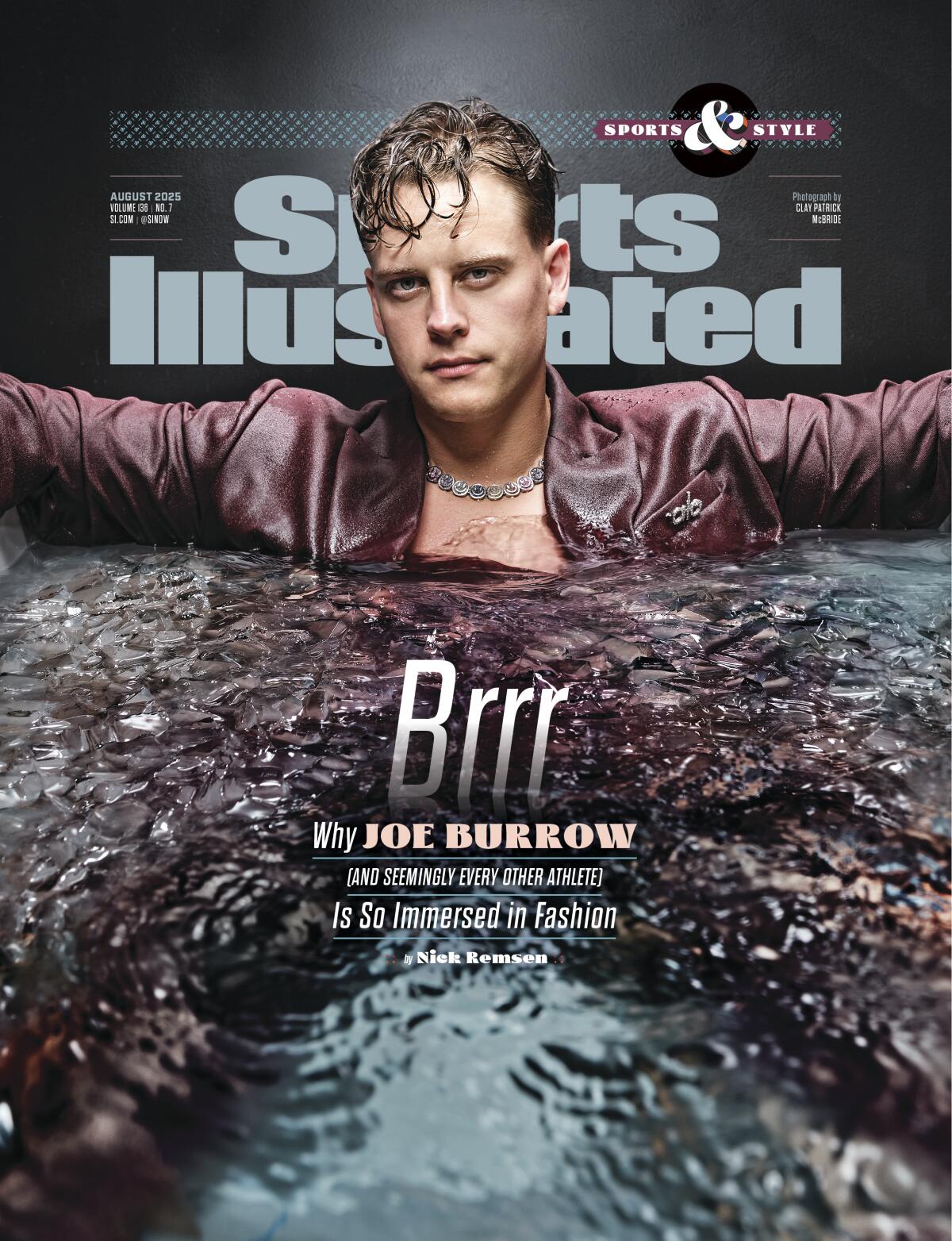
Cincinnati Bengals quarterback Joe Burrow on the cover of Sports Illustrated.
(Clay Patrick McBride)
The streaming channel is a major media initiative for brand that has seen more activity in other sectors.
In 2023, Authentic put the SI name on Lunatix, a sputtering ticket marketplace. Now called Sports Illustrated Tickets, the business has signage deals with 13 venues around the world including a New Jersey-based stadium — the home of the New York Red Bulls soccer team. The service expects to generate $500 million in revenue this year.
Authentic also uses Sports Illustrated-sponsored events such as the ones held at the Super Bowl to entertain clients for its other businesses and makes tickets available to the public. SI will host an event for Authentic at the Masters golf tournament in Augusta this week and has a permanent high-end, track-side hospitality space at Churchill Downs in Kentucky called Club SI.
Authentic specializes in acquiring and investing in famous retail properties that have foundered. The firm has acquired such names as the outerwear retailer Eddie Bauer, Brooks Brothers and Reebok, and in January took a 51% share in the fashion brand Guess.
ABG enlists outside operators to run the brands. Those operators pay an ongoing license fee to ABG, which also takes a cut of the revenues.
That was the plan when Authentic bought Sports Illustrated from Meredith Corp., now known as People Inc.
After the purchase, Authentic entered a $15-million-a-year licensing agreement with Arena Group (at the time known as Maven) to run Sports Illustrated. A New York-based digital media company, Arena operated such well-known titles as Men’s Journal, Parade and TheStreet. But the partnership unraveled when Arena used AI for sponsored content on Sports Illustrated’s website, which sounded alarm bells at the esteemed publication.

Sports Illustrated’s 2026 Super Bowl party at the Cow Palace in San Francisco.
(Sports Illustrated)
The Arena Group acknowledged it hired an outside firm to create product reviews that used fake bylines. The scandal coincided with the termination of its chief executive, Ross Levinsohn, who once held a leadership role at the Los Angeles Times.
The relationship with Authentic worsened when Arena’s majority owner, Manoj Bhargava, took over as interim chief executive. The founder of 5-Hour Energy, Bhargava tried to fire Sports Illustrated’s unionized editorial staff and renegotiate a lower licensing fee from Authentic. He also used the magazine’s editorial pages and website to promote his energy drink business.
The SI media business was unprofitable under Bhargava and Arena missed a payment to Authentic on its licensing deal. In March 2024, Arena announced it was shutting down the print edition of SI.
Around the same time, Authentic hired Minute Media, which runs the digital sites Fansided and Players’ Tribune, to take over Sports Illustrated. Bhargava didn’t go quietly; according to legal filings, he threatened to delete Sports Illustrated’s archive of intellectual property.
Authentic sued Arena for breaching the SI licensing agreement, which was settled. Many of the title’s laid-off journalists were rehired.
The experience with Arena was a harsh lesson for Authentic, which never had owned a media property before.
“The minute I make that phone call or anybody perceives that Authentic could control the newsroom, forget it, game over,” Dienst said, referencing Bhargava. “We had to move on.”
Minute Media has gotten high marks from the SI staff for its repair work on the media side of the business.
“It’s been a long time since we felt like we had an operator and support from the very top to not just grow what we’re doing day to day, but to grow what Sports Illustrated is going to look like 10 years down the road,” said Steve Cannella, editor in chief of Sports Illustrated.
SI’s union representing editorial employees praised Minute Media when it took over, and is close to agreeing on a new contract deal with the company.
Minute Media is aiming to expand the SI brand‘s reach across other media platforms to make up for the time lost under previous regimes.
“I’ve asked, ‘guys, what are all the things you wanted to do that you haven’t been able to do?’ ” said Minute Media President Rich Routman. “If we’re not trying new stuff, we’re failing.”
Some sports media types believe SI is largely a nostalgia play in a landscape where young fans go elsewhere for game highlights and turn to provocative hosts such as Pat McAfee on YouTube. But awareness goes beyond the audience of baby boomers and Gen Xers who grew up with the brand.
Lisa Delpy Neirotti, who leads the sports management program at George Washington University, recently conducted a study with her students on their media consumption habits. She said she was surprised to see high recognition of Sports Illustrated with the Gen Z crowd, and credits SI for Kids, the spin-off publication for younger readers launched in 1989.
“They would remember getting it in the mail, and it was the first thing that got them interested in sports,” Neirotti said. “There are a lot of positive memories that keep the brand alive.”
Dienst said the audience for SI has gotten younger under Authentic’s ownership. But he doesn’t disregard the oldsters who grew up with it.
“They’re very affluent and they’re super loyal,” he said.