Rastriya Swatantra Party, founded just four years ago, set to dominate new parliament with near two-thirds majority.
Published On 12 Mar 202612 Mar 2026
Share
A political party led by a rapper-turned-politician has won a sweeping parliamentary majority in Nepal, official results show, capping one of the most dramatic elections in the country’s recent history.
The Rastriya Swatantra Party of Balendra Shah, a 35-year-old former civil engineer and hip-hop artist known simply as “Balen”, secured 182 seats in the 275-member lower house of parliament, the Election Commission said on Thursday, with 125 won directly and a further 57 through proportional representation.
Recommended Stories
list of 2 itemsend of list
The Nepali Congress party finished in second place, with 38 seats. The Marxist party of veteran four-time Prime Minister Khadga Prasad Sharma Oli, whose government was ousted in a youth-led uprising last year, won just 25 seats.
Shah himself defeated the 74-year-old Oli in his own constituency.
Oli, who had dominated Nepali politics for years, congratulated his rival on X, wishing him a “smooth and successful” term.
The September 2025 protests that reshaped the country’s political landscape were initially set off by a government ban on social media, but rapidly swelled into a mass movement against corruption and economic stagnation, leaving at least 77 people dead.
Shah, whose music had long targeted those same grievances, emerged as a figurehead of the unrest, his song Nepal Haseko, or Nepal Smiling, accumulating more than 10 million YouTube views during the turmoil.
His path to likely prime minister, from engineer to rapper to Kathmandu’s first independent mayor in 2022, reflects a generational shift in a country where more than 40 percent of the nearly 30 million population is under 35, yet whose established party leadership has long remained in its 70s.
Shah said his victory was a signal of refusal to take “the easy way out” and a reckoning with the “problems and betrayals that have affected the country.”
The RSP, founded the same year as his mayoral win, ran a highly organised campaign backed by diaspora funding, particularly from Nepali communities in the United States.
Nepalese journalist Pranaya Rana described Shah to Al Jazeera as embodying “the outsider spirit that many young Nepalis are looking for to shake up the status quo.”
India’s Prime Minister Narendra Modi called the vote a “proud moment” in Nepal’s democratic journey, pledging close cooperation with the incoming government.
Under Nepal’s constitutional process, parties must now submit names to fill proportionally allocated seats before parliament is formally summoned by the president. A new prime minister, who will need the support of at least half of all members, is not expected to be confirmed for several days.
Shah’s party represents a reformist wave reshaping the Himalayan nation’s politics since last year’s youth-led uprising.
Published On 8 Mar 20268 Mar 2026
Share
Nepal’s centrist Rastriya Swatantra Party (RSP) of rapper-turned-politician Balendra Shah has secured a majority in the direct parliamentary elections and is heading for a landslide, according to official results and election commission trends.
The 35-year-old’s RSP party was also leading in proportional representation vote, according to results declared until early Sunday, in the country’s first election since last year’s youth-led uprising which toppled the government.
Recommended Stories
list of 4 itemsend of list
Elections on Thursday chose a new 275-member House of Representatives, the lower house of parliament, with 165 seats chosen directly, and 110 by a proportional representation vote.
Shah’s RSP has already won nearly 100 of 165 directly elected seats and is leading in over a dozen other constituencies in the results published by Nepal’s Election Commission early on Sunday.
Shah, widely known simply as “Balen”, himself on Saturday defeated the veteran four-time Prime Minister Khadga Prasad Sharma Oli – whose Marxist-led government was ousted in the protests last year – in his own seat in a southeastern district, securing almost four times as many votes as Oli.
His victory over the 74-year-old Oli, and his rise from the capital Kathmandu’s mayor to potential prime minister, marks one of the most dramatic results in recent Nepali politics.
He highlighted health and education for poor Nepalis as a key focus of his campaign, which rode a wave of public anger towards traditional political parties. He said the vote reflected his refusal to take “the easy way out” and signalled a reckoning with the “problems and betrayals that have affected the country”.
Oil congratulated Shah in a post on X, wishing him a “smooth and successful” term.
[Translation: Balenu Babu, Congratulations to you for the victory! May your five-year tenure be smooth and successful—heartfelt best wishes!]
Neighbouring India’s Prime Minister Narendra Modi on Saturday said the successful and peaceful conduct of elections in Nepal was a “proud moment” in the country’s “democratic journey”.
“It is heartening to see my Nepali sisters and brothers exercise their democratic rights so vibrantly,” Modi wrote on X. “This historic milestone is a proud moment in Nepal’s democratic journey.”
Modi assured of working together with the new government. “As a close friend and neighbour, India remains steadfast in its commitment to working closely with the people of Nepal and their new Government to scale new heights of shared peace, progress and prosperity.”
‘Shake up the status quo’
Shah trained as a civil engineer before breaking through as one of Nepal’s most prominent rappers, releasing conscious music targeting corruption and inequality that later became anthems of the September protests.
His 2022 election as Kathmandu’s first independent mayor was also a major upset for the political establishment at the time. The RSP, his party, founded the same year, was built on a similar anti-establishment platform.
Its campaign before Thursday’s vote was highly organised, with a more-than-660-person social media operation and significant funding from the Nepali diaspora, particularly in the United States.
“The nation was fed up with the old corrupt leaders,” said Birendra Kumar Mehta, a member of RSP’s central committee.
The September protests, initially triggered by a government ban on social media platforms, rapidly escalated into a mass movement against corruption and economic stagnation. At least 77 people were killed.
Shah emerged as a figurehead of the protests, and his song Nepal Haseko, Nepal Smiling, accumulated more than 10 million YouTube views during the unrest. His victory reflects a growing generational divide in the country.
More than 40 percent of Nepal’s nearly 30 million people are under 35, yet the leadership of its established parties has remained in its 70s.
Nepalese journalist Pranaya Rana described Shah to Al Jazeera as embodying “the outsider spirit that many young Nepalis are looking for to shake up the status quo”.
Kathmandu, Nepal – On the eve of Valentine’s Day last month, a former king in Nepal was on a helicopter, making his way to the capital, Kathmandu, from Jhapa, a district to the southeast where he has business interests.
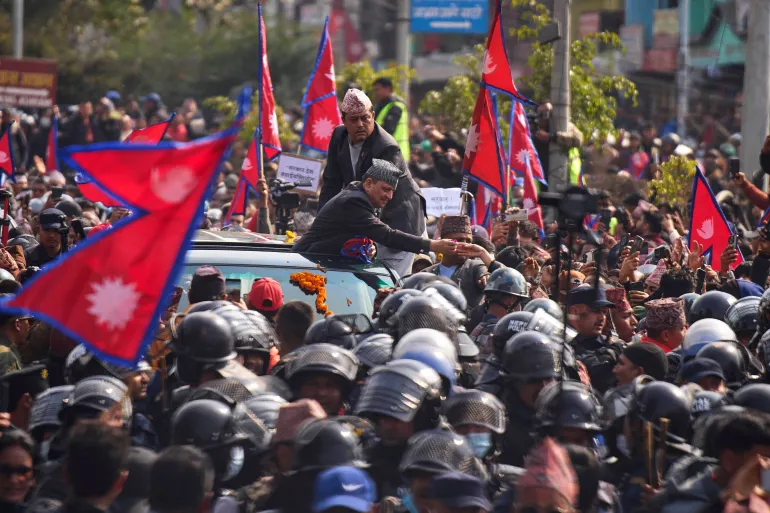
Gyanendra Bir Bikram Shah landed in Kathmandu to a red carpet welcome by thousands of supporters, with chants of “Raja aau, desh bachau!” (“Come back, king, save the country!”), a slogan popular among Nepal’s royalists, ringing out.
Four days later, on the eve of Nepal’s Democracy Day, the 78-year-old former monarch released a video message with English subtitles, speaking of his “unwavering sense of duty and responsibility” towards a nation he suggested was trapped in an “unusual whirlwind of distress”.
“The country is in one of the most painful situations in its history,” he said.
“In a democracy, it is appropriate for state systems and processes to operate in accordance with constitutional principles. While periodic elections are natural processes in a democratic system, prevailing sentiments suggest that elections should proceed only after national consensus to avoid post-election conflict or unrest.”
Shah’s explicit opposition to the parliamentary election – scheduled for Thursday – was aimed at Nepalis who have a lingering nostalgia for the monarchy, which was abolished in 2008 after seven years of Shah on the throne.
Former King Gyanendra Shah receives flowers from supporters upon his arrival at Tribhuvan International airport in Kathmandu, Nepal, on February 13, 2026 [Niranjan Shrestha/ AP Photo]
Why Shah is hopeful
Since the 239-year-old monarchy was abolished in 2008, Nepal, an impoverished nation of 30 million people, has been plagued with political instability.
It has seen 14 governments and nine prime ministers since, with power rotating between the former Maoist rebels’ party, the Communist Party of Nepal (Unified Marxist-Leninist), and the Nepali Congress.
However, a Gen Z-led uprising in September last year challenged the dominance of Nepal’s established political parties and forced the formation of an interim government, which is overseeing the March 5 election.
The youth-led challenge to an ageing political class has reignited debates in Nepal about a possible return of monarchy, and whether the prospect has significant public support.
There is marginal political support, too.
The Rastriya Prajatantra Party (RPP), which won 14 of the 275 seats in the 2022 parliamentary election, openly advocates for the restoration of a constitutional monarchy. Its leader, Rabindra Mishra, told Al Jazeera that Shah’s call for consensus on the issue echoed his own thoughts.
“I believe we need national consensus and a systemic overhaul of the system,” Mishra said, while campaigning in his constituency in Kathmandu. “I have been saying the election should be slightly postponed to forge consensus before announcing new dates. But we are not a formidable political force. The major parties are moving ahead with the election regardless.”
A year ago, Shah had put up a similar show of support in Kathmandu, fuelling speculation about whether he was trying to test the waters to push for the restoration of the constitutional Hindu monarchy. The demonstration turned violent after Durga Prasai, the royalist businessman who had mobilised crowds for the rally, broke the police barricade with his car and entered the restricted zone, which was not designated for demonstrations. Two people were killed, more than 100 were injured, and more than 100 were arrested for clashing with police.
A supporter blows a conch shell as people gather to welcome Shah upon his arrival at Tribhuvan International airport in Kathmandu, Nepal, Friday, on February 13, 2026 [Niranjan Shrestha/ AP Photo]
‘Trying to remain relevant’
Critics see calculated political signalling behind Shah’s public appearances.
Baburam Bhattarai, an ex-prime minister and former Maoist leader, said Shah’s statements were concerning.
“These kinds of public statements during crucial times are not good,” Bhattarai told Al Jazeera. “The Constituent Assembly lawfully abolished the monarchy and established a democratic republic. He should think about how to contribute responsibly as a citizen. Suggesting elections should not happen just before they take place sends the wrong message.”
Political analyst CK Lal offered a more tempered view.
“He [Shah] has seen power, and that nostalgia does not fade easily,” Lal told Al Jazeera. “Perhaps he hopes that if circumstances change, keeping the idea alive may prove useful. But at present, he appears to be trying to remain relevant. It is difficult for anyone who once held absolute authority to accept irrelevance.”
Supporters gather to welcome Shah upon his arrival at Tribhuvan International airport in Kathmandu, Nepal, on February 13, 2026 [Niranjan Shrestha/ AP Photo]
‘Unifying symbol’
The RPP’s election manifesto describes the monarchy as a “guardian institution”, necessary for a country in crisis.
“To move forward, both wheels must be strong,” said party leader Mishra, using the metaphor of a royal chariot. “We are not proposing the monarchy will run the government. Political parties will govern. The monarchy would serve as a unifying symbol above partisan politics.”
Mishra said Nepal faces internal security challenges and regional geopolitical pressures, and a ceremonial monarchy could provide stability.
But Bhattarai rejects this, saying the idea of a Hindu monarchy conflicts with Nepal’s religious, ethnic and cultural fabric, and its secular constitution.
“Monarchy is obsolete,” he said. “It will not solve our crises. These are inherent challenges that can only be addressed through democratic processes. Nepal is an inclusive, secular state. We cannot reverse that.”
Lal, however, argued that the monarchy retains a limited but symbolic resonance among some people.
“It would be presumptuous to say it is not a force,” he said. “But it is not a considerable force. It appeals mainly to religiously minded elders and cultural conservatives. The younger generation has no lived experience of monarchy. To them, it appears antiquated.”
Supporters perform Hindu rituals to commemorate the birthday of former King Shah, sitting on the right, at his residence in Kathmandu, Nepal, on July 7, 2025 [Niranjan Shrestha/ AP Photo]
Calls to restore Hindu state
Nepal’s monarchy under the Shah dynasty ended in 2006, when Maoist-led mass protests forced Shah, who had seized power and imposed emergency rule, to reinstate parliament. In 2008, a constituent assembly formally abolished the monarchy and declared Nepal a secular federal democratic republic.
Now, the RPP advocates for reinstating Nepal as a Hindu state. Nepal was the world’s only officially Hindu kingdom until 2008.
Mishra frames the proposal as cultural preservation rather than religious majoritarianism. “Nepal is a centre of both Hinduism and Buddhism,” he said. “We do not oppose any religion.”
However, he insisted: “To protect Nepal’s identity and maintain social cohesion, we need a Hindu king as the head of state.”
More than 80 percent of Nepal’s population is Hindu.
Bhattarai dismissed the idea as “romanticism”.
“Religion is a personal faith,” he said. “A nation state does not have a religion – people do. Enforcing one religious identity on a diverse society is anti-democratic.”
Lal pointed out that calls to restore the monarchy and a Hindu state are closely intertwined. “From a monarchist perspective, a Hindu state is a first step,” he said. “For Hindu nationalist forces, it may be an end goal. There appears to be a convergence of interests.”
Since 2008, Shah has not formally entered politics, though he maintains a visible public presence. He appears at restaurants, night clubs, and other public places on his birthday and during festivals, casually posing for photographs with people. His occasional private visits abroad, including to India, have drawn political scrutiny, though he holds no official diplomatic role.
India’s governing Bharatiya Janata Party of Prime Minister Narendra Modi also holds the ideology that India ought to be a Hindu state.
At a pro-monarchy rally in 2025, a prominent poster showed Yogi Adityanath, a Hindu nationalist politician who is the chief minister of the Indian state of Uttar Pradesh, which borders Nepal. Adityanath is also the chief priest at Gorakhnath Temple, which the Shah dynasty considers sacred, and has been publicly sympathetic to the idea of Nepal as a Hindu state.
But Lal downplayed speculation about Shah being backed by India, home to the world’s largest Hindu population.
“Foreign governments support winners, not losers. Their [India’s] interests lie with whoever holds power,” he said. “Despite a close relationship between the monarchy and the [Hindu nationalist] lobby in India, which is the ruling class now, they know that the monarchy has almost no relevance in Nepal.”
Monarchists mainly draw their support for the institution from an 18th-century treatise called Dibya Upadesh (Divine Counsel). Attributed to the “Prithvipath” philosophy of Nepal’s unifier, King Prithvi Narayan Shah. The idea describes Nepal as “a yam between two boulders”, referring to its precarious position between India and China, and urges its leaders to pursue cautious diplomacy, economic self-reliance and internal unity.
The RPP’s Mishra argues that these principles remain relevant.
“What Prithvi Narayan Shah formulated more than 240 years ago is still applicable today, in foreign policy, diplomacy, economic protection and national stability,” he told Al Jazeera. “We already had our organic values in Dibya Upadesh, but we went looking elsewhere for ideological models.”
But analyst Lal dismissed the idea that an 18th-century doctrine could guide a 21st-century republic.
“It is largely nostalgia. Invoking Prithvipath does not address contemporary geopolitical and economic realities. Nepal today operates in a completely different global context,” he said.
“I don’t see much chance for the monarchy to be restored.”
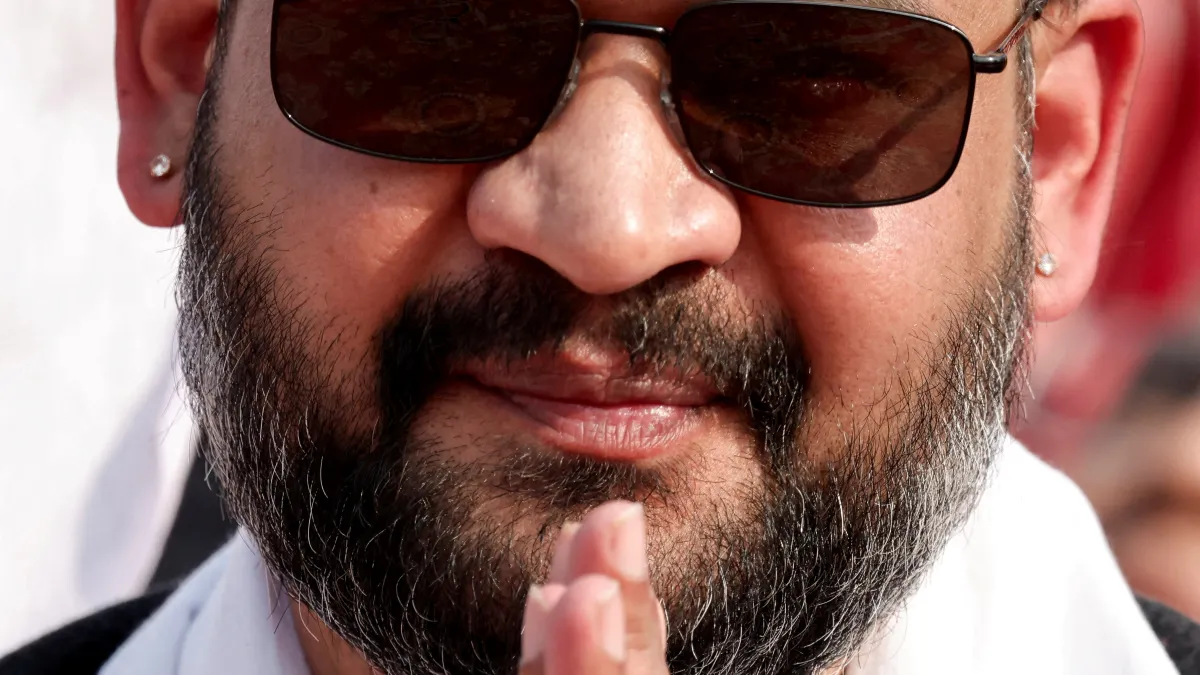
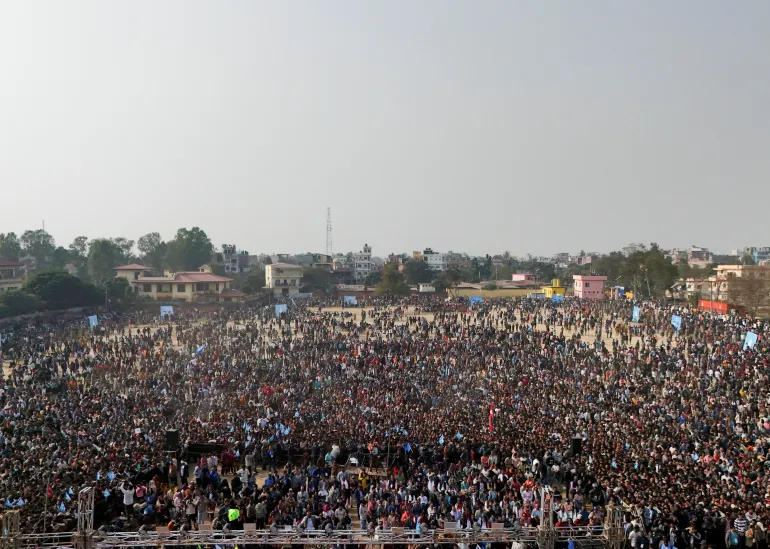
Kathmandu, Nepal – Facing thousands of raucous supporters, 35-year-old Balendra Shah lifted his signature black rectangular sunglasses, asked his audience to look him in the eye, and said: “I love you.”
It is a sentiment that millions of young Nepalis appear to reciprocate.
Recommended Stories
list of 4 itemsend of list
Balen – as he is popularly known – was a nobody until 2013, when he almost overnight became a rap sensation. Nearly a decade later, in May 2022, he stunned Nepal’s deeply entrenched mainstream political parties by winning the post of mayor of Kathmandu, the country’s capital, while contesting as an independent.
When the Himalayan nation of 30 million people erupted in popular protests against the government of then-Prime Minister KP Sharma Oli in September 2025, Balen emerged as a high-profile backer of the protesters. He was the first choice of many Gen Z activists to take over as interim leader after Oli was forced to resign. But he instead supported former Supreme Court Chief Justice Sushila Karki for the post. It is now that this was a tactical move.
As Nepal heads to its first election since the protests last year, and Karki’s brief term ends, Balen is positioning himself as the future prime minister the country needs. And true to style, he is doing it with a bang: He is contesting the parliamentary elections from Jhapa-5, a seat about 300km (186 miles) southeast of Kathmandu, against Oli, the man protesters deposed just five months ago.
On the surface, the odds appear stacked against him. The region is a stronghold of Oli and the Communist Party of Nepal – Unified Marxist Leninist (CPN-UML), which the former prime minister heads. Balen is contesting as a candidate of the Rastriya Swatantra Party (RSP), a centrist party formed less than four years ago, which won 10 percent of the national vote in the last elections in 2022.
Balen’s volatile public communication – he has abused mainstream parties, India, China and the United States, and threatened to burn down symbols of power in Nepal – has sparked criticism and questions over whether he is ready for high office.
But Balen defied the pundits when he won the Kathmandu mayoralty. And observers and analysts say that for many Nepalis, he represents a breath of fresh air in a country where more than 40 percent of the population is under the age of 35, but where the leadership of all major parties is in its 70s.
“Young Nepalis see him as a decisive actor, who is not beholden to traditional political or business interests,” Pranaya Rana, a journalist who writes for the Kalam Weekly newsletter, told Al Jazeera. “Many admire his macho public persona and his willingness to take on entrenched political patronage networks.”
Supporters of Balendra Shah, a former Kathmandu mayor popularly known as ‘Balen’, gather for a campaign rally in Janakpur, Nepal, January 19, 2026 [Navesh Chitrakar/Reuters]
The craze
If young Nepal burned with anger in September, when protesters clashed with security forces and attacked senior politicians after a crackdown by authorities under Oli, Balen was still seething with rage two months later.
In a midnight post on Facebook in November, he lashed out: “F*** America, F*** India, F*** China, F*** UML, F*** Congress, F*** RSP, F*** RPP, F*** Maobaadi. You Guys all Combined can do nothing”, venting against the popular political parties and even nations that have close ties to Nepal. Being the Kathmandu mayor at the time, he deleted the post less than half an hour later.
Then in January, he quit as mayor and joined the RSP, one of the parties he cursed in the Facebook post. More recently, after Oli called on Facebook for a public debate among prime ministerial candidates of major parties, Balen rejected the suggestion and asked the ex-prime minister to take responsibility for the dozens of civilians killed during the Gen Z protests in September. He asked Oli to acknowledge that he was a “terrorist”.
Over the top? Not to many Nepalis.
The rapper-turned-politician’s confrontational style and rhetoric appear to have only endeared him to large sections of the youth. His beard and dandy, all-black clothing style – he occasionally wears the traditional Newari dress of the ethnic inhabitants of the Kathmandu valley – coupled with his trademark dark glasses, have become fashion symbols.
Kathmandu shops once ran out of the kind of black rectangular glasses he wears. Many online stores, including Daraz, the most popular seller in Nepal, still carry multiple choices of these shades, calling them “Balen Shah glasses”.
Unlike traditional politicians, Balen mainly stays away from mainstream media. Instead, he communicates with the wider public through podcasts, television shows where he is a judge, or through his favourite platform: social media. His 3.5 million followers on Facebook, 1 million on Instagram, 400,000 on X and nearly 1 million on YouTube give him an online audience unmatched in Nepal.
This is valuable capital with a generation constantly on their phones.
Yet Balen first made waves not as a politician, but as an upstart musician who shook Nepal.
Balendra Shah, a rapper-turned-politician and the prime ministerial candidate for the Rastriya Swatantra Party (RSP), along with Rabi Lamichhane, RSP president, takes part in an election campaign in Kirtipur, Kathmandu, Nepal, February 28, 2026 [Navesh Chitrakar/Reuters]
Big cars, bigger songs
The youngest of four siblings, Balen was born in 1990 in Kathmandu. Balen’s father, Ram Narayan Shah – who passed away in December – was a government practitioner of ayurveda, the ancient Hindu healing system.
In an interview with Al Jazeera in September – three months before his death – Shah recalled Balen as a “bright and simple” child. The father’s work took him away from home frequently, but one clear memory from Balen’s childhood stuck out for Shah: “He wrote poems. I remember that, because I also wrote poems.”
Balen graduated with a civil engineering degree from Himalayan Whitehouse International College in Kathmandu and received a postgraduate degree in structural engineering from Visvesvaraya Technological University (VTU) in Karnataka, India.
Then, in 2013, he engineered his first major career transition. The setting was a popular rap battle in Nepal, called Raw Barz, in which two contestants face-off live against each other. One of the organisers of the competition, who requested anonymity, told Al Jazeera that Yama Buddha, a popular rapper who has since passed away, recommended Balen to him.
Balen won the rap battle, gaining instant popularity. “More than a rapper, he was a poet. He was very good lyrically, and talked about suppressed [people],” the contest organiser recalled.
In 2021, Shah announced his candidature for the mayoral election and revealed that he had been plotting the run for at least two years. He swept the election, winning 61,767 votes, defeating candidates from the major political parties, the Nepali Congress and Communist Party of Nepal (UML), who received 38,341 and 38,117 votes, respectively.
As mayor, according to his aide and press coordinator, Surendra Bajgain, Shah would arrive at his office at the Kathmandu Metropolitan City (KMC) at about 10am. He would first meet all the department heads, go through files, “seek clarity” on questions he had, and then sign files, Bajgain told Al Jazeera.
He would wear his trademark black jacket and pants, and black shades, every day to the office. He would remove his glasses inside the office, Bajgain said. “But you’ll see him in those glasses when taking pictures or in public,” he added.
As a mayor, he lived in government-provided accommodation in the heart of Kathmandu with his wife and an infant daughter. A gym regular, he preferred lunch at home, but would sip on endless cups of tea and coffee in the office.
To get away from the public gaze, Balen “loves to go on long rides outside the valley, because here, people surround him very often in public,” Bajgain said.
His passion for cars also landed him in controversy, widely circulated online, when he was seen driving an expensive Land Rover Defender worth 40 million Nepali rupees ($275,0000) in January, while campaigning in Jhapa 5, his electoral constituency, for the March 5 election.
Given his strong anticorruption image, the sight of him in a high-end luxury vehicle drew heightened scrutiny. Critics accused him of a lack of transparency over the vehicle’s ownership and use, while some pointed out that, despite promoting modesty in public office, he rarely used public transport as the mayor. The car, it turned out, had been given to him by a wealthy businessman for use during his campaign.
Balen is now also pursuing a PhD in traditional infrastructure at Kathmandu University. But he is far from a reluctant public figure, nor is he an ivory-tower researcher.
Balen’s songs, which mock political parties, criticise corruption and talk of the sacrifices of everyday Nepalis, have been the soundtrack to the efforts by Nepal’s Gen Z to reshape the country’s politics in recent months.
One song, Nepal Haseko (Nepal Smiling), became an anthem during last year’s protests, and already has more than 10 million views on YouTube. In the song, children sing in the chorus: “I want to see Nepal smiling; I want to see Nepalis living happily.”
Another song, Balidan (Sacrifice) has 14 million views on YouTube. It talks about impunity and corruption. On the Discord server “Youth Against Corruption”, where Gen Z protesters picked the country’s interim leader after Oli’s resignation in September, the name “Balen” was mentioned 16,328 times — far more than anyone else’s.
But Balen also has his critics.
Balen plays a ‘damru’ percussion instrument during an election campaign in Janakpur, Nepal, on January 19, 2026 [Navesh Chitrakar/Reuters]
‘Set on fire’
In 2023, when Balen was mayor, his wife was in his official vehicle when a traffic policeman stopped it. Balen was not in the car. The government-plated vehicle was being used on a public holiday, which gives traffic personnel the right to ask the purpose of the vehicle use and whether the driver has a permit for it.
On social media, Balen blew up about the incident: “If any of our KMC vehicles are stopped by the government from tomorrow, I will set the Singha Durbar on fire. Remember, you thief government”. Singha Durbar houses many administrative offices along with the Prime Minister’s Office.
The Oli government initially wanted to charge him for the incendiary statement, but backed off – Balen’s comment on social media had drawn support. It was a sign of things to come. During the Gen Z uprising in September, Singha Durbar was severely damaged after being set on fire.
In another instance, in 2023, after India installed a mural of “Akhand Bharat” (a Greater India) – encompassing many of its neighbours – Shah hung a “Greater Nepal” map in his office, including territories that once belonged to Nepal but now lie within India’s borders.
The move instantly escalated into a diplomatic hurdle. Shah was accused of going beyond his mandate as a municipal leader and stoking nationalist sentiment for political gains. His supporters, however, hailed his move as an assertive counter to foreign dominance.
In 2023, Balen also banned the screening of Indian films in Kathmandu, alleging that an Indian movie had suggested that Sita, one of Hinduism’s most revered goddesses, was born in India. In fact, she was born in present-day Nepal according to Hindu scriptures.
As Kathmandu mayor, Balen bulldozed illegal structures and ordered rubbish to be dumped outside government offices. He temporarily halted waste collection from Singha Durbar. The move was a riposte to what he argued was the central government’s failure to coordinate with the city to address Kathmandu’s chronic waste management crisis.
Yet to many belonging to the generation most hungry for change in Nepal, Balen has an allure no one else appears to have.
Balen meets supporters during an election campaign rally in Jhapa, Nepal, on February 23, 2026 [Umesh Karki/ AP Photo]
‘Shake up the status quo’
Aayal Sah, a 20-year-old first-time voter, is a resident of Janakpur – where Sita, the Hindu Goddess, is believed to have been born. He took three of his friends to see Balen’s first public appearance after joining the RSP. “I cannot directly vote for Balen as he is not contesting from our area, but I’ll surely vote for his party,” he told Al Jazeera.
Rana, the journalist at Kalam Weekly, said that for many, Balen “embodies the outsider spirit that many young Nepalis are looking for to shake up the status quo”.
Yet, Rana acknowledged, questions over Balen’s ability to lead Nepal linger as the country heads to elections. “A primary concern for most critics is Balen’s immaturity and his refusal to engage with the public. During his time as mayor, he gave no interviews to local media and did not answer any questions,” Rana told Al Jazeera.
After Oli quit office, when Gen Z protesters voted most for Balen to take over as interim leader on Discord, the then-mayor was not available on the phone when the youth movement’s leaders tried to reach him to see if he would take charge of the nation.
That, say analysts, was yet another example of Balen’s communication style: It is always one way, at his time and place of choosing.
But for many young Nepalis like Sah, the Janakpur resident, none of these chinks in Balen’s public life matter. “It’s the trust he has gained among the young people,” Sah said.
“He is the only one who can take the country forward.”