The volume of munitions expended in the course of U.S. operations against Iran this year has been and continues to be a hot topic of discussion, and there has been relatively little official data provided on this front. However, now we know that the F/A-18F Super Hornets of the U.S. Navy’s Strike Fighter Squadron 41 (VFA-41), the “Black Aces,” launched 421 missiles and bombs during their time supporting Operation Epic Fury.
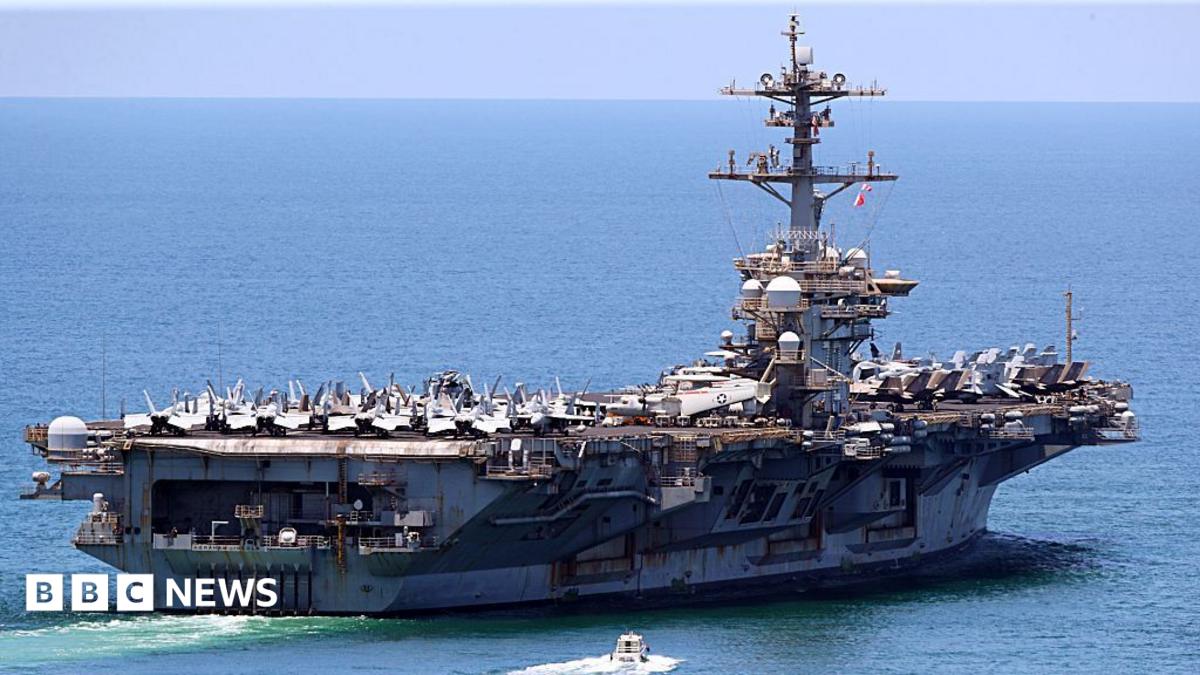
This new insight into VFA-41’s role in the conflict with Iran comes from a photo of a large board listing the squadron’s weapons expenditures during Epic Fury, via Jeff Rojas, who goes by the handle @jro_photography on Instagram. Rojas also shared pictures recently taken of VFA-41’s Super Hornets. The Black Aces were one of the squadrons assigned to the Nimitz class aircraft carrier USS Abraham Lincoln, which has been on a marathon deploymentsince last year. The carrier only left the Middle East region last month and is now set to formally return home to San Diego, California, within days. Per the Pentagon’s official timeline, Operation Epic Fury began on February 28 and concluded on May 5, though U.S. forces have continued to conduct strikes on Iran, on and off, since then.
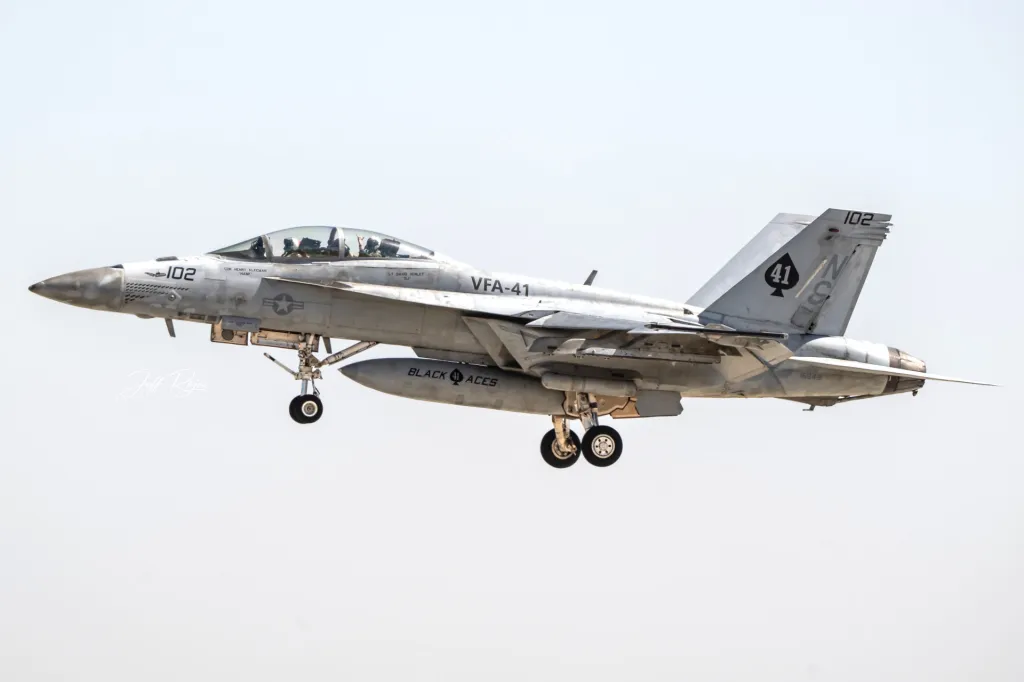
One of VFA-41’s F/A-18F Super Hornets spotted recently. Jeff Rojas Jeffrey Rojas
The complete tally of munitions employed as shown on the board, broken down by type, from greatest to fewest, is as follows:
The total cost of all of these munitions, using available data from U.S. military budget documents, is very roughly $43,646,000, at least. Unit costs fluctuate regularly due to a variety of factors. Furthermore, the exact price tag for different JDAMs can be somewhat difficult to calculate given how the individual components are budgeted.
The JDAM is really a family of kits that turn standard unguided ‘iron bombs,’ which can vary significantly in the kinds of effects they are designed to produce, into warheads for precision-guided munitions. This is exemplified by the (V)2 and (V)4 subvariants of the GBU-31/B mentioned here, which are built using standard high-explosive and bunker-buster bombs, respectively. No specific subvariants of the GBU-32, GBU-38, or GBU-54 were mentioned in the information provided. Standard JDAMs can also only be employed against static target coordinates. The LJDAM kits add a laser guidance component (akin to what is found on Paveway-series bombs) that enables strikes against moving targets.
A JDAM, as well as a pair of AIM-9Xs, seen under the wing of a VFA-41 Super Hornet in August. NAVCENT
No specific version of AGM-154 is mentioned, either, but the C and C-1 types, which have multi-stage bunker-busting warheads, are the only ones understood to be in service today. Remaining A variants, which were loaded with 145 small bomblets, were removed from U.S. service in 2008 as a result of new guidelines on cluster munitions issued under President George W. Bush. A planned AGM-154B, which would have contained six “smart” Sensor Fuzed Munition bomblets, was never produced. You can read more about the full JSOW family here.
We do not know exactly what targets any of these munitions were employed against. However, a picture that Jeff Rojas grabbed of one of VFA-41’s Super Hornets, seen toward the top of this story and in part below, shows a very interesting broken submarine kill marking, with the added text “Sub Buster.” The jet also has a number of more typical bomb-shaped kill marks.
A close-up look at the broken submarine and other kill marks on one of VFA-41’s Super Hornets. Jeff Rojas Jeffrey Rojas
The video montage in the social media post below includes a clip, starting at 0:13 in the runtime, of a Hellfire missile hitting what looks to be a Ghadir class diesel-electric midget submarine in port.
U.S. forces are degrading the Iranian regime’s ability to project power at sea and harass international shipping. For years, Iranian forces have threatened freedom of navigation in waters essential to American, regional and global security and prosperity. pic.twitter.com/gIBN02mowh
It is extremely likely that the AIM-9Xs and AIM-120s were fired at Iranian drones, though they could have been launched at incoming cruise missiles, as well. At the time of writing, there are no known or reported instances of U.S. military jets engaging crewed Iranian aircraft in the course of the conflict to date. In 2024, the Navy carried out a crash program that increased the total number of AIM-9Xs that F/A-18E/Fs could carry per sortie, specifically in response to Houthi drone threats. Super Hornets loaded with nine air-to-air missiles are now referred to as “Murder Hornets.”
It is also important to remember that this is a discussion of the munitions expended by just one Navy strike fighter squadron. Lincoln‘s air wing includes four strike squadrons, three with Super Hornets and one with F-35Cs, as well as units flying other types of aircraft and helicopters. The carrier was just one part of a much larger array of air, naval, and ground forces that participated in Operation Epic Fury and subsequent operations against Iran. For additional context, consider that the entire Eisenhower Carrier Strike Group, including its entire air wing and escorting ships, fired off 770 munitions in total, by the official count, during very active combat operations in and around the Red Sea between November 2023 and June 2024.
VFA-41 Super Hornets seen flying together recently. Jeff Rojas
As such, the tally of munitions launched from VFA-41 Super Hornets offers a very interesting view into that squadron’s contributions to Operation Epic Fury, as well as the full scale and scope of the conflict with Iran.
Special thanks again to Jeff Rojas for sharing the details about VFA-41’s participation in Operation Epic Fury and his pictures with us.
Fincantieri Marine Group, which developed the cancelled Constellation class frigate for the U.S. Navy, says it sees a possible new opportunity in the service’s latest small surface combatant plans. At least three foreign frigate designs are already under review for possible Navy service, as is the prospect of having them built overseas, as part of a study expected to wrap up next month. Fincantieri wants to once again add the FREMM design, which the Constellation was based on, to the Navy’s options. The shipyard, which is a subsidiary of its Italian namesake, made significant investments in shipyard infrastructure in the United States and supply chains as part of the Constellation debacle, but it is not clear if that will be enough to make a new pitch attractive.
USNI News first reported on the possibility of a new Fincantieri frigate pitch to the Navy yesterday after an interview with CEO George Moutafis. TWZ also spoke at length with Moutafis about the failure of the Constellation class program earlier this year, and we have reached back out to the company for more information about new prospects now.
“Right now the Navy and the [Trump] administration could find the right type of dialog with us to set [development] up in a way that enables quick setup and swift construction without letting design spirals get in the way,” Moutafis told USNI News. “Accept the design that is and works well, and start work on it to get units out there for the fleet.”
This is FREMM, this is Fincantieri | Fincantieri
In addition, “Moutafis said the supply chain the shipyard built during the Constellation could be applied to Fincantieri’s FREMM EVO design with few modifications to avoid the design churn that led to the cancellation of the Constellation,” according to USNI News.
The Constellation class was derived from the Franco-Italian FREMM, a multi-purpose frigate designed to offer a mix of anti-air, anti-submarine, and anti-surface warfare capabilities. The explicit intent of the program had been to acquire a frigate based on an established, in-production ‘parent’ design, to which only relatively minor changes would have to be made, helping to reduce cost and risk. In the end, Constellationonly had 15 percent design commonality with FREMM, causing delays and other issues that directly contributed to its cancellation. However, the Navy’s demand for smaller surface combatants has not gone away. We will come back to this all in a moment.
As designed, the FREMM EVO is close to 472.5 feet (144 meters) long, is some 64.6 feet (19.7 meters) at its widest, and displaces 6,500 tons with a full combat load, according to Fincantieri’s website. Its hull dimensions and displacement are essentially unchanged from the Italian subvariant of the baseline FREMM. The EVO will have a new superstructure configuration and a host of new capabilities.
Renderings of the FREMM-EVO. FincantieriAn Italian Navy FREMM frigate, or Bergamini class, in front, sails together with a US Navy Arleigh Burke class destroyer. USN
The most notable new feature on the EVO version is set to be a new Leonardo Kronos Dual-Band Radar (DBR). The Kronos DBR combines the C-band Kronos Quad and the X-band Kronos StarFire into a single system with four paired sets of active electronically scanned arrays (AESA) positioned around the superstructure. In general, combining radars in this way can offer advantages for performing a variety of different tasks and doing so simultaneously. The ability to fuse data from both arrays together can help produce high-fidelity target tracks and other benefits. At the same time, DBRs have historically presented complexities that can cause serious difficulties with both integration and operation.
Among other things, the DBR is set to give the FREMM EVO expanded capability to knock down incoming ballistic missiles in the terminal phase of flight using Aster 30 surface-to-air missiles. Anti-ship ballistic missiles have become a threat that navies globally could realistically encounter in future conflicts, even against smaller nation states or non-state actors. There is a trend emerging worldwide now in the development of new anti-ballistic missile defenses to protect individual warships, as well as help defend other naval assets and interests ashore. Baseline FREMM frigates can already fire Aster 30 missiles, as well as Aster 16s, from any of their 16 Sylver vertical launch system cells at the bow end of the ship. EVO has space allotted for the integration of additional VLS cells, but it is unclear whether any current customers are pursuing that option.
Lancio Aster 30
In terms of armament, like the baseline FREMM, the EVO configuration will also have deck-mounted launchers for eight anti-ship cruise missiles, two triple torpedo tubes, two turreted 76mm guns, and various smaller automatic cannons and machine guns.
FREMM EVO is to feature improvements to other parts of its sensor package, as well as electronic warfare and communications suites, compared to the baseline design. This will all be tied into a SADOC 4 combat management system (CMS) from Leonardo.
On top of all this, this new FREMM configuration will have a new dedicated suite of counter-drone capabilities, another threat category that is very real now, and that only continues to expand in scale and scope.
“FREMM EVO represents a milestone both in confirming the ability to combine maturity and innovation in its EW systems that will be on board, and for the first naval supply of an advanced anti-drone counter capability,” ELT Group, which is supplying components for the counter-drone suite, said in a statement back in 2024, according to Naval News. “The latter will allow both the detection, recognition and identification of drones and their soft-kill counter. The project of a naval CUAS arises from the expertise acquired by Elettronica in this capacity for several years now, which have led to the development of sophisticated Artificial Intelligence algorithms developed specifically for countering the threat posed by drones.”
When it comes to a new pitch to the U.S. Navy, FREMM EVO does have the benefit of being an in-production design. As mentioned, Fincantieri had also been working to expand its facilities at the Marinette Marine shipyard in Wisconsin to build similarly-sized Constellation class frigates before that program was cancelled. The shipbuilder has relevant established supply chains to feed into that yard, as well, as Moutafis highlighted to USNI News.
A Naval Sea Systems Command (NAVSEA) briefing slide from 2022 detailing work Fincantieri had been doing to expand its physical infrastructure to support the production of the Constellation class. USN
In speaking to us earlier this year, Moutafis also talked about important lessons learned from the Constellation program, which he felt were already having a positive impact the U.S. Navy way of doing business.
“Some of those lessons learned out of Constellation are being manifested in the things that the Navy has been rolling out the past few months – a new approach that empowers PAEs [Navy Portfolio Acquisition Executives] to make decisions, to minimize change, to embrace innovation and new technologies,” he said. “All these elements that we see now being rolled out, I think to a certain degree, connect back to lessons that have been learned out of the Constellation class journey.”
“Figure out what you want to prioritize, to what extent you want to prioritize schedule, and what’s the best way to say this,” he added when asked for specific examples of what he was talking about. “When you know when you need something delivered and at what pace, then enable the right level of decision-making. Because otherwise – I don’t want to sound this the wrong way – but perfection sometimes is the enemy of more than good enough.”
“Going beyond the Constellation class, now the needs are for vessels to be out there for the warfighter as soon as possible. For sure, we will see many cases where it will be considered that a vessel with these capabilities – even though potentially, in some areas, it may not have enough tons of steel on its sides, or whatever – it will be good enough to assist the warfighter as they head into harm’s way,” he also added at that time. “Those trade-offs are now being placed at the PAE level, allowing Navy leaders at that level to make the right decisions – figuring out whether to continue going down a design spiral versus just moving out with production and enabling us to have the right capabilities on time for the warfighter.”
When Moutafis spoke with us, the Navy had already unveiled a new FF(X) frigate program and announced plans to buy examples of a design derived from the Huntington Ingalls Industries’ (HII) Legend class National Security Cutter for the U.S. Coast Guard. Those frigates will notably lack a VLS array, at least initially, along with other features that were seen as critical to Constellation class. The Navy has outlined plans to offset the more limited baked-in capabilities of the FF(X)s with add-on containerized weapon systems and companion fleets of uncrewed surface vessels. All of this has already prompted significant debate about the operational utility of these small surface combatants, as TWZ has previously explored in detail.
A rendering of the FF(X) frigate. USN
In August, President Trump put out a memo that, in part, directed then-Acting Secretary of the Navy Hung Cao to “submit a plan … that includes timelines and resourcing requirements, for a new competitive acquisition approach for surface combatants with sufficient inherent capabilities to perform anti‑submarine warfare, surface warfare, and convoy escort duties.” The memo also outlined an acquisition strategy referred to as the “Finland Model,” in which foreign shipbuilders would have to make major investments in U.S. enterprises and hire American workers as part of any future contract, even if an initial tranche of vessels is built overseas. This, in turn, has led to the aforementioned foreign warship study ongoing now, which is reportedly exploring the merits of Japan’s Mogami class, the South Korean Chungnam class, and the Istanbul class from Turkey, in-depth profiles of which you can find here.
Examples of the Japanese Mogami class (at bottom), the South Korean Chungnam class (at top left), and the Turkish Istanbul class (at top right). Yuichi Yamazaki-Pool/Getty Images/HD Hyundai Heavy Industries/Anadolu Shipyard
Whether or not the U.S. Navy will pursue the acquisition of any of the ships it is studying now, or whether it might be willing to consider additional pitches from Fincantieri or other shipbuilders, remains to be seen. If it is to be successful, any new attempt to leverage an in-production foreign frigate design will have to take concrete steps to avoid falling into the same design change pitfalls as the Constellation class. The Navy’s struggles with solidifying designs early and keeping changes to a minimum during development and initial production have impacted several domestic naval shipbuilding efforts, too.
For Fincantieri, while the Navy played a central role in the failure of the Constellation program, there is the additional matter of whether the service is interested in any way in the optics of not only going back to the same shipbuilder, but the same underlying parent design (FREMM).
A rendering of Dutch shipbuilder Damen’s LST-100 landing ship, the basis for the Navy’s new LSMs. Damen
It’s also unclear what any additional frigate procurement program might mean for the existing FF(X) frigate program, and what level of additional competition there might be for shipbuilding resources, as a result.
“In terms of which path we go – I’m not going to get ahead of that process – but [studying all options is] essentially what we’re doing,” Navy Rear Adm. Casey Moton, head of the Portfolio Acquisition Executive Maritime (PAE-M) office, also said at the American Society of Naval Engineers Fleet Maintenance and Modernization Symposium last week, according to USNI News. “I am not going to get ahead of what we are doing in response to the presidential memo.”
“We just went through CDR [the critical design review] on the Flight I [of FF(X)], and so we’re doing some pre-production activities with HII to help prepare for that material,” Moton also noted. The Navy has said in the past that it is aiming to have the first FF(X) frigate in the water by 2028.
The Navy’s fleet of Arleigh Burke class destroyers “gets used with a very high demand signal combatant commanders. The Navy can’t operate with only one size of ship,” Rear Adm. Brian Metcalf, Deputy PAE-M, also said in an official video in June, further underscoring the general demand for these new smaller surface combatants. “The [FF(X)] frigate will fill that gap. They can be used in less contentious waters. They can be used as high-value escorts. There are all kinds of things the frigate can fill the gap for and allow destroyers to execute the high-end mission set.”
Signs that a new foreign-designed frigate could be in the Navy’s future have already been growing. The service may have a clearer vision for how to proceed, and whether there might be room for additional pitches from Fincanterai and others, after the review it is working through now is complete.
Lockheed Martin’s (LMT) Rotary and Mission Systems unit won a $155.7M cost-plus-award-fee contract modification.
The contract aims to support systems engineering and software integration for the Integrated Combat System across the U.S. Navy and Coast Guard surface forces.
WASHINGTON — Eight sailors attempted suicide while deployed with the USS Abraham Lincoln aircraft carrier strike group, which spent a record-setting uninterrupted time at sea supporting the Iran war, the Navy’s top civilian leader said this week.
Acting Navy Secretary Hung Cao provided the information to Sen. Kirsten Gillibrand in a letter dated Tuesday after the New York Democrat inquired last month about the strike group’s crew of thousands. The Lincoln’s extended deployment drew the nation’s attention following reports of crew stress and poor mental health, as well as supply shortages, including food and hygiene products.
Gillibrand asked Cao specifically if there were any suicides.
“There have been no suicides on board during this deployment,” Cao wrote in the letter, which was obtained by the Associated Press and reported earlier by CNN. “Since the beginning of LINCOLN’S deployment, there have been a total of eight suicide attempts across the strike group — this number includes the LINCOLN crew and Sailors from the carrier wing, strike group and destroyer squadron staff, escorting destroyers, and all embarked aviation squadrons.”
President Trump had downplayed reports about conditions on the Lincoln, which left its homeport in San Diego in November, arrived in the Middle East in January in support of Iran operations, and spent a record-setting uninterrupted time at sea of more than 260 days.
The carrier and some of its supporting ships stopped in Thailand in early September on their way back home to California. The Lincoln’s commanding officer, Capt. Dan Keeler, said then that the ship will be heading home soon but may make further supply stops. He declined to comment on the exact date the strike group is expected back in the U.S.
Last month, Trump called the nearly nine months at sea that the sailors endured a “good period of time” but added that “over the years, we’ve had them out there much longer.”
Trump told reporters in August that he spoke with a retired admiral who recounted being on ships for “much longer.” Trump said the admiral assured him that the Lincoln is “beautifully maintained and beautifully taken care of.” Trump did not name the admiral.
Defense Secretary Pete Hegseth also had said that conditions about the Lincoln were “completely misrepresented.”
Gillibrand took aim at both in a statement released this week in response to Cao’s letter.
“What Trump and Secretary Hegseth dismissed as ‘fake news’ turned out to be serious and deteriorating conditions for our service members,” she stated.
“Our troops and their families make immense sacrifices every single day, yet the president dismissed them with open disrespect,” Gillibrand said. “That this administration can find endless taxpayer dollars for bombs, ballrooms, and billionaires, but cannot take care of our service members, is completely unacceptable.”
Extended deployments of carriers wear on service members who are away from home for long periods and increase strain on the ship and its equipment. The Navy is continuing to enforce a blockade on Iranian ports in the Strait of Hormuz, and the Trump administration has offered no clarity on how it intends to wind down the war.
Acting United States Navy Secretary Hung Cao has confirmed that there have been “eight suicide attempts” by personnel assigned to the USS Abraham Lincoln aircraft carrier strike group posted in the Middle East – at least two by jumping overboard – during their deployment there.
In a letter to US Senator Kirsten Gillibrand on Tuesday, Cao wrote about quality of life on the fleet and morale among personnel. He was responding on behalf of US Defense Secretary Pete Hegseth to her questions about reports of crew members attempting to harm themselves.
Recommended Stories
list of 3 itemsend of list
While Cao said no service members had died by suicide during the deployment, there had been attempts to jump overboard.
“This includes the Lincoln crew and sailors from the carrier airwing, strike group and destroyer squadron staff, escorting destroyers and all embarked aviation squadrons,” the letter read.
Here’s what we know:
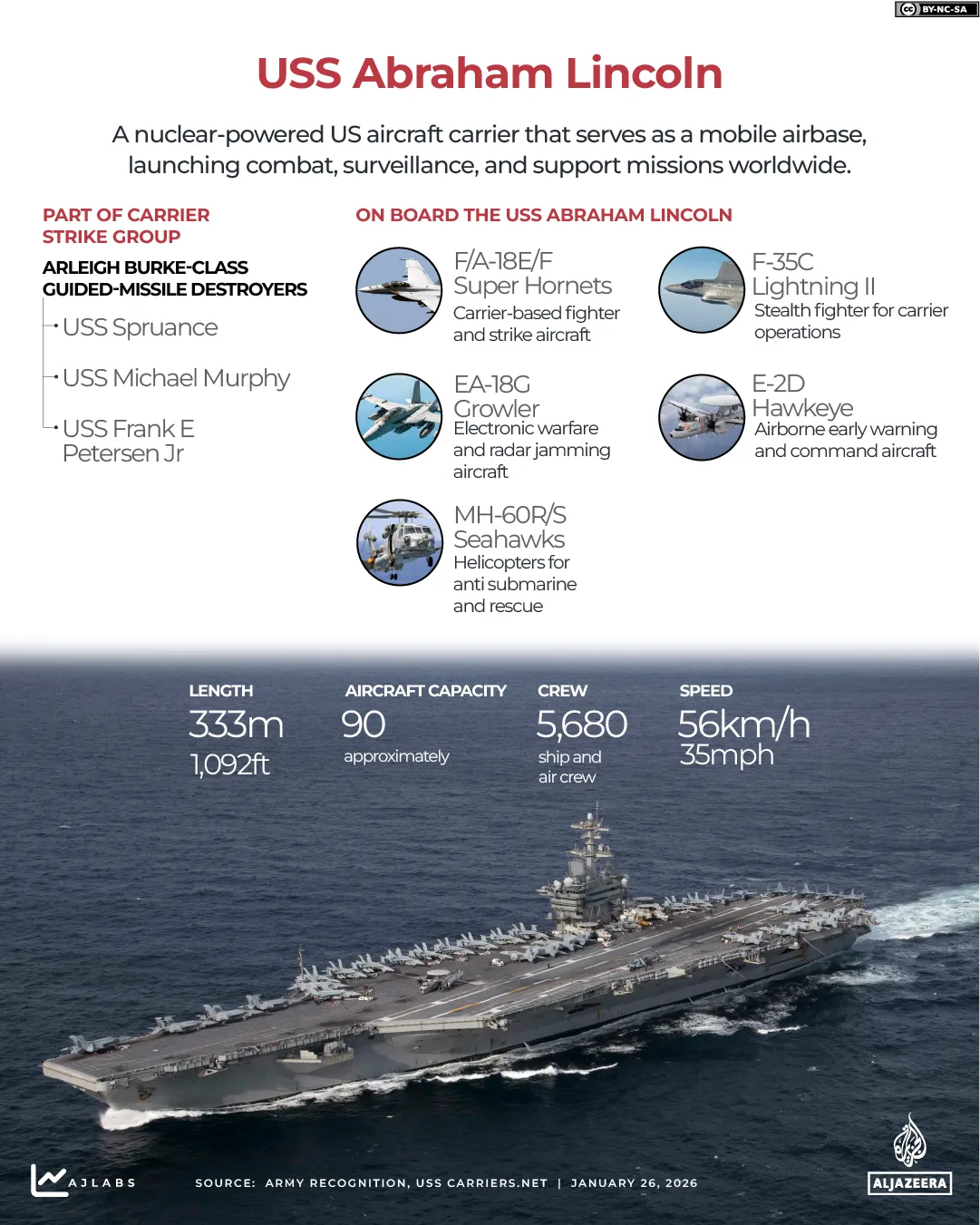
What is the USS Abraham Lincoln?
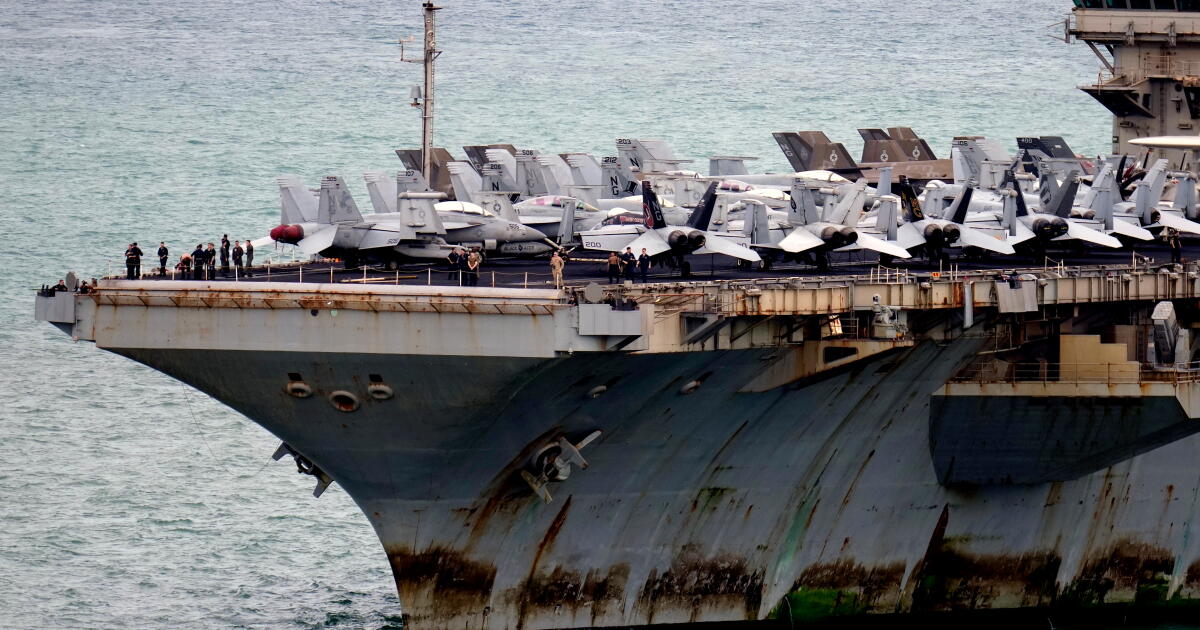
It is a nuclear-powered Nimitz-class aircraft carrier that the Navy has referred to as one of the “largest warships in the world”. Nimitz-class vessels include 10 nuclear-powered aircraft carriers in the US arsenal.
The carrier, which set off from California in November 2025 for a routine deployment to the South China Sea, was rerouted in January to the US Central Command (CENTCOM) region in the Middle East because of escalating tensions with Iran.
Since the US-Israel war on Iran broke out at the end of February, the USS Abraham Lincoln has engaged in combat efforts and helped enforce the US naval blockade on Iranian ports.
The roughly 5,000-strong crew on board the Lincoln were at sea for 286 days before finally disembarking in Thailand on September 1, setting a record for the longest deployment. Besides one short port stop last December, the crew had no land breaks in that time.
US media reports have tied ship supply shortages to Iranian attacks on US military sites in the Middle East, notably the heavy damage inflicted on the naval base in Bahrain in the early days of the war. The navy was reportedly forced to use the Indian Ocean island of Diego Garcia instead as its main supply hub, some 3,540km (2,200 miles) from where the USS Lincoln was operating in the Gulf.
According to its website, Naval Support Activity Bahrain provided “services and support to ships at sea, remote sites throughout the region, and military and civilian personnel living in Bahrain”.
Last month, experts told Al Jazeera that the lack of port stops during the ongoing conflict was a major issue for the carrier.
“Ships need maintenance, particularly ships that are extremely complicated with very advanced weapon systems such as nuclear-powered carriers with very advanced systems, and there are things that you cannot do in terms of maintenance under way,” Harlan Ullman, a retired senior naval officer and chairman of the strategic advisory firm Killowen Group, said.
Extended deployments “erode the readiness and capability of that ship the longer it’s at sea, and it lacks the ability to repair and extend maintenance”, he added.
Following media reports of poor levels of morale on board, the USS George Washington was diverted from the Pacific to replace the carrier last month.
What does Cao’s letter say?
“Since the beginning of Lincoln’s deployment, there have been a total of eight suicide attempts across the strike group,” Cao wrote.
In particular, he said one sailor assigned to the air wing jumped overboard in early August but was “quickly recovered”, treated by the medical department and “transferred off ship for follow-on care”.
“Additionally, one sailor attempted to go overboard in March and was stopped by his shipmates. That sailor was also provided with immediate medical care and subsequently returned to homeport,” the letter added.
Cao said the carrier had been deployed with various mental health resources, including one psychologist, three behavioural health technicians, one clinical social worker, one embedded integrated prevention counsellor, one facility dog, and five chaplains.
Cao also acknowledged resupply limitations, however, as the vessel was participating in “major combat operations”, which meant that the number of main course options served during meal times was reduced from two to one.
He said the Navy prioritised the delivery of “hygiene products, fresh provisions and critical repair parts”, adding that while the ship experienced plumbing issues earlier in its deployment, the shipboard engineering team had completed repairs and “portable water supply remains safe and tested daily”.
The Navy chief added that a biparitsan Congressional Delegation was in the “planning stages” of an on-board visit to the carrier once it returns to the US.
Have there been previous reports on the conditions on board the carrier?
Yes.
Before Cao’s letter, a crew member on board the carrier told CNN that morale on the vessel was very low, with suicidal ideation repeatedly heard among crew members.
Last month, the Navy Times, which covers US military news, spoke to the wife of a sailor who, she said, had attempted to jump off the vessel, saying he was “burnt out”.
According to the US news outlet, MSNOW, families of sailors had also attended a meeting with Cao the same month to express their concerns over the sailors’ mental health, exhaustion, and safety on board.
It also reported separately that families told it, on condition of anonymity, that their relatives and spouses on board had described mouldy showers and no hot water for showering for weeks.
Stars and Stripes, a US military news organisation, also reported last month that a spouse told the meeting with Cao that she had received a message from her husband saying “he hopes he doesn’t wake up tomorrow.”
The same month – and following that reporting – the Pentagon fired the Stars and Stripes editor-in-chief and its Middle East reporter.
Since beginning his second term in January 2025, US President Donald Trump has accused news outlets of publishing and broadcasting “fake news”.
On Thursday, US federal judge Timothy Kelly ordered the Trump administration to reinstate press passes after finding that the revocation was done without “constitutionally adequate due process”.
What has been the response to reports on the situation of sailors on board?
Following reports of burnout and struggling mental health on the USS Abraham Lincoln, CENTCOM chief Brad Cooper visited the sailors on the ship last month.
Cooper said in a statement afterwards that the team were “standing tall with immense, justified pride”, adding that “history will record this deployment as one of the most operationally intense and consequential of the modern era.”
Last month, Hegseth said reports about low morale and poor conditions on the ship had been “completely misrepresented”.
“We make sure every ship, every crew, every captain has everything we can provide them at every single moment. Some deployments are longer than others, and I have more respect and gratitude for those sailors than anybody,” Hegseth told reporters during a visit to Panama.
Trump also dismissed reports and said last month that the ship was “beautifully maintained”, saying reports of poor conditions were a “CNN fake news report”.
In a statement on Wednesday to CNN following the letter from Cao, Gillibrand said that what Trump and Hegseth had dismissed as “fake news” was in fact “serious and deteriorating conditions for our service members”.
“Our troops and their families make immense sacrifices every single day, yet the president dismissed them with open disrespect. That this administration can find endless taxpayer dollars for bombs, ballrooms, and billionaires, but cannot take care of our service members, is completely unacceptable.”
Acting Navy Secretary Hung Cao has said that eight crew members who were assigned to the USS Abraham Lincoln carrier strike group attempted suicide during their lengthy deployment.
The disclosure was made in a letter to Senator Kirsten Gillibrand of New York on Tuesday in response to questions from the Democrat on the well-being of sailors onboard following mounting concerns.
Family members of sailors had raised alarm about deteriorating mental health and grim conditions during a prolonged mission in the Middle East as part of the US war in Iran.
The carrier, which had been deployed since last November, is now returning to the US. The BBC has contacted the US Navy for comment.
In his letter, Cao said that there were five chaplains and multiple mental health professionals available on board to meet the “spiritual and emotional needs of the crew”.
He said the eight sailors included “the Lincoln crew and sailors from the carrier airwing, strike group and destroyer squadron staff, escorting destroyers and all embarked aviation squadrons”.
While the US Navy has previously acknowledged supply challenges on the carrier, it denied that a mental health crisis was taking place on the Lincoln, which had some 5,000 crew aboard.
Cao’s letter also denied widespread concerns about broken plumbing and shortages of fresh food, but acknowledged temporary “localized piping failures” and problems with the reverse osmosis desalination units, and some meal options were reduced for a “short time”.
Senator Gillibrand, a member of the Senate’s armed services committee, criticised the Trump administration’s previous responses to reports of grim conditions, calling the treatment of service members “completely unacceptable”.
“What Trump and Secretary Hegseth dismissed as ‘fake news’ turned out to be serious and deteriorating conditions for our service members,” she said in a statement to the BBC on Wednesday.
“Our troops and their families make immense sacrifices every single day, yet the president dismissed them with open disrespect,” she added.
The carrier left California in November for the South China Sea and was sent to the Middle East ahead of attacks on Iran in February. The deployment, which was originally set to end in May, was repeatedly extended.
In August, the USS George Washington, an aircraft carrier, was sent to replace the USS Abraham Lincoln following a nine-month deployment.
US sailors stopped in Thailand on their way home, hitting bars, malls and beach areas in their first time on land before continuing on to the US.
Suicide remains a leading cause of death in the US Navy and Marines, according to an analysis of military data by USNI News, while veterans have higher rates of suicide than Americans who have not served in the military, according to the Veterans Administration.
A study, external of 956 sailors released in January 2025 found that troops aboard US Navy ships suffer the highest rates of “serious psychological distress” compared to other branches of the US military.
The study cited “unique stressors, such as poor habitability, noise and demanding schedules that leave inadequate time for sleep and rest”.
If you or anyone you know has been affected by the issues raised in this article, details of organisations offering information are available at BBC Action Line or you can call the US Suicide and Crisis Lifeline on 988.
Islamabad, Pakistan — More than 16 months after India and Pakistan fought a four-day air war, firing missiles and drones at each other, the South Asian neighbours came the closest since then to a military face-off — this time in the Arabian Sea.
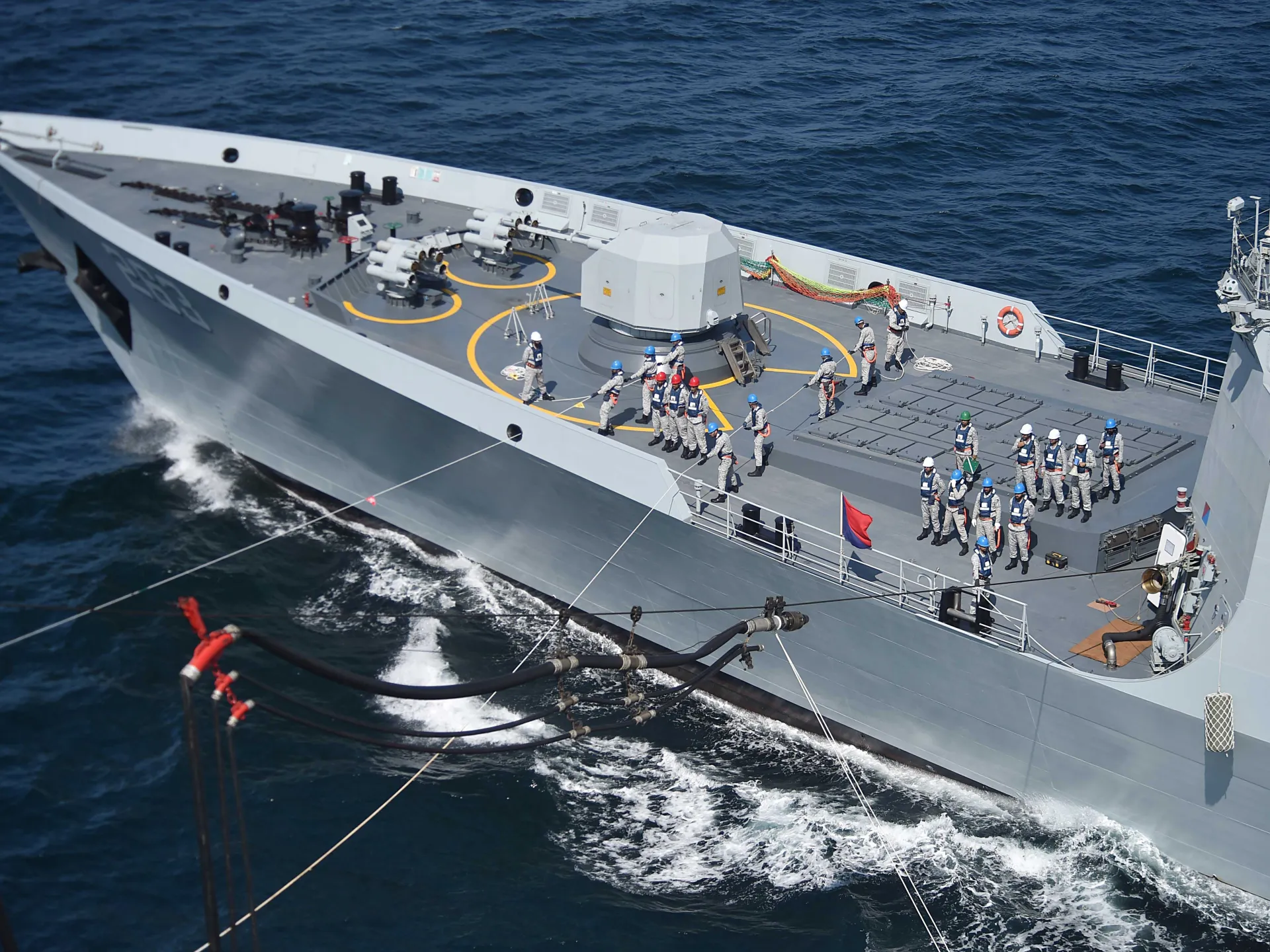
Indian and Pakistani naval vessels collided on Tuesday, setting off tit-for-tat accusations. Pakistan’s government summoned India’s top diplomat in Islamabad on Wednesday, mirroring action New Delhi had taken hours earlier when it summoned Pakistan’s charge d’affaires and lodged a protest of its own over the incident.
Recommended Stories
list of 4 itemsend of list
The collision is the first direct military encounter between the nuclear-armed neighbours since their four-day conflict in May 2025, when Indian air strikes and Pakistani retaliation brought both countries closer to full-scale war than at any point in decades.
So far, details of what happened remain disputed. Neither government has released video, track data or an independent account – and each statement places the blame on the other’s vessel.
But analysts say it underscored the risks of unintended incidents in the seas that could potentially escalate into broader crises, when India and Pakistan have few military and diplomatic mechanisms left in place to defuse tensions.
Two accounts
According to Pakistan’s Foreign Office statement issued on Wednesday evening, the navy has been conducting its biennial SEASPARK-26 exercise inside its exclusive economic zone since September 1 .
A country’s EEZ extends 200 nautical miles (370km) from its coast. Its territorial waters are only 12 nautical miles (22km) from the coast, with the rest of the EEZ in international waters. While vessels from other countries can pass through a nation’s EEZ in international waters unencumbered, they cannot exploit the waters economically: that right belongs only to the country whose EEZ it is.
Pakistan said that an Indian vessel, identified as the guided-missile destroyer INS Kolkata, had “repeatedly” tried to enter the exercise area since September 7 .
On September 15 , it said, Kolkata made a “dangerous” change of course that brought it into contact with a Pakistani vessel identified in local media as PNS Hunain, an offshore patrol vessel.
“Pakistan strongly rejects this belligerent Indian action,” the Pakistani Foreign Office said, calling it a violation of a 1991 bilateral agreement requiring warships to stay at least three nautical miles (5.5km, 3.4 miles) apart in international waters.
India’s Ministry of External Affairs said the warship was on “routine surveillance” in international waters when a Pakistani vessel approached at high speed and manoeuvred unsafely.
Neither government has named the vessels in its own on-record statement, and India has not confirmed or denied the Kolkata identification.
The two navies last collided in June 2011, when Pakistani frigate PNS Babur brushed against Indian frigate INS Godavari in the Gulf of Aden, while escorting a merchant vessel freed from Somali pirates.
Each side blamed the other then too. That row faded within weeks.
The risks
Retired Vice Admiral Ahmad Saeed of the Pakistan Navy said the pattern — two ships pressing close without a clear intent to collide — was familiar from Cold War-era “bumping” incidents between Soviet and US ships in the Black Sea.
But he argued that India and Pakistan are worse placed to manage similar encounters.
“There’s no bilateral Incidents at Sea agreement, the kind the US and USSR signed in 1972, and no navy-to-navy hotline,” Saeed told Al Jazeera. “Article 10 sets a distance, but it gives no manoeuvring rules and no procedure for investigating an incident afterwards. That gap is exactly why each side can just accuse the other.”
Article 10 of the 1991 confidence-building agreement between the two nations requires warships to stay at least three nautical miles (5.6km, 3.5 miles) apart in international waters.
Saeed said the greater risk was what might follow the collision: sharper tactics such as fire-control radar lock-ons or helicopter overflights and eventually “a contact with actual casualties.”
Muhammad Shareh Qazi, a Lahore-based security and maritime analyst, however, pointed to the same 1991 agreement, which he said requires 30 days’ written notice before a military exercise, as well as international collision regulations that apply to both countries as signatories to the UN maritime convention.
“If this collision really had the potential to escalate militarily, you’d have noticed by now,” Qazi said. “There’s a tool for that, called chaff, fired just above the bow or stern purely to signal you could escalate if needed. Nothing like that happened here.”
Both navies also have their own internal accountability channels, he added, with a captain found to have acted without authorisation facing a court martial process separate from any diplomatic protest.
On fishermen routinely detained for straying across the Sir Creek boundary, which is not demarcated between India and Pakistan further south, Qazi said the link to incidents further out at sea was indirect but real.
“Clear demarcation could help close those ambiguities over time, by reducing the ambiguity around where and how these interactions are expected to occur,” he added.
Saeed was more cautious about how contained an incident like this would remain.
“This hasn’t stayed quiet. Both governments went public with protests within a day of each other,” he said, adding that what made the moment riskier than 2011 was that “both publics are primed after last year’s conflict, which was not the case in 2011.”
Similar close-quarters confrontations have become more frequent between China and the Philippines in the South China Sea.
In the most recent flare-up, on July 24 , Philippine officials said a Chinese vessel came within about seven metres (23 feet) of a Philippine fisheries boat near Scarborough Shoal, the Philippine-claimed reef that China has controlled since 2012, and that Chinese coast guard ships fired water cannon at Philippine vessels.
Whether this week’s collision follows that pattern or fades like the 2011 incident depends less on the ships than on what comes next diplomatically, Qazi said.
“If, in the next 24 to 48 hours, an official statement suggests there was a genuine cause to manufacture an incident for the purpose of escalation, then yes, there may be a real possibility of this happening again,” he added.
The U.S. Navy’s newest stated requirements for its Collaborative Combat Aircraft (CCA) effort point toward a drone that sounds very much like an advanced uncrewed combat air vehicle (UCAV), rather than a smaller and less capable autonomous ‘loyal wingman’ intended to economically augment crewed fighters. Overall, the new requirements serve as a tacit admission that the Navy is still looking for the kind of drone that it previously explored with extreme promise in the X-47B and Unmanned Carrier-Launched Airborne Surveillance and Strike (UCLASS) program. The UCLASS requirements were abruptly shelved and replaced with an uncrewed carrier-based tanker effort, which resulted in the MQ-25 Stingray. This act was seen by some as one of the most controversial and puzzling procurement decisions in modern naval aviation history.
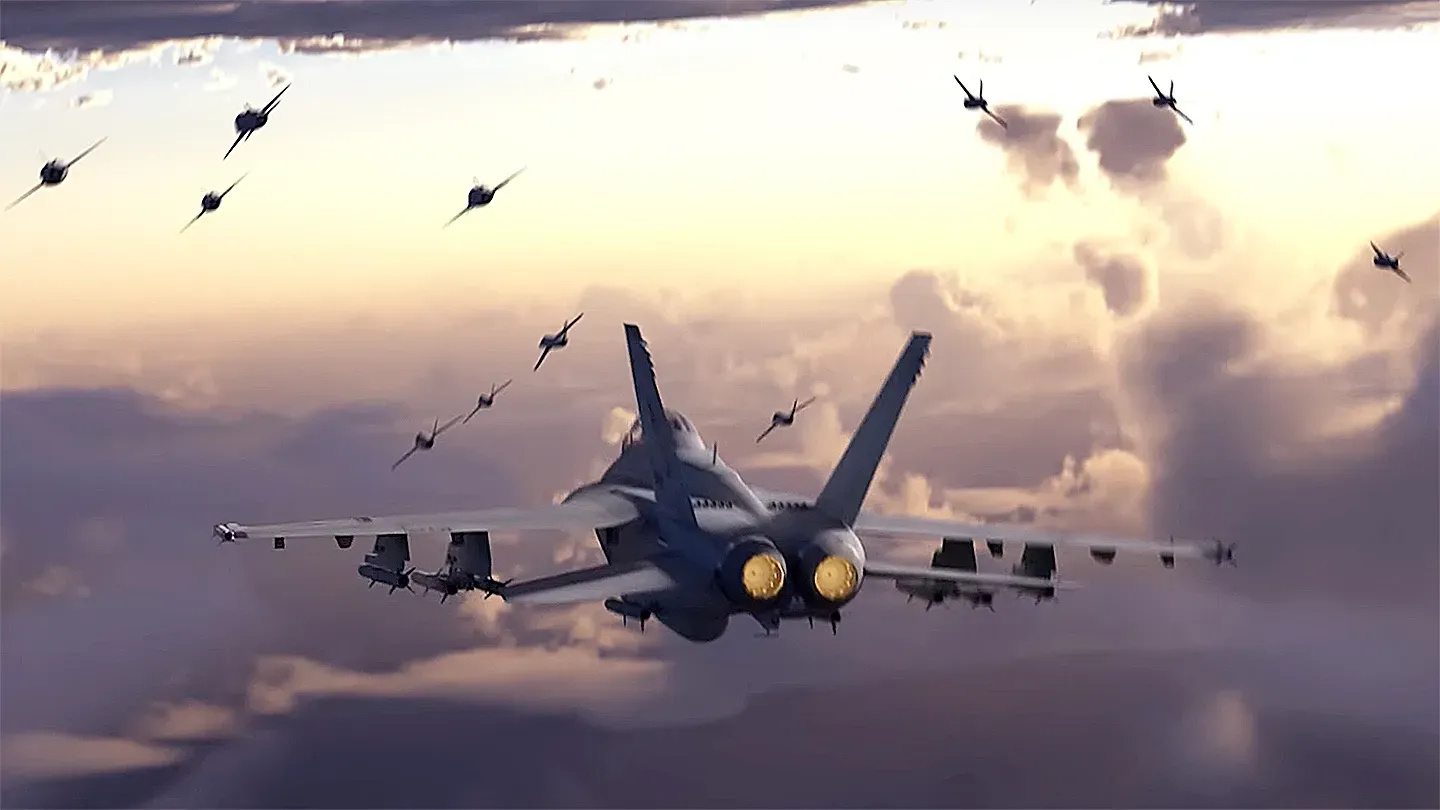
The traditional loyal wingman or CCA concept generally envisions uncrewed ‘fighter’ aircraft whose primary purpose is to complement crewed companions. This typically involves extending the crewed platform’s sensor reach, carrying additional weapons, and opening up a greatly expanded tactics playbook. An advanced UCAV, by contrast, is fundamentally an independent combat aircraft in its own right, designed to deliver weapons and other effects similar to what a crewed platform can provide without requiring a crew onboard or nearby. As such, it is more capable, survivable, and an overall ‘exquisite’ asset with a heavier payload, more capable of taking the place of a crewed aircraft in certain roles, rather than augmenting them, although there is nothing keeping them from working in a loyal wingman type role if required.
A rendering of a U.S. Navy Super Hornet working alongside smaller collaborative drones. Collins Aerospace/screencap
Yesterday, Naval Air Systems Command (NAVAIR) released a new Request for Information (RFI) that lays out an unusually demanding set of requirements for a CCA Increment 1 prototype. Among other things, the Navy wants an aircraft capable of operating from its aircraft carriers, carrying plentiful weapons, conducting strike missions in highly contested environments, and operating both independently and as part of a larger crewed-uncrewed team.
The combination of these requirements provides a much clearer picture of what the Navy wants its future carrier-based combat drones to be capable of.
Perhaps the most striking requirement concerns weapons carriage. The Navy says the Increment 1 CCA must have the ability to carry four externally mounted weapons weighing up to 2,500 pounds each throughout the target flight envelope and during carrier certification activities. That equates to a potential external weapons load of 10,000 pounds, although it should not necessarily be interpreted as the aircraft’s normal operational configuration. By way of comparison, a very heavily loaded F/A-18E/F Super Hornet might launch with close to 17,000 pounds of weapons and stores — though that is far from common.
An F/A-18F equipped with a uniquely massive weapons load, including no fewer than 10 1,000-pound GBU-32 JDAMs slung under its wings. All in, this stores load-out weighed roughly 16,750 pounds. U.S. Navy
Meanwhile, the kinds of drones that the U.S. Air Force is currently exploring under its own separate CCA Increment 1 effort, namely the General Atomics YFQ-42A Dark Merlin and Anduril YFQ-44A Fury, are air-to-air optimized. Their primary loadout is widely expected to be a pair of AIM-120 AMRAAM missiles, which is just a fraction of the Navy’s newly stated payload requirement.
A YFQ-44A Fury drone carrying an inert AIM-120 air-to-air missile during a flight test. U.S. Air Force
The RFI NAVAIR put out yesterday also specifically asks respondents to address internal weapons carriage, with both capacity and survivability among the factors the Navy will consider. Internal stores carriage would offer obvious advantages in reducing an aircraft’s radar signature and preserving aerodynamic performance.
The Navy also wants the aircraft to have a substantial combat radius while carrying its required weapons load, as well as the ability to spend at least 30 minutes on station while retaining sufficient fuel reserves to return to the carrier.
For a CCA, carrier operations add another layer of complexity. The aircraft must be capable of catapult launches and arrested landings from both Ford and Nimitz class carriers, while operating within existing carrier deck, elevator, hangar, and support constraints.
F/A-18E/Fs and F-35Cs seen on the deck of the Nimitz class supercarrier USS Theodore Roosevelt on July 10, 2026. Seaman Apprentice Tyler Harstad/U.S. Navy
Autonomy is similarly central to the concept. The Navy wants mission and flight autonomy that can support the aircraft from launch through recovery, along with the ability to incorporate third-party mission software. The prototype is also expected to demonstrate both individual and multi-aircraft autonomous operations. While crewed-uncrewed teaming is a fundamental part of the concept, the latest requirements make it clear that the aircraft will not depend on a crewed aircraft continuously supervising its actions.
The video below from Collins Aerospace offers a notional look at what crewed-uncrewed teaming involving carrier- and land-based CCA-type drones might look like in the future.
Collaborative Mission Autonomy
In terms of the survivability requirement, the Navy specifically wants the aircraft to operate in highly contested environments and is asking industry to provide approaches for assessing and managing survivability during collaborative operations. The consideration of internal weapons carriage is another indication that signature reduction and survivability are important design considerations, pointing to a low-observable (stealthy) platform.
All of this begins to blur the distinction between the Navy’s Increment 1 CCA plan and a traditional survivable UCAV concept.
That does not necessarily mean the Navy is abandoning the CCA concept entirely in favor of resurrecting the carrier-based UCAV concept. Rather, it suggests that the distinction between the two becomes blurred as requirements overlap. There also remains the strong possibility (or more likely probability) that the Navy will seek to explore CCA designs closer to what the Air Force, as well as the U.S. Marine Corps, are pursuing. This could potentially include development of carrier-based versions of one or more of those designs under a future increment.
A rendering depicting General Atomics carrier-based Gambit 5 drones operating from a British Queen Elizabeth class carrier. General Atomics
An earlier NAVAIR sources-sought notice released in July outlined an expansive vision for future carrier-based uncrewed aircraft covering missions including surface warfare; strike warfare; anti-submarine warfare; air warfare; electronic warfare; intelligence, surveillance, reconnaissance and targeting (ISR&T); mobility; and logistics. That notice also pointed toward aircraft capable of attacking targets at least 1,000 nautical miles from the carrier without requiring aerial refueling, while leaving open the possibility of extending that reach with tankers.
The mission sets as defined in the earlier RFI from July 2026. The acronyms JFC and CVW here refer to the joint force commander and the carrier air wing, respectively. U.S. Navy
Intriguingly, the new RFI does not include an explicit maximum range target, but based on the payload requirements alone, this would be very considerable, reflecting the Navy’s concerns about fighting a future conflict across the vast distances of the Pacific. Traditional advanced UCAVs usually have a combat radius measured in thousands of miles, not hundreds, far exceeding the reach of their crewed fighter counterparts.
Whatever the possible range target, the planned weapons load also points to a substantial airframe. Indeed, the deck-space requirement outlined in the RFI is relevant here. The CCA’s “spot factor” cannot exceed that of an existing fourth-generation fighter, meaning that it could potentially be as large as an F/A-18E/F.
Otherwise, however, the latest CCA Increment 1 RFI is considerably more concrete.
The Navy wants a first flight of a prototype within 24 months of a contract award and carrier certification during a three-year development effort. It also wants a path toward an affordability target of around $30 million per aircraft. This kind of price point would put it at the top end of the CCA concepts we have seen so far, and is fairly ambitious for a higher-end UCAV.
Navy officials said in 2024 that the CCA’s unit cost target was around $15 million, reflecting the idea that the aircraft would be sufficiently inexpensive to be expendable under some circumstances. The new RFI instead asks industry to outline a path toward an affordability target of $30 million per aircraft. That is still a fraction of the cost of a modern carrier-based fighter, but it suggests the Navy is willing to pay considerably more for an aircraft with substantially greater weapons capacity, range, autonomy, and survivability.
Concept artwork showing Boeing MQ-28 Ghost Bat CCAs alongside a Super Hornet. Boeing
As to the companies that might respond to the RFI, in August of last year, the Navy confirmed that Anduril, Boeing, General Atomics, and Northrop Grumman were all on contract for “conceptual” CCA designs. At that time, the service also said Lockheed Martin had been hired to work on a common control architecture for the drones. Lockheed Martin is already the prime contractor for the control stations and associated software the service is integrating onto its carriers now to support the MQ-25.
The new RFI, however, marks a shift from the conceptual studies described last year toward a specific prototype effort. The Navy is seeking industry input as it shapes the acquisition strategy, with responses due September 18.
In the past, the Navy has said it is aiming for the total makeup of carrier air wings to eventually be 60 percent or more uncrewed, although the precise balance is still to be determined and will certainly be informed by the lessons of Navy CCA Increment 1. Exactly how the CCA might fit in with the Navy’s sixth-generation crewed fighter – known as F/A-XX – is another intriguing prospect, but would clearly be optimized to work alongside that platform.
Now, back to the Navy’s earlier effort to develop a high-end, stealthy, carrier-based UCAV capability. Northrop Grumman built two X-47B demonstrators for that program, both of which underwent extensive flight testing, including carrier operations and aerial refueling. The aircraft flew from 2011 for around half a decade. As of 2022, both X-47Bs had been earmarked for eventual public display at museums.
The two X-47Bs together. Northrop Grumman
The two X-47Bs had offered far more than a glimpse of what a carrier-based UCAV capability might look like, and the base design was set to evolve into an operational type. These were large, stealthy UCAVs with thousands of pounds of payload and endurance that far outstripped crewed naval fighter aircraft. The follow-on UCLASS program aimed to see the capabilities the X-47 demonstrated put into operation via a new aircraft procurement effort. However, it transformed into the radically different, less ambitious, tanker-focused Carrier-Based Aerial-Refueling System (CBARS) program in the mid-2010s. This, as noted, led to the MQ-25 Stingray.
To this day, the cancellation of UCLASS remains a very sore spot and is widely seen as a nearsighted and even reckless decision. This mirrored earlier moves by the USAF, which had demonstrated how revolutionary UCAV capabilities could be, only to entirely walk away from the concept. In fact, that service went even further, appearing to erase those developments from recent memory. You can read all about this bizarre and troubling inflection point in American air power history and the glaring questions surrounding it in this past feature.
MQ-25 T-1 seen during deck handling testing aboard the USS George H.W. Bush. U.S. Navy
Fast forward to today, and the Navy is getting the MQ-25, which is primarily a tanker, but clearly, that was not the only mission set that influenced its exotic design.In fact, these Navy requirements could open the door for the Stingray platform to potentially fulfill at least parts of the Navy uncrewed combat drone role in a ‘cleaned-up,’ stealthier configuration, something we have explored in depth in the past.
Overall, the takeaway here is that the Navy’s latest CCA requirements raise the intriguing possibility that its earlier UCAV ambitions are resurfacing, this time under the CCA banner. This is happening as China is moving very quickly with its own stealthy UCAVs, a number of which are in testing, and one of which is very mature and is navalized for shipboard operations – the GJ-11 Sharp Sword. The GJ-11 sounds very similar to the Navy’s requirements wish list, including its ability to act independently and teamed with crewed counterparts, as well as its general size and need for survivability.
While an RFI only represents an early part of the contracting process, in practical terms, it looks like the Navy is asking whether industry can finally make good on the past promise of a U.S. Navy UCAV.