Niger mutiny exposes growing reliance on Russia | Conflict News
Niamey, Niger – The failed mutiny in Niger has shown the extent to which President Abdourahamane Tiani now relies on Russian support when his government comes under threat, including from within his own security forces.
On August 29, soldiers calling themselves the Armed Forces for the Restoration of the Homeland attacked Air Base 101 at Niamey’s international airport, the presidential palace and the national broadcaster in a coordinated assault. A statement circulated during the fighting falsely declared that Tchiani had been removed.
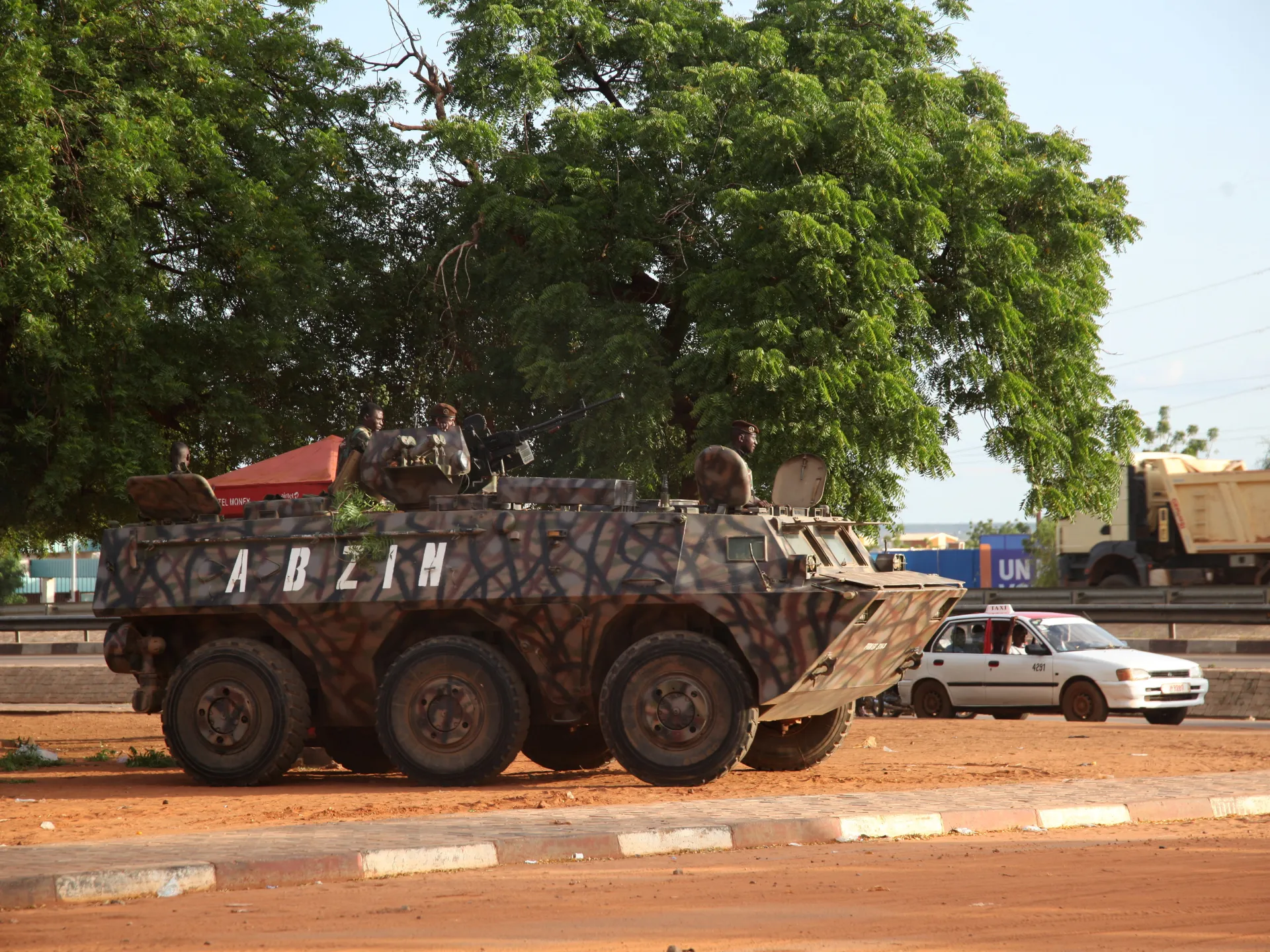
Loyalist presidential guard units held the palace overnight, while about 200 Russian Africa Corps soldiers, backed by drones and reportedly reinforced from Mali and Libya, helped retake the airbase by evening. At least 27 people were killed, and about 100 mutineers were arrested.
The mutiny showed who Tchiani could rely on when his own security forces turned against him. Nigerien troops held the presidential palace, while Russian personnel and equipment helped loyalist forces retake the key airbase.
A fractured army
Speaking to Al Jazeera, Ryan Cummings, head analyst at Signal Risk, said the attempted mutiny was rooted in grievances that had been building inside the military.
“The insurrection indicates discord within the Nigerien armed forces,” he said. “This stems from multiple sources. The foremost pertains to significant casualties being inflicted against the country’s military by an array of non-state armed actors which appear to be as well equipped, if not better, than their military counterparts.”
Cummings pointed to a widening gap between soldiers fighting on the front lines and those protecting the country’s political leadership.
“Other factors include discrepancies in deployment and remuneration between low- to middle-ranking officers, who led the attempted mutiny and putsch, versus their more senior counterparts, such as the presidential guard who thwarted the coup attempt,” he said.
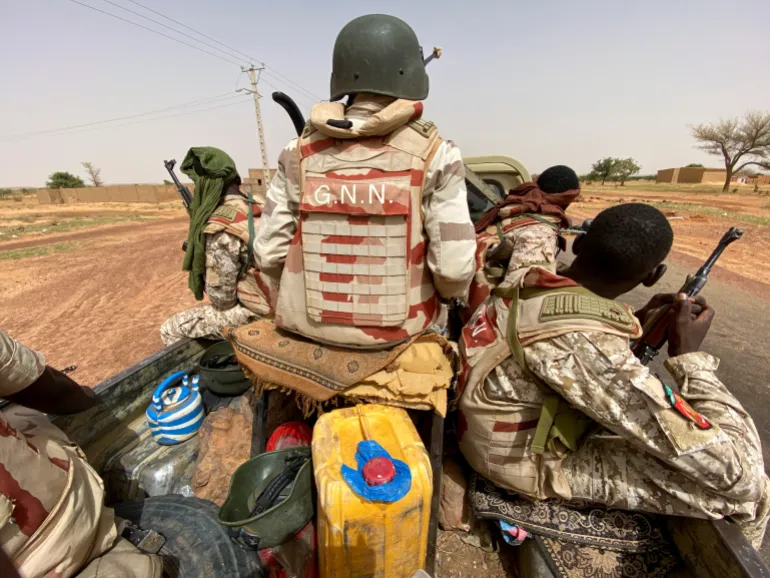
“Junior to middle-ranking soldiers are generally deployed to conflict front lines, where they face well-equipped and increasingly professional militant units that are capable of overrunning their positions,” Cummings noted. “Conversely, more senior military units, most notably the presidential guard, are deployed to garrisoned cities such as Niamey and Agadez, where the threat of engagement is generally lower. Despite facing a lower risk profile, senior military units generally enjoy significantly higher remuneration than their low- to middle-rank counterparts.”
The mutiny exposed the gap between soldiers fighting on the front lines and those serving in better-protected units in the capital.
Russia’s role grows
Tchiani expelled French and American troops in 2023 and 2024, and troops from Russia’s Africa Corps entered Niger as the military government sought to replace Western support.
But the mutiny showed that Moscow’s role now goes beyond helping Niger fight armed groups.
When soldiers inside Niger’s own military threatened the government, Russian personnel and equipment helped loyalist forces retake Air Base 101. The episode showed that Russia’s role in Niger now extends beyond the fight against armed groups to helping protect the military government itself.
That is a significant shift from how the partnership was initially presented to Nigeriens: as a way to strengthen the fight against armed groups after the departure of Western forces.
For Tchiani, that reliance on Moscow comes as he faces continued attacks by armed groups and growing discontent among soldiers fighting them.
A test for the AES alliance
The response from Niger’s fellow military leaders also raised questions about how much help the Alliance of Sahel States (AES) can provide when one of its members is under serious pressure.
According to Romane Dideberg, a research analyst at Chatham House’s Africa Programme, the response was one of the most revealing aspects of the rebellion.
“What the security response says about the cohesion of the Alliance of Sahel States might be one of the most telling elements of the mutiny,” she said. “As with the April attacks in Mali, the two other Sahelian juntas remained largely unreactive during this existential moment for the Nigerien junta, reacting only once the mutiny was neutralised.”
“This partly reflects the operational shortcomings of the confederation’s security architecture, but also, more critically, the sensitive relations between Tchiani’s junta and his Malian and Burkinabe counterparts,” she said.
Dideberg said Tchiani was rumoured not to have reached out to Mali. She also pointed to a generational and cultural gap between Tchiani and his Sahelian allies, saying his government showed more continuity with the former establishment while a different rationale had underpinned the coup that brought him to power.
The mutiny tested how far the three miltary governments were prepared, and able, to come to one another’s aid.
The UAE allegations
Alongside the Russian role, allegations have emerged that French and Emirati interests were connected to the mutiny, amid wider friction over Niger’s Trans-Saharan Gas Pipeline project.
The allegations have not been independently substantiated.
Roger Gabriel, a Nigerien army captain and commander of the elite 1st Parachute Battalion, appeared on state television on September 4 and alleged that several people, including associates of deposed President Mohamed Bazoum and officers from Chad, Benin and the Ivory Coast, were behind the attack.
He also said people from the United Arab Emirates had called and urged him to join the mutiny.
The claims are difficult to independently verify, but they have put fresh attention on the UAE’s growing presence in the Sahel.
Speaking to Al Jazeera, Hossamaldeen Ibrahim, an Africa analyst at the Bloomsbury Intelligence and Security Institute (BISI), said the possibility of Emirati involvement “cannot be dismissed” given the information circulating and the UAE’s broader regional activity.
“The UAE has been expanding its influence across the Sahel, from the western states to Sudan, primarily through official partnerships with military regimes, but also via informal networks, resource extraction, notably gold, and ties to non-state actors including separatist groups when needed,” he said.
“Its approach is pragmatic and dual-track: it prioritises formal state-level relations first, then pivots to alternative channels if the official path falters,” Ibrahim said.
“All of this is deeply political and strategic, interlinked with ambitions to secure leverage over Mediterranean and Red Sea routes. The growing friction with Algeria underscores how these moves are widely read in the region as an effort to reshape the balance of influence, making any allegations around the recent events in Niger worth careful scrutiny rather than either exaggeration or dismissal,” he said.
For now, the allegations remain allegations.
Tchiani survived the mutiny, but the failed attempt to remove him exposed strains inside his military, highlighted his growing reliance on Russia, and raised questions about how much help his closest regional allies can provide when he needs it.
For Dideberg, the implications go beyond the failed attempt to unseat Tchiani.
“This mutiny calls the effectiveness, but also, to an extent, the sincerity, of the mutual assistance pact into question,” she said.

![Nigerien soldiers patrol outside the town of Ouallam, Niger [Reuters]](https://i0.wp.com/www.aljazeera.com/wp-content/uploads/2022/01/2021-10-08T050022Z_1003423593_RC22FO9GB76E_RTRMADP_3_AFRICA-ISLAMISTS-SAHEL-LEADERS.jpg?w=640&ssl=1)