mural

Ziggy Marley on singing about Bob Marley, Hollywood Bowl show and more

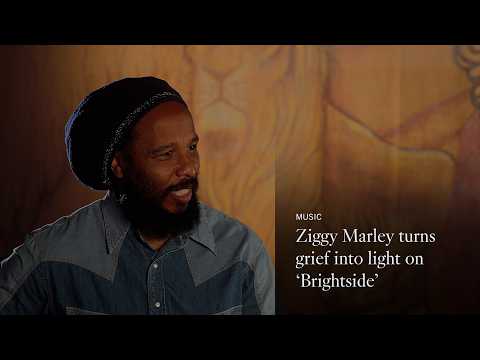
It’s Friday afternoon in North Hollywood and Ziggy Marley is perched on a stool inside his newly built Rebel Lion Studio, tucked in one of the neighborhood’s creative enclaves.

The nine-time Grammy winner is surrounded by a collection of lion figurines, guitars, traditional hand drums and a piano. Along the walls hang two replicas of backdrops his legendary father, Bob Marley, used on tour in the 1970s. The murals, depicting Rastafari icons and Haile Selassie I and Marcus Garvey, were featured in the 2024 biopic “Bob Marley: One Love.”

“These are what we used as the backdrop for the concert scenes. Them spiritual to me,” Marley says in patois as the smell of palo santo dances around the rehearsal space.

Music has been both an inheritance and lifelong pursuit for Marley. From sitting in studio sessions with his father as a child to building a five-decade career of his own, he has remained a curious student of the craft, one willing to challenge convention in search of a deeper meaning. That spirit is evident on “Brightside,” his ninth solo album, which was released on vinyl on April 18 (Record Store Day) and May 1 on streaming.

Rather than recording the eight-track project in 440 Hz, the standard tuning frequency for most modern music, he opted for 432 Hz, a tuning some musicians and theorists believe creates a warmer, more meditative listening experience. He also slowed down his songwriting process, giving each lyric room to carry its message of hope through turbulent times. The album, which may be his most personal yet, also features “Many Mourn for Bob,” the first song he has written directly about his late father.

“I think it shows the next stage that I probably am in,” says Marley, adding that he felt connected to his father on a spiritual level. “We took another step in the relationship, to another place that it’s never been before.”

Ziggy Marley is bringing his "Brightside" tour to the Hollywood Bowl on June 21 alongside reggae star Burning Spear.

Ziggy Marley is bringing his “Brightside” tour to the Hollywood Bowl on June 21 alongside reggae star Burning Spear.

(Dania Maxwell / For The Times)

He adds, “When I was doing the song, it kind of came to me like this song could’ve been my father’s song. It could’ve been a song that he wrote.”

The reflective nature of “Brightside” arrives at another pivotal time in Marley’s career. This year marks the 20th anniversary of “Love Is My Religion,” the Grammy-winning album that launched his solo career and crystallized a personal philosophy he still carries today. He is also set to release his sixth children’s book, “True to Myself,” in September.

As we wrap up our conversation, Marley has only a few minutes before Rebel Lion Studio shifts back into work mode. Within minutes, bandmates, background singers and production crew members begin funneling into the space, hauling in stacks of equipment as promotion and preparations continue the “Brightside” tour, which stops at the Hollywood Bowl on June 21.

This interview has been lightly edited for length and clarity.

You recorded your latest album, “Brightside,” here at Rebel Lion Studio, which you designed and built from the ground up. Can you take me back to the beginning of that process and why you wanted to do it?

I grew up around my father and my mother as growing musicians trying to succeed and there was one thing I kept hearing over and over throughout my life: independence. Their whole mission was to be independent. I saw them work and I saw my father build a studio. I saw him have a space where he can do more music and control his own time. That was a dream of mine for a long time, ever since I started doing music because usually we use other people’s studios. I couldn’t have this in my house. It’s too much. It’s a dream come true.

We’re surrounded by two beautiful murals. Is there a particular item that is personal to you?

The murals are replicas of my father’s backdrops that they used. The original artwork is by Neville Garrick, but he helped us re-create them for the Bob Marley movie. These are the murals we used as the backdrop for the concert scenes. They are spiritual to me cause that’s Haile Selassie and Marcus Garvey, two very important beings for us. Inspirational.

On "Brightside," Ziggy Marley dedicated a song to his father, Bob Marley, for the first time in his career.

On “Brightside,” Ziggy Marley dedicated a song to his father, Bob Marley, for the first time in his career.

(Dania Maxwell / For The Times)

“Brightside” is your ninth solo album. What mindset were you in emotionally and spiritually when you started working on it?

I never thought about making an album, I was just writing songs. You just tap into things in your subconscious that are waiting to become music, I feel like. Then when the time comes for writing songs, the time comes. It’s like a season. Like you have blueberry or orange season. So there’s a season for me when I write songs. Then you say, “All right, let’s make an album then.” But you don’t think about an album before. It’s just an expression or a feeling just to make music, not for any reason but to make it. It happened over a period of years. Ideas and experiences that eventually come out. But closer to the time I [made] the album, I remember writing some of the later songs like “Why Let the World.” It was a song that I wrote because I was feeling down and everything that was happening in the world and the country. Just so much negativity and I just felt like I needed to take a break from it. To recharge yourself. We cannot fight every day. We need to take a break and then get back to it. I needed to teach myself to take some time. It was more of a mental thing than an emotional thing. Stuff I deal with my father, personal life and stuff with my spirituality and my faith. So there’s a lot of me in this record.

“Many Mourn for Bob” is the first song you’ve explicitly written about your father. Your brother, Stephen, is also on the vocals. What surprised you emotionally once that song was finished?

I’m not sure I thought about it like that. The experience of expressing that emotion, it’s a spiritual experience. I think it shows the next stage that I probably am in and even my relationship with my father on that spiritual level. It’s a different place. We took another step in the relationship, to another place that it’s never been before. When I was doing the song, it kind of came to me like this song could’ve been my father’s song. It could’ve been a song that he wrote. That’s how I felt about it. This is partly his song. It’s me and him making this song. This song is his song too.

How has your relationship with grief changed over the years?

It’s more of a comrade, understanding, empathy and having the maturity and the experience to understand what he went through as a man, as a human being. I think that’s what it is, really. A better understanding of what he went through, not the glory. The pain, the mental and emotional state. You’re more than just an idol. You’re more than just a legend. You’re more than just a father. To go deeper than that, so that’s the next level.

Yeah, the skit you used of him saying “I’m just a man from the ghetto” on the song really summarizes that.

That’s the real him. That’s him right there. Even in the tone of his voice, you can hear the real Robert coming out.

Another standout song from the album is “Racism Is a Killa.” One thing that you do well is having a heavy topic, but finding a way to still make it feel hopeful and joyful. Why was it important for you to approach the track this way rather than from a place of anger, heaviness or sounding preachy?

I think it started out preachy and angry, but over time, it kind of evolved and I kind of evolved too ‘cause my own evolution is represented in the music. And you know something, doing that song helped me evolve because I had to think about it differently without the anger. The song made me do that. Like how else can I approach this? It’s inspiration that causes these things. It’s not an intellectual thing. I didn’t do that intellectually. Like over time, something just started coming out of me. I never really thought about it before, but I can see it now.

In the video, which features your daughter, Zuri, you referred to the condition as “Racismosis” in the video and sang about how it can be cured.

It’s kind of like a sickness, a disease. It’s a virus. We can minimize the virus and stop the disease. It’s true. Racism is a killa. This virus can kill ya. Literally kill ya. Spirtually kill ya. Emotionally kill ya. Mentally kill ya. It kill ya in different ways. It kills the victim and it kills the person perpetrating it. It’s killing everyone, but we can cure it though. It starts with the children. I have a friend of mine who said, “Yo, my little son loves this song. He doesn’t want to stop. He says ‘Put on “Racism is a Killa.”’ So that’s where the antidote is starting. The minds of the children. The music with a conscious message gives them the right consciousness that they grow up with. That is how we take our time and lower the spread of the virus.

You recently released an alternate version for “Racism Is a Killa” with Big Boi. How did that collaboration come together and what excited you about working with him?

I’ve loved Big Boi and Outkast from a long time ago. He’s a legend and a strong voice. There’s different layers to it and I feel like Big Boi took it to that other layer. So yeah, we just love Big Boi and I’m going to jump on something he does. [Laughs]

I’d be remiss if I didn’t ask your approach for your album and how you swapped the typical 440 Hz for 432 Hz. Do you remember the first time you heard the music played back that way?

It’s a long journey because for most of my life in music, I’ve tried to be a student. I’ve tried to keep an open mind and learn more and more. With this album, there’s an inspirational side of music and that’s where I lean into most of the time, but as I grew up, I started to understand there’s also a science too. It’s also mathematics. The universe, it’s all mathematics and science, and I shouldn’t shun the science of music just because I think the inspiration is all it should be. I think a part of that was learning that for myself and opening up and saying, “Yo, let me put some science into this.” Frequency. What does frequency do to people? Frequency affects people. Frequency is a weapon. It’s a tool. I’m sure the army has some kind of frequency thing. So frequency is powerful. I wanted to try something different anyway. I want to be different. I want my frequency to be different from the majority of frequencies that’s being played out there, because it’s fun for me to be different.

When I was working on the demos, I was like “Let me try this 432 Hz thing” and I like how it feels for me personally, how I sing on the frequencies. It resonates differently and makes me feel different. We did it and it felt good, and we did it live, and from my point of view, I felt a different energy with the audience too. So all of those experiments led me to the final conclusion to say, “Yeah, let me do the record in 432.” It’s really nice vibes, which the world needs a different frequency. We can use it.

This year marks the 20th anniversary of “Love Is My Religion,” your first solo Grammy-winning album. When you think back to that era of your life, who was Ziggy back then?

A lot was changing because I moved to L.A. during that time.

You got married around that time too, right?

Yeah. I don’t really fight change. I just try to navigate them and figure them out cause sometimes change is hard. There was a lot of change living here, moving around, trying to find a place, music, but then it’s like we are continuously updating ourselves. I’m continually updating. You know how you update your OS. I’m updating my OS. My operating system is being updated throughout my experience in life. There’s always something else out there for me to evolve to. So during that period of my life, “Love Is My Religion” came to me when someone asked me, “What religion are you?” And I just said “Love is my religion.” I never thought about it before, never contemplated it, never even thought of those words together before in my life, and they just came out to me that day. So the album represents a time in my life when I realized there’s a spiritual awakening that I had. “Love Is My Religion” is a spiritual awakening. That’s my thing. That’s who I am. That’s why it’s a milestone.

Ziggy Marley at Rebel Lion Studio.

“If you think you’re going to change this world with music and you’re trying to send a message out there, you have to speak to children,” Ziggy Marley says.

(Dania Maxwell / For The Times)

You’re kicking off the “Brightside” tour this month, which includes a stop at the Hollywood Bowl. What are you most excited about when it comes to bringing this album to people for the first time live?

I’m excited about playing the music. I think it’s about the music. These new songs, they vibrate very highly for me and I’m excited about experiencing and expressing that. And also kind of not doing it for the audience. I don’t want to do it for the audience. I want the audience to experience what I’m experiencing, what I’m expressing. I want them to feel me. I don’t want them to be like “Hey look at me.” [Laughs] There’s still connectivity going on, but I want them to feel the songs the real way. That’s what I’m excited about for people to feel it the way that I feel it.

You even posted the lyrics and told fans to get to practicing, so they can really understand the message.

Yeah. Just reading them for me, I really like the writing I did on this. I also took some time with this too. I was saying to someone that I developed a deeper relationship with the lyrics and the words than I did before. My relationship with the words here are very mature. I feel good about it. That’s why I want people to know the words because words are very important. Words are very important. If you know the words you get a deeper understanding of what I’m talking about and what I’m feeling.

Jamaican reggae musician Ziggy Marley poses for a portrait at his studio

After nearly 50 years of making music, Ziggy Marley built his own studio in North Hollywood called Rebel Lion Studio. He plans to turn it into a multipurpose creative space.

(Dania Maxwell / For The Times)

Look on the bright side is a phrase that people say often, but what do those words mean to you right now?

Sometimes we can get in a place [where] we can’t see the other side of things because we’re so caught up in that one place. Like the cliché, there’s two sides to a story, ya know? The universe is always yin and yang, but there’s always another side of things. But I feel like the way we are being programmed in a way through media and everything, it’s like there’s only one side. Everything is like this, there’s nothing else going on over there that we need to see, we only need to see this. This is all that’s going on in the world. There’s nothing good, there’s nothing nice, there’s no good people, there’s no love. So it’s a realization too. A realization that there’s the other side. Never get to that place where we think it’s just that side alone because we get so much of it. It’s a reminder, I think, for us like “Come on guys.” The thing about it too, sometimes you can feel like — even for me — some people say, “Hey look on the bright side,” some people find that like “Why are you happy? Why you so chirpy?” [Laughs]

That’s true.

I’m proud that I’m on the bright side. I’m living on the bright side, I don’t care. You don’t like me because I’m living on the bright side? You want me to be like you, you want me just live on the dark side with you, right? So it’s like a proudness of being positive and having that outlook in life, and not feeling like you have to [fall to] peer pressure. More positivity in life, not just the negativity. I’m confident in that too. So it’s kind of like that too, you know, like being proud, lifting up that side of me. Yeah, I’m happy to be living on the bright side.


Source link

Artist suing FIFA over destruction of Dallas whale mural before World Cup

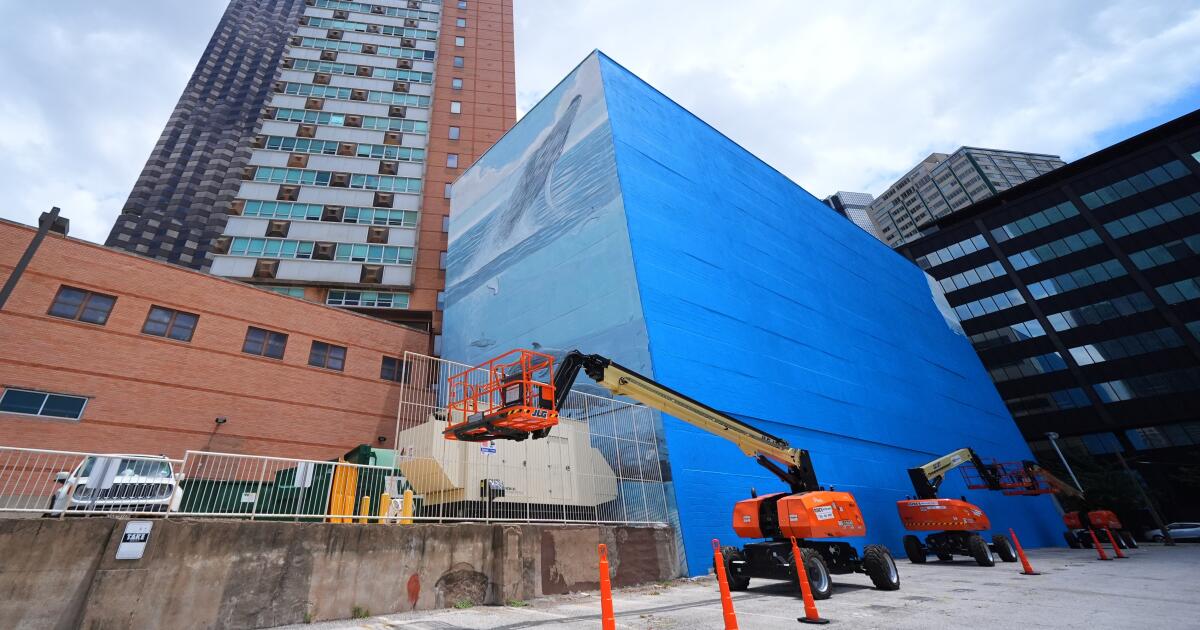
The artist who painted a giant mural on a building in downtown Dallas of life-sized swimming whales has filed a $25 million lawsuit against soccer’s international governing body and others, saying they illegally painted over his work to promote the city’s upcoming World Cup matches.

The artist Wyland says he hand-painted the sprawling mural that covered roughly 17,000 square feet across two of the building’s walls.

The mural stood for nearly three decades before workers began painting over it last month, causing an uproar among residents who admired the mural’s grand scale and message of ocean conservation.

The area’s World Cup organizing committee said in a statement that, in place of Wyland’s mural, new artwork is planned “that captures this current historical moment and reflects the energy, unity, and global spirit surrounding the World Cup 2026.” It said a portion of Wyland’s mural would be preserved.

Wyland filed suit Monday in U.S District Court in Dallas saying that World Cup organizers, along with the building’s owner and management company, painted over his mural without his consent or even notifying him. He says their actions violated a 1990 federal law passed to protect visual artists from destruction of publicly displayed works.

Wyland is seeking at least $25 million in damages. His lawsuit says world soccer’s governing body, FIFA, and other defendants “hastily and irrevocably destroyed a civic landmark” to promote the World Cup.

“Though FIFA claims they were working to develop art for the host city, in truth, they defaced an historic fixture of the host city,” the artist’s lawsuit says.

A FIFA spokesperson said Tuesday the federation “has no involvement in this whatsoever” and referred a reporter to the tournament’s local organizing committee.

A spokesperson for the North Texas FWC Organizing Committee declined to comment. The committee isn’t named as a defendant in the lawsuit.

A spokesperson for Slate Asset Management, which manages the building where the mural was painted over, said in a statement that local World Cup organizers asked Slate in March to donate the mural space for “a new public art installation.”

“Slate is not being compensated in any way for the use of the wall space and was told by the local groups that Mr. Wyland had been notified,” the management company’s spokesperson said in an email.

Dallas is hosting more World Cup matches than any of the other sites in the event co-hosted by the U.S., Canada and Mexico, with nine matches set to be played at AT&T Stadium in suburban Arlington, home of the Dallas Cowboys.

Wyland’s Dallas mural, titled “Whaling Wall 82,” was finished in 1999 and is among more than 100 similar murals known as Whaling Walls the artist painted around the world to promote the conservation of ocean life.

An online petition protesting the mural’s destruction and calling for protecting of public artwork in Dallas has received more than 2,600 signatures.

Wyland’s lawsuit alleges violations of the Visual Artists Rights Act, a 1990 federal law that protects artwork of “recognized stature” even if someone else owns the physical artwork.

A judge cited that law in 2018 when he ordered a property owner to pay a group of New York graffiti artists $6.7 million for whitewashing dozens of their spray-painted murals on buildings that once housed a factory in Queens. The ruling was upheld on appeal.

Bynum writes for the Associated Press. Bynum reported from Savannah, Ga.
Source link

Artists, community welcome World Cup to Inglewood with murals and more

A lot has changed since Jacori Perry attended Morningside High School.

Perry is now a renowned artist who goes by the names Mr. Ace and AiseBorn.

The school is now known as Inglewood High School United.

And the lecture hall on that campus now features a large, ornate mural of a soccer ball being grasped by the hands of two people — freshly painted by the 2004 Morningside graduate as the city of Inglewood prepares to host eight World Cup games at SoFi Stadium starting next month.

A man brushes paint onto a mural while harnessed to a lift above the ground.

Local artist Mr. Ace works on his mural at Inglewood High School United on May 11. The artist, whose real name is Jacori Perry, attended the school when it was known as Morningside High more than two decades ago.

(Eric Thayer / Los Angeles Times)

“If you told me that I would be back here painting one of the walls on this campus when I was in high school, I don’t think that I necessarily would have foreseen it,” Mr. Ace said as he put the finishing touches on his mural last week. “So I’m a little in amazement about just the way life works in that sense.”

He was one of several Los Angeles-based artists to participate in a Road to World Cup Community Day last month at Inglewood High United. Many of the artists — including Juan Pablo Reyes (“JP murals”), Michelle Ruby Guerrero (“Mr. B Baby”) and Angel Acordagoitia — sketched designs on portable panels (12-feet by 8-feet) and picnic tables for community members to paint.

The picnic tables will remain at the high school in front of Mr. Ace’s mural. The mobile murals will be placed throughout LAX to welcome visitors arriving for the World Cup.

Kathryn Schloessman, chief executive of the Los Angeles World Cup 2026 Host Committee, said in a news release that the event was “just one example of how the energy of the World Cup can be felt in neighborhoods across our region.”

“Students, artists, and volunteers came together to create a work of art that will live on well beyond the end of the tournament,” Schloessman said. “It’s a reflection of the creativity, diversity, and community pride that makes our region so special as we prepare to host the world for FIFA World Cup 2026.”

Community members were encouraged to take part in the painting process, no matter their skill level.

“We made it easy enough for people that have zero experience to a proficient level of experience, for them to all be involved,” said Reyes, who designed and helped paint two mural panels and three tables. “We did the sketch, and then I tried to dab a little bit of color — whatever color is supposed to be there, I dabbed a little bit of color right there, so they would have a guide. …

People stand on a scaffold and on the ground while painting a mural on a large panel.

Students and community members help paint a mural panel during a Road to World Cup Community Day event May 2 at Inglewood High School.

(Dawn M. Burkes / Los Angeles Times)

“I was right there, kind of supervising, making sure that everything went as planned. And if anybody has questions, they’re more than welcome to let me know about them. But, yeah, it’s pretty easy for them to kind of be involved and feel that sense of ownership and have a sense of pride that, ‘Yeah, I was part of that mural-creation process.’ It’s a rich experience for them.”

Acordagoitia sketched several tabletop designs for the public to paint at the event.

“They did great,” he said of the community members. “They helped a lot. They were asking questions. They got all the other colors correct. So, yeah, they were excited. A lot of kids were excited to see the live painting, because now kids are used to being on their phones. So that was a great experience for them.”

Acordagoitia also opted to paint a mural panel on his own because “it was a little more technical,” involving portraits of his 8-year-old son, a nephew and a friend.

“I wanted to focus more on the youth because that’s really our future,” he said. “So that’s, that’s the main thing about the mural, just about the kids, soccer, culture, community. It’s exciting for me, because I grew up playing soccer and to include soccer with art, it’s just a dream come true.”

Guerrero said “the community was a big help in filling in all the background colors that I need in order to build the detail and layers” on the two mural panels she designed.

“My whole style is based on culture. And I think that there’s a connection there with the World Cup and how I feel like it brings together all the culture and just, like, celebration,” Guerrero said. “It kind of goes hand in hand with the type of work I do, because my stuff is really festive, celebrating culture. And just as an L.A.-based artist, I think the collaboration made sense.”

The four artists also took part in another Road to World Cup Community Day in downtown L.A. at Gloria Molina Grand Park on March 14. At that event, the artists sketched designs on large sculptures shaped like soccer balls and on an oversized picnic table, also for community members to paint.

While Mr. Ace opted to paint his permanent mural at Inglewood High School United on his own, he was sure to include the community theme into his work.

“The idea was really centered around just creating something that was community-based — something that represented the World Cup but also represented some sense of community,” he said. “And so what I did was try to create something that was symbolic, very direct in terms of its relationship to soccer and figuring out through that how to create something simple that [brings] into that a sense of community. And that’s how I landed on the two hands holding the soccer ball.”

A man stands in a lift and paints on a wall with blue paint as part of a mural with an ornate design.

Local artist Mr. Ace works on his World Cup-themed mural at Inglewood High School United on May 11.

(Eric Thayer / Los Angeles Times)

Back when he was a student on that campus, Mr. Ace said he was always involved in art and knew he wanted a career as an artist. He struggled to come up with the right words to describe how it felt being back there creating a work of art to be shared with the students, all of the community and everyone who happens to see it on the way to a World Cup match.

“I guess there’s no words to really describe it,” he said. “I think if any artist gets the opportunity to paint at their own high school — especially if they’ve been doing large-scale works around the city, the country or the world — I think that is a little touching. When it’s attached to something like the World Cup … you know, a large part of my childhood was spent in Inglewood, so coming from my circumstances and life, I think it’s even more intriguing.”


Source link

66 photos from America’s Mother Road as she turns 100

The problem is not where to find photos on Route 66. The problem is putting down the camera, especially during this centennial year, when the road is dressed up with more lights, banners, murals and fresh paint than it has seen for decades.

Stories, photos and travel recommendations from America’s Mother Road

Travelers may be tempted to just keep snapping. But for better results on every level, say hello and ask questions first. Here are a few more photo tips along with an east-to-west gallery of what our photographers and I found on the road:

  • You can’t be everywhere at dusk, when the neon signs blaze, so be strategic (and maybe plan for an early dinner or a late one).
  • Use a solid tripod (for long exposures), stay off the road, and be sure to try a variety of exposure times. (Neon is tricky.)
  • If you see a roadside image that needs your attention, pull over, park legally and step away from the vehicle. The result will be better and all will be safer.
  • Besides the freedom of road-tripping, the spirit of Route 66 is about independent businesses bucking the odds on the road less traveled. If we all take pictures without spending, those businesses won’t last long.

Views from Navy Pier in Chicago.

Views from Navy Pier in Chicago.

Millennium Park in Chicago.

Millennium Park in Chicago.

Route 66 begins in downtown Chicago at Adams Street and Michigan Avenue. Early alignments put it on Jackson Boulevard. Signs mark the spot across the street from the Art Institute of Chicago.

Route 66 begins in downtown Chicago at Adams Street and Michigan Avenue. Early alignments put it on Jackson Boulevard. Signs mark the spot across the street from the Art Institute of Chicago.

Art Institute of Chicago.

Art Institute of Chicago.

Cigars and Stripes BBQ in Berwyn, Ill.

Cigars and Stripes BBQ in Berwyn, Ill., features a Muffler Man smoking a cigar and holding a jumbo bottle of barbecue sauce.

The Gemini Giant stands along Route 66 in Wilmington, Ill.

The Gemini Giant stands along Route 66 in Wilmington, Ill.

Atlanta, Ill., is home to the American Giants Museum.

Atlanta, Ill., is home to the American Giants Museum — which celebrates the Muffler Men and Uniroyal Gals that were common roadside advertising features in the middle 20th century.

Springfield, Ill., is home to the Abraham Lincoln Presidential Museum and Library.

Springfield, Ill., is home to the Abraham Lincoln Presidential Museum and Library. Exhibits takes Lincoln from his Illinois childhood through to the Civil War and his assassination in 1865.

A barn along Route 66 near Carlinville, Ill.

A barn along Route 66 near Carlinville, Ill.

The Wagon Wheel Motel on Route 66 in Cuba, Mo.

The Wagon Wheel Motel on Route 66 in Cuba, Mo.

The Route 66 Car Museum's collection includes about 70 vehicles, especially American and European sports cars.

The Route 66 Car Museum’s collection includes about 70 vehicles, especially American and European sports cars. Pictured is a 1967 Pontiac Bonneville.

Gary's Gay Parita

Gary’s Gay Parita, once a service station, won fame over the decades for its hosts’ hospitality. It’s still a popular stop, 25 miles west of Springfield, Mo.

Rockwood Motor Court sign

Rockwood Motor Court in Springfield, Mo., dates to 1929. It has been restored and continues to operate.

The Meadow Gold District in Tulsa, Okla.

The Meadow Gold District in Tulsa, Okla.

This fiberglass Rosie the Riveter figure went up on 11th Street in Tulsa in 2025.

This fiberglass Rosie the Riveter figure went up on 11th Street in Tulsa in 2025.

Buck Atom's Cosmic Curios occupies a former service station on 11th Street — a.k.a. Route 66 — in Tulsa.

Buck Atom’s Cosmic Curios occupies a former service station on 11th Street — a.k.a. Route 66 — in Tulsa.

Soda pop bottles line the walls of Pops 66 in Arcadia, Okla.

Soda pop bottles line the walls of Pops 66 in Arcadia, Okla.

A car travels down a stretch of the Meadow Gold District in Tulsa, Okla.

A car travels down a stretch of the Meadow Gold District in Tulsa, Okla.

The Cyrus Avery Centennial Plaza features a bronze sculpture called, "East Meets West."

The Cyrus Avery Centennial Plaza features a bronze sculpture called “East Meets West,” just off the now-closed Cyrus Avery Route 66 Memorial Bridge.

The Round Barn ion Arcadia, OK, stands along Route 66.

The Round Barn in Arcadia, Okla., stands along Route 66.

National Route 66 Museum and Elk City Museum Complex, Elk City, Okla.

National Route 66 Museum and Elk City Museum Complex, Elk City, Okla.

The fastidiously restored U Drop Inn.

The fastidiously restored U-Drop Inn, a Streamline Moderne filling station and cafe in Shamrock, Texas, is one of the architectural standouts of Route 66. It doesn’t sell gas, though.

Visitors to Cadillac Ranch art installation in Amarillo, TX, are allowed to spray the 10 Cadillacs half-buried in the ground.

Visitors to the Cadillac Ranch art installation in Amarillo, Texas, are allowed to spray-paint the 10 Cadillacs half-buried in the ground there.

The Midpoint Cafe in Vegas, Texas, celebrates the halfway point along Route 66 between Chicago and Los Angeles.

The Midpoint Cafe in Vegas, Texas, celebrates the halfway point along Route 66 between Chicago and Los Angeles.

A license plate spotted in Albuquerque.

A license plate spotted in Albuquerque.

La Cita, a sombrero-topped restaurant, is one of the most popular eateries in Tucumcari, NM.

La Cita, a sombrero-topped restaurant, is one of the most popular eateries in Tucumcari, N.M. It was founded in 1940 and moved to its current location in 1961.

Motel Safari in Tucumcari, N.M., is one among a handful in town that have renovated and upgraded to attract contemporary travelers along Route 66.

Motel Safari in Tucumcari, N.M., is one among a handful in town that have renovated and upgraded to attract contemporary travelers along Route 66.

Michela Franceschilli and her mom, Carla, came from Rome for their second trip exploring Route 66.

Michela Franceschilli and her mom, Carla, came from Rome for their second trip exploring Route 66. They are standing by the Blue Swallow Motel, in Tucumcari, N.M.

From Old Highway 66 near Laguna, N.M., Casa Blanca Road leads to Enchanted Mesa and Acoma Village.

From Old Highway 66 near Laguna, N.M., Casa Blanca Road leads to Enchanted Mesa and Acoma Village.

The exterior of Duran Central Pharmacy in Albuquerque.

The exterior of Duran Central Pharmacy in Albuquerque.

The combination plate, Christmas-style, at Duran Central Pharmacy.

The combination plate, Christmas-style, at Duran Central Pharmacy.

El Vado Motel is a rescue-and-recovery story on Central Avenue in Albuquerque.

El Vado Motel is a rescue-and-recovery story on Central Avenue in Albuquerque.

Signs and murals line the roadside as Old Highway 66 passes through Grants, N.M.

Signs and murals line the roadside as Old Highway 66 passes through Grants, N.M.

The West Theatre in Grants, N.M.

The West Theatre in Grants, N.M.

The Painted Desert Trading Post stand west of Chambers, Ariz.

The Painted Desert Trading Post stand west of Chambers, Ariz. The restored building and a stretch of old Route 66 are on private property behind a gate. Travelers call or text a number on the gate to ask for access.

Signage along old Route 66 in Holbrook, Ariz.

Signage along old Route 66 in Holbrook, Ariz.

The Painted Desert portion of Petrified Forest National Park includes broad vistas and richly varied mineral colors.

The Painted Desert portion of Petrified Forest National Park includes broad vistas and richly varied mineral colors.

Scenes from Route 66 in Williams, Ariz.

Scenes from Route 66 in Williams, Ariz.

Angel & Vilma Delgadillo's Original Route 66 Gift Shop on Route 66 through Seligman.

Angel & Vilma Delgadillo’s Original Route 66 Gift Shop on Route 66 through Seligman, Ariz.

Aztec Motel and Creative Space in Seligman, Ariz.

Aztec Motel and Creative Space in Seligman, Ariz.

Route 66 merch in Seligman, Ariz.

Route 66 merch in Seligman, Ariz.

Tin Can Alley is a compound of five rental Airstream trailers in Kingman, Ariz.

Tin Can Alley is a compound of five rental Airstream trailers in Kingman, Ariz.

The stretch of old Route 66 between Kingman and Topock in western Arizona is known as "Arizona Sidewinder."

The stretch of old Route 66 between Kingman and Topock in western Arizona is known as “Arizona Sidewinder” for its 191 turns, often without guardrails. The old mining town of Oatman, known for its feral donkeys, is on the way.

Oatman, Ariz., is known for its roaming burros, western storefront and busy weekends.

Oatman, Ariz., is known for its roaming burros, Old West-style storefronts and busy weekends. It stands on a curvy stretch of Route 66 that attracts many motorcyclists and off-road enthusiasts.

El Rancho Motel Sign on the outskirts of Barstow, Calif.

El Rancho Motel Sign on the outskirts of Barstow, Calif.

Wigwam Motel off Route 66.

Wigwam Motel off Route 66.

The iconic Roy's sign stands over old Route 66 at Amboy, Ca., in San Bernardino County.

The iconic Roy’s sign stands over old Route 66 at Amboy, Calif., in San Bernardino County. These days Roy’s operates as a gas station, gift shop and snack bar, not a cafe or motel.

The fiberglass statue known as Chicken Boy stands on the roof of artist, designer and gallerist Amy Inouye's studio on Figueroa Street in Highland Park.

The fiberglass statue known as Chicken Boy stands on the roof of artist, designer and gallerist Amy Inouye’s studio on Figueroa Street in Highland Park.

The interior of the Magic Lamp Inn.

The interior of the Magic Lamp Inn.

The Magic Lamp Inn in Rancho Cucamonga.

The Magic Lamp Inn in Rancho Cucamonga.

Mitla's Cafe in San Bernardino.

Mitla’s Cafe in San Bernardino.

Foothill Drive-In sign on the campus of Azusa Pacific University.

Foothill Drive-In sign on the campus of Azusa Pacific University.

A portion of Route 66 that runs parallel with I-15.

A portion of Route 66 that runs parallel with I-15.

Signs of Route 66 through the town of Oro Grande, Calif.

Signs of Route 66 through the town of Oro Grande, Calif.

Elmer's Bottle Tree Ranch.

Elmer’s Bottle Tree Ranch.

The interior of the Formosa Cafe in West Hollywood.

The interior of the Formosa Cafe in West Hollywood.

The historic train car at the Formosa Cafe.

The historic train car at the Formosa Cafe.

Mel's Drive-In diner in Santa Monica.

Mel’s Drive-In diner in Santa Monica.

Route 66 memorabilia at Mel's Drive-in diner.

Route 66 memorabilia at Mel’s Drive-in diner.

Route 66 Burger at Mel's Drive-In, a popular stop for Route 66 travelers.

Route 66 Burger at Mel’s Drive-In, a popular stop for Route 66 travelers.

The Santa Monica Pier, which marks the western end of Route 66.

The Santa Monica Pier, which marks the western end of Route 66.

Memorabilia for sale on the Santa Monica Pier.

Memorabilia for sale on the Santa Monica Pier.

Scenes from the Santa Monica Pier and the end of Route 66.

Scenes from the Santa Monica Pier and the end of Route 66.

A sign marking the end of Route 66 on the Santa Monica Pier.

A sign marking the end of Route 66 on the Santa Monica Pier.

The entrance to the Santa Monica Pier.

The entrance to the Santa Monica Pier.

The Santa Monica Pier at dusk.

The Santa Monica Pier at dusk.

Source link

Once a ‘sickly’ child, Olympic medalist Brittany Brown now has a mural

Brittany Brown looks strong.

She looks confident.

She looks capable of achieving her dreams.

That’s how Brown looks in the mural painted in her honor at Vista del Valle Elementary — and it’s how the 31-year-old U.S. sprinter feels in real life nearly two years after winning a bronze medal in the women’s 200-meter at the 2024 Paris Olympics.

But that’s not always how she felt decades ago during her time as a student at the Claremont school.

“I grew up very sickly,” Brown told The Times last month while visiting Vista del Valle for a mural unveiling ceremony. “I had asthma. I had pneumonia, bronchitis. … I never thought I’d be running because I just was not the person that would be running. I was told to stay inside, not go outside.”

A runner spreads a U.S. flag behind her back while walking on a stadium field

U.S. sprinter Brittany Brown celebrates winning the bronze medal in the women’s 200-meters at the 2024 Paris Olympics.

(Christian Petersen / Getty Images)

Brittany Brown looks down and off to the side as she stands with her hands behind her back. She wears a medal around her neck

Former Vista del Valle Elementary student Brittany Brown wears her 2024 Paris Olympics bronze medal at the school’s district track and field competition April 24.

(Etienne Laurent / For The Times)

Brown’s family also faced housing uncertainty and financial struggles during that time. They moved around a lot, and sometimes Brown and her family — mother Yo-Landa, father Wayne, older sister Brandi, twin brother Brandon and younger brother Bryan — found themselves living in a hotel room near the elementary school.

Her mother told The Times that the school and the community provided invaluable support during those trying times.

“I think emotionally, it took a toll on her,” Yo-Landa Brown said. “But, of course, she was always joyful. She was very observant. She was kind. I could tell she used to cry a lot, but we all just tried to keep things calm and collected around her.”

A girls is all smiles after winning a ribbon at an elementary school track meet.

U.S. sprinter Brittany Brown, a bronze medalist at the 2024 Paris Olympics, is all smiles after winning a ribbon in the Vista del Valle track meet as a fourth grader in 2007.

(Brandi Brown)

The mural ceremony was held April 24 immediately after the school’s 50th annual district track meet, where Brown interacted with the participants and handed out ribbons. Vista del Valle Elementary hosts all seven elementary schools in the district each year for the meet. It was as a fourth-grade participant at the same event nearly 20 years ago that Brown discovered she loved to run — and also that she was very good at it.

“I remember running just felt very freeing. Like it just felt like, ‘OK, I’m not the sick kid. I can just try and do something,’” said Brown, who holds the Claremont High School record in the girls 100-meter and 200-meter races. “And I was also winning, so that helped as well. … Running has brought me opportunities I never thought I would ever experience.”

The mural was painted by local artist Xiucoatl Mejia, who attended Claremont Unified School District schools from kindergarten (Sumner Elementary) through high school (Claremont High). He has painted several murals at district schools in recent years and was already working with first-year Vista del Valle principal Charles Boulden to start an after-school art club for the students.

The two men thought it would be great to have a mural on campus to tie in with the half-century anniversary of the district track meet. The realization that one of the country’s top sprinters was a Vista graduate who got her start at the same meet served as further inspiration.

The mural depicts an adult Brown running while wearing a Vista track uniform and carrying a torch. A large group of children runs behind her, with some of those kids resembling students from the art club.

A crowd of adults and children standing in front of a brightly colored mural

People gather in front of a mural featuring U.S. sprinter Brittany Brown prior to its unveiling ceremony April 24 at Vista del Valle Elementary in Claremont.

(Etienne Laurent / For The Times)

“It just made sense to include some of the kids who were in the class and make it a little bit more custom to the school and personal to these kids,” Mejia said.

Third-grader Levi Adams said being depicted in a mural on a school wall is “special because when you’re older you can go back and look at it.”

Second-grader Holland Ly agreed that “it’s pretty special” to be featured in a painting that “many people” will see through the years.

Art club students also helped paint the mural.

“I had the kids lay out the whole track,” Mejia said. “I wanted them to do that very specifically, because I wanted them to understand that that’s the foundation for the race in our scene. … I wanted them to have that part in it, and be able to look back on it and see it.”

The theme of the piece initially was victory, Mejia said, but it evolved.

“As it progressed, the theme kind of changed into carrying the torch and paving the way for a better future for our youth and for our communities,” Mejia said. “It became a lot bigger than what initially it was. It became something that is a little bit more powerful than any singular victory. It was a collective victory with everyone.”

Boulden thinks the mural ended up being a tremendous success.

U.S. sprinter Brittany Brownholds up her bronze medal while surrounded by family members

U.S. sprinter Brittany Brown holds up her bronze medal from the 2024 Paris Olympics surrounded by, from left: mother Yo-Landa Brown, twin brother Brandon Brown, brother Bryan Brown, grandmother Jeanette Royston and sister Brandi Brown.

(Brandi Brown)

“I couldn’t be happier with how it is — the colors, how vibrant it is and what it represents to me,” the principal said. “I see perseverance in there, and I see chasing dreams, and I see kids chasing after somebody who’s chasing their dreams as well.”

Brown is also thrilled with how the first mural in her honor turned out.

“I think it’s really good! I’m really, really happy with it,” said Brown, who is currently training in Los Angeles with the long-term goal of competing for the U.S. again in the 2028 Summer Olympics. “I love the colors. It even has my choker — I wear a choker when I run a lot. It has the little, fine details, so I think that was really cool.”

Her mother said she thought it was “really touching” that Mejia included images of current Vista students in the painting.

“Yes, Brittany is the Olympian, but now you have the next generation involved,” Yo-Landa Brown said. “Their stories will continue to live on and they will remember that. And that will give them the inspiration to be better and to do better in their lives. I thought that was phenomenal. I felt so thankful that he was able to capture that.”

Wearing her Olympic medal around her neck, Brown addressed the student body at the mural ceremony and became emotional while talking about the hardships she overcame while attending the school.

A woman smiles and offers a high-five to a student while standing next to another

Olympian Brittany Brown hands out ribbons and high-fives to participants in Vista del Valle’s annual district track and field meet April 24 in Claremont.

(Etienne Laurent / For The Times)

“I really just want them to know you can create beautiful stuff, even in the struggle,” Brown told The Times afterward. “It’s going to be a lot harder, but you can still create beautiful stuff in the struggle. And I definitely have created a different life for me. …

“I never thought the little girl in the hotel would freaking have a mural. I never thought, like a little asthma girl, you know, someone who wasn’t allowed outside, that this would be my story. So it’s definitely crazy. That’s what I want them to know.”

Brown’s message seems to have resonated with the students. Fifth-grader Kaylee Mency said Brown’s story of her childhood struggles “really meant a lot to me because she still kept going even though her life wasn’t as good.”

Fifth-grader Eliana Ocegueda added: “She went to this school and now she’s an Olympian. It’s really inspiring and it kind of makes you think about you can be anything you want to be.”

Source link