Mel Brooks has been watching movies for about as long as anyone alive. The comedy icon, who turned 100 in June, was born in the silent era and grew up in Brooklyn devouring double bills at his neighborhood theater in the 1930s. That movie-mad kid would go on to become one of the giants of filmmaking, directing classics like “The Producers,” “Blazing Saddles” and “Young Frankenstein” and giving us a song-and-dance Frankenstein’s monster, cowboys farting around a campfire and the mystical power of the Schwartz.
So when the American Cinematheque recently invited Brooks to program a series of his favorite films — something he had never done before — there was no telling where his tastes might lead.
Beginning Sept. 3, the Cinematheque will bring Brooks’ 20 selections to the big screen in “Programmed by Mel Brooks: 100 Years at the Movies,” running through Nov. 12 at the Aero, Egyptian and Los Feliz 3 theaters. The lineup spans nearly nine decades of Brooks’ own lifetime: The oldest film he chose was released when he was 4; the newest came out when he was 93.
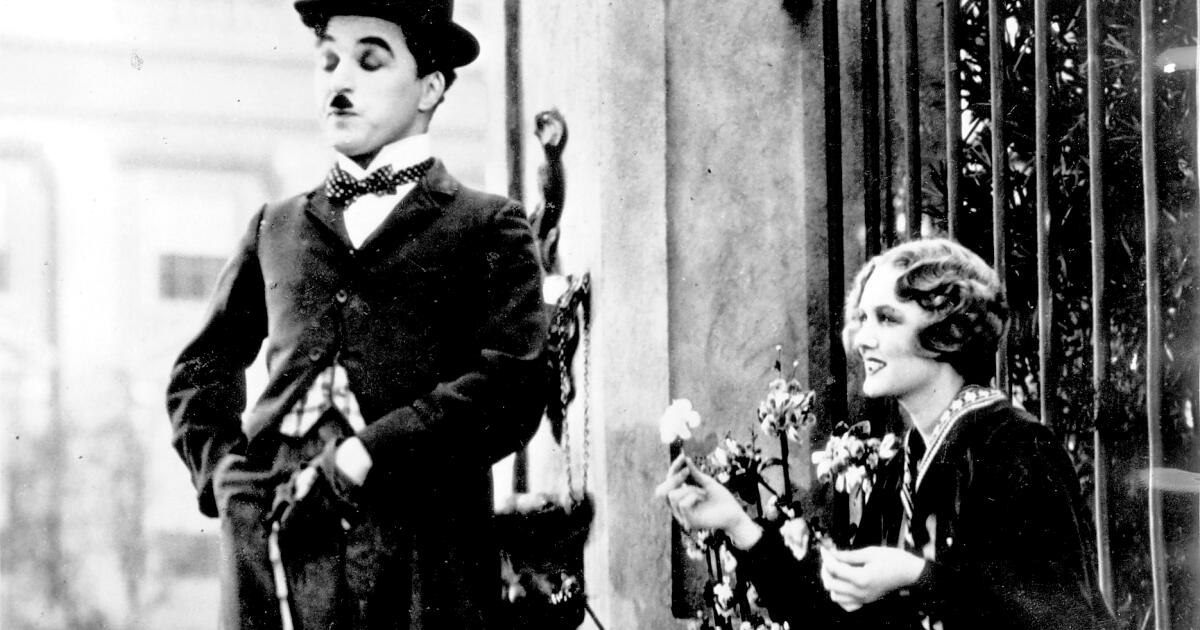
What made the cut? Some choices make perfect sense for Brooks: comedy classics like Charlie Chaplin’s “City Lights” (1931) and the Marx Brothers’ “A Night at the Opera” (1935). Others are more surprising, from Kevin Costner communing with the Sioux in “Dances With Wolves” (1990) to Eddie Murphy resurrecting a blaxploitation legend in “Dolemite Is My Name” (2019). The list is overwhelmingly American with just one foreign-language film, Federico Fellini’s bittersweet 1953 comedy “I Vitelloni.”
For Brooks, the exercise offered a chance to reconnect with what drew him to movies in the first place.
“It was wonderful compiling a list of all these marvelous movies for American Cinematheque,” Brooks said in a statement to The Times. “It reminded me about why I first fell in love with the art of film.”
Earlier this year, with Brooks’ centennial approaching, the Cinematheque began thinking about how to mark the milestone. The organization has screened his films regularly for decades and Brooks has appeared at its theaters a dozen or so times to discuss his work and collaborators. Simply putting “Blazing Saddles” and “Young Frankenstein” back on the marquee wasn’t going to cut it.
“The question was: How do we do something different and interesting?” says Chris LeMaire, the Cinematheque’s director of programming, in a phone interview. “Then it became: What if we reached out to Mel and asked if he wanted to put his programmer hat on and take over our calendar and see what he would come up with?”
The Cinematheque already invites filmmakers and other guests to choose individual films for its weekly Sunday Print Edition series, but handing someone an entire series to program was another matter.
“We didn’t even say how many films it could be,” LeMaire recalls. “We kind of said, ‘How many do you want to show?’ ”
Brooks conveyed his selections through his assistant, who would speak with him by phone and relay the titles to the Cinematheque by email. Rather than arriving all at once, the list grew over several days as Brooks kept thinking of movies he wanted to add.
“It was really neat to see it unfold because he sent an initial list and we were like, ‘Wow, this is great,’ ” LeMaire says. “Then a few hours later, he thought, ‘Well, we can’t forget John Ford. We’ve got to throw in ‘The Grapes of Wrath.’ Fast-forward a few more of these cycles where he was thinking about it and that’s how it got up to 20.”
Brooks is letting the selections speak for themselves, offering up the movies he loved without feeling the need to make a case for them.
“He didn’t provide much explanation, didn’t say why he was picking all these films,” LeMaire says. “I think that’s really beautiful in that sense.”
To LeMaire, the breadth of the list reflects both Brooks’ long view of movie history and the eclecticism of his own work.
“He was born before the sound era, so you get the sense that he’s put this list together based on actual experience, watching firsthand as cinema evolved over the decades,” LeMaire says. “There’s such a mix of genres on this list, and that mirrors how his films work — the love of cinema history and the lovingly satirizing ways of dealing with genre.”
Some connections to Brooks’ own career are particularly direct. He produced David Lynch’s 1980 drama “The Elephant Man,” while Alfred Hitchcock’s 1960 horror classic “Psycho” inevitably calls to mind Brooks’ 1977 Hitchcock spoof “High Anxiety.” Brooks also included one of his own films, “The Twelve Chairs,” his 1970 comedy based on the Russian novel.
Hardly one of his best-known films, “The Twelve Chairs” has proved one of the trickier titles for the Cinematheque to screen. LeMaire says it and Paul Mazursky’s 1986 comedy “Down and Out in Beverly Hills,” another Brooks selection, lack readily available digital restorations, making suitable screening materials harder to track down.
Brooks left the screening order up to the Cinematheque. LeMaire chose “City Lights” to kick off the series. “When Mel Brooks says he wants to show a Charlie Chaplin film, it just seemed like: Well, that’s the way we’ve got to open,” LeMaire says.
Brooks is not currently expected to appear at any of the screenings. Could he nevertheless turn up as a surprise? LeMaire isn’t making any promises.
“I wouldn’t want to get anyone’s hopes up,” he says. “I’ll be there with everybody else, wishing and hoping.”
Asked to name his own favorite Brooks film, LeMaire doesn’t hesitate: “Young Frankenstein.”
“I might have seen that more than any other film ever, honestly,” he says. “So it really is such a dream come true that he responded with enthusiasm and put this together for us. It’s a dream come true for me personally.”
Here is the complete lineup for “Programmed by Mel Brooks: 100 Years at the Movies”:
Sept. 3 — “City Lights” (1931), Aero Theatre Sept. 4 — “When Harry Met Sally…” (1989), Aero Theatre Sept. 5 — “I Vitelloni” (1953), Aero Theatre Sept. 6 — “The Grapes of Wrath” (1940), Aero Theatre Sept. 9 — “The Elephant Man” (1980), Aero Theatre Sept. 19 — “This Is Spinal Tap” (1984), Los Feliz 3 Sept. 20 — “Shane” (1953), Los Feliz 3 Sept. 23 — “The Miracle Worker” (1962), Los Feliz 3 Oct. 6 — “Down and Out in Beverly Hills” (1986), Los Feliz 3 Oct. 10 — “Top Hat” (1935), Aero Theatre Oct. 11 — “Dances With Wolves” (1990), Egyptian Theatre Oct. 16 — “Jojo Rabbit” (2019), Los Feliz 3 Oct. 17 — “Double Indemnity” (1944), Egyptian Theatre Oct. 18 — “Schindler’s List” (1993), Egyptian Theatre Oct. 20 — “A Night at the Opera” (1935), Los Feliz 3 Oct. 22 — “Dolemite Is My Name” (2019), Los Feliz 3 Oct. 24 — “Broadway Melody of 1940” (1940), Los Feliz 3 Oct. 25 — “Ed Wood” (1994), Egyptian Theatre Oct. 31 — “Psycho” (1960), Egyptian Theatre Nov. 12 — “The Twelve Chairs” (1970), Egyptian Theatre
Rarely would Sam Neill, who died Monday, carry a film on his own, but what he did in several of them, modestly and dependably, was equally as important. His nuanced supporting work allowed some of the greatest actresses of their moment attain their first fireworks. And even though he starred in one of Hollywood’s hugest blockbusters, it takes a certain kind of confidence to share the spotlight with a dinosaur. Here are Neill’s highlights, all worth rewatching for the sake of better appreciating a sophisticated presence often on the sidelines.
‘My Brilliant Career’ (1979)
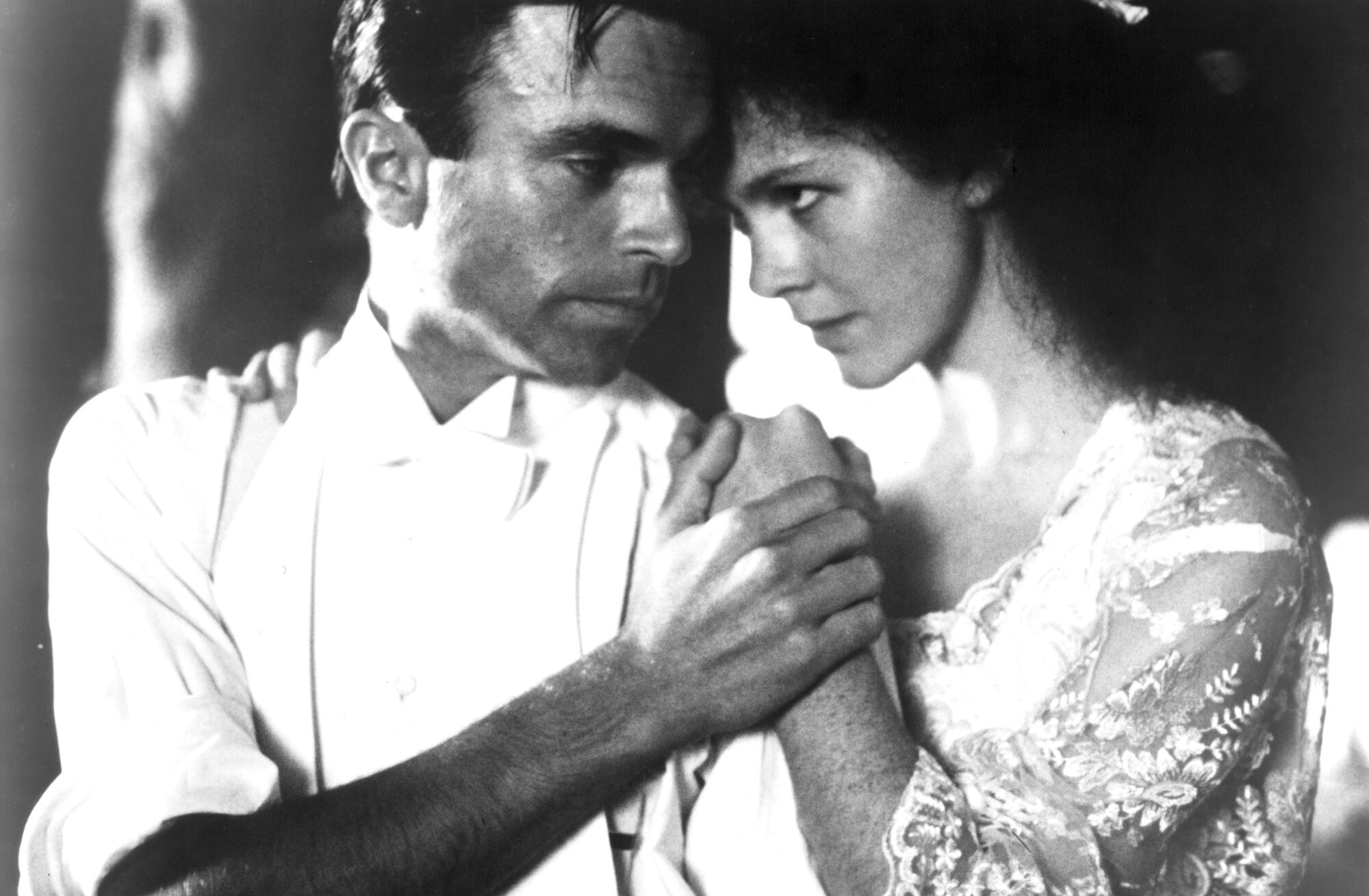
Sam Neill and Judy Davis in the movie “My Brilliant Career.”
(Michael Ochs Archives / Getty Images)
Gillian Armstrong’s first feature is a landmark of the Australian New Wave and feminist cinema, signaling the arrival of the great Judy Davis and containing the most erotically charged (and quite possibly the longest) pillow fight in movie history. It works splendidly for countless reasons, not the least of which is Neill’s presence as the charming suitor of Davis’ headstrong heroine. Set in 1897 in rural Australia, the film follows Davis’ Sybylla, who dreams of becoming a writer, an unconventional aspiration given her family’s poverty and societal norms. Then she meets a wealthy charmer, played by Neill, and he proposes. It should be an easy decision, particularly since Sybylla loves him and Neill makes him so irresistible. That Sybylla does, in fact, resist, choosing independence over love and the possibility of perennial pillow fights, makes “My Brilliant Career” so daring and thrilling. — Glenn Whipp
‘Possession’ (1981)
Isabelle Adjani and Sam Neill in the movie “Possession.”
(Metrograph Pictures)
It’s being remade with Margaret Qualley and the main reason for the movie’s notoriety remains Isabelle Adjani’s unhinged, incantatory performance, a collection of freak-outs that’s still unmatched. But one can argue that Adjani couldn’t have gotten there without the slightly milquetoast banality of her character’s husband, played by Neill as one of the least exciting on-screen spies of the 1980s. (She’s already cheating on him when the movie begins.) He doesn’t seem cut out to be a family man either, but Neill’s cuckolded complaining, hard to pull off this confidently, may be what’s driving her to self-harm in the first place. — Joshua Rothkopf
‘The Final Conflict’ (1981)
More than a decade before his “Jurassic Park” role, Neill delivered a chilling turn as the Antichrist in “The Final Conflict,” better known as the third film in “The Omen” franchise, about a couple that unwittingly adopts the son of Satan. In this second sequel, Neill plays an adult Damien Thorn, now a U.S ambassador to the United Kingdom who is determined to stop the second coming of Christ. With sinister smiles and steely glares, Neill makes Damien his own, waging a murderous campaign against a group of priests, his voice dripping with contempt as he vows to slay “the Nazarene” when he is born. — Greg Braxton
‘Dead Calm’ (1989)
Sam Neill and Nicole Kidman on the set of the movie “Dead Calm.”
(Michael Ochs Archives / Getty Images)
We remember Philip Noyce’s claustrophobic cat-and-mouse thriller primarily as Nicole Kidman’s big-screen breakthrough. But, and you may be noticing a theme here, the movie would not work without Neill, who had a gift for playing opposite strong-minded women. Kidman and Neill are a married couple embarking on an ocean adventure to work through the loss of their child. They happen upon a crazy-eyed stranger (Billy Zane) on a sinking schooner, take him aboard and things go south from there. Part Cary Grant, part MacGyver, Neill gives a great physical performance, which he parlayed into well-paying Hollywood action roles for the rest of his career. None came close, though, to his flare-gun theatrics here. — Glenn Whipp
‘Jurassic Park’ (1993)
You go for the dinosaurs and there’s no shame in that. But credit Neill for both understanding the assignment and not quite settling for those awed stares of Spielbergian wonder. His Alan Grant is distinct enough to register as prickly and a little inside himself. He absolutely hates children, even as the whole plot, somewhat obviously, steers him in the opposite direction. He’s not Jeff Goldblum-level rascally, but he’s confident enough to go his own way and make a killer joke at a high-voltage fence. Acting-wise, Neill has already held his own opposite several forces of nature (see above). Raptors were nothing. — Joshua Rothkopf
‘The Piano’ (1993)
Sam Neill in the move “The Piano.”
(The Criterion Collection)
So many of Neill’s most memorable movies feature him supporting the singular vision of great directors, as is the case with Jane Campion’s 1993 landmark. Neill plays the awkward, ignorant Scottish farmer who arranges for a mail-order marriage with Holly Hunter’s mute pianist and then becomes possessive and driven to jealous despair. We hate him. Which was fine by Neill, as he wrote in his 2023 memoir: “There is honour to be found in the second fiddle. Or fourth. No one notices you much, you don’t get nominated for things. But you served. I was there in an important feminist film. It’s a work of art. And look, that tiny little figure in the fabric — see down there on the right — that’s me. It’s a film that will always have a place in cinema history. And I served in it.” — Glenn Whipp
‘In the Mouth of Madness’ (1994)
Finally, a leading role. Granted it’s one in which Neill, strapped in a straitjacket, screams things like “I’m not insane!” But if you’re a fan of his brand of slightly unconvinced heroism, John Carpenter’s horror movie — about an insurance investigator on the hunt for a missing Stephen King-like author — is an enjoyable watch. Carpenter was never one to overexplain things to his actors (it’s why you find so many rich, self-directed performances in his movies) and Neill’s snoop definitely goes through the looking glass, from disbelieving cynic to true believer. Genre movies thrive on his kind of total commitment. — Joshua Rothkopf
Can you tell the story of America in 10 movies? Maybe so — at least a version of it — if you stick to moments of serious national friction and those rare instances when a filmmaker meets the mood with a true vision. If you want tearjerkers about red, white and blue triumph, this is not your list (although the Space Race drama “The Right Stuff” always does the trick). Meanwhile, our current state of disunity and division will find its own expressions in time; start with “Civil War,” though it’s a bit too soon. Instead, we thought about historical pivot points and built a list of classics, along with a few alternatives for each title.
The Great Depression
Henry Fonda, left, in the 1940 film “The Grapes of Wrath,” directed by John Ford.
(20th Century-Fox)
‘The Grapes of Wrath’ (1940)
America is a broken place in John Ford’s poetically charged adaptation of the Steinbeck novel: a downbeat landscape of Oklahoma dust storms, long shadows and the teetering sight of a car turned into a truck transporting a family westward. This will always be one of those essential movies about a particular national dream — not just a myth — of emerging from economic catastrophe and being reborn in the promised land of California. Ford, with the instincts of a showman, foregrounded hope on the horizon via inspired performances by Henry Fonda and Jane Darwell’s pragmatic Ma Joad getting the final word (“We keep a’coming…”). But there is still so much darkness in “The Grapes of Wrath,” especially in its scenes of John Qualen’s Muley Graves, crumpled on the ground, suddenly a squatter on his own piece of land. He’s no match for the bulldozers. As long as the idea remains that property gets its purpose from those tending it, working it, nourishing it and dying on it, the film will never become a relic. Its binding values of labor and community remain relevant, even if today’s Hollywood rarely speaks to them. — Joshua Rothkopf
See also: “Modern Times,” “Sullivan’s Travels,” “Bonnie and Clyde”
Postwar optimism
Michael Hall, from left, Teresa Wright, Myrna Loy and Fredric March in the 1946 movie “The Best Years of Our Lives.”
(Samuel Goldwyn Productions)
‘The Best Years of Our Lives’ (1946)
World War II ended with ticker-tape parades and soaring expectations. William Wyler’s sweeping drama arrived just as America was beginning to reckon with what coming home actually meant. Harold Russell, a real-life veteran who lost both hands during the war, plays a sailor struggling to imagine a future with the woman he loves. Dana Andrews is a decorated bombardier who returns to the same soda fountain job he held before the war, discovering that military heroism doesn’t necessarily translate into peacetime opportunity. The movie became one of the biggest hits of 1946 because it understood a challenge facing millions of Americans: The war had given the country a common purpose but peace meant each person had to find their own. Yet for all its honesty about that dislocation, the film remains remarkably hopeful. Its faith that people can rebuild their lives and start over feels almost radical today. Seen from the distance of eight decades, it feels like a dispatch from a country that had just survived a catastrophe and still believed its best days lay ahead. — Josh Rottenberg
See also: “It’s a Wonderful Life,” “Miracle on 34th Street,” “Giant”
Capitalism, unchecked
Daniel Day-Lewis in the 2007 movie “There Will Be Blood,” directed by Paul Thomas Anderson.
(Paramount Vantage)
‘There Will Be Blood’ (2007)
“I drink your milkshake — I drink it up!” Oil man Daniel Plainview’s deranged metaphor, allegedly taken from congressional transcripts from the 1920s Teapot Dome scandal in which Interior Secretary Albert Fall defended the practice of directional oil drilling, a.k.a. drainage, became a catchphrase when “There Will Be Blood” arrived in 2007. Elon Musk probably has a T-shirt in the back of a drawer emblazoned with the line. It epitomizes the American ethos of extracting resources that belong to someone else and then brutally bragging about the beatdown. Paul Thomas Anderson’s movie is part history lesson, part horror film, which, when it comes to chronicling the American experience, feels like the perfect blend. The oil man’s exploits take place more than a century ago, but seem particularly relevant now with Musk newly minted as the world’s first trillionaire and income inequality rapidly widening. Plainview confesses, “I have a competition in me. I want no one else to succeed.” It neatly sums up the endgame in which we find ourselves — and his vanquishing of the preacher Eli speaks to what we worship in the United States. He’s finished and sometimes it feels like we are too. — Glenn Whipp
See also: “The Wolf of Wall Street,” “WALL-E,” “Sorry to Bother You”
Post-Vietnam/Watergate cynicism
‘Nashville’ (1975)
Ronee Blakley in the 1975 movie “Nashville,” directed by Robert Altman.
(Paramount Pictures)
Could one movie capture the breadth of emotions around this year’s 250th anniversary celebrations as well as Robert Altman did the bicentennial? As the country was still reeling from the assassinations and discord of the 1960s, the despair of Vietnam and the scandals of Nixon and Watergate, there was a soul-baring uncertainty to what it even meant to be an American. With 24 main characters interwoven around the town of Nashville, home of country music and intersecting political undercurrents, the film tries to make sense of the chaos. While the conspiracy thrillers of the 1970s are seen as the most direct response to the moral malaise of the moment, Altman finds an unexpected way to gild his innate skepticism with a light filigree of hope, a complex quilt of characters capturing the contradictions inherent in the American identity. And yet as cynical and beaten-down as the film’s viewpoint can often be, there is still a spark of decency and perseverance. That is the America that Altman celebrates, even as he lets no one off the hook. Few films capture the hum of life in all its maddening beauty quite like this one. — Mark Olsen
See also: “Blow Out,” “The Conversation,” “The Parallax View”
‘Network’ (1976)
Robert Duvall, Faye Dunaway and William Holden in the 1976 movie “Network,” directed by Sidney Lumet.
(MGM Studios / Getty Images)
Much has been made over the years about how prescient this film was, as if screenwriter Paddy Chayefsky and director Sidney Lumet saw the constrictive dangers of corporate consolidation in the distance and came back to warn us. But if these rumbling premonitions have remained true across multiple eras of an ever-evolving media landscape, have we really learned anything? Perhaps we really do live in a “demented slaughterhouse of a world,” as the unhinged newsman Howard Beale says in one of his apocalyptic broadcasts, and have all along. Maybe what “Network” nails most of all is apathy: that even the most righteously committed can have their heads turned from their true goals and then struggle to get back on track. What may be most shocking rewatching the film today is the suspicion that some current media figures see the maneuverings of villainous executives played by Robert Duvall and Faye Dunaway and somehow think that they were the heroes of the story all along. Not even Lumet or Chayefsky would have predicted that. — Mark Olsen
See also: “Broadcast News,” “The Insider,” “Nightcrawler”
Gentrification and racial tensions
Spike Lee, left, and Danny Aiello in the 1989 movie “Do the Right Thing.”
(Universal Pictures)
‘Do the Right Thing’ (1989)
Spike Lee’s masterpiece was met with hand-wringing when it arrived in theaters 37 summers ago, with white critics fretting how “urban audiences” would react to its shocking ending of brutality and angry protest. “If some audiences go wild, [Lee] is partly responsible,” critic David Denby wrote in New York Magazine. Nobody rioted. “Do the Right Thing” made some people uncomfortable because it told truths from a Black perspective that they did not want to accept. That unwillingness to have hard conversations and learn from them remains evident today as we prepare to celebrate our nation’s 250th birthday without an honest reckoning of the anguish that lies beneath the storybook version of America’s founding. The paradox is that Lee’s movie is itself that conversation, its characters engaging in a series of arguments, evenhanded and empathetic, about how race affects the lives we lead in America. Until our country engages in that dialogue, nothing will change. For a moment, the Black Lives Matter movement signaled a willingness to grapple with the past. But the pendulum swung and we’re back to days of “Driving Miss Daisy” denial. But “Do the Right Thing” remains with us, its urgency and relevance undiminished, waiting for an America open to listen and live up to its idealized aspirations. — Glenn Whipp
See also: “Get Out,” “12 Years a Slave,” “Fruitvale Station”
The rise of the yuppies
Roddy Piper, left, and Keith David in the 1988 movie “They Live,” directed by John Carpenter.
(Universal Pictures)
‘They Live’ (1988)
“I believe in America,” the guy says, but we’re not in the private office of some all-powerful Corleone. Rather, this is a working man in a plaid shirt and denim. As the sun sets on his sad L.A. tent city (inspired by the real-life Justiceville), he only wants what everyone else wants: a hard day’s work for fair pay and the chance to get ahead. “It’ll come,” he says, serenely. He doesn’t know he’s in a John Carpenter movie — Roddy Piper was never put to better on-screen use — and that those keeping him down are, in fact, aliens hypnotizing us into an unseeing stupor as they carve up the world’s resources. Released at the tail end of Reaganomics, Carpenter’s most politically forward thriller now feels like a decoder ring for ’80s-era greed, detachment, complacency and ruthlessness. Carpenter meant us to to see his bug-eyed space invaders as yuppies. He also intended us to question whether we were selling each other out, just to join the “human power elite” for a tiny piece of pie. “They Live” looms just on the other side of appreciated. Many genre films say what our more prestigious dramas can’t about the creeping forces that are changing America; this one still feels like it’s getting away with murder. — Joshua Rothkopf
See also: “American Psycho,” “Invasion of the Body Snatchers,” “After Hours”
’80s women in the workplace
Harrison Ford, left, Melanie Griffith and Sigourney Weaver in the 1988 movie “Working Girl.”
(20th Century Fox)
‘Working Girl’ (1988)
Mike Nichols’ zeitgeisty hit opens on a shot of the Statue of Liberty hoisting her torch like a paycheck. Down by her green toes, Melanie Griffith’s Staten Island secretary Tess McGill ferries to Manhattan to type memos for important men. Tess has a job, not a career. But 1988 was the first year that female undergraduates outnumbered men on college campuses. Even without a degree, Tess is ambitious to climb the corporate ladder — once she swaps out her practical white sneakers for a pair of pumps. The script by Kevin Wade throws up hurdles of sexism and class snobbery, never sugarcoating how Tess’ male co-workers treat her like a blow-up doll. (Critics dismissed Griffith, too, until this performance earned her an Oscar nomination.) Yet note how her Ivy League-educated boss Katharine (Sigourney Weaver) isn’t immune to harassment either; she’s just mastered how to parry her colleagues’ advances. Fantastic as it is, “Working Girl’s” core flaw is that Tess can’t snag her seat at the conference table until she yanks Katharine out of it. Weaver said that when she showed the script to real-life working girls on Wall Street, they asked, “This awful secretary steals your man, wears your clothes, takes your office — who’s going to sympathize with her?” Millions did and still do. — Amy Nicholson
See also: “9 to 5,” “Baby Boom,” “Silkwood”
Digital alienation
Justin Timberlake, left, and Jesse Eisenberg in the 2010 movie “The Social Network,” directed by David Fincher.
(Merrick Morton / Columbia TriStar )
‘The Social Network’ (2010)
In 2010, Apple introduced the iPad, Instagram launched its app and Silicon Valley still looked to many tech-besotted Americans like a force for progress. At a moment when technology companies were promising to bring people closer together, David Fincher’s acerbic drama about the founding of Facebook had a darker theory about why people wanted to connect in the first place. Aaron Sorkin’s screenplay traces Facebook’s creation back to a very old human desire: getting noticed by the people who matter. Instead of celebrating innovation, the movie unfolds through lawsuits and broken friendships. At Harvard, Jesse Eisenberg’s Mark Zuckerberg fixates on the exclusive final clubs that won’t quite accept him. It’s a surprisingly sour approach for a Facebook origin story. Years before social media became a political battleground, Fincher was focused on something more basic — the fear that everyone else had been invited to a party you couldn’t get into. The movie ends with Zuckerberg alone at a computer, refreshing the Facebook page of the woman who dumped him and waiting for her to accept his friend request. More than 15 years later, it’s still hard to think of a better image for the loneliness and insecurity lurking beneath our connected lives. — Josh Rottenberg
See also: “Her,” “Eighth Grade,” “Ingrid Goes West”
Post-9/11 anxieties
A scene from the 2004 movie “Team America: World Police,” directed by Trey Parker.
(Melinda Sue Gordon / Paramount Pictures)
‘Team America: World Police’ (2004)
To add drama to the ennui over the 2000 U.S. presidential campaign, “South Park” creators Trey Parker and Matt Stone pledged to immediately produce a silly sitcom about the winner. “That’s My Bush!” ran for eight episodes in the spring of 2001, with plans to spin off into a feature called “George W. Bush and the Secret of the Glass Tiger.” But the Sept. 11 attacks changed everything, including the work of satirists. Parker and Stone pivoted to “Team America: World Police,” a bomb-throwing comedy about our country’s napalm-strength combination of naiveté and swagger. To prevent an attack hailed as “9/11 times a thousand,” a squadron of puppet commandos blows up the planet themselves. The dark joke is these marionettes aren’t behaving much differently than the action heroes who have shaped the national id — it’s a through-the-looking-glass lens into our Hollywoodized view of the globe, down to the Parisian streets made of cobblestone croissants. At once straight-faced, sacrilegious and scatological, “Team America” needed nine tries to eke past the MPAA. Yet in divided times, it was a unifier. The political spectrum from Kim Jong Il to Alec Baldwin got equally savaged and the film’s eff-yeah patriotic theme song (“Rock and roll! The internet! Slavery!”) could even be heard blaring from real-life tanks in Fallujah. — Amy Nicholson
See also: “Eddington,” “Idiocracy,” “Harold & Kumar Escape From Guantanamo Bay”
A hypnotizing deep dish of star wattage, family meltdowns, racial tensions and Texas-sized steaks served for breakfast, George Stevens’ 1956 drama was taken extremely seriously in its moment — 10 Oscar nominations seriously. The most notable of those were for Rock Hudson and, competing against him in lead actor, a posthumously honored James Dean. Taken together, the two represent a fascinating dichotomy that was happening in screen acting, a burrowing into psychology that was leaving other more traditional stars behind. (Elizabeth Taylor and Mercedes McCambridge make for another great pairing in the movie.) Roughly 25 years later, the film would inspire the TV series “Dallas,” even down to having a main character with the initials J.R. Go luxuriate in the original epic.
“Giant” is playing Sunday at the Academy Museum. Tickets here.
We did it! America made it to 250 years of existence!
OK, not everyone may be feeling especially celebratory as we hit the semiquincentennial, as culture critic Mary McNamara wrote in her essay this week, but we can still find some solace in wanting to do better and be better. I’ve always believed the arts are a reflection of the heart and soul of a people. And in a country as multicultural and diverse as ours, that can look very many different ways. While it’s true that social media and the internet at large has siloed us, nothing stays the same and, like it or not, change and progress are very much at the root of America’s existence, as is acceptance of different ways of living. What makes this country great are those varied experiences and how art can be an entryway to them.
If that gives you enough inspiration, there are several Fourth of July events to watch over the weekend, including traditions like the “Macy’s 4th of July Fireworks Show,” now in its 50th edition, on NBC, Telemundo and Peacock, and Nathan’s Hot Dog Eating Contest on ESPN and ABC as part of their “Disney Celebrates America” programming. If you’re looking for something fresh, the America250 initiative will be streaming a ball drop from Times Square in New York beginning Friday night, which CNN is also covering via “Independence Eve Live With Anderson & Andy: Celebrating 250,” a New Year’s Eve-style production with Anderson Cooper and Andy Cohen. Similarly, PBS will be broadcasting “A Capitol Fourth: 250th Weekend Celebration” from the U.S. Capitol and from George Washington’s home in Mount Vernon. It will feature performances from the National Symphony Orchestra, Trace Adkins, Patti LaBelle, Kool & The Gang and more.
On Saturday, America250 will stream “America’s Block Party” from the L.A. Memorial Coliseum, which features performances by Chris Stapleton, the Smashing Pumpkins, Chaka Khan and Anthony Ramos. CBS will also air some of those acts on “The Great American Block Party 250,” along with performances from the Washington Monument in Washington, D.C., by the Zac Brown Band, Jon Batiste, Goo Goo Dolls and the War and Treaty (it will also stream on Paramount+).
You are reading Screen Gab newsletter
Sign up to get recommendations for the TV shows and streaming movies you can’t miss, plus exclusive interviews with the talent behind your favorite titles, in your inbox every Friday
By continuing, you agree to our Terms of Service, which include arbitration and a class action waiver. You agree that we and our third-party vendors may collect and use your information, including through cookies, pixels and similar technologies, for the purposes set forth in our Privacy Policy such as personalizing your experience and ads.
In keeping with this week’s theme, we’ve also rounded up several series and films that we recommend watching over the long holiday weekend that tell a story about America or Americans in all their glory — imperfect, diverse and unique. Now that’s something to celebrate. — Maira Garcia
Turn on
Recommendations from the film and TV experts at The Times
“The Americans” (Hulu)
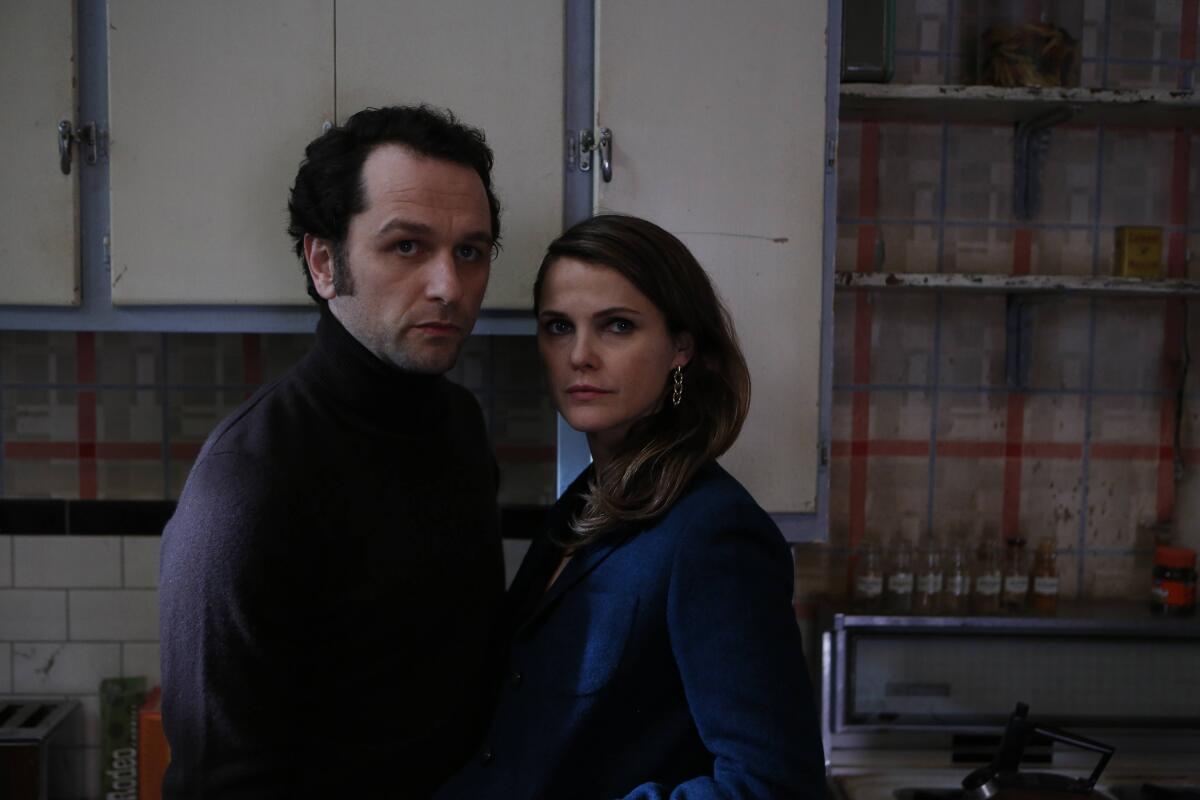
Matthew Rhys as Philip and Keri Russell as Elizabeth in “The Americans.”
(FX )
This series may seem like an odd choice to recommend during the July 4 holiday, particularly when the main characters are driven by values that are pointedly un-American. The FX series, which concluded its six-season run in 2013, stars real-life couple Keri Russell and Matthew Rhys as Russian spies posing as a suburban couple living in Washington in 1981. Critics celebrated the drama as the couple took on their assignments to undermine the U.S. government while also concealing their true identities from their friendly neighbor — an FBI counterintelligence agent — and their two American-born children. Their journey is further complicated as they grow more attached to American lifestyles and values. Rhys, who is currently stirring up awards season buzz with his lead roles in Apple TV‘s “Widow’s Bay” and Netflix’s “The Beast in Me,” won an Emmy for lead actor in a drama during the show’s final season. Fans of “The Americans” are still shaken by the memory of the devastating series finale. — Greg Braxton
“Spirit of ’76” (VOD)
Jeff McDonald, left, David Cassidy and Steven McDonald in “The Spirit of ’76.”
(Philosophical Research Society)
In this energetic, colorful, low-budget 1990 ode to the bicentennial year, travelers from a colorless 2176 attempt to travel to 1776 to reclaim foundational knowledge lost when “the magnetic storm degaussed all recorded history.” They arrive instead on July 4, 1976, where a different sort of freedom holds sway — freedom to get down, freedom to boogie. It’s a friends-and-family affair, written and directed by Lucas Reiner, with appearances by his brother Rob and father Carl; a story co-authored by Roman Coppola; and costumes by his sister Sofia. David Cassidy and Olivia d‘Abo star as among the visitors from the future; Leif Garrett (like Cassidy, a 1970s TV and pop idol) is a disco-mad lothario. Also on board are Tommy Chong, Barbara Bain, Don Novello, Moon Zappa and performance artists the Kipper Kids as men in black. Julie Brown is a sex worker who has something to say about the Gulf of Tonkin Resolution that will sound distressingly timely. Brothers Jeff and Steve McDonald — from the band Redd Kross, and not playing brothers — are the bike-riding, long-haired, slang-slinging teens who join in to help the time travelers accomplish their mission. One word: tetrahydrozoline. — Robert Lloyd
“The Simpsons” (Disney+, Hulu)
“The Simpsons” has long been an American staple on television.
With more than 800 episodes across 37 seasons, “The Simpsons” is basically on track to reaching its own semiquincentennial milestone. Its relevance in today’s landscape may be debated, but the animated series has audaciously and consistently captured the American experience with its piercing satire about societal and cultural events and shifts, as well as its reflections on the frustrations and absurdities of daily life for a middle-class family living in a quintessential American suburb — an ideal that has long stood as a standard of success for generations of Americans and now feels like a fantasy for many who still strive for it. (Insert GIF of Homer disappearing into a shrub here.) It’s one of the most entertaining time capsules of a good chunk of America’s run so far. And hey, there are plenty of July 4 episodes to pre-game, pair with, or distract from your social obligations. — Yvonne Villarreal
“American Movie” (VOD)
Bill Borchardt, left, and Mark Borchardt in the documentary “American Movie.”
(Sony Pictures Classics)
One of the breakout documentaries of the ’90s, Chris Smith’s portrait of aspiring Wisconsin filmmaker Mark Borchardt suggests that if you want to understand America, you could do worse than spend some time in his company. Borchardt has no Hollywood connections, no money and seemingly no realistic path to finishing his low-budget horror movie “Coven” (which he stubbornly insists on pronouncing “COE-ven”). Working the graveyard shift at a cemetery and battling his own drinking, he somehow keeps persuading friends and relatives to help him inch the film toward completion. The movie is often hilarious but it never makes Borchardt the punchline, leaving open the question of whether he’s a genuine outsider artist or simply incapable of recognizing impossible odds. When he starts feeling sorry for himself, he has a way of snapping out of it: “No one has ever, ever paid admission to see an excuse.” As America marks its 250th birthday, with so many of the country’s problems seeming unsolvable, Borchardt reminds us that impossible sometimes just means unfinished. — Josh Rottenberg
“Reservation Dogs” (Hulu, Disney+)
Willie Jack (Paulina Alexis), Elora Danan Postoak (Devery Jacobs), Bear (D’Pharaoh Woon-A-Tai) and Cheese (Lane Factor) in “Reservation Dogs.”
(Shane Brown / FX)
This is perhaps too on the nose, but what is the story of America without Native Americans and Indigenous storytellers? Don’t worry, “Reservation Dogs” is not meant to be a history lesson. A coming-of-age dramedy, the series follows a group of teenagers living in a small town in the Muscogee Nation in rural Oklahoma. Culturally specific and infinitely relatable, the teens are grieving one of their own as they navigate familiar perils of adolescence: future aspirations (or lack thereof), relationships and rivalries, family and more as they grow into who they are meant to be. Created by Sterlin Harjo and Taika Waititi, the show was celebrated for its representational milestones both in front and behind the camera for the entirety of its three season run. But what keeps this show on my perpetual rewatch list is its humor, heart and endless humanity. And Cheese! — Tracy Brown
“Star Trek: Strange New Worlds” (Paramount+)
Una (Rebecca Romijn), Capt. Pike (Anson Mount) and Spock (Ethan Peck) in “Star Trek: Strange New Worlds.”
(Marni Grossman / Paramount+)
Despite being set on a starship traveling through the far reaches of space, “Star Trek” is a quintessentially American show that celebrates very American ideals and aspirations. The franchise depicts a future where good people want to do good, are endlessly curious, believe in justice and diplomacy and strive to maintain peace. They’re also willing to fight for what they believe in. “Strange New Worlds,” though created in our modern streaming times, captures a lot of the spirit and swagger of the original series — and not just because it features some characters that originated there. The show follows Capt. Christopher Pike (Anson Mount) and the crew of the U.S.S. Enterprise as they explore strange new worlds and boldly go where no one has gone before. Pike wields a kind of empathetic, nice dad next door charm and all the capabilities of a decorated starship officer, which makes him a perfect ambassador for his exploratory mission. He’d probably also make a good host of a big Fourth of July backyard bash. — T.B.
“Mo” (Netflix)
Mo Amer in Season 2 of his eponymous Netflix series.
(Eddy Chen / Netflix)
The immigrant experience has been portrayed in a number of films and series over the years — though I’d argue there still aren’t enough. This series created by and starring comedian Mo Amer captures not only the realities of navigating the American immigration system, with its draconian requirements and regulations, but also the experience of multicultural life in the melting pot that is Houston, Texas. Here, Amer plays a fictional version of himself, a Palestinian refugee who is trying to get legal status while encountering personal and professional roadblocks at every turn. It’s funny and melodramatic, occasionally veering into silliness, but it brilliantly highlights the very real struggle of finding your place in the world when you don’t know where you can call home or where you belong (the Spanish saying, ni de aqui, ni de alla, neither from here nor there, applies). And it’s one of the very few humanizing onscreen depictions of the Palestinian American experience. — Maira Garcia
“Pose” (Hulu) and “Fellow Travelers” (Paramount+)
Mj Rodriguez as Blanca and Billy Porter as Pray Tell in “Pose.” (FX)
Tim (Jonathan Bailey) and Hawk (Matt Bomer) in “Fellow Travelers.” (Ben Mark Holzberg / Showtime)
The struggle for gay rights has been a long chapter in American history and in the case of these two series, one depicts it through New York’s ballroom scene and the other through the halls of Washington. “Fellow Travelers,” created by Ron Nyswaner and based on Thomas Mallon’s novel of the same name, depicts the romance between Hawkins “Hawk” Fuller (Matt Bomer) and Timothy “Tim” Laughlin (Jonathan Bailey) beginning in the 1950s during the height of McCarthyism and the Lavender Scare and goes through the decades, culminating with the AIDS crisis of the ‘80s. If you want a good cry this weekend, start here. “Pose,” meanwhile, is at turns celebratory and heartbreaking as it depicts the experience of a group of Black and Latino members of the ball scene in the ‘80s and ‘90s. The series highlights the opulent costumes and performers in drag who would leave it all on the floor for a chance at glory among their peers, but also the interpersonal relationships and challenges faced by trans characters like Blanca (Mj Rodriguez, who scored an Emmy nomination for her performance in 2021), Elektra (Dominique Jackson) and Angel (Indya Moore), as well as gay characters like Pray Tell (the inimitable Billy Porter). Both shows are reminders that LGBTQ+ rights were hard won and that the struggle continues. — M.G.
Two of the biggest box-office standouts of 2026 so far were not made by established studio directors or built on franchise IP.
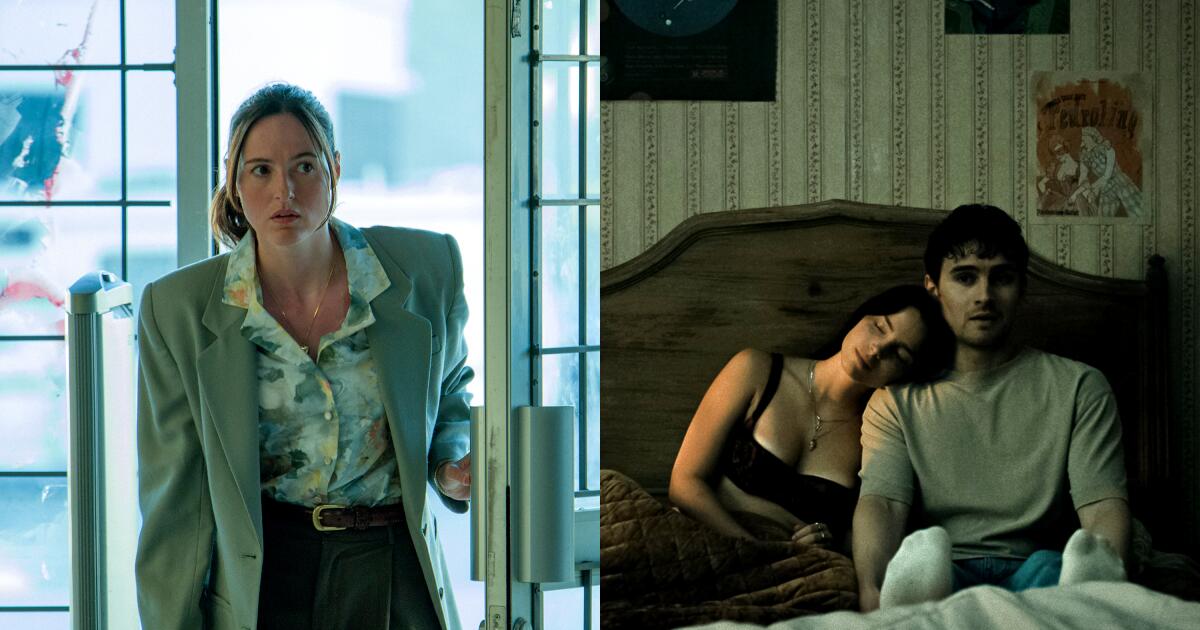
“Obsession” and “Backrooms” — horror films from internet-native directors in their 20s — have outperformed far more expensive studio releases.
The breakout success of these films has ignited debate across Hollywood about what made these movies so popular, especially among Gen Z moviegoers who haven’t been flocking to cinemas in recent years. Here’s what to know:
The numbers
”Obsession” was directed by 26-year-old Curry Barker, who got his start on YouTube with sketch comedy and horror shorts. Released May 15 by Focus Features, the film was made for just $750,000 but opened to a staggering $17 million and has improved on its debut every weekend since.
“Obsession” set an all-time horror record for the biggest fourth weekend for a film at the domestic box office, raking in $25.4 million. It now ranks as the year’s fifth most popular film, nearing $200 million domestically and roughly $295 million worldwide — ahead of Pixar’s “Hoppers” ($166 million) and Paramount’s “Scream 7” ($121 million), per Box Office Mojo.
Released May 29 by A24 (known for such acclaimed films as “Moonlight” and Everything Everywhere All at Once”) on a reported $10-million budget, it opened to $81 million and crossed $100 million in under a week.
Within two and a half weeks, it had outgrossed the entire theatrical runs of horror films “Five Nights at Freddy’s 2,” “Smile” and “Scream 7.” It sits as 2026’s eighth-highest-grossing film.
Who is watching?
The audiences are young. In recent weeks, nearly 90% of “Backrooms’” viewers were under 35, with more than half under 25. Over “Obsession’s” first few weekends, 75% of the audience was 17 to 34, which is significant at a time when major studios have struggled to consistently get younger viewers to trek to the multiplex.
Why it’s working
Audiences have clearly latched onto the stories, said Jason Blum of Blumhouse–Atomic Monster, who worked on both films.
“There’s been an audience kind of waiting to get back to the movie theaters, and we in Hollywood really have not landed on what would get them back,” he told The Times in an interview this week.
Blum, who upended horror genre with the “Paranormal Activity” franchise, ties the success of “Backrooms” and “Obsession” to a connection to the directors’ origins.
Because the films were made by creators who speak to younger viewers daily on YouTube, he said, that generation “feels like they’re being spoken to.”
David Gross, an analyst at FranchiseRe, framed it as a new pipeline of talent and material. Creators can build large followings very inexpensively, he said, and their stories arrive further developed — which expedites the development and discovery process. He called internet-based storytelling “another additive source for material for movies.” Blum added that the films’ success could make studios more willing to bet on undiscovered directors who “might not have been considered” before.
Rosie Ramirez, chief marketing officer at Galaxy Theatres, said a young first-wave audience tends to generate buzz. More than a month after “Obsession” was released, she said, the Nevada chain’s four California locations are only now seeing a second wave of moviegoers curious about the hype.
Whether this marks a lasting shift or a fluke is unclear. May crossed $1 billion in box office — with “Backrooms” and “Obsession” doing much of the heavy lifting. Despite the improvement, the box office has yet to full return to pre-pandemic levels, with the summer tracking roughly 3.5% behind summer 2019, said Comscore’s Paul Dergarabedian.
And Dergarabedian questioned how the industry could replicate a success that, in his words, was “authentically and organically created” rather than manufactured: “It just happened,” he said.
Ramirez argued the broader summer slate — franchise tentpoles like “Toy Story 5” alongside some original surprises — points to a healthy box office regardless, a reminder that “it doesn’t always have to be the big summer blockbuster.”
Not every summer movie needs to be a mystery that unfolds hallway after hallway, with a creature hiding around every corner ready to pop out. But maybe the best one is: “Backrooms,” opening May 29 and directed by 20-year-old phenom Kane Parsons. We chatted with him about how he got to make his big debut for A24. Apart from that inspiring story, what can we hope for at the multiplex? We asked our staffers for their dreamiest expectations and they didn’t hold back: space epics, Matt Damon in a helmet and, yes, a “Jackass” movie. Read on and let this be your guide.
‘The Mandalorian and Grogu’
(May 22)
Pedro Pascal, left, and Sigourney Weaver in the movie “The Mandalorian and Grogu.”
(Lucasfilm)
TV’s “The Mandalorian” premiered in 2019 and was the first live-action series in “Star Wars” history. Now, the next adventure of the fierce bounty hunter and his adorable young charge will be the franchise’s first big-screen installment since the sequel trilogy wrapped with “Episode IX — The Rise of Skywalker.” I, for one, am excited that Grogu, with all his snackish charm, has been promoted to title-character status along with Pedro Pascal’s more stoic Din Djarin. The movie will also introduce Sigourney Weaver as Col. Ward, a former Rebellion pilot turned New Republic leader, and Jeremy Allen White as grown-up Rotta the Hutt, Jabba’s son, who debuted as an infant in the animated “Star Wars: The Clone Wars.” — Tracy Brown
‘Masters of the Universe’
(June 5)
Nicholas Galitzine in the movie “Masters of the Universe.”
(Giles Keyte / Amazon MGM Studios)
Our opinions of Hollywood’s dip into the nostalgia well may vary, but it’s easy to want to feel the kind of joy that a game or toy brought us when the world felt less complicated. He-Man’s best stories so far may have been on animated TV, but I have enough childhood memories of smashing the character’s action figure against others that I’m curious about how he’ll play in the big-screen sandbox. Starring Nicholas Galitzine as a wayward Prince Adam trapped on Earth, “Masters of the Universe” adds a contemporary twist and some modern sensibilities to the lore. With Laika Studios vet and “Bumblebee” director Travis Knight at the helm, I’m expecting a sweet balance of humor and heart. — Tracy Brown
‘Disclosure Day’
(June 12)
Emily Blunt in the movie “Disclosure Day.”
(Niko Tavernise / Universal)
Nearly half a century after “Close Encounters of the Third Kind” and decades on from “E.T.” and “War of the Worlds,” Steven Spielberg is still looking to the skies — and we still want to know whether to be excited or terrified by what he sees. His latest brings extraterrestrial life into the realm of ’70s conspiracy thrillers. (Screenwriter David Koepp has compared it to paranoia pieces like “Three Days of the Condor.”) Emily Blunt plays a Kansas City meteorologist who begins receiving a signal from beyond Earth, while Josh O’Connor is a government employee on the run with information that powerful people are trying to keep hidden. If Spielberg’s earlier UFO movies gave us awe, comfort and catastrophe, this one feels like an encounter of a fourth kind: What happens when the cover story breaks? — Josh Rottenberg
‘The Death of Robin Hood’
(June 19)
Hugh Jackman in the movie “The Death of Robin Hood.”
(A24)
Go to the beginnings of Hollywood and there are Robin Hood movies: Douglas Fairbanks, Errol Flynn, some shorts from even earlier. And it’s a safe bet that, as long as there’s pull to the idea of stealing from the rich and giving to the poor, there will be more to come. Quietly, writer-director Michael Sarnoski has made a niche for himself as a storyteller of regrets, of roads not taken. His 2021 restaurant memory drama “Pig” gave Nicolas Cage his subtlest dialogue in years, while “A Quiet Place: Day One” had no business being as believably haunted as it was. Sarnoski is the perfect person to do a retelling tilted toward the end of a rampager’s life. Hugh Jackman embodies the role with a rough dignity. — Joshua Rothkopf
‘Leviticus’
(June 19)
Stacy Clausen, left, and Joe Bird in the move “Leviticus.”
(Neon)
Unlike many tales of demonic possession, Adrian Chiarella’s feature debut lingers in the mind for being so recognizably close to home; it doesn’t need to crab-walk into the room, spin its head 360 degrees and announce itself as evil. In a small, backwards Australian community, coming of age and coming out evince fear in the Christian townsfolk. Two teenage boys (Stacy Clausen and “Talk to Me’s” writhing standout Joe Bird) keep their attraction to themselves. Even so, a violent curse bedevils them, a sophisticated feat of careful writing and directorial sensitivity that sets Chiarella apart from the gorehounds. Let’s also cheer the return of Mia Wasikowska, stepping back confidently. — Joshua Rothkopf
‘Maddie’s Secret’
(June 19)
John Early in the movie “Maddie’s Secret.”
(Magnolia Pictures)
An affectionate throwback to overly earnest TV movies (and a knowing send-up of over-the-top bad-girl flicks), this film marks the feature debut as writer-director for comedian John Early, who also stars. With a cast drawn from comedy-scene friends such as Kate Berlant and Conner O’Malley all tuned into a very specific wavelength, the movie somehow surpasses conventional notions of camp and irony to exist in a genuinely unique space all its own. As Maddie, an aspiring L.A. food influencer battling a secret eating disorder, Early’s performance will undoubtedly remain one of the most distinctive and original of the year, by equal turns outrageously funny and tenderly vulnerable, often in the same moment. — Mark Olsen
‘The Invite’
June 26
Olivia Wilde, Seth Rogen, Penélope Cruz and Edward Norton in the movie “The Invite.”
(A24)
Olivia Wilde’s dinner-party dramedy made good on its considerable promise when it premiered at Sundance in January, earning a standing ovation and tears (of relief? joy?) from Wilde as she took the stage. Wilde and Seth Rogen play longtime marrieds harboring a laundry list of resentments who host their upstairs neighbors (Penélope Cruz, Edward Norton) for an evening of fun. At least it starts off that way, but of course, the gathering quickly sours, leaving us rubbernecking the damage. Wilde navigates the tonal shifts with authority, delivering surprises along the way, including an ending that somehow delivers hope for the institution of wedlock. Am I overselling it? Would I cry Woolf to you? — Glenn Whipp
‘Jackass: Best and Last’
(June 26)
Johnny Knoxville, right, in the movie “Jackass: Best and Last.”
(Paramount Pictures)
Johnny Knoxville and his band of professional bad decision-makers are calling this one their final hurrah and, really, can you blame them? The original “Jackass” crew are now in their 50s, long past the point when being shot out of cannons and zapped with tasers seems like a sensible career plan. Knoxville himself was hospitalized with a brain injury after being flipped by a bull during the filming of 2022’s “Jackass Forever” and has said he can’t risk another concussion. This send-off mixes new stunts with archival footage, promising the usual outlandish pranks and blunt-force impacts to sensitive bodily regions. If this really is the end for the franchise, it’s hard to argue they didn’t push it as far as it would go. — Josh Rottenberg
‘Supergirl’
(June 26)
Milly Alcock in the movie “Supergirl.”
(Warner Bros.)
No diss to last summer’s charmingly square “Superman,” but the funniest scene in the movie was Milly Alcock’s 45-second cameo as Kal-El’s cousin Kara, who stumbled into his Fortress of Solitude to collect her dog Krypto still hungover from an outer-space bender. (“This is why he has behavioral issues,” Superman said with a sigh.) Now, she and the mutt have their own movie and zero pressure to represent truth, justice and a better tomorrow. Ana Nogueira’s script appears to be a riff on the 2021 comic-book miniseries “Supergirl: Woman of Tomorrow,” in which the blond‘s birthday bacchanal takes a U-turn after Kara aligns with an alien child (young Eve Ridley from “3 Body Problem”). It’s basically an intergalactic “True Grit.” My one concern is that director Craig Gillespie made the too-squishy “Cruella.” Here’s hoping “Supergirl’s” tone is more sour than sweet. — Amy Nicholson
‘The Odyssey’
(July 17)
Matt Damon in the movie “The Odyssey.”
(Melinda Sue Gordon / Universal Pictures)
As the follow-up to his “Oppenheimer” — which won Oscars and made nearly $1 billion — Christopher Nolan has gone from an ambitious story about the creation of the nuclear bomb to an even more ambitious story rooted in the origins of literature. Adapting Homer’s ancient Greek saga, Nolan has created an epic to end all epics: the tale of a king struggling to return home after years away at war. With an absolutely stacked cast and told at a massive scale, “The Odyssey” indicates that Nolan seems to trust that modern audiences will respond to a 3,000-year-old tale, and that some aspects of the human experience truly are eternal. — Mark Olsen
‘I Want Your Sex’
(July 31)
Cooper Hoffman and Olivia Wilde in the movie “I Want Your Sex.”
(Lacey Terrell / Magnolia Pictures)
A new Gregg Araki movie loaded with sex and bad choices? What a rare and wonderful summer treat. (It’s the indie provocateur’s first feature in more than a decade.) An unhinged Olivia Wilde as the ultimate bad boss — an art star hoping to recapture some edge — gets you in the door. But Araki has shaded in the margins masterfully, with vivid supporting turns by Chase Sui Wonders, Daveed Diggs and the now-ubiquitous Charli XCX. And it’s Cooper Hoffman, in a performance as flustered as his impresario in “Licorice Pizza” was confident, who commands the movie, topping from the bottom. Araki’s sensibility is, if anything, wiser now, though he’d probably flinch at the word. Brace for inappropriateness. — Joshua Rothkopf
‘Spider-Man: Brand New Day’
(July 31)
An image from the movie “Spider-Man: Brand New Day.”
(Sony Pictures)
It’s been five years since our friendly neighborhood webslinger’s last big-screen adventure and a lot has changed in the Marvel Cinematic Universe. But it appears things have pretty much stayed the same for Peter Parker (Tom Holland). His last adventure involved him staving off a multiversal crisis by making everyone in the world forget him, including his best friends MJ (Zendaya) and Ned (Jacob Batalon). “Spider-Man: Brand New Day” picks up a few years later, with Peter still protecting the streets of New York as a masked superhero while his friends continue to live their lives unaware of what he once meant to them. Can some mutating DNA be the catalyst for a happy reunion? I hope so. — Tracy Brown
‘One Night Only’
(Aug. 7)
Monica Barbaro and Callum Turner in the movie “One Night Only.”
(Nicole Rivelli / Universal Pictures)
“The Purge”… but hot? That’s the pitch behind Will Gluck’s high-concept romantic comedy in which singles are eager to hook up on the one night a year when premarital sex is legal. The original story by Travis Braun was ranked No. 1 on the 2024 Black List of the best unproduced screenplays. While “that Gluck magic” doesn’t have quite the flow of the “Lubitsch touch,” he’s already directed one of the best modern rom-coms (“Easy A”) and one of the most lucrative (“Anyone but You”). Those films crowned Emma Stone and Sydney Sweeney as official movie stars. I’d love to see this film’s ingenue, Monica Barbaro, ascend to their ranks. Barbaro excelled in the Bob Dylan biopic “A Complete Unknown,” where her hard-to-impress Joan Baez earned her an Oscar nod for supporting actress. This is her chance to seduce the audience as well as her onscreen co-star Callum Turner. I’m eager to commit. — Amy Nicholson
‘Teenage Sex and Death at Camp Miasma’
(Aug. 7)
Hannah Einbinder, left, and Gillian Anderson in the movie “Teenage Sex and Death at Camp Miasma.”
(Ryan Plummer / Mubi)
Jane Schoenbrun has become one of the freshest new voices in American independent filmmaking with 2021’s “We’re All Going to the World’s Fair” and 2024’s “I Saw the TV Glow,” transforming pop-culture obsessions into emotional explorations of identity and self-discovery. Promising to turn the summer camp slasher movie inside-out, their latest effort is about an up-and-coming director (“Hacks” star Hannah Einbinder) who entreats a faded scream queen (Gillian Anderson) to return to the horror franchise that once made her a star. Einbinder and Anderson locked into a psychosexual transference story already feels plenty potent. Put that setup in the anything-goes hands of Schoenbrun and it should make for a combustible combination of genre, persona, desire and fun. — Mark Olsen
‘The End of Oak Street’
(Aug. 14)
From left, Ewan McGregor, Christian Convery, Maisy Stella and Anne Hathaway in the movie “The End of Oak Street.”
(Warner Bros. Pictures)
Do you ever look out your window and, tired of the same old view, long that you could just pick up and live somewhere else? I don’t know if Anne Hathaway’s character in David Robert Mitchell’s “The End of Oak Street” has ached for that kind of change, but it sure seems to have found her and her family in this tale of a suburbia transported to … prehistoric times? To another dimension, a dimension of sound, a dimension of sight, a dimension of mind? I do not know. I do not want to know. I do know that there is a dinosaur giving chase. And Ewan McGregor looks alarmed. And Mitchell is the weirdo writer-director behind “It Follows” and “Under the Silver Lake.” That’s all I need. — Glenn Whipp
‘The Dog Stars’
(Aug. 28)
Jacob Elordi in the movie “The Dog Stars.”
(Fabio Lovino / 20th Century Studios)
Director Ridley Scott long ago secured his place in film history with “Alien,” “Blade Runner” and “Gladiator.” The fact that he’s still at it at 88 makes each new film feel like an event. His latest adapts Peter Heller’s 2012 novel set in the aftermath of a pandemic that’s nearly wiped out humanity. Jacob Elordi, hot off “Frankenstein,” plays Hig, one of the few immune survivors, a pilot living at an abandoned airfield with his dog and a heavily armed survivalist (Josh Brolin). Hig’s days are spent flying perimeter patrols, scanning for signs of life — or trouble — until he encounters Margaret Qualley’s Cima, a medic guarding her own small foothold in the ruined world. Scott has called the film hopeful, which may be the most intriguing part: a post-apocalyptic story about why anyone bothers to keep going. — Josh Rottenberg