Moore

These musicians struggled after the LA wildfires. MusiCares offered them a lifeline

Singer-songwriters Lisa Simmons-Santa Cruz and her husband Francisco Carroll Santa Cruz were going through a challenging time last March when they worked on Snoop Dogg’s 2025 gospel album, “Altar Call.”

“We were actually writing all those songs in a hotel, displaced,” Carroll Santa Cruz said.

The couple, who have worked in the entertainment industry for more than 29 years writing and producing music for artists like Kelly Rowland and television shows such as “Desperate Housewives,” had lost their Altadena home in the Eaton fire a few months earlier.

Still, the platinum singer-songwriters didn’t want to pass up the opportunity, which came up during the final week of their hotel stay when Simmons-Santa Cruz and Carroll Santa Cruz were introduced to Snoop Dogg through artists Charlie Bereal and Point 5ve. Although Snoop Dogg had also set up a donation center for fire victims, the couple chose not to share their own displacement with him or anyone else in the music industry.

“We needed something the fire couldn’t burn and that was our music,” Simmons-Santa Cruz said. “At that time, we needed something separate from the fire — something that the fire couldn’t touch, it was too traumatic to keep revisiting what we’d lost, so our work became our peace and our escape.”

Despite the loss of their home studio and the limitations of working from a hotel room, they successfully completed the project in a short amount of time. Simmons-Santa Cruz later described the experience as “divine intervention in the midst of tragedy,” saying the music gave them space to heal through faith while doing what they loved most.

“It was comforting, we didn’t have to focus on the fire or what was lost, the music gave us a moment to reflect on life, and it became a saving grace,” she said.

The couple had originally resided in the Altadena home with Simmons-Santa Cruz’s 77-year-old mother, who first bought the house in 1974. In the aftermath of the fires, the couple was forced to figure out where they were going to live as they also grappled with the immense paperwork, bills and insurance claims that came with the loss of their home.

MusiCares, a health and welfare charity for musicians founded by the Recording Academy in 1989, offered them assistance.

“They were like, the FEMA of the music industry,” Simmons-Santa Cruz said.

According to Theresa Wolters, executive director of MusiCares, the organization supports the music community through direct financial assistance for basic living, medical, mental health and substance use needs, as well as free preventive healthcare. One year after the Los Angeles wildfires, MusiCares has directed more than $15 million toward relief and recovery, reaching over 3,200 music professionals affected by the disaster.

When MusiCares stepped in to provide emergency funds for Simmons-Santa Cruz and her husband, it also offered to replace an important instrument for her. Her father, who died seven years ago, helped her pick her first guitar, but the guitar was left behind when the fire broke out.

“That guitar was very sentimental for me,” she said.

Nothing can ever replace the personal memory tied to the guitar, but Simmons-Santa Cruz says that MusiCares offered her hope through this deed, and the new guitar represents that.

“I just broke down, I just started crying, because I’m like, who replaces a guitar? … The last thing that was on my mind was replacing our equipment because we’re still in survival mode,” she said.

Drummer Darryl "JMD" Moore" getting fitted for custom ear molds

Drummer Darryl “JMD” Moore” getting fitted for custom ear molds for his live performances at MusiCares Altadena Health and Wellness Clinic at Grammy Museum L.A. Live

(Rebecca Sapp/Getty Images for The Recording Academy)

The couple is living in a rental and continuing to deal with the fallout of the fires, still unable to rebuild their house because of the financial costs. Since the fires, many other music professionals have faced similar hardships, like music producer and drummer Darryl “JMD” Moore, who still has to pay the mortgage on the home he lost while rebuilding another one “like for like” as mandated by the mortgage bank.

“I wanted to build a home for my children, and my grandchildren, my descendants, that would serve them financially and in every other way it could, because I know this property is valuable, my house doubled in value, it was worth twice what I paid for,” Moore said. “But our insurance is not paying us enough money to build the same house, it’s like hundreds of thousands of dollars short, so everybody like us, we’re in a scramble to get the money to fill in the gaps.”

After years of renting in Altadena, Moore finally bought his first home there in 2011, a purchase made possible thanks to his success in the music industry. Moore is known in both the jazz and hip-hop music scenes, having produced acts like the Pharcyde and Freestyle Fellowship while also drumming for jazz greats like Horace Tapscott. Moore originally grew up in South L.A., where he started playing drums at 13, focusing on R&B and funk before eventually being mentored by the renowned jazz saxophonist and singer Elvira “Vi” Redd.

When the Eaton fire began to crawl toward Moore’s house, he said he quickly packed his most important possessions. He took an archival hard drive which contained his music from 2004 to the present, but everything else burned: his recording studio, archival tapes and reels, and his favorite drum set, a vintage 1965 Rogers Holiday kit he bought in the ‘80s.

“I played on albums and records with that Rogers kit, when I moved to New York in ’89, I took that Rogers kit with me, and I pushed that kit down the street every night from the East Village to the West Village to work,” Moore said. “I can get one that looks just like it if I was willing to spend the $4,000, but was it in the back of the subway, did I play it on Bleecker Street?” the jazz drummer said.

Immediately after the fire took his home, Moore needed to work, but he no longer possessed the peripherals and equipment he required to record. MusiCares donated thousands of dollars’ worth of equipment he needed, including a drum set, and it also provided grants to help him pay both his mortgage and the rent where he’s currently staying. Moore has a long way to go before he completely recovers financially, but he says the organization made a significant impact in his life this past year, and he’s grateful.

“My studio’s back online, I’m able to practice, I’m able to work and do some gigs … it gave me my voice back, really, that was the beginning of everything,” the hip-hop producer said.

For Gwendolyn Sanford and Brandon Jay, a married couple raising a 16-year-old and a 9-year-old, the emotional weight has been just as significant as the financial burden that followed. The couple said they’ve been proactive in prioritizing the mental well-being and happiness of their children since losing their Altadena home.

“It was harder for them early on, when we were moving so frequently, we didn’t have any control over it, we were just trying to get somewhere stable to be, and I think they were processing the loss when they were sad that we didn’t have our home,” Sanford said.

Sanford and her husband are singer-songwriters and have scored music for television shows like “Weeds” and “Orange Is the New Black.” The couple is also in a children’s music band called Gwendolyn and the Good Time Gang, and they recently composed music for the off-Broadway show “Romy and Michele the Musical.”

Like many others, the couple lost their personal recording studio, making work difficult. The stress has been immense for the couple, but they said MusiCares was able to ease some of the financial burden when the organization offered them grants to cover their mortgage, which they are still on the hook for.

Darryl "JMD" Moore in front of his home that burned down in the wildfires, taken in 2023.

Darryl “JMD” Moore in front of his home that burned down in the wildfires, taken in 2023.

(Darryl “JMD” Moore)

“There’s all the red tape and hurdles and things we have to do just to rebuild our home, so that in itself is like a full-time job that we never wanted, on top of just our regular lives raising our kids and doing work,” Jay said. “So, to have the support of someone like that and have them say you don’t have to worry about this one aspect for a while, is invaluable.”

Recently, Sanford was asked to perform at a groundbreaking ceremony her former Altadena neighbor was having for a new house being built there. Sanford’s daughter had not wanted to go back to the neighborhood, but she decided to accompany her mother anyway. The return was cathartic.

“She was able to walk around our lot and have a private moment, and I asked her how she felt, and she said, ‘I feel safe here, this is my home,’” Sanford said.

At the event, Sanford sang a song she penned in 2011 called, “Acorn,” which was inspired by the grandeur of oak trees and what they symbolize in nature. The song has taken on a different meaning for her in the wake of the fires.

“The acorn is a metaphor, and I think that’s kind of where we all are right now, we have to start over, we have to start small, and eventually we’ll get back to where we were,” Sanford said.

Source link

Palisades fire report was sent to mayor’s office for ‘refinements’

Months after the devastating Palisades fire, the head of the Los Angeles Fire Commission inquired about the Fire Department’s long-awaited after-action report.

Interim Fire Chief Ronnie Villanueva said that a “working draft” had been sent to Mayor Karen Bass’ office, Genethia Hudley Hayes told The Times on Tuesday.

In the conversation, which took place in mid-August or later, Villanueva said that the mayor’s office had asked for “refinements,” but he did not say what they were, according to Hudley Hayes.

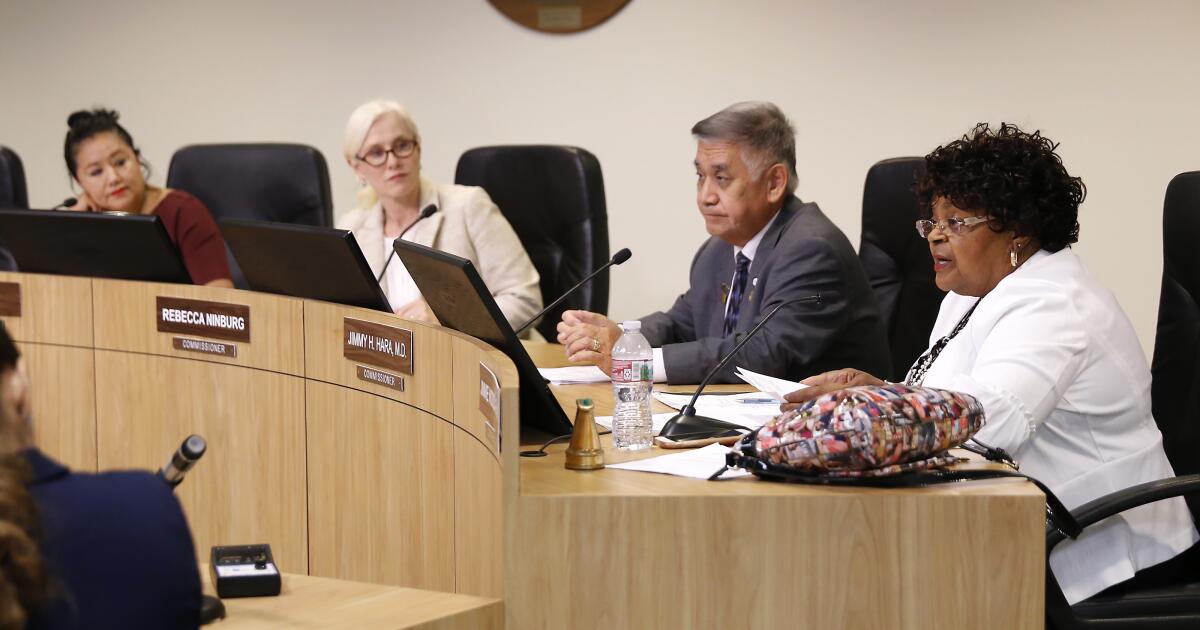
Hudley Hayes, who was appointed by Bass in June 2023 to serve on the five-member commission that provides civilian oversight of the LAFD, said that in her long career in civic roles, she had learned that words like “refinements” could mean troubling changes to a government report, made for the purpose of hiding facts.

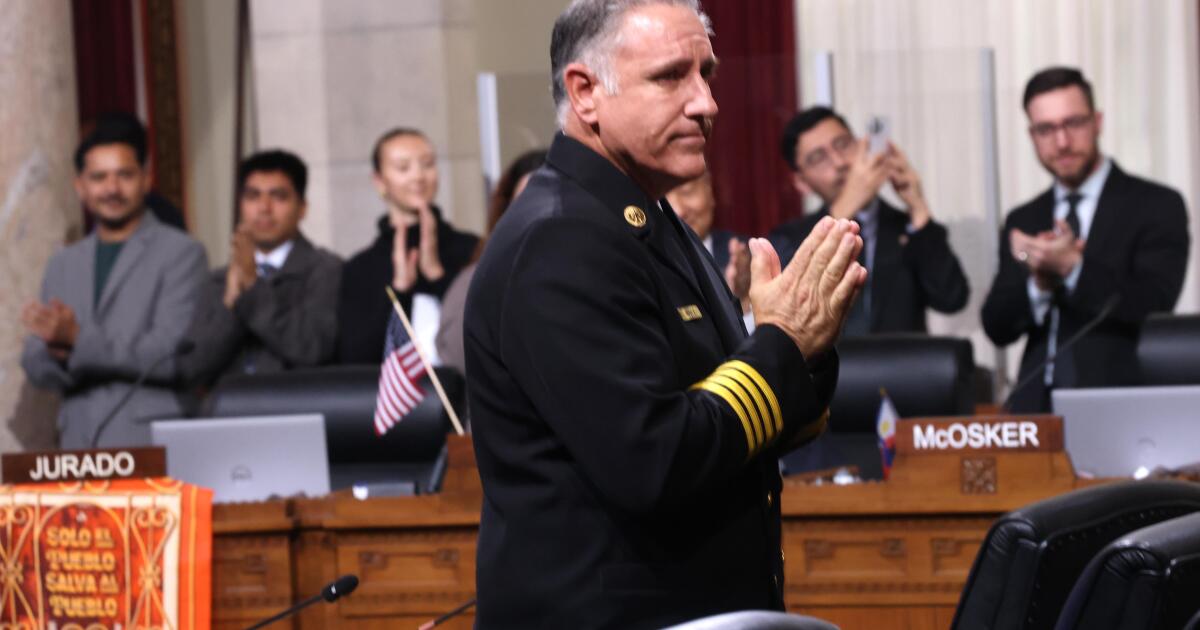
Earlier Tuesday, Fire Chief Jaime Moore, responding to the findings of a Times investigation, acknowledged that the after-action report had been edited to soften criticism of the LAFD leadership’s handling of the Palisades fire.

The Times had previously reported that Hudley Hayes was concerned enough about possible edits that she sought advice from a deputy city attorney.

But Hudley Hayes’ remarks Tuesday were her first public statements that her concerns stemmed from what she understood to be the mayor’s office’s possible intent to influence the report, which was supposed to lay out what went wrong in fighting the Palisades fire and how to prevent the mistakes from happening again.

Hudley Hayes said that after reviewing an early draft of the after-action report, as well as the final document released by the LAFD on Oct. 8, she was satisfied that “material findings” were not altered.

But her account raises questions about the mayor’s role in revisions to the report that, as Moore conceded Tuesday, downplayed the city’s failures in preparing for and responding to the fire, which killed 12 people and leveled much of the Palisades and surrounding areas.

On Tuesday, Bass’ office did not immediately explain what the refinements were. A spokesperson previously said that the office did not demand changes to the drafts and only asked the LAFD to confirm the accuracy of items such as how the weather and the department’s budget factored into the disaster.

“The report was written and edited by the Fire Department,” the spokesperson, Clara Karger, said in an email last month. “We did not red-line, review every page or review every draft of the report.”

The Times obtained and analyzed seven drafts of the report and identified deletions and revisions. The most significant changes in the various iterations of the report involved the LAFD’s deployment decisions before the fire, as the wind warnings became increasingly dire.

In one instance, LAFD officials removed language saying that the decision not to fully staff up and pre-deploy all available crews and engines ahead of the extreme wind forecast “did not align” with the department’s policy and procedures during red flag days. Instead, the final report said that the number of engine companies rolled out ahead of the fire “went above and beyond the standard LAFD pre-deployment matrix.”

Moore, who replaced Villanueva in November, admitted that the report was watered down to shield top brass from scrutiny.

“It is now clear that multiple drafts were edited to soften language and reduce explicit criticism of department leadership in that final report,” Moore said at a Fire Commission meeting Tuesday. “This editing occurred prior to my appointment as fire chief. And I can assure you that nothing of this sort will ever again happen while I am fire chief.”

The LAFD did not respond to a query about who ordered the changes to the report. Villanueva also did not respond Tuesday to requests for comment.

Hudley Hayes said she reached out to Villanueva around Aug. 21, when The Times published a story quoting a colleague on the Fire Commission, Sharon Delugach, expressing a desire to see the after-action report.

“It occurred to me then that she was correct. We hadn’t seen one — it was taking a long time,” Hudley Hayes said. “That’s the point I called interim Chief Villanueva.”

Meanwhile, the author of the report, Battalion Chief Kenneth Cook, had emailed a PDF of his report to Villanueva in early August, asking the chief to select a couple of people to provide edits so he could make the changes in his Word document.

The following week, Cook emailed the chief his final draft.

“Thank you for all your hard work,” Villanueva responded. “I’ll let you know how we’re going to move forward.”

Over the next two months, the report went through a series of edits — behind closed doors and without Cook’s involvement, as The Times disclosed last month.

On Oct. 8, the same day the report was released, Cook emailed Villanueva, declining to endorse the public version because of changes that altered his findings and made the report “highly unprofessional and inconsistent with our established standards.”

“Having reviewed the revised version submitted by your office, I must respectfully decline to endorse it in its current form,” Cook wrote in the email obtained by The Times. “The document has undergone substantial modifications and contains significant deletions of information that, in some instances, alter the conclusions originally presented.”

A July email thread reviewed by The Times shows that the LAFD formed a “crisis management workgroup” to deal with concerns about how the after-action report would be received.

“The primary goal of this workgroup is to collaboratively manage communications for any critical public relations issue that may arise. The immediate and most pressing crisis is the Palisades After Action Report,” LAFD Assistant Chief Kairi Brown wrote in an email to eight other people.

“With significant interest from media, politicians, and the community, it is crucial that we present a unified response to anticipated questions and concerns,” Brown wrote. “By doing so, we can ensure our messaging is clear and consistent, allowing us to create our own narrative rather than reactive responses.”

Hudley Hayes, who previously served on the L.A. Unified school board, said she did not think “there was any critical material removed” from the final report.

She said she noticed only small differences, such as “mistakes” being changed to “challenges,” and the removal of firefighters’ names.

She added that she does not know who ordered the changes disclosed by The Times — and despite her oversight role, is “not particularly” interested in finding out.

“Our job is to take the report that we have in front of us. Our job is to make sure those recommendations that came to us from a public report are taken care of,” she said. “You’re asking me political questions.”

Pringle is a former Times staff writer.

Source link

LAFD chief admits Palisades fire report was watered down, says it won’t happen again

Los Angeles Fire Chief Jaime Moore admitted Tuesday that his department’s after-action report on the Palisades fire was watered down to shield top brass from scrutiny.

Moore’s admission comes more than two weeks after The Times found that the report was edited to downplay the failures of city and Los Angeles Fire Department leaders in preparing for and fighting the Jan. 7, 2025, fire, which killed 12 people and destroyed thousands of homes.

“It is now clear that multiple drafts were edited to soften language and reduce explicit criticism of department leadership in that final report,” Moore said Tuesday during remarks before the city’s Board of Fire Commissioners. “This editing occurred prior to my appointment as fire chief. And I can assure you that nothing of this sort will ever again happen while I am fire chief.”

Moore, who was appointed fire chief in November, did not say who was responsible for the changes to the report.

The report’s author, LAFD Battalion Chief Kenneth Cook, declined to endorse it because of substantial deletions that altered his findings. Cook said in an Oct. 8 email to then-interim Fire Chief Ronnie Villanueva and other LAFD officials that the edited version was “highly unprofessional and inconsistent with our established standards.”

Mayor Karen Bass’ office has said that the LAFD wrote and edited the report, and that the mayor did not demand changes.

On Tuesday, Clara Karger, a spokesperson for Bass said: “Mayor Bass fully respects and supports what the Chief said today, and she looks forward to seeing his leadership make the change that is needed within the department. Chief Moore is a courageous leader with strong integrity who continues to show his deep commitment to the people of Los Angeles and to the brave firefighters who serve our city every day.”

Villanueva did not immediately respond to a request for comment.

Moore’s remarks, on the eve of the first anniversary of the Palisades fire, were the strongest admission yet of missteps by LAFD leaders. They amounted to an about-face for a chief who in November critiqued the media following a Times report that a battalion chief ordered firefighters to roll up their hoses and leave the area of a New Year’s Day fire even though they had complained that the ground was still smoldering. That fire, the Lachman fire, later reignited into the Palisades fire.

“This is about learning and not assigning blame,” said Fire Commissioner Sharon Delugach, who praised the chief for his comments.

The most significant changes, The Times found in its analysis of seven drafts of the report, involved top LAFD officials’ decision not to fully staff up and pre-deploy available firefighters ahead of the ferocious winds.

An initial draft said the decision “did not align” with policy, while the final version said the number of companies pre-deployed “went above and beyond the standard LAFD pre-deployment matrix.”

A section on “failures” was renamed “primary challenges,” and an item saying that crews and leaders had violated national guidelines on how to avoid firefighter deaths and injuries was scratched.

Another passage that was deleted said that some crews waited more than an hour for an assignment on Jan. 7, 2025.

The department made other changes that seemed intended to make the report seem less negative. In one draft, there was a suggestion to change the cover image from a photo of palm trees on fire to a more “positive” image, such as “firefighters on the frontline.” The final report displays the LAFD seal on its cover.

A July email thread reviewed by The Times shows concern over how the after-action report would be received, with the LAFD forming a “crisis management workgroup.”

“The primary goal of this workgroup is to collaboratively manage communications for any critical public relations issue that may arise. The immediate and most pressing crisis is the Palisades After Action Report,” LAFD Assistant Chief Kairi Brown wrote in an email to eight other people.

“With significant interest from media, politicians, and the community, it is crucial that we present a unified response to anticipated questions and concerns,” Brown wrote. “By doing so, we can ensure our messaging is clear and consistent, allowing us to create our own narrative rather than reactive responses.”

Maryam Zar, a Palisades resident who runs the Palisades Recovery Coalition, said that “when news came out that this report had been doctored to save face, it didn’t take much for [Palisades residents] to believe that was true.”

It was easy for Moore to admit the faults of previous LAFD administrations, she said.

“He’s not going to take any heat. It wasn’t him,” she said. “He’s not the fire chief who really should have stood up and said, ‘I didn’t do what I should have.’”

The after-action report has been widely criticized for failing to examine the New Year’s Day fire that later reignited into the Palisades fire. Bass has ordered the LAFD to commission an independent investigation into its missteps in putting out the earlier fire.

On Tuesday, Moore said the city failed to adequately ensure that the New Year’s Day fire was fully snuffed out.

He said that LAFD officials “genuinely believed the fire was fully extinguished.”

“That was based on the information, conditions, and procedures in place at that moment. That belief guided the operational decision-making that was made,” he said. “However, the outcome has made it incredibly clear that our mop-up and verification process needed to be stronger.”

“We have to own that, and I do,” he added.

Source link

After Palisades failures, is LAFD prepared for the next major wildfire?

As the Palisades fire raged, then-Los Angeles Fire Department Chief Kristin Crowley went on a television blitz, calling out city leadership for systematically underfunding her agency.

The LAFD, she said, didn’t have enough firefighters, based at enough fire stations, to quench the wind-driven flames that were tearing through the hills.

“We need more. This is no longer sustainable,” she said in one interview Jan. 10.

Nearly a year after the fire destroyed much of the Palisades, LAFD officials continue to highlight financial concerns, with Crowley’s successor requesting a 15% budget increase and the firefighters union proposing a sales tax that could bring in an extra $300 million per year.

A Jan. 9 aerial view of neighborhoods destroyed by the Palisades fire.

A Jan. 9 aerial view of neighborhoods destroyed by the Palisades fire.

(Robert Gauthier / Los Angeles Times)

But the LAFD’s hyper-focus on money obscures its leaders’ failures in managing the resources they had, beginning with a decision to leave the scene of a New Year’s Day fire despite signs it hadn’t been fully extinguished.

Days later, that fire reignited into the Palisades fire, which killed 12 people and destroyed thousands of homes. Despite forecasts of catastrophically high winds, LAFD officials didn’t pre-deploy engines in the area or increase manpower by ordering a previous shift of firefighters to stay on duty.

As the flames spread, the firefighting response was disorganized and chaotic, with the LAFD’s own after-action report describing major failures by high-ranking commanders in communication, staffing and basic wildland firefighting knowledge.

City leaders have highlighted changes they have made since the fire, including appointing 30-year LAFD veteran Jaime Moore as chief and drafting new protocols for staffing on high hazard weather days.

But the question remains: Is Los Angeles prepared for the next major wildfire? Some city officials and fire experts don’t think so, pointing to an LAFD that hasn’t evolved with the times and an incomplete review of how the Palisades fire started.

Moore, who was appointed chief last month, declined to comment.

Mayor Karen Bass said in an interview earlier this month that the city is “on the path to be completely ready” for a major wildfire, with the LAFD now taking a more proactive approach to weather warnings.

“The Fire Department has been way more aggressive, has done pre-deployment, has been very visible, alerts going out early, trying to be very, very aggressive,” she said.

But Genethia Hudley Hayes, president of the Board of Fire Commissioners, said that the LAFD is still unprepared and that there hasn’t been enough time to make the necessary changes. She cited the LAFD’s technology, which she said is about two decades behind.

“I am not confident there would be a different result” if a similar disaster strikes, she said.

City Councilmember Traci Park, whose district includes Pacific Palisades and who has advocated for more Fire Department funding, agreed with Hudley Hayes.

Some essential changes have been made, such as requiring firefighters to stay for an additional shift during red flag warnings, Park said. But she said that too many fire engines are out of service, there are not enough mechanics, and most important, questions about the origin of the Palisades fire remain unanswered.

In October, after federal prosecutors charged a former Palisades resident with deliberately setting the Jan. 1 Lachman fire, The Times reported that a battalion chief ordered firefighters to roll up their hoses and leave the burn area on Jan. 2, even though they had complained that the ground was still smoldering and rocks remained hot to the touch. The Times reviewed text messages among firefighters and a third party, sent in the weeks and months after the fire, describing the crew’s concerns.

The LAFD’s after-action report, released in October, only briefly mentioned the Lachman fire. Critics have flagged this as a crucial lapse in the report, which prevents the department from figuring out what went wrong and avoiding the same mistakes.

After the Times report, Bass ordered an investigation into the LAFD’s handling of the Lachman fire.

Mayor Karen Bass and then-Fire Chief Kristin Crowley

Mayor Karen Bass, right, and then-Fire Chief Kristin Crowley speak during a news conference in January. Bass ousted Crowley less than two months after the Palisades fire.

(Allen J. Schaben / Los Angeles Times)

Bass had ousted Crowley less than two months after the Palisades fire, citing the LAFD’s failure to properly deploy resources ahead of the winds and potentially have a chance to extinguish the fire before it exploded out of control, an issue that was exposed by a series of reports in The Times.

Bass also countered Crowley’s financial complaints, saying that the budget did not affect the department’s ability to fight the fire. The LAFD’s 2024-25 budget had actually increased 7% from the previous year, due in part to generous firefighter raises.

More money won’t solve bad decision-making by top officials, said Marc Eckstein, an emergency physician who served as LAFD’s medical director and commander of its emergency medical services bureau until he retired in 2021.

He said that without transparency and accountability, “the fallback is always going to be what it has been: We need more of everything — more people, more money, more fire trucks, more fire stations.”

A modern fire agency needs the flexibility to surge its staff during a disaster, he said, while also addressing day-to-day needs. Most 911 calls are for medical problems, he said, yet the LAFD functions more or less the same as it did decades ago, when structure fires were more common.

He said a panel of outside experts should have been given access to the LAFD’s records to offer an unbiased look at how the department performed leading up to and during the Palisades fire.

“And it’s a playbook. OK, how do we prevent this from happening again?” he said. “And the fact that didn’t happen is a disgrace.”

How much the department transforms after the Palisades disaster will depend, in large part, on its new chief. Moore, who joined the LAFD in 1995 and most recently was deputy chief of the Operations Valley Bureau, was chosen by Bass to lead the department over a fire chief from a major city outside California.

At stations around L.A., firefighters told Bass that they wanted an insider for the job, which she said factored into her decision.

“Given that the Fire Department was under such scrutiny, such a difficult time, morale is in the toilet, infighting that’s going on, the last thing in the world they needed, in my opinion, was somebody from the outside,” Bass told The Times.

Moore had signaled before his appointment was confirmed last month that he was troubled by the LAFD’s missteps with the Lachman fire and was going to bring in an outside organization to investigate.

But the following week, he appeared to change course, alleging that the media was trying to “smear” firefighters while saying he still planned to investigate the Lachman fire.

Moore will be in charge of implementing the 42 recommendations in the after-action report, which range from establishing better communication channels to how to defend homes where hidden embers could ignite.

The report drew the conclusion that top LAFD commanders had startlingly little knowledge about combating wildfires, including “basic suppression techniques.” It suggested that all LAFD members undergo training on key skills such as structure defense and how to draw water from swimming pools when hydrants don’t work.

In an interview with ABC7, Moore said that the LAFD has adopted about three-quarters of the recommendations and is considering creating a division specializing in wildland fires.

Hand crew members work outside

Members of Crew 4, the department’s new full-time wildland hand crew, practice cutting fire lines near Green Verdugo Fire Road in Sunland.

(Myung J. Chun / Los Angeles Times)

Since the Palisades fire, the LAFD has hired a 26-member wildland hand crew that uses chainsaws and other tools to chop paths through brush to stop a fire from spreading. When they aren’t battling fires, they do brush clearance throughout the city.

Earlier this month, as hand crew members practiced cutting fire lines through the brush in Sunland, the crew’s leader, Supt. Travis Humpherys, declined to say whether they would have changed the outcome of the Palisades fire.

Travis Humpherys is the Crew 4 superintendent.

Travis Humpherys is the Crew 4 superintendent.

(Myung J. Chun / Los Angeles Times)

But they have already “made a dramatic impact” with brush clearance and fighting wildfires, including a 20-acre fire in Burbank in June, Humpherys said.

Moore’s requested budget of more than $1 billion for the coming year — a 15% increase over this year’s budget — includes money for a second wildland hand crew, as well as nearly 200 additional firefighter recruits and helitanker services to attack fires from the air. That amount could be pared down during the months-long city budgeting process, as the City Council and the mayor find ways to balance the overall budget amid financial headwinds.

Meanwhile, United Firefighters of Los Angeles City Local 112 is charting an ambitious course to reduce the department’s dependency on the city budget, pushing for a ballot measure that, if approved by voters in November 2026, would raise nearly $10 billion by 2050 through a half-cent sales tax. But after the LAFD’s failures in the Palisades fire, some voters may be reluctant to entrust its leaders with more money.

“It’s hard to believe that we are fully prepared for the next major emergency,” Doug Coates, the union’s acting president, said in a statement. “We desperately need more firefighters and paramedics, more trucks, engines, and ambulances and more wildfire resources and neighborhood fire stations.”

E. Randol Schoenberg, whose family lost four homes in the fire, including his in Malibu — along with documents that belonged to his grandfather, the composer Arnold Schoenberg — said he would be happy to pay more taxes for more services.

But Schoenberg, an attorney who is representing Palisades fire victims in a lawsuit against the city and the state, said he expects the LAFD to honestly examine its mistakes.

“If they don’t really grapple with the issues of how this happened, then no matter how much money we throw at it, it’s going to happen again,” he said.

Times staff writer David Zahniser contributed to this report.

Source link