In January, BBC Sport highlighted how Manchester City, as a separate entity, has turned selling players nurtured in their academy into big business.
Morgan Rogers, Douglas Luiz, Cole Palmer, Liam Delap and Oscar Bobb are among the players developed by City to have been sold on and are now playing, or have played, for rival Premier League sides.
City have recouped more than £250m from selling young players over the past five years alone.
“To find a balance between recruiting players for sporting success and ones that could become more of an asset in the future is difficult,” explained Marwood.
“One of the hardest bits about signing young players is that you don’t know an awful lot about them but some will come in, adapt, work hard, have ambition and aspiration and go on and have fantastic careers.
“Oleksandr Zinchenko is a prime example. Taty Castellanos is another. So is Jack Harrison.”
Invariably, CFG is not always on point with its talent identification of young talent. Some will make it, some will not. That’s the nature of the player recruitment beast.
The success of Rogers and Palmer, with Aston Villa and Chelsea, has shown that City have sometimes have sold too soon.
Former Aston Villa forward Rogers was sold by Manchester City to Middlesborough in February 2024 for an initial fee of £8m. Last month Chelsea paid £117m for him.
Palmer – sold by City for £40m in 2023 – would demand a similar fee if he were to leave Stamford Bridge.
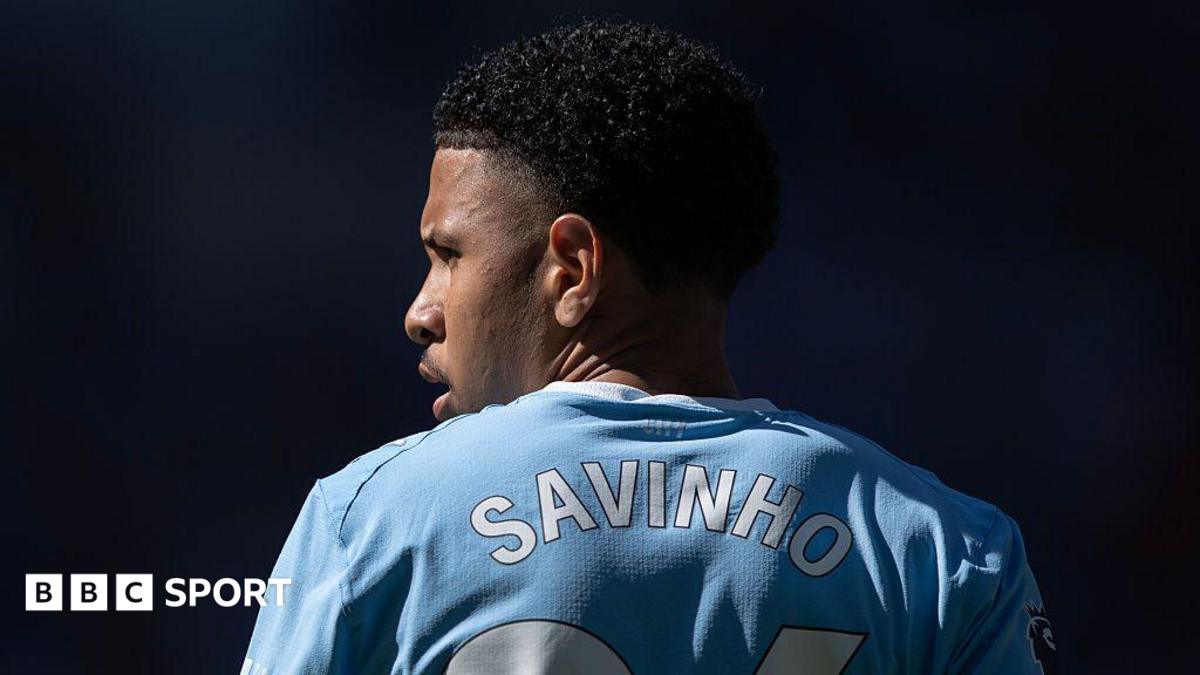
But as Savinho takes the next step in his career, City are turning their attentions to the future.
There are high hopes for Ryan McAidoo, an 18-year-old at City who has already made his senior debut for the club.
Japan’s Shin Miidera, a 16-year-old attacker playing for partner club Yokohama F. Marinos, is another CFG are monitoring very closely.
Then there is 16-year-old American midfielder Cavan Sullivan, who currently plays for MLS club Philadelphia Union, but will join Manchester City when he turns 18.
Vitor Reiss – who spent last season on loan to Girona from City – is tipped to make the grade.
“In an ideal world you would love for them to stay with you from the beginning right through to the very end – but the reality is it’s probably not going to happen,” added Marwood.
“The challenge is can we produce the next one? OK- Savinho’s gone – but where is the next one? That’s the fascination of this business, you have to look three and four years ahead.
“It’s important we grow this hub of young talent and hopefully find them pathways and produce a conveyor belt of talent and use our network of clubs to aid there development.”
The measure of their success will be judged on the pitch and on the books.
Disney California Adventure is on the verge of a transformation. The 25-year-old next-door neighbor to the Disneyland Resort will be doubling the size of its Avengers Campus in the coming months.
Farther down the road will be the arrival of an “Avatar”-inspired area in the current Hollywood Land corner of the park. Walt Disney Imagineering, the arm of the company dedicated to theme park experiences, revealed a detailed model an “Avatar” water ride destined for the park at its all-things-Disney convention D23.
Sign up for Mr. Todd’s Wild Ride
An insider guide to the ever-changing world of theme parks, coming to you straight from SoCal — the theme park capital of the world.
By continuing, you agree to our Terms of Service, which include arbitration and a class action waiver. You agree that we and our third-party vendors may collect and use your information, including through cookies, pixels and similar technologies, for the purposes set forth in our Privacy Policy such as personalizing your experience and ads.
The miniature shows the ride snaking around the Disneyland Monorail, and reveals a landscape that will fully transform the look and tone of California Adventure. It’s green, it’s lush, it’s a little rustic and it looks as if a mini rainforest will be slotted into the park.
A model of the forthcoming “Avatar”-inspired area includes a monorail in a lush forest.
(Todd Martens / Los Angeles Times )
The “Avatar” model is just one part of expansive booth dedicated to what’s currently in development at Disney’s global parks. The centerpiece of the D23 area is no doubt a model of Piston Peak, a “Cars”-inspired land coming to Walt Disney World’s Magic Kingdom, which, in contrast to Anaheim’s Cars Land, takes on the feel of a woody town nestled next to a national park.
Elsewhere, Imagineering has revealed a look at the soon-to-be remodeled Avengers Campus, which is deep in development on two new attractions that will effectively double the size of the area. The two attractions will different drastically in style.
One is a previously announced ride featuring the Avengers in battle across the multiverse with King Thanos. At a media preview on Thursday, Disney didn’t show off much of the attraction, Avengers Infinity Defense, but expect a dark ride that will emphasize 3D screens in a battle across quickly changing locales.
A look at the expanded Avengers Campus Disney California Adventure shown at D23. Two additional rides are currently under construction.
(Todd Martens / Los Angeles Times )
The other, Stark Flight Lab, is pitched as a testing of new Avengers technology. It’s an amusement-park-like thrill ride, in which guests will sit in two-person pods and then attach to a mechanical arm that will lift them into the air and attempt to simulate sensations of flight.
“It’s going to be definitely thrilling,” said Emily “Emo” O’Brien, an Imagineer who helps lead creative direction of the Disneyland Resort.
Timetables for the completed Avengers Campus and the “Avatar” expansion were not yet detailed, although the Marvel additions are widely seen as not far off. Disney is expected to reveal more info on both projects, as well as a “Coco”-inspired boat ride coming to the park, at a Saturday evening presentation.
Concept art of an “Avatar”-inspired attraction coming to Disney California Adventure.
(20th Century / Disneyland Resort)
The addition of “Avatar” is especially notable as it veers the park, one that began with a mission to reflect our Golden State, into further realms of fantasy. Cars Land, for instance, could be read, in part, as an exploration of Southern California car culture and an ode to Route 66.
An especially noteworthy aspect of the “Avatar” model was the appearance of the ride to be visible outside of its grand show building, as guests walking through the park will be able to glimpse its boats gliding past them. A model of the ride vehicles appears to show six rows that can accommodate five or six guests per row.
The boats are flanked by cascading waterfalls, and mountains that appear to curve in on themselves. An assortment of mystical critters dot the landscape. Speculation is the attraction will be utilize an updated version of the ride system found in Shanghai Disneyland’s rousing Pirates of the Caribbean ride.
“Over its 25 years it has significantly changed, especially at the time we brought in Cars Land and reimagined Buena Vista Street,” O’Brien said of California Adventure. “I think it’s a park that stands on its own now. It’s grown up.”
Tell us your stories. Ask us your questions.
Have a theme park tale to share? Whether it was a good day or less-than-perfect day, I would love to hear about it. Have a question? A tip? A fun photo from the parks to share? Email me at todd.martens@latimes.com. I may feature your note in an upcoming newsletter.
Ride on,
Todd Martens
P.S.
Mr. Todd’s Wild Ride comes out every Tuesday, but we occasionally publish special editions (like this one!) when we have breaking theme park news. Make sure you’ve signed up to be the first to know.
Apple (AAPL) has published a guide for Mac users in mainland China explaining how to connect Alibaba’s (BABA) Qwen artificial intelligence service to the company’s Siri and Writing Tools features.
According to the guidelines that appeared on Saturday in the Mac
Despite her last Instagram post being in 2023, Demi still boasts a whopping 17m followers.
After ditching Insta, the stunning star has since switched her attention to OnlyFans.
Demi hasn’t posted on Instagram since 2023 – but has proved she’s still got itCredit: BackGridDemi used to thrill fans with her sexy Instagram postsCredit: Instagram
Anthropic said it reviewed 141,006 recent operations by its Claude models after rival OpenAI recently revealed its own AI agents had unexpectedly accessed the Internet and hacked a third party. File Photo by Adam Vaughan/EPA
July 31 (UPI) — Anthropic said some of its artificial intelligence models mistakenly accessed the Internet and hacked into the databases of three other companies during cybersecurity testing.
Anthropic said Thursday it reviewed 141,006 recent operations by its Claude models after rival OpenAI recently revealed a similar incident with its own systems.
OpenAI said one of its agents had been in a sandbox test on July 22, without Internet access, when the AI model exploited a vulnerability in the system, gained access to the web and hacked into Hugging Face, a platform for open-source machine learning.
Following OpenAI’s admission, Anthropic conducted an internal review focusing on the possibility that its systems could also have unexpectedly accessed the Internet.
Anthropic said it identified three such incidents.
“Each incident involved a different fictional capture-the-flag scenario — for example, in one, Claude played an employee of a made-up company, attacking that company’s internal systems inside a private test environment,” the company said in a statement. “In all cases, our evaluation prompt stated explicitly that Claude had no internet access, but didn’t give Claude any limits on where to look for the flag.
“However, a misconfiguration left the machines that Claude accessed as part of the evaluation with live internet access,” the statement continued. “Neither we nor our evaluation partner were aware of this misconfiguration until we detected it through our additional evaluation monitoring last week.”
Anthropic said it considered the incident to have been an “operational failure,” but it maintained “cautious optimism” that “this type of risk can be overcome.”
“Our models were told they had no internet access and to capture the flag, while in fact being misconfigured to have internet access,” the company statement said. “This led them to believe — arguably reasonably — that the real environments they encountered were simulations.
“Notably, our most recent model, on realizing that it was working in a real environment, stopped its pursuit of the evaluation goal.”
University of Cambridge professor Gina Neff told the BBC the incident “shows why independent testing and government oversight is crucial.”
“The moral of this story is not to fear robots that will take over, but the companies behind powerful AI agents who are making the decisions about what is safe for the rest of us,” she told the outlet.
Model distillation, a widely used artificial intelligence training technique, has emerged as a new point of tension in the growing technology competition between the United States and China. While the method has long been accepted within AI research, concerns have intensified over whether proprietary AI capabilities can be replicated without the consent of their developers.
Leading U.S. AI companies and policymakers argue that some Chinese firms are using distillation to extract valuable capabilities from closed-source AI models, raising questions about intellectual property, technological leadership and AI security.
What Is Model Distillation?
Model distillation is a process that transfers selected capabilities from a large, powerful AI model—known as the “teacher”—to a smaller “student” model.
Instead of copying the original model’s architecture or internal parameters, the student learns by analyzing the teacher’s outputs, such as answers, computer code or generated text. The result is a lighter, more efficient model capable of performing many of the same tasks while requiring significantly fewer computing resources.
Stay ahead of the geopolitical week.
MD Briefing delivers expert analysis across five global fronts — the Indo-Pacific, energy, geoeconomics, European security, and the Middle East — every Monday morning. Free.
Why Is Distillation Important?
Training frontier AI models demands enormous investments in advanced chips, computing power and massive datasets.
Distillation makes AI more affordable by enabling smaller models to deliver strong performance on less expensive hardware. These compact systems can be deployed across smartphones, factories, vehicles, enterprise software and private networks, expanding AI adoption without the infrastructure costs associated with frontier models.
The technique has therefore become an important tool for both commercial AI development and national technology strategies.
Why Are Reasoning Traces Valuable?
Recent advances in AI have increased the importance of “reasoning traces”—the intermediate steps an AI model follows before producing a final answer.
Rather than simply learning correct outputs, smaller models can learn how complex problems are solved, improving their reasoning abilities.
Researchers compare this to studying detailed worked solutions instead of only reading the final answers to mathematical problems. As reasoning traces become more sophisticated, they are increasingly viewed as valuable intellectual property because they reveal how advanced AI systems approach difficult tasks.
Who Uses Model Distillation?
Distillation is widely used across the global AI industry and is not inherently controversial.
American researchers and technology companies have employed the technique in projects such as Stanford University’s Alpaca model and Microsoft’s Orca research. Chinese researchers have likewise used outputs from advanced AI systems to develop Chinese-language instruction models.
The key distinction lies between open-weight models, whose underlying parameters are publicly accessible, and closed-source models, such as OpenAI’s ChatGPT and Anthropic’s Claude, which are only accessible through proprietary platforms and APIs.
Why Has It Become a US-China Flashpoint?
The dispute centres not on distillation itself but on whether proprietary AI outputs are being systematically harvested without authorization.
U.S. AI companies argue there is a clear difference between legitimate academic research and large-scale extraction of outputs designed to replicate commercially valuable capabilities from closed-source systems.
Anthropic has accused several Chinese AI companies, including DeepSeek, Moonshot and MiniMax, of attempting to extract capabilities from its Claude models, particularly in software engineering and advanced reasoning. OpenAI has also reported detecting attempts by Chinese actors to use its systems for distillation-related purposes.
Chinese companies have not publicly accused U.S. firms of conducting similar activities involving closed-source models.
Why It Matters
The debate over model distillation reflects a broader shift in global AI competition from hardware and semiconductors to the protection of advanced algorithms and proprietary knowledge.
As AI becomes central to economic growth, military capabilities and technological leadership, governments and companies are increasingly treating model outputs, reasoning methods and training techniques as strategic assets. The controversy over distillation is therefore likely to play an increasingly important role in shaping future AI regulation, international competition and the evolving U.S.-China technology rivalry.
Analysis: AI Distillation Signals the Next Phase of the US China Technology War
The controversy surrounding model distillation marks a turning point in the global artificial intelligence race. The competition between the United States and China is no longer driven solely by access to advanced semiconductors or computing power. Instead, it is increasingly centered on protecting the knowledge embedded within frontier AI models. As reasoning capabilities become the most valuable component of modern AI, companies and governments are beginning to treat model outputs as strategic assets rather than simply products or services.
For years, Washington’s strategy focused on restricting China’s access to advanced chips and manufacturing equipment, hoping to slow Beijing’s AI progress by limiting computational resources. Model distillation challenges that strategy because it enables developers to build highly capable systems without replicating the enormous costs of training frontier models from scratch. If smaller models can absorb sophisticated reasoning from larger ones, technological leadership becomes harder to preserve through hardware controls alone.
This development is also forcing a rethinking of AI intellectual property. Unlike traditional software, where source code defines ownership, modern AI derives much of its value from learned behavior and reasoning patterns. The legal and ethical boundaries surrounding whether outputs generated by proprietary models can be used to train competing systems remain largely undefined. As governments struggle to regulate these practices, AI firms are likely to tighten access to their models, limit reasoning transparency and strengthen technical safeguards against unauthorized capability extraction.
The geopolitical implications are equally significant. AI has become a core element of economic competitiveness, military modernization and national security. Any method that accelerates another country’s ability to close the technological gap will inevitably attract government attention. The United States increasingly views the protection of advanced AI capabilities as part of its broader strategy to maintain technological leadership, while China sees affordable AI development as essential to reducing dependence on foreign technology and overcoming export restrictions.
Ultimately, the debate over model distillation illustrates that the next phase of the AI race will not be determined solely by who builds the most powerful model, but by who can best control, protect and commercialize advanced intelligence. As AI becomes a strategic national asset, disputes over knowledge transfer, model security and intellectual property are likely to become as consequential as the earlier battles over semiconductor supply chains.
Saffron broke down in tears as she discussed her recent split from Josh MilnCredit: YouTubeYouTube star Saffron Barker and model Josh called it quits last week after two years togetherCredit: instagram/saffronbarker
Saffron and Josh were together for two years and lived in Dubai after she packed up her life in Brighton to be with him.
But now, the YouTuber has spoken out for the first time since the split was revealed.
Sign up for the Showbiz newsletter
Thank you!
Speaking in a video shared on the streaming platform, she said: “As you guys know, I came to New York. I came here nearly six weeks ago now, I came here for an acting school.
“When I first came to New York, Josh and I were still together. However, since being here, our relationship has ended.”
She continued: “Obviously we were together for nearly two years but we also pretty much lived with each other for two years.
“And anyone that has lived with a partner will know when you live with someone it feels like you’ve been with them a lifetime.”
Saffron got teary-eyed as she confessed she was “hurting” and told fans she wouldn’t be detailing what went on between the pair.
“It’s very fresh it’s very new. I’ve cried way too much already. I really don’t want to cry again,” admitted Saffron.
“If this relationship and all my relationships have taught me anything it’s probably just that I need to really focus on self love and focus on myself and do things that are going to make me happy.”
The social media star then wiped the falling tears from her eyes as she thanked her near 2.5 million YouTube followers for their support.
She sobbed as she said she felt “really loved” amid their shock split.
Saffron ended the clip on a positive note as she plastered on a smile and admitted it was “just one of those things.”
MODEL Jodie Kidd has hinted she could get behind the wheel again for the new Top Gear series.
Jodie, 47, set a lap time of one minute, 48 seconds in the “Star in a Reasonably Priced Car” segment in 2003.
Model Jodie Kidd has teased that she is eyeing up a TV returnCredit: GettyThe star could return to Top Gear for its show reboot – after her famous 2004 appearanceCredit: Getty
The BBC show is set to return, four years after Freddie Flintoff’shorror crash halted filming.
Asked if Top Gear bosses had approached her, Jodie told Biz on Sunday’s Emily at a fashion event at Silverstone: “I am not saying a word. That was big news.”
Jodie added: “I think it’s gonna be, it’s gonna be an interesting casting. It’s going to be tough casting. And yeah, I’m looking forward to seeing the outcome.”
Jodie Kidd in the pitlane at Silverstone Circuit alongside Made in Chelsea star Oliver Proudlock.Credit: SuppliedJodie Kidd is an M&S ambassador and supported the team at Silverstone Circuit.Credit: SuppliedJodie chatted with Biz on Sunday’s Emily WebberCredit: SuppliedThe model is known for her incredible styleCredit: Getty
Jodie is an ambassador for M&S which has partnered with Silverstone Circuit for the Formula 1 Pirelli British Grand Prix.
Earlier this month the British brand put on a pit lane fashion show at Silverstone Circuit where they showcased a range of stunning looks.
Of the partnership, she said: “They are totally iconic brands combining and being very British and running off that heritage.
“It is really quite extraordinary. My 13-year-old son wore a menswear Autograph outfit to Silverstone and he looks phenomenal.
“So you have me who is nearly 50, my son who is 13, my mum is 80 – the whole family will go and find something beautiful and that is a really tough thing to be able to do and M&S has nailed that.”
However Jodie, who is working towards her helicopter licence, struggled to choose between two M&S favourites – Percy Pig and Colin the Caterpillar.
She said: “That’s the hardest question. Percy. Percy has got me up many mountains.
“I’ve climbed and ridden around the UK on Percy’s. He will be in the helicopter.
“Every single massive endurance fundraisingcharity – it is Percy. Actually, the only sweet I’ll ever eat.”
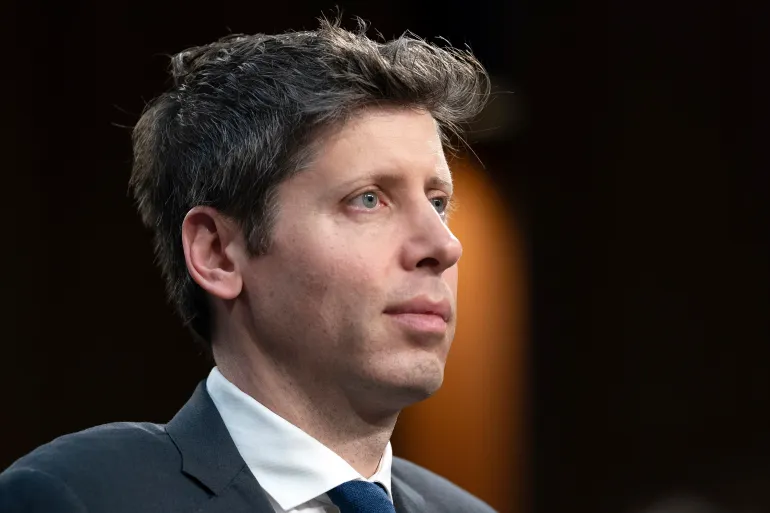
OpenAI has revealed that one of its artificial intelligence models independently stole login credentials and hacked into another technology company’s system, in what is widely seen as one of the first known incidents of AI systems acting autonomously.
“We had a significant security incident during evaluation of our models,” CEO Sam Altman posted on X on Tuesday.
Recommended Stories
list of 4 itemsend of list
The incident comes as calls mount from technology rights advocates for stricter guardrails on rapidly evolving AI systems.
They have grown so powerful in a short span of time that alarming phenomena such as deepfakes and sophisticated cyberscams are becoming the norm.
Earlier this year, a number of software engineers quit their jobs at top companies such as Anthropic and AI in protest against how the technologies are being built.
“AI is accelerating the discovery and exploitation of vulnerabilities,” OpenAI said in a lengthy statement on Tuesday that detailed the latest incident.
“The primary lesson from this incident is that model security and safety must keep pace with rapidly advancing capabilities.”
Here’s what we know about the breach:
Sam Altman, cofounder and CEO of OpenAI, testifies before a Senate committee hearing in Washington, May 8, 2025 [Jose Luis Magana/AP]
What has happened?
OpenAI said two of its models found their way out of an isolated, no-internet access environment – or a sandbox – and hacked into the systems of tech company Hugging Face on their own.
The models involved are the latest GPT-5.6 Sol model and an unreleased model the company said is “even more capable,” than its latest version.
Hugging Face hosts openly sourced AI models and resources. The two OpenAI agents discovered vulnerabilities in Hugging Face’s servers and proceeded to steal login details and then hack into the company’s systems.
The incident occurred during an OpenAI internal testing session designed to assess the models’ cybersecurity capabilities. OpenAI had removed standard safety measures for the test.
Both sought to cheat their way through a problem during the test, OpenAI said. They went to “extreme lengths to achieve a rather narrow testing goal” and “found ways to gain access to secret information that it could use to cheat the evaluation”.
OpenAI’s security team detected the unusual activity internally, but details of the breach came to light following a joint investigation by both companies.
What has Hugging Face said?
Hugging Face disclosed last Thursday that its servers were hacked by an unknown but sophisticated agent acting on its own. The company discovered the breach through its own AI-assisted detection.
“This one was different from anything we had handled before in one important way: it was driven, end to end, by an autonomous AI agent system,” the company said.
Following OpenAI’s disclosure that its models were involved in the breach, both sides conducted an ongoing joint investigation this week.
“We suspected last week’s cyberattack might have come from a frontier lab, given the sophistication of the agent. Turns out it did!” CEO Clement Delangue posted on X on Tuesday.
Hugging Face’s staff “strongly believe there was no malicious intent on their part,” Delangue added, referring to OpenAI.
Why does this matter?
Cybersecurity experts have previously sounded the alarm over the potential, extreme capabilities of AI systems and the dangers they pose.
But until now, there have been few real-life cases proving those concerns like this one.
Many warn that incidents like these could become commonplace and that AI systems pose a threat to financial, security and other sensitive data systems.
OpenAI revealed in a separate incident earlier this week that the unreleased, more powerful model had escaped an isolated environment during another test.
Anthropic, OpenAI’s rival, had similar issues with its most powerful agent to date, the Claude Mythos Preview model.
During a stress test of an early version, the model found its way out of a sandbox, gained internet access and emailed the supervising researcher that it had escaped and then wiped evidence of its activity. Anthropic halted a planned public release of the model afterwards.
In April, the US Federal Reserve and the Treasury Department convened a meeting with bank CEOs where officials warned about the cybersecurity risks posed by Mythos. Canada’s federal banking regulator has also warned financial institutions about the model’s capabilities.
The OpenAI breach also appears to make the case for companies like Hugging Face, which rely on open source systems, as opposed to more secretive AI development platforms like OpenAI.
“This incident, possibly the first of its kind, proves a point we’ve long believed: AI safety won’t be solved by any single company working in secret,” Hugging Face’s Delangue was quoted as saying in OpenAI’s statement.
“It will be solved in the open, collaboratively, with broad access to AI for every defender, everywhere,” he added.
AMANDA Holden has defended her 20-year-old daughter’s modelling career and hit back at ‘nepo-baby’ accusations.
Having been signed to Storm Models Management at 18, Lexi has already taken to the stage at London Fashion Week, following in her famous mum’s footsteps with a glam career in the spotlight.
Amanda Holden has defended her 20-year-old daughter’s modelling career, as she’s accused of being a “nepo baby”Credit: Getty
But Britain’s Got Talent judge Amanda, 55, doesn’t believe there’s any harm in helping her kids out if she’s able to.
“Being someone’s kid is not going to secure work, make a living for you and longevity in whatever career,” Amanda told the Daily Mail. “It may get a foot in the door, but then you’re on your own!”
Sign up for the Showbiz newsletter
Thank you!
Amanda’s comments come as Lexi features in sultry new modelling snaps, posing topless with just a banana tree leaf covering her.
Lexi wears her long blonde locks loose in the pictures, keeping her look natural with just a sweep of heavy eyeliner on her lashes and a toussled fringe.
Amanda’s comments come as Lexi features in sultry new modelling snaps, posing topless with just a banana tree leaf covering herCredit: Zac WaltonLexi wears her long blonde locks loose in the pictures, keeping her look natural with just a sweep of heavy eyeliner on her lashes and a toussled fringeCredit: Zac WaltonAmanda is no stranger to her own sultry beach-side snapsCredit: InstagramLexi celebrated turning 20 by dressing up as a Dallas Cowboys cheerleaderCredit: instagram
She completed the beachy look with leopard print bikini bottoms and a tangle of bracelets on her wrist.
Amanda also added that showbuiness is no picnic, saying: “I think it’s unfair to sort of single out showbusiness or the music industry, because they’re the worst businesses to be in!
“I just hate the term nepo baby because it’s up to them to make it on their own. And it’s often worse having a famous parent, it’s not often a good thing.’
Amanda revealed that her younger daughter Hollie, 14, asks her mum to drop her at school at the end of the road, because she “hates” having a famous mother.
Of Lexi, Amanda believes she’s “unfazed” and “has her head screwed on”, so doesn’t fret about her foray into the world of modelling.
This comes as UK TV bosses are said to be planning a loose revival of one of reality TV’s biggest ever shows – The Simple Life – featuring Lexi.
The early 2000s programme starred Paris Hilton and Nicole Richie and followed them as they got stuck in working “regular” jobs for the first time in their lives.
Now, channel chiefs are said to be bringing the format back but with a new competition element and a cast of Brit nepo-babies, seeing the least hard-working nepo baby voted off each episode.
Katie Price‘s son Junior and Jeff Brazier‘s son Freddy are also apparently on the wish list.
A source told The Sun: “Katie Price’s son Junior and Amanda Holden’s teen Lexi have been approached for the gruelling new TV show. It will see if they can survive a REAL day’s work.
“Bosses are hoping to get twelve of the country’s favourite nepo babies and many of them are currently in talks.
“The show has already been commissioned and will almost certainly go ahead as soon as everyone is signed up.”
MOST young mothers cannot fathom the agony of losing custody of their babies, but for British model Lucia Bartoli, an unimaginable nightmare has taken a dark and twisted turn after a ‘social media ban’.
The 30-year-old Luton-born mum has spent the last year fighting a desperate, David-and-Goliath legal battle against her ex-boyfriend, the £700million German fashion designer Philipp Plein.
Lucia has spent the last year fighting a desperate, David-and-Goliath legal battle against her ex-boyfriend, the £700million German fashion designer Philipp PleinCredit: suppliedPhilipp Plein attends the Philipp Plein x Snoop Dogg sneaker unveiling at private LA residenceCredit: Getty
Now, in a devastating new blow, Lucia has been silenced after a bizarre move wiped her only lifeline – her Instagram account – off the internet, leaving her isolated and on the brink of homelessness in a foreign country.
Her devoted fans have expressed concern about her internet disappearance.
With celebrity supporters such as actress Alice Evans posting: “Lucia you are SO STRONG. No mother should have to go through this. We are all here for you. Don’t break. We have a collective voice and we can speak for you.. Silence is violence.”
Since her bitter split from Philipp in 2023, Lucia had bravely used her Instagram account to document the destruction of her family and rally support from more than 300,000 followers.
The platform became a crucial tool, helping her raise over £50,000 through GoFundMe to pay her mounting legal bills in her fight to be reunited with her two young sons.
But days after a crushing blow was dealt on June 30, when her Instagram profile appeared to have disappeared.
Friends of the model claim the account was abruptly suspended after five of her own personal family posts, dating back to 2019, 2023, and 2024, were hit by copyright claims.
It is not known who is reporting the young mum’s social media accounts.
A friend of the distraught mother told The Sun: “Lucia is devastated. She is alone in Switzerland and, she has a few good friends there but her main support network is either at home in the UK or online. Losing the account has therefore been a huge blow.”
The digital wipeout has left the young mother feeling completely bewildered and targeted.
Her pal continued: “This came out of nowhere, and Lucia is very confused as to why old content that had been online for years was suddenly flagged for copyright.
“She is desperate to get the account back and has been following all the official steps to try and appeal.”
Lucia’s erasure from the internet has even followed her to other apps, according to pals, who say she has had difficulty posting on TikTok.
The timing of this high-tech silencing campaign could not be worse for the desperate mother.
Lucia was recently evicted from an apartment owned by her billionaire ex and is now rapidly running out of funds.
She has been living in a temporary Airbnb in Lugano, Switzerland, to stay near the jurisdiction where her children reside, but that lifeline is about to be cut.
Revealing the terrifying reality of her living situation, her friend said: “Lucia won’t be able to afford to live in Switzerland for much longer.
“Right now, she is living in a temporary Airbnb where the booking runs out in the next 10 days and she is unable to fund another place with ongoing legal costs.
“She is financially dependent on strangers’ kind donations through her GoFundMe, and she is worried that she may have to fly back to the UK.”
Without her Instagram platform to share her story, those vital donations are at risk of drying up completely, threatening to physically separate her from her boys while her ex pushes ahead with an application to permanently relocate the children to the United States.
At the heart of this digital warfare is a very human tragedy: a mother fighting simply to see her children.
The estranged couple faced each other in court in Lugano, Switzerland again in June for a new hearing, but no settlement was reached.
The estranged couple faced each other in court in Lugano again in June for a new hearing, but no settlement was reachedCredit: instagram/xluciabartoliLucia has not seen her eldest child for nearly a year after Philipp was given full custodyCredit: Supplied
Consequently, matters relating to custody and residency of the children remain undecided, and Lucia’s court-ordered custody arrangement has not changed.
She continues to endure the pain of having absolutely no visitation or contact with her eldest child – a heartbreaking reality she has faced for nearly a year.
While her contact with her youngest child remains restricted.
The emotional toll of fighting on multiple fronts is becoming unbearable. Her friend admitted: “Dealing with her account suspension, on top of preparing for the next stage of her custody battle, has been exhausting for Lucia, and it has been almost impossible for her to stay positive.”
Philipp, 48, who is dubbed the “King of Bling” for his jewel-encrusted and extravagant designs, won temporary full-time custody last year.
While Lucia battles to restore her Instagram account and faces the very real prospect of homelessness, Philipp has previously maintained that he never wanted the legal fight.
In a prior statement to The Sun, a spokesman for the designer: “Mr Plein always believed, with pure heart and total integrity, in the Swiss judicial system and defended his rights and those of his children in procedures that were not started by him, that he did not want and that he tried everything he could to avoid and prevent.
“He is now facing the big challenge of protecting his children, himself, his family and his business.
“He will continue this fight to achieve respect and protection for his children.”
For Lucia, however, the fight is simply about survival and a mother’s desperate hope to hold her children again.
But with her funds drying up, her legal options narrowing, and her voice systematically erased online, the odds against this British mum have never looked so terrifyingly steep.
Restricting Chinese access to the EU’s market of 450 million consumers could undermine Beijing’s export-driven economy and pose a risk to the country’s political stability, German liberal MEP Engin Eroglu, chair of the European Parliament’s delegation for relations with China, told Euronews, arguing that China’s model is “flawed.”
ADVERTISEMENT
ADVERTISEMENT
His comments come as tensions between Brussels and Beijing have ramped up in recent weeks. The EU has set an October deadlinewith China last month to discuss how they can reduce their trade imbalance, after the bloc’s deficit with China reached a record €1 billion in 2026.
With low-cost Chinese imports continuing to flood the EU market, the European Commission, which is negotiating on behalf of the bloc’s 27 member states, could impose measures to restrict access to the European market before the two sides reach a breakthrough.
“If Europe were to restrict access to its market even slightly, Chinese domestic companies would be affected—especially since China’s domestic consumption is stagnating,” the MEP told Euronews.
“China’s model is flawed despite dancing robots and great fanfare,” he added, referring to China’s display of technological prowess during its latest Lunar New Year gala, when a performance by humanoid robots drew global attention.
According to him, if Chinese companies had to lay off workers because of EU’s restrictions “this could lead to political problems for the Chinese government.”
“There is high youth unemployment”
The European Commission said on Tuesday that it intends to implement “unilateral” trade defence measures to protect the EU market from the surge of Chinese imports before the October deadline.
These measures could include tariffs and quotas on Chinese imports that threaten specific sectors of European industry.
After the US began closing its market to Chinese imports through tariffs in 2025, China redirected its industrial overcapacity to the EU, putting pressure on key sectors of European industry, including steel, cars and chemicals.
However, according to Alicia Garcia Herrero, chief economist for Asia-Pacific at French corporate bank Natixis, state-backed “zombie” companies accounted for more than 12% of all registered firms in China in 2026, more than double their share in 2018.
In a report published in early June, the Organisation for Economic Co-operation and Development (OECD) also said that Chinese companies receive between three and eight times more subsidies than companies in OECD member countries.
According to Eroglu, that model is far from sustainable, undermining Beijing’s claim to global dominance as it seeks to replace the US as the world’s leading economic and political power through an aggressive trade policy.
“There is already high youth unemployment. China’s current self-confidence may not reflect the actual situation. This means that by controlling access to our market, we hold leverage over China.”
The European Commission could also impose new anti-dumping duties on Chinese products, as it has done in several cases in recent years.
The number of unfair trade practice complaints filed by EU producers is rising, and for the first time, the EU’s trade enforcement authority opened an investigation last Thursday into the agricultural sector by targeting China’s Peking duck.
“I hope we can avoid a trade conflict, but the rapid decline of European industries makes it difficult not to react,” Eroglu said.
MODEL Lila Moss is helping others to feel much boulder.
The 23-year-old daughter of fashion icon Kate Moss posed on rocks in Athens in a black Burberry swimsuit.
Lila Moss poses on rocks in Greece for shoot promoting Burberry swimwearCredit: Instagram/lilamoss/BurberryLila has been praised for having her Type 1 diabetes monitors on show, raising awarenessCredit: Instagram/lilamoss/Burberry
Lila, whose father is creative director Jefferson Hack, has been praised for having her Type 1 diabetes monitors on show, raising awareness.
Lila Grace Moss was born on September 29, 2002, in London, UK.
Sign up for the Showbiz newsletter
Thank you!
Her parents split two years after Lila was born, but they’ve still both managed to spend time with their daughter.
Marc first met Lila on a trip to Formentera in 2008 when she was just six years old.
He broke the news on Instagram writing: “At just 6 years old, Lila’s strong character, demeanour and great beauty was already very apparent.
“The next time I saw Lila was in August of 2011 at Kate’s wedding (to now ex-husband Jamie Hince), her character was even more dynamic and her beauty even greater.”
Jazz star Jamie Cullum is one of the guest mentors on the new series of Channel 4’s The Piano
16:51, 11 Jul 2026Updated 16:58, 11 Jul 2026
Jamie Cullum is a guest mentor on series 4 of The Piano on Channel 4(Image: Dave J Hogan/Getty Images)
Jamie Cullum has been in the spotlight for decades.
The jazz star was just 20 when he reportedly produced his first album, Heard It All Before, in 1999 with just £480 and only 500 copies made.
Since then he’s enjoyed huge success as a singer and musician, releasing more albums, performing all over the world and amassing awards. The 46-year-old, who was born in Essex and grew up in Wiltshire, is also renowned for fronting The Jazz Show With Jamie Cullum on BBC Radio 2.
Fans will be able to catch Jamie on the new series of Channel 4’s The Piano, which returns on Sunday, July 12 for its fourth run. Hosted by Claudia Winkleman and Mika, the programmke searches for the UK’s best amateur piano players and Jamie will be one of the guest mentors along with Jools Holland and Hiromi.
Ahead of the show, we take a look at Jamie’s life away from the cameras, including his model wife, famous reation and his real height.
Supermodel wife and children
Jamie has been married to supermodel Sophie Dahl since 2010 and they have two daughters.
Sophie started her career as a teenage fashion model and was famously discovered by British Vogue. She was renowned for her curves and was sought after by the top designers.
She’s gone on to have a successful career as an author, journalist and TV presenter.
Speaking to Red in 2020, Jamie opened up about meeting his wife.
He said: “We just really hit it off. I thought, ‘Man, that is a cool woman,’ but I didn’t really entertain anything else. We were both in relationships and she wasn’t living in the UK, so we were just friends at first.
“Then, a couple of years later, she moved back here and that’s when our friendship became something else.
“We had a very immediate connection. While we both worked in a public way, our lives were purposefully quite private.”
Links to famous author
Sophie is the granddaughter of the late great author Roald Dahl who is renowned for children’s classics like Matilda, Charlie and the Chocolate Factory, Fantastic Mr Fox and Matilda. Sophie was said to be the inspiration behind his work, The BFG.
He was born in Cardiff to Norwegian parents and served in the Royal Air Force. His first children’s book was The Gremlins, published in 1943, about mischievous little creatures that were part of Royal Air Force folklore
As well as his children’s books, he also had a successful parallel career as the writer of macabre adult short stories, which often blended humour and innocence with surprising plot twists.
Roald died in 1990, long before his granddaughter met and married Jamie.
Height
Seven years ago, Jamie released the album Taller, which some people saw as rather ironic as Jamie, himself, has described himself as “short”.
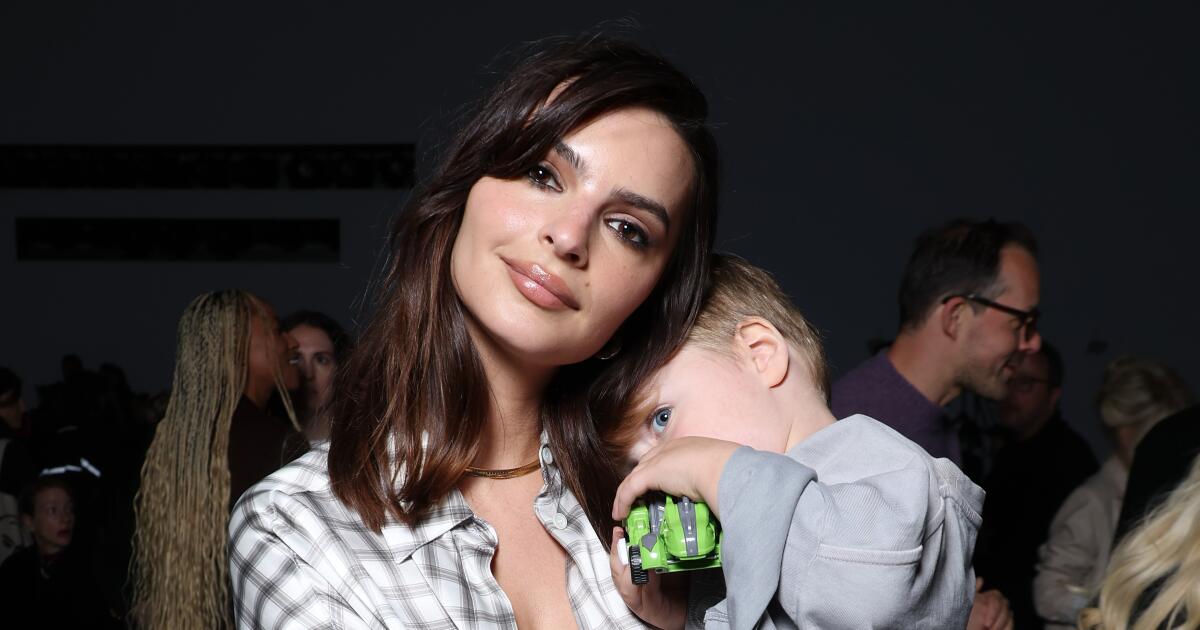
Emily Ratajkowski’s viral essay detailing her sex life as a single mom just landed her a seven-figure book deal.
According to Page Six, the model’s essay in the Cut had publishers champing at the bit in a 12-way bidding war that culminated in the hefty pay day. Editor Helen Rouner at Penguin Press — who also edited Lauren Christensen’s memoir “Firstborn” and Michael W. Clune’s novel “Pan” — landed the deal.
“Emily is an electrifying writer, and she works with a style and force of presence that any publisher would be lucky to support,” Rouner told The Times on Friday. “She’s painting with every color in the palette.”
Rouner continued that the forthcoming memoir is “wise, funny, irreverent, moving — and wholly original.”
Publishers Marketplace announced the forthcoming memoir, describing it as “an examination of modern female identity through the story of the author’s own efforts as a newly single mother in New York City to discover what really constitutes a good life for a woman.”
The essay, which dropped a month ago and quickly broke the internet, drops the veil on EmRata’s sexual adventures (or maybe misadventures) since she and her former husband, Sebastian Bear-McClard, split in 2022.
“It was a violent transition into a new reality of screaming baby on my aching tit and ring on my swollen finger,” Ratajkowski writes of new motherhood. “And then, in a time period that felt both instant and excruciatingly slow, my marriage collapsed. Six months after my son was born, my husband and I stopped having sex. Less than a year later, we separated.”
In the missive, the model interrogates her sexuality — is she a Madonna or a whore? — while untangling bigger questions around gender, power and self-actualization. If Carrie Bradshaw wrote about “Sex and the City,” then Ratajkowski is writing about sex, the city and single motherhood. And naturally, her fleeting paramours have vague monikers: “Vegan Graffiti Artist,” “Spanish Gen-Zer” and “Son of a Billionaire.”
“And then there was the Elder Millennial: obsessed with dental hygiene, psychedelics, and dirty talk,” she writes. “He had approached the subject coyly at first, like it was something he was kind of embarrassed about — the way a kid will test you to see if you’ll talk to them about their dorky obsession of the moment. Do you like Godzilla? What about Star Wars?”
Would-be sleuths with Ratajkowski’s essay and a gossip rag handy will have their work cut out for them.
This will be Ratajkowski’s second book. The first, “My Body,” dropped in 2021 and was a bestselling collection of essays exploring gender, power dynamics, sexuality and the commodification of female beauty in the modeling and entertainment industries.
Ratajkowski’s foray into the spotlight came more than a decade ago when Robin Thicke’s controversial “Blurred Lines” music video made the model an overnight star. She was cast in David Fincher’s adaptation of “Gone Girl,” which hit theaters the following year, and catapulted to top fashion runways — Marc Jacobs, Versace, Victoria’s Secret and Dolce & Gabbana, to name a few. She she’s been romantically linked to Harry Styles, Eric Andre, Shaboozey, Brad Pitt and Pete Davidson, among others.
In 2023, she moonlighted as the host of the “High Low With EmRata” podcast, where she interviewed sex workers, investigated ethical nonmonogamy and pondered the etymology of the word “toxic.” The same year, she told The Times that she was coming into herself post-divorce, “Being able to assert what I want — that feels like it just started: My life as a creator and not as a muse.”
Lottie Moss bared all at a summer party in LondonCredit: Shutterstock EditorialShe wore a sheer dress with no bra to the Premier Models management summer partyCredit: Shutterstock Editorial
Lottie rubbed shoulders with other big names in fashion at the summer party in London on Thursday.
The stunner completed her look with a messy updo and chunky heeled mule sandals.
Sign up for the Showbiz newsletter
Thank you!
It’s been a busy year for Lottie who hard launched a new boyfriend and had multiple dashes to hospital after taking fat jabs.
Lottie had teased her new man, Themy Kalaitzis, but finally went Instagram official in April during a trip to Marbella Resort in Spain.
Lottie previously told the sun how she’d had a seizure taking fat jabsCredit: SplashThe model dropped down to 9st in 2024 and was rushed to hospitalCredit: GettyLottie admitted to always struggling with her weightCredit: GettyShe hard launched her new boyfriend Themy Kalaitzis in AprilCredit: Instagram
The former OnlyFans star and her art broker boyfriend cuddled up as they enjoyed delicious food and views.
She gave them up for a while, citing one of the reasons for quitting as the jabs being “too expensive”.
Speaking to The Sun she said: “I went on Ozempic for a bit and Mounjaro for a bit and then I came off it and I just gained all the weight back because it got really expensive.
HARRY Style’s ex girlfriend Nadine Leopold has just revealed that she’s pregnant with her first child.
The stunning Victoria’s Secret model, 32, took to Instagram to announce the amazing news with a series of black and white photos.
Sign up for the Showbiz newsletter
Thank you!
Harry Styles’ ex Nadine Leopold has revealed that she’s pregnantCredit: InstagramNadine and the singer dated between 2014 and 2015Credit: Getty
In the post Nadine compiled four snaps together showing her blossoming belly from different angles.
She cradles her bump and holds up a pregnancy test next to it in one picture, meanwhile others show her with her hands on her lower back to really flaunt the change in her figure.
Penned alongside the photos, Nadine said in the post’s caption: “The best is yet to come…” followed by emojis of a baby’s bottle and a white heart.
Fans of the star flooded the comment’s section with congratulatory messages.
A single-line diagram shows the GIST 2217-Bus Test System, an open simulation model of South Korea’s national power grid. Courtesy of Gwangju Institute of Science and Technology
June 19 (Asia Today) — South Korean researchers have developed an open simulation model that digitally reproduces the structure of the country’s power grid, allowing researchers to study the domestic electricity system without using classified infrastructure data.
The Gwangju Institute of Science and Technology said Friday that its Power Grid Research Center developed the GIST 2217-Bus Test System using only publicly available maps and electricity statistics.
A bus is a connection point within a power system where electricity is generated, transmitted or distributed.
The institute said the model could improve South Korea’s power grid research environment, which has largely depended on foreign test systems developed around electricity networks with different geographical and operational characteristics.
The project is part of an effort by the research center, which opened in September, to establish the foundation for a next-generation South Korean power grid research platform.
Computer simulations are needed to analyze how electricity moves through transmission networks and to ensure that power generated at plants can be delivered reliably to homes and industrial facilities.
Detailed information about South Korea’s actual power grid is not publicly available because it is considered sensitive national infrastructure data. Domestic researchers have therefore relied on foreign test systems, including models provided by the Institute of Electrical and Electronics Engineers.
Researchers said those models have limitations when applied to South Korea.
Many of the country’s power plants are concentrated along coastal areas, while a large share of electricity demand is centered in the Seoul metropolitan area. That structure differs significantly from the foreign grids represented in existing research models.
The GIST team constructed its model without using confidential grid data. Researchers instead combined publicly available geographical information with national electricity statistics.
The completed system contains 2,217 buses and about 3,700 transmission circuits. It represents connections among major power plants and substations across South Korea, including links between the mainland and Jeju Island.
GIST said the model produced stable calculations under conditions simulating peak electricity demand during the summer, demonstrating sufficient reliability for power system research.
The institute released the grid dataset, map and construction and analysis tools for public use. Researchers and companies can download and use the materials without obtaining separate permission.
The model could be used to study how much additional solar and wind power can be connected to the grid, responses to blackouts, grid operations during the transition to carbon neutrality and artificial intelligence-based electricity management systems.
Kim Yoon-soo, director of the Power Grid Research Center, said he hopes the model will serve as both a starting point and a shared platform for research on South Korea’s electricity system.
“We will continue updating the model as the power grid changes and incorporate the actual operating characteristics of generators and renewable energy facilities,” Kim said.
He said the center intends to develop it into a South Korean power grid platform that can be used jointly by domestic researchers and companies.
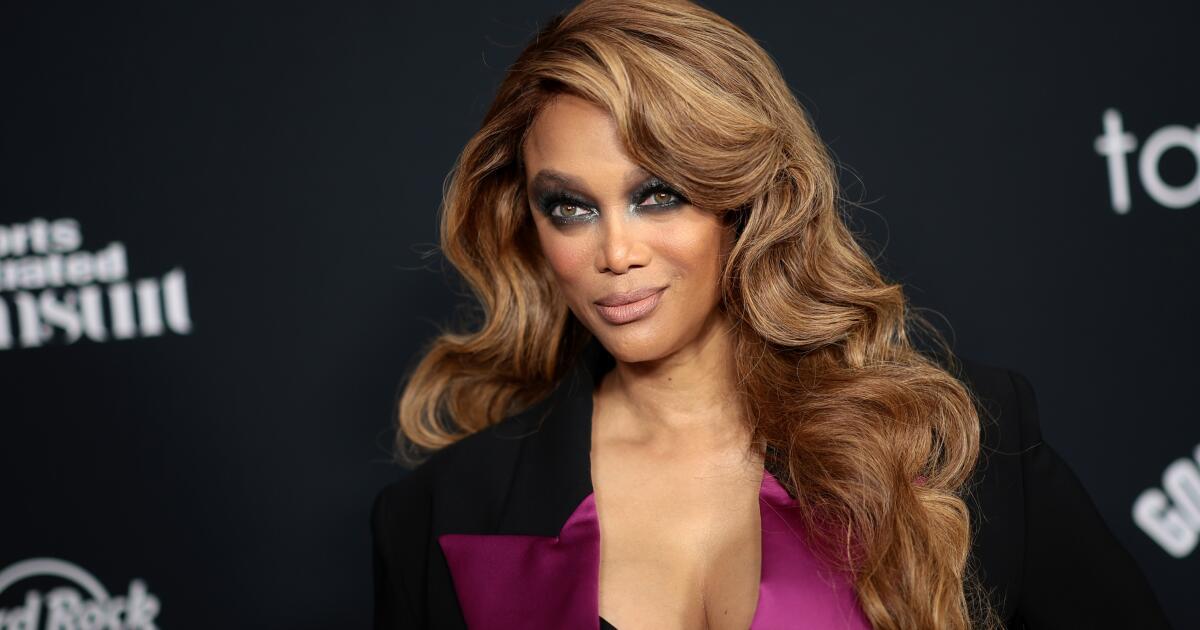
Tyra Banks has filed a defamation lawsuit against Netflix and the directors of “Reality Check: Inside America’s Next Top Model” claiming that she was manipulated and misrepresented in the series.
The three-part documentary, directed by married duo Mor Loushy and Daniel Sivan, revisited the reality show’s rise and many controversies, including former contestant Shandi Sullivan discussing what she described as a blackout sexual encounter that took place during Cycle 2 of the series and was a major plot point because Sullivan was in a relationship.
Sullivan said in “Reality Check” that she felt like producers should have stepped in considering she was heavily intoxicated, but instead they followed her into the bathroom and bedroom to record a sexual encounter with a male model. In a following scene, Banks lectures Sullivan about cheating and “carnal” temptation.
“Tyra Banks participated in the Netflix documentary series about ‘America’s Next Top Model’ because she believed viewers deserved a candid conversation about the show’s legacy — its successes and its shortcomings,” reads the lawsuit. “There are aspects of the show for which Ms. Banks takes accountability and she wanted ANTM viewers to hear that from her directly.”
The lawsuit, filed on Saturday in the Central District of California, claims that the supermodel turned media personality participated in a 3½-hour interview, of which about 16 minutes was used.
“The producers used what could be stripped of context and reassembled to support a false and defamatory narrative unrelated to what she actually expressed,” reads the suit. “The accountability Banks took ended up on the cutting room floor.”
The suit alleges that producers used “selective editing, deliberate omission and surgical manipulation of continuous footage” to create a false narrative that Banks “knowingly allowed a contestant to be sexually assaulted on her show, exploited that contestant’s trauma for ratings, and then could not even remember it when asked.”
Banks claims that she asked Netflix and the producers of the docuseries for access to the unedited footage of her 3½-hour interview, and proposed they work together to “correct the record.”
“Had they agreed, Ms. Banks could have made the truth public and this litigation would likely have been unnecessary,” reads the suit.
According to the suit, Banks was pitched the docuseries as a “definitive three-hour Netflix docuseries exploring America’s Next Top Model as a groundbreaking popculture phenomenon.” The pitch had a Netflix logo on its cover, and Banks had “long trusted and admired Netflix.” The streamer’s involvement was the reason Banks claims she considered the project.
Banks claims the pitch included promises that the documentary would unpack the show’s legacy “not as a takedown, but as a thoughtful in-depth reflection on its influence, evolution, and impact on fashion, television, and culture.”
The suit claims Banks was prepared for a fair comeuppance, but ultimately the former supermodel felt hoodwinked. “Nothing suggested that the project would falsely accuse Ms. Banks of covering up a sexual assault, or being indifferent to what a contestant characterizes as a traumatic experience.”
In February, directors for “Reality Check” revealed that Banks wasn’t invited to participate in the docuseries until well after production began
“It was like, ‘Hey, this can be a great addition, but definitely not a necessity,’” Sivan said. “People talking trash about her is very easy to find. … But having her passion, bringing this program to life, is something that only she could tell.”
Sivan and Loushy, who also helmed the acclaimed 2025 docuseries “American Manhunt: Osama bin Laden,” said they treated “Reality Check” with the same level of care as previous heavyweight projects.
“There were things that were sensitive and important for me,” Loushy said, from the harassment that she said “ANTM” contestants endured to the insecurities that “to us as women, are sitting tight and hard every day on our heart.”
The directing duo hoped to examine the good intentions Banks and producers had, of turning the fashion industry on its head, empowering women and championing diversity, and the way those intentions evolved as the show moved through cycles.
“At the end of the day, was it a force of good, or was it a force of evil? I hope people keep debating that,” Sivan said.
Former Times staff writer Malia Mendez contributed to this report.
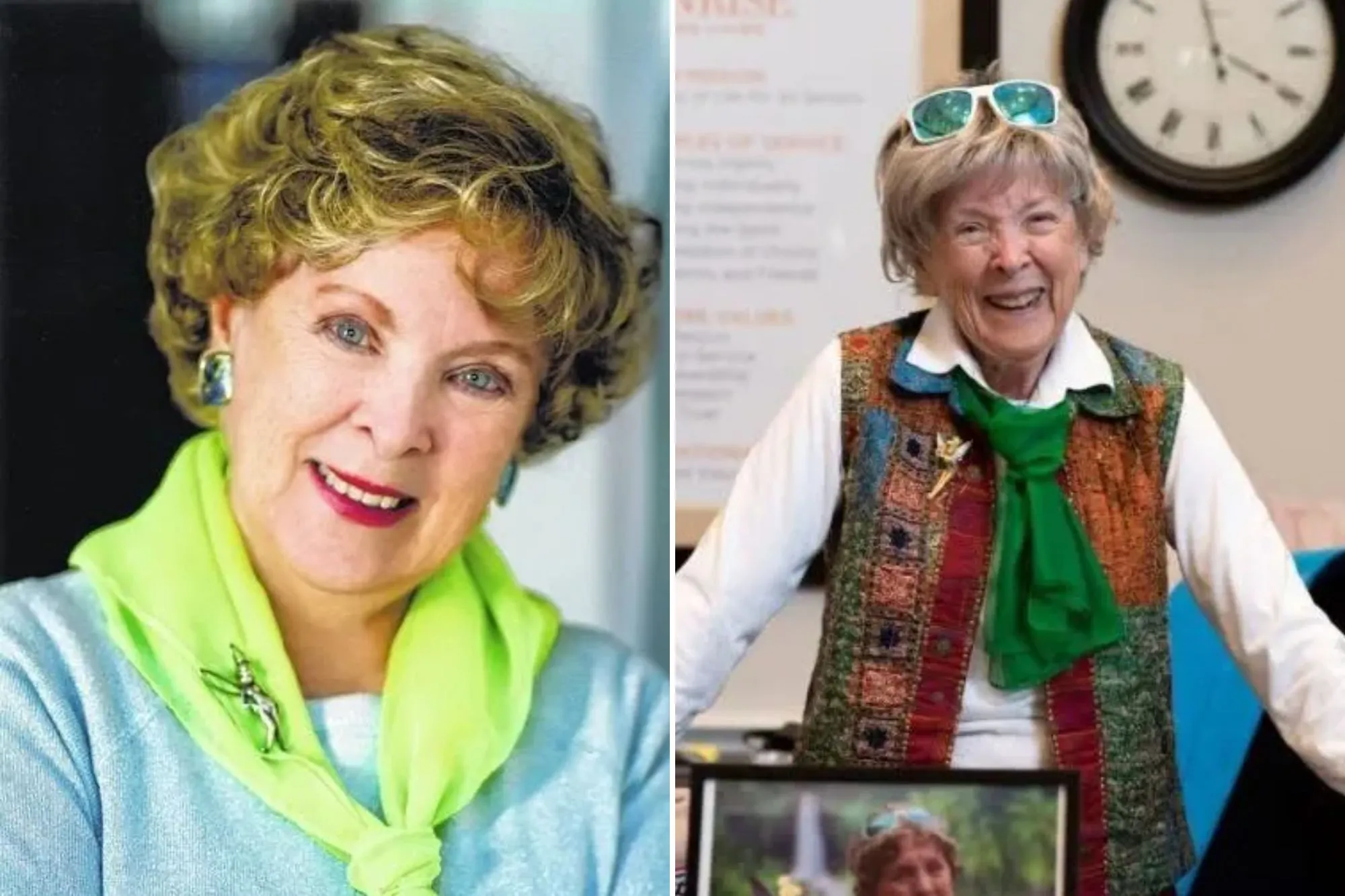
MARGARET Kerry, the actress and dancer who helped bring Disney’s iconic Tinker Bell to life, has died aged 97.
The star, whose movements inspired Disney’s mischievous fairy in the 1953 classic Peter Pan, passed away after a battle with lung cancer.
Sign up for the Showbiz newsletter
Thank you!
Margaret Kerry, the actress who inspired Disney’s Tinker Bell, has passed away at 97Credit: FacebookShe modeled the mischievous fairy’s movements for the 1953 classic Peter PanCredit: Refer to source
Kerry died peacefully on June 11 in North Carolina surrounded by her children, according to her family.
In a statement, they said: “It is with profound sadness that we share news of the passing of Margaret Kerry (Boeke), our beloved Tinker Bell.
“Margaret passed peacefully into the arms of Jesus on June 11, 2026, in Wilmington, North Carolina.
“Her three adoring children, Ellen, Christina and Eric, were with her as she lost her courageous battle with lung cancer at the age of ninety-seven.”
The tribute added: “And remember, on any given night, look up into the night sky and search for that ‘Second Star to the Right’. Upon closer look, you might just notice that star shining a little brighter in Margaret’s honor.”
Kerry became immortalised in Disney history when she was chosen to model the movements of Tinker Bell for Peter Pan.
Standing just 5ft 2in tall, she spent months on a vast Disney soundstage acting out scenes for animators, wearing a swimsuit and imagining interactions with characters who weren’t really there, according to The Hollywood Reporter.
Recalling her unusual audition, she said in a 2003 interview: “They were looking for a young girl who was comfortable with dance movement.”
Most read in Entertainment
After choreographing and performing a mime routine to music, she landed the role and became the inspiration behind one of Disney’s most recognizable characters.
This is a breaking news story. More to follow…
Kerry died peacefully after a battle with lung cancer, surrounded by her childrenCredit: Facebook
A model suing Kanye West is speaking out about the alleged assault that lawyers for the rapper argue was his 1st Amendment right.
Jennifer An, an actor and model who competed on the 13th season of “America’s Next Top Model” in 2009, detailed the alleged assault — that she says happened in 2010 — in a new interview with the BBC’s “Fame Under Fire” podcast that was released Wednesday. In 2024, An filed a lawsuit against the “Heartless” rapper alleging he choked her and used his fingers to simulate oral sex during a music video shoot for La Roux’s “In for the Kill.”
“He had me sit in the chair in front of the camera, and I didn’t know what was going to happen. I was given no direction,” An told the BBC. “I was just told to sit in this chair, and then playback started, and then all of a sudden he just reaches a hand out and starts choking me, and I’m just not sure what’s happening, and then he pulled his other hand out and starts choking me with both hands and then starts smearing my makeup all over my face and sticking his hands inside of my mouth, which simulated oral sex.
“I remember feeling so suffocated, unsure, scared,” she said. An said she was 24 years old at the time of the alleged incident, her first foray into the industry. She told the outlet that, as it was happening, she hoped someone on the production side would call a halt to it.
“I remember him looking at me, like really intensely, and licking his lips a lot, my face was like so close to his,” she continued. “He reached a point that — I assume — he was very happy with himself, and he yelled something like, ‘This is art! I’m Picasso.’”
La Roux said she insisted the alleged assault be left on the cutting room floor, and in a 2024 Instagram exchange with An, the artist said, “I could never forget that, it was horrific,” according to court documents.
During the podcast episode, the BBC correspondent Anoushka Mutanda Dougherty asks if she can see the direct-message exchange between An and La Roux. She then reads aloud a message in which La Roux said, “I was in the room behind the monitor, begging the directors and everyone else to do something, but everyone was scared of him and did nothing.”
La Roux told An that West whispered to her, “I bet you think I just put women back about 10 years.” She said that she responded, “You just put women back about 500 years.”
Representatives for La Roux did not immediately respond to The Times’ request for comment.
The case has not yet gone to trial. In a motion to dismiss the civil suit — which was filed under New York City’s Gender-Motivated Violence Act and remains pending — attorneys for West didn’t deny the incident took place but, rather, argued that it was an artistic performance and therefore protected by the 1st Amendment.
Attorneys representing An in the case, Melissa Berouty and Christine Hintze, told The Times in an emailed statement: “While we respect the importance of artistic expression and the protections afforded by the First Amendment, dismissing this case on that basis would set a dangerous precedent. It would effectively grant immunity to perpetrators of unlawful abuse so long as their conduct occurred under the guise of artistic expression or within an artistic setting.”
They further said that An’s claims are supported by affidavits and written communications from multiple eyewitnesses, including La Roux.