
Miranda Hart has explained why she decided to sign up to Celebrity Traitors, which comes after years out of the spotlight as she dealt with a series of health struggles

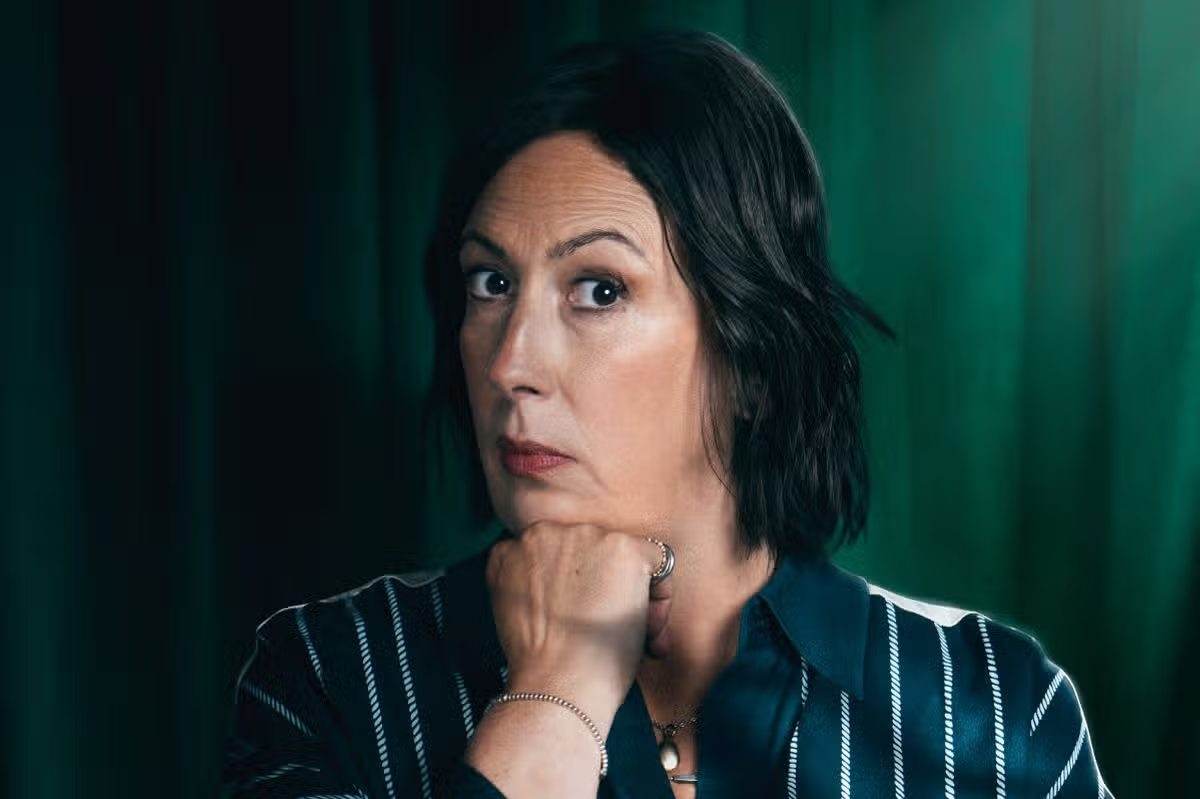
Miranda Hart is making her television comeback with Celebrity Traitors(Image: CREDIT LINE:BBC/Studio Lambert/Cody Burridge/BBC Creative)
Miranda Hart has explained why she decided to sign up to Celebrity Traitors following her “long term ill health issues.” The comedienne, 53, is best known for fronting her eponymous sitcom in the late 2000s but took a break from the spotlight after becoming increasingly unwell.
The TV star previously told how she had suffered a “tick-borne illness” while living in the USA as a teenager. At one point, she was diagnosed with myalgic encephalomyelitis (ME), also known as chronic fatigue syndrome, before eventually being diagnosed with Lyme Disease in 2020.
The Celebrity Traitors will mark Miranda’s first mainstream television appearance in six years, and she has now explained that she jumped at the chance to take part.
She said: “My decision making in life generally, and certainly work, is follow the joy. I haven’t done much TV work for a long time, having only recently come out of long-term ill health issues and when I was offered this, my whole body sort of relaxed, I smiled, and I just wanted to jump about like a schoolgirl with joy.
“It’s just fun. It’s outdoors, it’s games. All the stuff I love. It’s play basically. And I’m passionate about encouraging people to play more generally, and this game is that in spades.
“It’s a brilliant television show – the only flaw in taking part is that as a fan of the show it will be less fun to watch it with myself in it!”
Despite her new lease of life, the former Call the Midwife star, who secretly got married in late 2024, is still living with elements of her illness and is struggling to a point but has been able to manage her symptoms and insisted she felt well enough to join Claudia Winkleman’s hit BBC game show.
She added: “I’m still living with elements of ME, and that brings fatigue and pain to manage, but I have come to a point where I feel well enough to step out, and that’s also partly why I’m doing this.
“The joy of mucking about on television again will hopefully outweigh some of the challenges. And I think it will be challenging on my body, so it’ll be interesting, and it’ll take some courage as this is a big next step.
“When you live with a chronic illness, it’s invisible, so people don’t know that you’re sitting there in pain. But then it reminds you that everybody’s got their thing. So, I’m also really looking forward to making friends and looking after each other and hopefully they can carry me up a hill or whatever we’re going to have to do!”
Miranda, who will appear alongside the likes of Little Mix singer Leigh-Anne Pinnock, Coronation Street legend Julie Hesmondhalgh, and Love Island host Maya Jama, even teased that there could be a nod to her sitcom past.
She added: “When someone said on Instagram, “Oh, I hope you gallop in the castle,” I foolishly replied, Right, I now take that as a dare.” So that was idiotic of me.
“I will have to at some point gallop down a corridor. I’ll gallop when no one’s watching…or who would be the best person to encourage to gallop?
“I don’t know. I mean, Kenny probably doesn’t even know who I am. So, if I could get him to gallop…I could get a new generation galloping.”
Like this story? For more of the latest showbiz news and gossip, follow Mirror Celebs on TikTok , Snapchat , Instagram , Twitter , Facebook , YouTube and Threads .