
milly

‘Supergirl’ review: Let Milly Alcock party harder next time

Kara Zor-El (Milly Alcock) can swill an entire sorority’s supply of booze. As a Kryptonian, her hangovers are instantly cured by a yellow sun. And so director Craig Gillespie’s “Supergirl” follows a trail of empty beer bottles to find Superman’s lonely younger cousin marking her birthday on a solo interstellar bender, pounding shots alongside her dog, Krypto.

Unlike sweet-natured Kal-El (David Corenswet), a.k.a. Clark Kent, who escaped Krypton as a baby, this traumatized 20-something bore witness to their home planet’s long and painful extinction. Playing grief like the sandblasted absence of emotion, Alcock’s Supergirl isn’t in the mood for Metropolis do-gooding. She prefers slumming it at extraterrestrial honky-tonks with suitors who look like armadillo-plated slugs. She’s most visibly depressed when she tries to convince herself she’s having fun.

Who doesn’t want to go on a “Star Wars” cantina crawl? The opening stretch of “Supergirl” is great — Alcock even passes out on a toilet with aplomb. Briefly we hope that Gillespie and screenwriter Ana Nogueira are shaking up the superhero format like a bottle of gas-station champagne. I’d love to see Alcock’s heroine in a grotty, silly “Animal House”-style comedy, out-drinking a galaxy of alien squids. But the limits of Hollywood’s imagination squeeze Supergirl to stop partying and start doing some regular old rescuing. Sigh. Someone’s gotta save franchise movies from themselves.

As usual, there’s a tyke in trouble: 13-year-old Ruthye (Eve Ridley), a fellow orphan with a ramrod disposition and a tidy brunet braid that gives away that her character is modeled on Hailee Steinfeld’s vengeful teenager in “True Grit.” Ruthye wants to hunt and kill the creep who murdered her family. Unlike Supergirl, the child thinks it’s healthier to exorcise — not imbibe — one’s heartache. The duo visit an Epstein-island-like planet of kidnapped breeding women where, in one of the script’s subtler sick horrors, the locals imply that pubescent Ruthye is more valuable than aged 23-year-old Supergirl. (Although some of the caged extras appear to be as ancient as 30.) It’s yet another swiped idea, this one from “Mad Max: Fury Road,” for a minor story beat that’s unnecessary. Still, Alcock reacts with exactly the right note of disdain: “Cool,” she croaks. ‘Nuff said.

They’ve come to this cesspool to find the villainous Krem, an unrecognizably vile Matthias Schoenaerts with a mug that’s been pierced all over like he face-planted into a pile of thumbtacks. His biker-scumbag-times-infinity prosthetic design is fantastic, but what makes it genius is that the makeup team allowed a couple of metal studs to fall off Krem’s forehead before his first close-up. You know, for that lived-in barbarian sex trafficker look.

As Ruthye, Ridley’s crisp British elocution is the cleanest thing in the movie, which is shot by Rob Hardy in shades of mustard smog and latrine brown. Neither Supergirl as a babysitter nor Gillespie as a storyteller let the kid carry her share of the action, but I suspect Ridley has the talent for it. She seizes her small opportunities to impress in the film’s second half. Spitting on a baddie, her righteous loogie stings like a moral disinfectant.

Meanwhile, Jason Momoa swaggers into the fray from the cover of an ’80s hard-rock album with Kiss’ makeup, Manowar’s muscles and Meatloaf’s motorcycle. His character, a blue-skinned bounty hunter, only tangentially slots into the plot. Really, Momoa’s massive presence is here to prove that James Gunn was serious when he announced he was hard-resetting DC Comics’ film canon up to 2023’s “Aquaman and the Lost Kingdom.” Momoa as Aquaman is dead. Long live Momoa as Whoever This Guy Is.

Gillespie likes to champion difficult women, from Tonya Harding in “I, Tonya” to the Dalmatian-skinning Disney villain of “Cruella.” Yet as his budgets have mounted, so has the pressure to make his problematic ladies popular with a mass audience. “Supergirl” feels anxious to entertain. The jokes all have the same sense of snarky humor, no matter what species is cracking them. One scene even has a comic slow clap that, in my theater, didn’t get a reaction. The camera and cutting pace refuse to relax. Major set-piece action shots are impossible to follow. You can’t squint past the distracting lens flares.

Alcock’s wildling Supergirl is the one reason to see the film. As in her too-brief role on the “Game of Thrones” prequel “House of the Dragon” and her rollicking cameo at the end of 2025’s “Superman,” the Australian actor is a striking combination of grounded conviction and otherworldly essence, the ideal one-two for a character who plays anti-gravity fetch with her dog. Floating weightless in the stars, her hair unbrushed and bathrobe-like jacket shrugged on, she makes the impossible look casual. (Supergirl’s iconic red-and-blue minidress is so not her style.)

Alas, Krypto the pup is sidelined early on with a whimper, both from him and us. Maybe he’ll get more screen time when the digital animators figure out how to make him look more realistic. (Between the mutt’s anime eyes and that gawky-phony deer in “Disclosure Day,” are CGI creatures getting worse?)

Grief tethers Supergirl to Ruthye, even though they disagree on how to handle it, and it also seems to repel her from Corenswet’s dopey, innocent Clark Kent. There’s rich irony in the personality contrast between the cousins. Her Kryptonian parents raised her to help humanity; his parents intended their son to rule it. But due to twists of fate, she’s the miserable, maladjusted one. The movie has no time to mine the psychology underneath their clash, let alone summon a sniffle for the other pitiful characters who die during this escapade. Perhaps it’s holding that tension back for a sequel, but I’d rather invest in the characters now.

A flashback to Supergirl’s first touchdown on Earth has the awkwardness of a study-abroad student realizing she doesn’t like her host country at all. Despite our planet seeming to have enforced its monoculture on outer space — an extraterrestrial dive bar band even does “The Girl From Ipanema” — Supergirl appreciates little of it besides some product-placement dog treats and, in a forced touch, the pop music on her headphones as well as crammed into the soundtrack next to Claudia Sarne’s gravelly score. I’ll accept this degenerate Supergirl sporting a retro Blondie shirt, but not her willingly choosing to listen to mopey contemporary Earth jams like Rilo Kiley and a twee cover of Jimmy Eat World over, say, Kryptonian death metal.

Still, the production design has imaginatively askew takes on the mundane: gridded jail cells, plodding space buses, clumsy oxygen suits that shimmy on with a satisfying squeak. When Supergirl makes a pit stop at a celestial convenience store, she samples a snack that I’m forced to call poop-corn. If “Supergirl” sells enough of it, hopefully Alcock can rampage again in a more confident sequel that truly cuts loose.

‘Supergirl’

Rated: PG-13, for sequences of strong violence, action, language, and smoking

Running time: 1 hour, 48 minutes

Playing: Opens Friday, June 26 in wide release
Source link

In Sundance breakout film ‘TheyDream,’ a Puerto Rican family heals old wounds

At this year’s Sundance Film Festival, filmmaker William D. Caballero won the NEXT Special Jury Award for Creative Expression for his intensely personal, multimedia feature debut, “TheyDream.” During his acceptance speech, he made a powerful statement.

“In case ICE were ever to harm me or kill me, this film will serve as the truth of who I am, and who my family is, before Fox News or this administration ever makes us out to be the villain[s],” he recalls paraphrasing during a recent interview.

Blending live action footage with different animation techniques — as well as the 3-D-printed miniatures that have been a fixture of Caballero’s work for more than a decade — “TheyDream” honors the filmmaker’s Puerto Rican loved ones, particularly his mother, Milly.

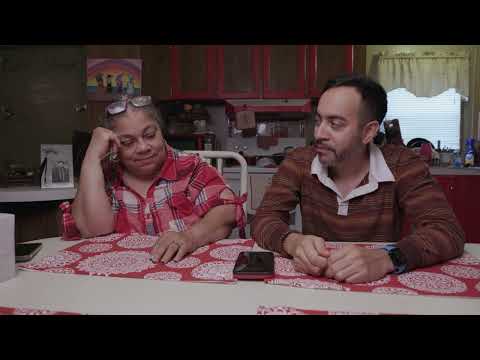
She collaborated with him in the making of this one-of-a-kind portrait of loss, resilience and shared healing. Their heartfelt exchanges throughout this process are also shared on-screen.

“Seeing her light up and become transformed throughout was just invigorating, because it allowed us to talk about heavy things and bond throughout the process of creating a story that’s personal [for us] both,” Caballero says. “It’s like, ‘Let’s guide each other and instead of me taking your stories and making magic with them, let’s make this magic together.’”

The brilliantly unconventional piece of autobiographical storytelling will screen as the closing night film of the Los Angeles Latino International Film Festival (LALIFF) on Sunday. Recently, John Leguizamo and Ben DeJesus joined the film as executive producers.

Starting with his 2013 short film “How You Doin,’ Boy? Voicemails From Gran’pa,” Caballero has used miniatures to immortalize his loved ones. That bite-sized introduction to his Boricua grandfather’s humorous wisdom evolved into the HBO Latino show, “Gran’pa Knows Best.”

“When I started working on ‘Gran’pa Knows Best,’ I knew that 3-D printing was this new technique,” he says. “But I’d never seen anyone that looked or sounded like my grandfather in it. I realized that it could be a really creative method to preserve his voice and his story. “

Then came the 2017 short “Victor & Isolina” about his grandparents’ relationship, and more recently in 2022, he debuted “Chilly and Milly,” which focused on his parents. Some of the sets from these shorts, tiny replicas of places familiar to Caballero, and a few of the miniature characters were reused in “TheyDream.”

“Being able to create these things in miniature is almost like getting back in touch with the idea of play,” Caballero explains. “As a child, you invent lots of stories all the time. But now as an artist, I’m able to tell stories that touch upon reality and painful memories, but also hopes and dreams in a way that hearkens back to the innocence of childhood.”

Man holds his folded hands in front of his mouth while he sits.

Filmmaker William D. Caballero will screen “TheyDream” on Sunday at the Los Angeles Latino International Film Festival (LALIFF).

(William D. Caballero)

“TheyDream” is a culmination of the eclectic and nimble artistic practice that Caballero has developed since he studied digital art at the Pratt Institute in Brooklyn.

“I’d always just been attracted to new ways of expressing myself and expressing stories. And I say this both in a way that brings me pride, but also brings me a bit of a headache, because I don’t think I’ll ever be a conventional filmmaker,” he says, laughing.

Still, working outside the margins of traditional moviemaking requires great adaptability.

When Caballero received funding for “TheyDream” in 2021, the money wasn’t enough to conceive it as he had originally envisioned it: entirely told with 3-D-printed figures in physical sets. The lack of resources forced him to rethink his approach, and he opted for hiring two Puerto Rican animators, Julisse Tinoco and Frank Martinez, each of whom animate in distinct styles, to help him create some of the sequences needed.

“This all goes back to the resourcefulness that I learned when I was young,” Caballero says. “When you’re born Latino and low-income in this society, you can’t let yourself be written off or you’re already defeated before you even begin.”

Caballero grew up in housing projects in New York City, and later in a trailer in his grandmother’s backyard in Fayetteville, N.C. Both of his parents were disabled.

Filmmaker William D. Caballero poses as his father for a reference shot in the making of his 2026 film "TheyDream."

Filmmaker William D. Caballero poses as his father for a reference shot in the making of his 2026 film “TheyDream.”

For Caballero, he says the arts have provided an escape that he “needed in order to survive and not feel weighed down by American consumerism, by poverty and by feeling trapped.” Whenever grief has perturbed him, Caballero has processed it through creativity.

With “TheyDream,” he wished to extend that vehicle for self-reflection to his mother. The film addresses complicated familial bonds and his mother’s experience caring for others.

“Throughout the years, we’ve lost several of my family members that we were both close to, but my mother especially,” he says. “She feels their absence much stronger than I do. I live in Los Angeles, my mother still lives in North Carolina. Knowing that she was alone in the mobile home, it just made me feel like, ‘That can’t be good for her.’”

His mother, he says, deals with self-esteem issues because her identity has for so long been reduced to being a caretaker for elderly relatives, who, inevitably, pass away — leaving her feeling like a failure. In reality, it was thanks to her devotion that they added years of life.

Caballero’s mother was at the Sundance premiere of “TheyDream,” where she witnessed how others saw her through the film she helped her son craft.

“I wanted her to feel like, ‘Mom, look at all these people that are clapping for you. They’re clapping for you because you are a hero. You deserve to hold yourself high and be strong and know that there’s something incredible in your story that’s indicative of the stories of many low-income Americans, regardless of race,’” Caballero says, visibly moved.

A prolific and highly regarded artist (he is a 2018 Guggenheim Fellow), Caballero has several other projects in the works that he’s trying to shop around. One of them is an episodic series titled “Second Fiddle,” about a 15-year-old Latino boy who gets accepted to a prestigious summer youth orchestra camp — and whose overbearing mother decides she’s going to stay in the camp with him.

Caballero's mother, Milly, got the animated treatment in "TheyDream."

Caballero’s mother, Milly, got the animated treatment in “TheyDream.”

“I never saw a Latino playing violin on TV or the big screen. I didn’t see any quirky, nerdy, artsy Latino kids like I was,” he says. “And I felt in my core that [it] was just wrong and something that I could change.”

Another project, “Raúl Playing Game,” is “an adult version of Pixar’s ‘Inside Out,’ ” that takes place in the mind of a closeted bisexual man. Caballero himself is bisexual. In 2022, “Raúl Playing Game” was selected for the LALIFF Inclusion Fellowship, which provided support for a short film version that serves as proof of concept for a potential TV show.

“I always wanted to make sure that I was telling authentic stories even if not necessarily always positive stories,” he says. “I’m very happy that I never lost track of that. Because I do believe that we need to tell our own stories, in our own unique voices, before someone else does it for us.”

Source link