Milano Cortina acting as ‘propaganda for Russia’, says banned Heraskevych | Winter Olympics News
Ukrainian skeleton racer Heraskevych says 2006 Winter Olympics ‘acts as propoganda for Russia’ after IOC decision.
Published On 13 Feb 2026
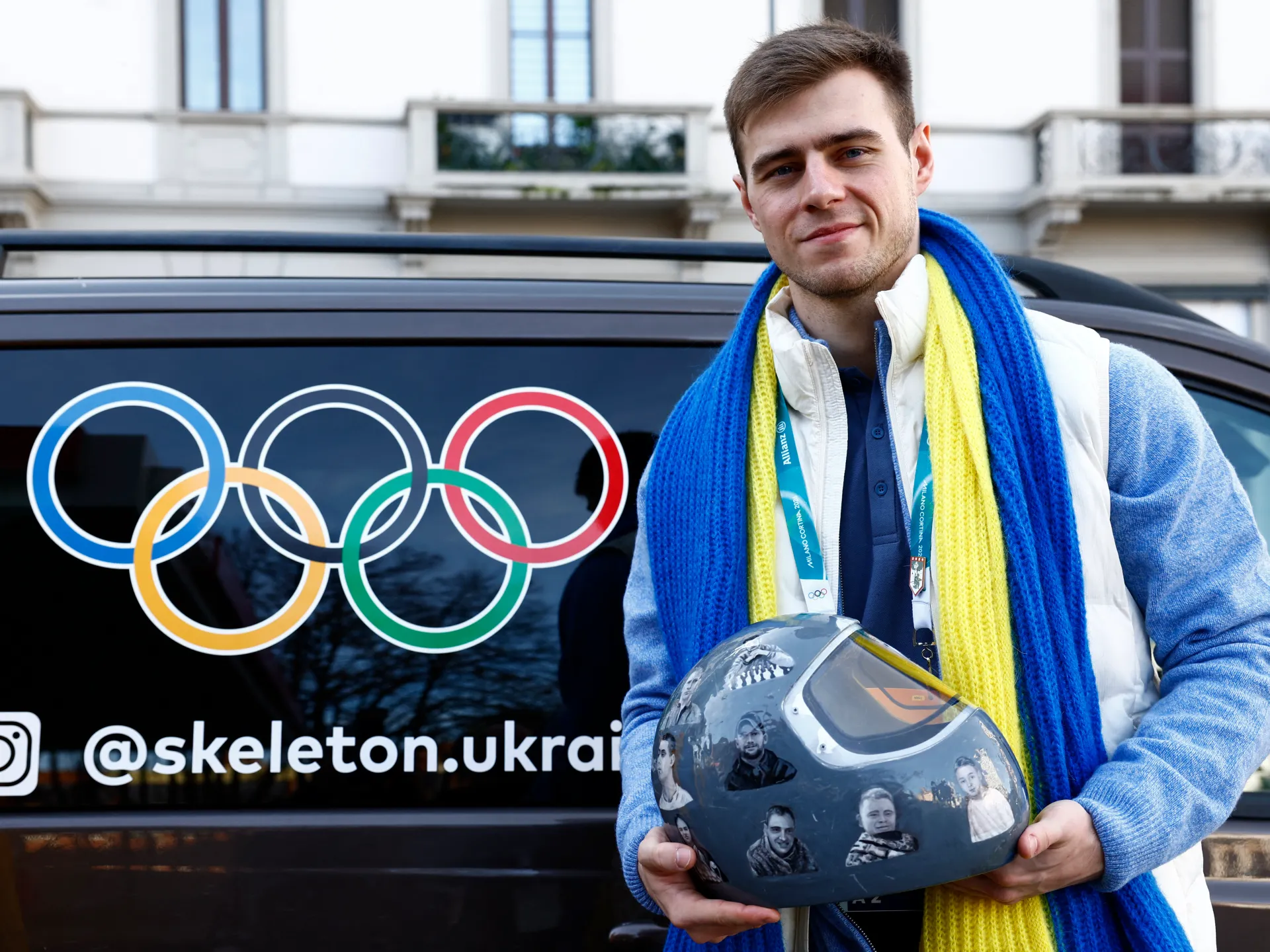
The Court of Arbitration for Sport (CAS) began hearing Ukrainian skeleton racer Vladyslav Heraskevych’s appeal on Friday, with a decision expected later in the day on whether he can return to competition at the Milano Cortina Olympics after his disqualification over his “helmet of remembrance”.
The 27-year-old was removed from the Olympic programme on Thursday when the International Bobsleigh and Skeleton Federation jury ruled that imagery on the helmet — depicting athletes killed since Russia invaded Ukraine in February 2022 — breached rules on political neutrality at the Games.
Recommended Stories
list of 4 itemsend of list
Heraskevych is seeking reinstatement or at least a CAS-supervised run, pending a decision by sport’s highest court in advance of the final two runs set for Friday evening.
“I’m pretty positive about how it went,” he told reporters outside the office of CAS in Milan following his appearance before the court. “I hope the truth will prevail, and I know that I was innocent.”
The racer said he was now getting threats from Russians and blamed the IOC’s decision for that.
“I believe that these Games now and this act of the IOC also serves as an instrument of propaganda for Russia,” Heraskevych said. “I still receive a lot of threats from the Russian side.”
The IOC, whose president, Kirsty Coventry, met Heraskevych on Thursday in a last-ditch effort to break the impasse, has allowed the athlete to keep his credentials despite his disqualification, so he can stay at the Milano Cortina Games.
“For me, sitting down with Vladyslav and his dad, the conversation was extremely respectful,” Coventry told a news conference on Friday. “After that, I asked the disciplinary commission to re-look at not pulling his accreditation, out of respect for him and his dad. I thought that was the right thing to do.”
The case has dominated headlines in the first week of the Olympics.
CAS Secretary-General Matthieu Reeb could not say exactly when they were likely to reach a decision, despite the tight schedule.
“We hope to have a final decision announced today, but it’s difficult for me to say when,” Reeb told reporters. “Obviously, we know the schedule of the competition, and it is an objective for CAS to be able to run the decision before the start of the race, but we don’t know how long the hearing will take.
“We have only one arbitrator from Germany, and she will be in charge of this case. We have participants attending in person, like the IOC, the athlete is here, the father of the athlete is here.
“We have a representative of IBSF attending remotely. The athlete is also assisted by legal counsel speaking from Kyiv.”