members

Who are the council members temporarily in charge of Iran? | Explainer News

Until Khamenei’s successor is picked, the three-member leadership council, including Ayatollah Alireza Arafi, will lead Iran.

Iranian authorities have announced a three-member interim leadership council to run the government after the killing of Supreme Leader Ali Khamenei in Israeli-United States strikes.

Iran’s government pledged to avenge the killing on Saturday of Khamenei, who had been in power for nearly four decades. Tehran has since targeted Israeli and US assets located across Gulf countries in retaliatory strikes.

Recommended Stories

list of 4 itemsend of list

While US President Donald Trump has said he wants a change in Iran’s government, the religious leaders of Iran moved on Sunday to start the process of choosing Khamenei’s successor.

Iran
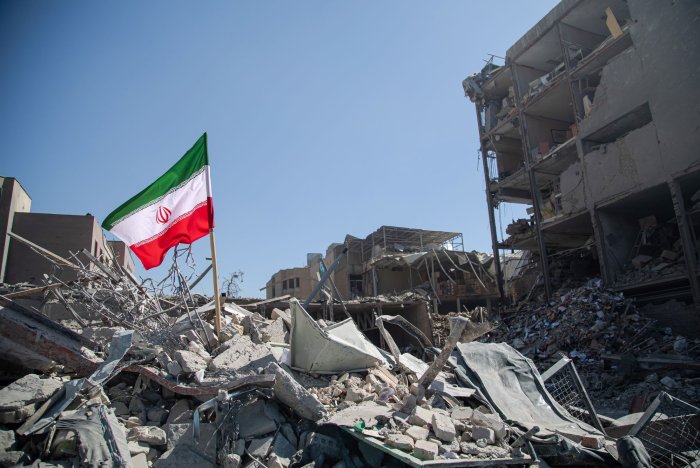
Plumes of smoke rise over residential areas of Tehran from US-Israeli air strikes on March 1, 2026 [Fatemeh Bahrami/Anadolu]

What is the interim leadership council?

Article 111 of Iran’s Constitution authorises a temporary leadership council to assume the supreme leader’s duties until a successor is elected.

That council will consist of President Masoud Pezeshkian; the chief justice of the Supreme Court, Gholam-Hossein Mohseni-Ejei; and a member of the Guardian Council, Ayatollah Alireza Arafi.

So who are these three figures who will temporarily run Iran as it reels from war?

arafi
Pope Francis greets Ayatollah Alireza Arafi, president of the Islamic Seminaries of Iran, during a private audience at the Vatican on May 30, 2022 [Handout/Vatican Media via Reuters]

Ayatollah Alireza Arafi

Arafi has been a member of the Guardian Council since 2019. Its members are appointed by the supreme leader. It is an Islamic legal authority that vets Iran’s laws and policies to make sure they conform to Islamic principles. It approves election candidates, has veto power over legislation passed by parliament and supervises elections.

Arafi also serves as the deputy chairman of the Assembly of Experts, the body responsible for overseeing the selection of the supreme leader. He leads Friday prayers in Qom, Iran’s most important religious centre, and heads the seminary system, overseeing education for religious leaders nationwide.

FILE - Masoud Pezeshkian, the President of Iran, attends the United Nations General Assembly at United Nations headquarters, on Sept. 25, 2025. (AP Photo/Angelina Katsanis, File)
Masoud Pezeshkian, the president of Iran, attends the United Nations General Assembly in New York [File:Angelina Katsanis/AP]

Masoud Pezeshkian

Pezeshkian, 71, is a reformist politician and heart surgeon who served in the army during the Iran-Iraq War. He was elected president in the 2024 elections.

He previously served as health minister under President Mohammad Khatami and, after 2005, as a member of parliament representing the northwestern city of Tabriz.

Pezeshkian ran unsuccessfully for president earlier but in 2024 won on a reform-oriented platform and has since navigated economic pressures and regional tensions.

He earlier campaigned on economic stabilisation, easing social restrictions and pursuing constructive engagement abroad while affirming loyalty to the Islamic Republic’s constitutional framework.

Reacting to Khamenei’s assassination, Pezeshkian said in a statement that Iran now considers “it its legitimate duty and right to avenge the perpetrators and masterminds of this historic crime”.

Gholamhossein Mohseni Ejei was put on US and EU sanctions blacklists 10 years ago for his role in a crackdown on a popular uprising [File: AFP]
Gholam-Hossein Mohseni-Ejei [File: AFP]

Gholam-Hossein Mohseni-Ejei

Mohseni-Ejei is a senior religious leader and has headed the judiciary since Khamenei appointed him to the post in July 2021.

He previously served as intelligence minister from 2005 to 2009 and later as prosecutor-general and first deputy chief justice. He is regarded as a hardline figure aligned with the conservative wing of the government.

In January, when the collapsing rial triggered protests across Iran, Mohseni-Ejei promised “no leniency” towards what he called “rioters”.

Mohseni-Ejei said the US and Israel “openly and explicitly supported the unrest” in the country after Trump called on Iranians to take to the streets.

After Khamenei’s killing, Trump again addressed the Iranian public on Saturday, calling for them to topple the government. “This will probably be your only chance for generations,” he said on Saturday after the US and Israeli attacks on Iran began.

Source link

Nationwide members issued good news by BBC expert – what you should know

Nationwide members issued good news by BBC expert – what you should know – The Mirror


reach logo

At Reach and across our entities we and our partners use information collected through cookies and other identifiers from your device to improve experience on our site, analyse how it is used and to show personalised advertising. You can opt out of the sale or sharing of your data, at any time clicking the “Do Not Sell or Share my Data” button at the bottom of the webpage. Please note that your preferences are browser specific. Use of our website and any of our services represents your acceptance of the use of cookies and consent to the practices described in our Privacy Notice and Terms and Conditions.

Source link

L.A. City Council should expand to 25 members, charter reform commission says

The size of the Los Angeles City Council should increase from 15 to 25 seats, the city’s Charter Reform Commission recommended Thursday.

On a 9-2 vote, the commission backed the council expansion, with supporters saying that smaller ethnic groups, including Black and Asian American and Pacific Islander residents, would be better represented.

The council has consisted of 15 members since 1925, when the city had fewer than 600,000 residents, compared with 3.9 million today.

“I think we owe the people of Los Angeles to walk out of this room saying that we are a commission that’s concerned about equity, that we are a commission that is concerned about Black and AAPI folks who live in this city,” said Commissioner James M. Thomas, who supported the expansion.

The commission also recommended ranked choice voting, where voters list candidates in order of preference, for municipal elections beginning in 2032. The city should also establish a new position, chief financial officer, which would essentially be a title change for what is now called the city administrative officer, the commission recommended.

By April 2, the commission, which has been meeting since last July, must send all its recommendations to the City Council on changes to the city’s governing charter. The council will then vote on which changes will go before city voters as ballot measures in November.

Thursday’s meeting was packed with supporters of City Controller Kenneth Mejia, who feared that the commission would gut his office’s watchdog role.

Among the CFO’s duties would be preparing the city budget, advising the mayor on fiscal policy and producing revenue forecasts — duties currently under the CAO.

Tim Riley, owner of Heavy Water Coffee Shop in Chinatown, said trust in government is at an all-time low and urged the commission to keep the controller’s powers intact.

“Kenneth has been the only form of government that we have felt has represented us as a community,” Riley said.

City Administrative Officer Matt Szabo spoke briefly and confirmed his support for designating the CAO as the city’s chief financial officer, without impacting the controller’s office. The CFO role recommended by the commission does not take away any duties from the controller.

In 1925, each of the 15 City Council members represented about 38,000 residents. Now, each council district has an average of 265,000 residents. If the council grows to 25, each member would represent roughly 159,000 residents.

The commission did not discuss whether the council members’ salaries and office budgets should remain the same, potentially increasing costs for taxpayers.

Nick Caputo, who has been chronicling the charter reform commission‘s progress online, advocated during public comment for the commission to endorse more than 23 seats. The commission had debated for weeks about whether to go as low as 23 seats or as high as 31, settling on 25 as a compromise.

With smaller council districts, Caputo said, residents will be represented by people who know their neighborhoods better.

“I’m happy that they did go to 25,” Caputo said Friday. “I think that would be a tremendous boost for not just representation, but also you’ll get real specialists.”

Commissioner Carla Fuentes noted that three City Council members — Nithya Raman, Ysabel Jurado and Heather Hutt — have publicly supported expanding the council to 25.

“This is a huge moment for the commission,” Chairperson Raymond Meza said after Thursday night’s meeting. “We have been hearing from hundreds of stakeholders, academics, members of the public, other interested parties — and to be able to begin drafting charter language for the City Council to consider is pretty momentous.”

During the debate on ranked choice voting, Commissioner Diego Andrades explained that the city would no longer hold a primary election, which would save money. Instead, all candidates would run in a general election.

Commissioner Christina Sanchez expressed concern that non-English speaking voters and those in under-served communities might have trouble understanding the complexities, which drew ire from the crowd.

“Are you calling us stupid?” two people said.

The commission also passed a recommendation that the city should approve an ordinance for language accessibility and educating residents about the new voting system.

Two days earlier, the commission voted unanimously to bifurcate the duties of the city attorney, currently an elected official who prosecutes misdemeanors and represents the city in civil litigation. Under the commission’s proposal, an appointed city attorney would take over the civil litigation duties, while an elected city prosecutor would handle the misdemeanors.

The decision to bifurcate the position came after consulting with good governance groups, the public and city departments, Andrades said. The current system allows a city attorney eyeing higher office to potentially offer bad advice to a sitting mayor, and conflicts of interest could occur on issues like police-related settlements and misconduct, he said.

Times staff writer Dave Zahniser contributed to this report.

Source link

California’s Congress members’ plans for Trump’s State of the Union address

Boycotts. Prebuttals. Rebuttals. Historic guests.

California members of the U.S. Senate and the House of Representatives’ approach to President Trump’s State of the Union address Tuesday night are as varied as their politics and their districts.

Before the speech, Sen. Adam Schiff described Trump as an out-of-control and corrupt president who has ignored pressing issues such as climate change in order to enrich himself and punish his political enemies, including by turning the U.S. Department of Justice and the rest of the federal government into a “personal fiefdom,” unbound by the law.

“From the birth of our nation, our founders were obsessed with preventing tyranny and the emergence of another king, another despot. They created checks and balances, separation of powers, an independent judiciary. They understood that the greatest threat to liberty wasn’t foreign invasion, it was the concentration of power in the hands of one person or faction,” Schiff said on the floor of the U.S. Senate. “This president has systematically dismantled these safeguards in his second term.”

Schiff is among the Democrats boycotting the speech. Other Californians include Reps. Robert Garcia (D-Long Beach), Sara Jacobs (D-San Diego), Sydney Kamlager-Dove (D-Los Angeles) and Julia Brownley (D-Westlake Village).

Sen. Alex Padilla, the son of immigrants who was tackled in Los Angeles last year when he attempted to ask Homeland Security Secretary Kristi Noem a question during the immigration raids, will deliver a Spanish-language response after Trump’s address on television and online.

California has the largest congressional delegation in the nation, so its elected officials frequently have an outsized presence in the nation’s capital. An especially memorable moment was when then-House Speaker Nancy Pelosi (D-San Francisco) ripped up a copy of Trump’s speech after the 2020 State of the Union address.

It’s unclear whether California elected officials plan anything as dramatic tonight. But their guests are notable.

Though Garcia is not attending the speech, his guest at the event is Annie Farmer, a woman who was abused at the age of 16 by sexual predators Jeffrey Epstein and Ghislaine Maxwell. Rep. Eric Swalwell (D-Dublin), who is attending, is bringing Teresa J. Helm — another Epstein abuse survivor.

Others plan to bring constituents from their districts — Rep. Ken Calvert (R-Corona) is bringing Ben Benoit, the Riverside County auditor-controller who is a longtime friend.

Pelosi’s guest is the Rev. Devon Jerome Crawford, senior pastor of historic Third Baptist Church of San Francisco. And some have surprise guests who will be unveiled later tonight.

Source link

How ‘The Secret Agent’ found Tânia Maria, other cast members

For casting director Gabriel Domingues, putting together the ensemble of “The Secret Agent” meant materializing characters inspired by director Kleber Mendonça Filho’s recollections.

“It’s not that he was showing us a picture and saying, ‘They must look like this.’ They were ideas of memories that could change,” Domingues says of the Brazilian period thriller about a father on the run during an interview at The Times newsroom. One of the nominees for this year’s inaugural Academy Award for casting, Domingues appreciates how politically charged Mendonça Filho’s films are. His narratives are often fertile ground for an eclectic mix of performers.

And there are no throwaway roles in “The Secret Agent”: “Even the small characters represent ideas about Brazilian life and its contradictions,” Domingues adds.

To honor his large cast, a “panorama” of his country’s people, Mendonça Filho includes a montage at the end of the film in which each actor is acknowledged individually. The director thinks of this as the cinematic equivalent of a curtain call or final bow at the end of a stage production.

“Gabriel tries to find an interesting mix of experienced actors and people that we can discover,” says producer Emilie Lesclaux about Domingues, with whom she’s worked on multiple projects. He first collaborated with Mendonça Filho and Lesclaux on “Aquarius” as a casting assistant.

Domingues believes working on “Aquarius” was instrumental in developing his casting method, which involves searching for the least obvious option to cast the character. He prides himself on doing the shoe-leather work of looking for fresh, compelling faces in cities where others might not think to look — those without a prominent arts scene, for instance.

That’s not to say the entire cast was discovered. Mendonça Filho had lead Wagner Moura in mind from the outset, while others sprung to mind as he wrote the screenplay: Maria Fernanda Cândido, a famous soap opera actor, as a crucial ally to Moura’s character; and the late Udo Kier, who had previously appeared in the director’s blood-soaked film “Bacurau,” as a German Jewish immigrant who lived through World War II.

The filmmaker admits that envisioning parts with a specific person in mind is “dangerous.” “I can write a character thinking of you, but I never know if you will want to make the film,” says Mendonça Filho. “And I grow attached to the image.”

Among the other supporting roles, the most challenging to cast, the team agrees, was that of Euclides, the sleazy police chief. Though the character is “repulsive,” it also required an edge of charisma to make him more emotionally layered. Eventually, they came across actor Robério Diógenes. “Robério has studied the clown art in the theater, and he’s a very funny guy, so he adds a component of ridiculousness to this character,” Domingues says.

For Vilmar, an impoverished man hired as a subcontractor for a murder, Mendonça Filho had in mind a real-life contract killer he’d seen in a 1970s TV program. The actor had to convey a certain ambiguity not often afforded to people of a lower social class. There’s no doubt Vilmar is acting out of necessity, but he is not entirely without agency since he negotiates his payment. Domingues found the ideal embodiment of this complex character in Kaiony Venâncio, an actor from the city of Natal who had mostly worked in short films.

Then there’s the scene-stealing Tânia Maria, who plays the endearing, chain-smoking Dona Sebastiana. The 79-year-old talent first appeared in “Bacurau” as an extra. “I just could not help thinking of her,” says Mendonça Filho about casting her in his latest film. “I even pre-ad-libbed many of her lines knowing what she might say.”

Before finding her way onto the screen, Tânia Maria has long made a living as an artisan handcrafting rugs. “I never thought about being an actress. I only thought about sewing,” she says with an endearing smile. “All of this came as a surprise.”

And though she’s still sewing, her acting prospects look bright. She’s already appeared in another film, “Yellow Cake,” premiering at the Berlin International Film Festival this month. That Tânia Maria also recently starred in humorous local commercials for Burger King and Heineken is proof of her current status in Brazilian pop culture — as are the Dona Sebastiana costumes that have become popular during this year’s Carnival.

“I can’t go out on the street without people stopping me. They ask me for autographs, for photos, they want to talk to me, they ask me questions,” she says in Portuguese via an interpreter while on a video call from her home. “I make time for everyone, and I’m enjoying all of it.”

Undaunted by what she calls the most challenging aspect of acting — memorizing the lines — Tânia Maria is eager to continue exploring this unexpected new facet. “I don’t want to stop because I’m not old! I’m waiting for more invitations to move forward in acting,” she says.

The success many of the actors have found thanks to “The Secret Agent” very much pleases the filmmakers, but it also has a major downside.

“That’s all that we want for the people that we work with, that the film is good for them and their career,” says Lesclaux. “But for us, it also makes things more complicated for the next film because we will want to work with them, and they might not be available.”


Source link

Who are Bangladesh’s new cabinet members? | Bangladesh Election 2026 News

Tarique Rahman, leader of the Bangladesh Nationalist Party (BNP), which swept to a landslide victory in last week’s parliamentary elections, has been sworn in as the country’s first elected prime minister since deadly protests in 2024, which resulted in the ouster of the previous government and its prime minister, Sheikh Hasina.

The political alliance led by Rahman’s party won 212 seats in the Jatiya Sangsad, Bangladesh’s parliament, in Thursday’s elections, leaving its main competitor, the alliance led by Jamaat-e-Islami, with 77.

On Tuesday, Rahman took his oath of office, and newly elected MPs pledged loyalty to their country inside the oath room of the parliament building as they were sworn in by Chief Election Commissioner AMM Nasir Uddin.

Foreign officials, among them Pakistan’s foreign minister and the speaker of India’s Parliament, were also present.

Here is what we know about the people who will be running Bangladesh’s new government:

Who are the new cabinet members?

Twenty-five full ministers in the new cabinet took their oaths during a separate ceremony in Dhaka on Tuesday afternoon. The 25 have been drawn overwhelmingly from the BNP and its close allies.

Among the state (junior) ministers appointed to Rahman’s government are Nurul Haque and Zonayed Saki, first-time parliamentarians, who were prominent voices during the 2024 protests.

While members of the cabinet have been announced, the ministries they will be responsible for have not yet been confirmed. Here’s a look at who some of them are.

Mirza Fakhrul Islam Alamgir

Alamgir, who has served as secretary-general of the BNP since 2016, was elected to his seat in parliament by the constituency of Thakurgaon-1, a district in northwestern Bangladesh.

Alamgir, 78, served as a member of parliament from 2001 to 2006 under the previous BNP government, led by Rahman’s late mother, Khaleda Zia, during which he was also state minister for agriculture and later for civil aviation and tourism.

After the end of that government’s term, a caretaker administration took over until elections in 2008, which Alamgir stood in but did not win. He remained a senior member of the BNP outside parliament.

In October 2023, Alamgir was detained by police the day after mass antigovernment protests swept through Dhaka when Hasina’s Awami League party was in power. The police said he had been detained for questioning in connection with the violence that erupted during those demonstrations.

When the BNP win was announced last week, Alamgir hailed the victory and called the BNP “a party of the people”.

Amir Khasru Mahmud Chowdhury

Chowdhury was elected from the Chattogram-11 constituency, which covers the Bandar and Patenga areas of Chattogram city in southeastern Bangladesh.

From 2001 to 2004, Chowdhury served as minister of commerce under the previous BNP administration. He is a member of the BNP’s standing committee.

Before last week’s vote, Chowdhury said that if elected, the BNP would govern by investing in people, “in health, in education and upskilling” and by supporting “artisans, the weavers” and small industries with credit as well as helping them access international markets, including by helping them with their branding.

Iqbal Hasan Mahmud Tuku

Tuku, 75, has been elected as a member of parliament for the Sirajganj-2 constituency in North Bengal.

Tuku is a member of the BNP Standing Committee, the party’s top policymaking body.

He is a veteran BNP figure who has been elected to parliament multiple times and has held important party roles. From 2001 to 2006, he served as the state minister for power. In 2006, he also briefly served as the state minister for agriculture.

In 2007, during the military-backed interim government, a special anticorruption court in Dhaka sentenced Tuku to nine years in prison in a case filed against him by the Anti-Corruption Commission (ACC). The ACC accused Tuku of concealing information about assets worth 49.6 million takas (roughly $400,000).

The High Court upheld his conviction and jail sentence in 2023 after a lengthy appeal process. However, in September 2025, a year after the overthrow of the Awami League government, the Appellate Division of the Supreme Court acquitted Tuku.

Khalilur Rahman

Khalilur Rahman is a technocratic minister, appointed for his expertise rather than as a party politician. He is not a member of parliament.

He served as national security adviser in the interim administration headed by Muhammad Yunus, which took over to oversee a transition after Hasina’s ouster.

He also served as the government’s representative for the Rohingya issue during Yunus’s tenure. The refugee camps in Cox’s Bazar in southern Bangladesh are sheltering more than one million Rohingya refugees, most of whom fled Myanmar in 2017 to escape a military crackdown.

Afroza Khanam Rita

The only woman cabinet minister, Rita is a first-time member of parliament but comes from a political family: Her late father was a four-times MP. Rita is also the chairwoman of the Monno Group of Industries, a conglomerate whose firms produce ceramic ware, textiles and agricultural machinery – primarily for export.

Asaduzzaman

Asaduzzaman, was elected from the Jhenaidah-1 (Shailkupa) constituency, which covers Shailkupa upazila in Jhenaidah district in southwestern Bangladesh.

Dipen Dewan

Dewan, 62, a Chakma Buddhist leader, is expected to be named minister of Chittagong Hill Tracts affairs. Dewan won from the Rangamati constituency.

Chakma Buddhists are an ethnic group of Tibeto-Burman speaking people. They are indigenous to the Chittagong Hill Tracts of Bangladesh and parts of northeastern India.

Nitai Roy Chowdhury

Chowdhury, a Hindu leader, is widely expected to become the minister of cultural affairs.

Chowdhury, 77, has served as a senior adviser and strategist for the BNP’s top leaders.

How significant are these appointments?

During campaigning, the BNP pledged to meet the people’s demand for an elected government with real legitimacy. Therefore, ministers and cabinet members can expect a significant amount of scrutiny, experts said.

Khandakar Tahmid Rejwan, lecturer in global studies and governance at the Independent University, Bangladesh, told Al Jazeera: “The appointees in their respective fields will also face an invisible yet significant pressure to prove themselves more effective and distinctive than the previous administrations, both the interim government and, of course, the Awami League-led government under Sheikh Hasina.”

He added: “It will be particularly interesting to observe whether, after a youth-led mass uprising, the core of executive power is taken over by the old guard or by new faces that reflect diversity in terms of age, gender, ethnicity and religion.”

While two prominent figures from the 2024 student uprisings have been named as state ministers – Nurul Haque and Zonayed Saki – Rejwan added that leaders of the student-led National Citizen Party, which was founded after the 2024 uprising, had made a “strategic mistake” by allying with Jamaat instead of the BNP.

“They had the option to form an alliance with the BNP, which they later abandoned in favour of Jamaat. Given these political dynamics, it is unlikely that any student leaders will receive cabinet positions.”

Who attended the ceremony to swear in the new cabinet?

Several foreign delegations were in Bangladesh to attend the ceremony.

They included Maldivian President Mohamed Muizzu and Bhutanese Prime Minister Tshering Tobgay.

India was represented by Om Birla, the speaker of its lower house in Parliament. Pakistani Federal Minister for Planning Ahsan Iqbal also attended.

Leaders and representatives from Nepal and the United Kingdom, China, Saudi Arabia, Turkiye, the United Arab Emirates, Qatar and Brunei were among those who were invited to attend.

Source link

Trump says Board of Peace members pledge $5B to rebuild Gaza

Feb. 16 (UPI) — President Donald Trump said member states of his newly created Board of Peace have pledged more than $5 billion toward rebuilding Gaza and thousands of personnel to maintain security in the Palestinian enclave.

Trump said in a post on his Truth Social media platform on Sunday that the pledge will be officially announced on Thursday during the inaugural meeting of the board at the U.S. Institute of Peace in Washington, D.C.

“The Board of Peace will prove to be the most consequential International Body in History, and it is my honor to serve as its Chairman,” Trump said.

Specifics such as how much and what each member state pledged were not made public.

More than 20 countries have joined the board, which Trump formally launched last month on the sidelines of the World Economic Forum in Davos, Switzerland.

The board is tied to a U.N.-backed Gaza stabilization and reconstruction plan, but questions about its scope have grown because the board’s charter does not mention the Palestinian enclave and critics worry that the initiative might undermine the United Nations.

Scrutiny has also focused on its membership, which includes Belarus, which aided Russia in its war against Ukraine, and Israel, whose leader, Benjamin Netanyahu, is the subject of an International Criminal Court arrest warrant issued in November 2024 alleging war crimes and crimes against humanity in Gaza.

More than 50 nations reportedly received invitations to join, but many U.S. and Western allies have declined. Trump said he rescinded an invitation to Canada as relations between Ottawa and Washington have deteriorated during Trump’s second term.

Much of the Palestinian enclave has been damaged or destroyed since the war began on Oct. 7, 2023, when Hamas attacked Israel.

United Nations estimates state that more than 81% of all buildings and structures in Gaza have been either damaged or destroyed.

U.N. agencies have said that around $70 billion is needed to reconstruct the enclave, which measures about 25.4 miles long and between 3.7 and 7.5 miles wide along the Mediterranean.

Thousands of displaced Palestinians walk along the Rashid coastal road toward Gaza City on October 10, 2025, after the implementation of a cease-fire agreement between Israel and Hamas. Photo by Hassan Al-Jadi/UPI | License Photo

Source link

Huge girl group reuniting without three key members as they plot massive 2026 comeback tour

HIT girl group The Pussycat Dolls are reuniting – but without three original members.

The Sun can reveal that frontwoman Nicole Scherzinger is returning to lead the group for a world tour later this year.

Nicole Scherzinger, Kimberley Wyatt, and Ashley Roberts on a night out.
Three members of The Pussycat Dolls — Kimberley Wyatt, Nicole Scherzinger and Ashley Roberts — are making a comebackCredit: Hewitt / Splash News
The Pussycat Dolls in golden dresses with their Best Dance Video award for "Buttons" at the 2006 MTV Video Music Awards.
The original six members of the girl group in 2006, from left to right: Ashley Roberts, Kimberly Wyatt, Melody Thornton, Nicole Scherzinger, Carmit Bachar and Jessica SuttaCredit: Getty – Contributor

She will be joined by British-based members Kimberly Wyatt and Ashley Roberts.

However, Carmit Bachar, Jessica Sutta and Melody Thornton will not be returning.

Those close to the remaining Dolls have insisted it will go ahead this time, after they cancelled their 2020 tour, and subsequently split up.

That reunion featured Carmit and Jessica, although they are not involved this time.

Read more on Pussycat Dolls

BAWL FACE

I was in the Pussycat Dolls – I was never given a chance, it was painful


GREEN GODDESS

Ashley Roberts, 44, reveals stunning figure in bikini dancing in Mauritius

They were due to play arenas across the UK and Australia in 2020, with the tour delayed to 2021 due to Covid.

However, a disagreement between Nicole and the band’s founder Robin Antin meant it was cancelled.

But The Sun has been told they are finally moving forward after reaching an out of court settlement last year.

A source said: “Nicole and the girls have been talking about getting Pussycat Dolls back together for months now.

“Covid scuppered the original plan and then disagreements behind the scenes meant it all fell apart.

“But Nicole, Ashley and Kimberly are a solid unit and they’re raring to go.

“They are due to meet up in London tonight to iron out the finer details and toast the deal for the tour, which is set to be announced in the coming weeks.

“It feels like the perfect time.”

They quietly signed to top touring agency CAA in December to help guide the massive comeback.

Then Nicole hinted at plans for 2026 in a post in December when she shared an old video of the group.

She wrote: “For the PCD fans. For the memories. For what’s to come.”

It comes 21 years after they burst onto the music scene with their hit single Don’t Cha.

They had a subsequent seven Top Ten tunes including Stickwitu, Beep, Buttons, When I Grow Up and Jai Ho, followed by another Top 40 hit with React in 2019.

In the last five years, mum-of-three Kimberly has become a presenter on Hits Radio, while Ashley has remained a stalwart on Heart Breakfast.

But former X Factor judge Nicole has cemented herself as a musical theatre star and last year won the Tony for Best Actress thanks to her turn in the Broadway show Sunset Boulevard.

Source link